Slime Moulds & Fungi at Strumpshaw Fen – December 2025
My posts are mostly slime moulds — I tend to ignore most fungi unless I'm taken by its form, or it's an interesting find.
I have already done a dedicated post for a visit to the reserve on 7th December — this post is an overview for the rest of December 2025.
20th December 2025
The Dell
Turning over a branch fragment, I uncovered a gregarious colony of bluish-grey and greyish-white sporangia. I think this slime mould could be Physarum leucophaeum.
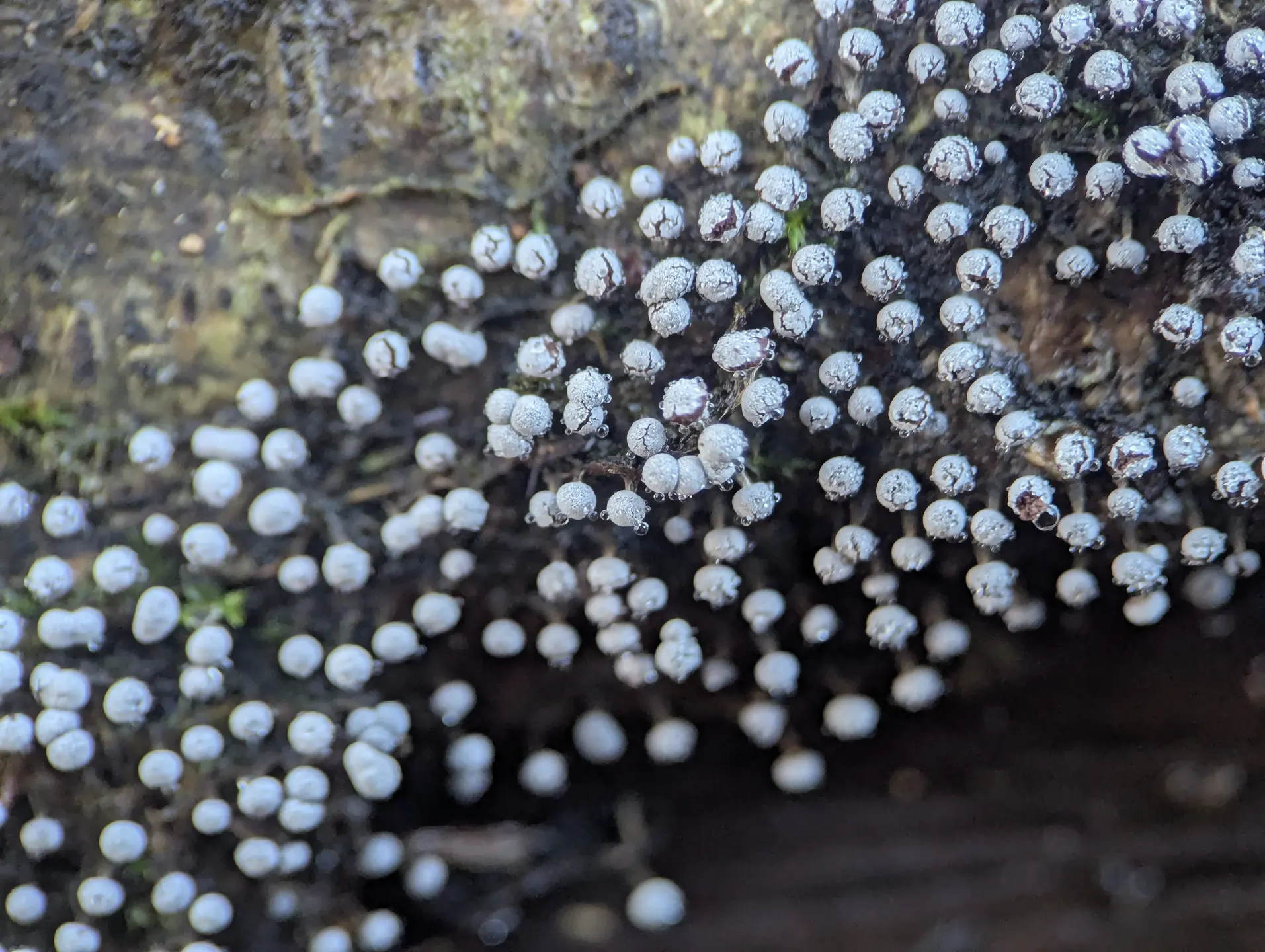
The Dell, Strumpshaw Fen – 20th Dec 2025
Drainage Channel Path
The next three photos show early stage sporangial development — at this stage it's impossible to ID them macroscopically.
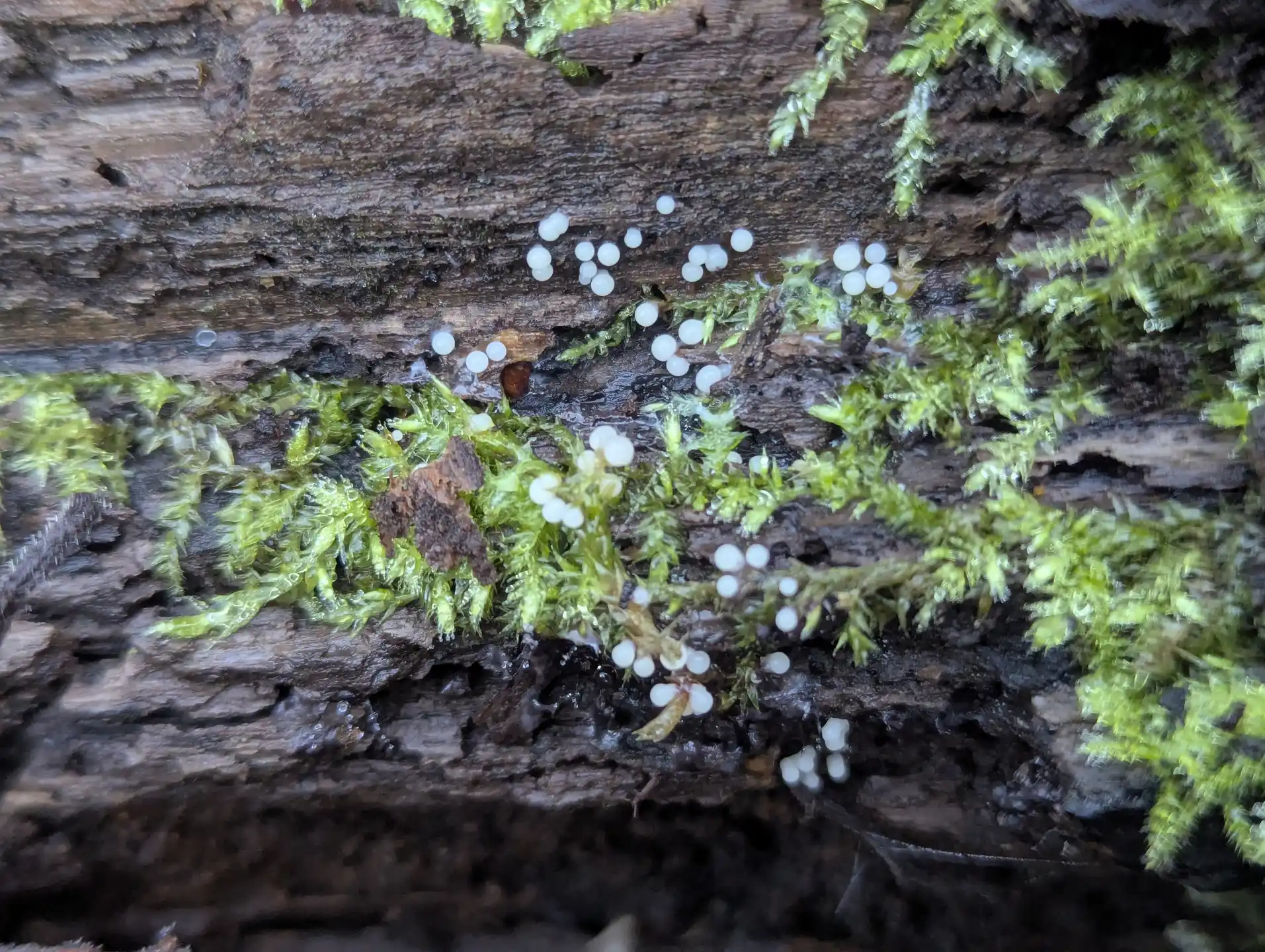
Drainage Channel Path, Strumpshaw Fen – 20th Dec 2025
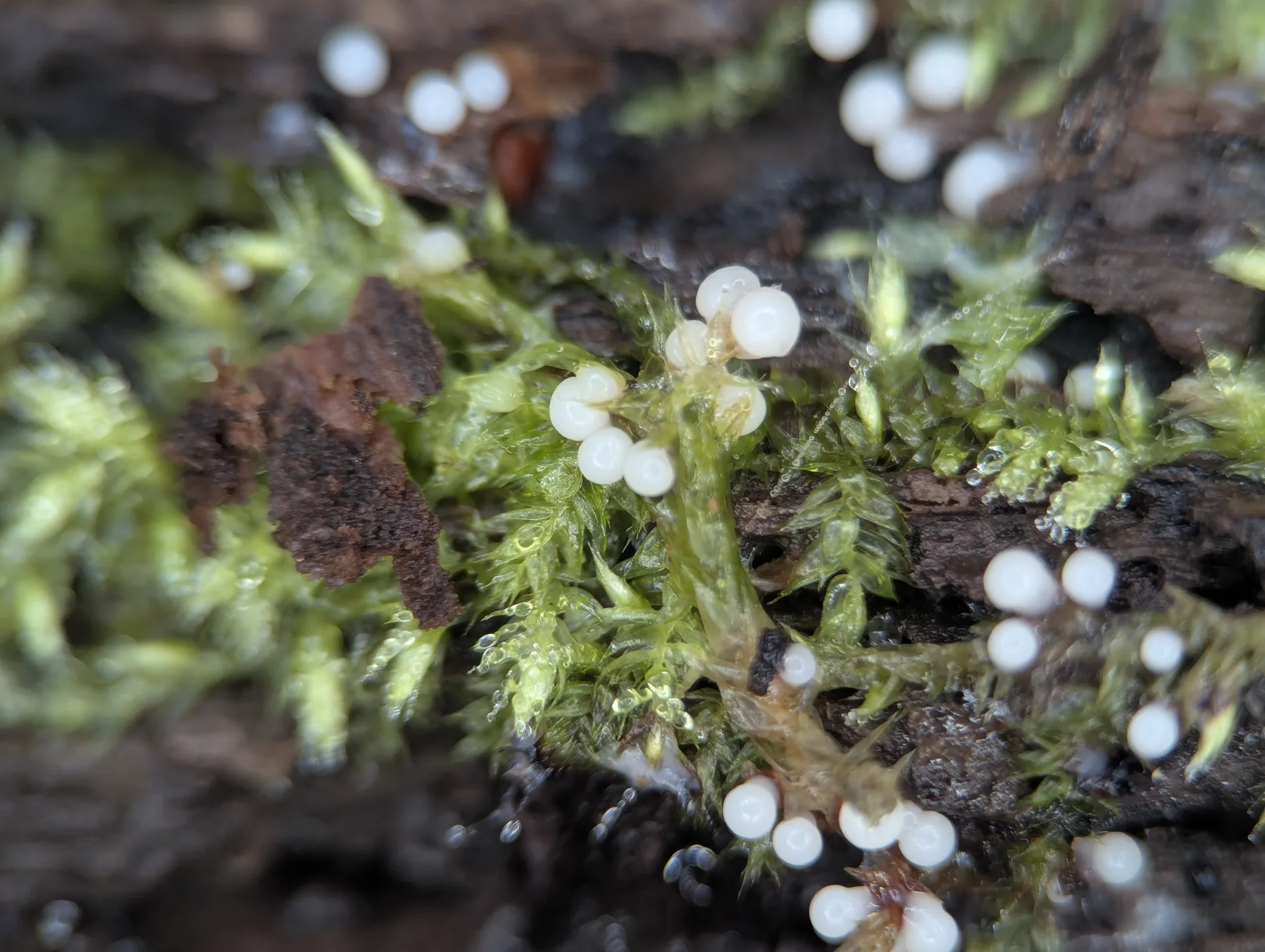
Drainage Channel Path, Strumpshaw Fen – 20th Dec 2025
In the photo below, the sporothecae and stalks are beginning to form.
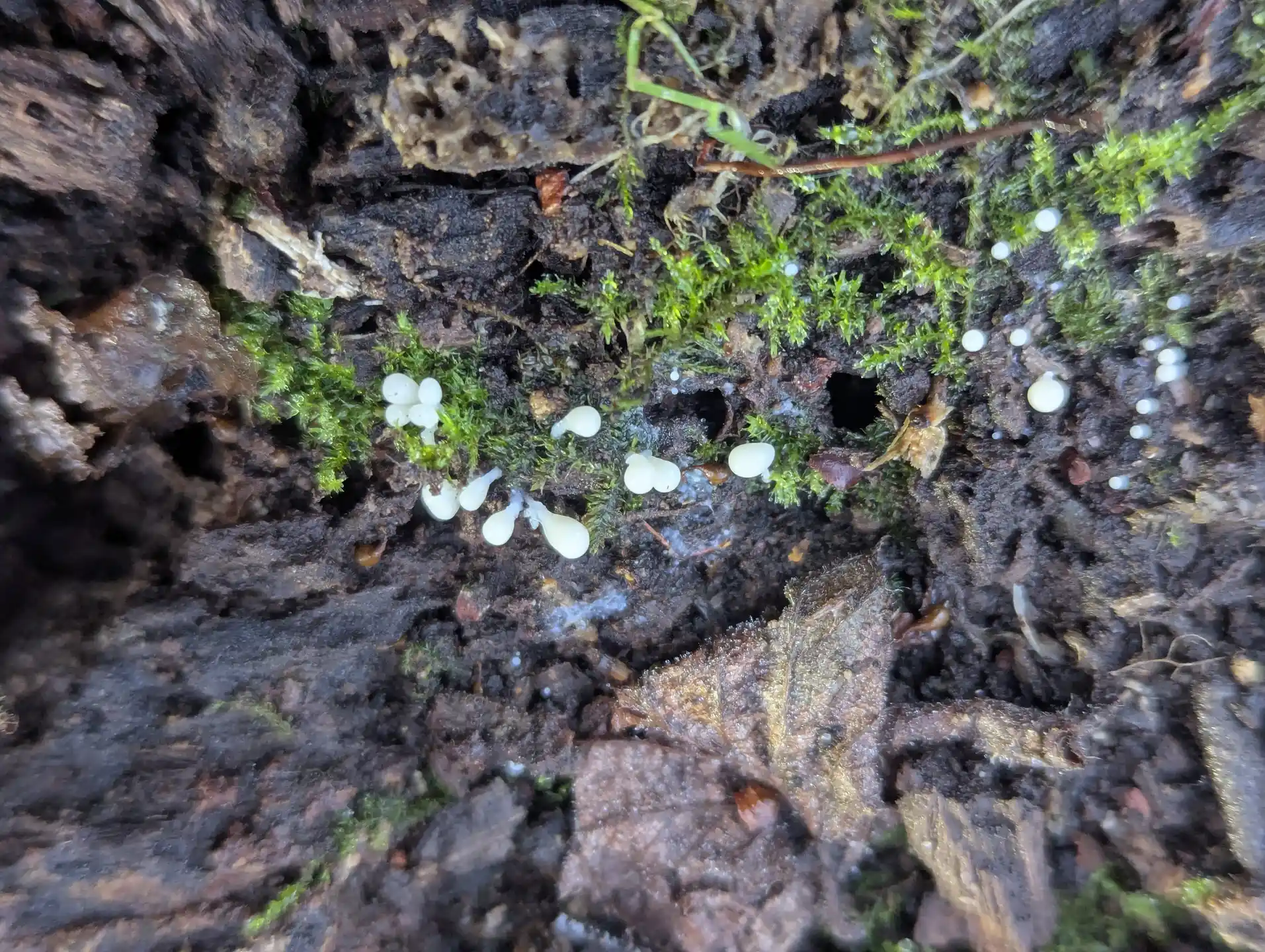
Drainage Channel Path, Strumpshaw Fen – 20th Dec 2025
It was along the Drainage Channel path that we came across a new slime mould for us — likely Didymium squamulosum (below).
We tracked it on subsequent visits during December and into the New Year, from early sporulation to dehiscence.
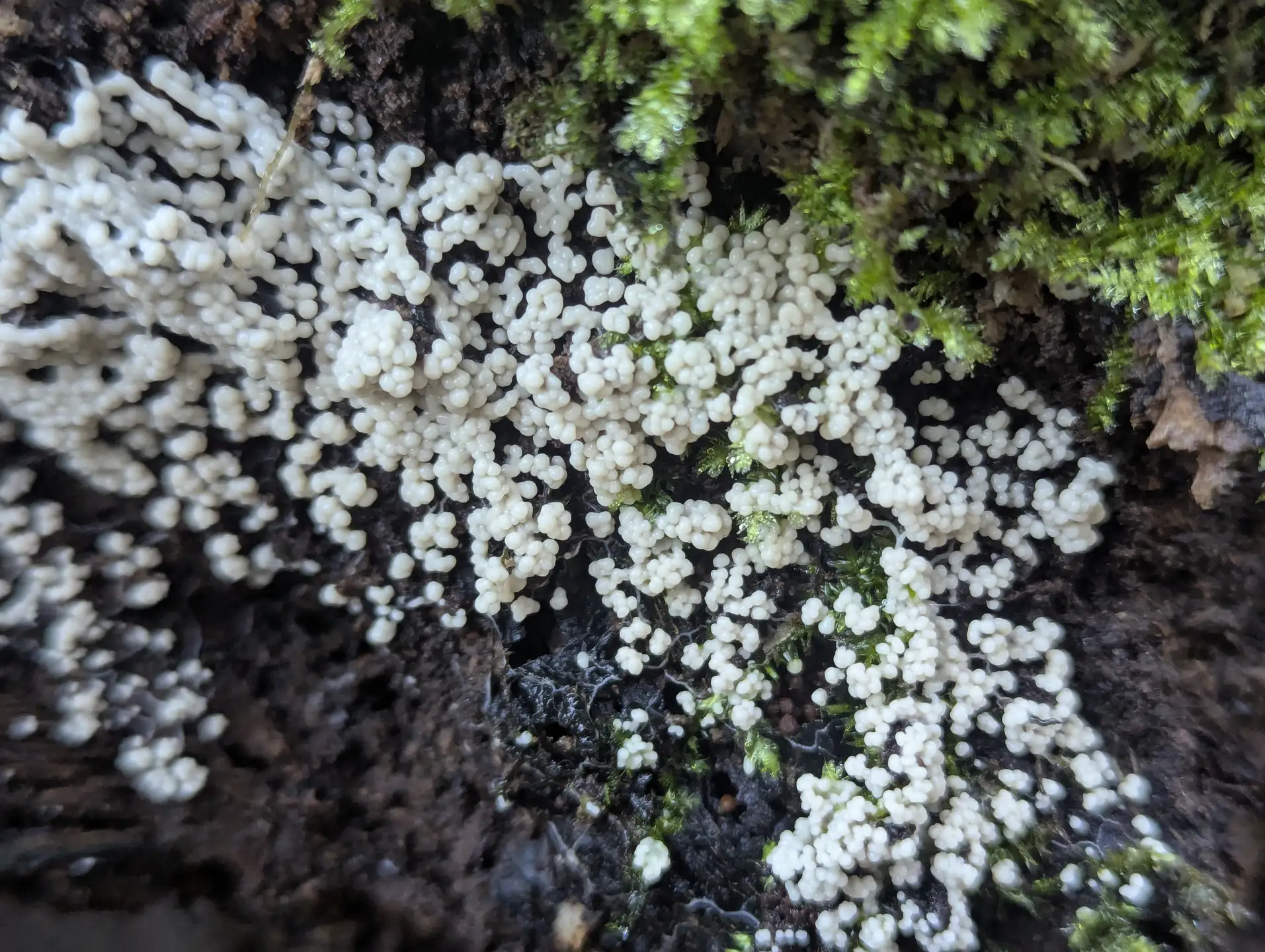
Drainage channel path, Strumpshaw Fen – 20th Dec 2025
On another decaying trunk fragment, near the Didymium squamulosum, we spotted numerous groupings of gregarious Trichia-like sporangia.
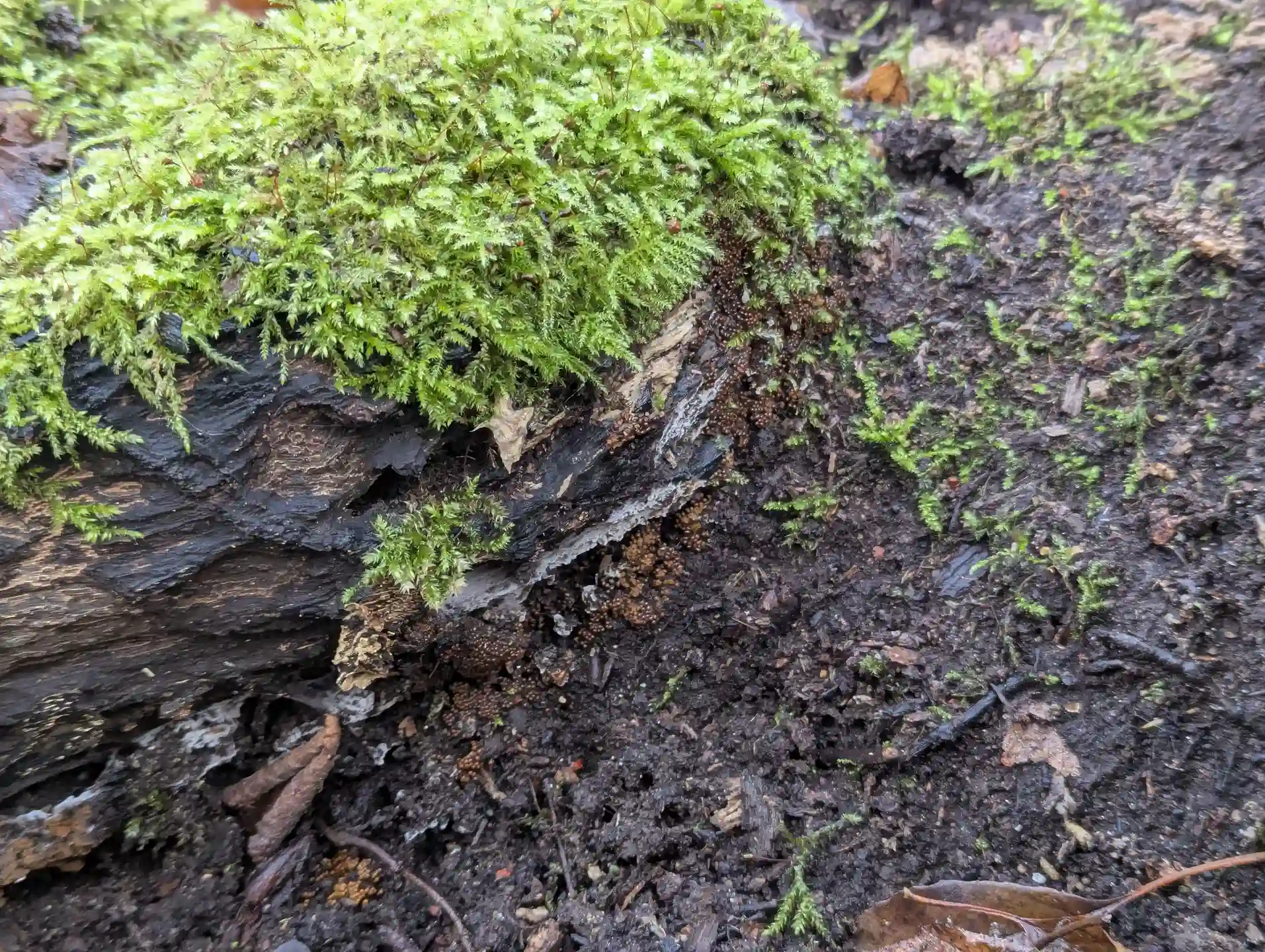
Drainage channel path, Strumpshaw Fen – 20th Dec 2025
The sporangia are generally the same colour; however, those in the photo below appear darker than the two subsequent photos — because of the macro lens light used in those shots.
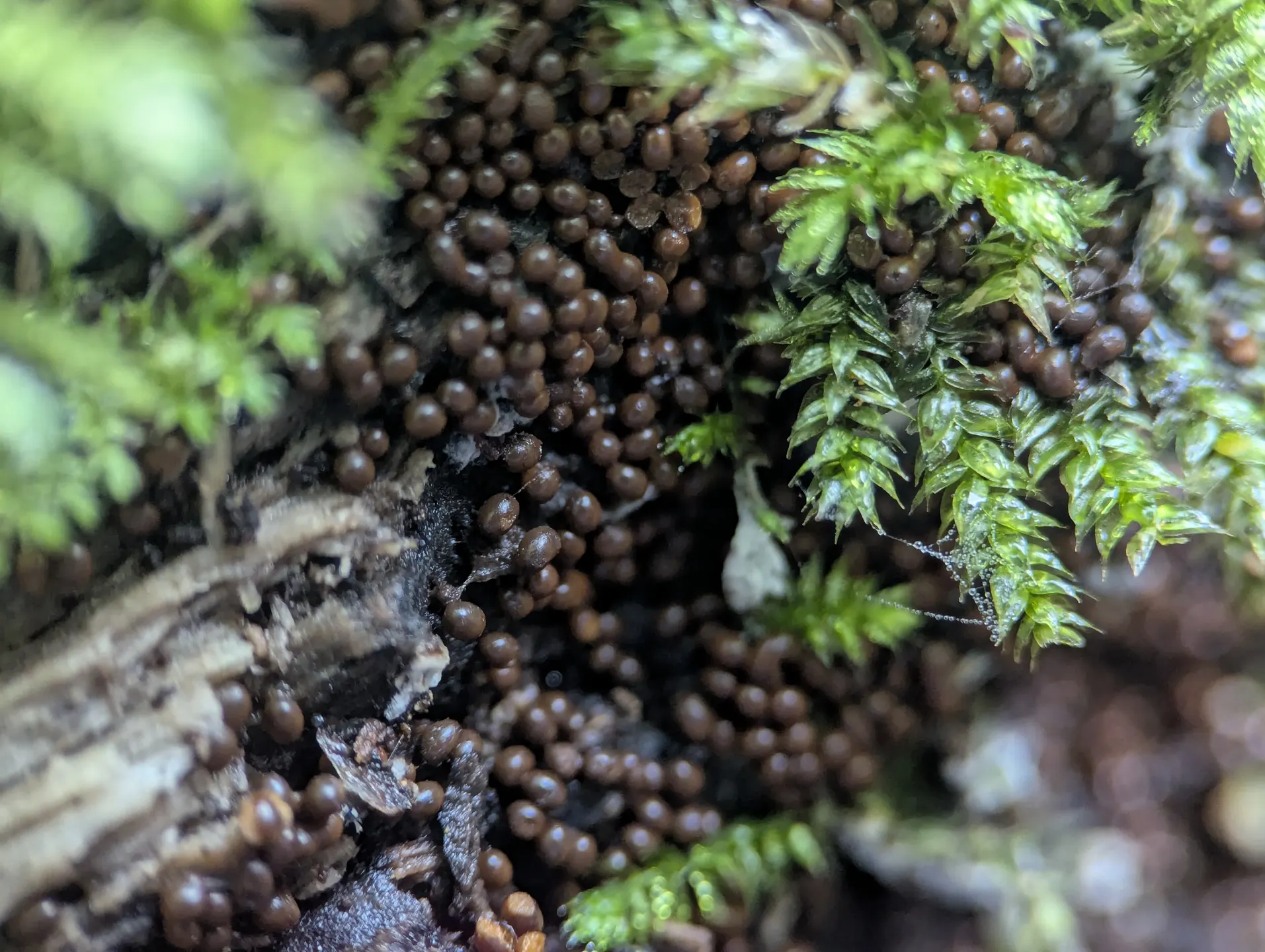
Drainage channel path, Strumpshaw Fen – 20th Dec 2025
You can see the lens light reflected in the sporangia.
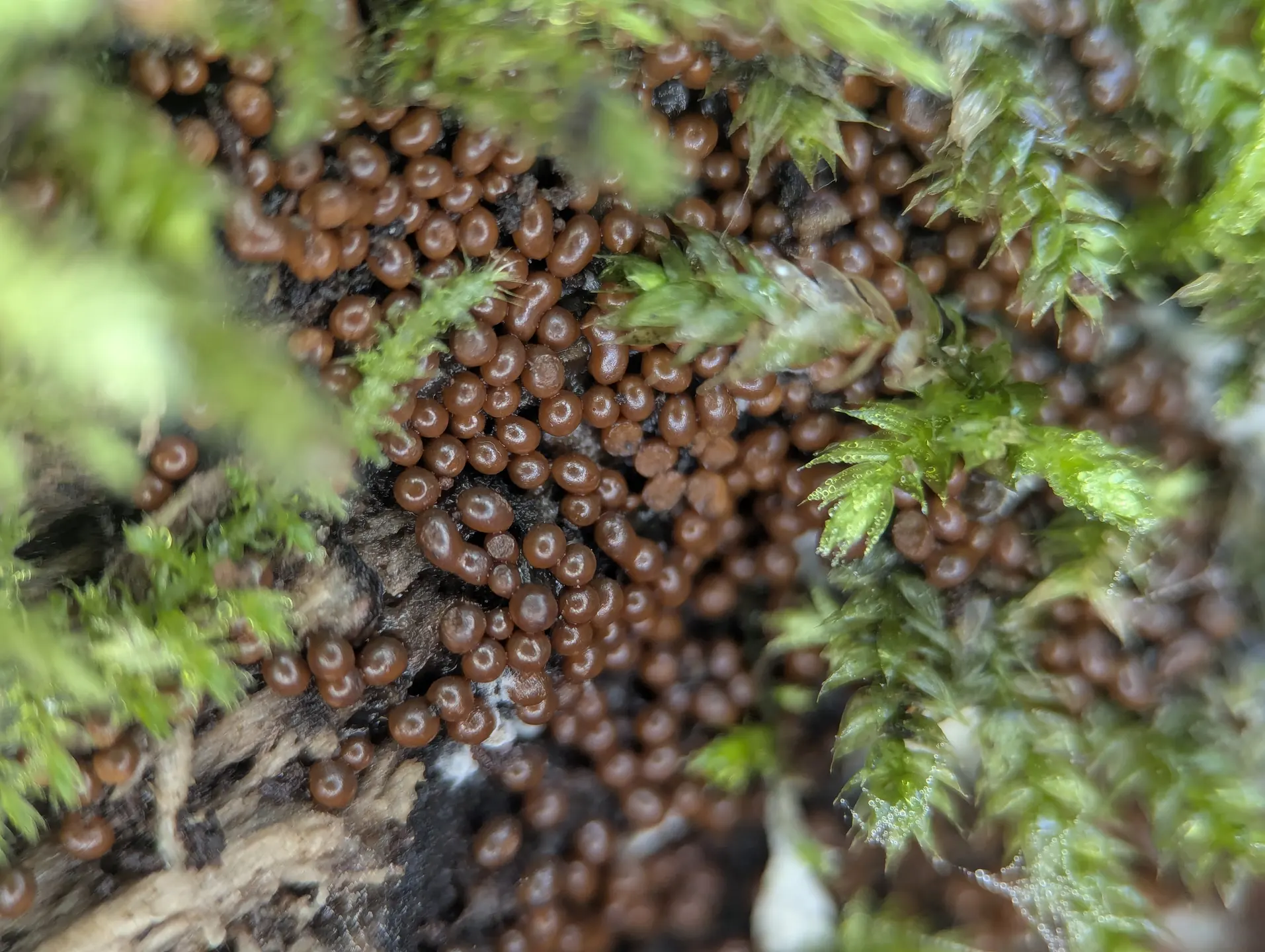
Drainage channel path, Strumpshaw Fen – 20th Dec 2025
The sporangia below are dehiscing exposing orange-yellow capillitial spore masses.
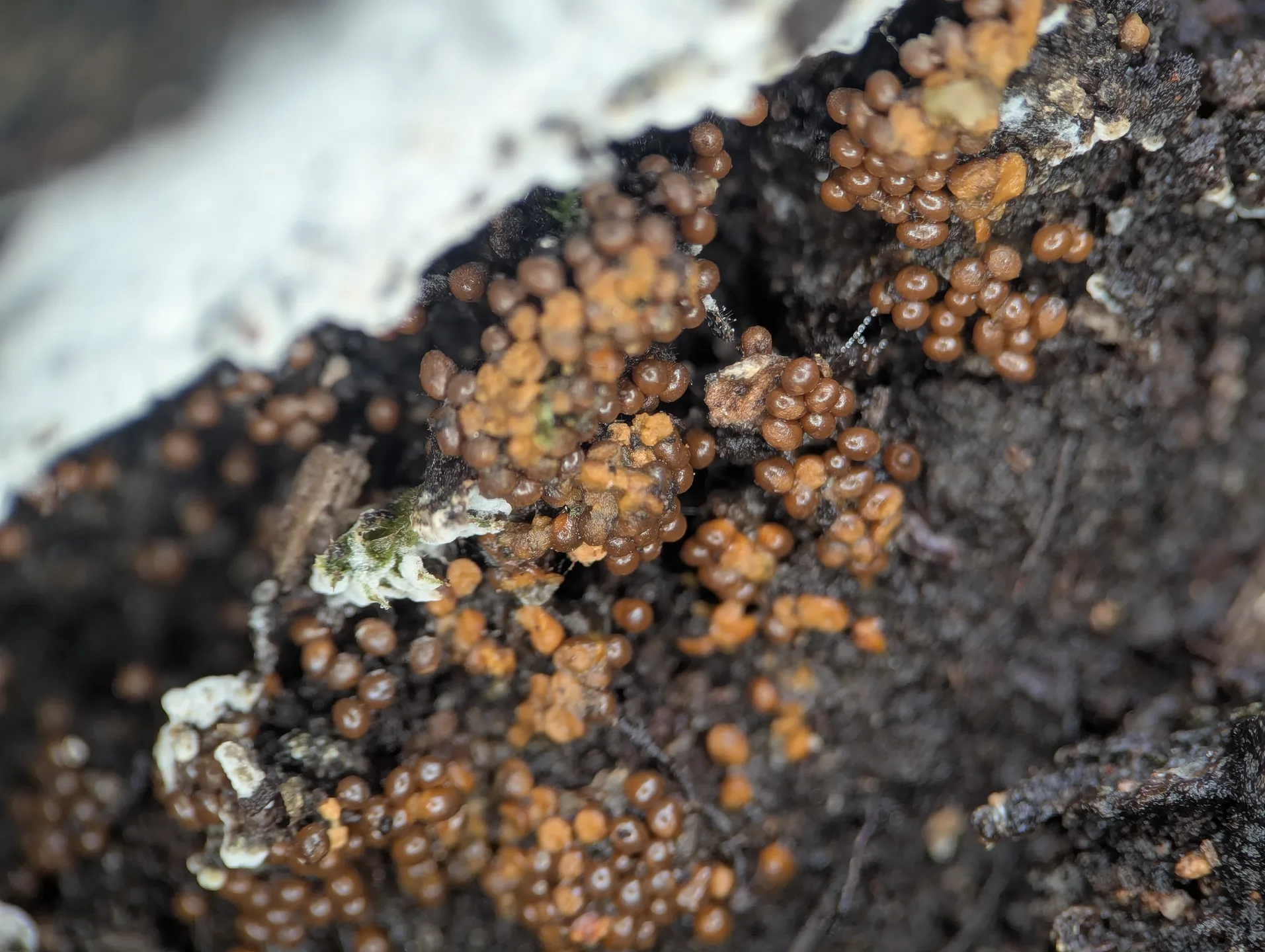
Drainage channel path, Strumpshaw Fen – 20th Dec 2025
Near The Outpost
I spotted these cute mushrooms on a leaf — maybe Crepidotus epibryus, the grass oysterling. They fit the general description of Crepidotus epibryus from various online identification resources.
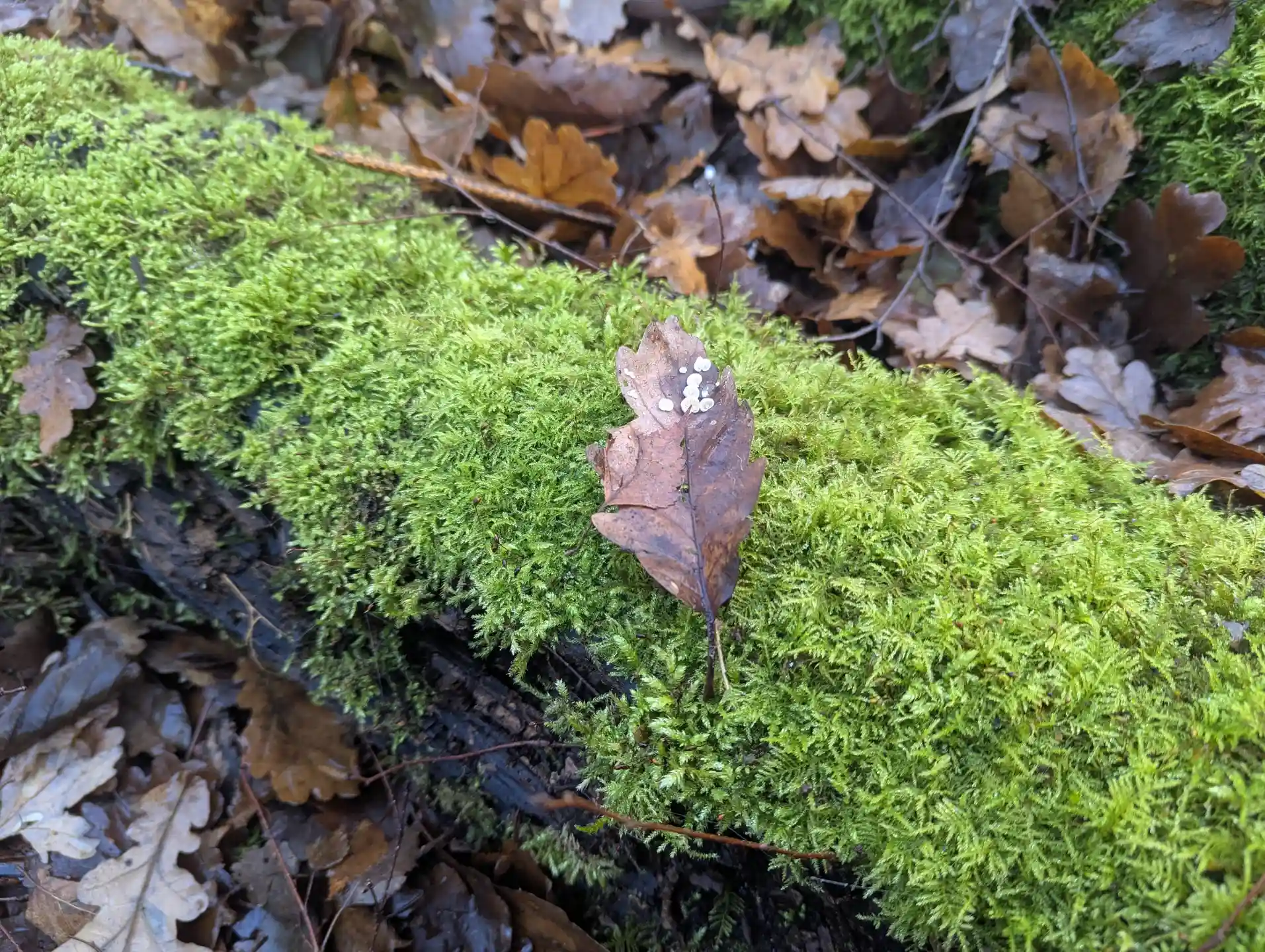
Near The Outpost, Strumpshaw Fen – 20th Dec 2025
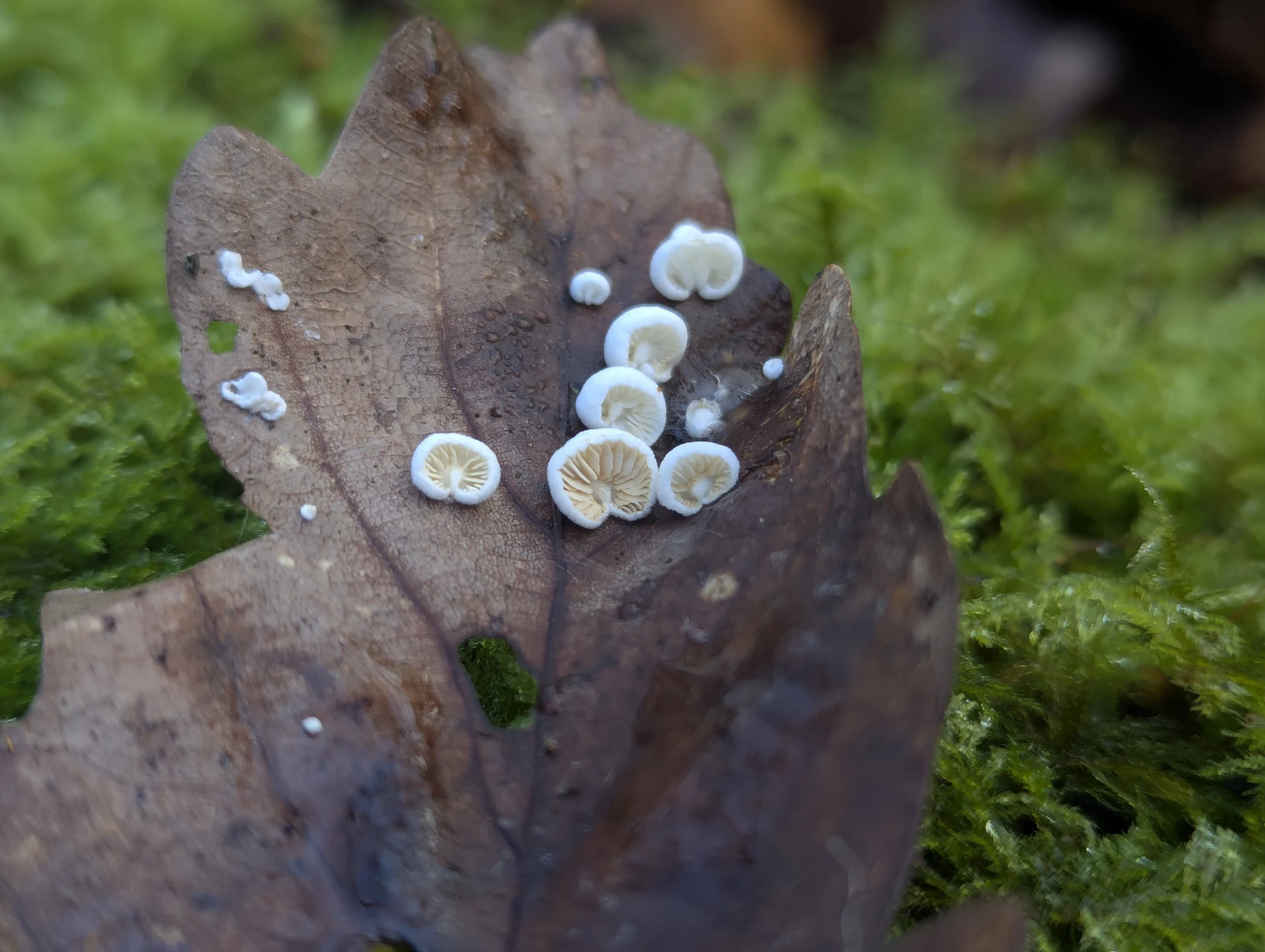
Near The Outpost, Strumpshaw Fen – 20th Dec 2025
Trail End
Near the end of the woodland trail I spotted some unidentified plasmodial blebs. They were cream and had an irregular form.
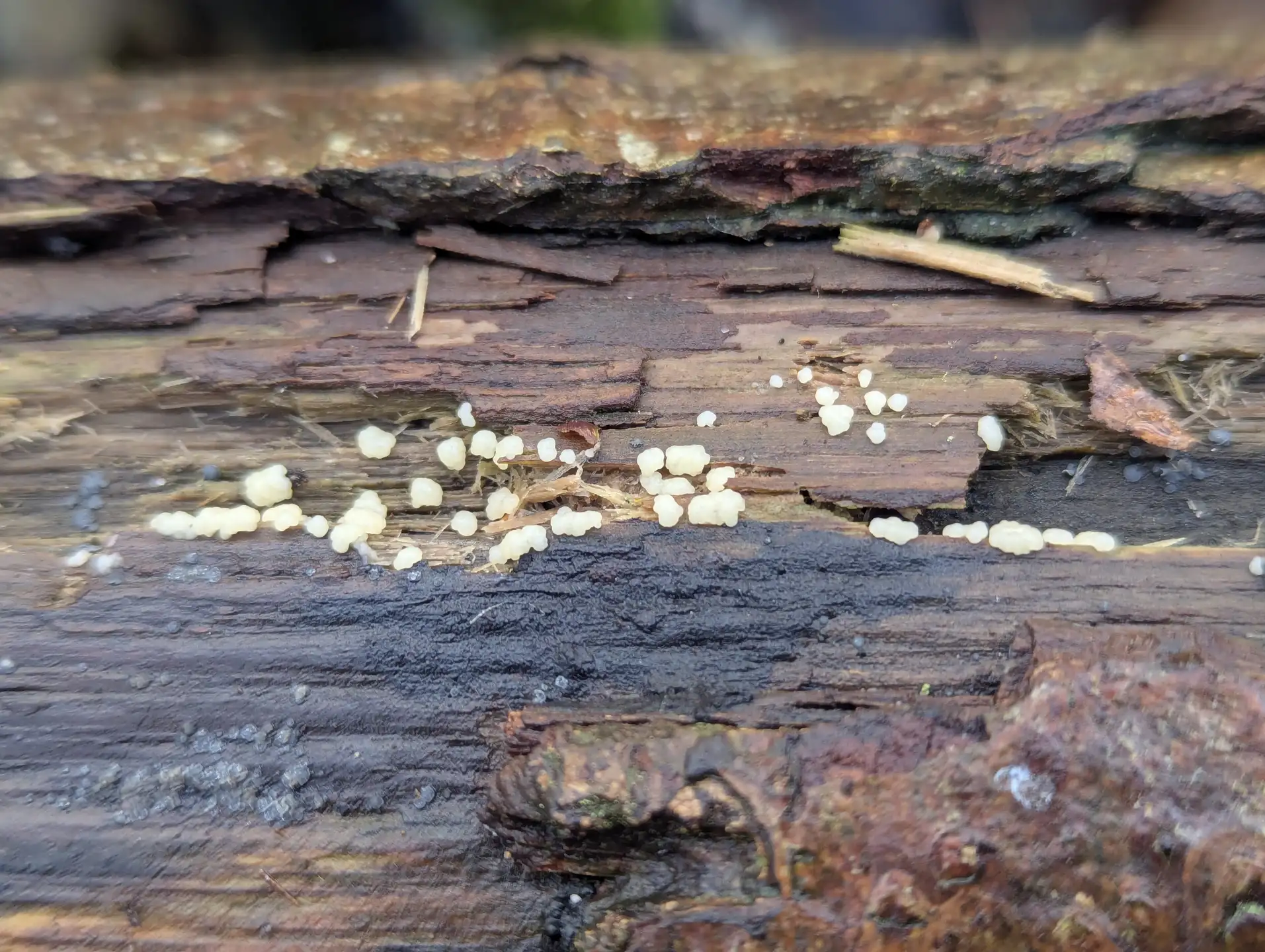
Trail End, Strumpshaw Fen – 20th Dec 2025
The next photo shows some globular white sporangia with hints of pink. The singular sporangium left of the cluster of six does appear to have a short slender black stalk.
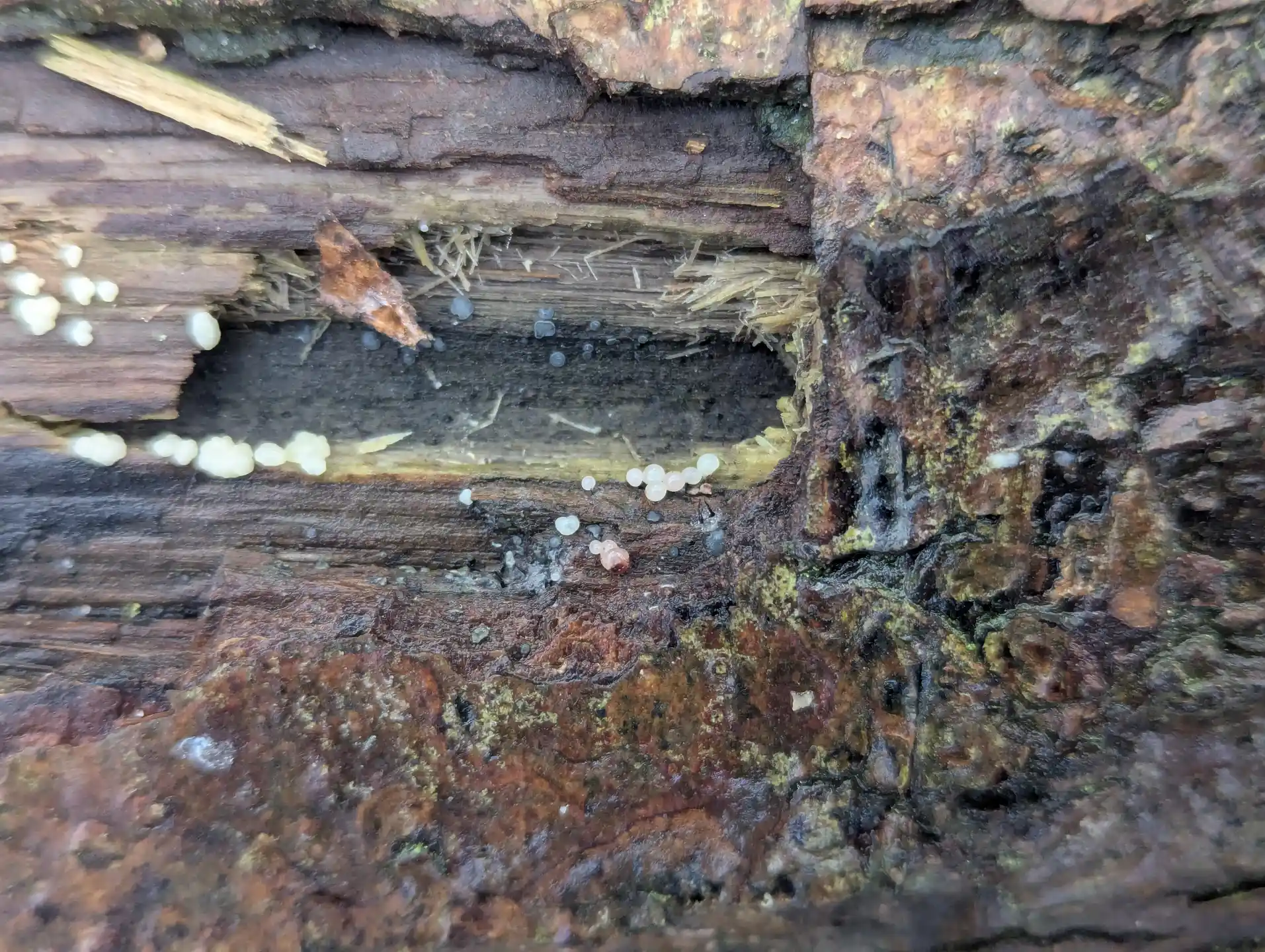
Trail End, Strumpshaw Fen – 20th Dec 2025
21st December 2025
Near The Outpost
On the downed trunk that we have observed fabulous slime mould activity – Badhamia utricularis sporangia and likely plasmodia, and Heterotrichia obvelata — we noticed a small orange-yellow plasmodium feasting on Phlebia radiata, which we tracked into early February 2026.
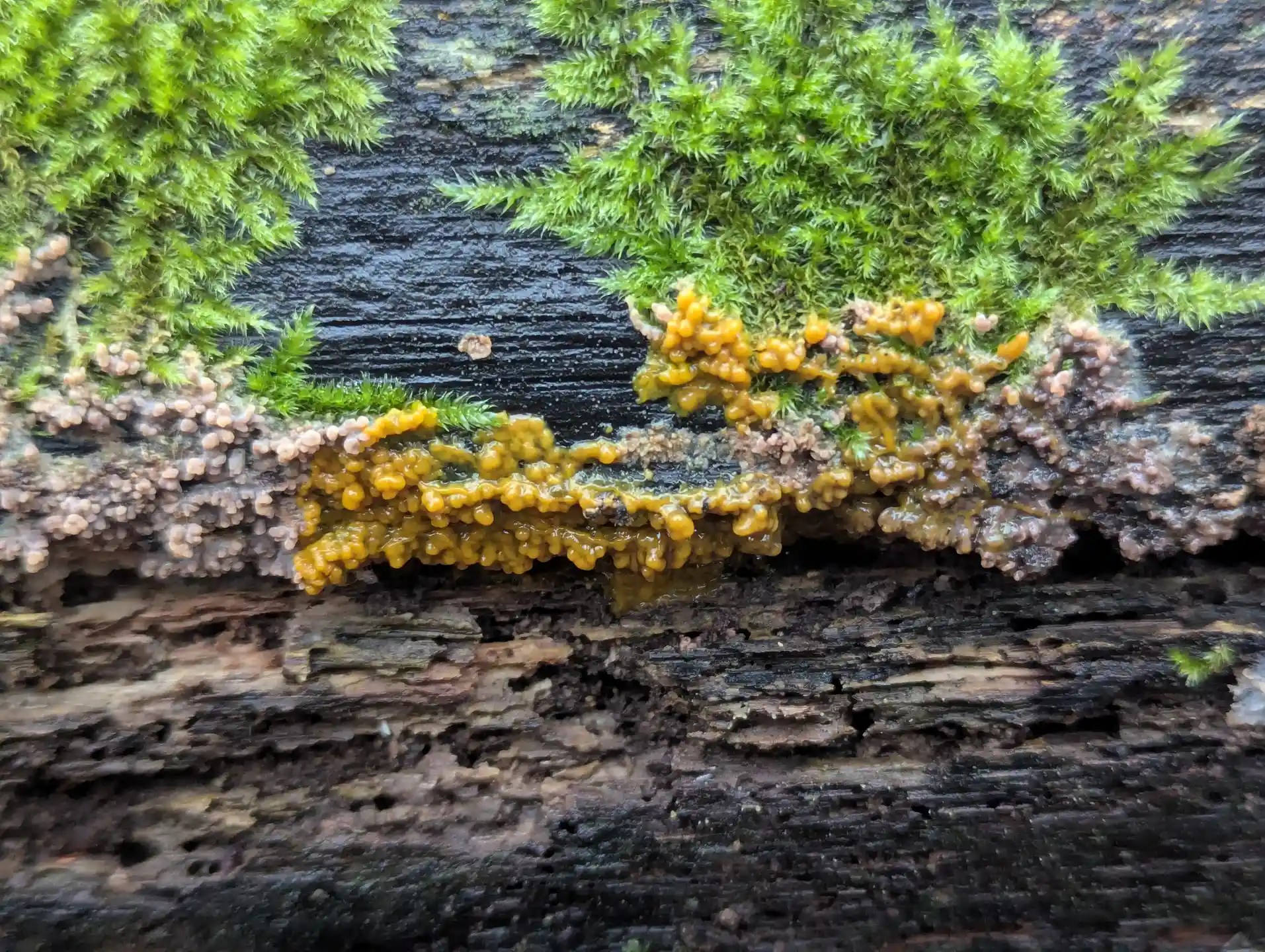
Near The Outpost, Strumpshaw Fen – 21st Dec 2025
22nd December 2025
Drainage Channel Path
This cluster of sporangia with pale sulphur-yellow sporothecae and translucent stalks were beautiful. We were able to track its development over the next several days.
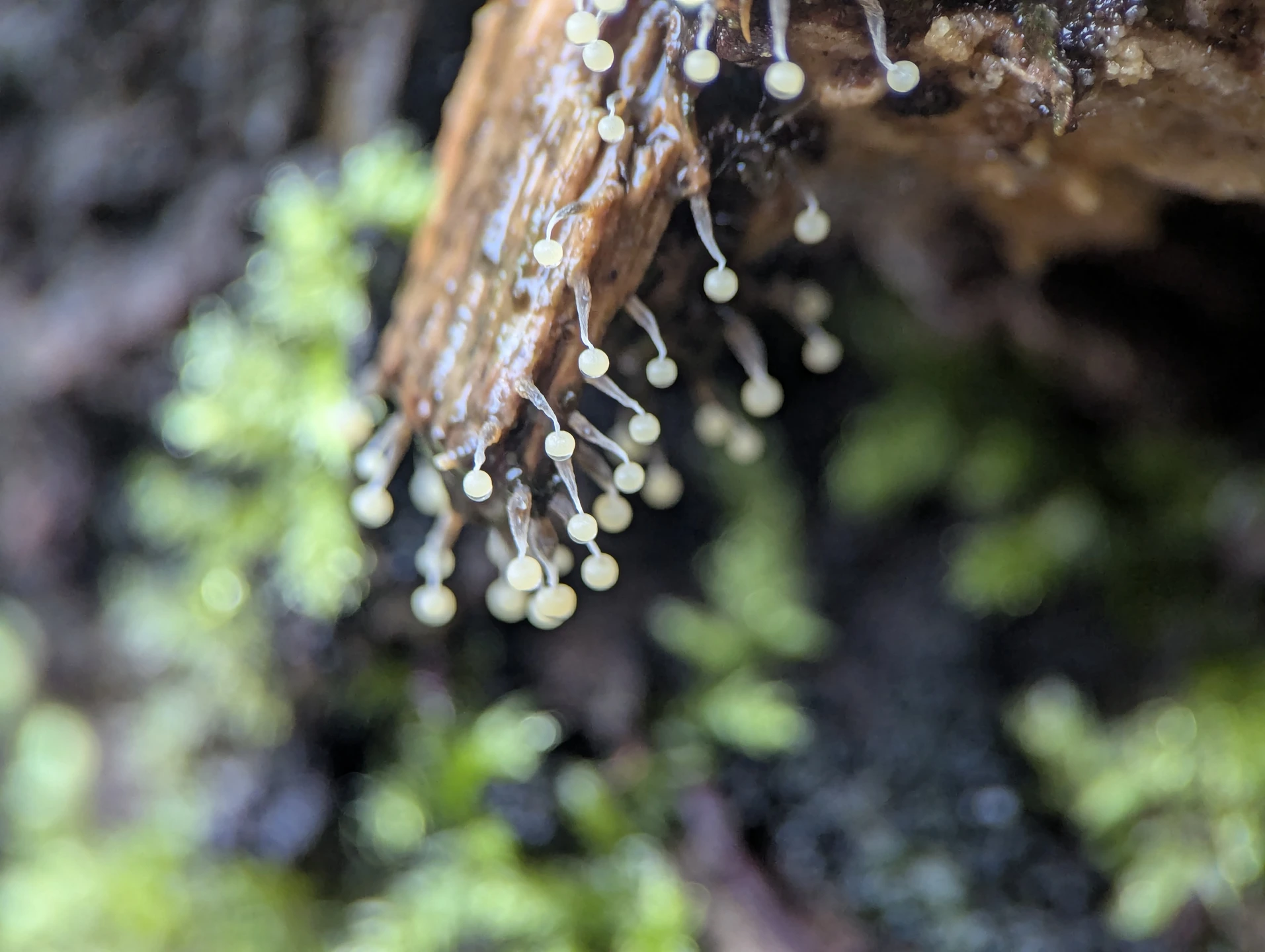
Drainage Channel Path, Strumpshaw Fen – 22nd Dec 2025
The next photo is a tuft of ozonium! Ozonium is associated with Coprinellus disseminatus and Coprinellus radians, although I wasn't able to see any fruiting bodies about.
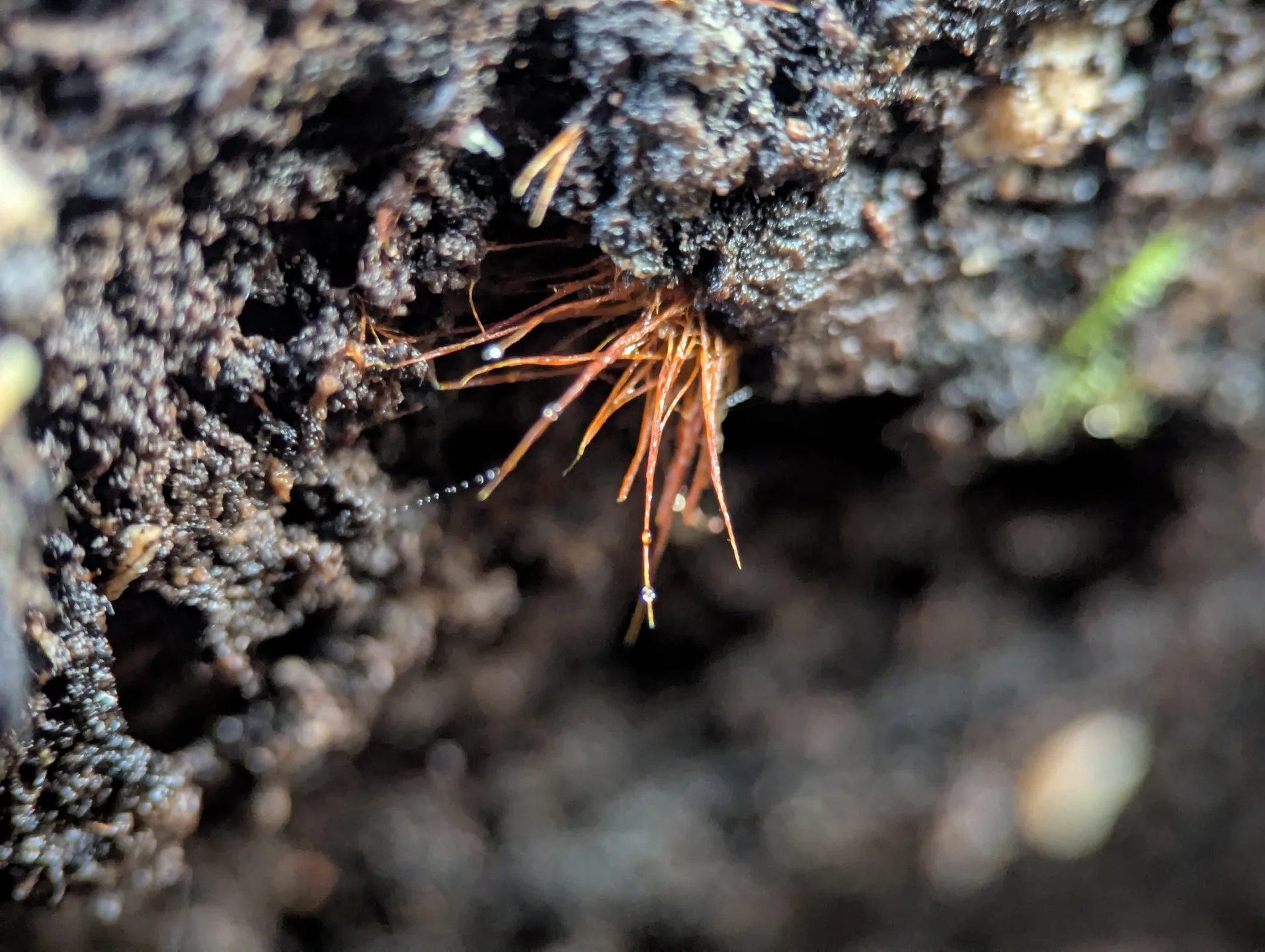
Drainage Channel Path, Strumpshaw Fen – 22nd Dec 2025
The most satisfying explanation of what ozonium is, is that it is an anamorph (the asexual phase of a fungus) that forms specialised vegetative mycelium (consisting of well septated and clampless hyphal strands 🤯) [1].
It usually takes the form of a dense, orange, felt-like mat spreading across the substrate. I think, historically, it was viewed as an independent fungus.
The small group of juvenile sporangia in the next photo are probably Comatricha nigra.
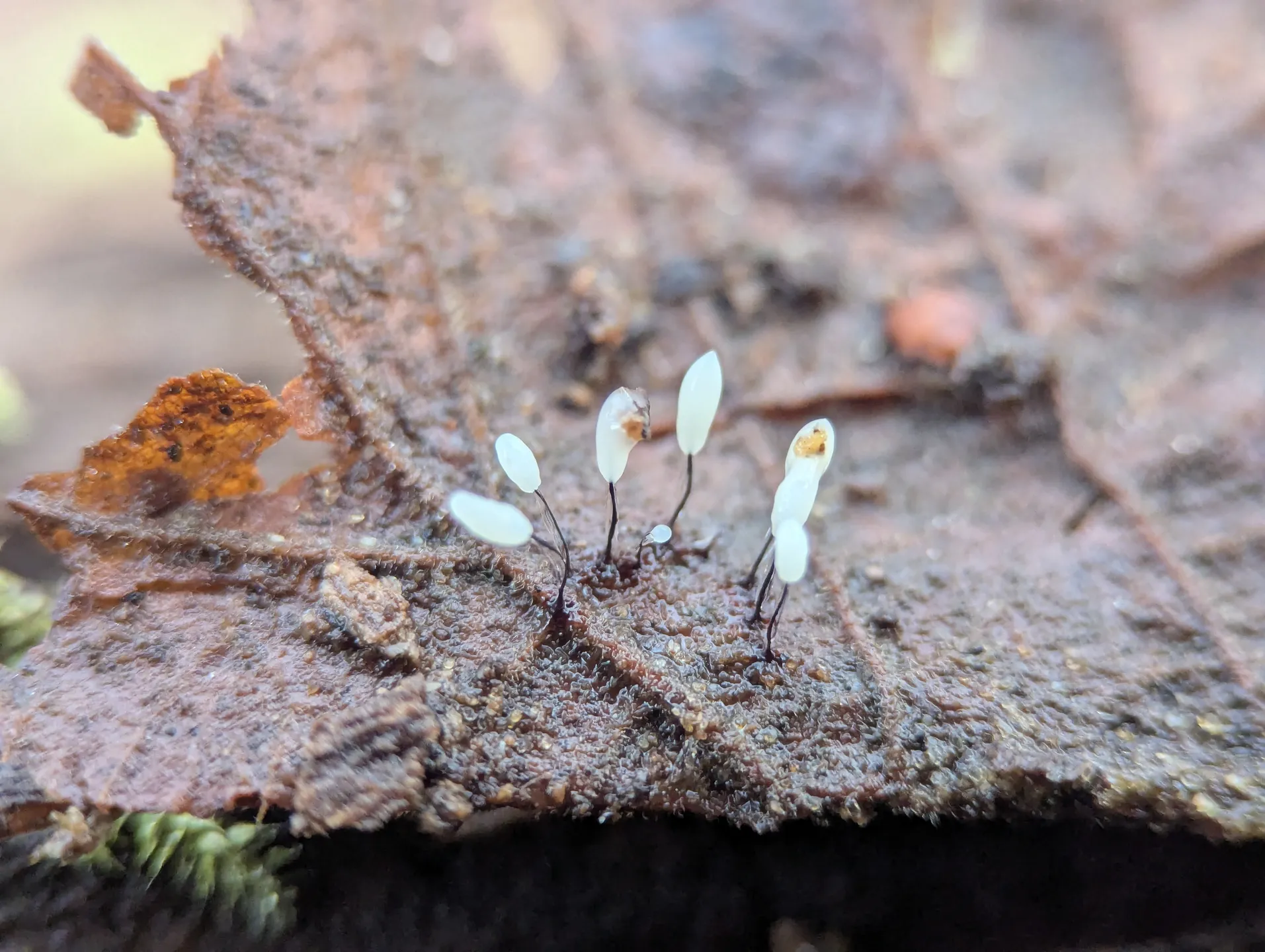
Drainage Channel Path, Strumpshaw Fen – 22nd Dec 2025
I never expected to find slime mould sporangia on a fragment of Daldinia concentrica (King Alfred's cake). I think it could be Physarum leucophaeum.
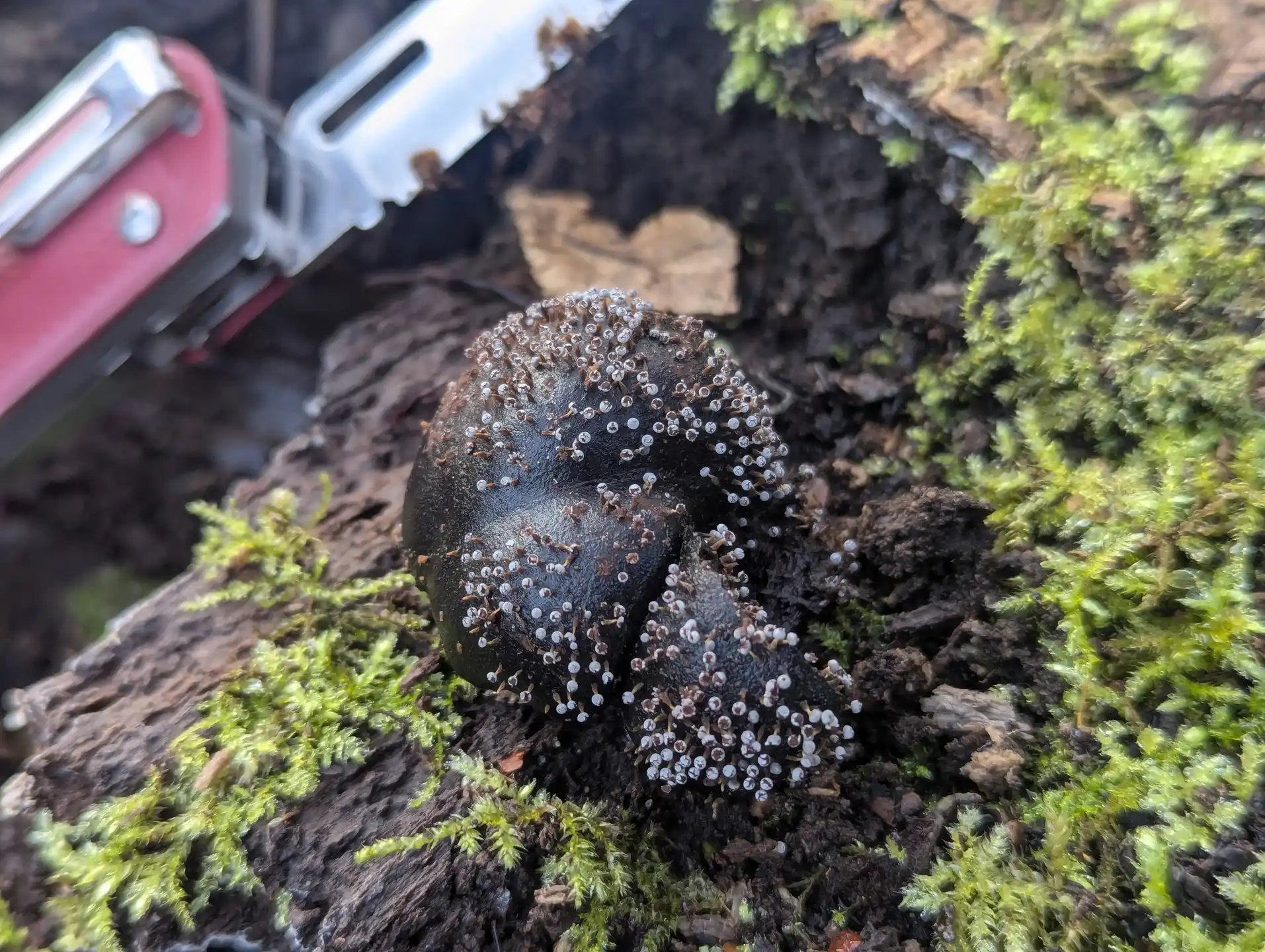
Drainage Channel Path, Strumpshaw Fen – 22nd Dec 2025
Near The Outpost
From a distance, we could see patches of flesh-pink coloration on the fallen high stump near The Outpost.
Earlier on this day we found flesh-pink juvenile Heterotrichia ferruginea at the allotment — could it be...? We rushed over — it was the exact same slime mould 🤯
This was also likely Heterotrichia ferruginea and we were able to track it into January 2026.
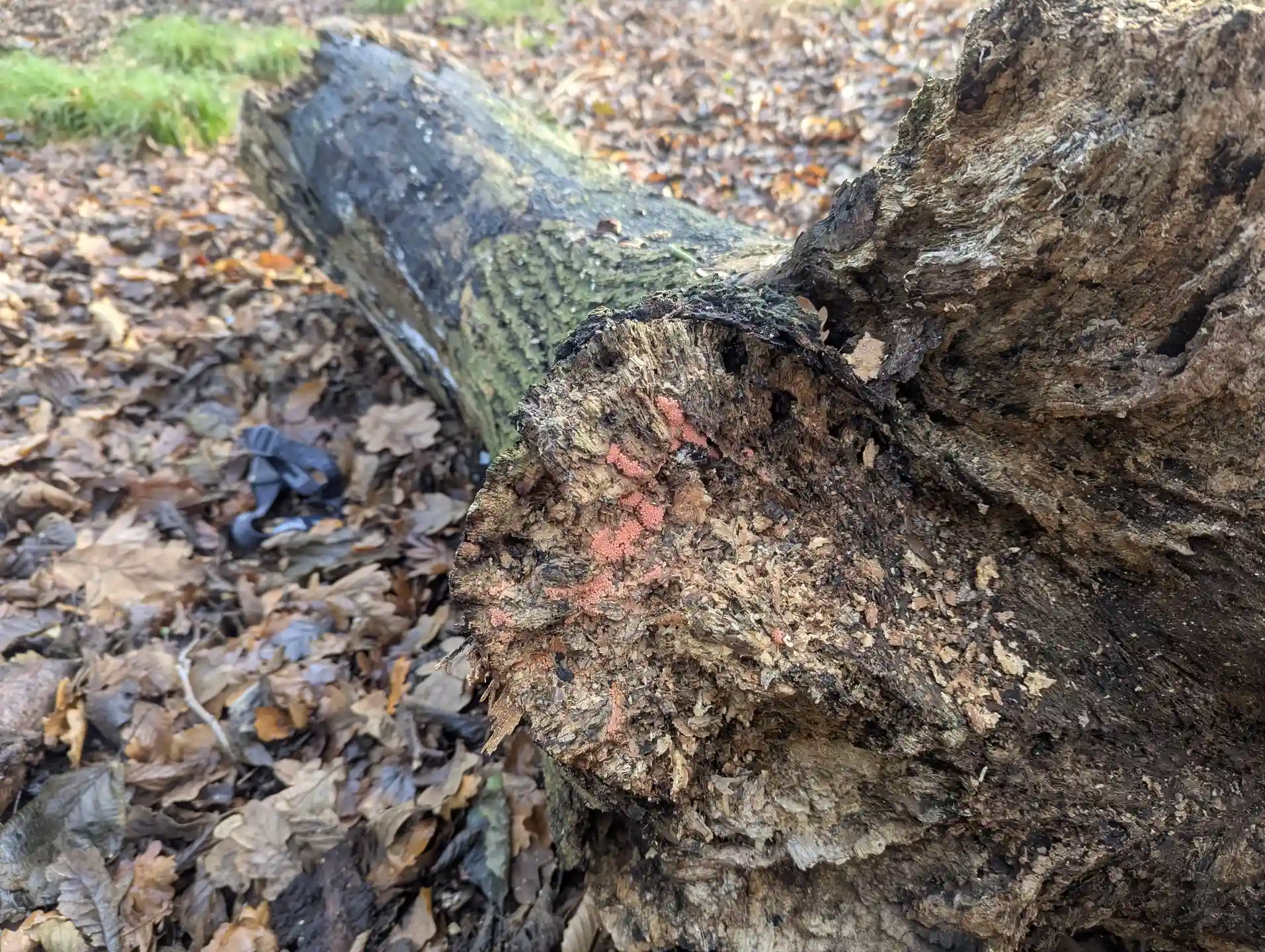
Near The Outpost, Strumpshaw Fen – 22nd Dec 2025
23rd December 2025
Drainage Channel Path
Look like mature Comatricha nigra sporangia...
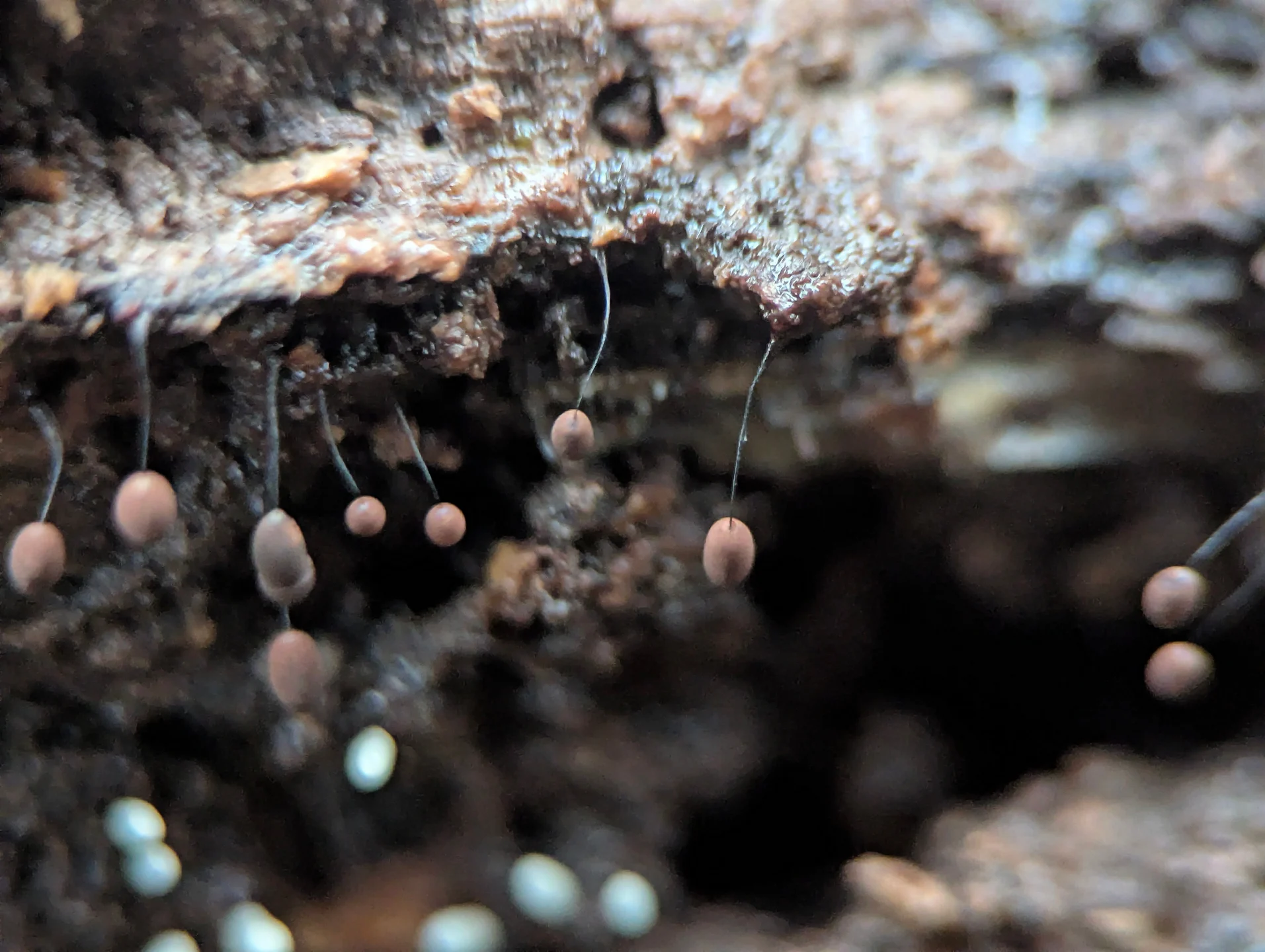
Drainage Channel Path, Strumpshaw Fen – 23rd Dec 2025
Near The Outpost
Returning to the high stump near The Outpost to check out the Heterotrichia ferruginea, the daughter was kicking about the leaves when she spotted these luminous yellow-orange, cup-like sporangia that were probably Craterium minutum.
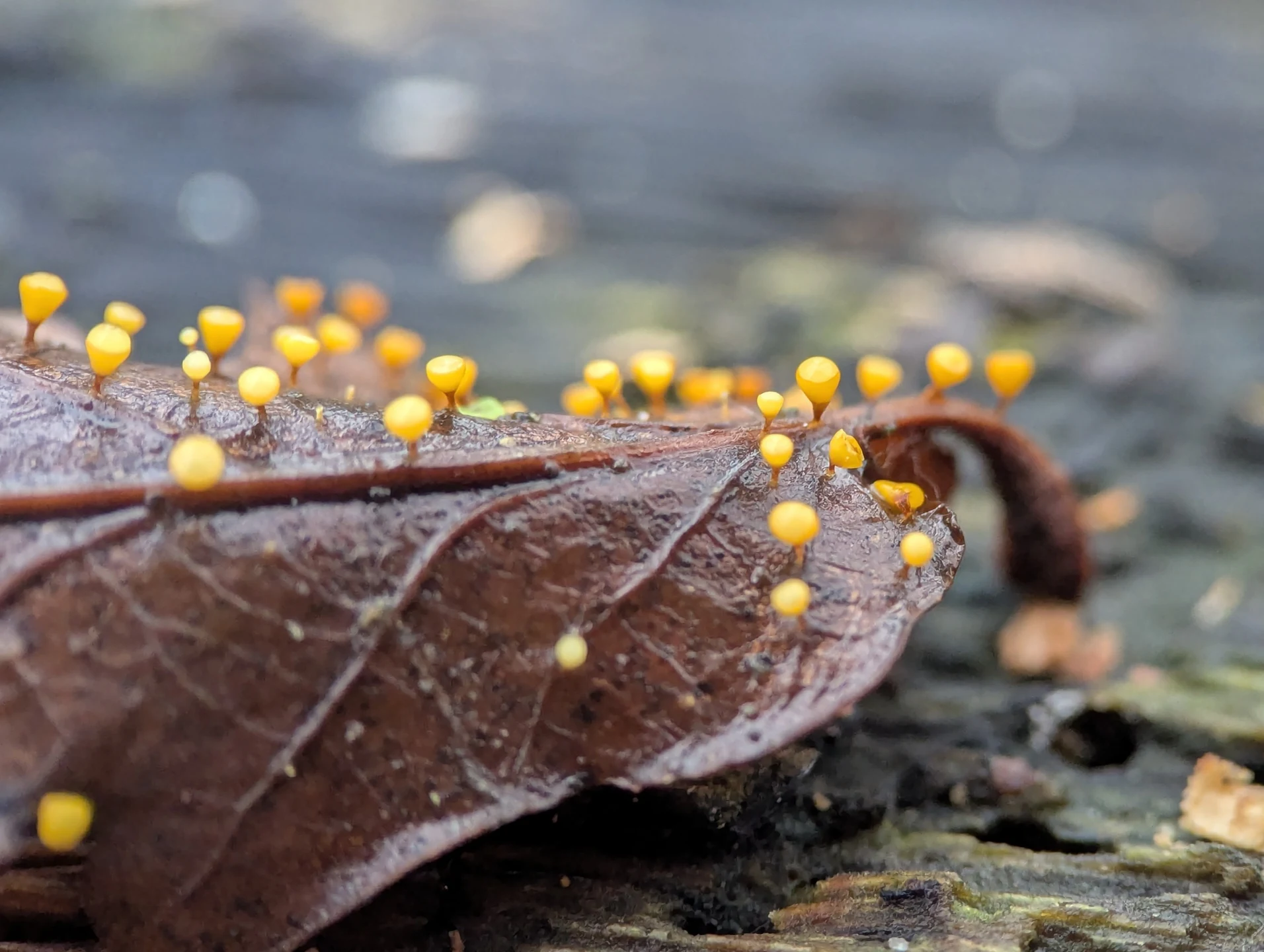
Near The Outpost, Strumpshaw Fen – 23rd Dec 2025
28th December 2025
The Dell
All over The Dell and around the Sandy Glade paths we spotted numerous Didymium spongiosum (formally Mucilago crustacea)...
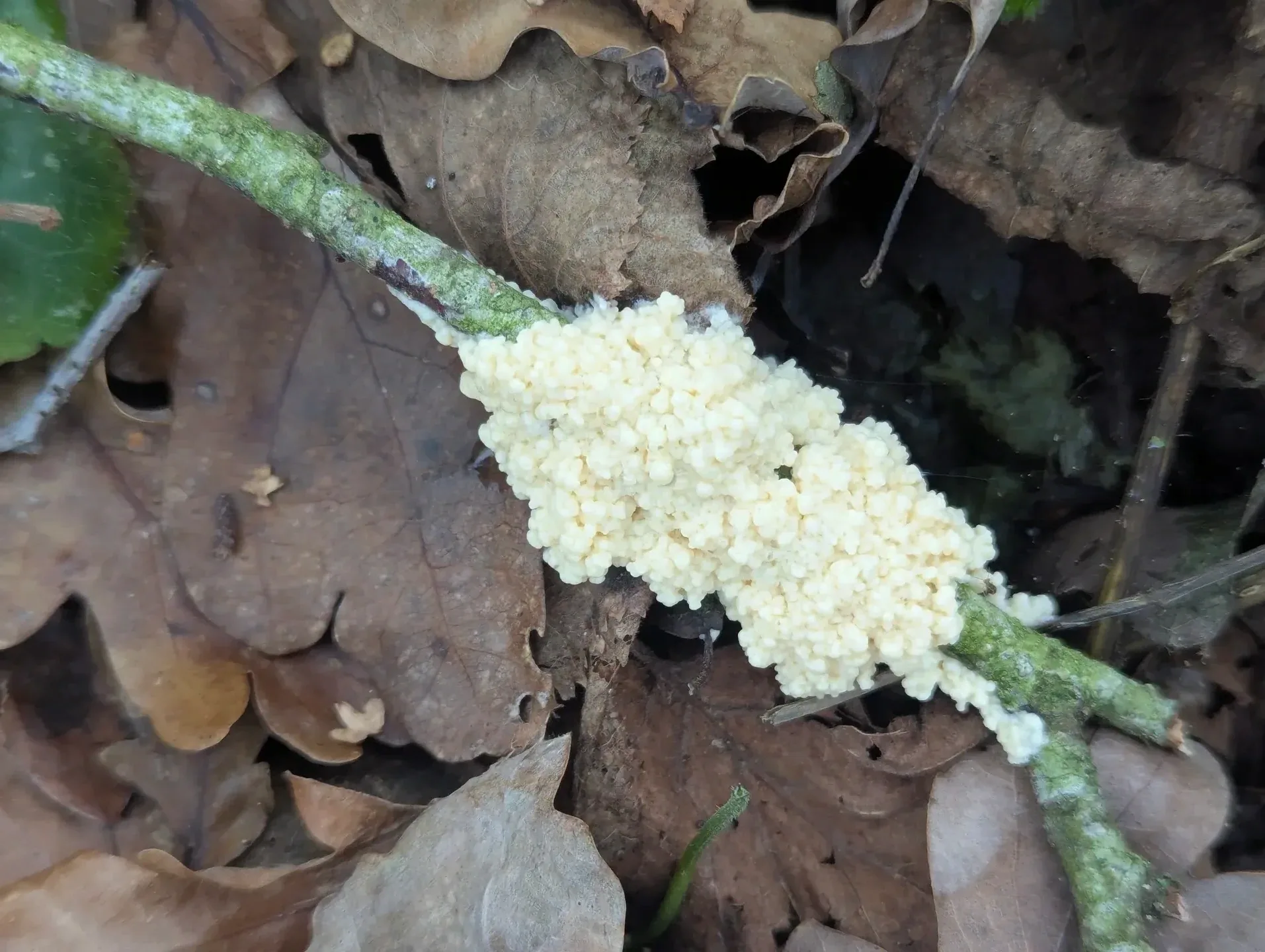
The Dell, Strumpshaw Fen – 28th Dec 2025
The following photograph appears to show four distinct sporangial developmental stages of what I think is Hemitrichia clavata.
There are the white sporulating globular blebs, the viscous-grey sporangia to the right, the three small straw-yellow sporangia with a slight iridescent sheen, and the three dehiscing sporangia with the straw-yellow candy-floss like capillitial spore masses.
Notably, the left-most dehiscing sporangia clearly has the deep basal cup club that is typical of Hemitrichia clavata.
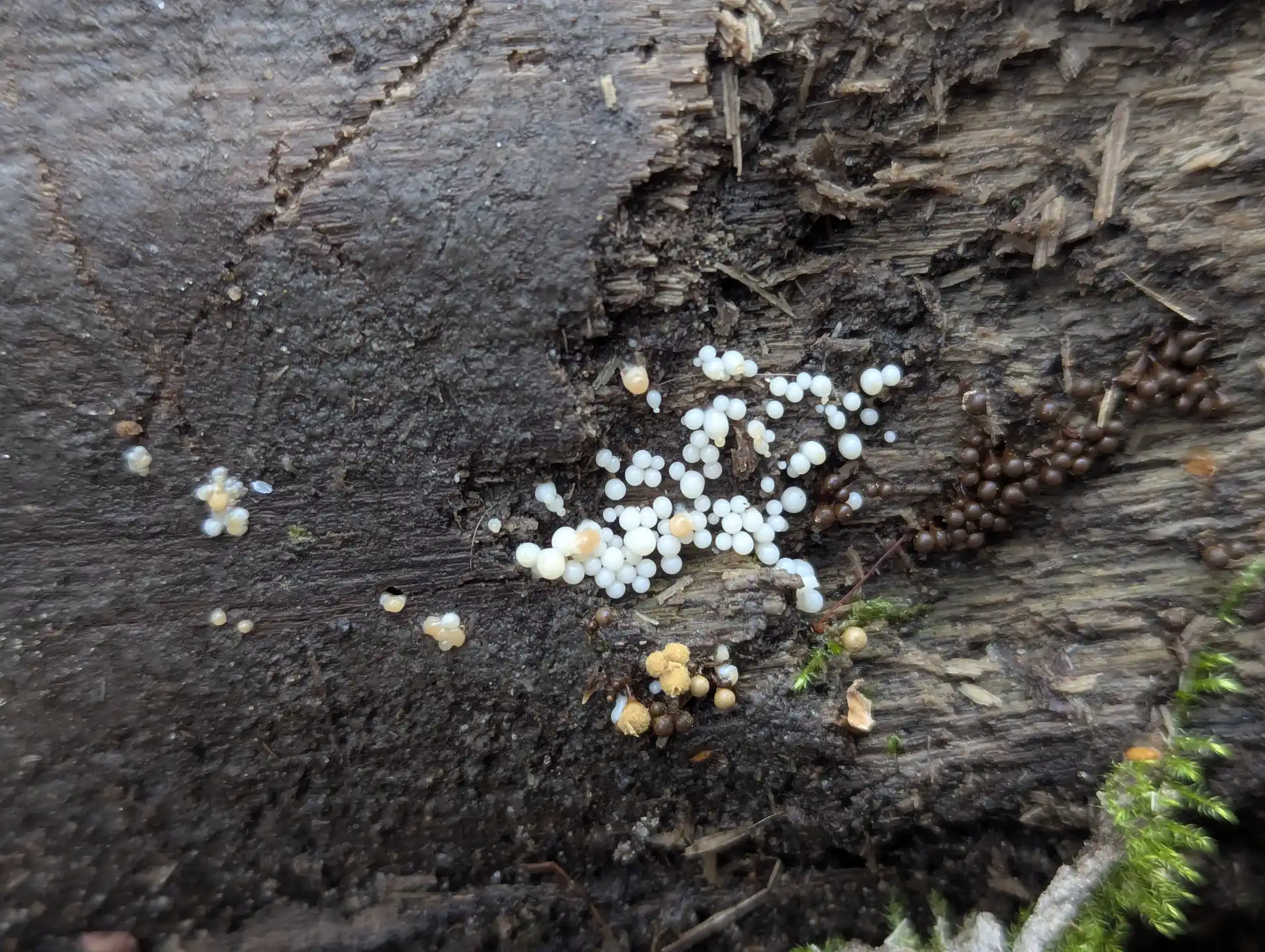
The Dell, Strumpshaw Fen – 28th dec 2025
The dehiscing sporangia have fuscous stalks that transitions to honey-yellow at the base of the cup, and then to straw-yellow at the line of dehiscence.
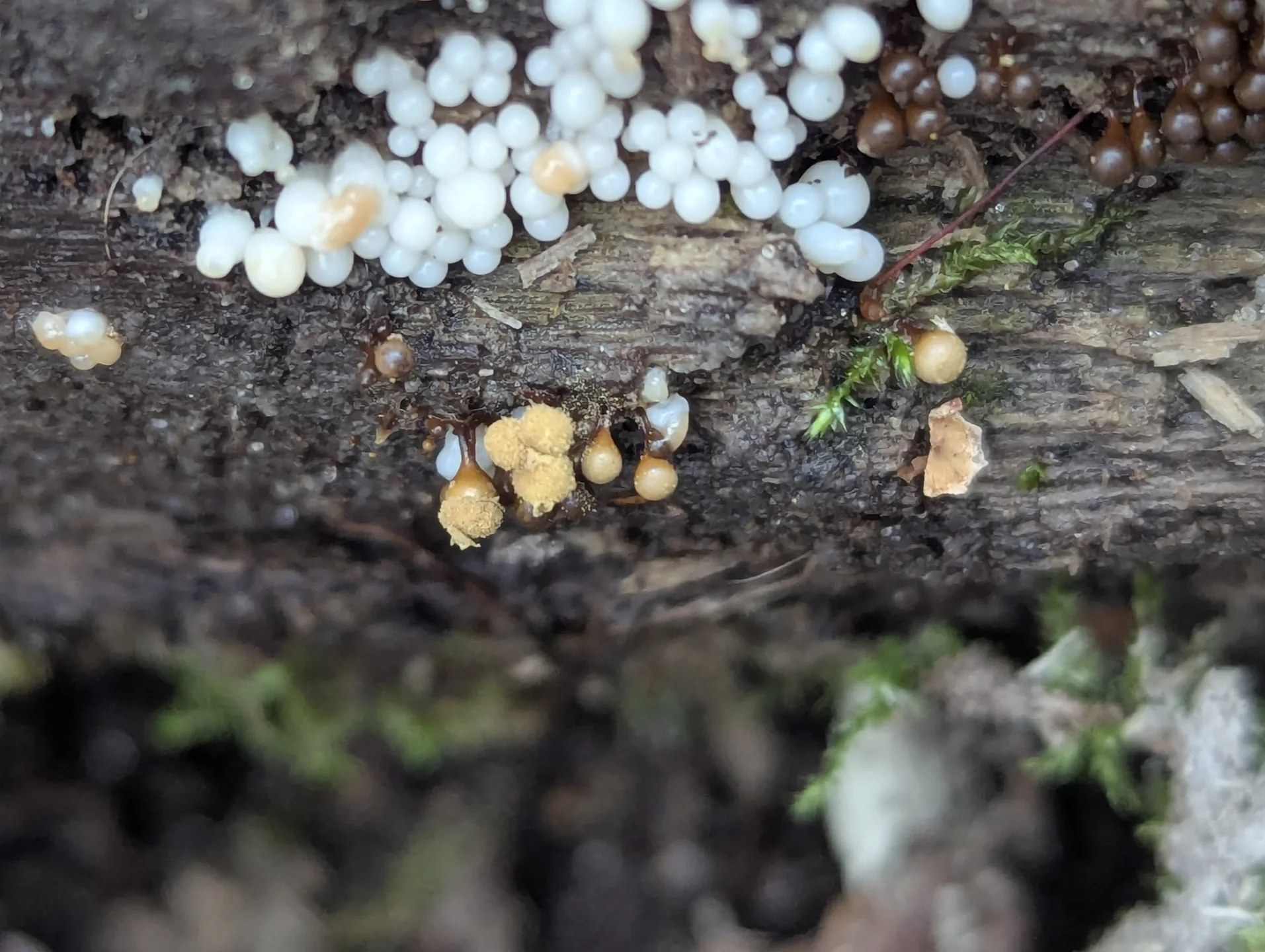
The Dell, Strumpshaw Fen – 28th dec 2025
Further along the branch were more dehiscing sporangia, but were they Hemitrichia clavata ? The peridial cup colour appears more uniform, the stalks seem more slender, and the capillitial spore masses are more irregular and loose. Of course, there can be wide variability in morphology and colour within a slime mould species.
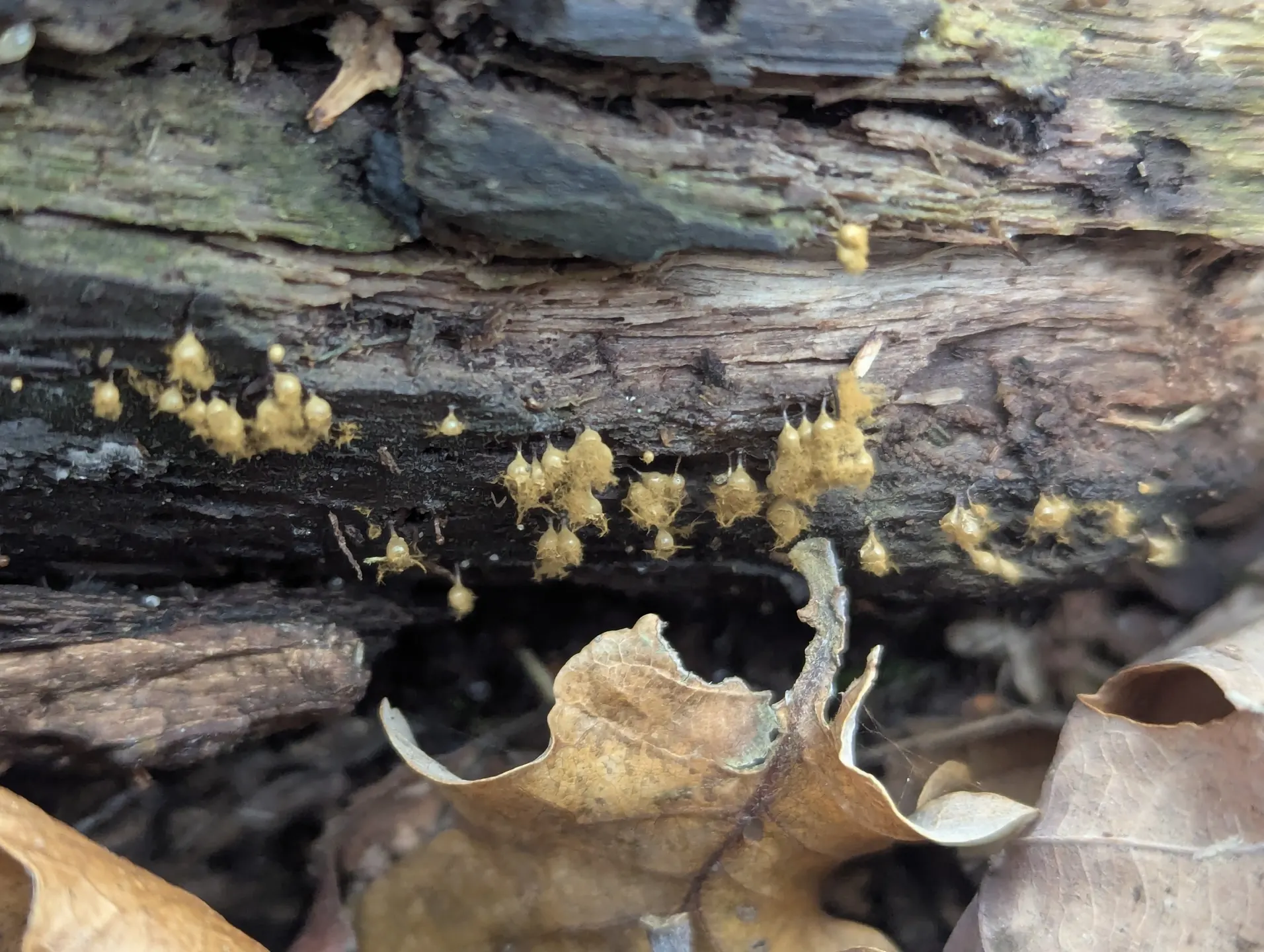
The Dell, Strumpshaw Fen – 28th dec 2025
Drainage Channel Path
The next photo shows groups of crowded sporangia that we tracked all the way into April 2026 — it was being parasitised by a fungus. I had narrowed this slime mould down to either Trichia scabra or Trichia favoginea.
On a Norfolk Fungus Study Group foray in March, one of the regulars was able to ID this as Trichia favoginea and the fungus that was parasitising the sporangia as Polycephalomyces tomentosus.
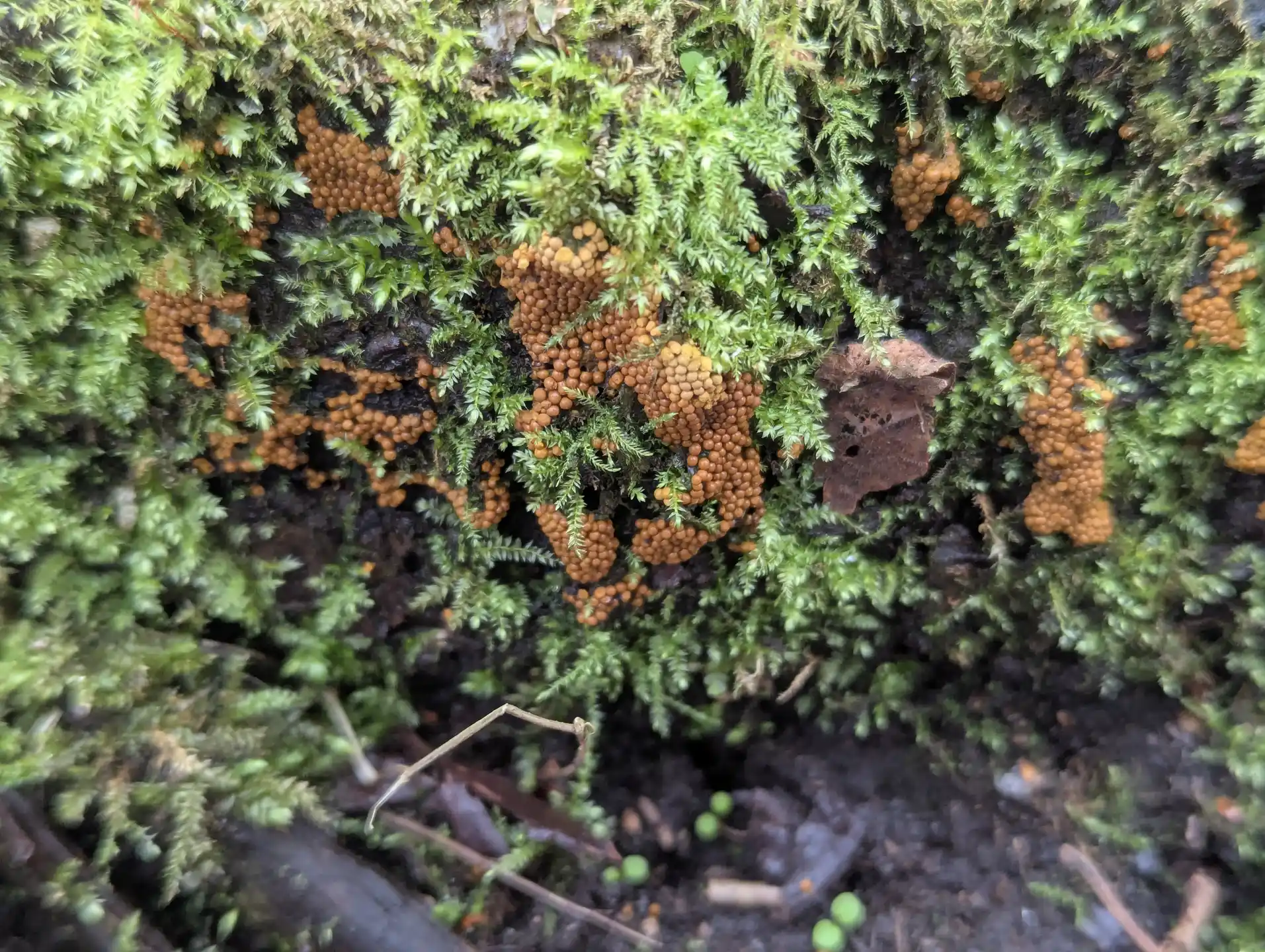
Drainage Channel Path, Strumpshaw Fen – 28th Dec 2025
Nearby, I spotted some sporangia that, following the write-up of the Trichia favoginea post, I'm confident that it too is Trichia favoginea.
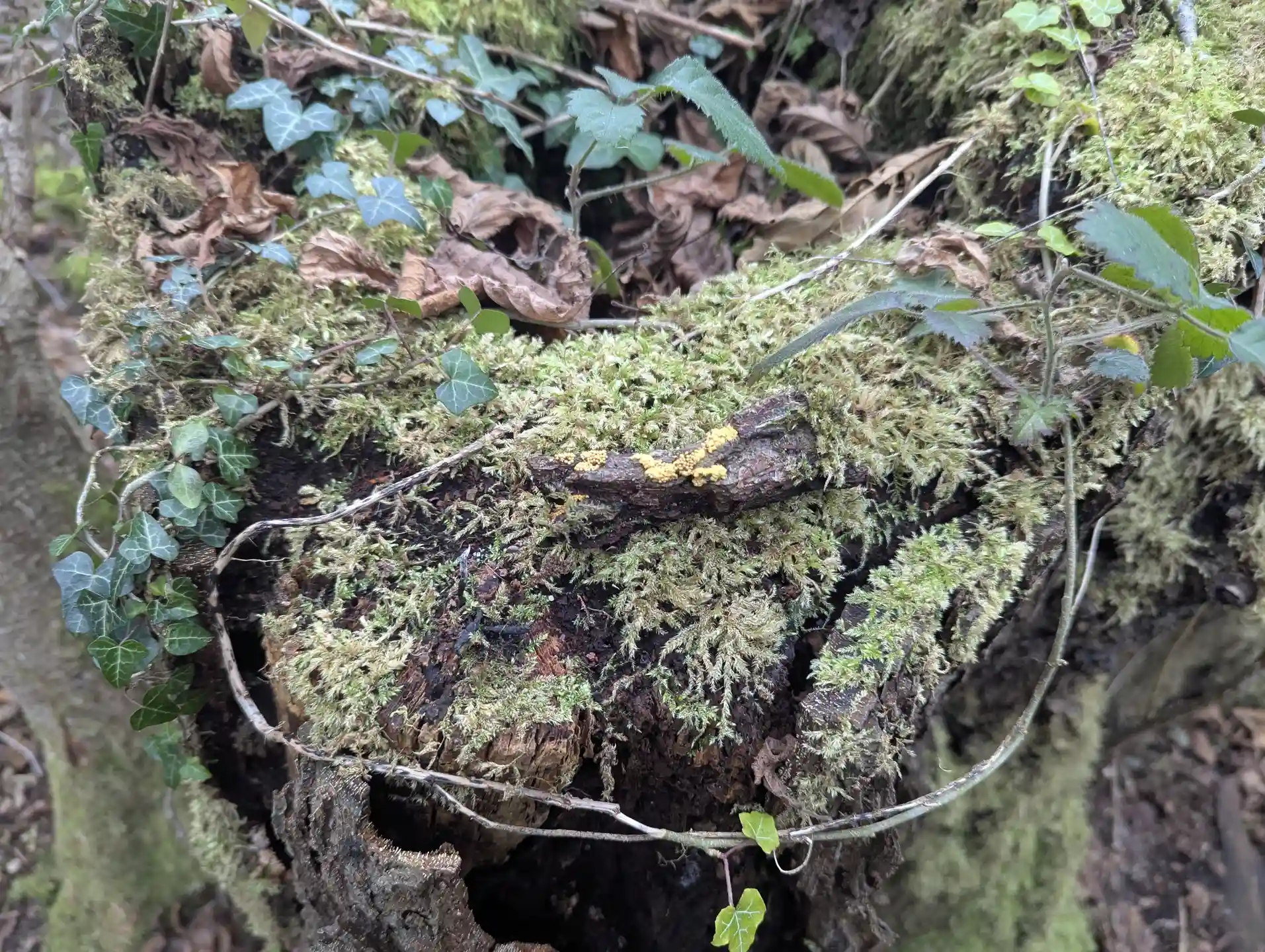
Drainage Channel Path, Strumpshaw Fen – 28th Dec 2025
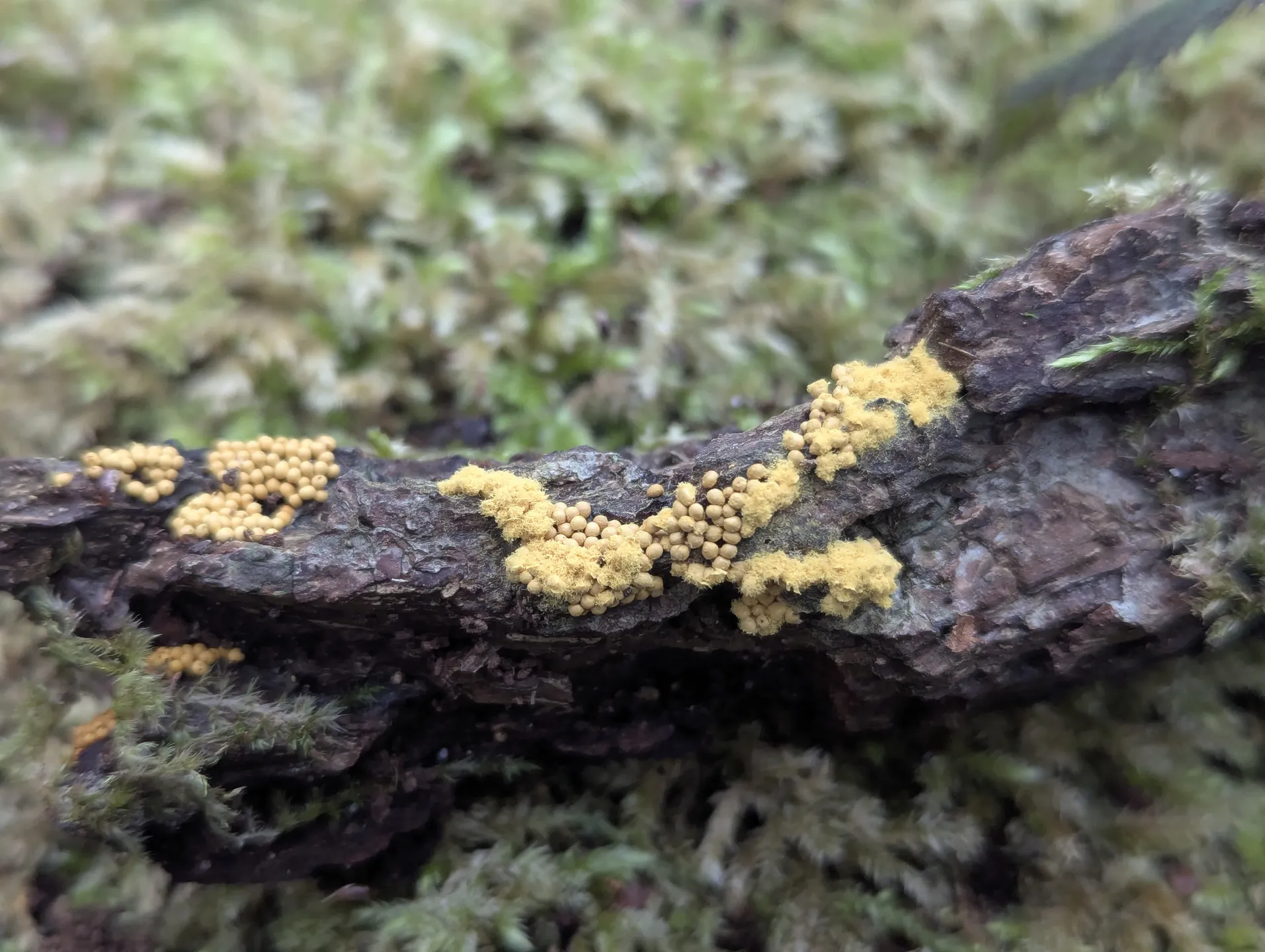
Drainage Channel Path, Strumpshaw Fen – 28th Dec 2025
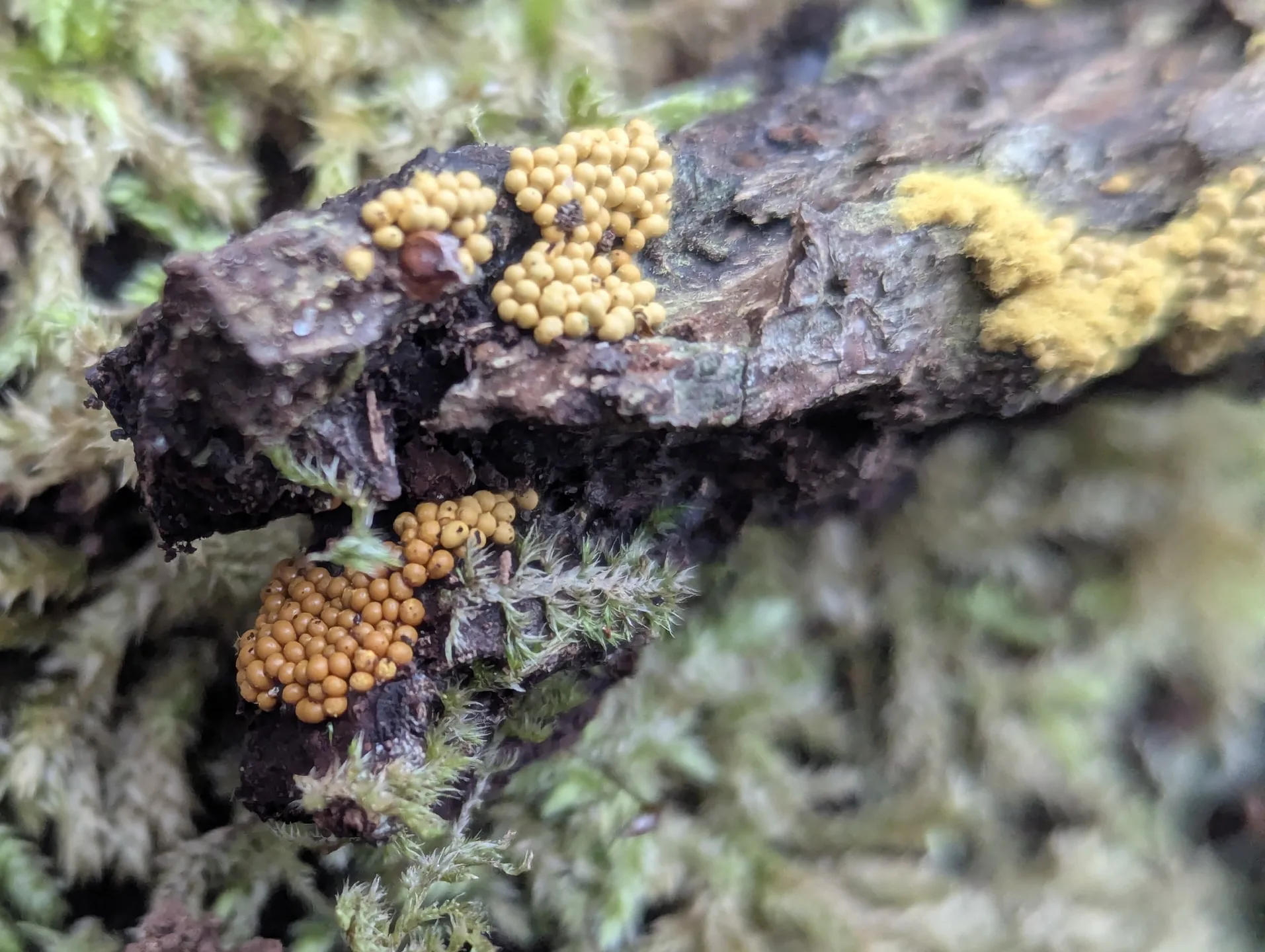
Drainage Channel Path, Strumpshaw Fen – 28th Dec 2025
[1] Badalyan, S. M., Navarro-González, M., & Kües, U. (2011). Taxonomic significance of anamorphic characteristics in the life cycle of coprinoid mushrooms
https://www.researchgate.net/publication/229163985_Taxo-nomic_significance_of_anamorphic_characteristics_in_the_life_cycle_of_coprinoid_mushrooms
Strumpshaw Fen is a nature reserve managed by the RSPB adjacent the River Yare, east of Norwich in Norfolk.
RSPB Strumpshaw Fen webpage RSPB Strumpshaw Fen Wikipedia entry