Didymium spongiosum slime mould at Strumpshaw Fen – Winter 2025/26
The last time we saw Didymium spongiosum at the reserve woodland was in November 2025.
Late December 2025 and into January 2026 we spotted this slime mould in The Dell and along the path adjacent The Sandy Glade — and we were able to track some of them.
This slime mould was previously known as Mucilago crustacea and it sat in its own standalone, single-species genus (monotypic). However, research has shown that it sits firmly within the genus Didymium.
Although Didymium and Mucilago were considered synonyms, Mucilago had historical priority over Didymium. But Didymium contains more than 90 recognised species compared to Mucilago's single species, so to avoid a mass renaming of Didymium species, it was proposed to conserve the name Didymium. And because Didymium crustaceum already exists, Mucilago crustacea was given the new name of Didymium spongiosum. [1]
The Dell – 28th December 2025
We spotted the plasmodium below (specimen A) in The Dell.
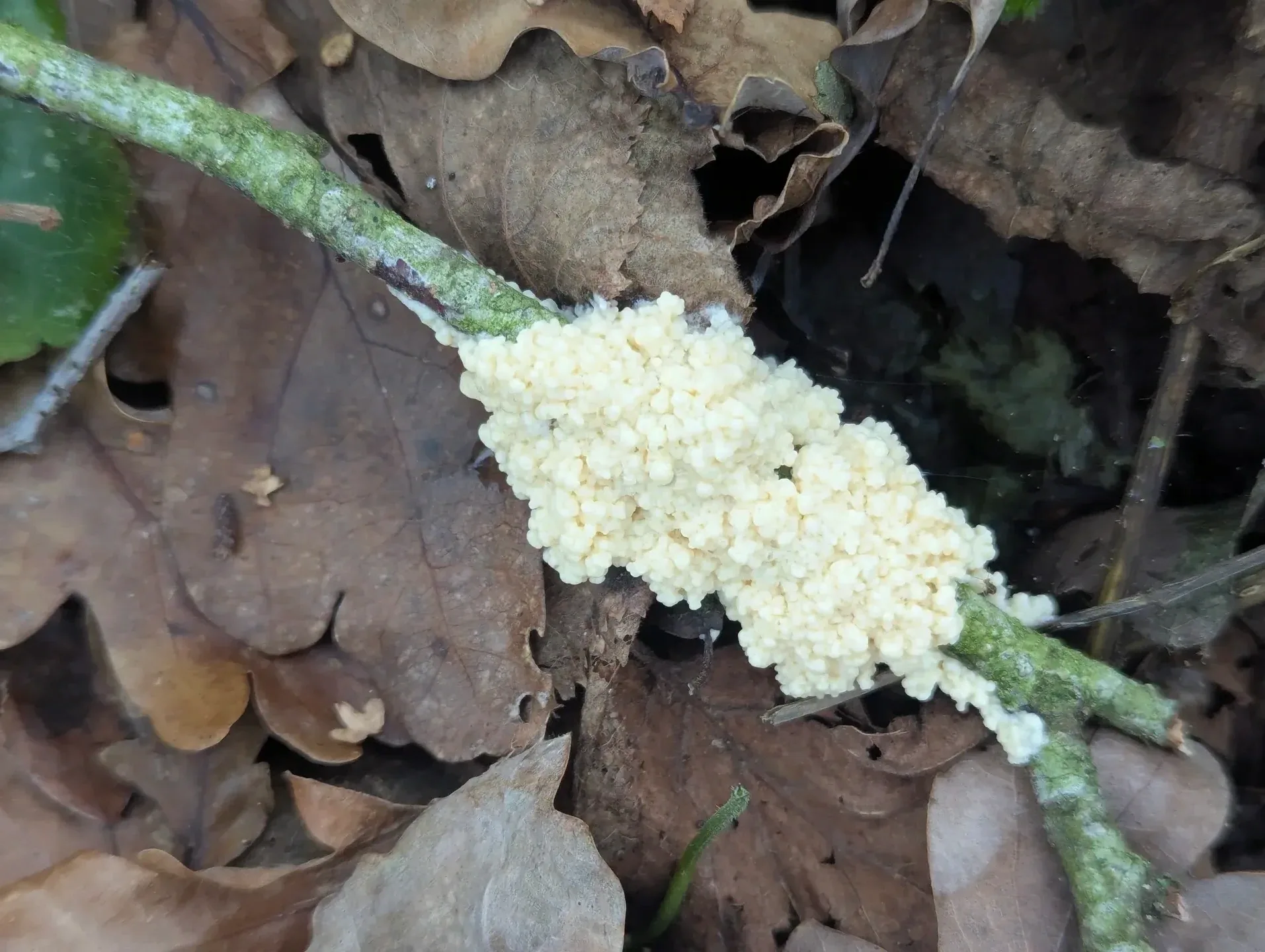
The Dell, Strumpshaw Fen – 28th Dec 2025
Four days later, the slime mould had spread out becoming aethalial, forming the distinctive convoluted rugose cortex.
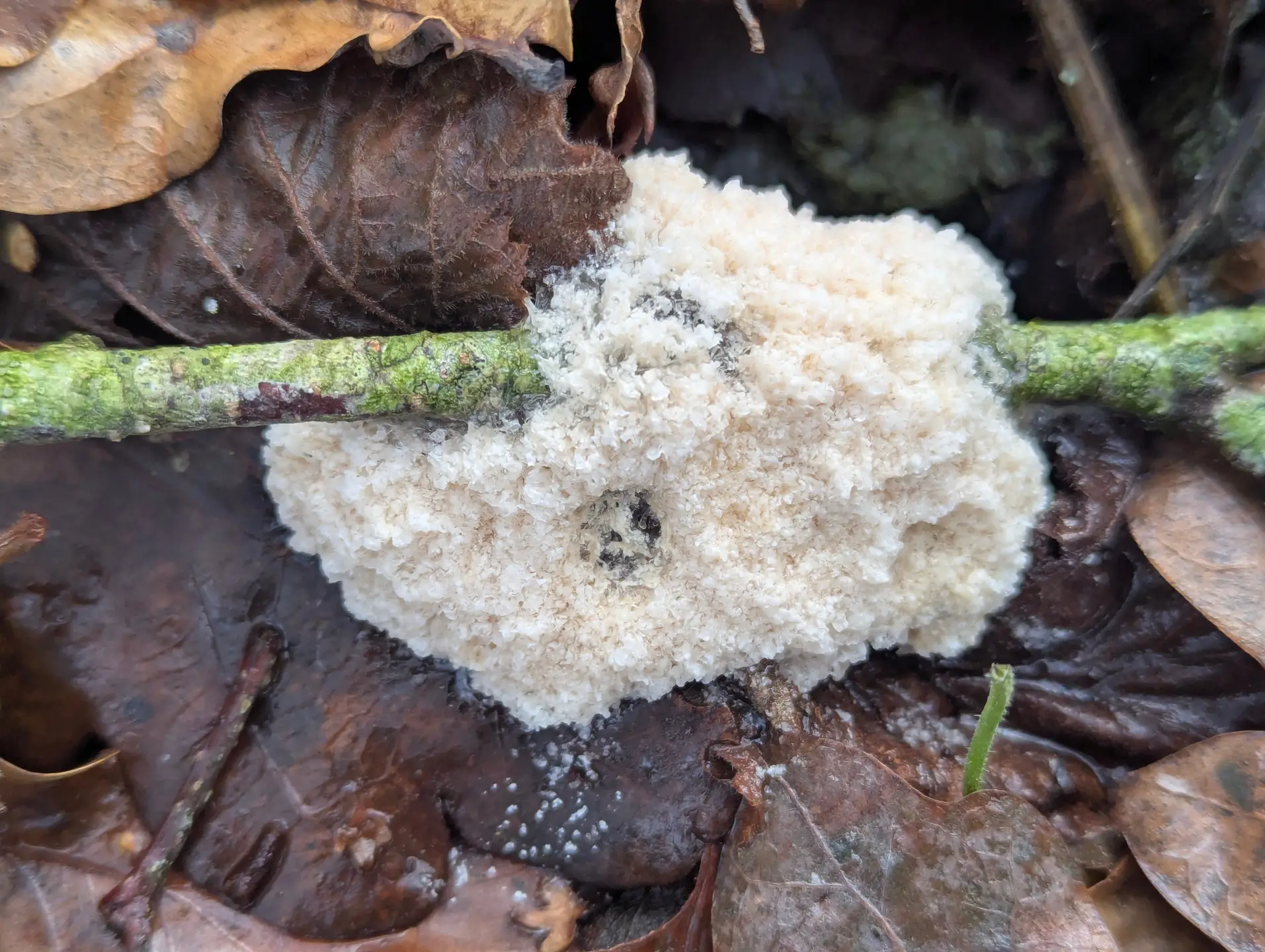
The Dell, Strumpshaw Fen – 1st Jan 2026
Just over two weeks later, it had degraded to a damp remnant, likely due to rain — and, interestingly, turning a pale orange-yellow hue.
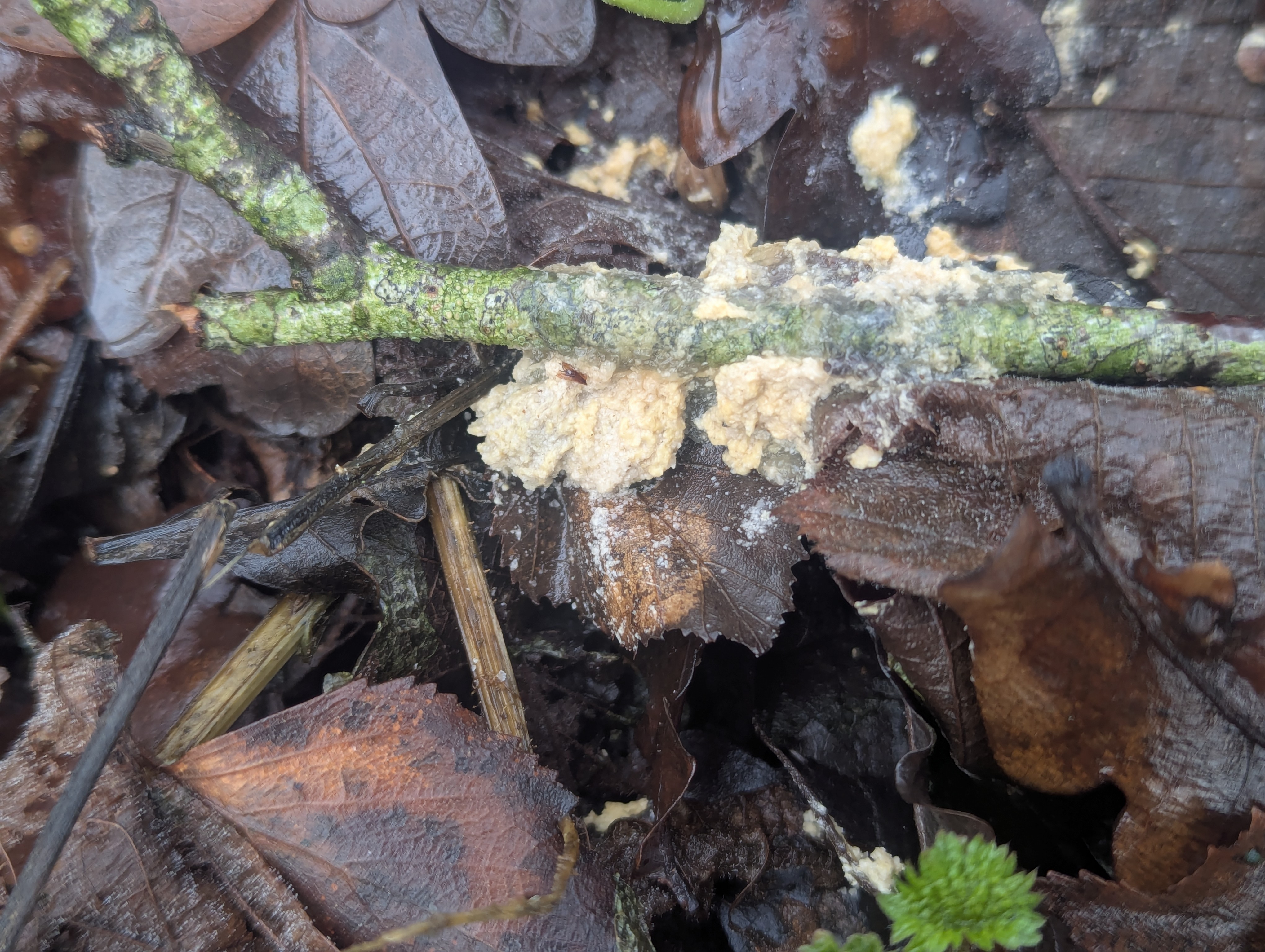
The Dell, Strumpshaw Fen – 18th Jan 2026
The plasmodium below (specimen B) — also in The Dell on the 28th December.
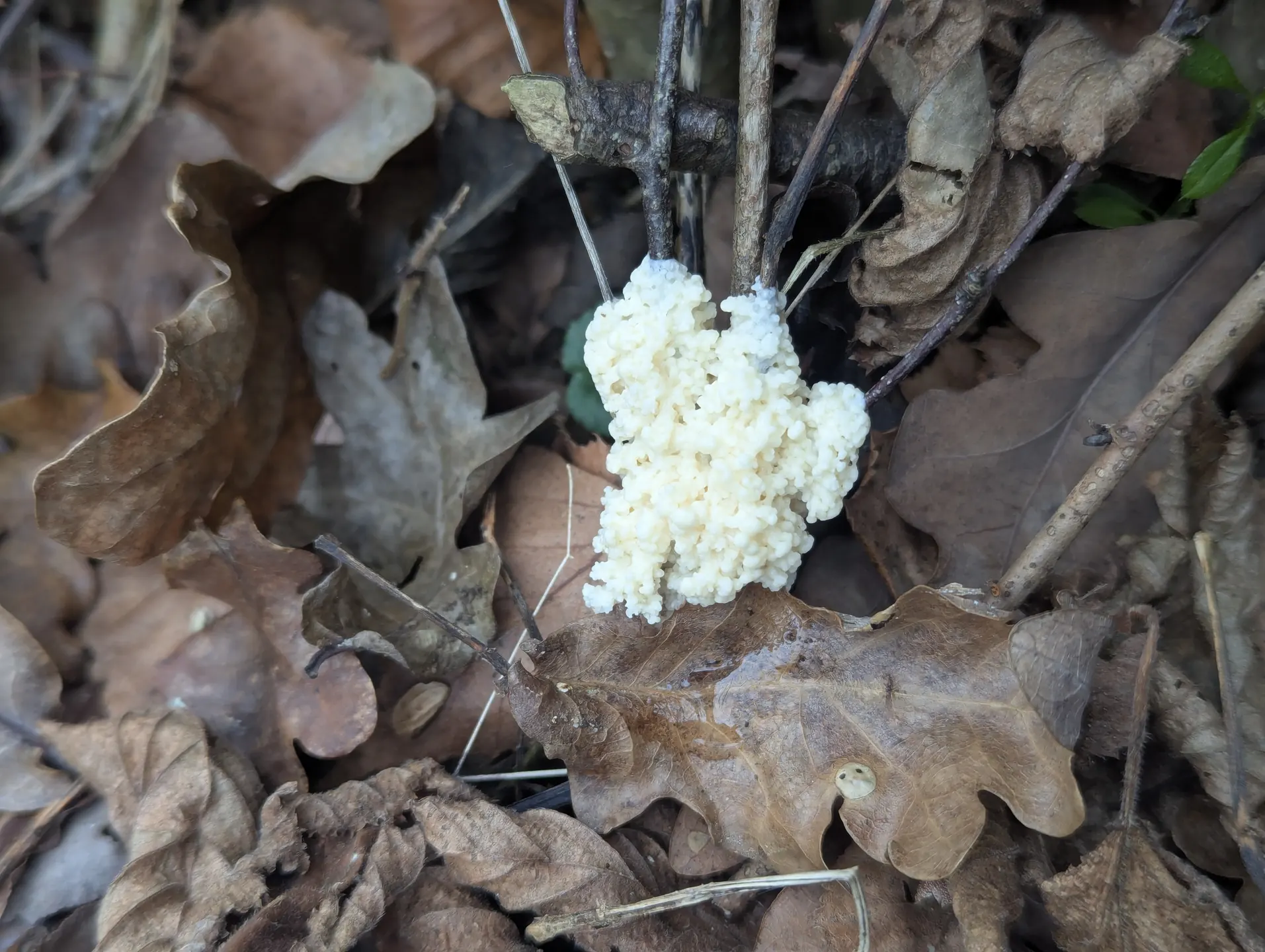
The Dell, Strumpshaw Fen – 28th Dec 2025
And four days later it too had become an aethalium with a convoluted rugose cortex.
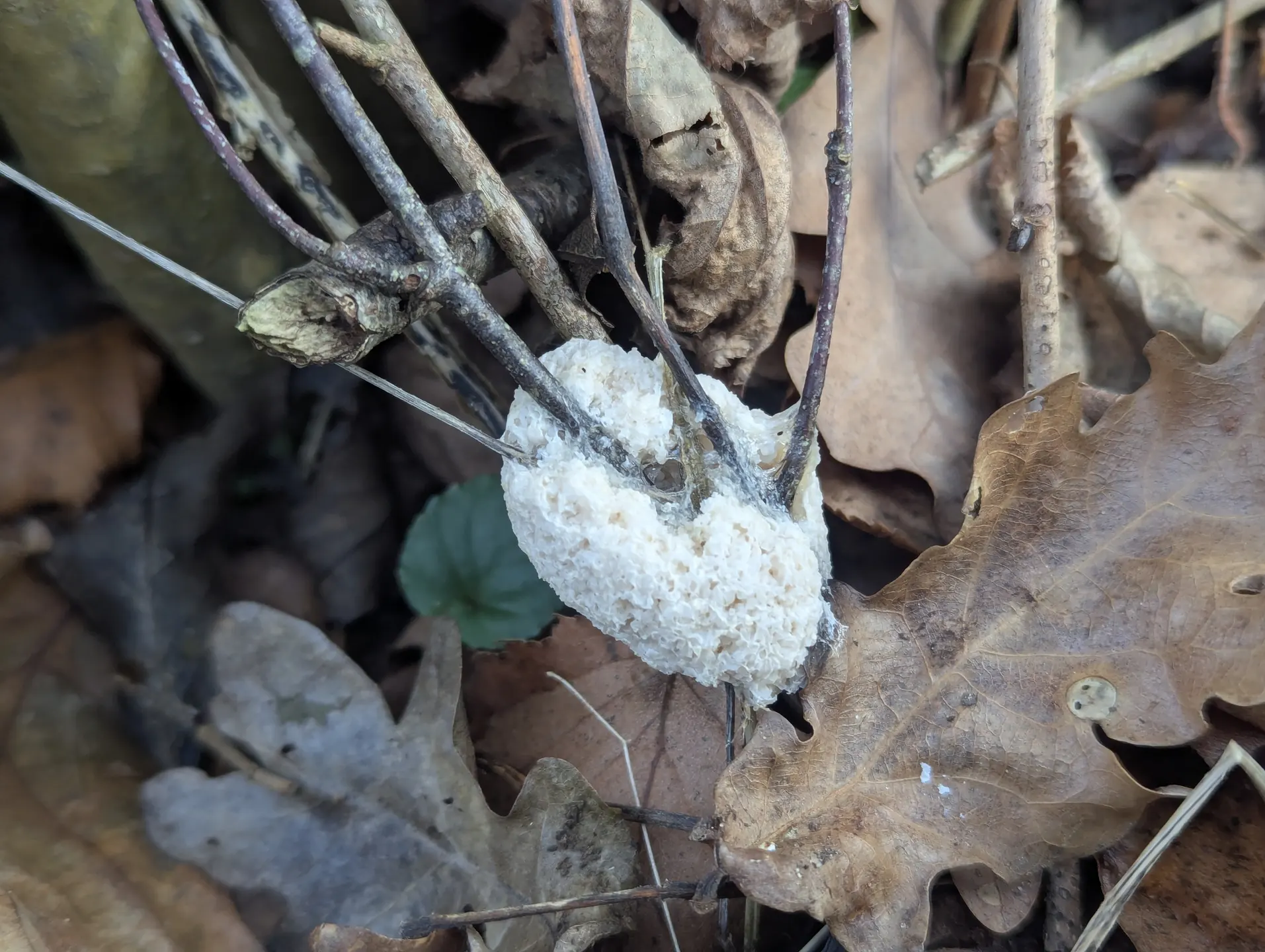
The Dell, Strumpshaw Fen – 1st Jan 2026
And like the specimen A aethalium, two weeks later, this one had matured to a pale orange-yellow hue.
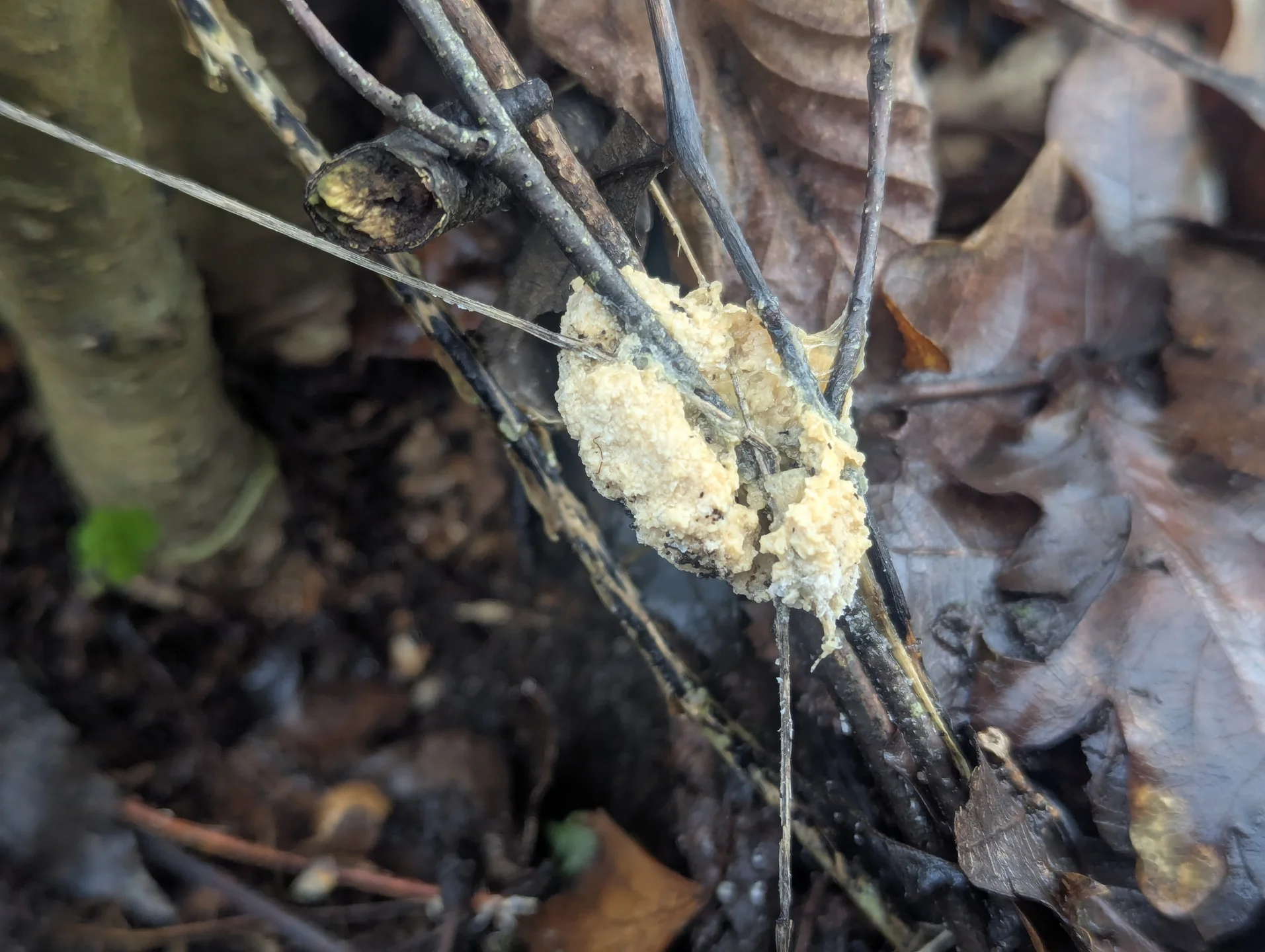
The Dell, Strumpshaw Fen – 18th Jan 2026
And to our surprise, this slime mould was still around on the 1st February.
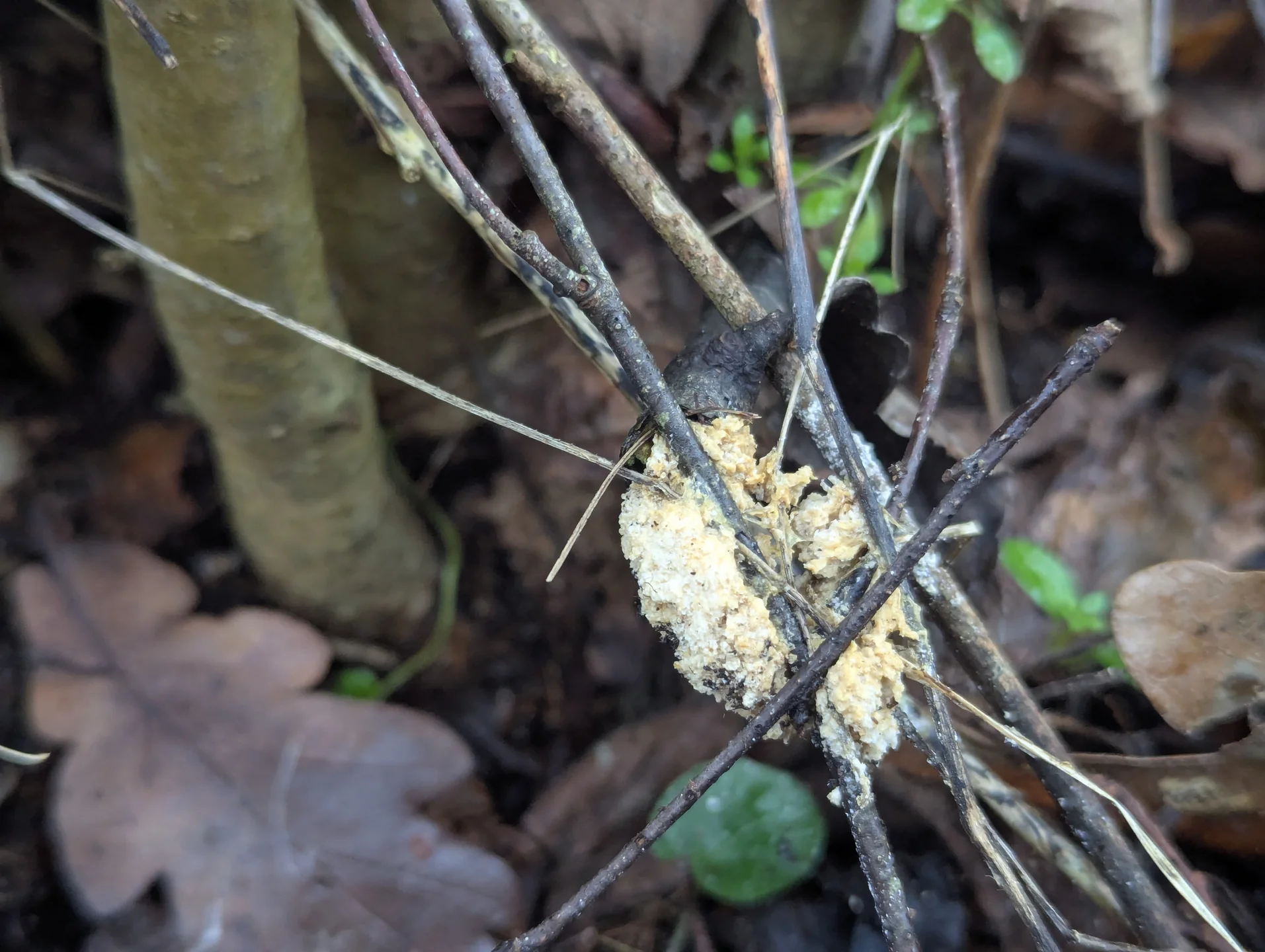
The Dell, Strumpshaw Fen – 1st Feb 2026
The aethalium below (specimen C), spotted on the 28th December, is at the mature stage — colour and form — that, in my mind, I associate with Didymium spongiosum.
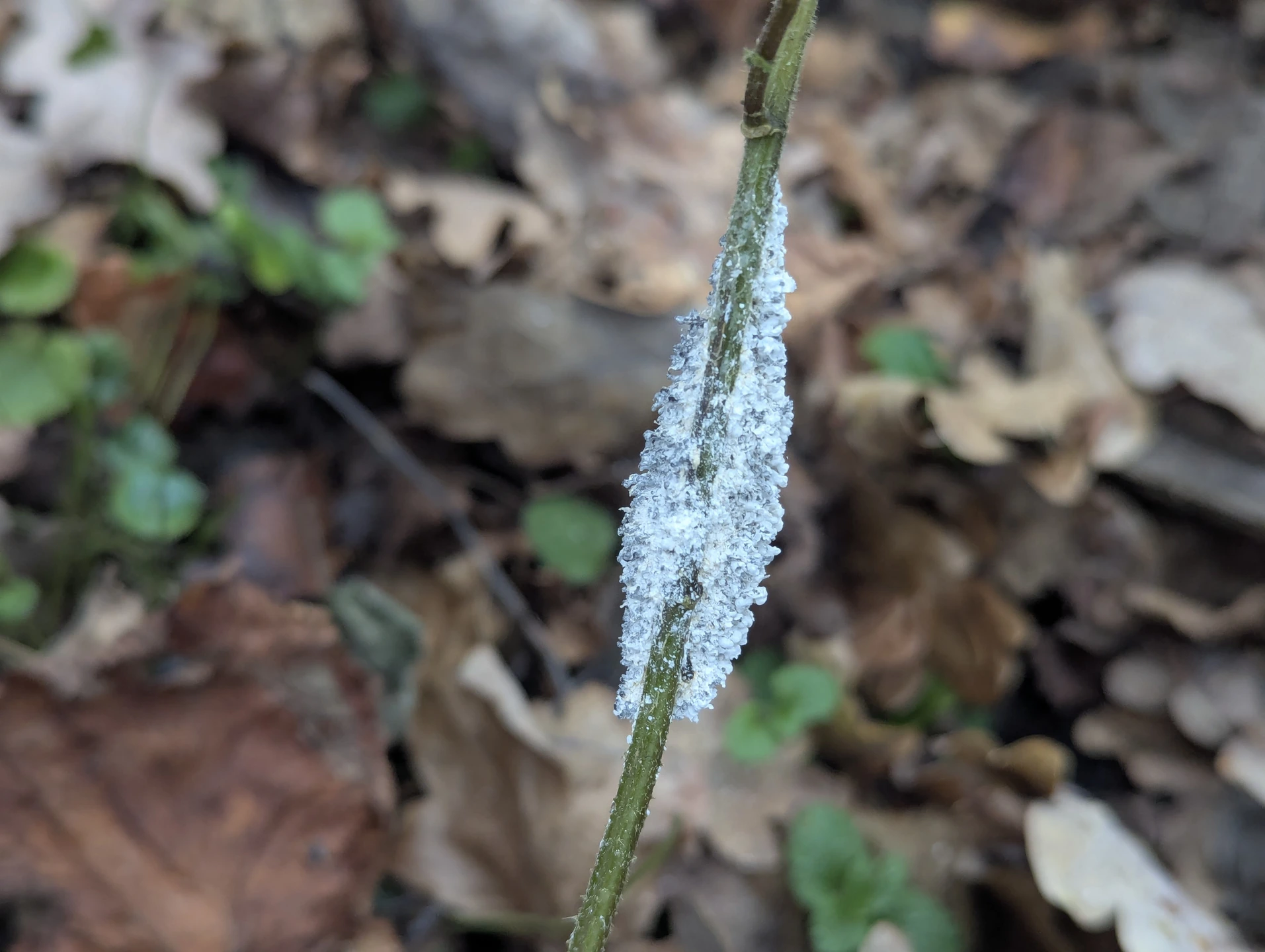
The Dell, Strumpshaw Fen – 28th Dec 2025
Four days later.
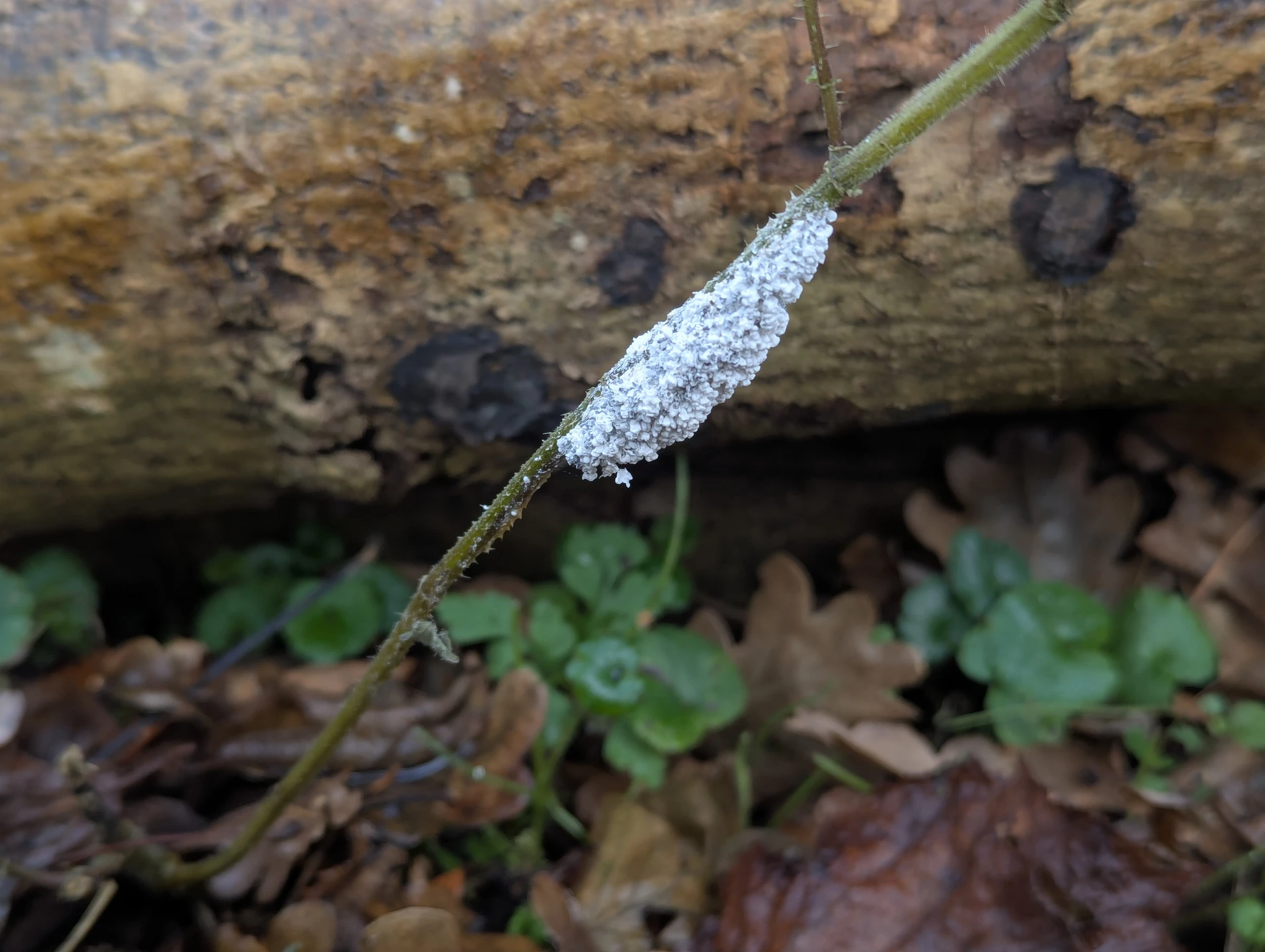
The Dell, Strumpshaw Fen – 1st Jan 2026
The aethalium below (specimen D) was also spotted on 28th December.
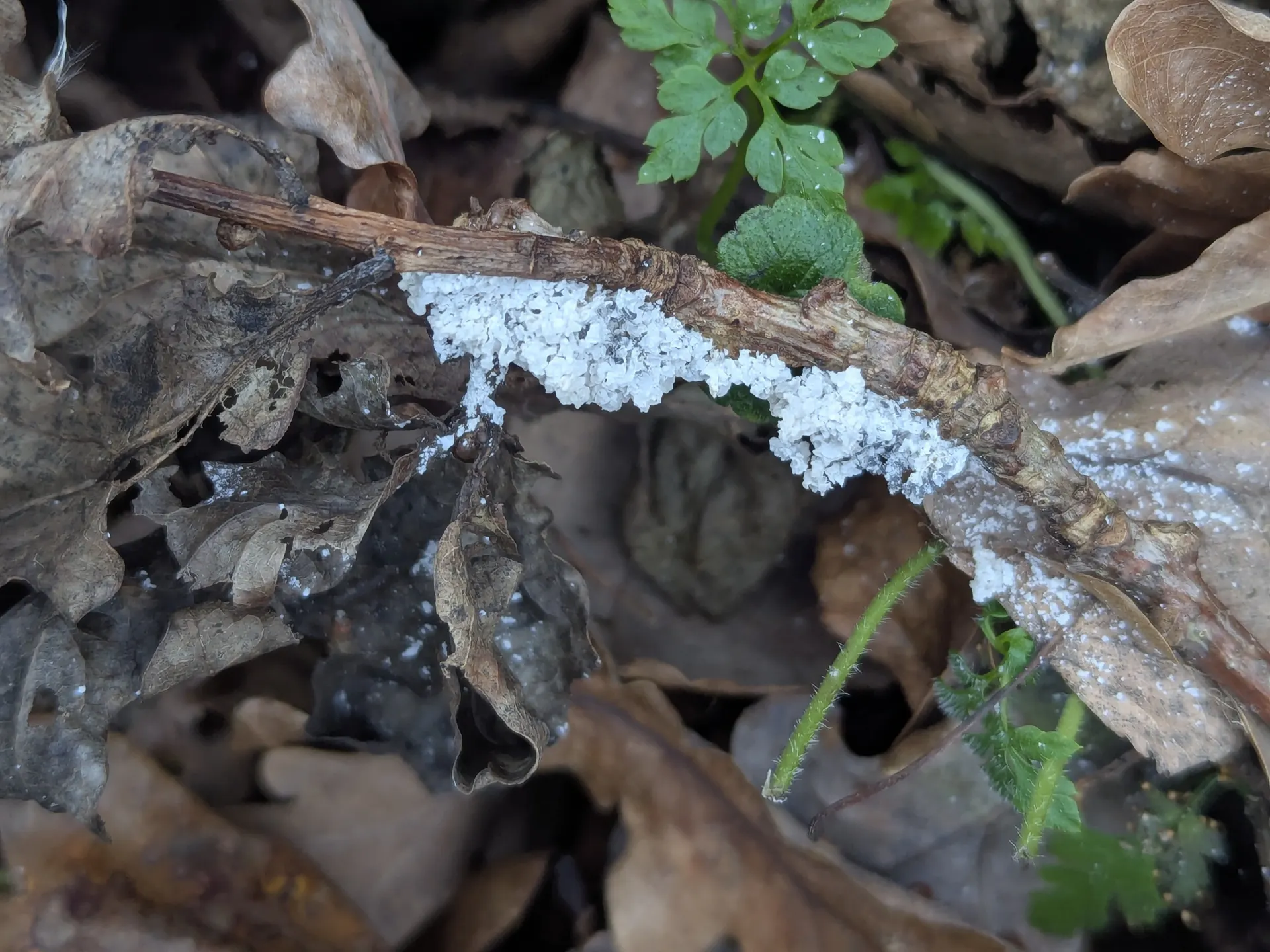
The Dell, Strumpshaw Fen – 28th Dec 2025
And four days later.
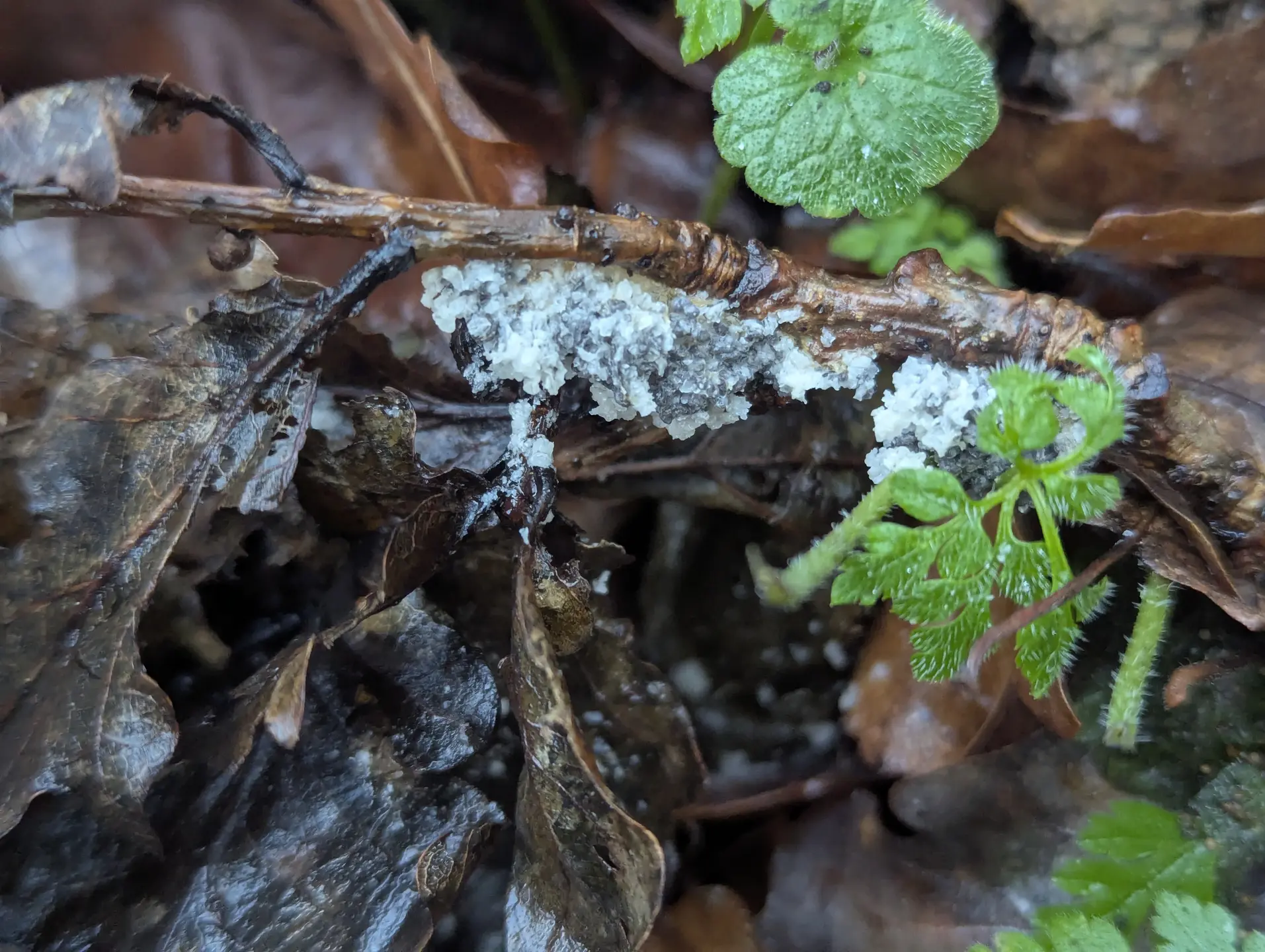
The Dell, Strumpshaw Fen – 1st Jan 2026
Sandy Glade Path – 28th December 2025
Along the Sandy Glade Path we spotted more Didymium spongiosum — below were a group of three aethalia likely formed from one plasmodium (specimen E).
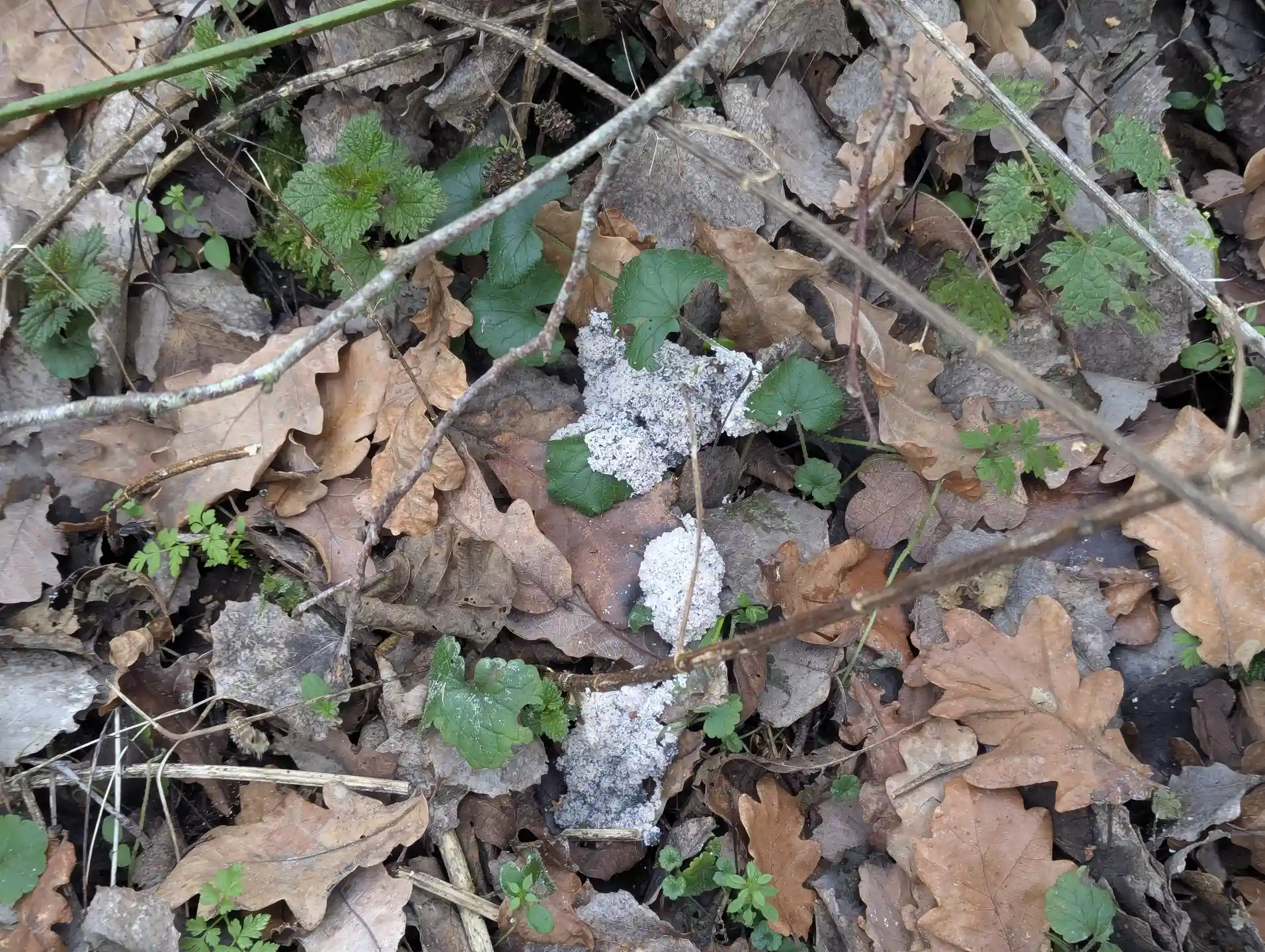
Sandy Glade Path, Strumpshaw Fen – 28th Dec 2025
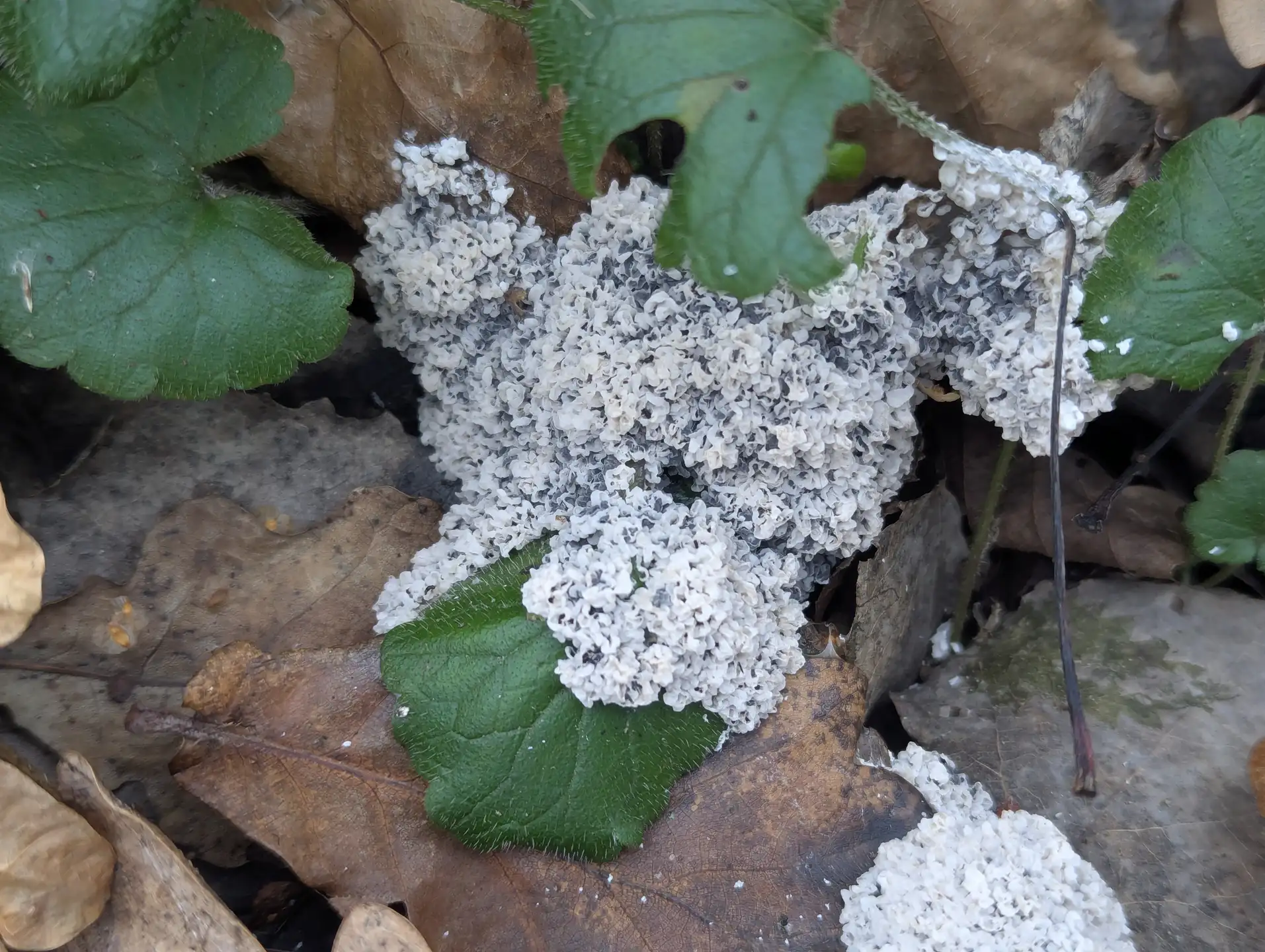
Sandy Glade Path, Strumpshaw Fen – 28th Dec 2025
In the next two photos you can see two of the aethalia linked by an "isthmus" of peridial material.
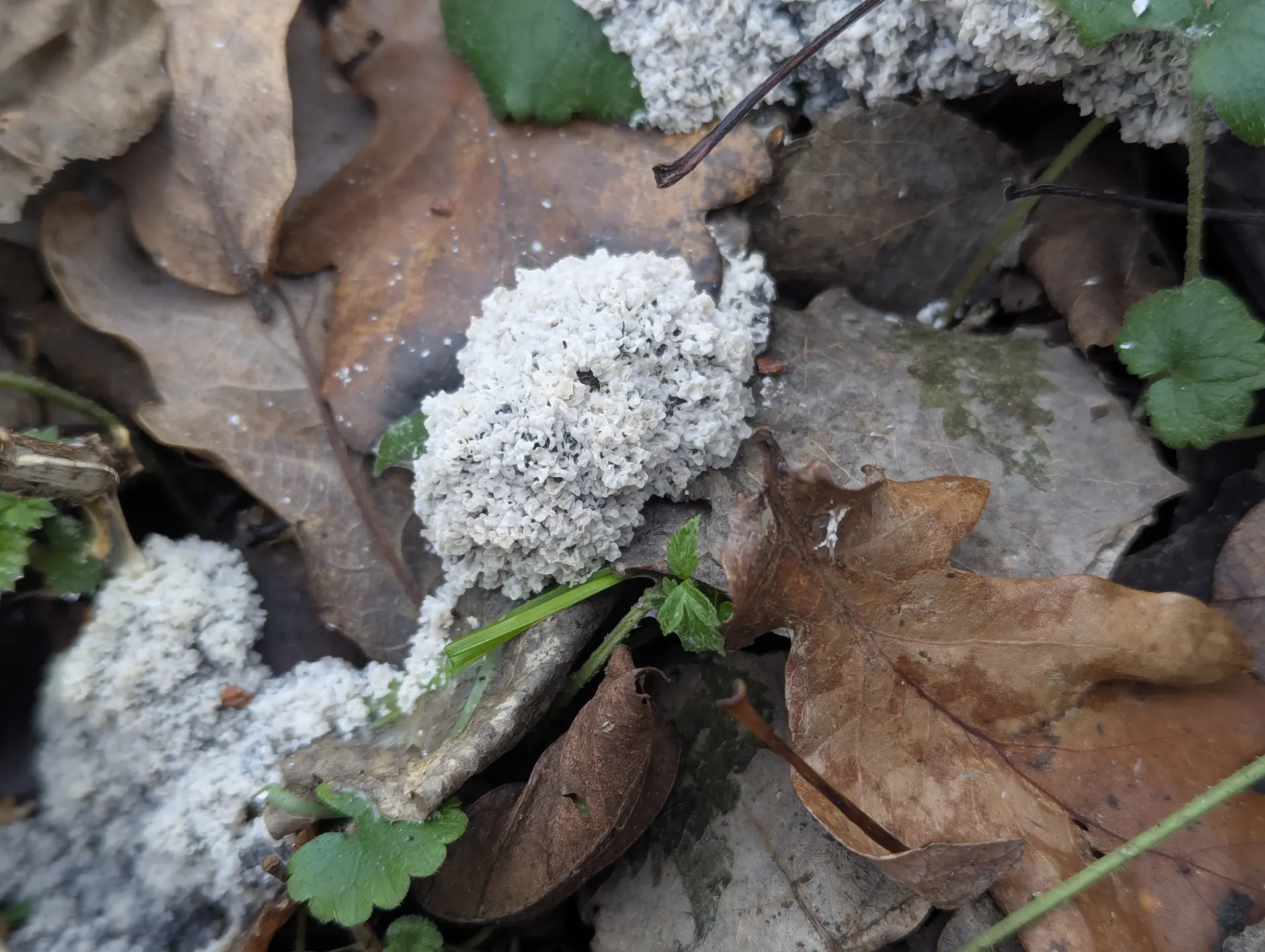
Sandy Glade Path, Strumpshaw Fen – 28th Dec 2025
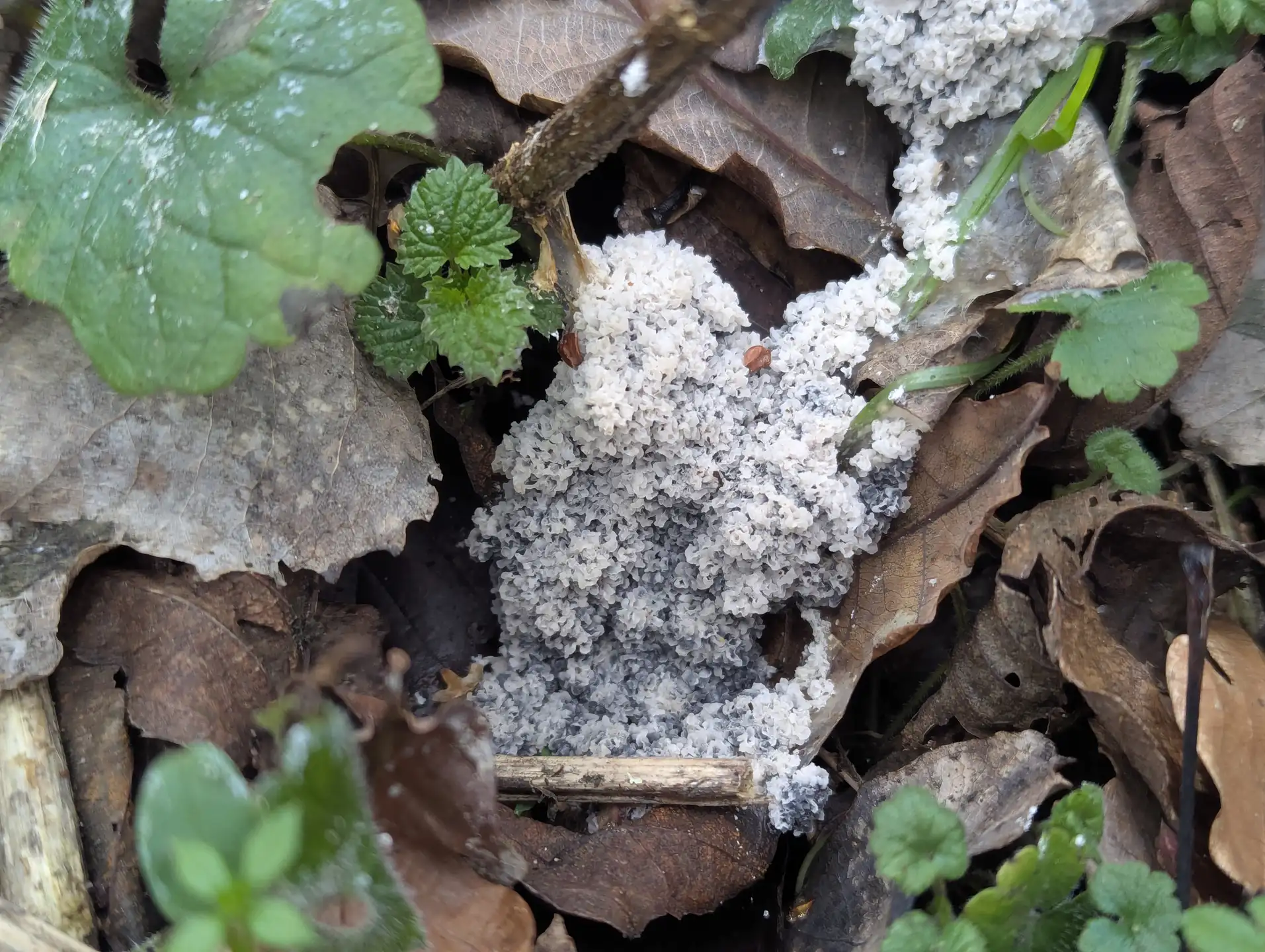
Sandy Glade Path, Strumpshaw Fen – 28th Dec 2025
And four days later.
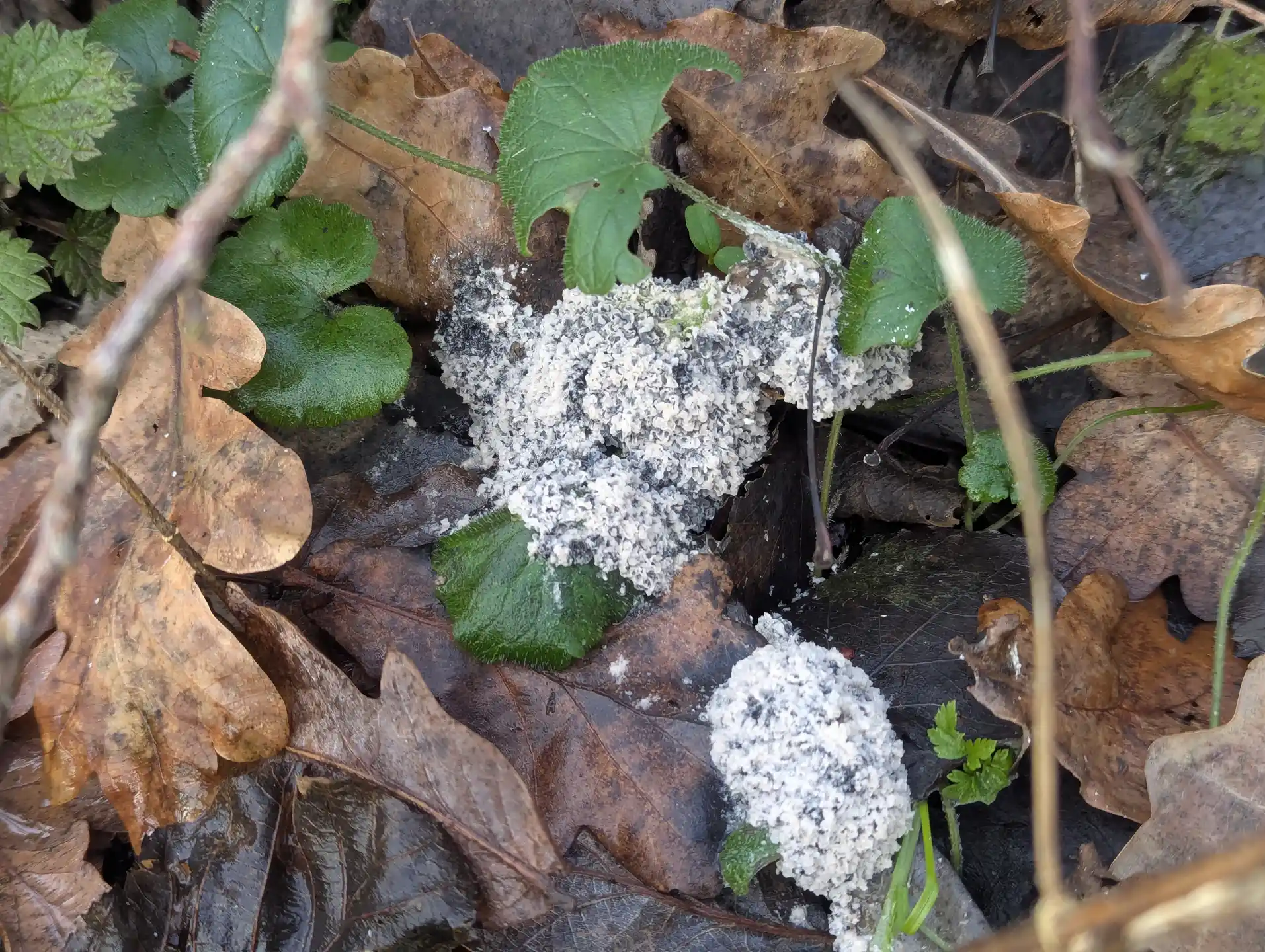
Sandy Glade Path, Strumpshaw Fen – 1st Jan 2026
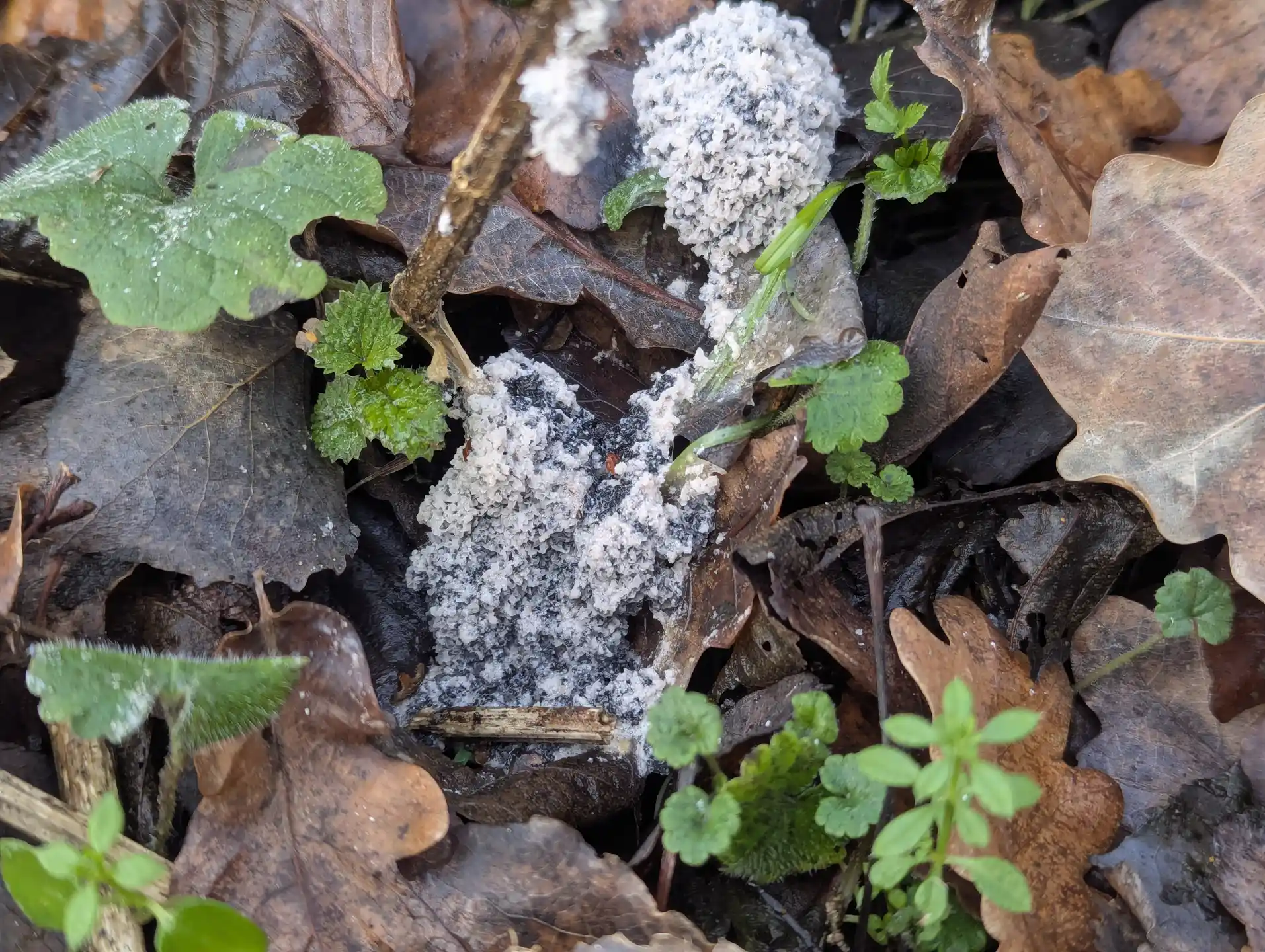
Sandy Glade Path, Strumpshaw Fen – 1st Jan 2026
The two hanging aethalia below (specimen F) were also along the Sandy Glade Path on the 28th December.
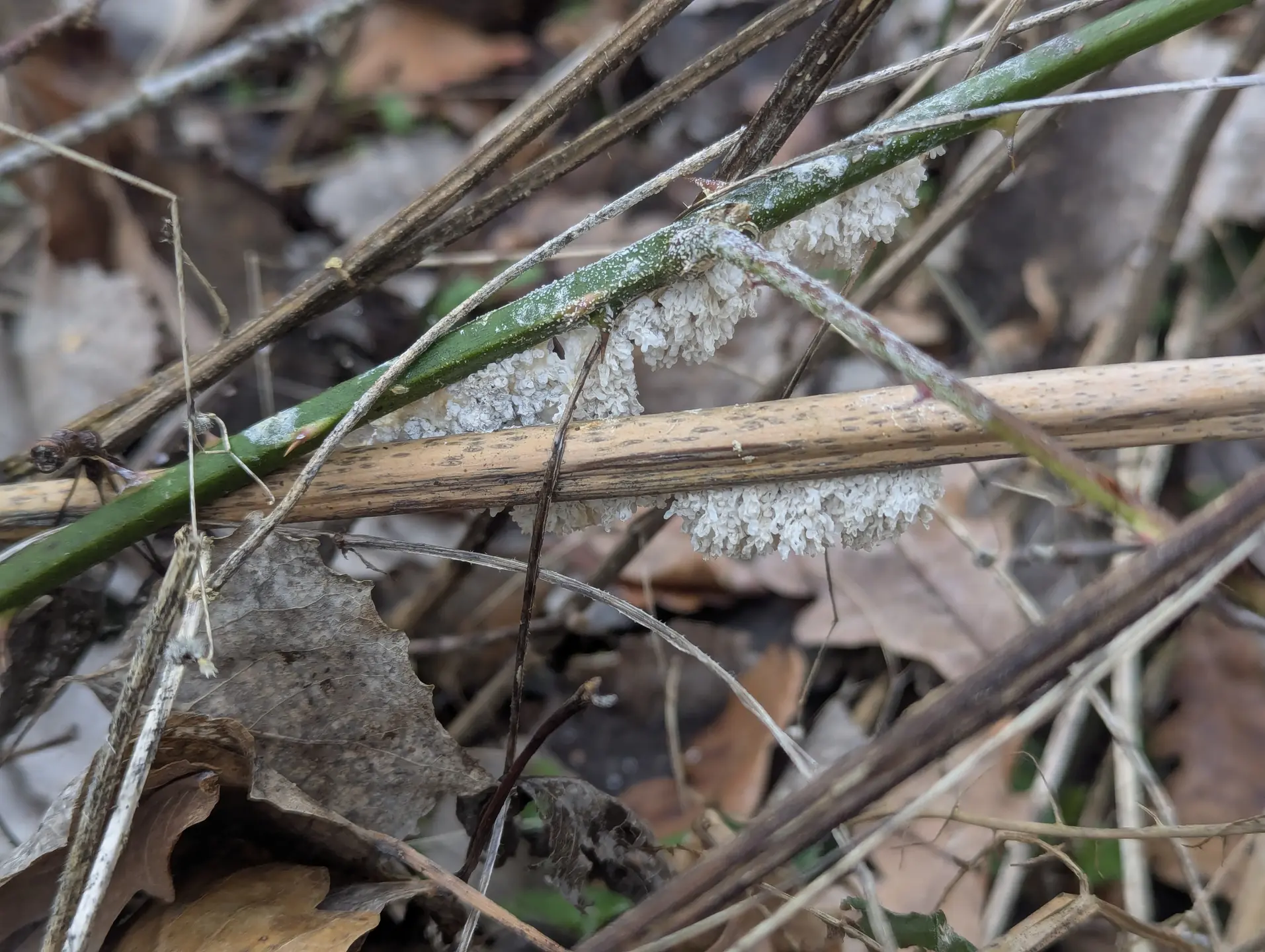
Sandy Glade Path, Strumpshaw Fen – 28th Dec 2025
Four days later.
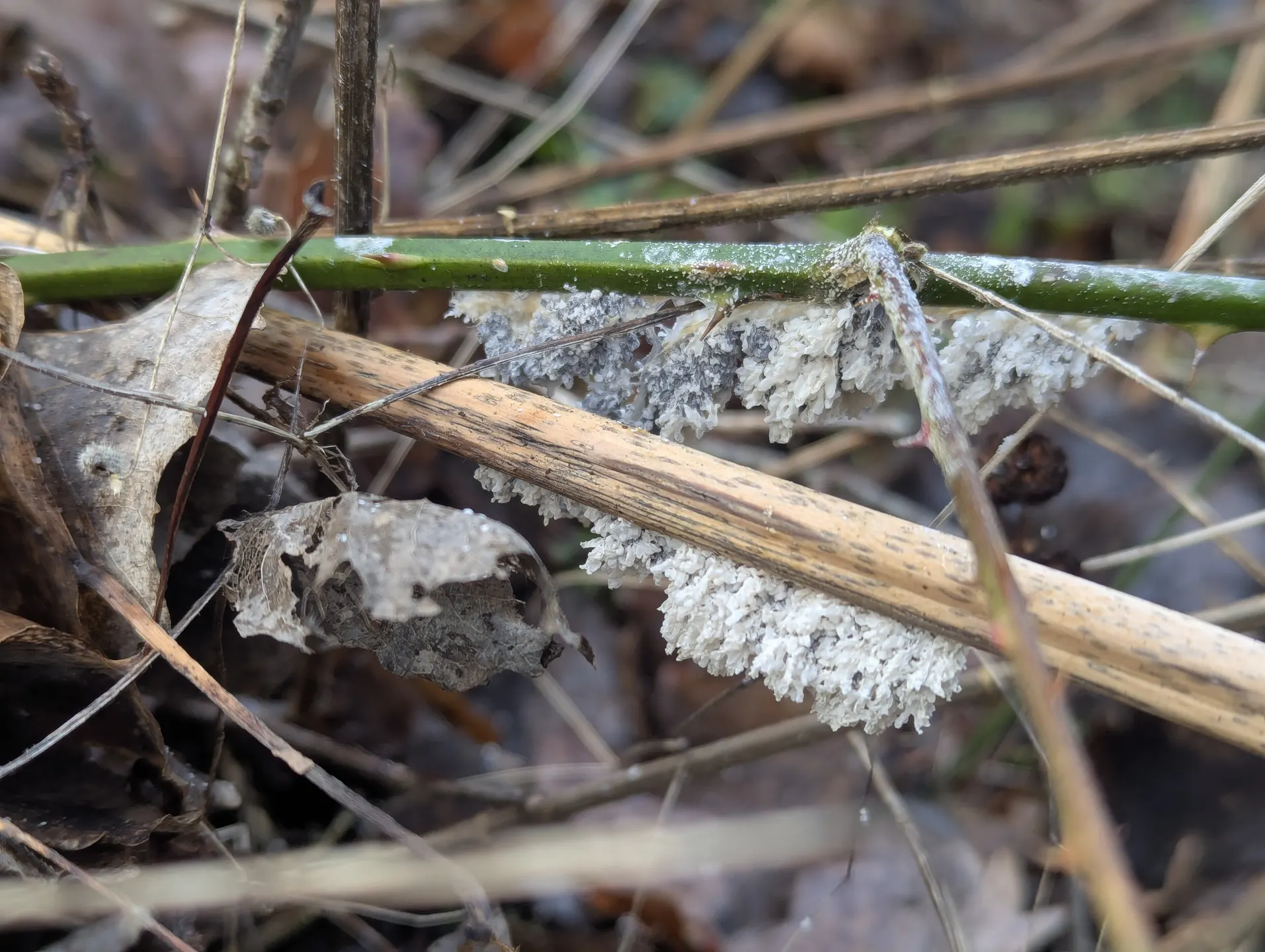
Sandy Glade Path, Strumpshaw Fen – 1st Jan 2026
And just over two weeks later — two very wet aethalia with most of the cortex gone, exposing the black spore masses.
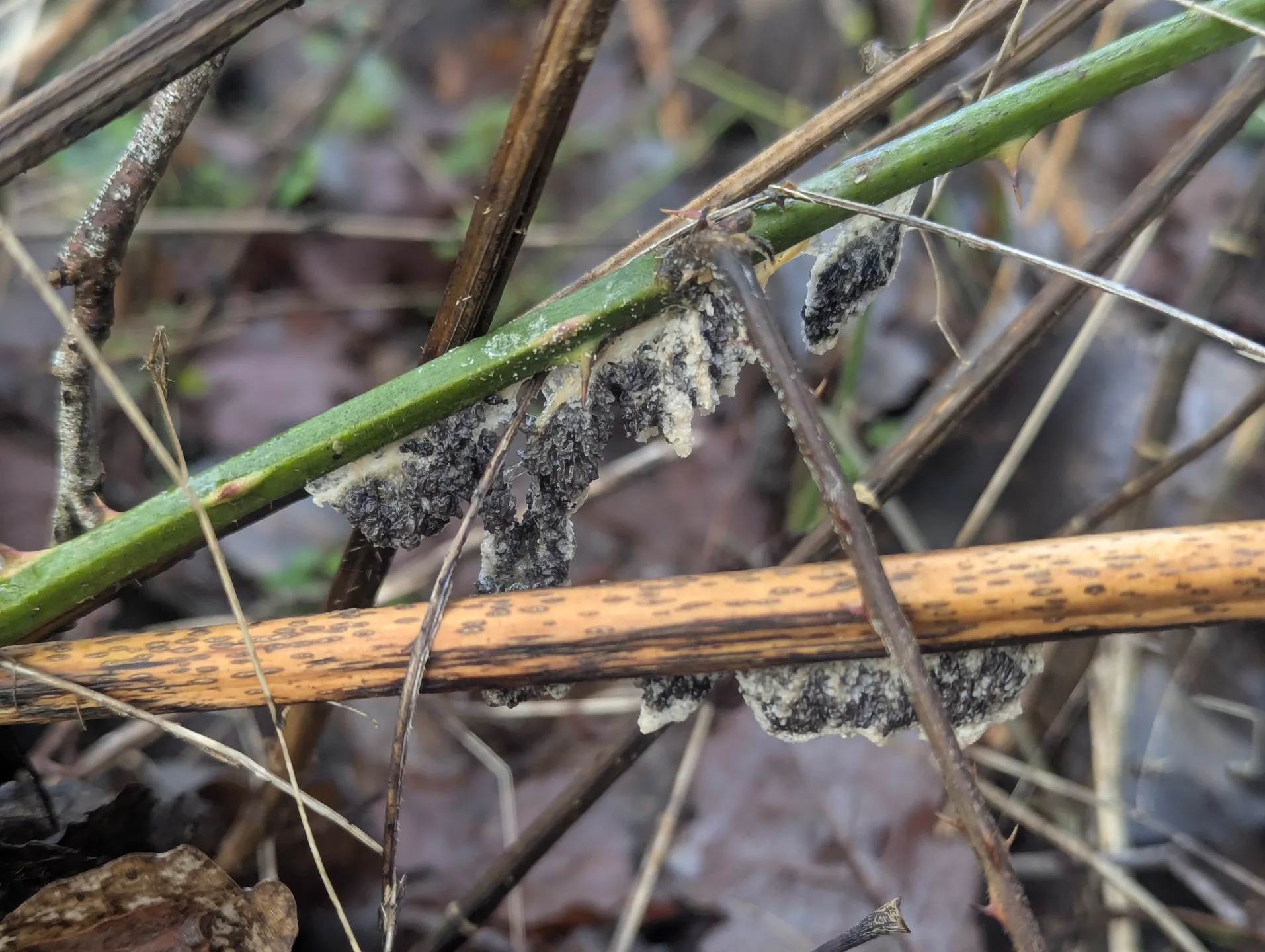
Sandy Glade Path, Strumpshaw Fen – 18th Jan 2026
Sandy Glade Path – 1st January 2026
The next two photos show the same aethalium (specimen G) from different sides.
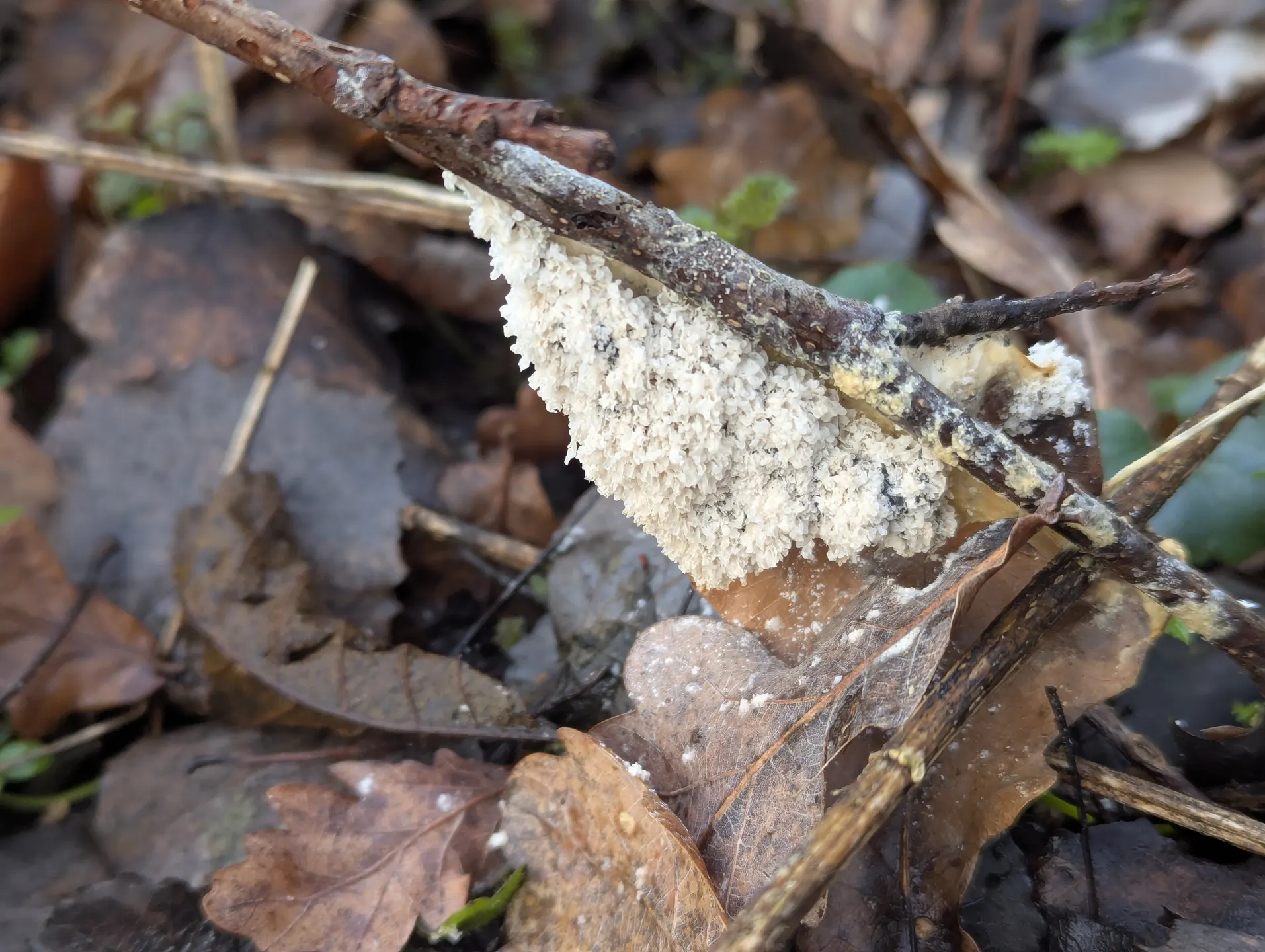
Sandy Glade Path, Strumpshaw Fen – 1st Jan 2026
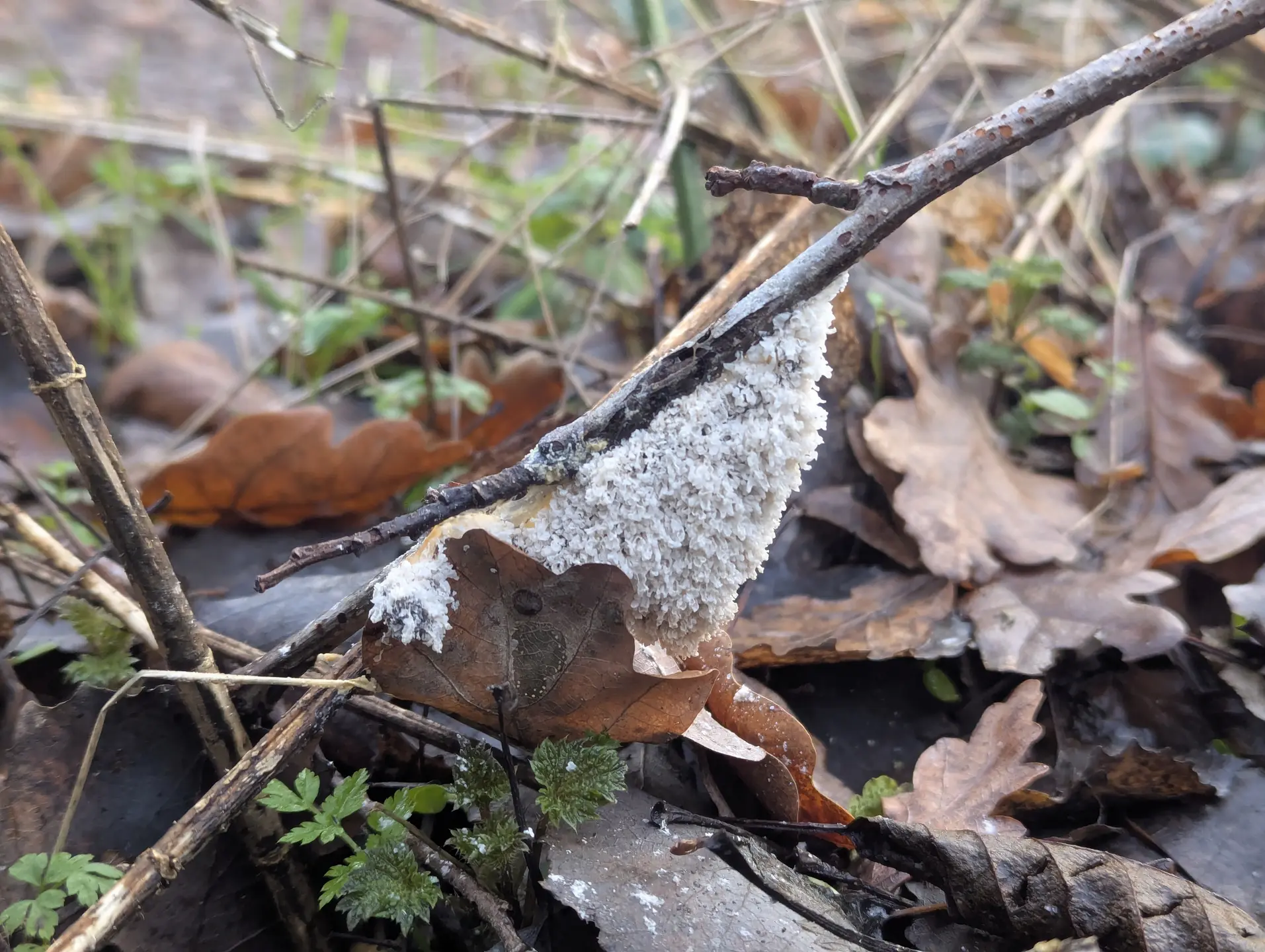
Sandy Glade Path, Strumpshaw Fen – 1st Jan 2026
The Dell – 1st January 2026
This plasmodial Didymium spongiosum (specimen H)has some plasmodial veins visible and appears to be forming into two aethalia.
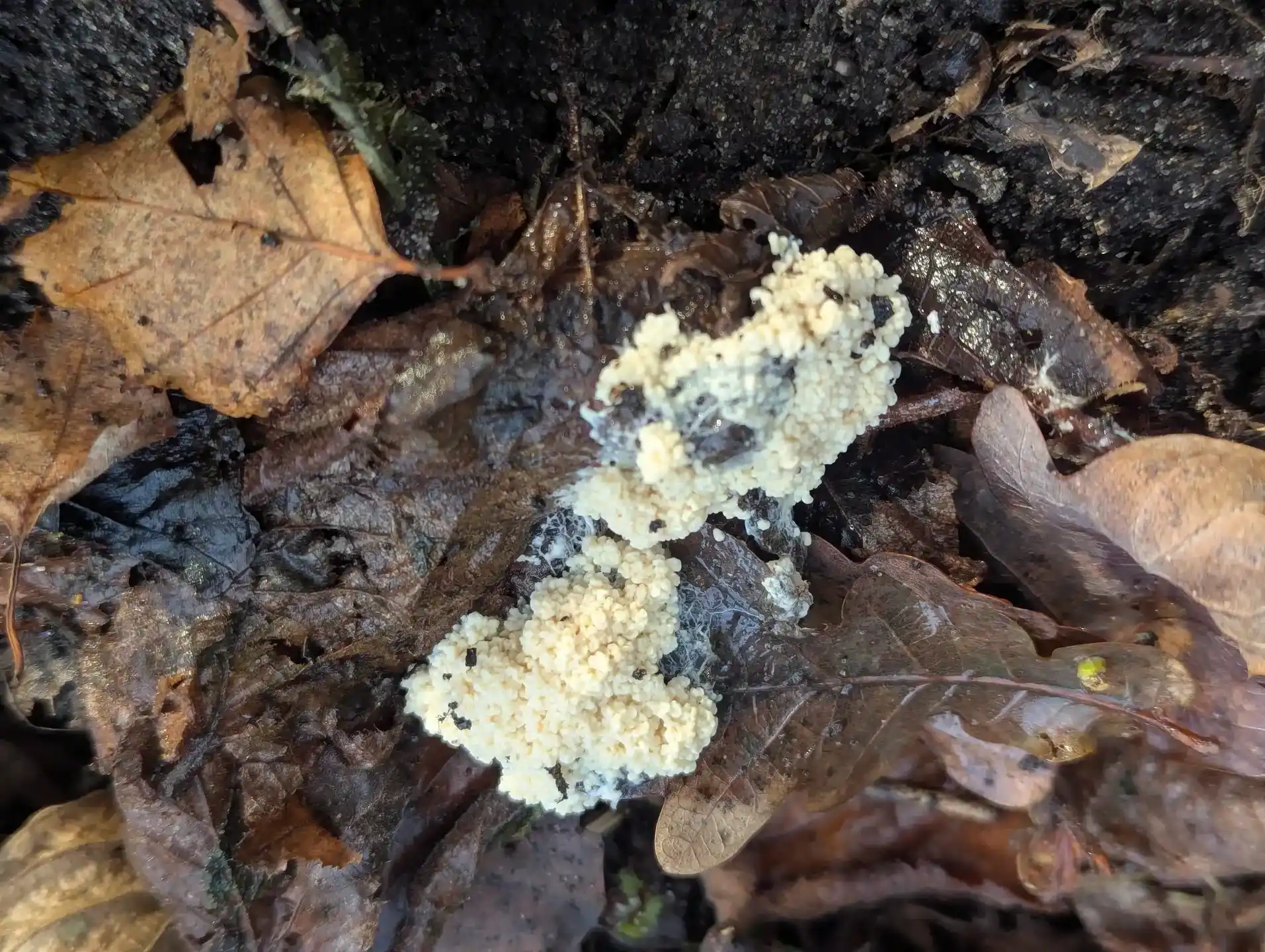
The Dell, Strumpshaw Fen – 1st Jan 2026
And just over two weeks later, it was aethalial, but the upper aethalium was degraded.
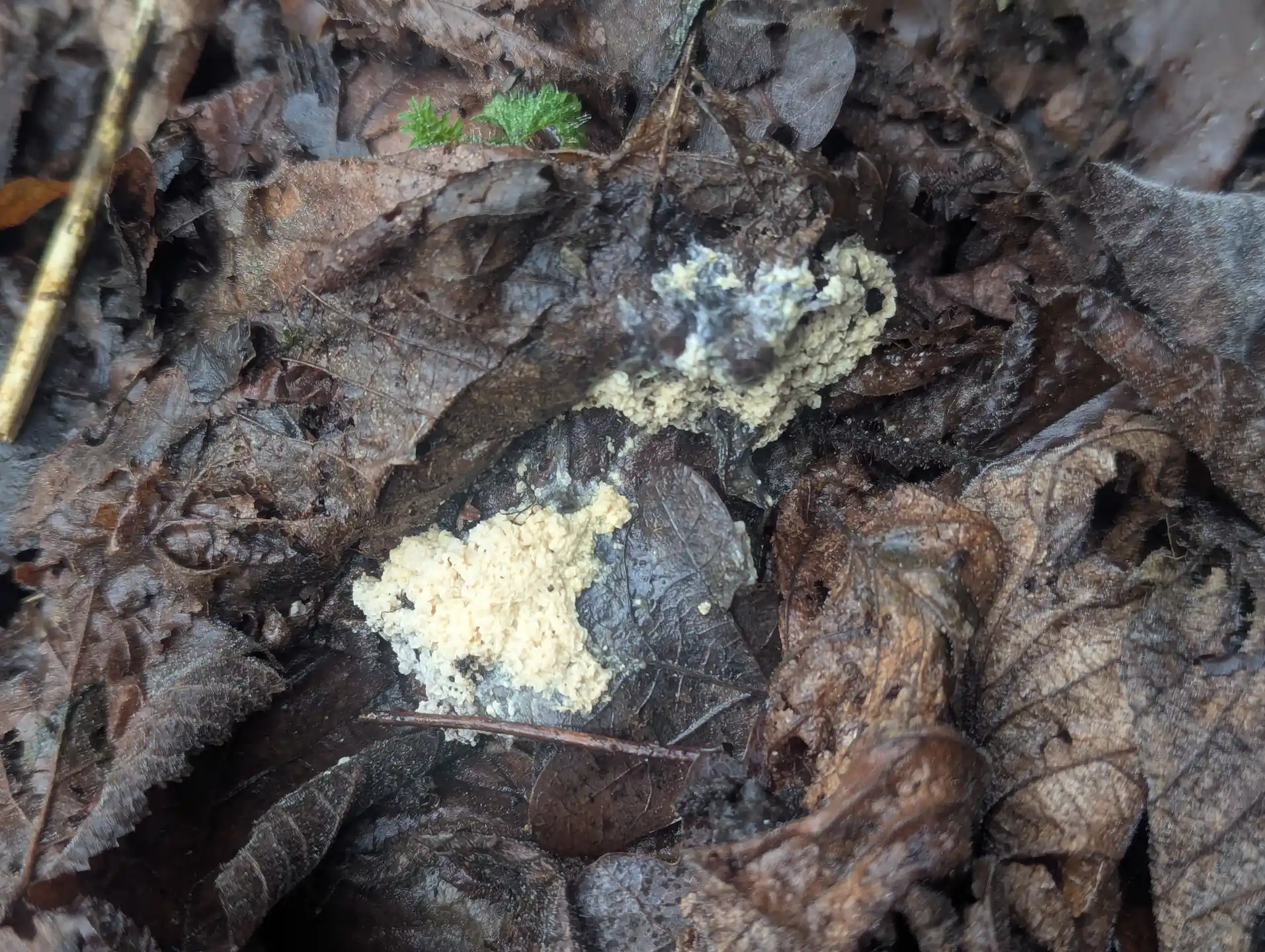
The Dell, Strumpshaw Fen – 18th Jan 2026
The Dell – 18th January 2026
The following photos are of some plasmodial Didymium spongiosum that we spotted in The Dell — well, identifying a slime mould macroscopically at the plasmodial stage is notoriously difficult, but I'm calling it Didymium spongiosum based on the location, substrate and recent observations.
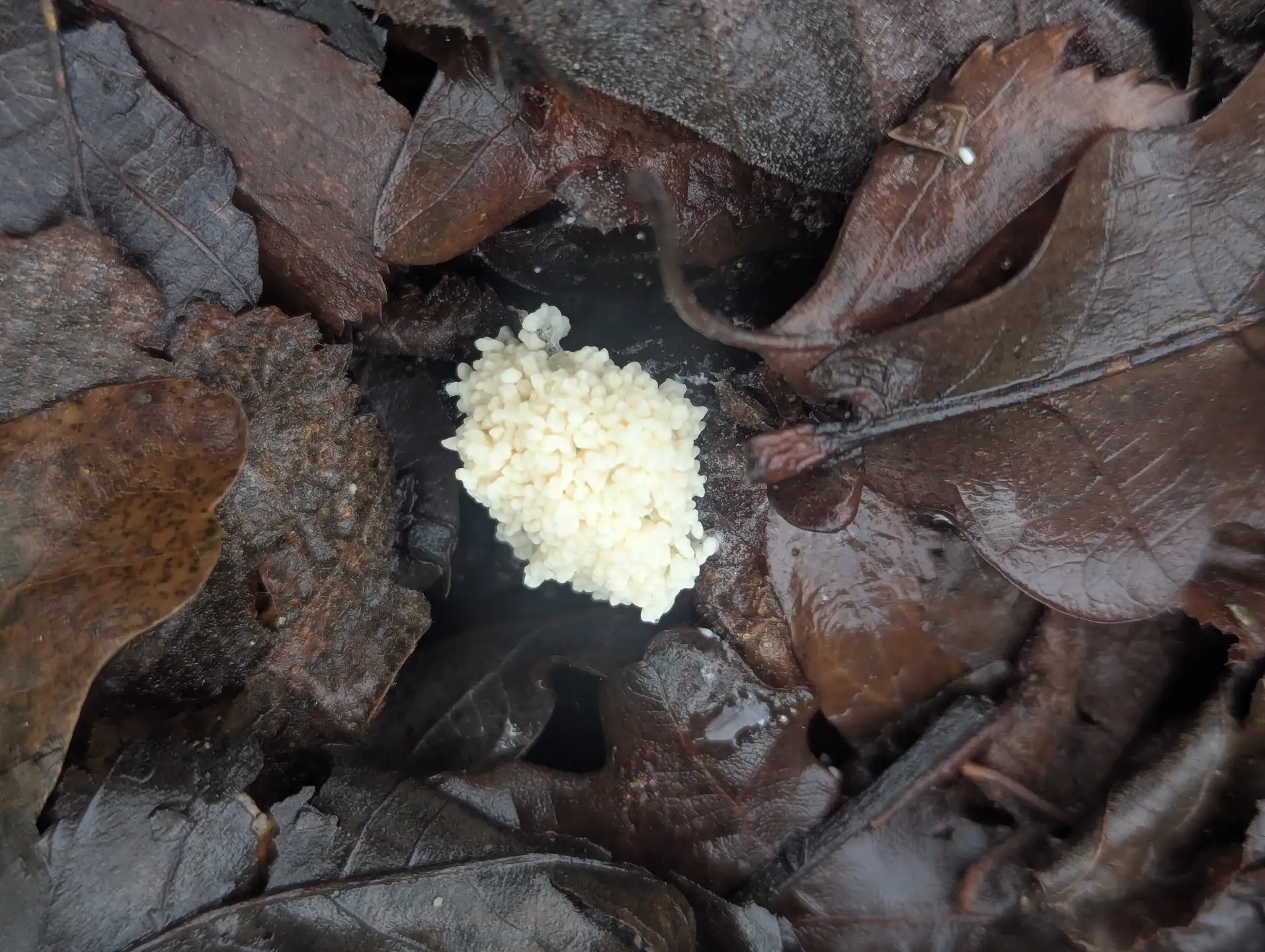
The Dell, Strumpshaw Fen – 18th Jan 2026
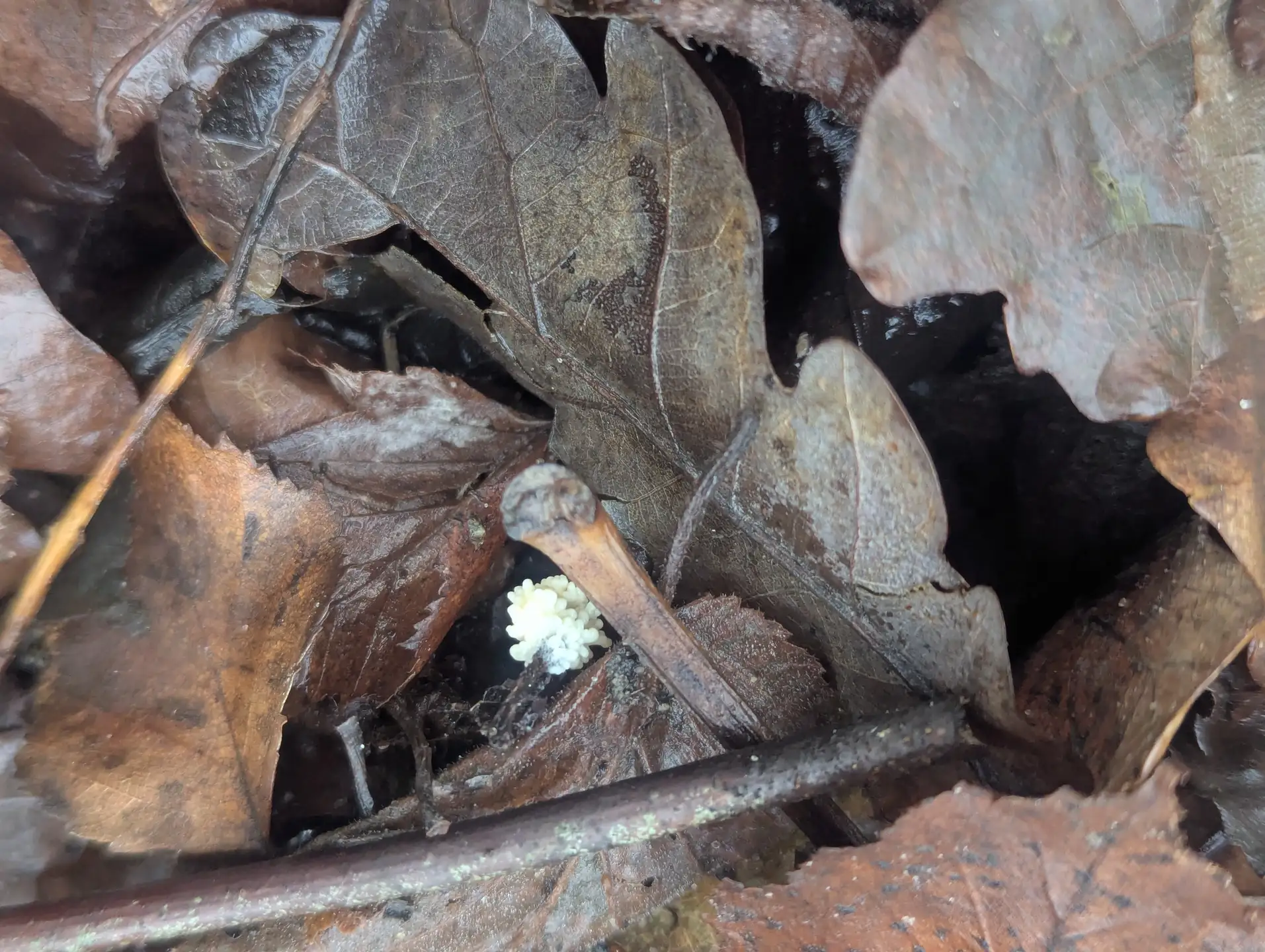
The Dell, Strumpshaw Fen – 18th Jan 2026
These next two slime moulds exhibit plasmodial veins.
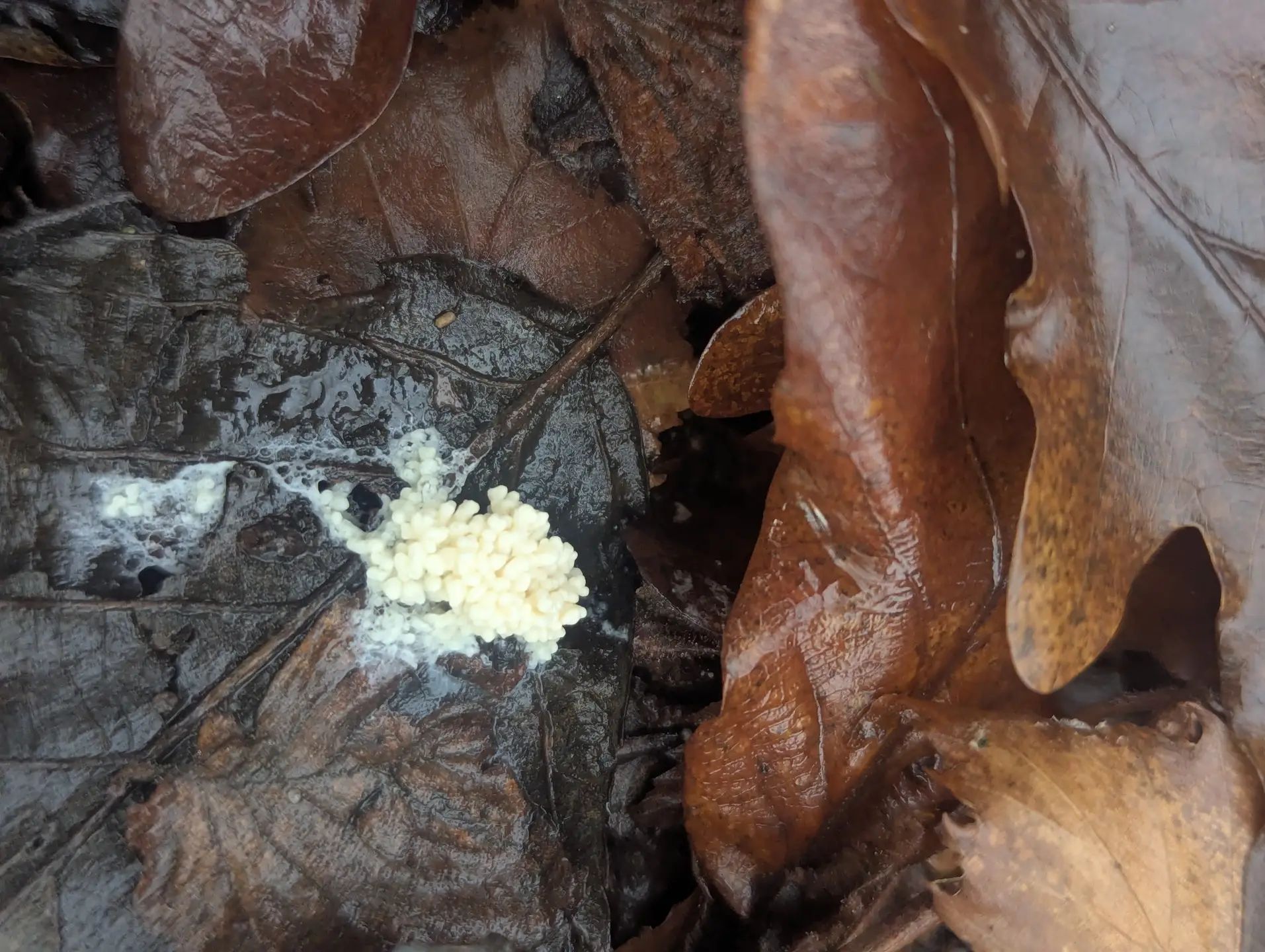
The Dell, Strumpshaw Fen – 18th Jan 2026
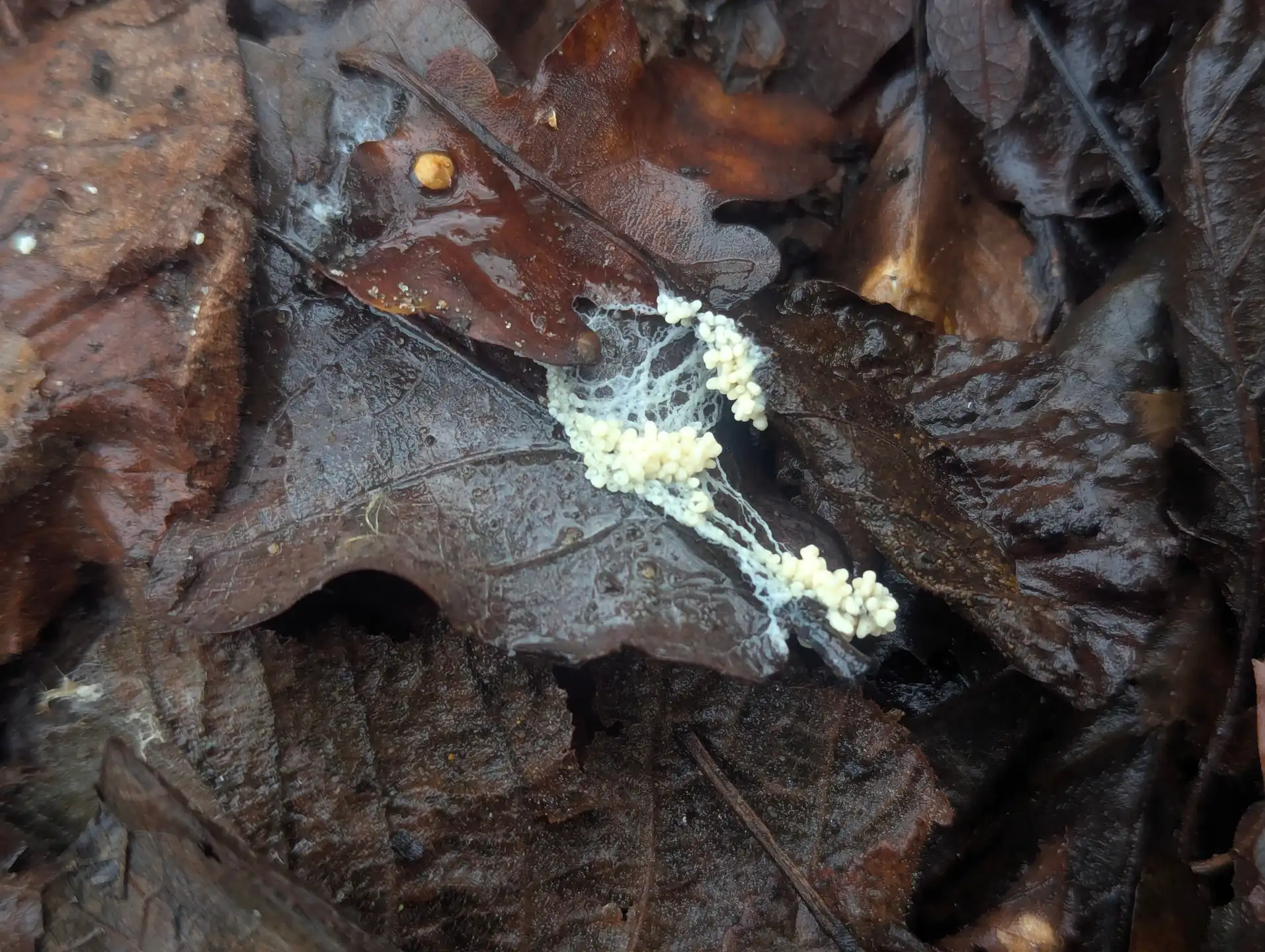
The Dell, Strumpshaw Fen – 18th Jan 2026
We visited the reserve frequently over the following weeks and months, but saw no further signs of Didymium spongiosum.
[1] Zamora, J. C., García-Martín, J. M., & Lado, C. (2023). (2955) Proposal to conserve the name Didymium against Mucilago and Spumaria (Physarales, Myxomycetes)
https://www.researchgate.net/publication/371769194_2955_Proposal_to_conserve_the_name_Didymium_against_Mucilago_and_Spumaria_Physarales_Myxomycetes
Strumpshaw Fen is a nature reserve managed by the RSPB adjacent the River Yare, east of Norwich in Norfolk.
RSPB Strumpshaw Fen webpage RSPB Strumpshaw Fen Wikipedia entry