Slime moulds & fungi at Strumpshaw Fen – 7th December 2025

The Dell

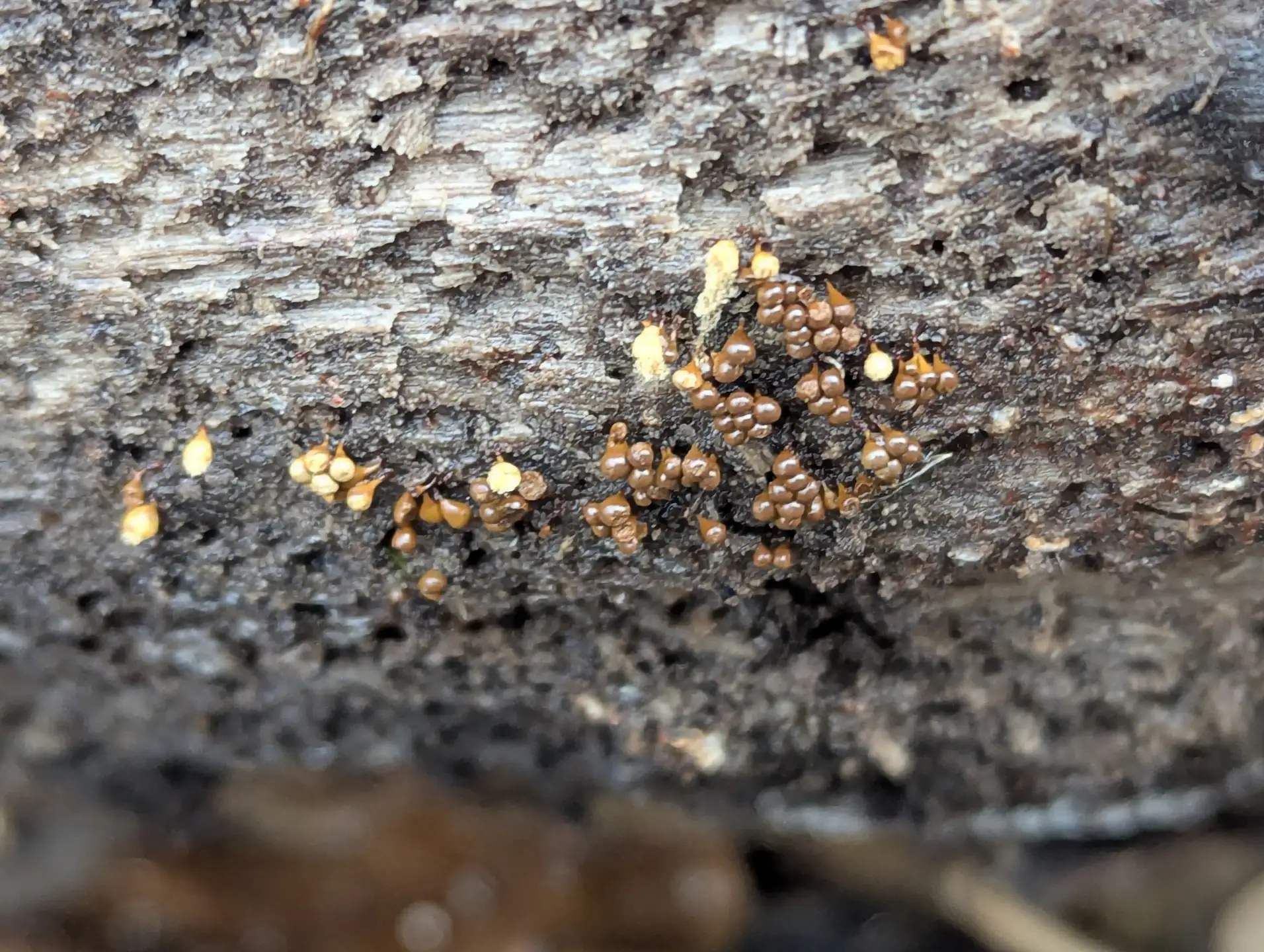
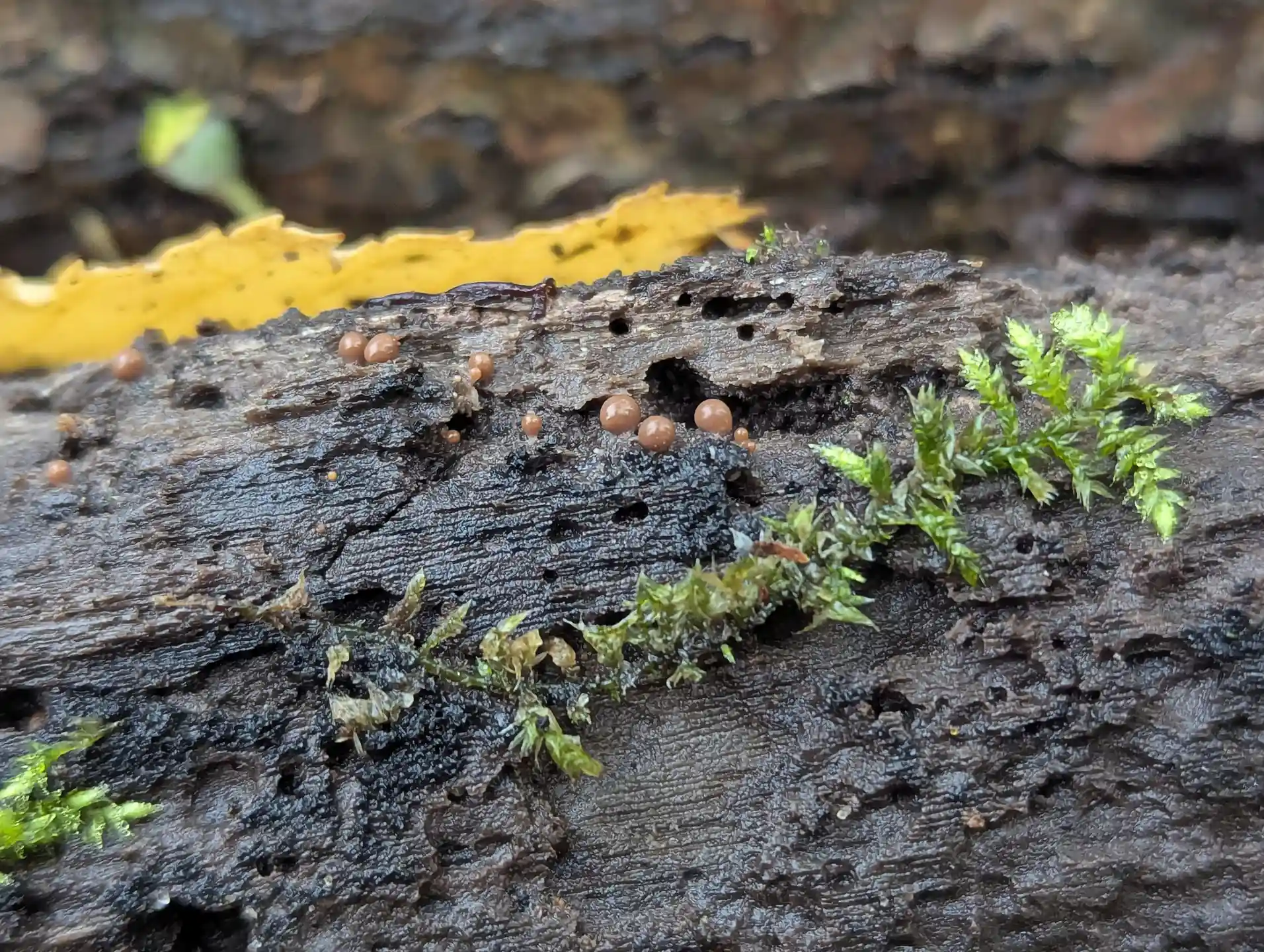
These have a Hemitrichia decipiens feel about them, if only because they appear to have the translucent white stalk that is associated with Hemitrichia decipiens.
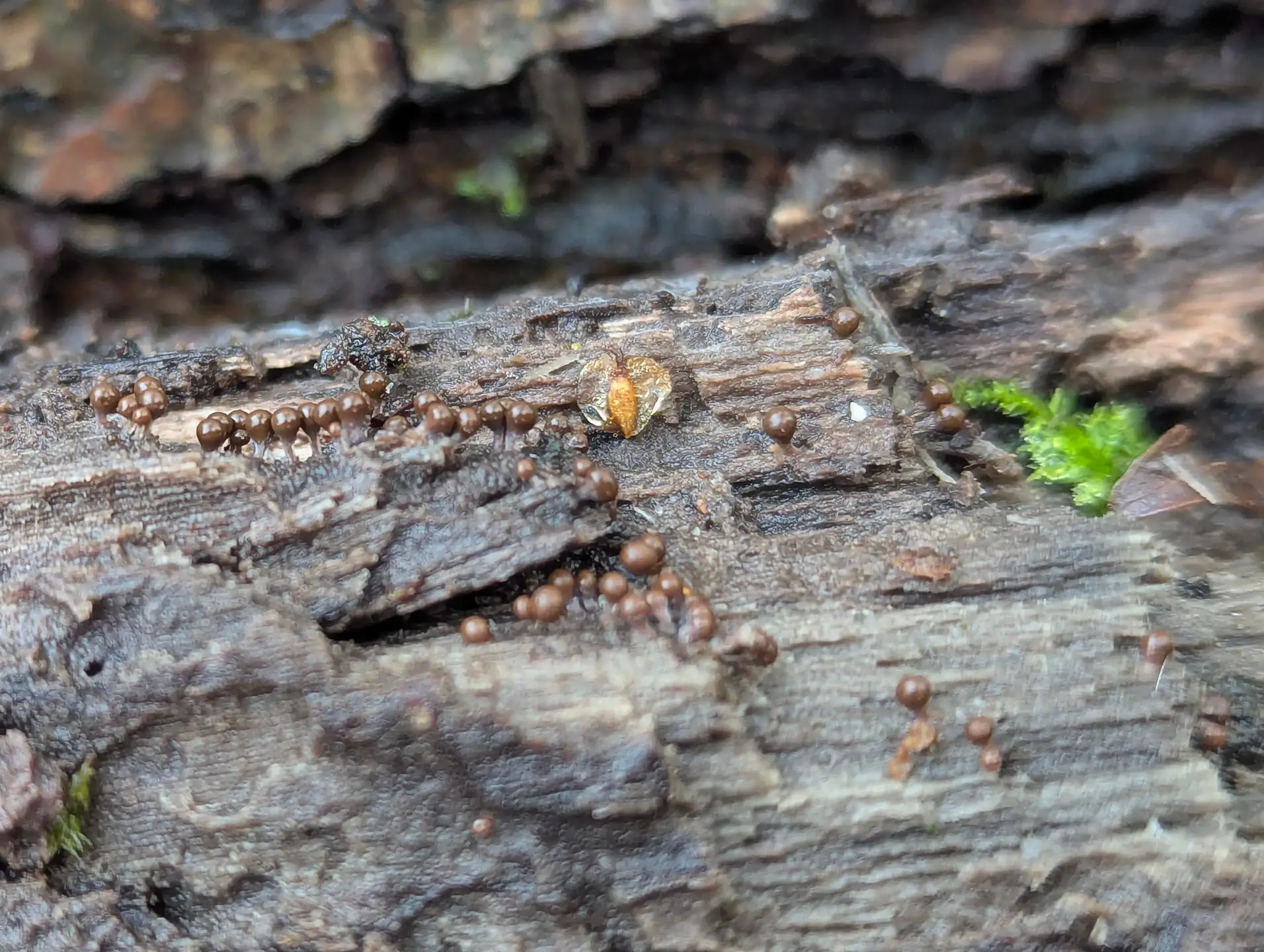
Glossy brown Hemitrichia decipiens sporangia with translucent white stalks on damp wood.
Looks like Hemitrichia decipiens – The Dell
Strumpshaw Fen – 7th December 2025
Close-up of the brown Hemitrichia decipiens sporangia.
Looks like Hemitrichia decipiens – The Dell
Strumpshaw Fen – 7th December 2025

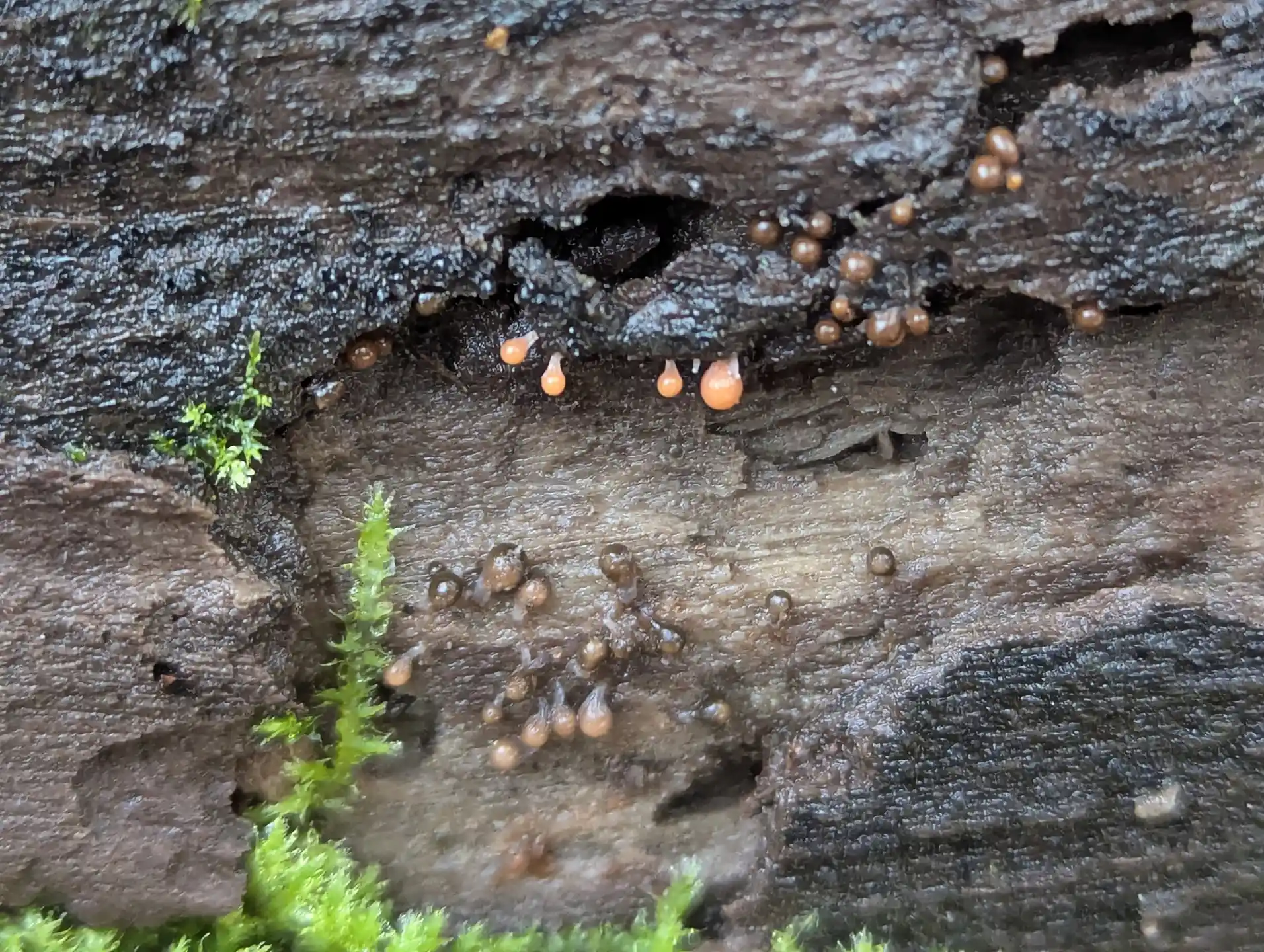
Clearly they have developed beyond the often photographed orange/peach/salmon younger form, except for the four sporangia in the photo below. Below them, some sporangia have already turned to a deep olive but are translucent, showing the spore mass inside still retaining a peach colour.
More Hemitrichia decipiens sporangia; some still orange but others are translucent deep-olive showing a developing orange spore mass inside.
Looks like Hemitrichia decipiens – The Dell
Strumpshaw Fen – 7th December 2025

The Sandy Glade

This was exciting – I don’t see these plasmodiocarp slime mould forms very much at all.
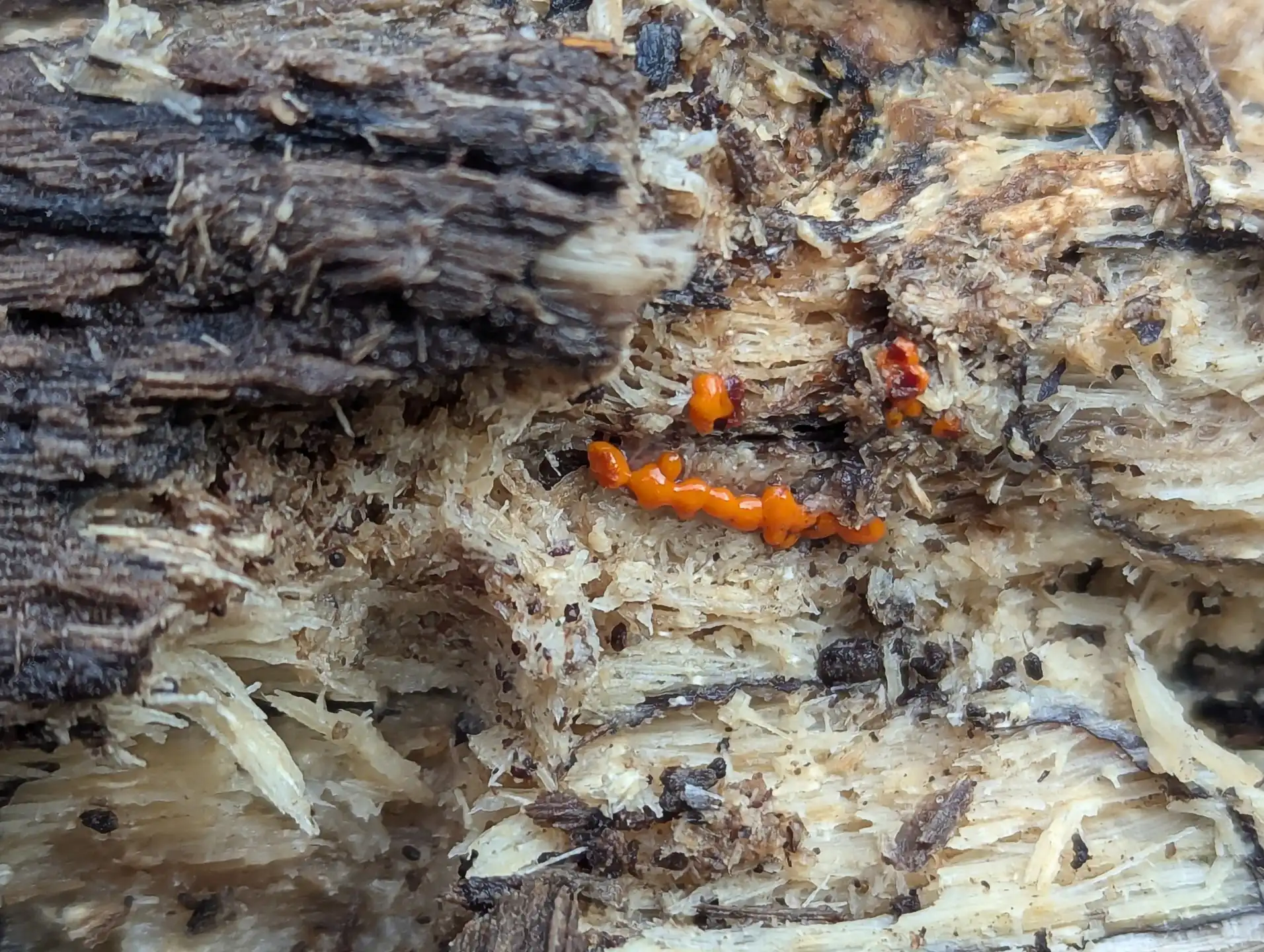
Small linear apricot-orange worm-like plasmodiocarp slime mould on damp decaying wood.
Unidentified plasmodiocarp slime mould – Sandy Glade
Strumpshaw Fen – 7th December 2025

These slime moulds below are definitely likely Hemitrichia clavate.
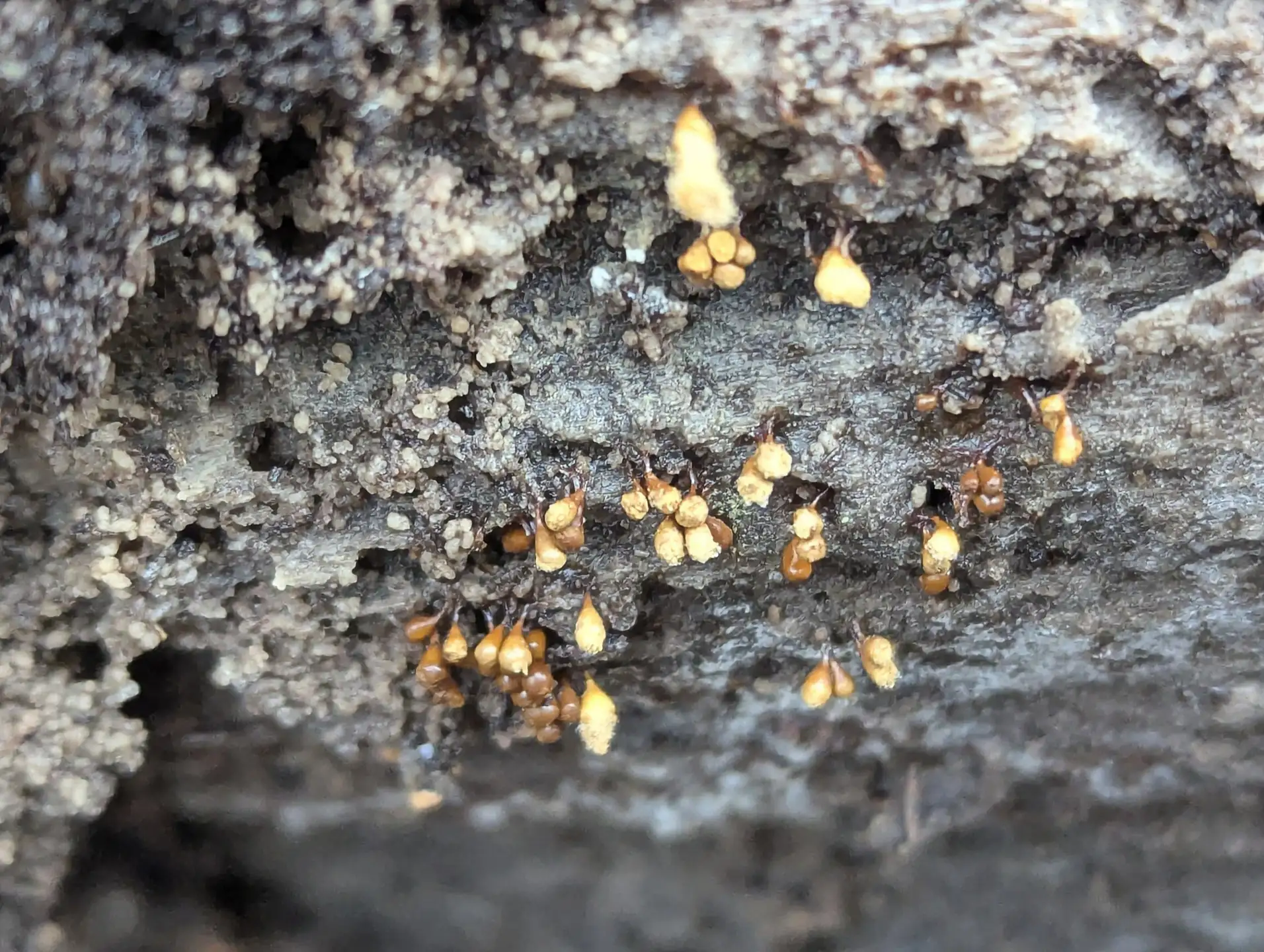
Glossy brown Hemitrichia clavate sporangia on dark decaying wood. Some of the sporangia have dehisced exposing the yellow-cream spore mass.
Likely Hemitrichia clavate – The Dell
Strumpshaw Fen – 7th December 2025
Dehiscing Hemitrichia clavata sporangia on dark decaying wood.
Likely Hemitrichia clavate – The Dell
Strumpshaw Fen – 7th December 2025

Around The Outpost

This is the high stump that toppled over in autumn 2025. It had previously not appeared to host any obvious slime moulds but now that it was on the ground we did start to see slime moulds growing on it.
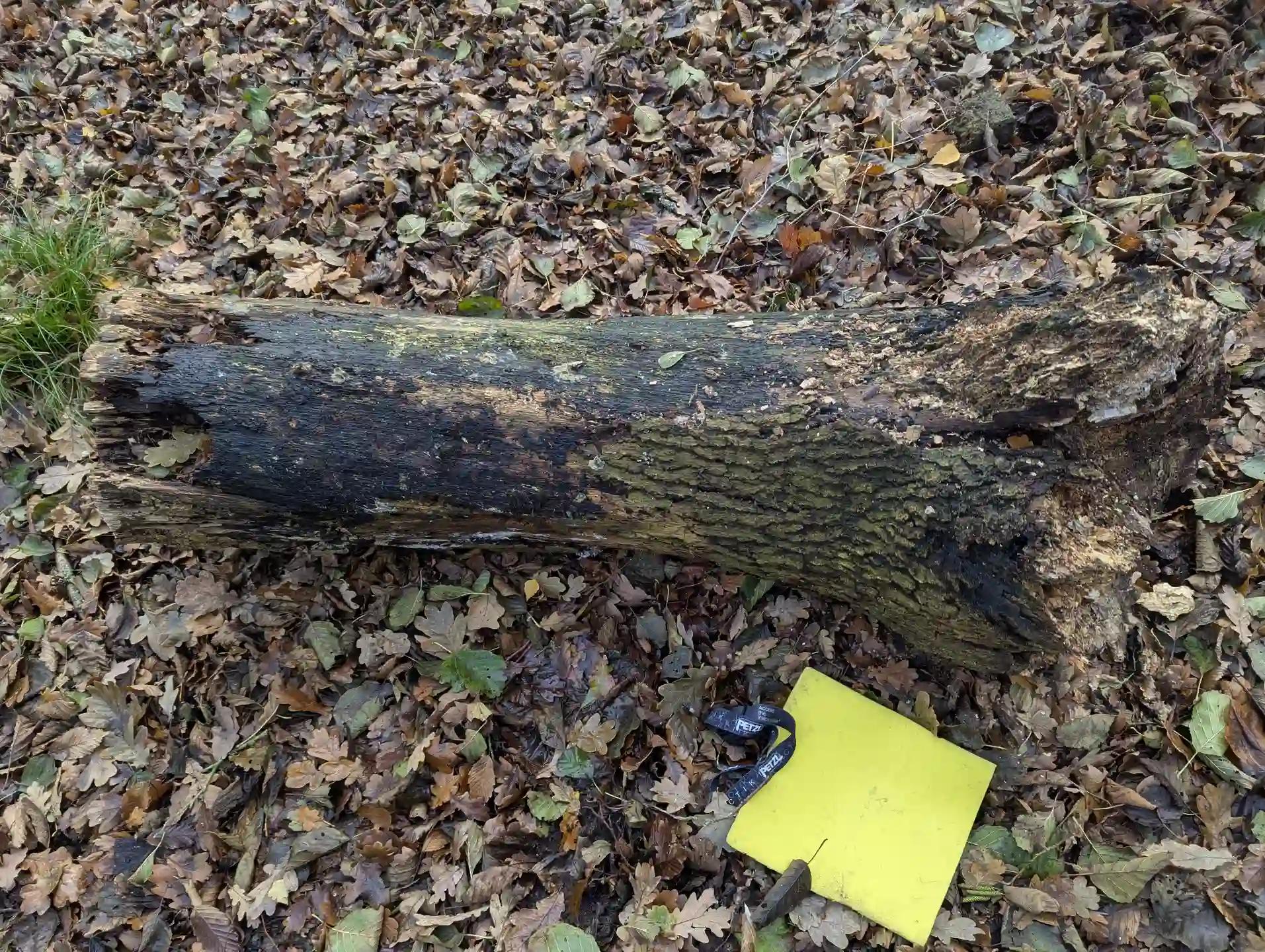
Fallen high stump lying on the woodland floor of dense brown leaves. The stump is decaying at it's root and cut ends and has lost most of it's bark exposing dark weathered wood.
Toppled high stump – near The Outpost
Strumpshaw Fen – 7th December 2025

On this day I spotted slime mould groups at various stages of development. In the photo below the sporothecae are at the stage just before dehiscence – they look like they could be Comatricha nigra.
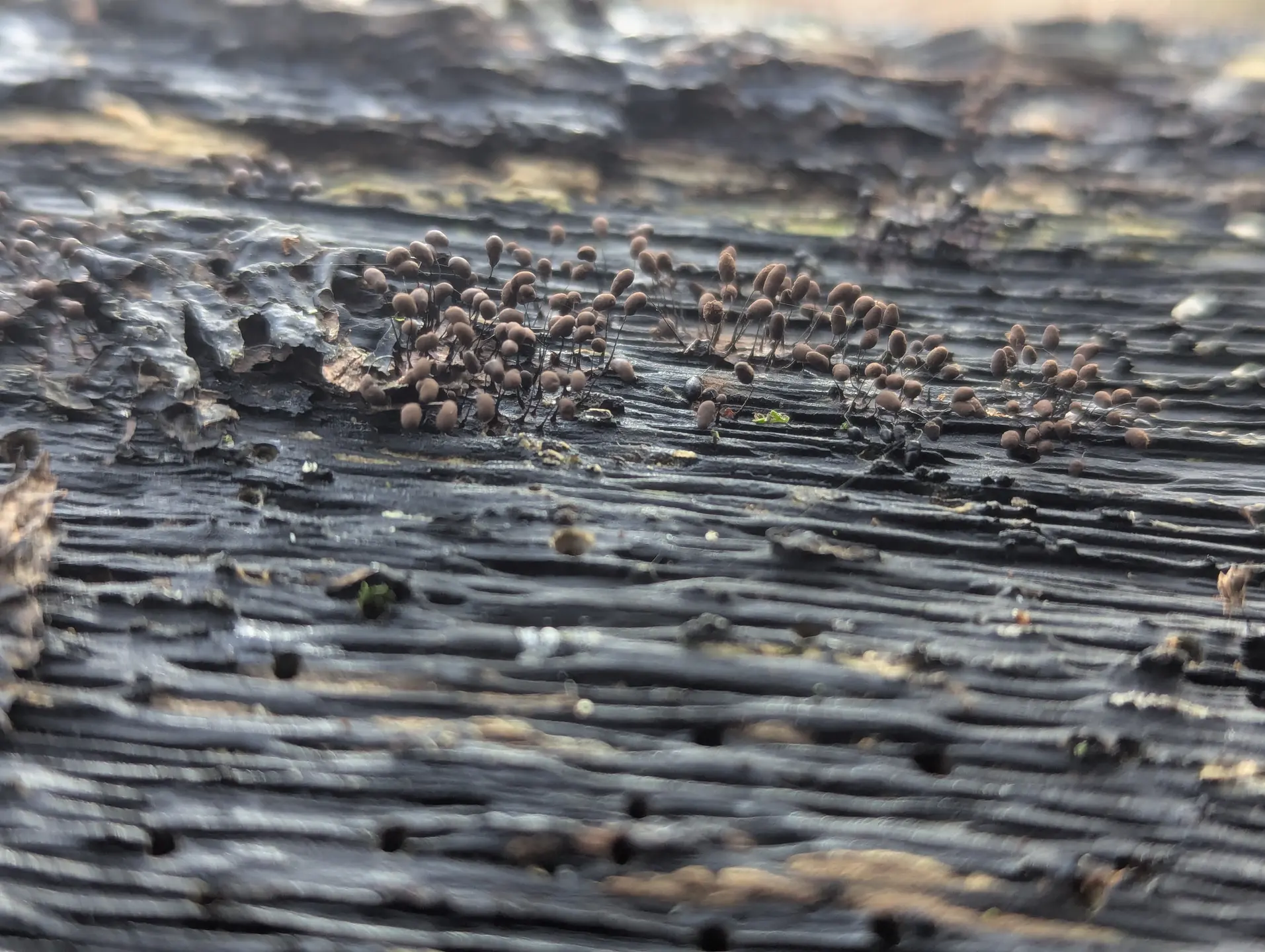
Close-up of likely Comatricha nigra sporangia on dark wood. The sporangia are mature brown sporothecae on slender black stalks.
Looks like Comatricha nigra – near The Outpost
Strumpshaw Fen – 7th December 2025

This is the plasmodium that was present.
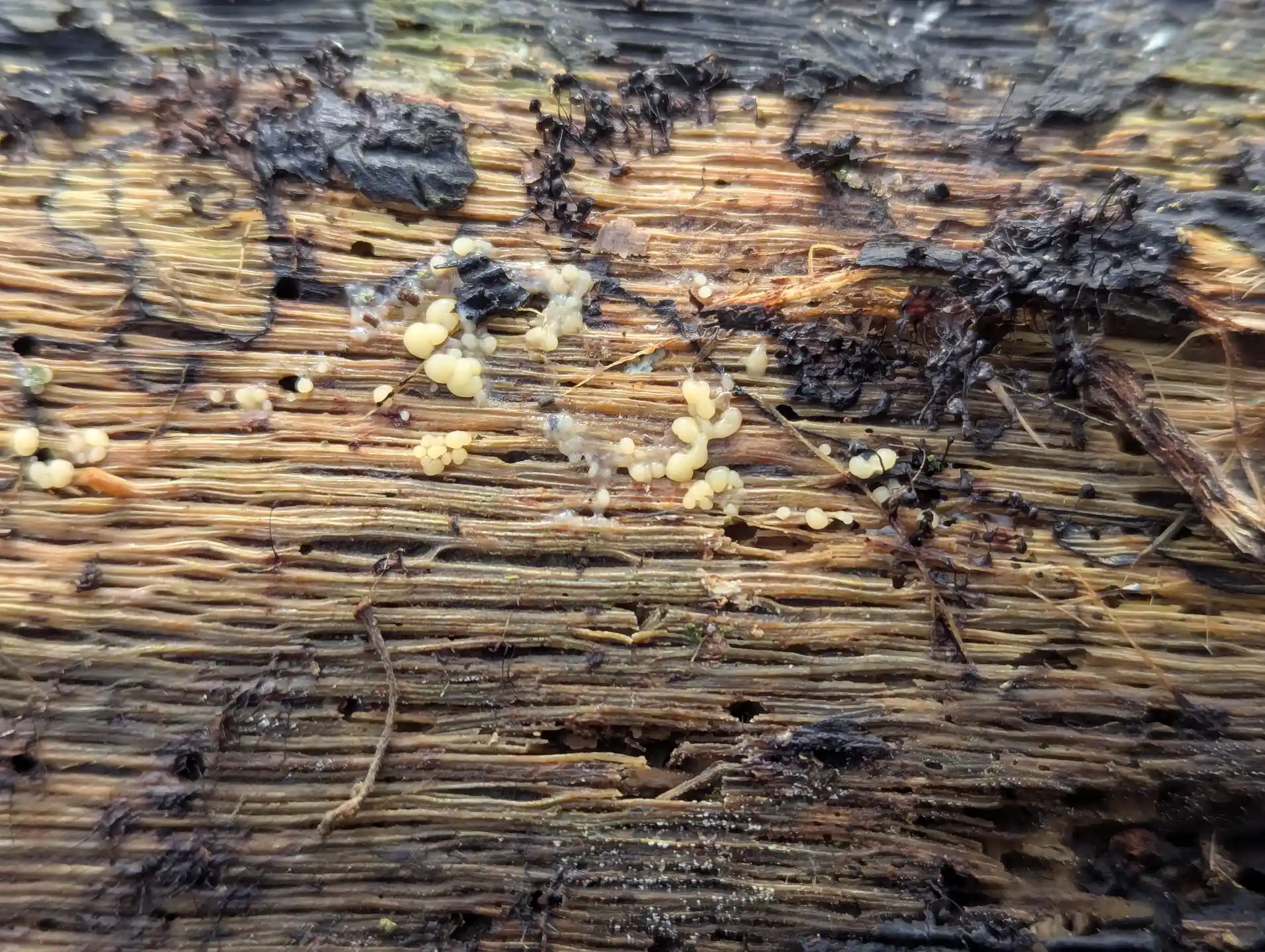
Pale-yellow plasmodial blobs on damp, weathered  orange-yellow wood.
Could be Comatricha nigra plasmodium – near The Outpost
Strumpshaw Fen – 7th December 2025

The pale-yellow sporangia below have a Comatricha nigra feel about them and given the colour similarity to the plasmodium above, that plasmodium could therefore be a Comatricha nigra. Note the white sporangia below in the bark fissure.
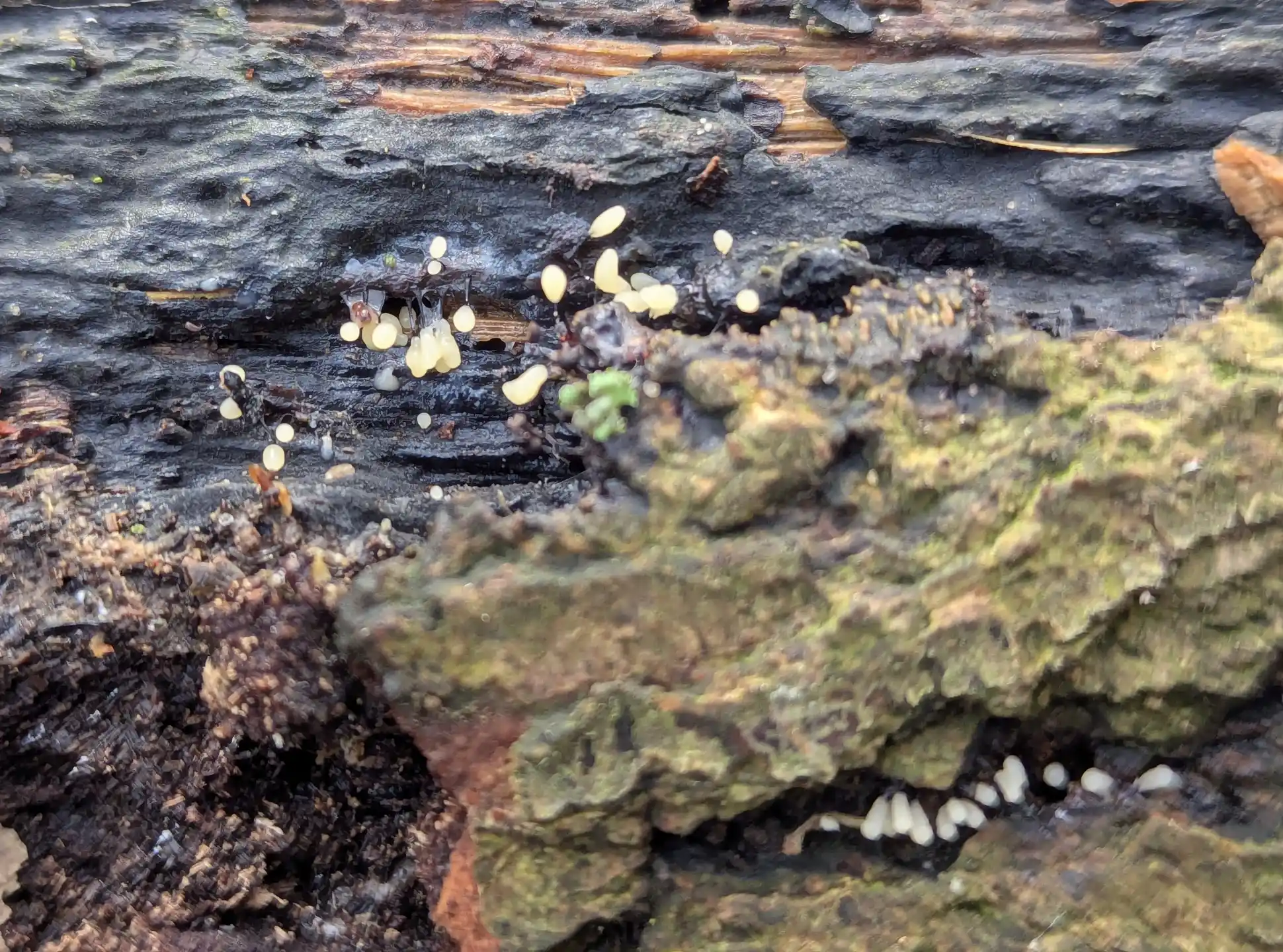
Likely young, pale-yellow Comatricha nigra sporothecae with slender black stalks on dark weathered wood. In the bottom quarter of the photo some white sporangia populate a fissure in the bark.
Could be Comatricha nigra sporangia – near The Outpost
Strumpshaw Fen – 7th December 2025

Below is another group of white sporangia, and looking more closely, the sporothecae do have a different form – more like Stemonitopsis typhina, which we saw on this fallen stump in November.
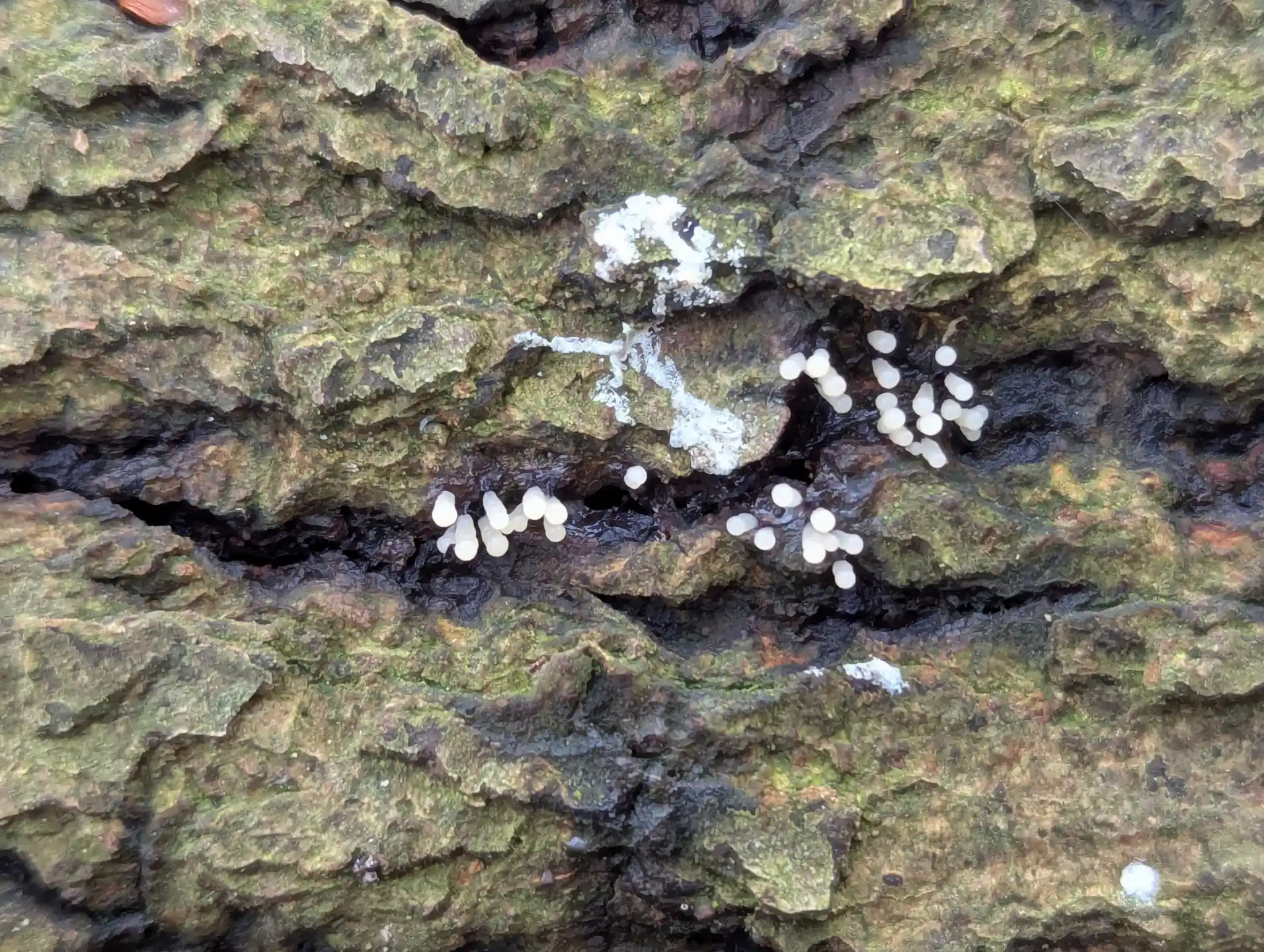
Possibly Stemonitopsis typhina sporangia populating a fissure in bark. The sporothecae are white with short black stalks.
Could be Stemonitopsis typhina sporangia – near The Outpost
Strumpshaw Fen – 7th December 2025

This green stained wood fragment caught my eye.
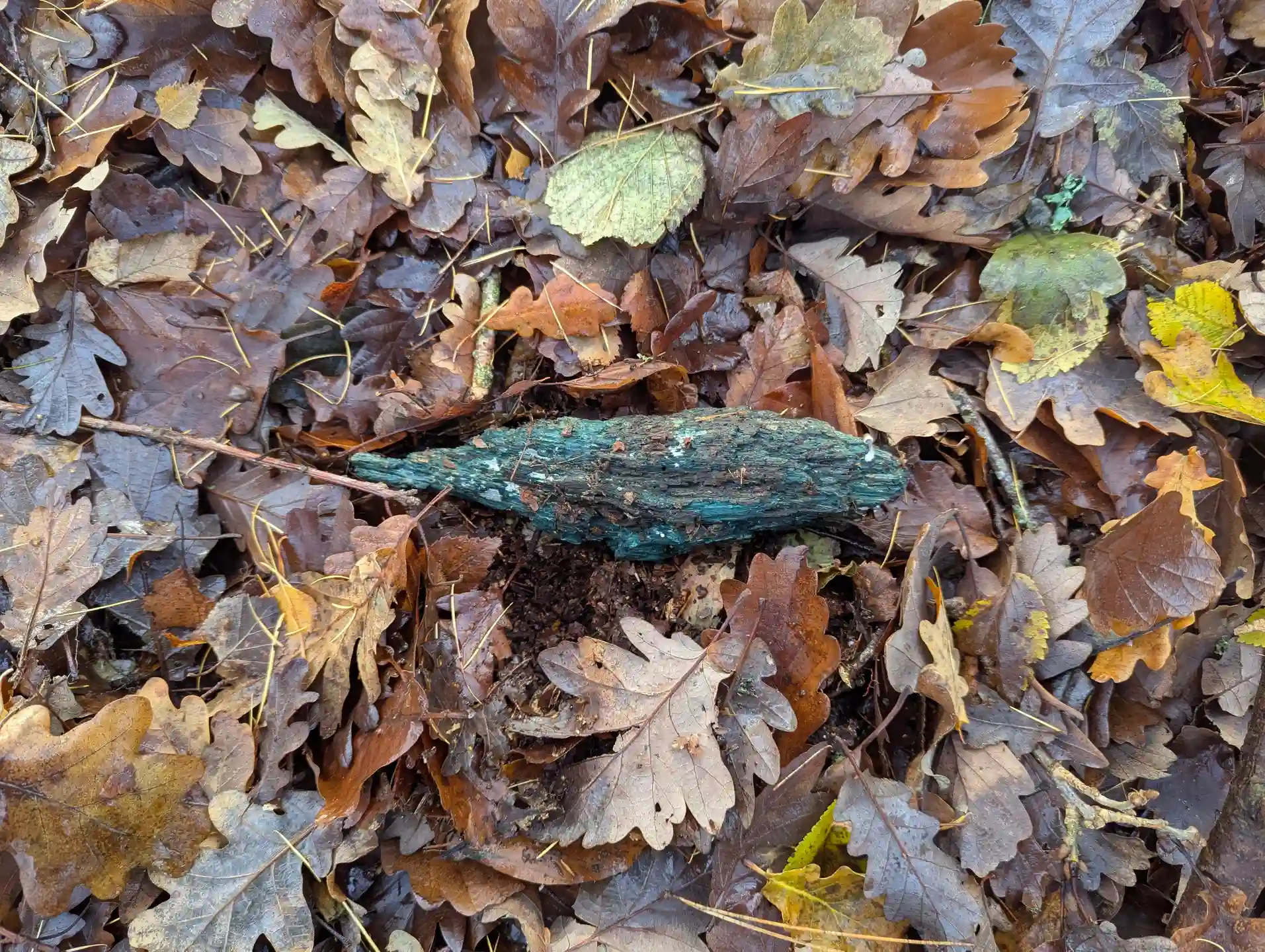
Green stained fragment of wood on the woodland floor of mostly brown oak leaves.
Green stained wood fragment – near The Outpost
Strumpshaw Fen – 7th December 2025

The staining is undoubtedly from Chlorociboria – picking it up I noticed a small mushroom growing at one end.
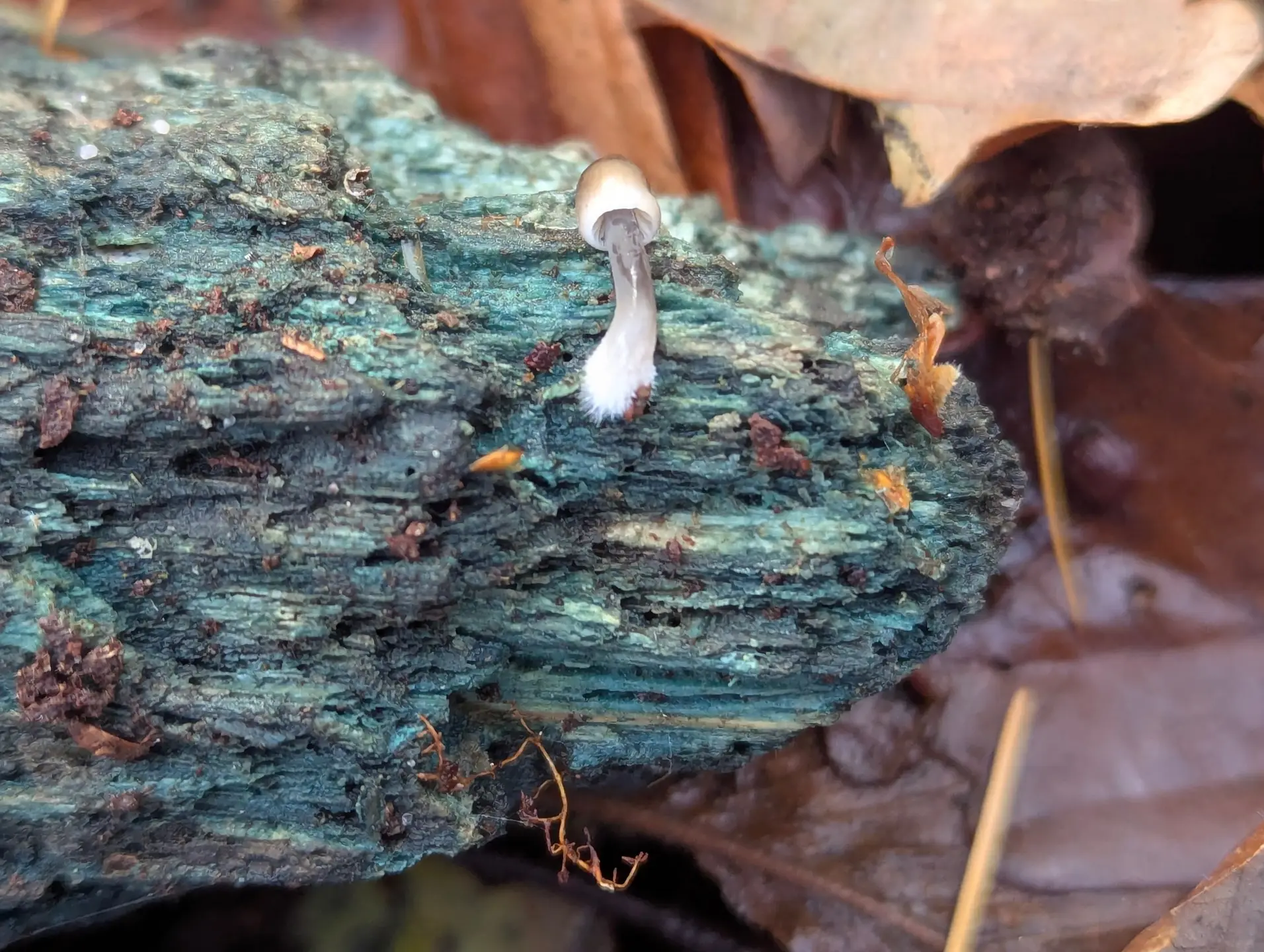
Close-up of one end of the green stained wood fragment with a small young mushroom growing on it.
Unidentified mushroom – near The Outpost
Strumpshaw Fen – 7th December 2025

This white-grey plasmodium I think is Ceratiomyxa fruticulosa.
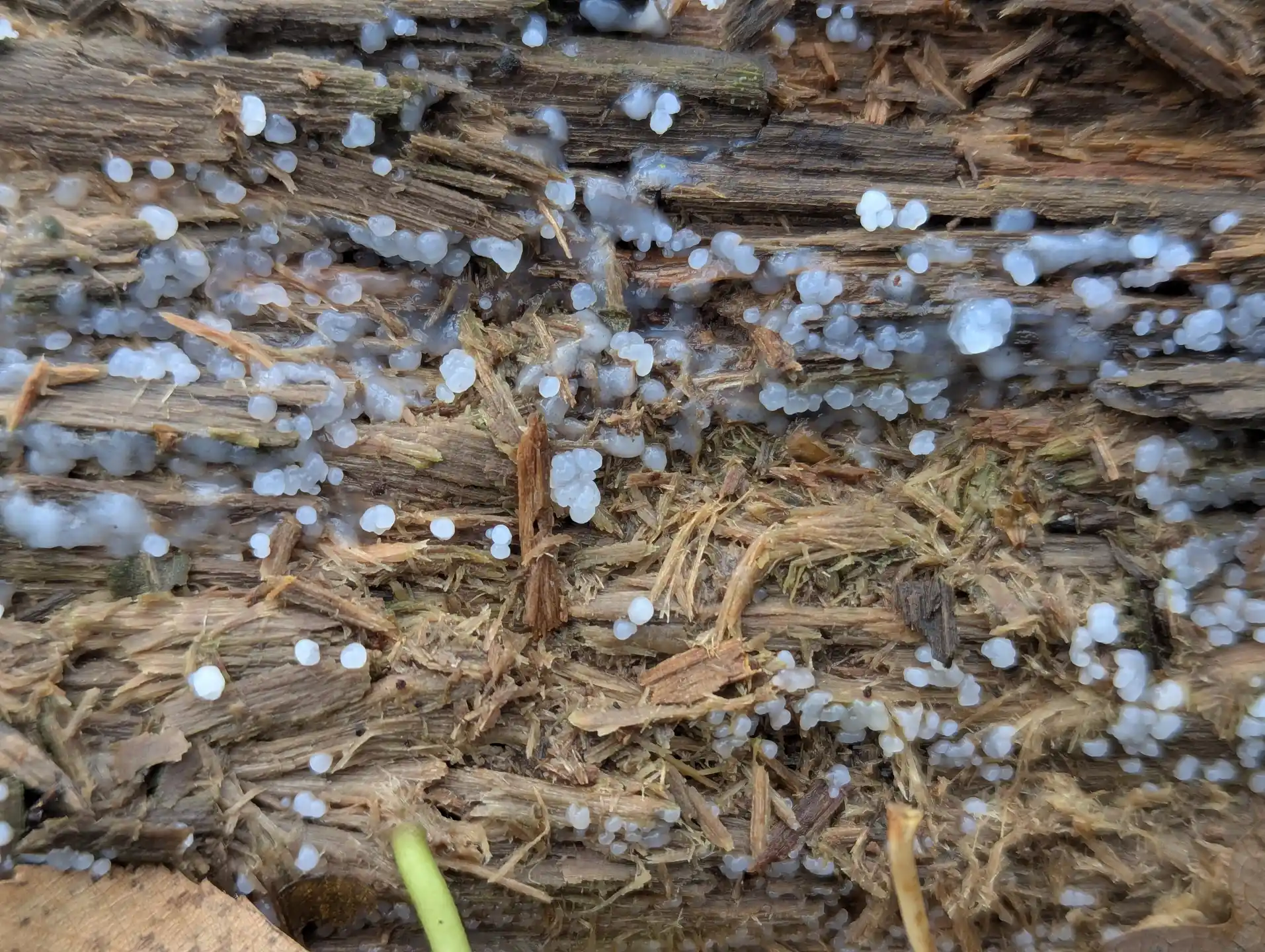
Length of decaying wood on the woodland floor of green and mostly brown leaves. Growing on the wood is a likely Ceratiomyxa fruticulosa plasmodium.
Likely Ceratiomyxa fruticulosa plasmodium – near The Outpost
Strumpshaw Fen – 7th December 2025

In the photo below the plasmodium is beginning to sporulate.

Close-up of the sporulating likely Ceratiomyxa fruticulosa plasmodium.
Likely Ceratiomyxa fruticulosa plasmodium – near The Outpost
Strumpshaw Fen – 7th December 2025

In the photo below, you can see translucent grey amorphous plasmodium alongside a whiter, sporulating area that is beginning to develop buds that will eventually form the small coral-like branched structures.
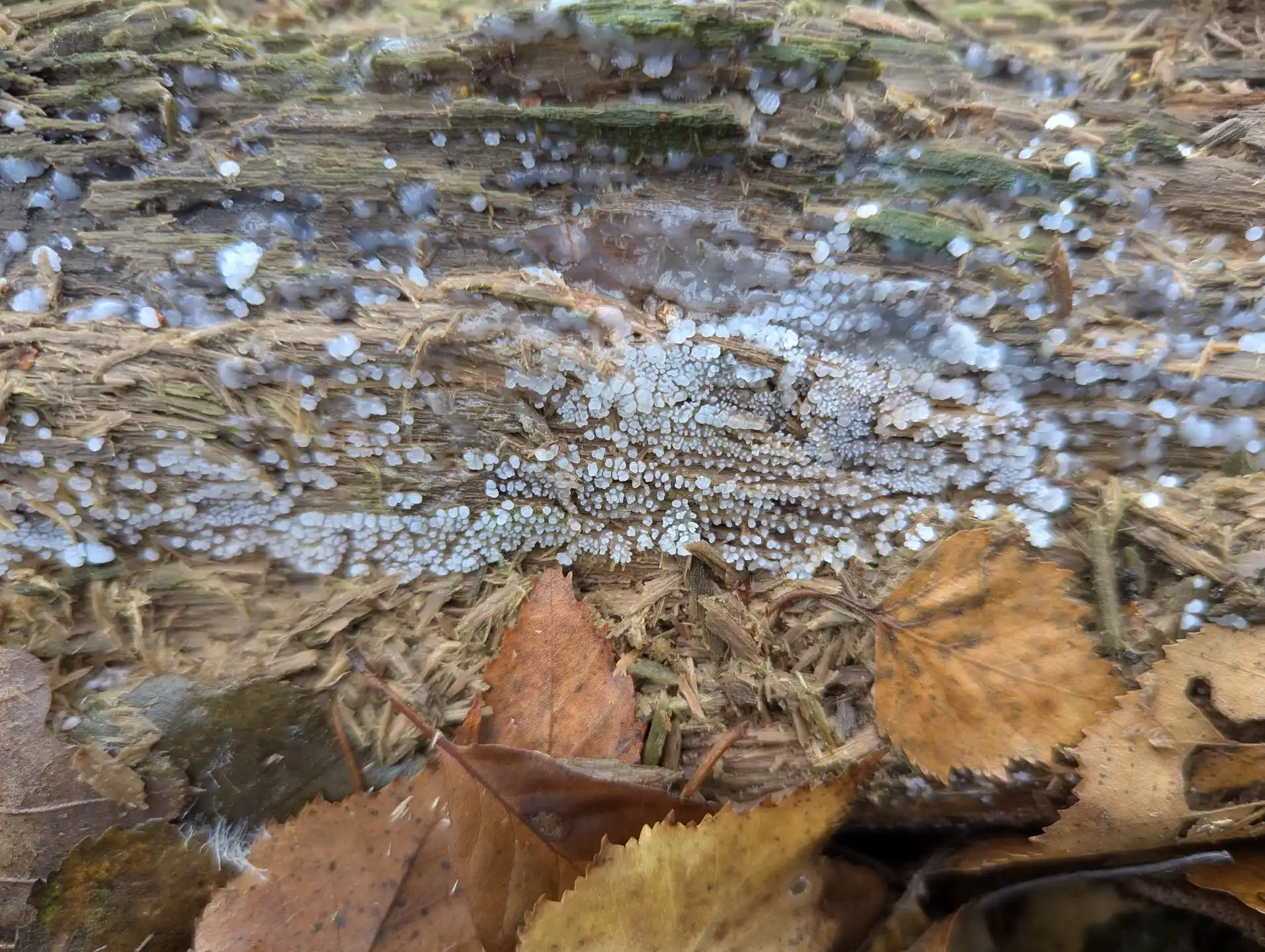
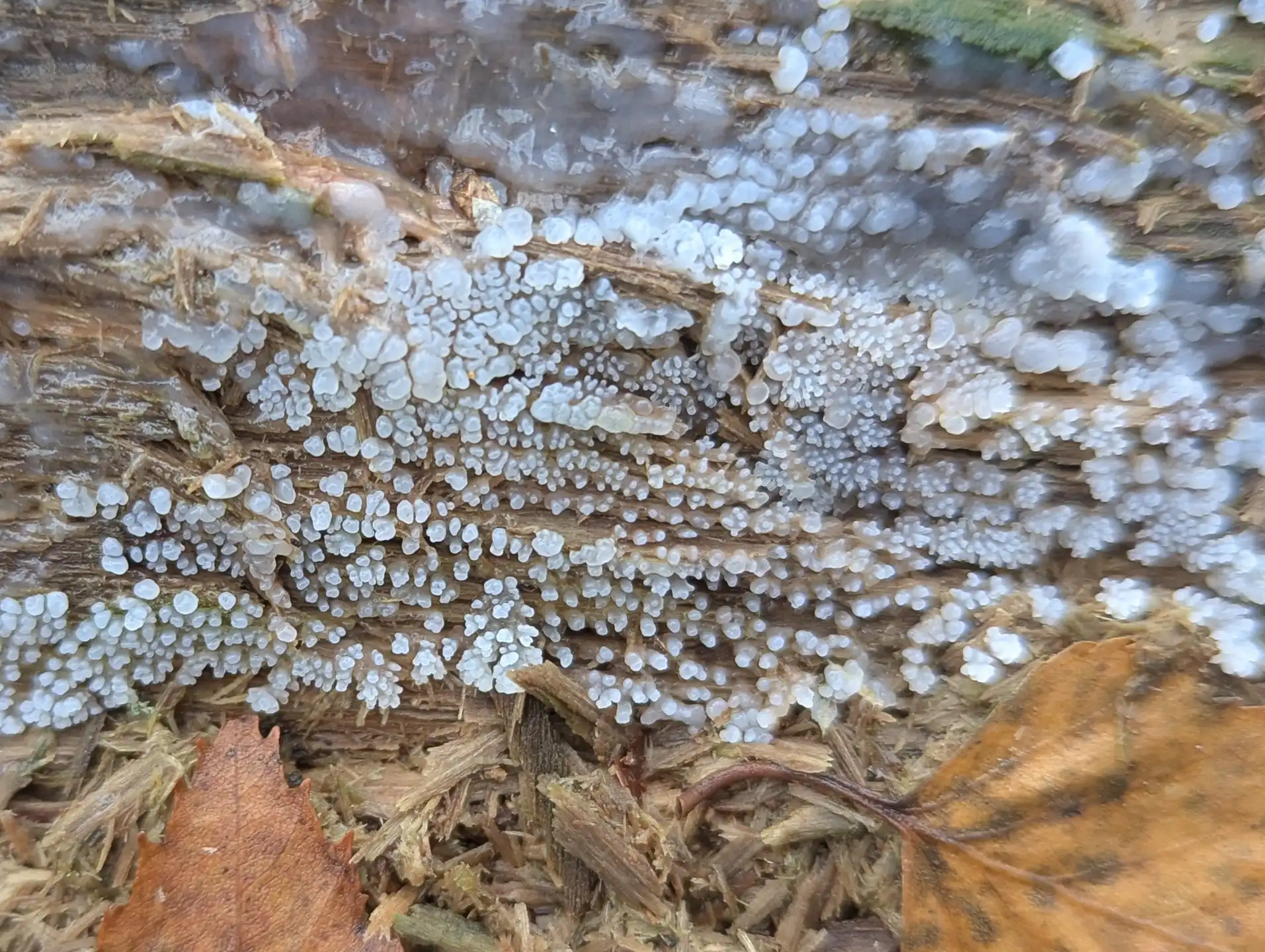
Close-up of the likely Ceratiomyxa fruticulosa plasmodium showing amorphous and sporulating sections.
Likely Ceratiomyxa fruticulosa plasmodium – near The Outpost
Strumpshaw Fen – 7th December 2025
Translucent grey and white Ceratiomyxa fruticulosa plasmodium on damp decaying wood beginning to sporulate forming coral-like buds. At the bottom of the photo are some brown  leaves.
Likely Ceratiomyxa fruticulosa plasmodium – near The Outpost
Strumpshaw Fen – 7th December 2025

These lichens and the two glowing Tremella fruiting bodies on this branch are a wonderful array of colours.
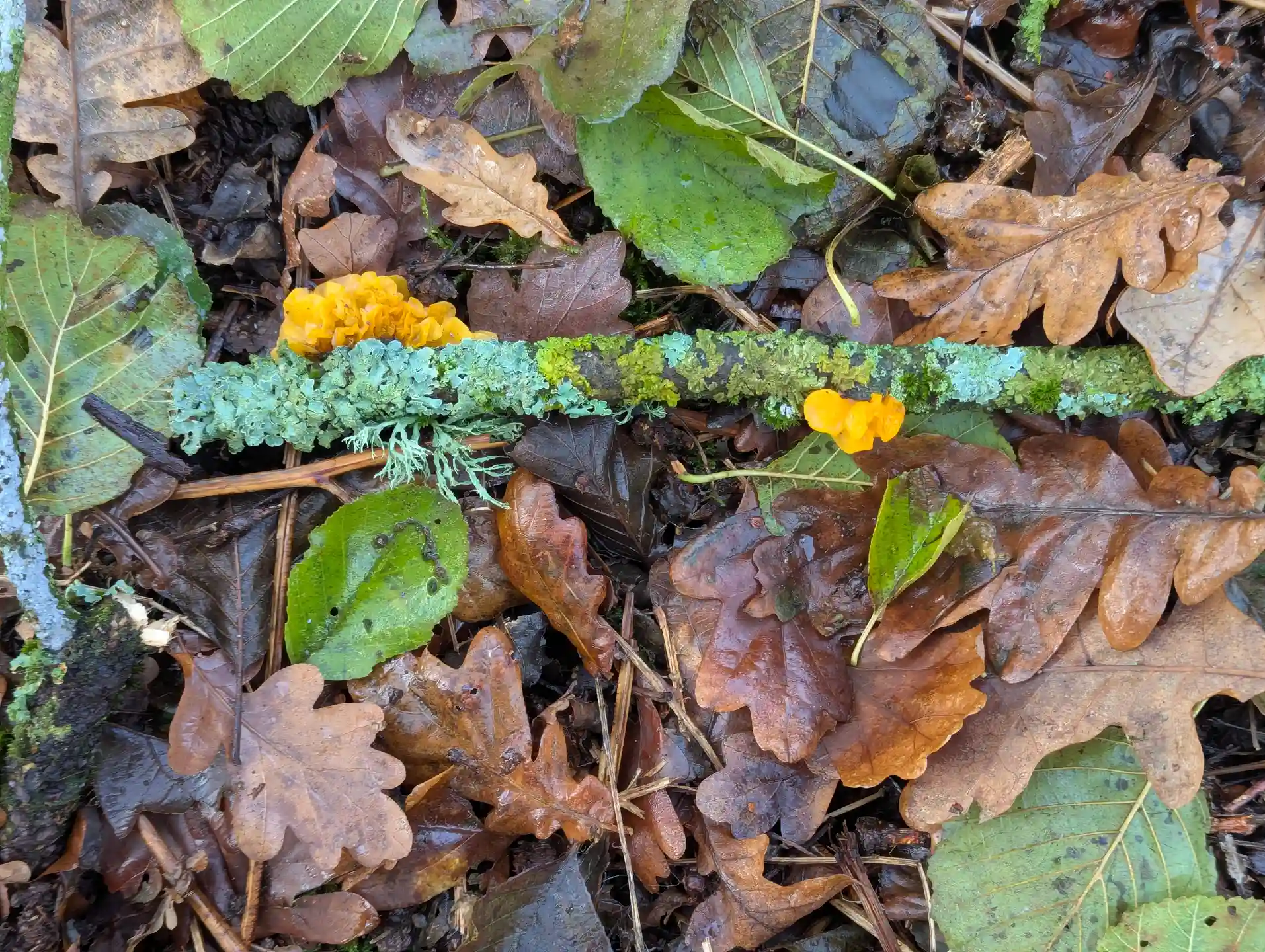
Small branch on the woodland floor surrounded by green and brown leaves. Colourful glaucous-green and yellowish-green lichens populate the branch. Two bright orange-yellow Tremella mesenterica fruiting bodies attached to the branch stand out.
Likely Tremella mesenterica – near The Outpost
Strumpshaw Fen – 7th December 2025

As I understand it, these are more likely to be Tremella mesenterica than Naematelia aurantia. While Naematelia aurantia is associated with Stereum hirsutum, Stereum hirsutum seems to prefer larger, more substantial sections of wood than smaller diameter branches. Tremella mesenterica is associated with Peniophora.

Strumpshaw Fen is a nature reserve managed by the RSPB adjacent the River Yare, east of Norwich in Norfolk

RSPB Strumpshaw Fen webpage RSPB Strumpshaw Fen Wikipedia entry