Likely Didymium squamulosum slime mould – plasmodium to sporangia at Strumpshaw Fen – Winter 2025/26
At the same stump where we found what might have been Physarum psittacinum, another slime mould first for us – Didymium squamulosum (likely).
20th December 2025
We spotted a large white patch from afar and as we approached – it was a large sporulating plasmodium on another part of the decaying stump as the possible Physarum psittacinum.
The photos below show the plasmodium forming clusters of sporangia.
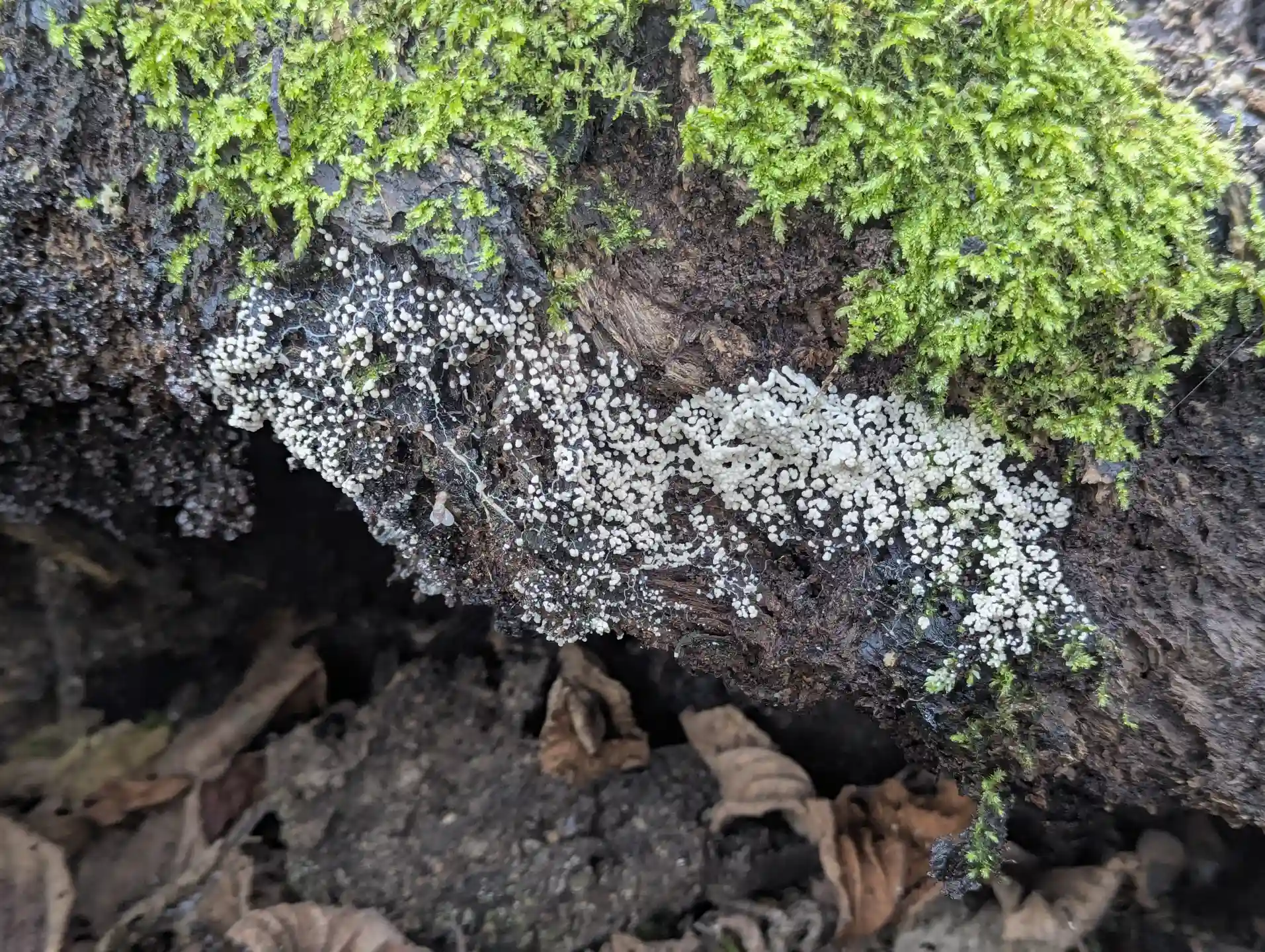
Strumpshaw Fen – 20th December 2025
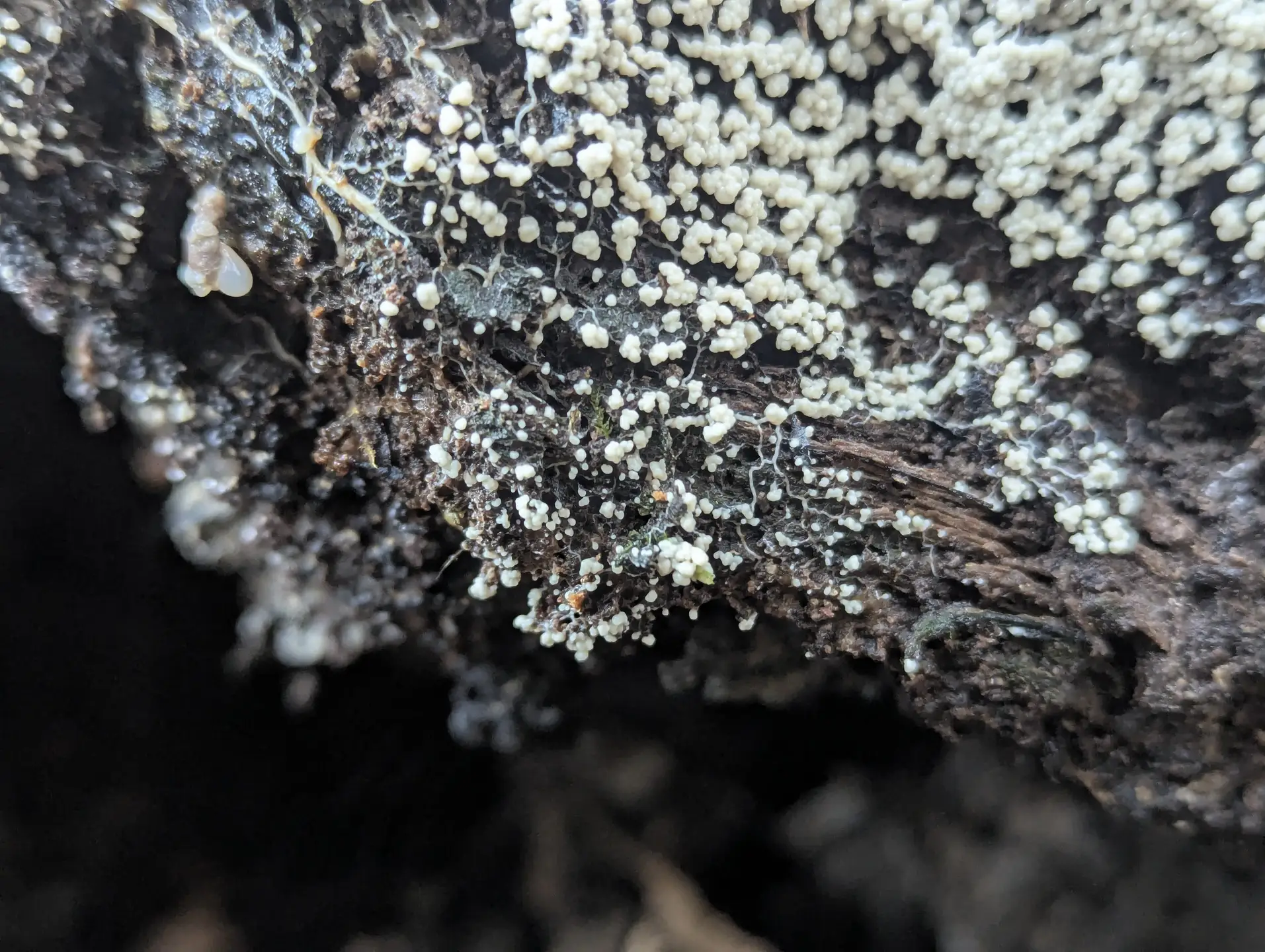
Strumpshaw Fen – 20th December 2025
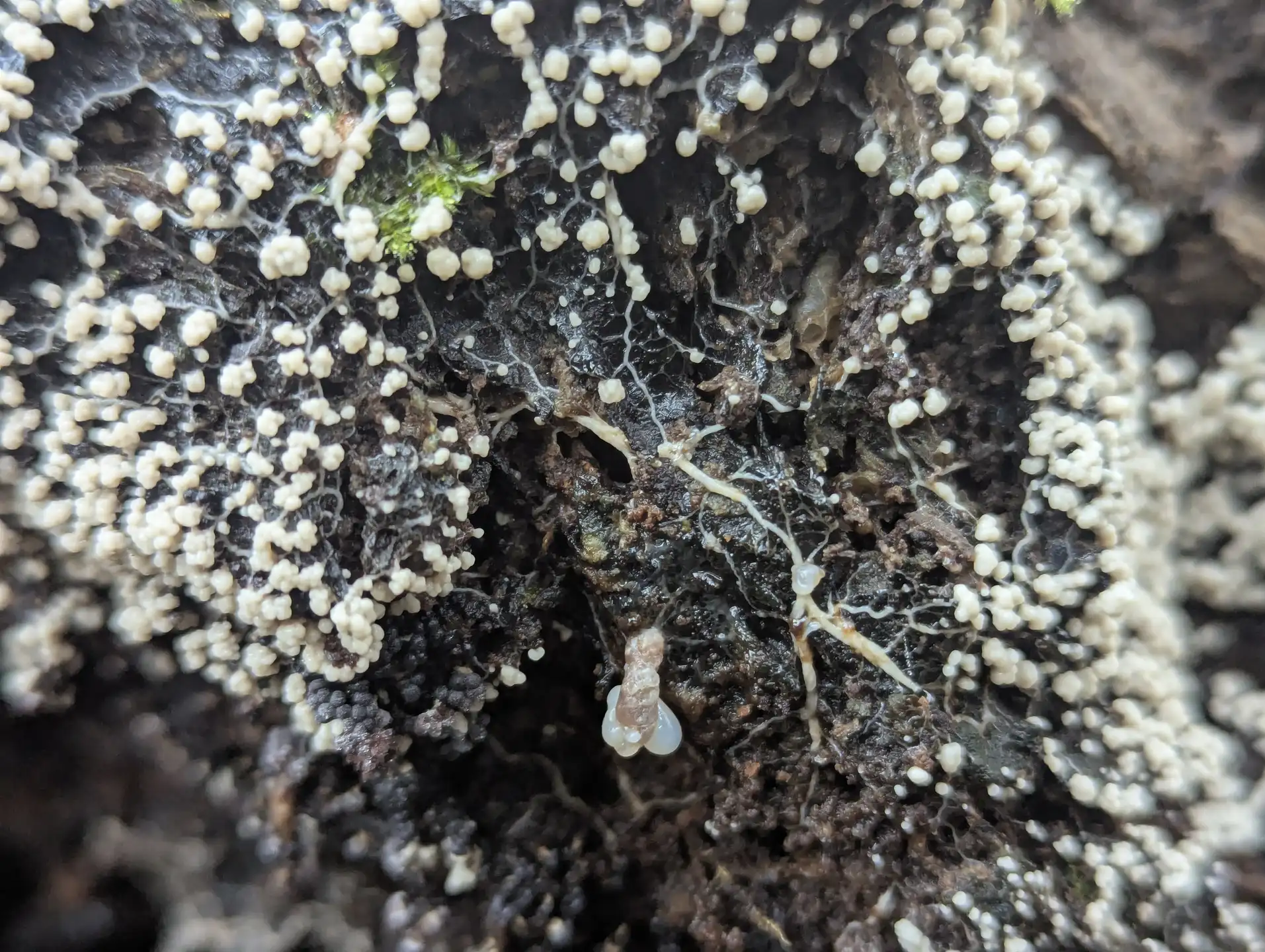
Strumpshaw Fen – 20th December 2025
These two photos below show an area of the plasmodium that is still a little amorphous with the globular sporangia beginning to form.
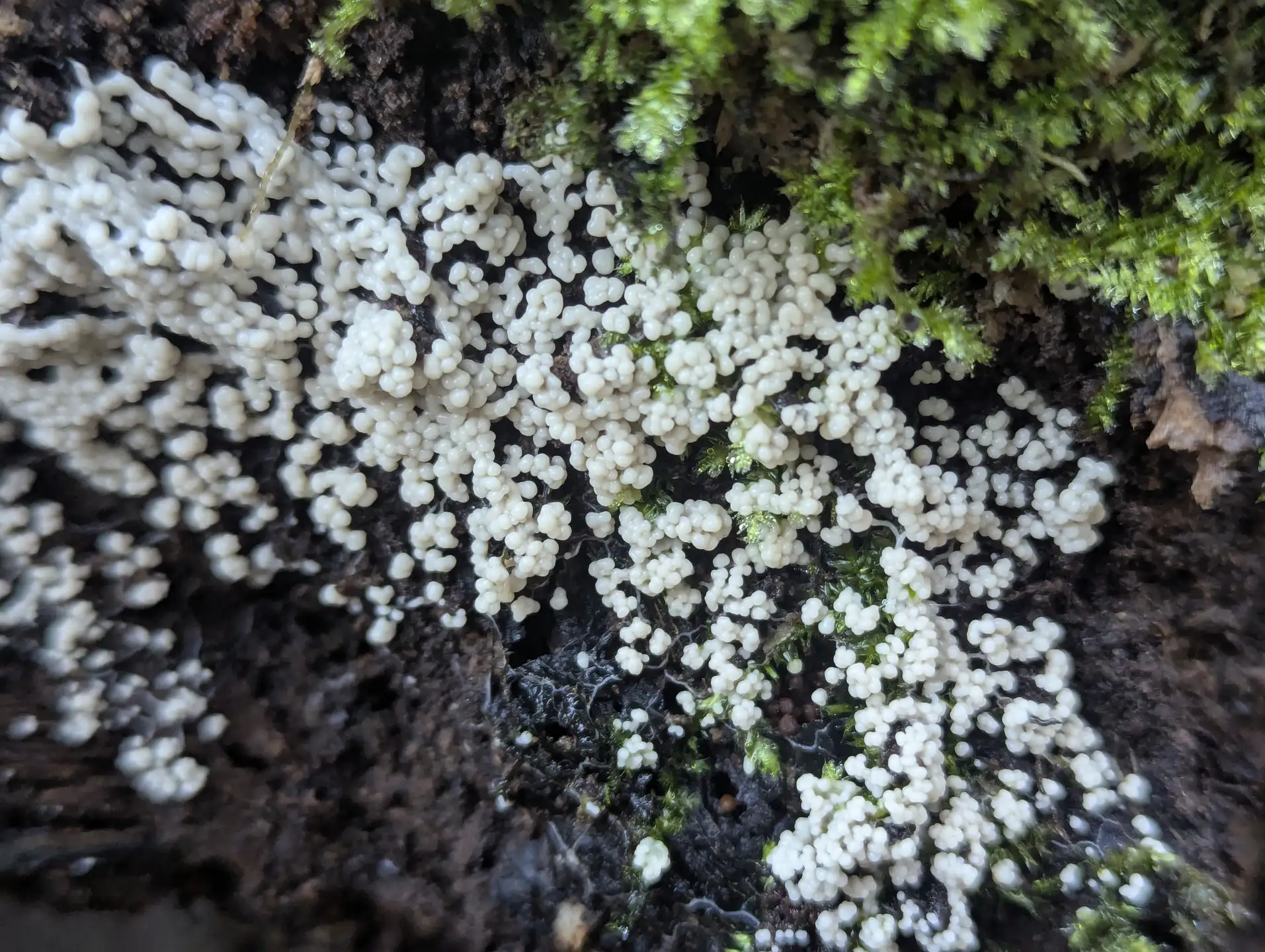
Strumpshaw Fen – 20th December 2025
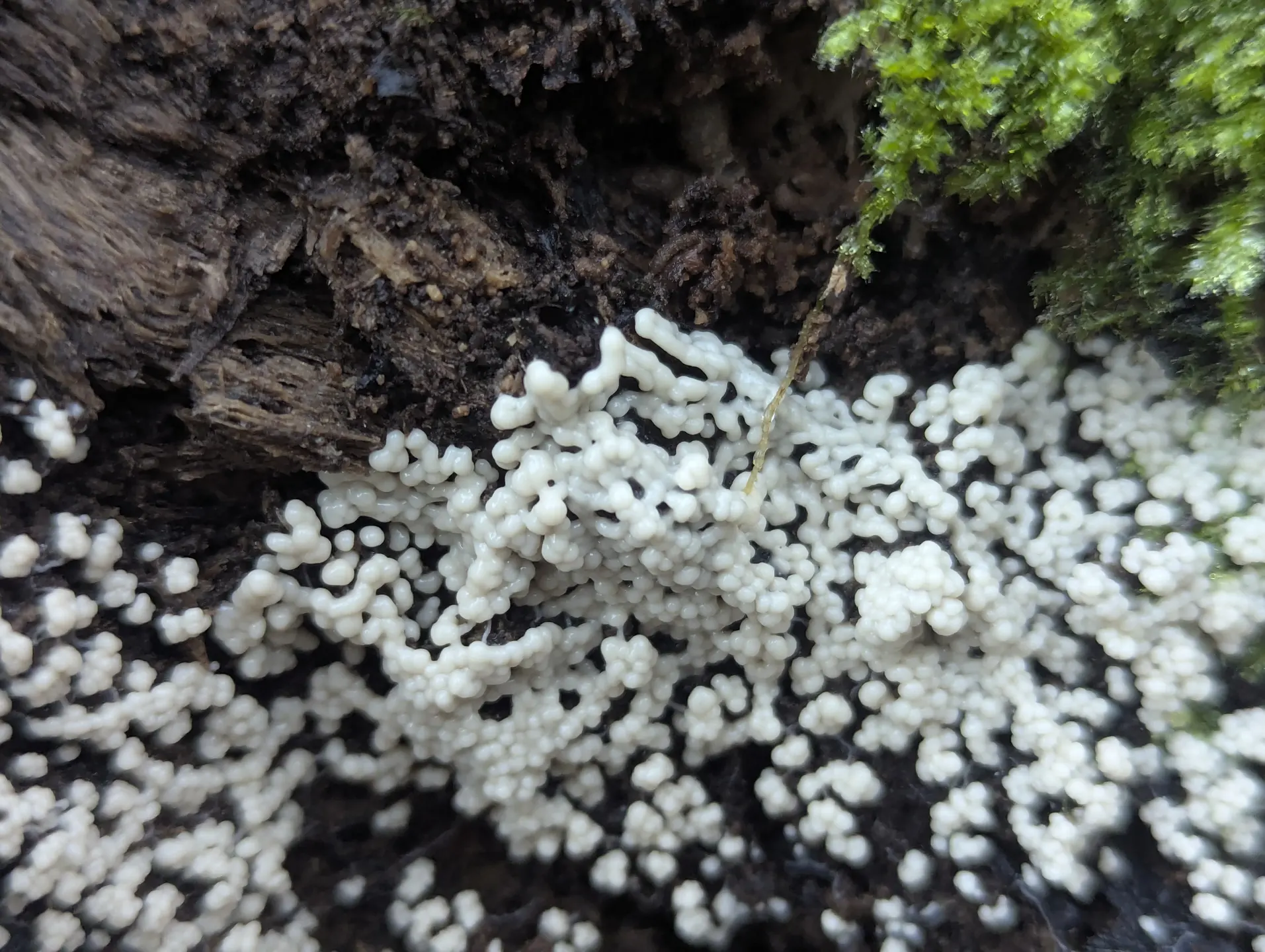
Strumpshaw Fen – 20th December 2025
We returned in the evening and the daughter spotted some maturing sporangia that I had missed in the morning – further along the stump, left of the white plasmodium.
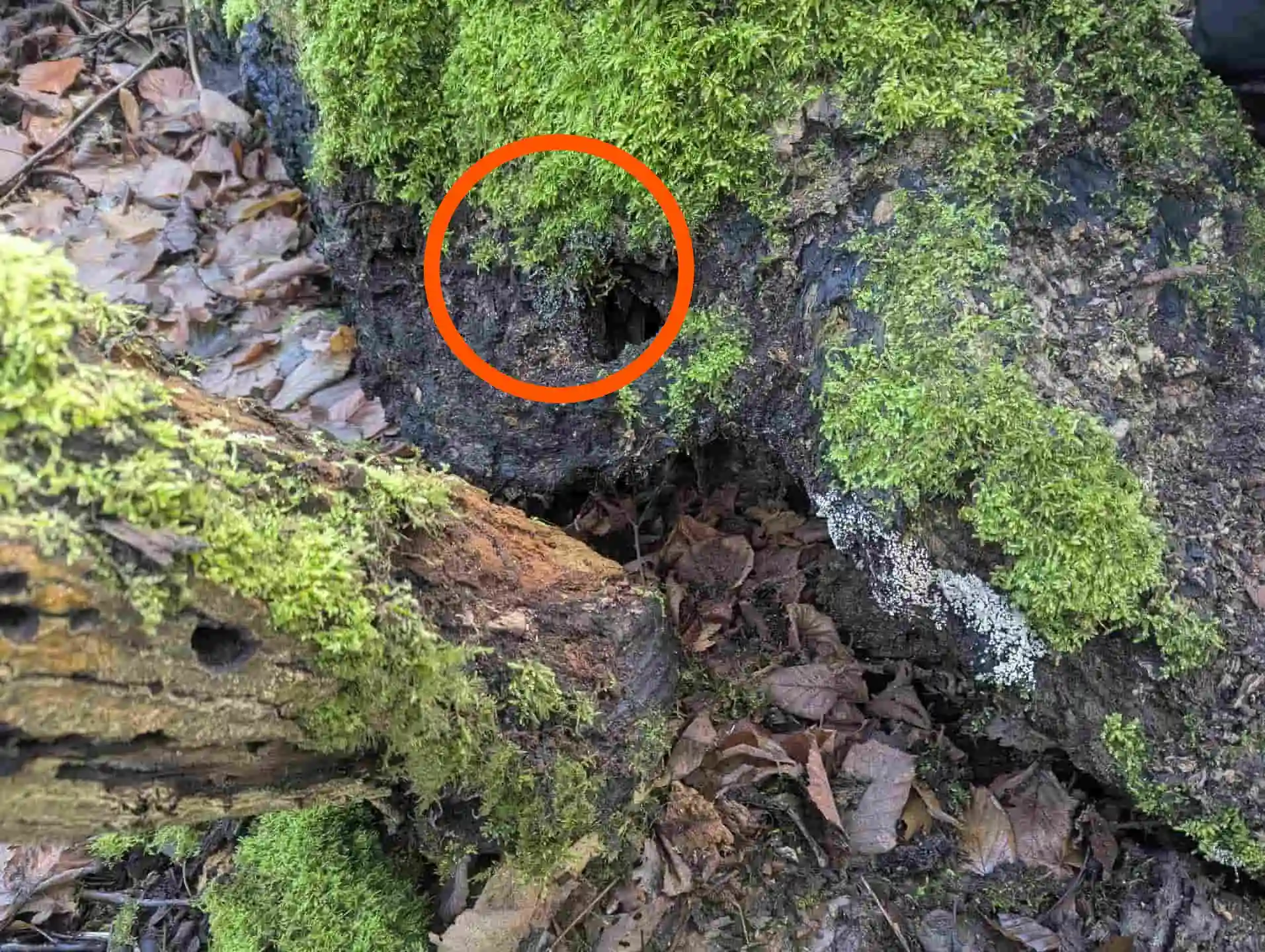
Strumpshaw Fen – evening of 20th December 2025
But were these sporangia the same slime mould species as the white plasmodium...?
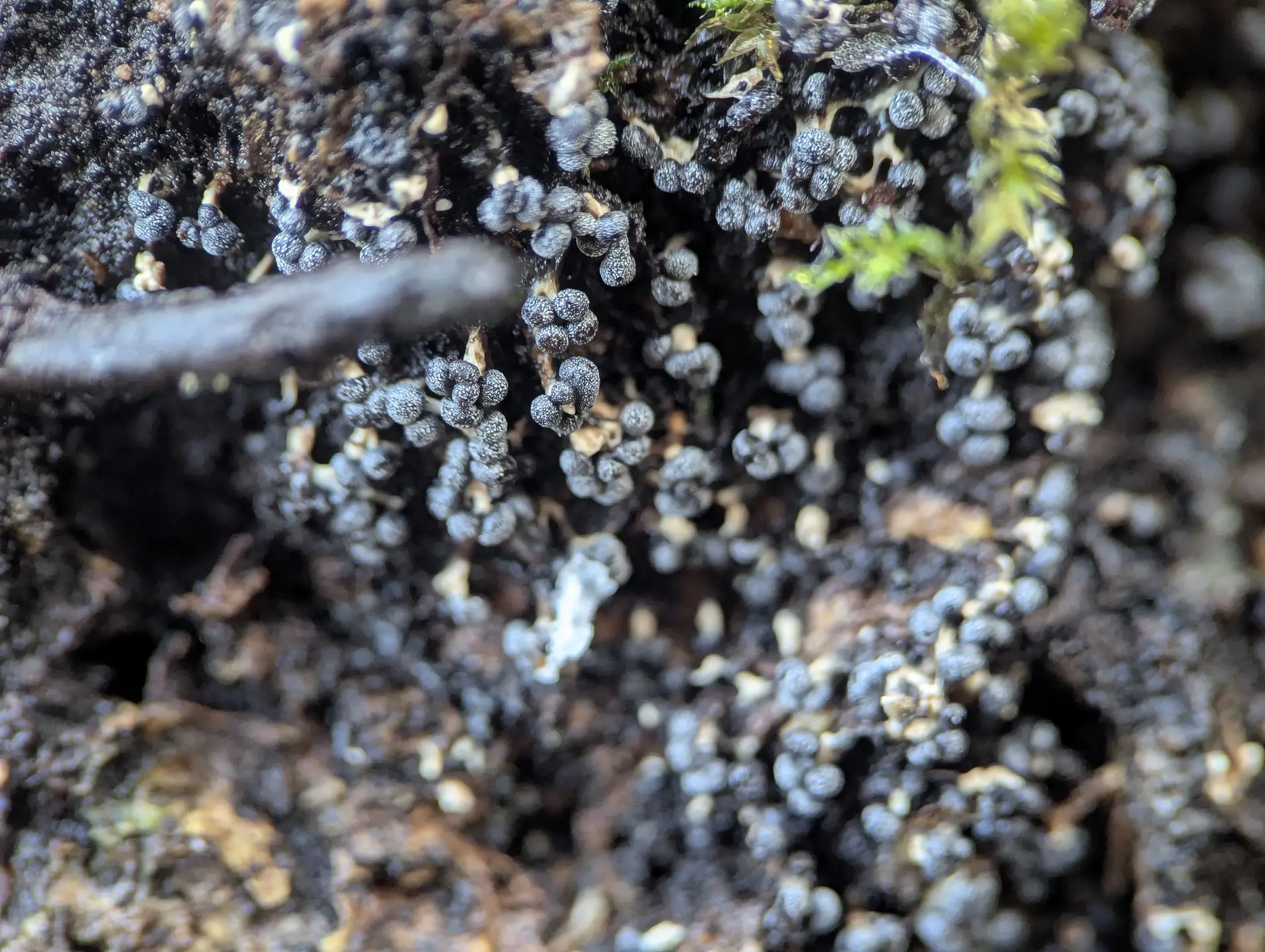
Strumpshaw Fen – evening of 20th December 2025
21st December 2025
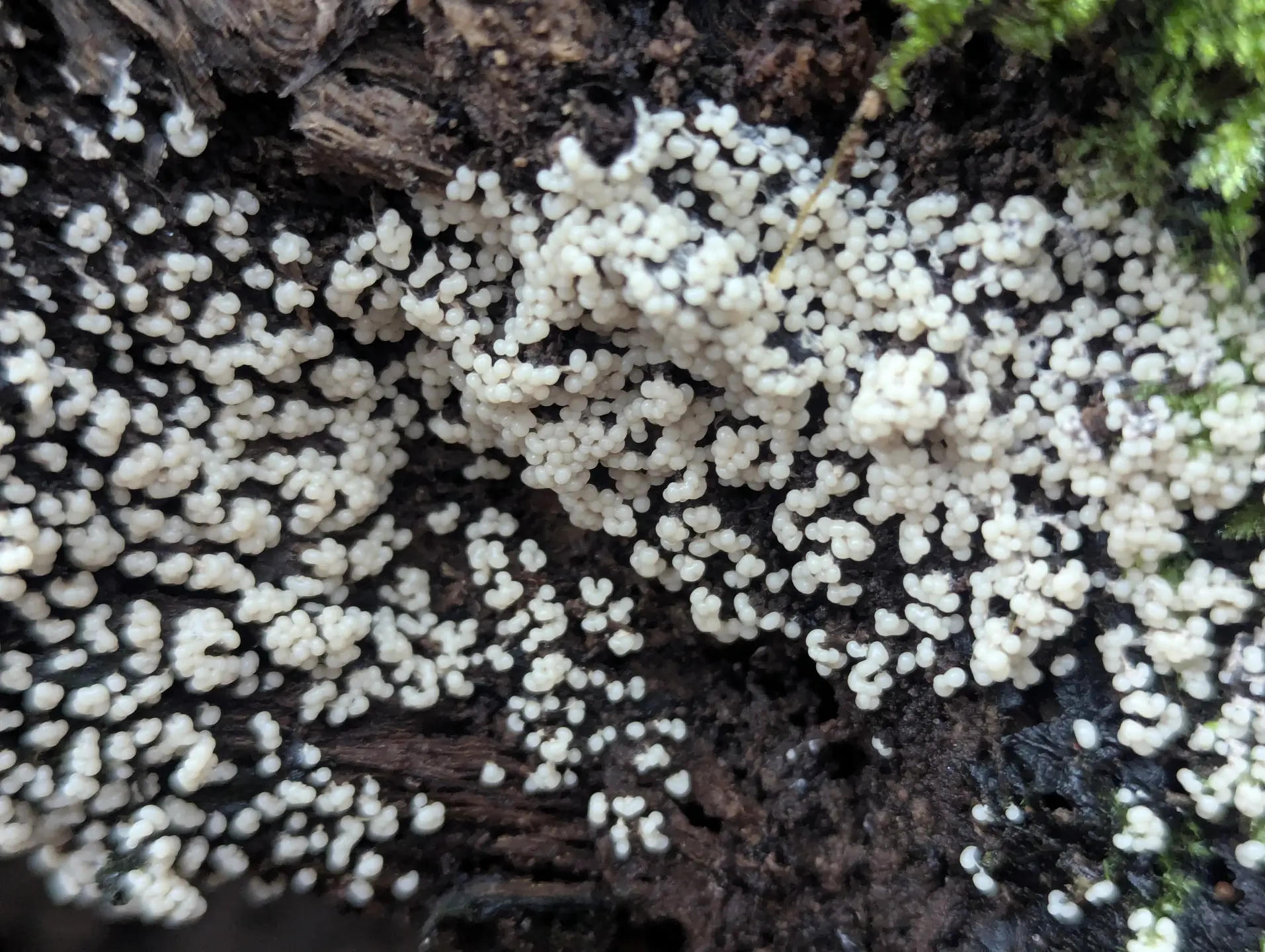
Strumpshaw Fen – 21st December 2025
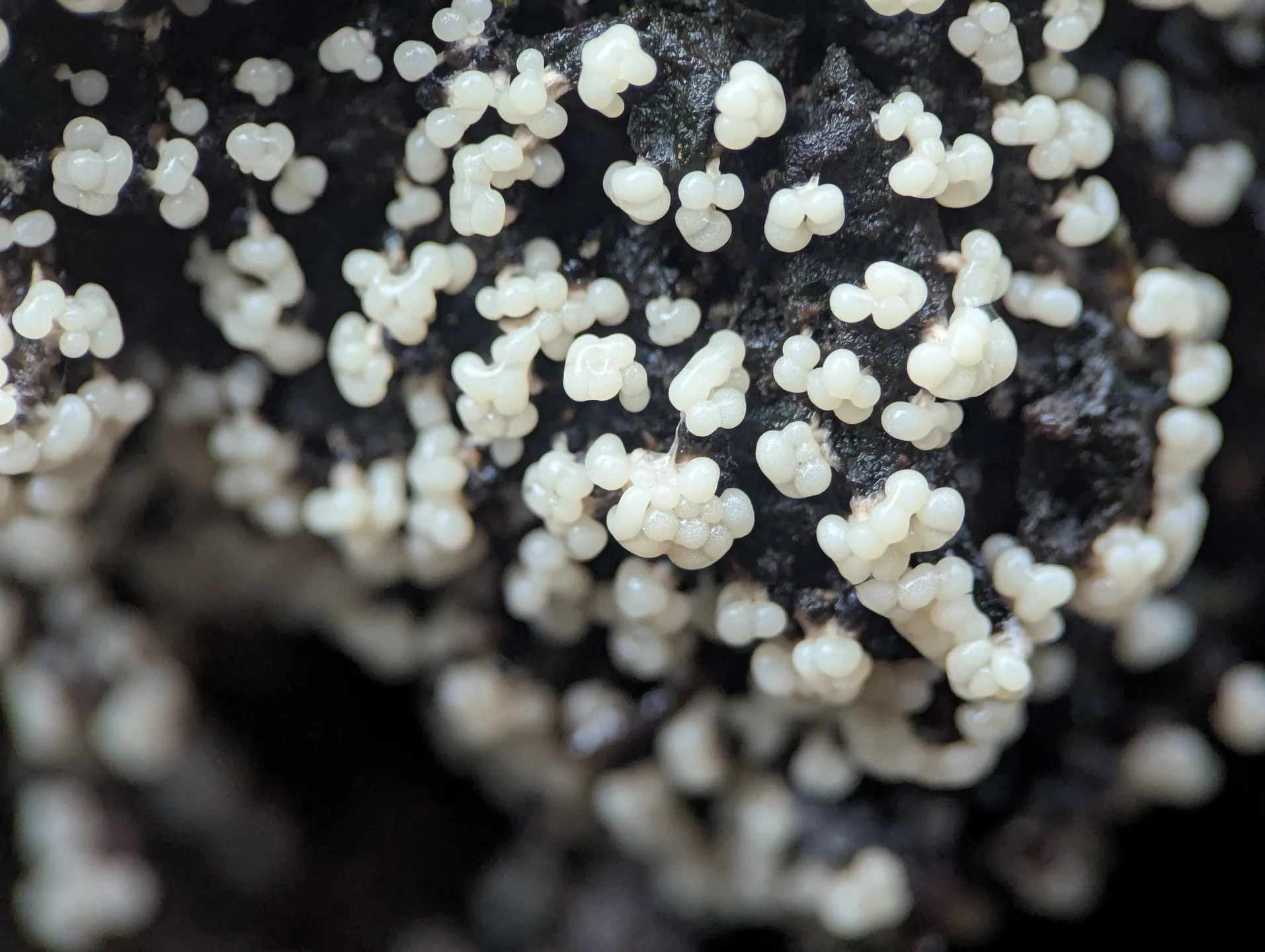
Strumpshaw Fen – 21st December 2025
This next photo shows an intricate network of plasmodial veins.
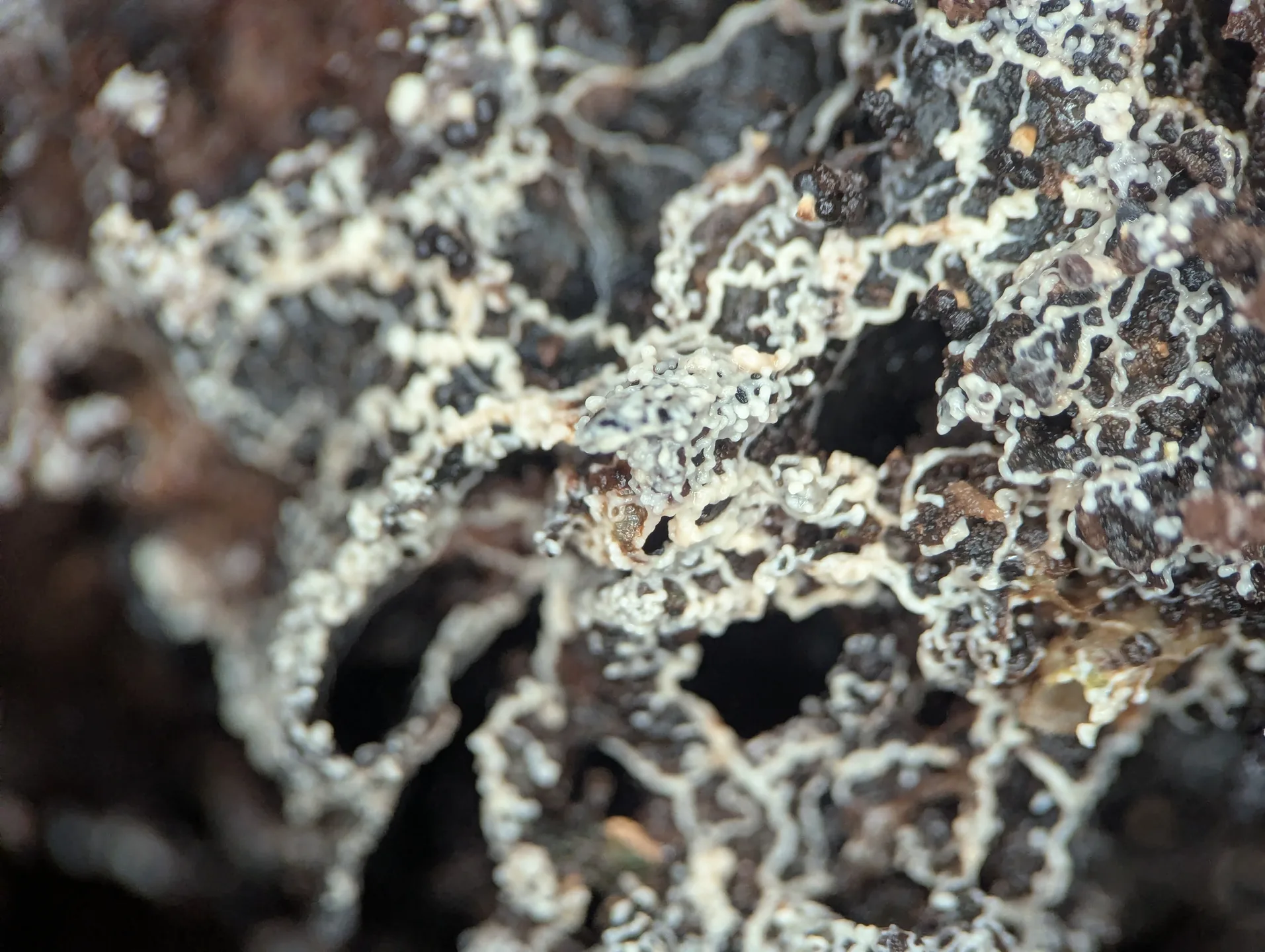
Strumpshaw Fen – 21st December 2025
22nd December 2025
Two days on from when we first spotted the plasmodium, a distinct maturing and colour change of the sporangia was evident – from the white of the earlier sporulating stage to brownish vinaceous (younger) to light bluish grey (older).
Clearly, this is the same species as the adjacent mature sporangia from the first day.
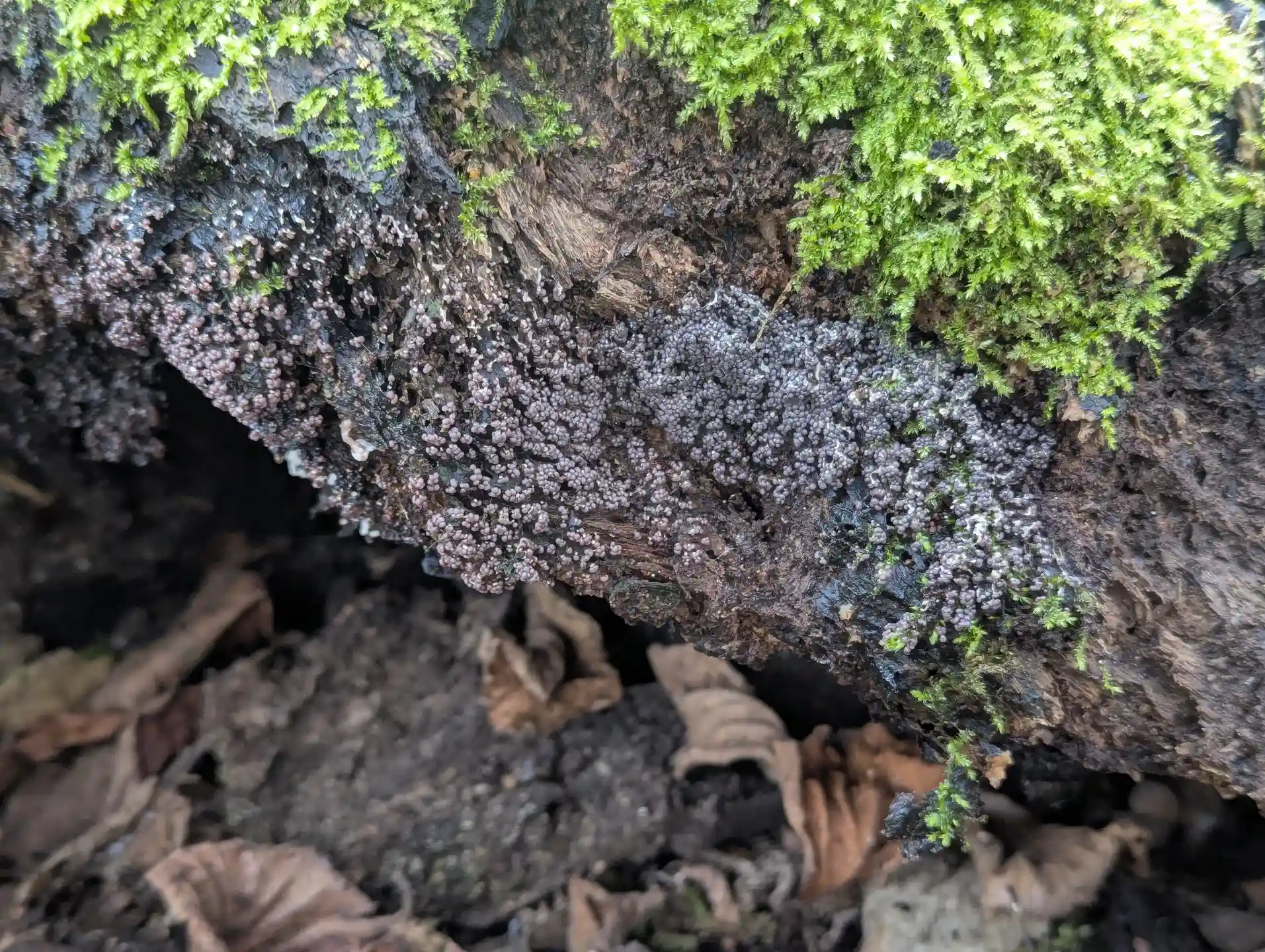
Strumpshaw Fen – 22nd December 2025
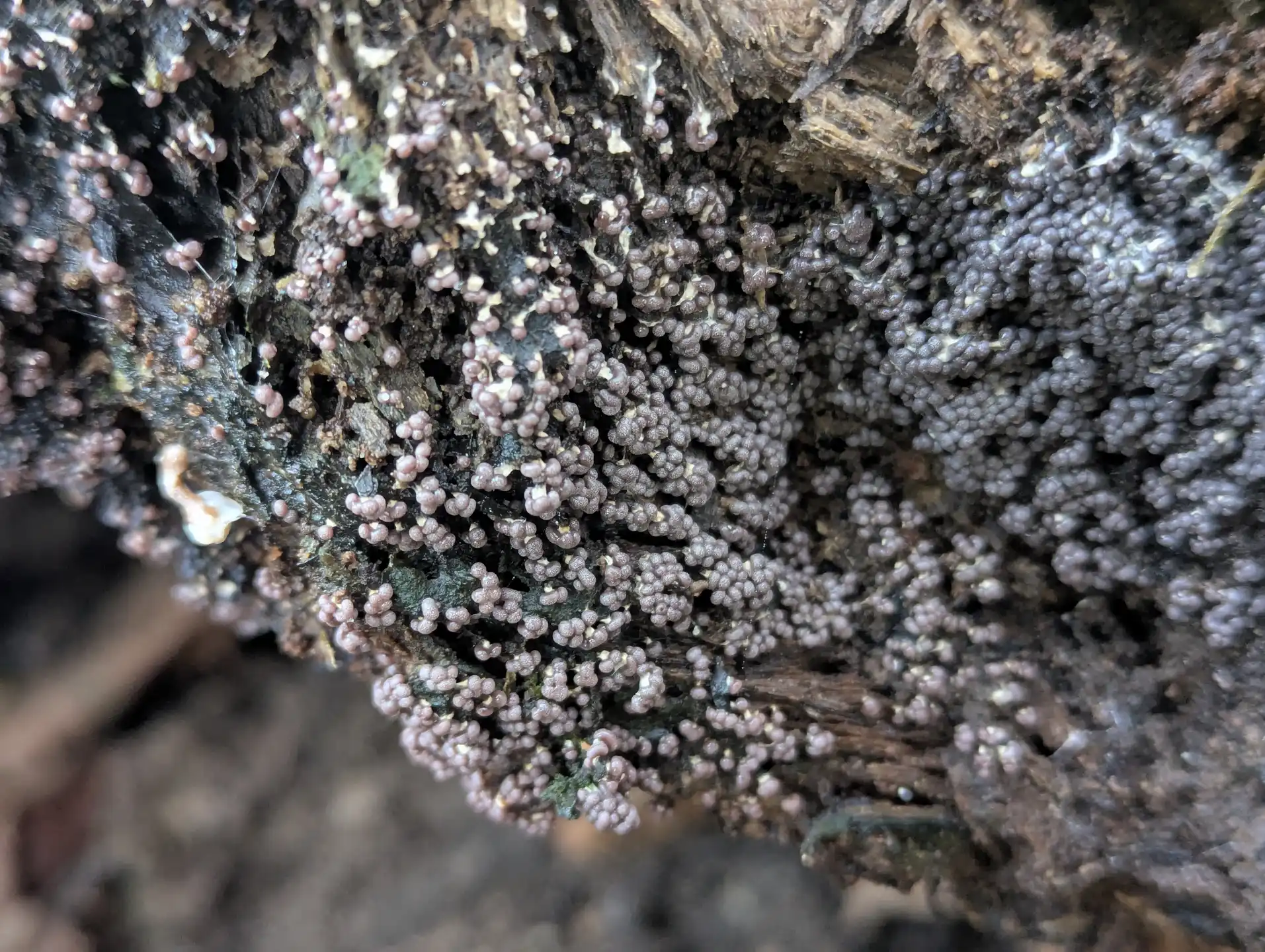
Strumpshaw Fen – 22nd December 2025
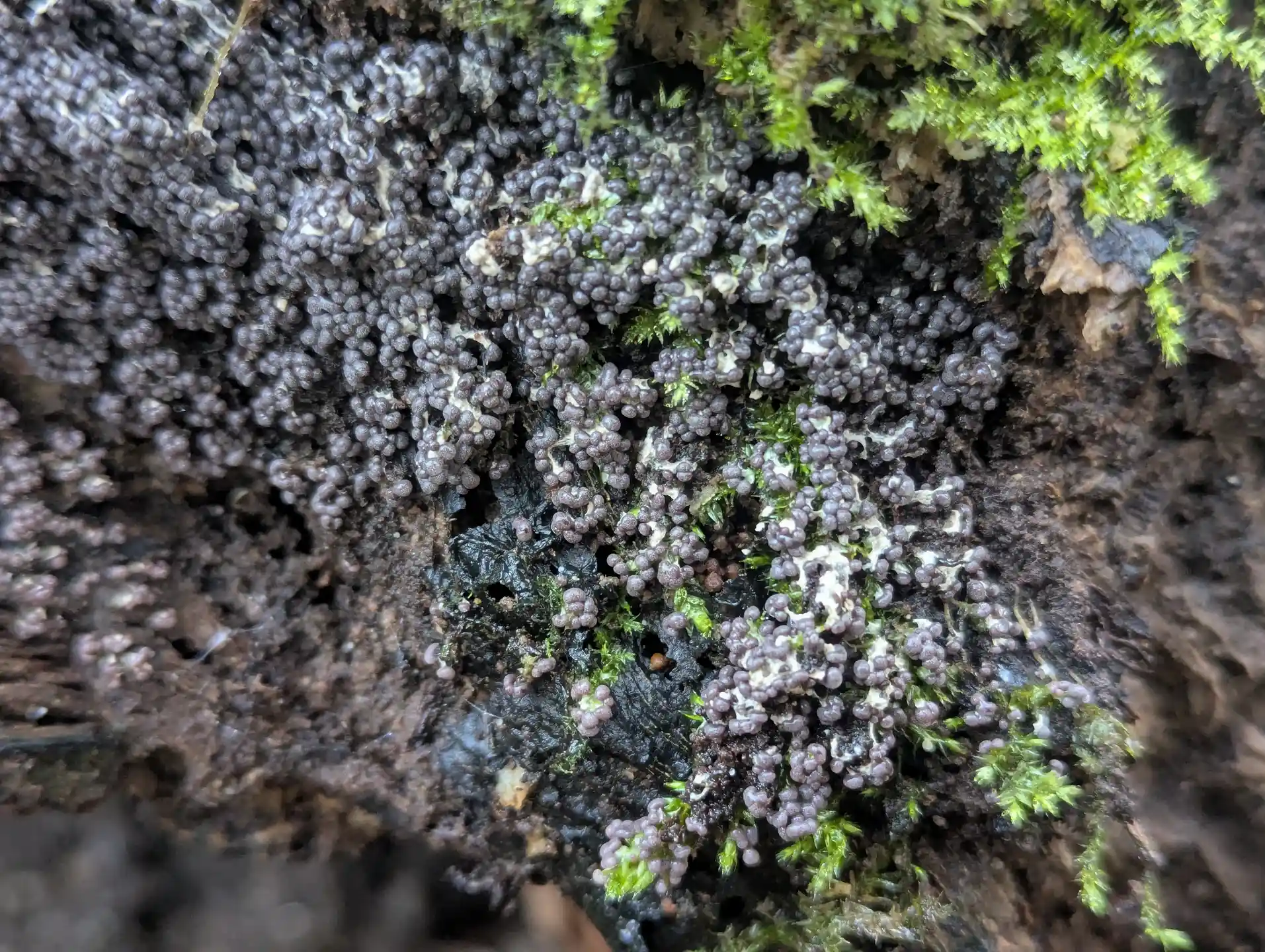
Strumpshaw Fen – 22nd December 2025
Notice the out of focus younger white sporangia in the photo below.
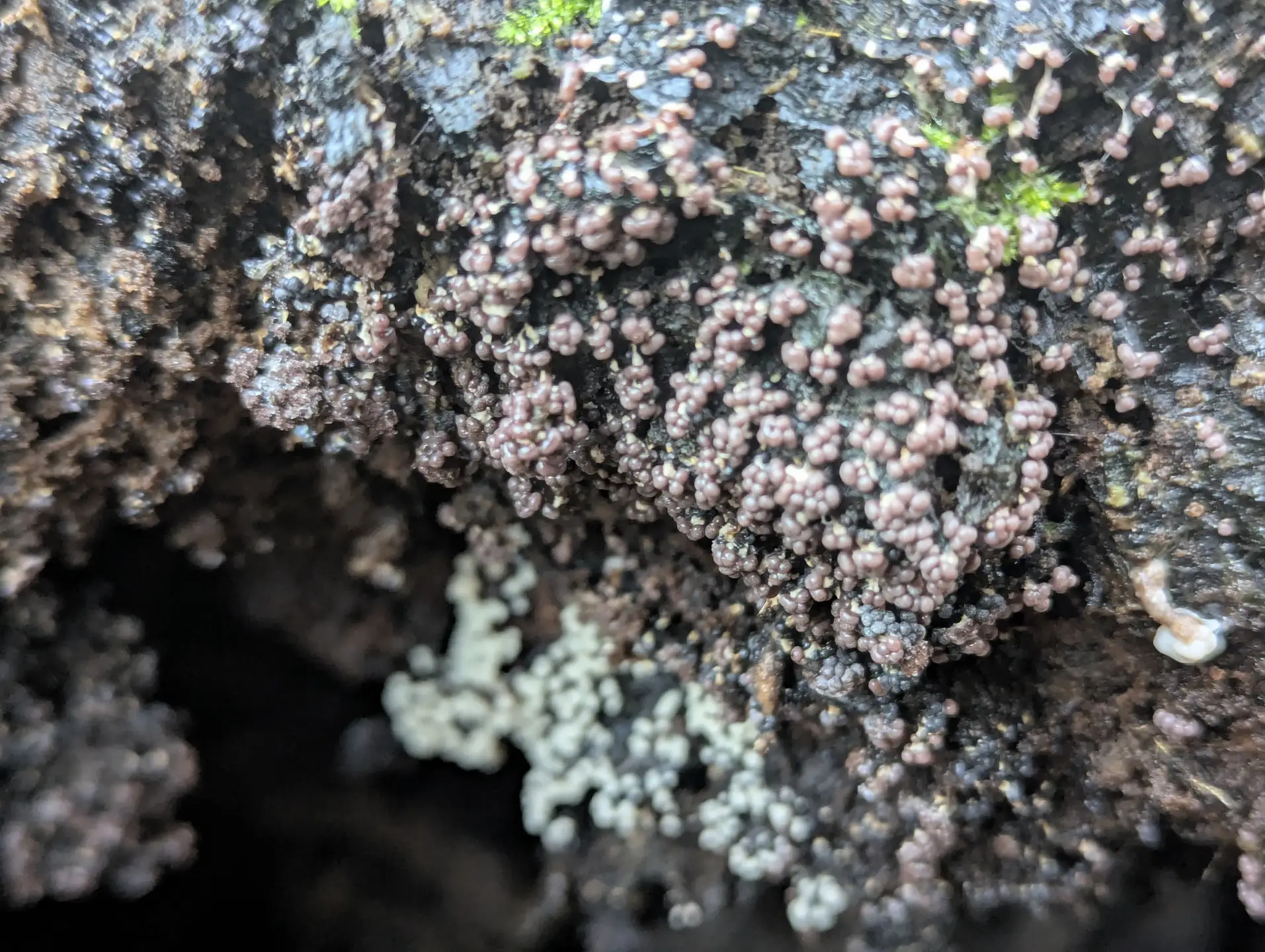
Strumpshaw Fen – 22nd December 2025
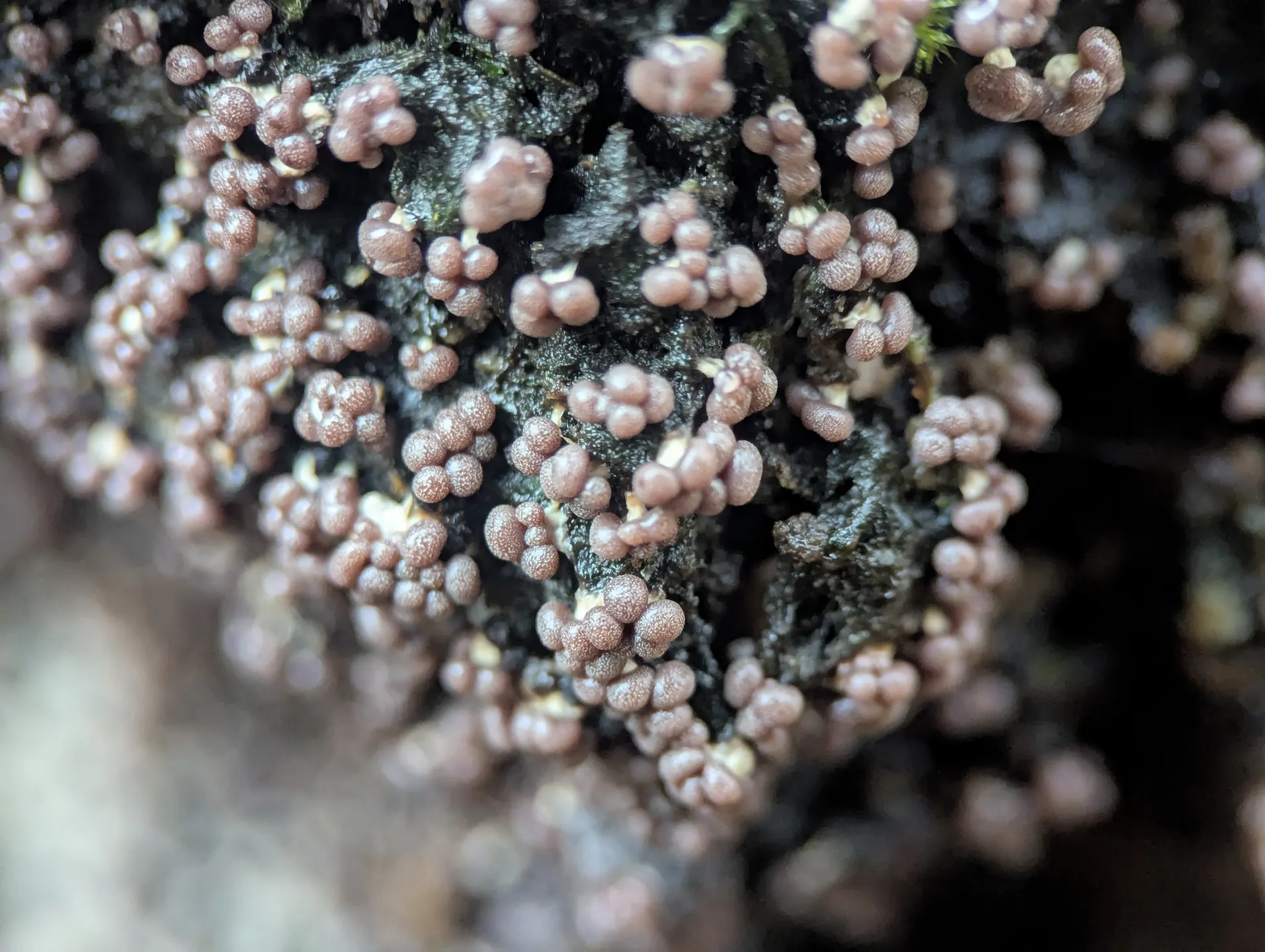
Strumpshaw Fen – 22nd December 2025
23rd December 2025
The next day the sporangia were no longer moist and had taken on a matt appearance – ranging from light bluish grey to ash grey.
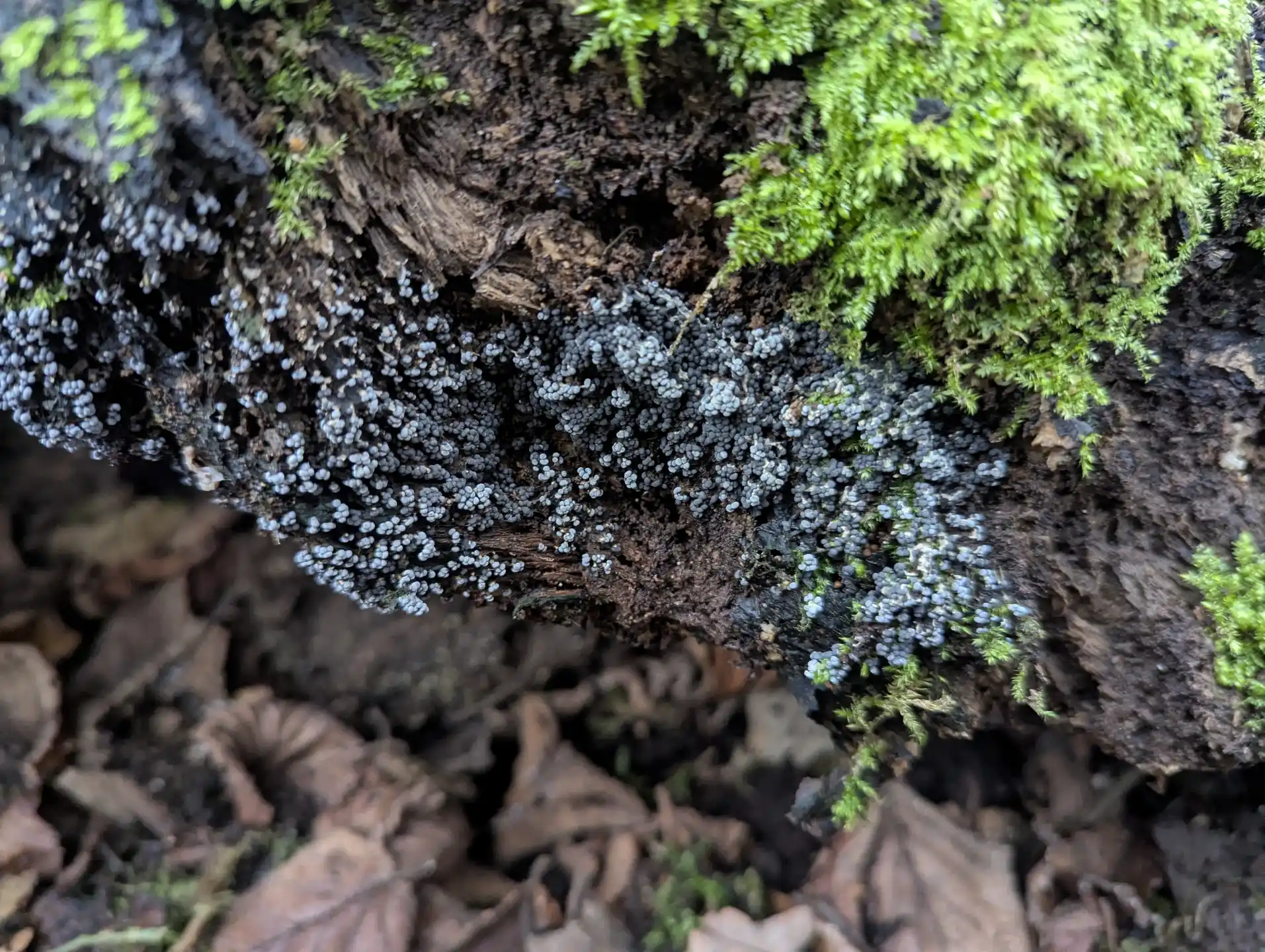
Strumpshaw Fen – 23rd December 2025
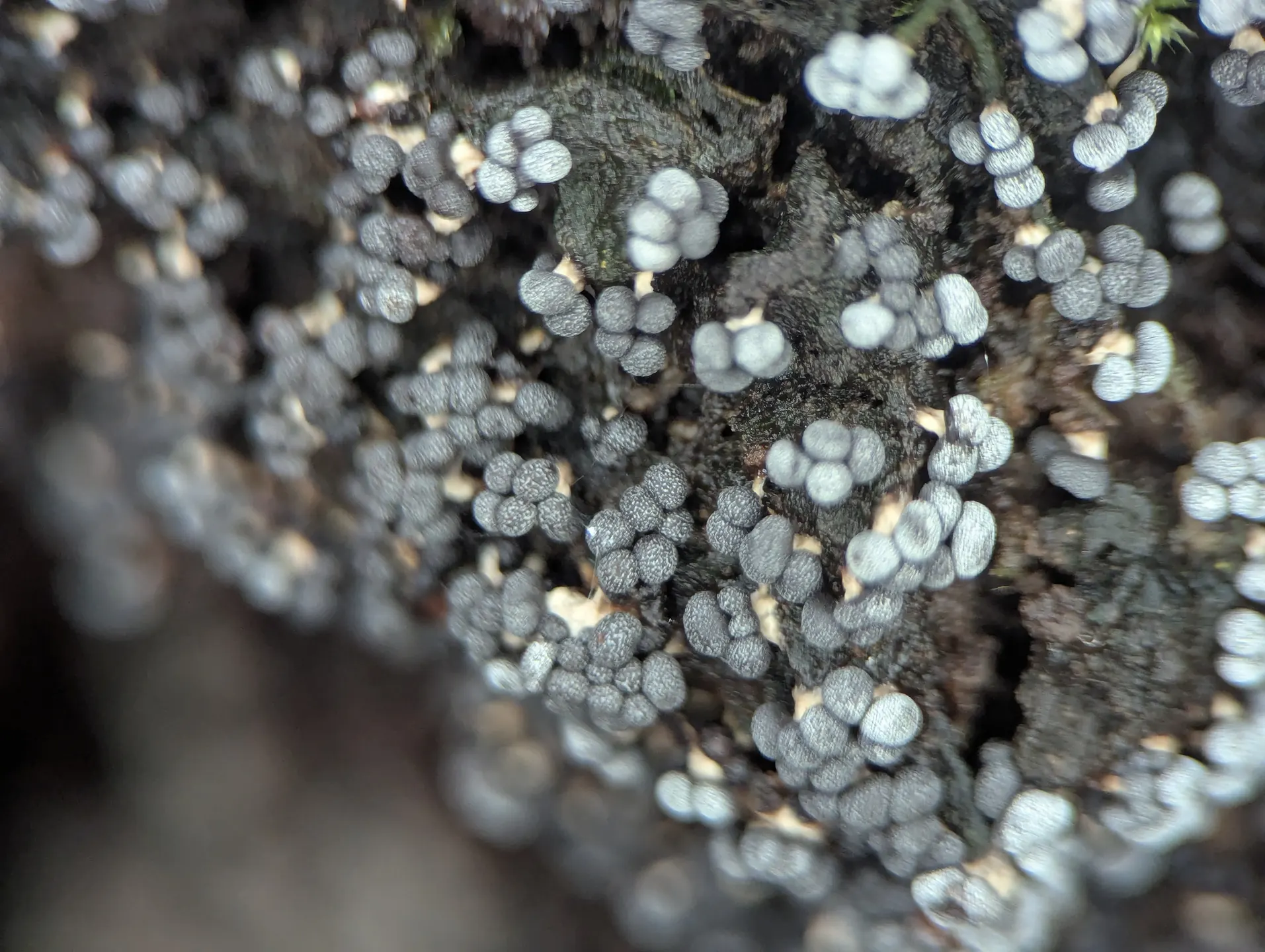
Strumpshaw Fen – 23rd December 2025
28th December 2025
We returned five days later to find that most of the sporothecae had turned pale bluish grey.
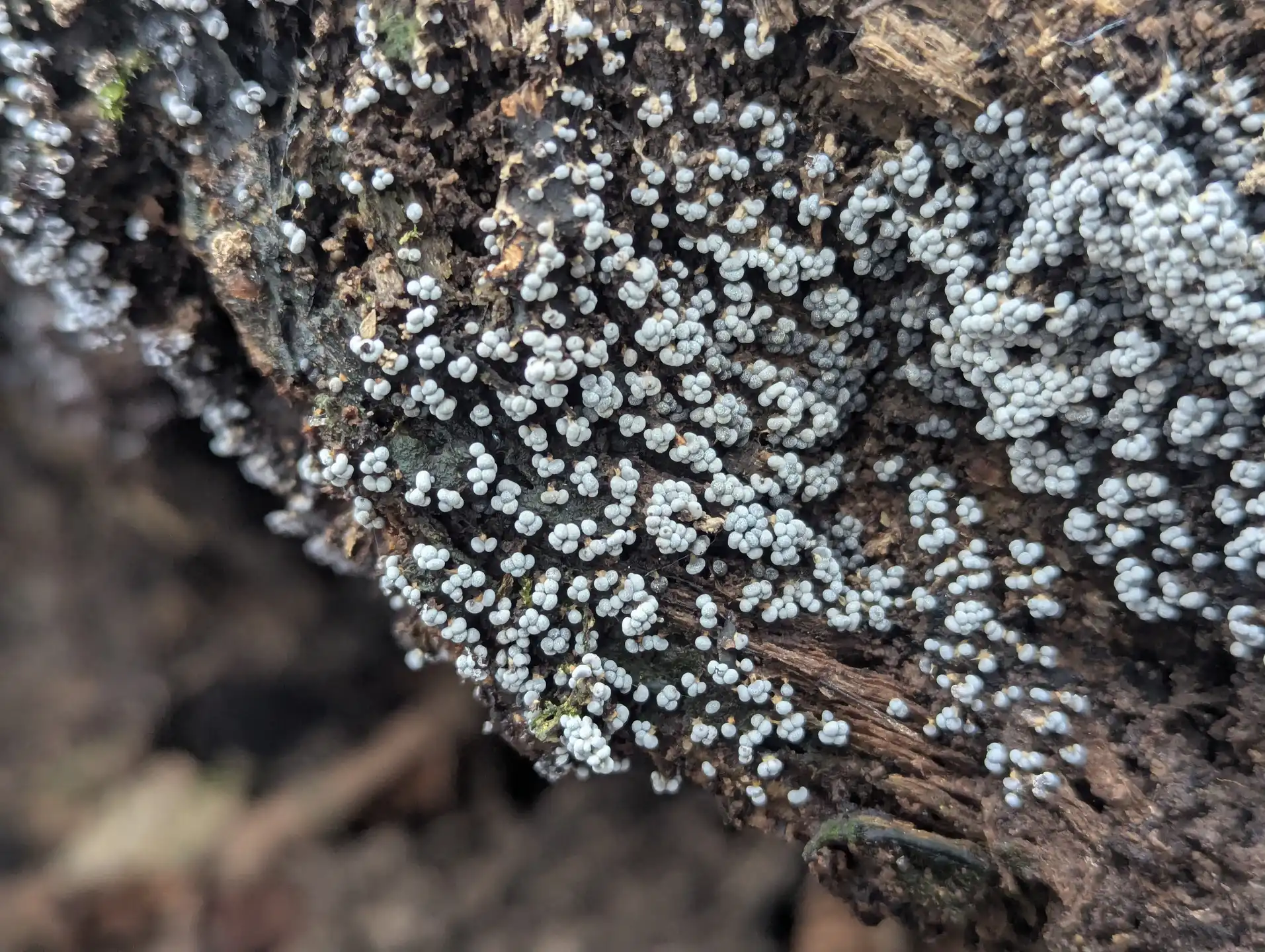
Strumpshaw Fen – 28th December 2025
1st January 2026
And three days later, the sporangia were all dehiscing, revealing their brown spore masses.
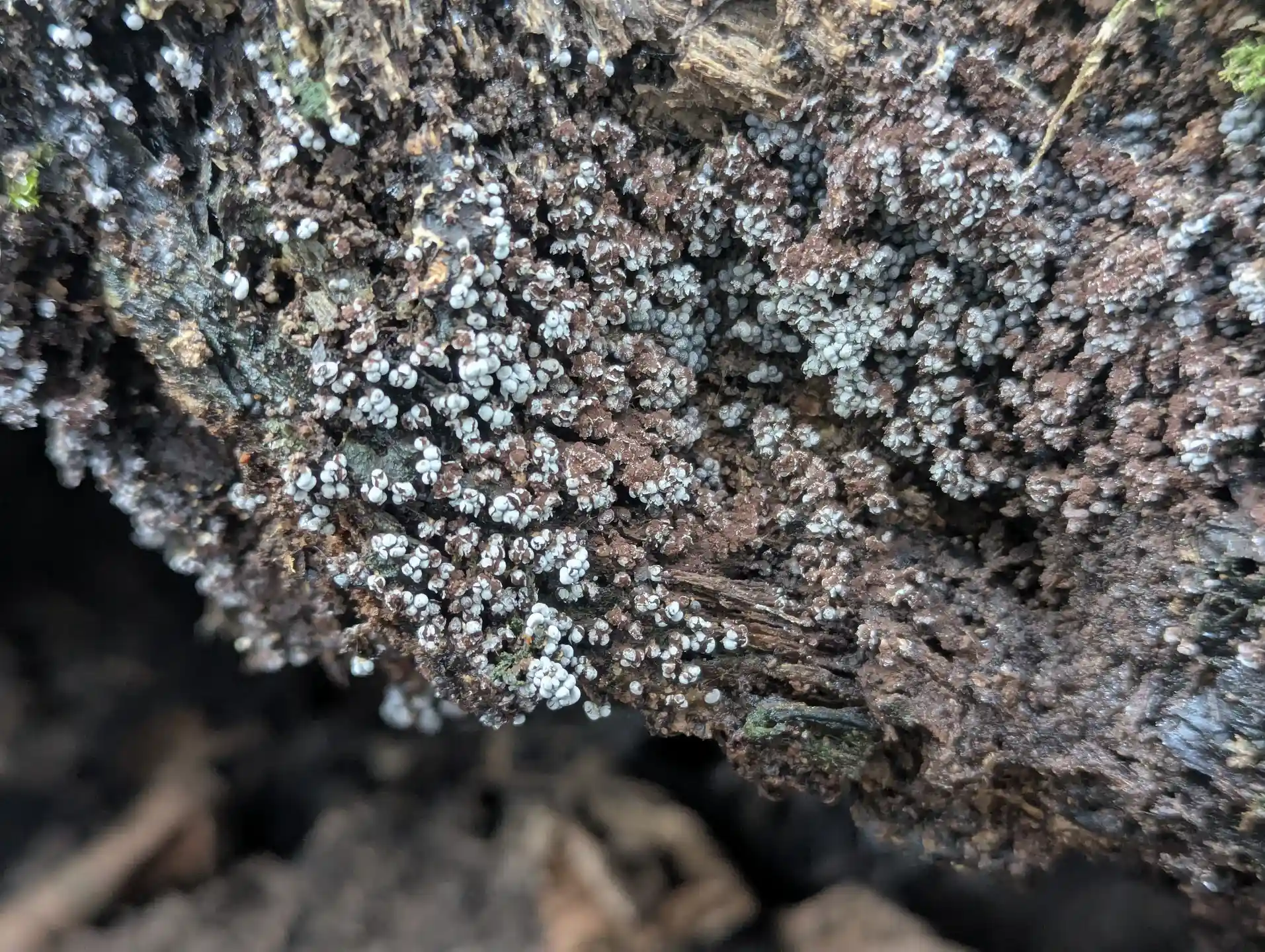
Strumpshaw Fen – 1st January 2026
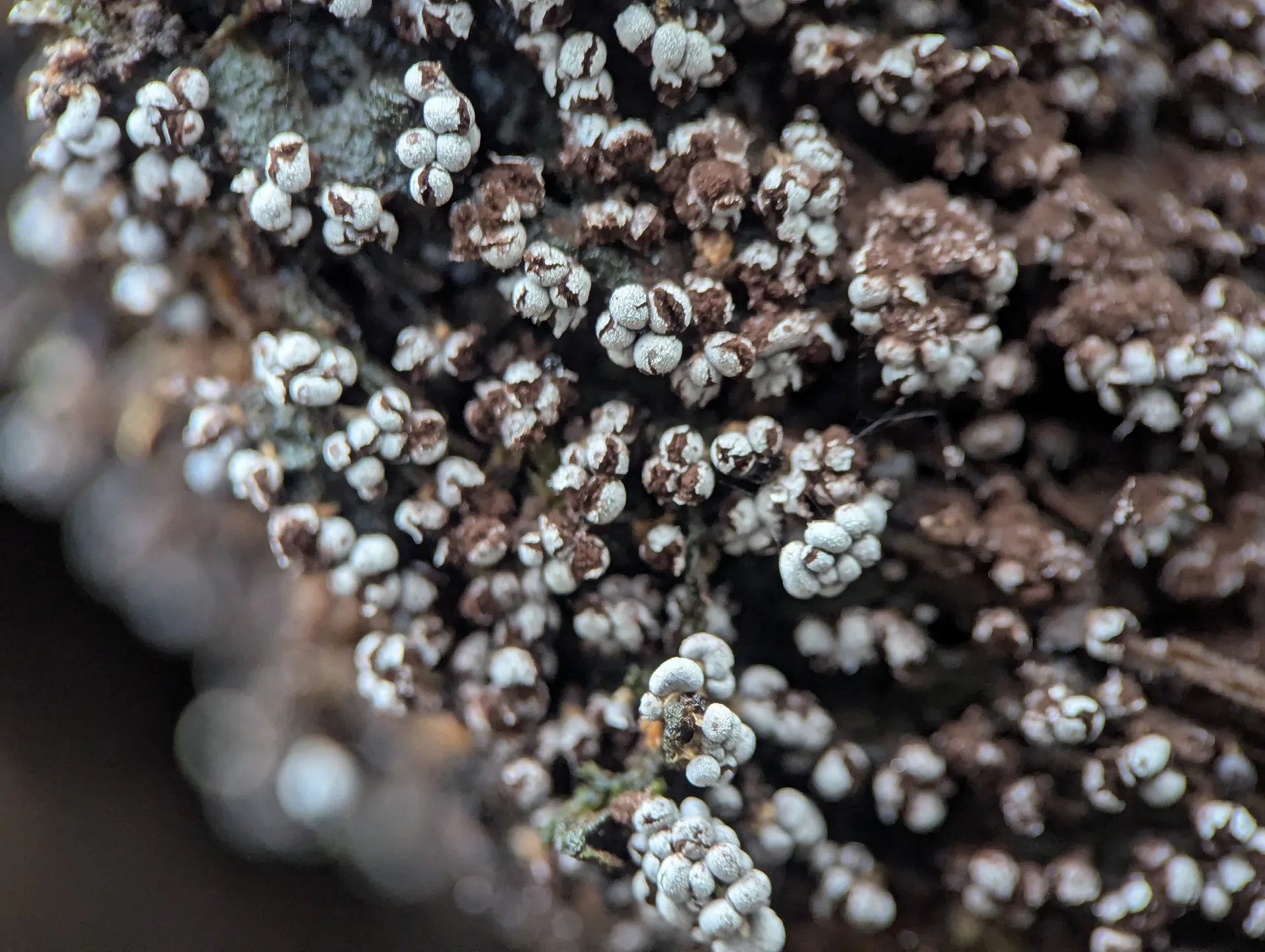
Strumpshaw Fen – 1st January 2026
Strumpshaw Fen is a nature reserve managed by the RSPB adjacent the River Yare, east of Norwich in Norfolk.
RSPB Strumpshaw Fen webpage RSPB Strumpshaw Fen Wikipedia entry