Strumpshaw Fen Fungi & Slime Moulds – October 2025
At the Basecamp loop we were excited that we had found some unknown club (to us) but they were just fungi stems (probably).
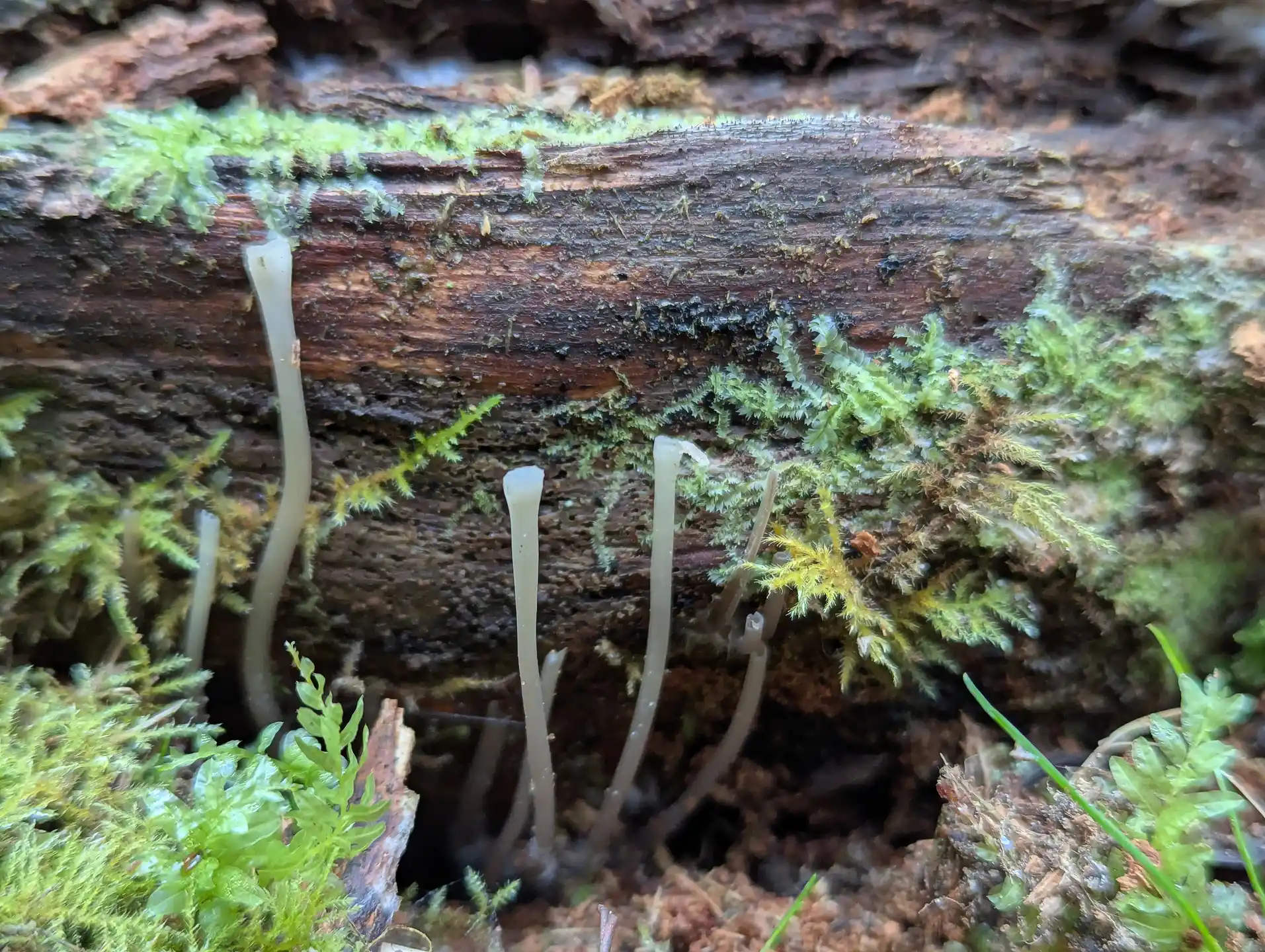
Strumpshaw Fen – 19th October 2025
And some mouldy fungi. Could the cotton wool-like fuzzy hyphae growths be the parasitic fungus Syzygites megalocarpus ?

Strumpshaw Fen – 19th October 2025
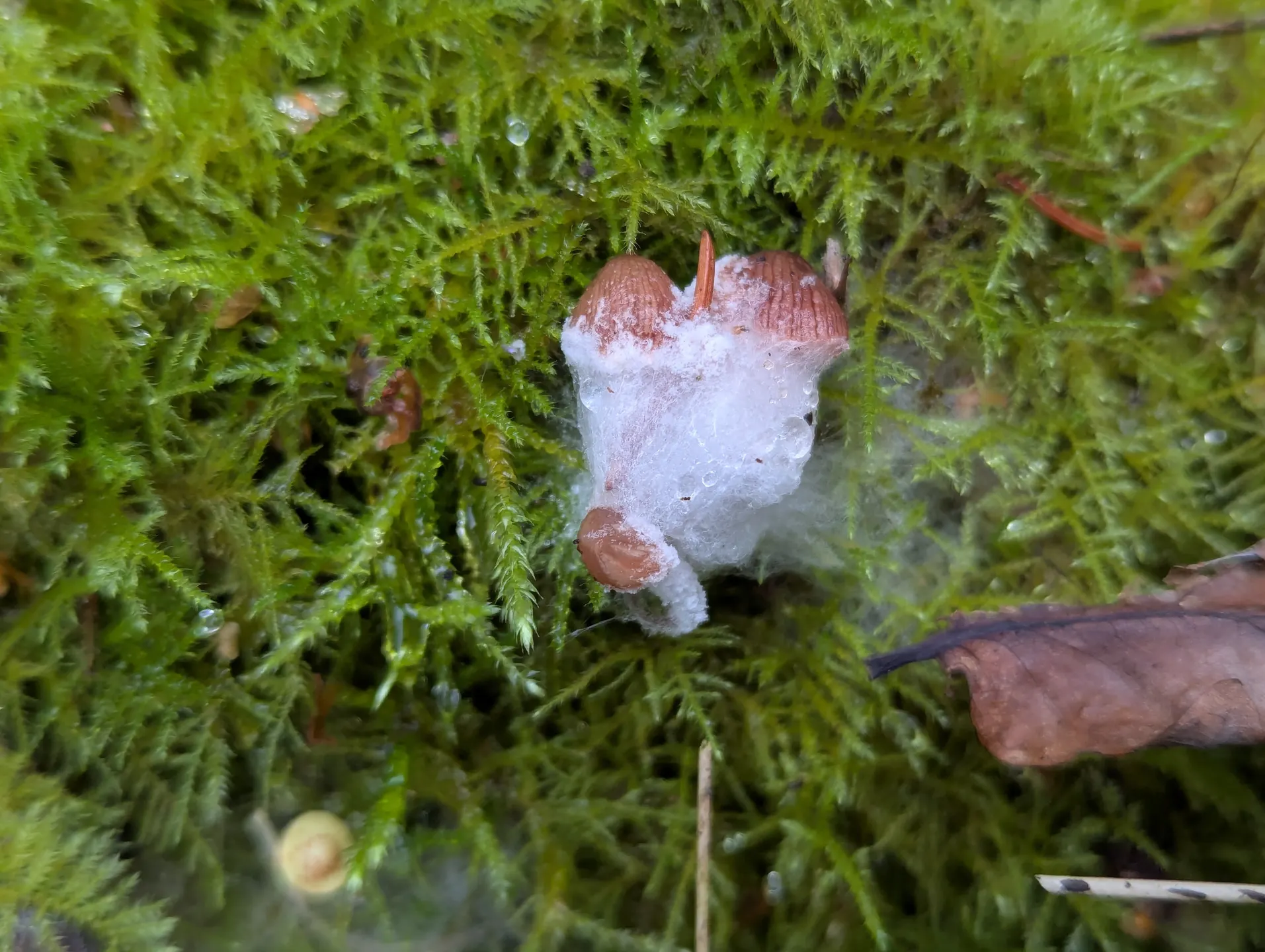
Strumpshaw Fen – 19th October 2025

Strumpshaw Fen – 19th October 2025
Syzygites megalocarpus is monotypic meaning that is is the sole species in the genus
On the same mossy section of trunk – Spinellus fusiger (bonnet mould) on an unidentified fungus cap – fine translucent stalks with tiny black spherical heads.
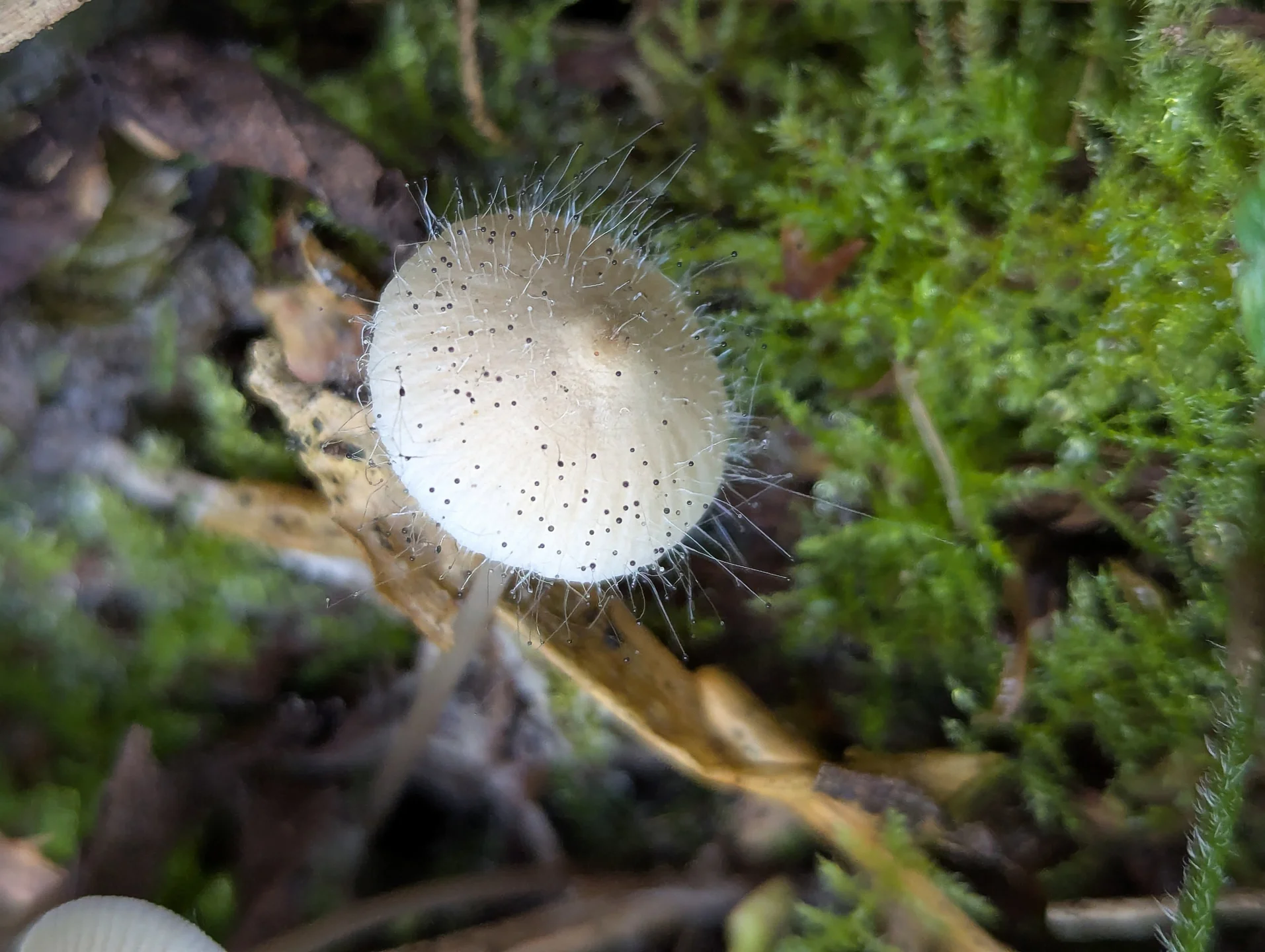
Strumpshaw Fen – 19th October 2025
At first I thought that the slime mould below was Tubifera ferruginosa, but the colour didn’t feel quite right and the sporangial forms more individualistic than the typical form of a Tubifera ferruginosa pseudoaethalium. The sporangia also had distinct stalks. Maybe this is Heterotrichia ferruginea ? But in his ID handbook, Bruce Ing notes that the hypothallus of Heterotrichia ferruginea is yellow brown, whereas this slime mould’s hypothallus is white. Or could this be Heterotrichia obvelata ?
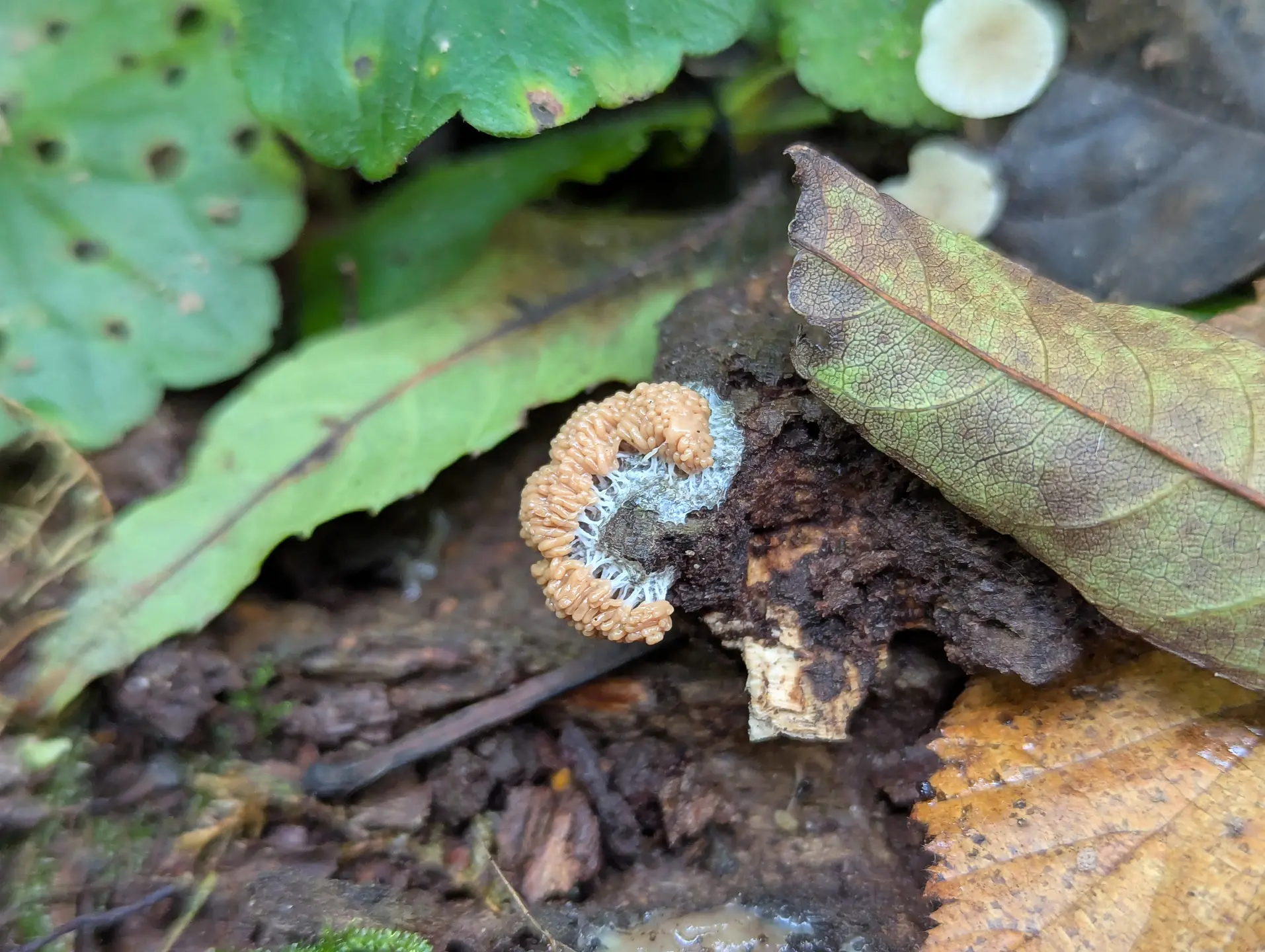
Strumpshaw Fen – 19th October 2025
Thinking about it, these moist, pinkish buff sporangia do have a similar form to the Heterotrichia obvelata that we found earlier in 2025, although back then we did not observe the slime mould between its white primordial forms and the mature pale-beige, matte sporangial forms.
The wine-red sporangia below are Arcyria stipata.
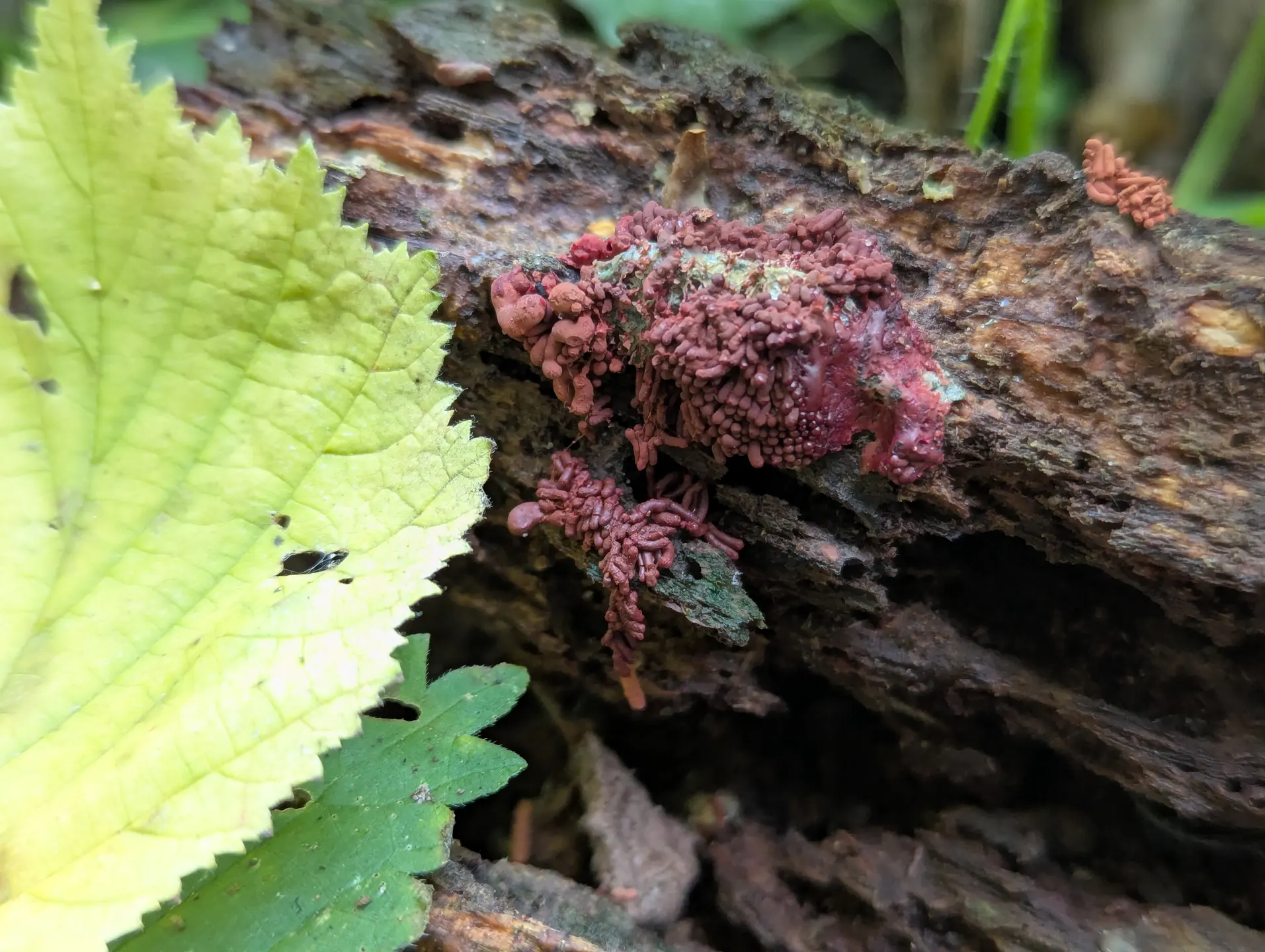
Strumpshaw Fen – 19th October 2025
I wasn’t going to show this photo of these unidentifiable white slime mould primordia until I noticed a single pale yellowish-green eyelash fungus hiding in plain sight! We’ve seen many common eyelash fungi (Scutellinia scutellata) at Strumpshaw Fen over the years but not this colour. Maybe this is a Scutellinia setosa or Scutellinia erinaceus ?

Strumpshaw Fen – 19th October 2025
Opposite the bench – at the end of the drainage‑channel path – at the edge of the alder carr – I spotted something in the moist ground that I wanted to be a slime mould but I couldn’t place it – it’s morphology didn’t fit with my expectations. But that’s a limitation of my knowledge of slime moulds in the field.

Strumpshaw Fen – 19th October 2025
I’m wondering if this is the plasmodium of Lignydum muscorum (formally Fuligo muscorum). If this is a plasmodium – there is some resemblance to some online images of claimed Lignydum muscorum. And in his ID handbook of slime moulds, Ing describes Lignydum muscorum as having an apricot plasmodium.
Also in the vicinity were some individual white clubs – I do like clubs. I think these could be Clavaria acuta – the so-called pointed club. But are the tips pointed? Maybe, but perhaps the tips are more rounded than pointed? And then there’s Clavaria falcata ! Down the rabbit hole I go 🤯It seems falcata and acuta are often considered to represent the same species, although they still appear as separate names in the main nomenclatural databases such as MycoBank and Fungal Names.

Strumpshaw Fen – 19th October 2025

Strumpshaw Fen – 19th October 2025
The white clubs were growing among clusters of Macrotyphula juncea (the slender club), whose rhizomorphs were like a dense mass of tangled threads.
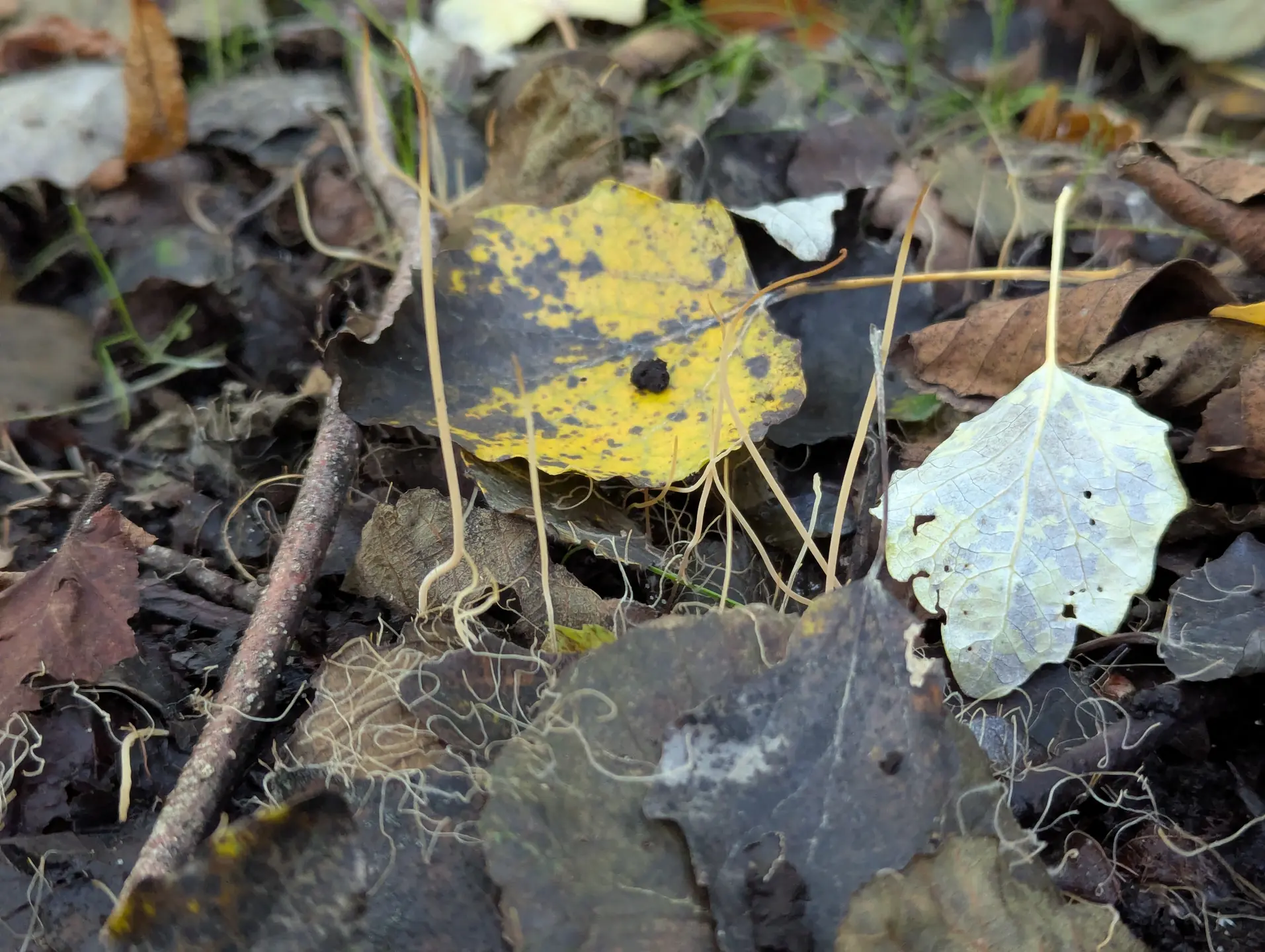
Strumpshaw Fen – 19th October 2025
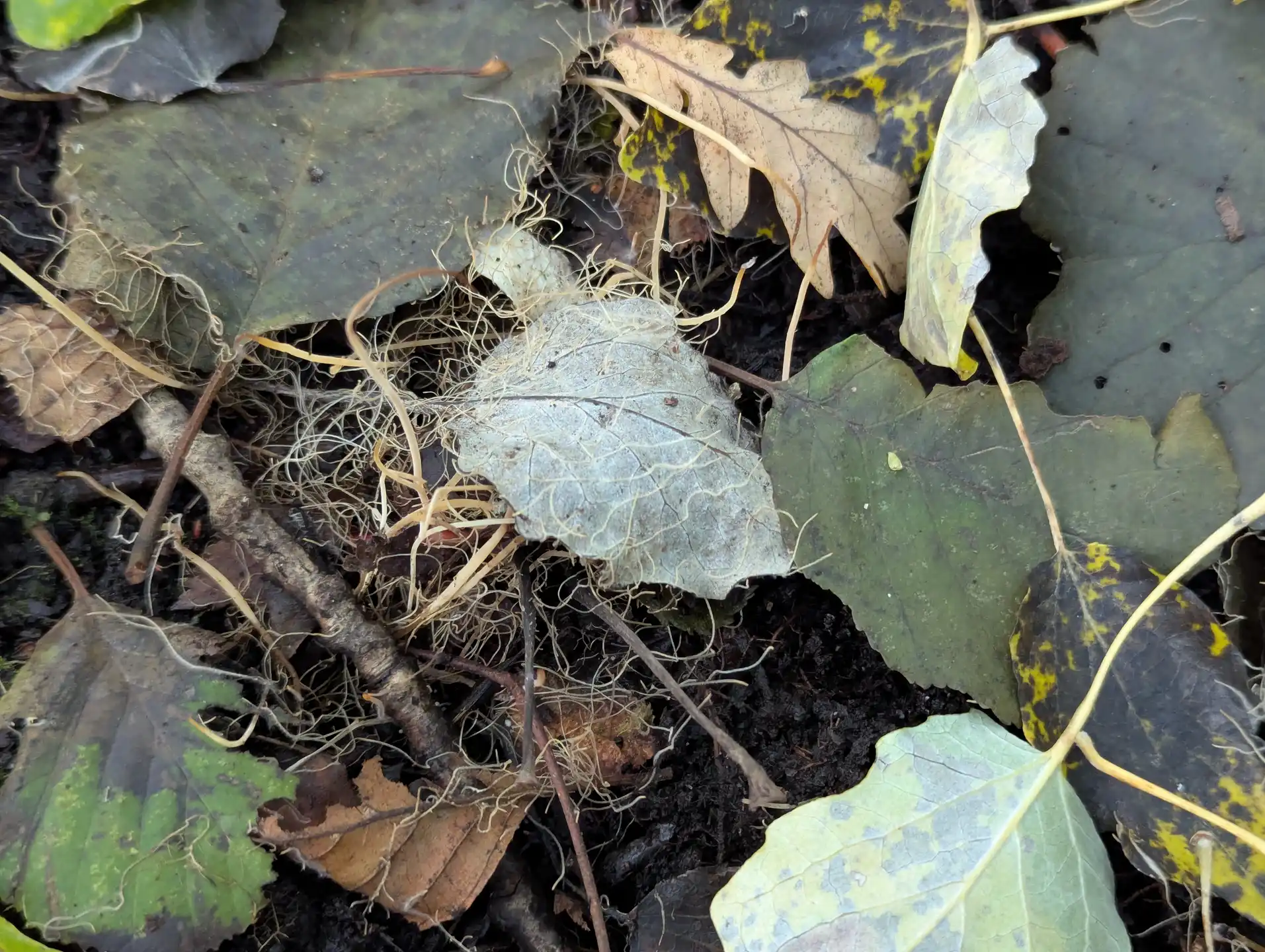
Strumpshaw Fen – 19th October 2025
And more mouldy fungi.

Strumpshaw Fen – 19th October 2025
Towards the end of the woodland trail after The Outpost two unidentified fruiting bodies.

Strumpshaw Fen – 19th October 2025
Strumpshaw Fen is a nature reserve managed by the RSPB adjacent the River Yare, east of Norwich in Norfolk
RSPB Strumpshaw Fen webpage RSPB Strumpshaw Fen Wikipedia entry