Slime moulds & fungi at Strumpshaw Fen – November 2025
2nd November 2025
The Dell
These fungi looked like an oysterling fungus: maybe Crepidotus mollis – the peeling oysterling…? The deeply undulate, reflexed caps are wonderful.
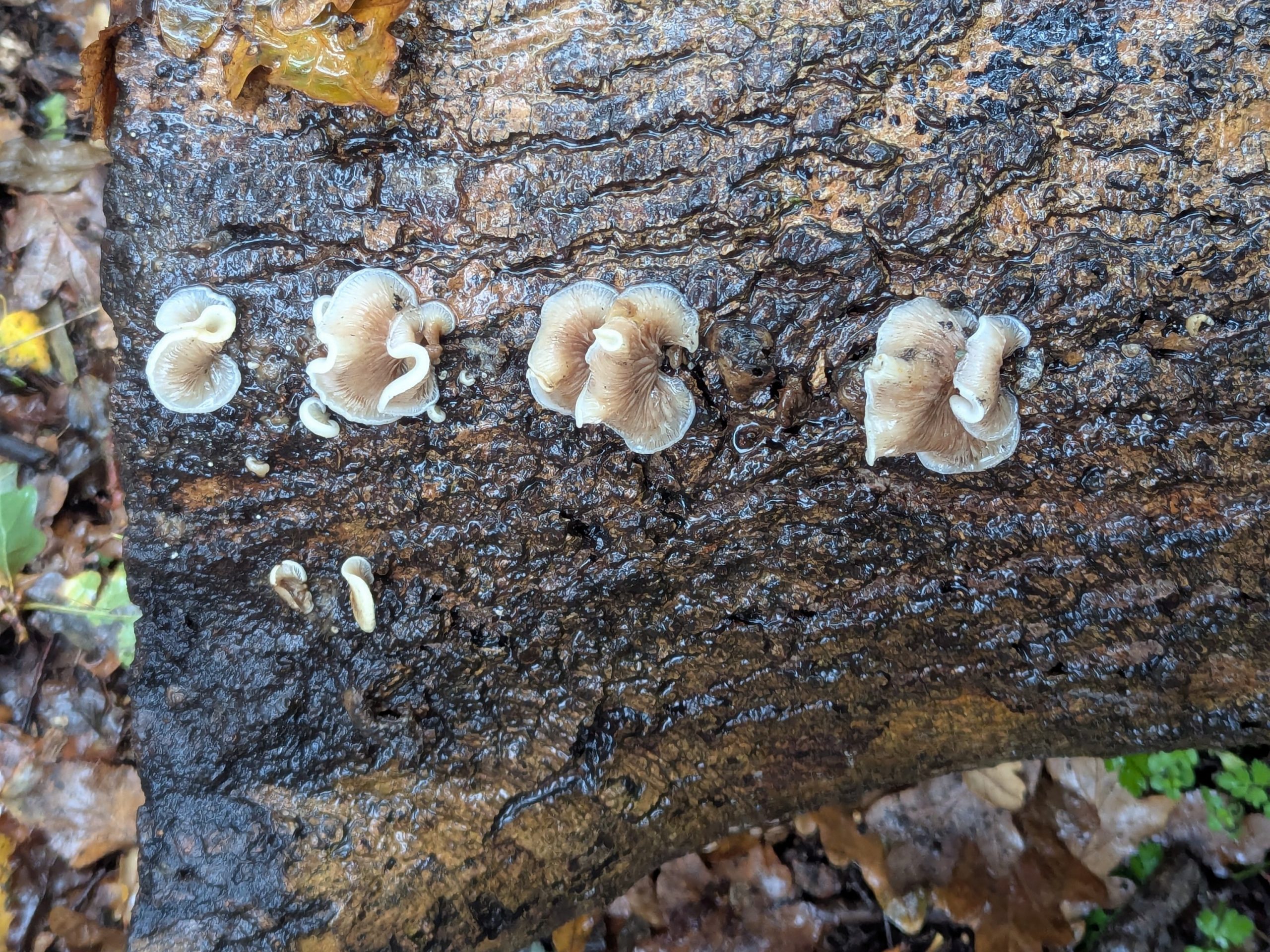
Strumpshaw Fen – 2nd November 2025
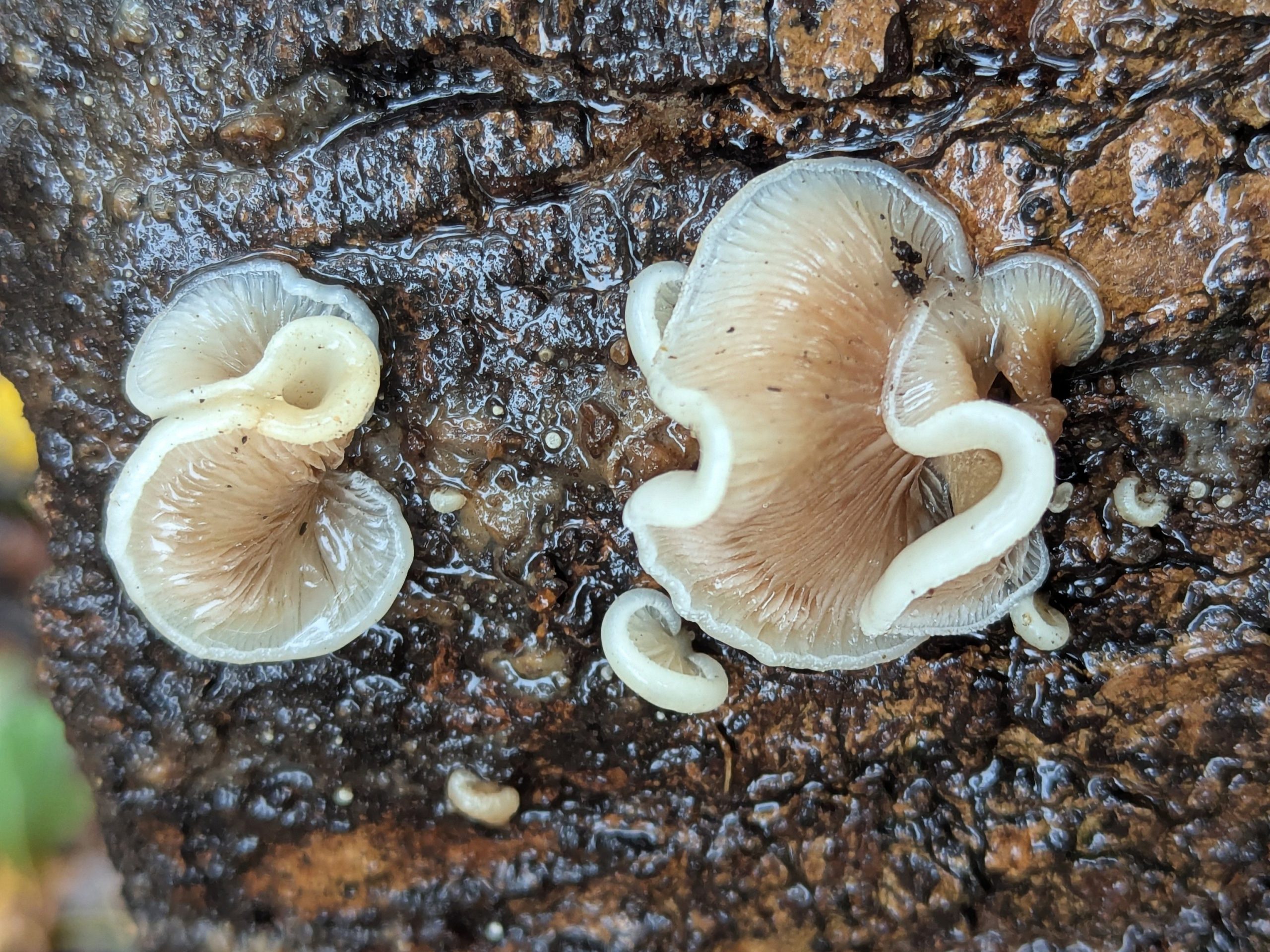
Strumpshaw Fen – 2nd November 2025
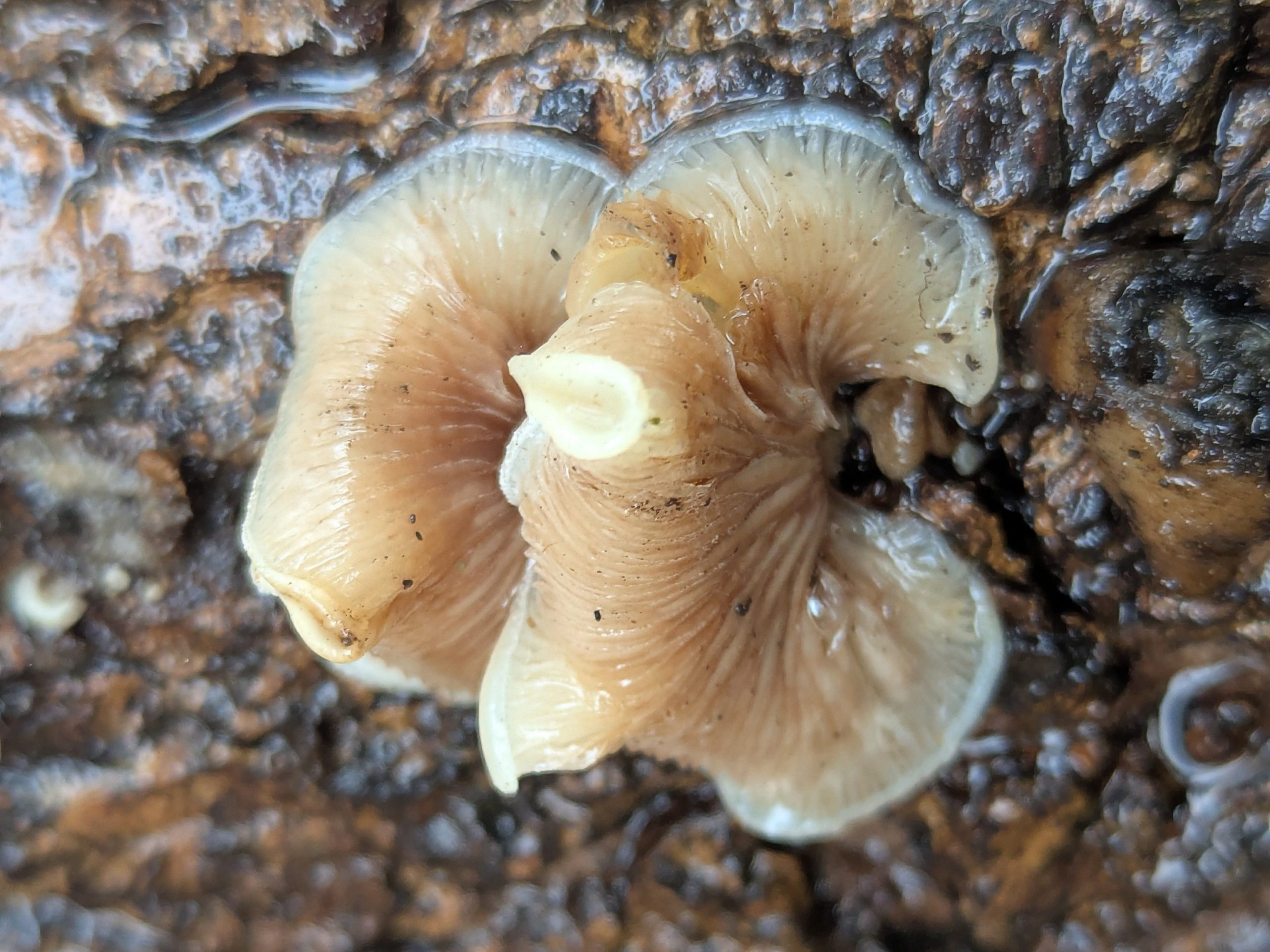
Strumpshaw Fen – 2nd November 2025
Below – Lepista flaccida – the tawny funnel.
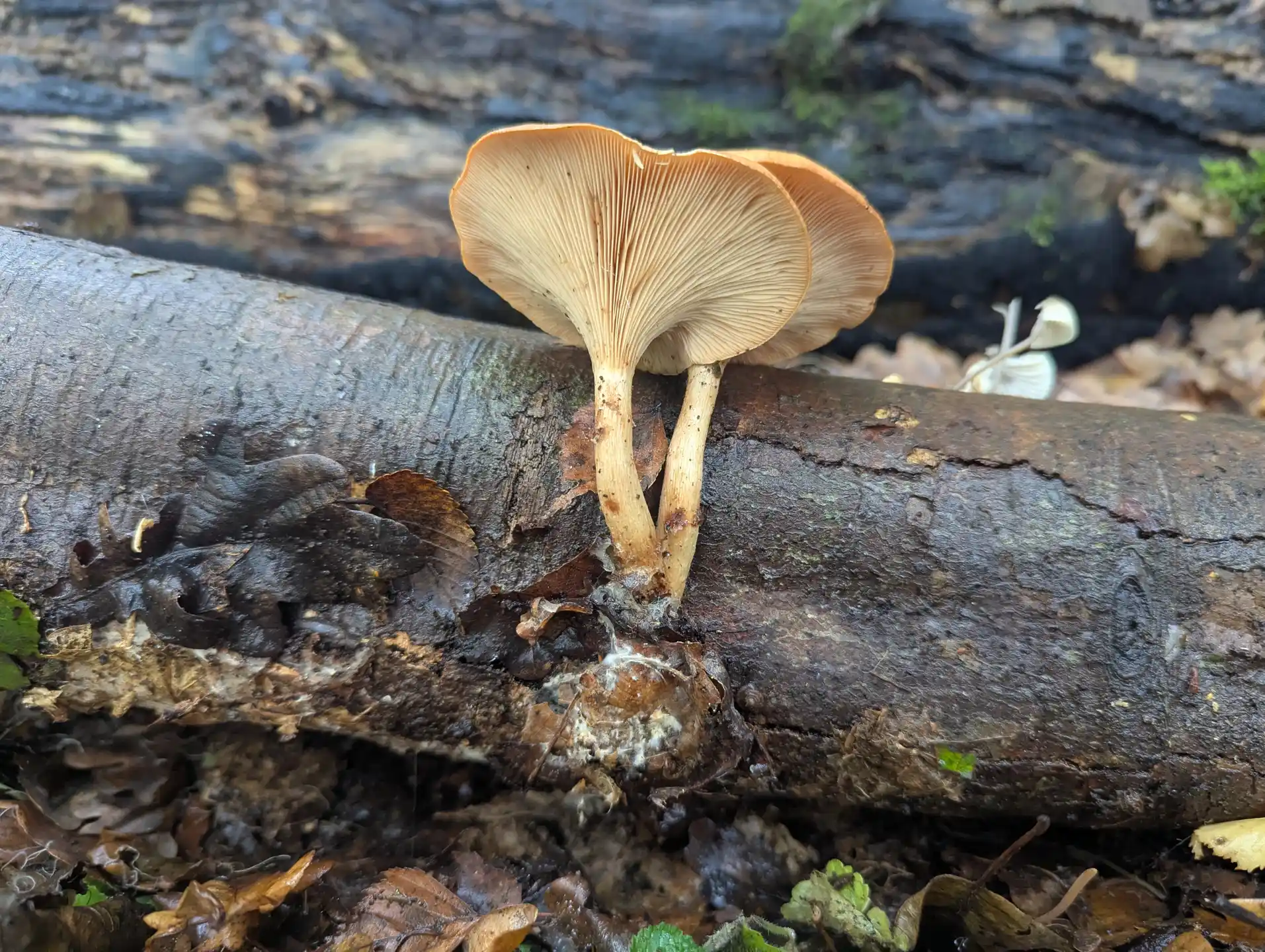
Strumpshaw Fen – 2nd November 2025
Mycokey’s ID tool suggests that these slender stemmed fungi could be Mycena vitilis – the snapping bonnet.
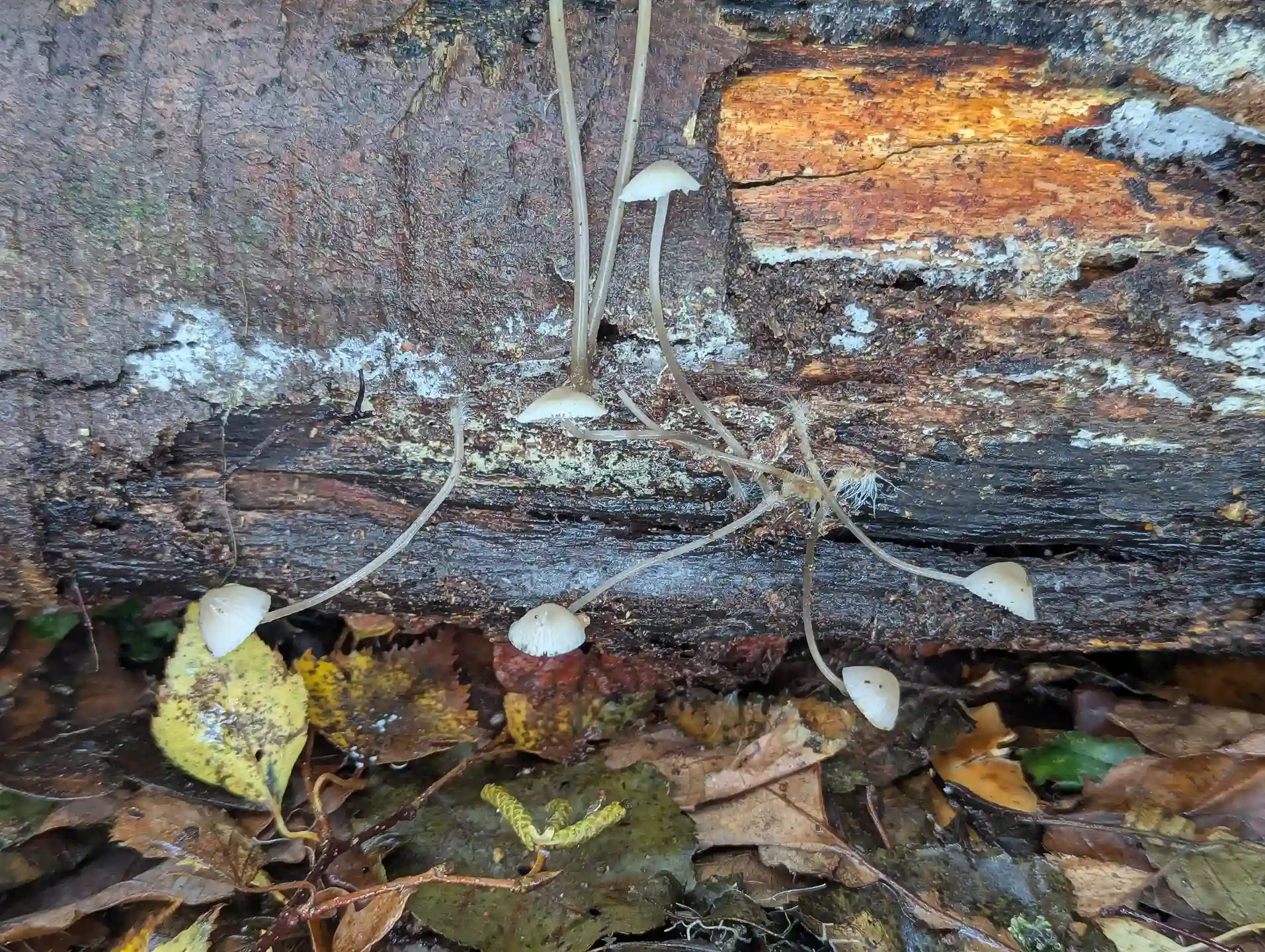
Strumpshaw Fen – 2nd November 2025
Sandy Glade Area
A Geastrum triplex – the collared earthstar. We haven’t seen this fungus at the reserve for some time.
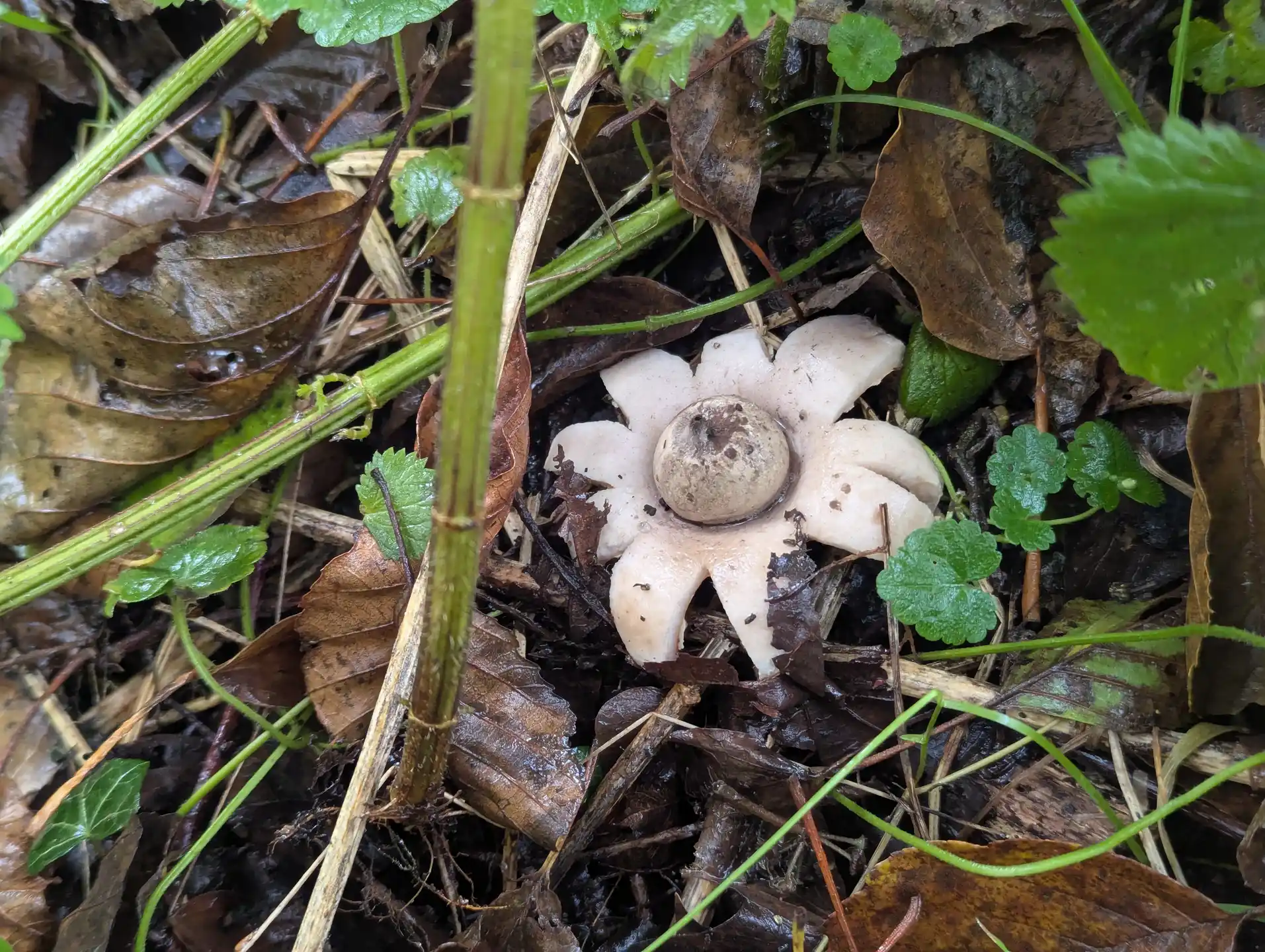
Strumpshaw Fen – 2nd November 2025
Drainage Channel Path
A new slime mould for us 🤩: Brefeldia maxima – which we went on to observe over the following months.
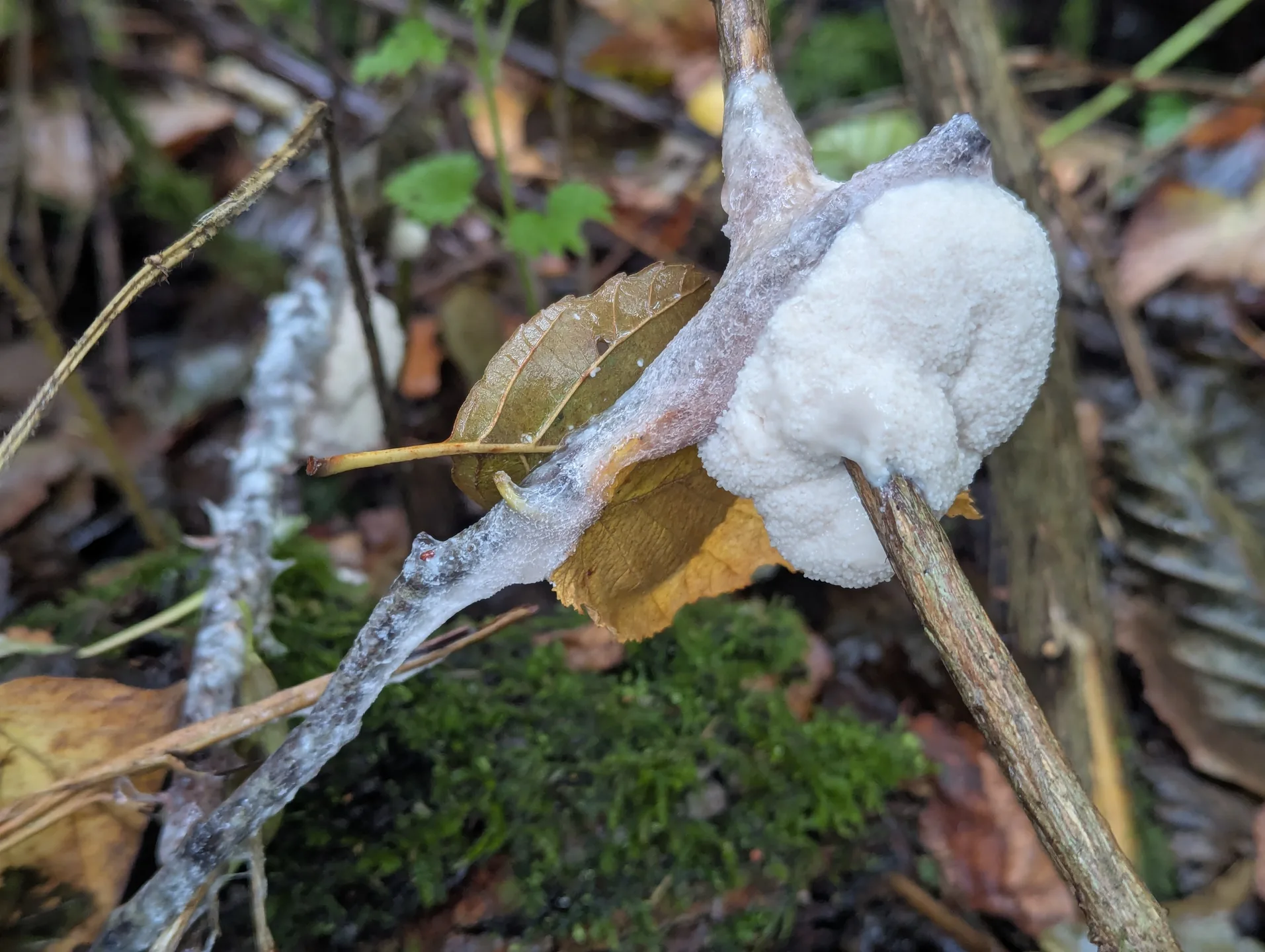
Strumpshaw Fen – 2nd November 2025
Around The Outpost
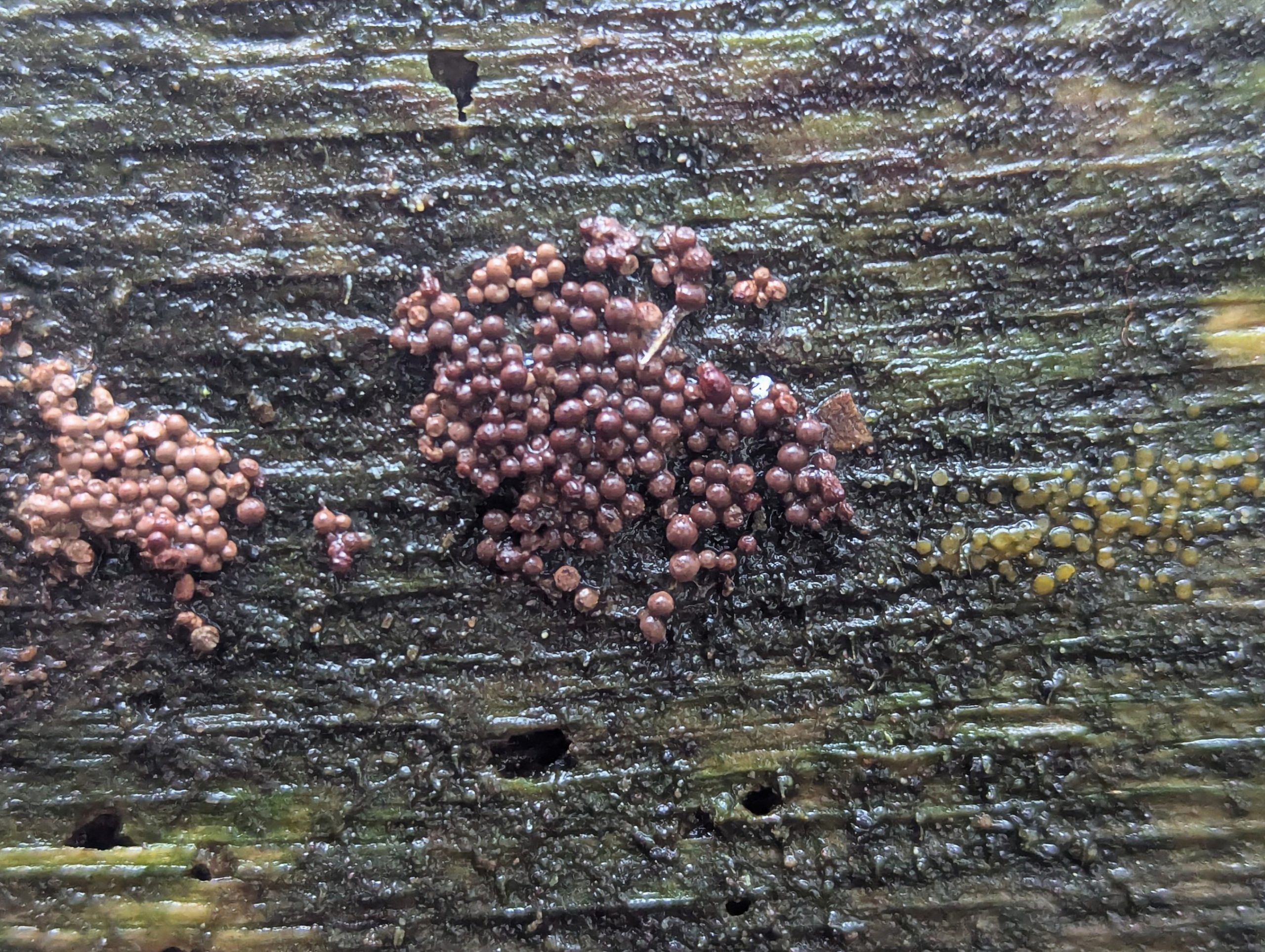
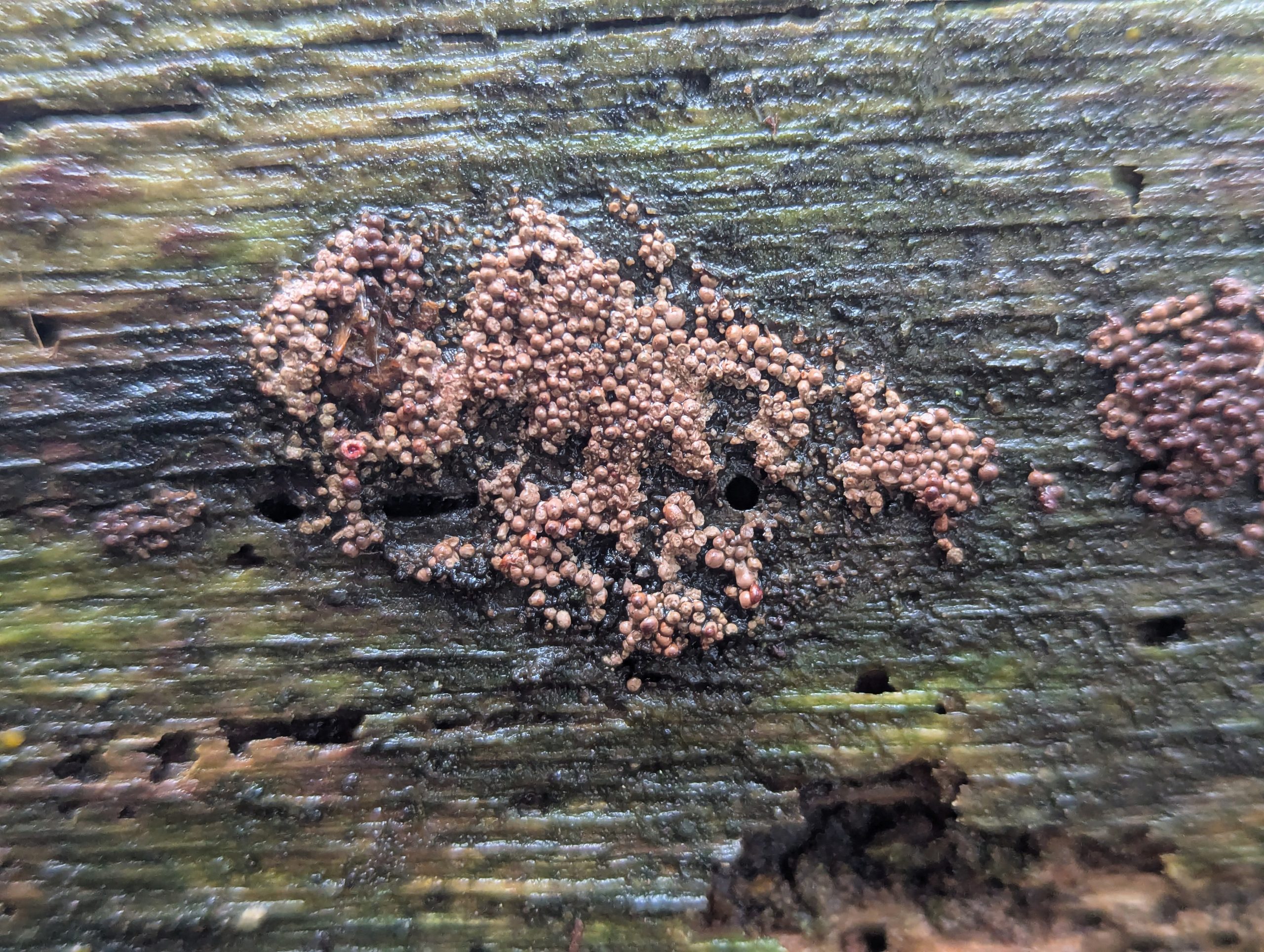
Before The Outpost on a section of trunk that hosts a number of different slime mould and fungi species [1] – two crowded groups of the same unidentified slime mould sporangia at different stages of development: one younger, reddish-brown group with intact sporangia and a larger, brownish-vinaceous group where many of the sporangia appeared to have exposed spore masses or where the peridia had shrivelled.
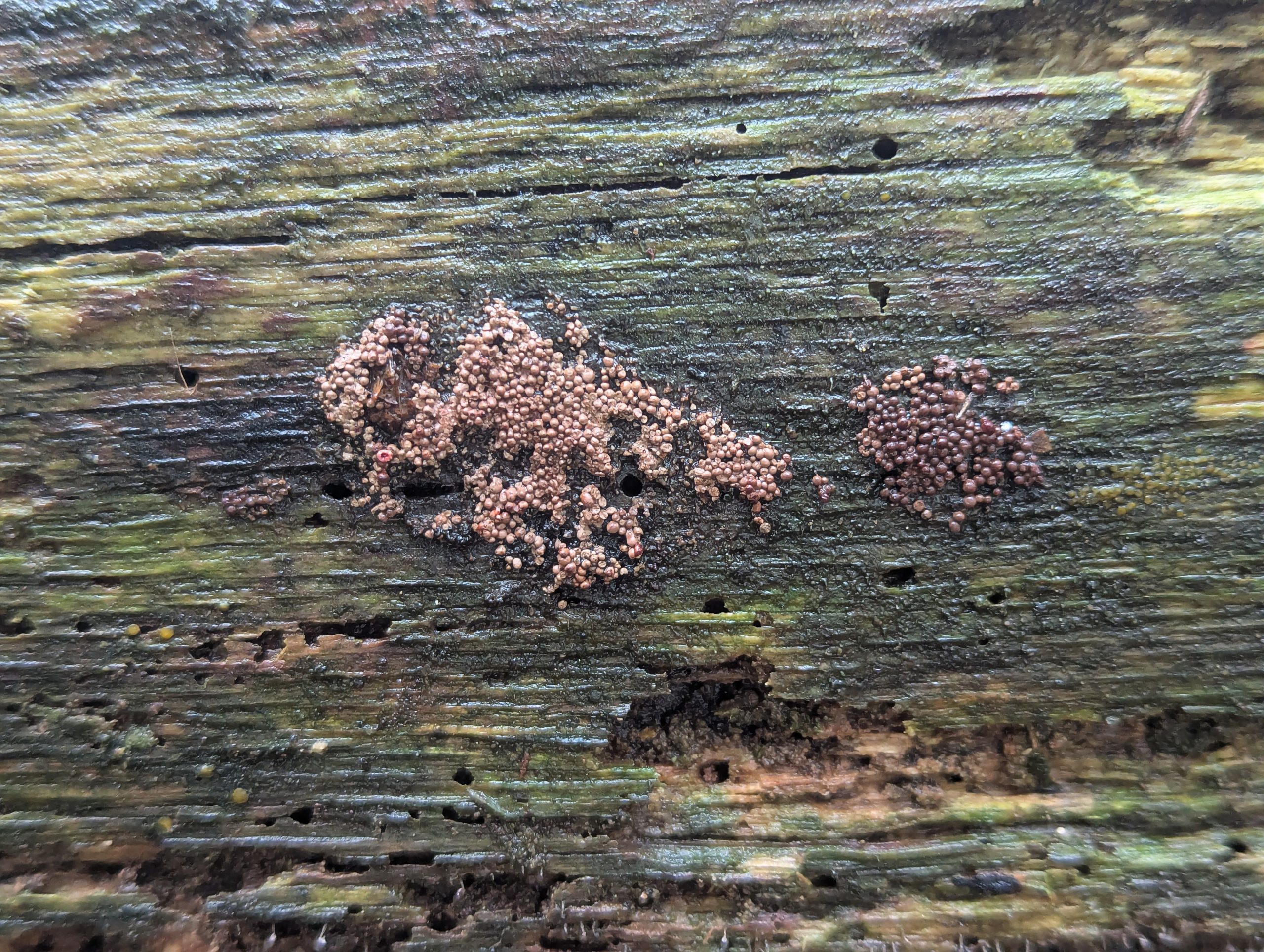
Strumpshaw Fen – 2nd November 2025
Strumpshaw Fen – 2nd November 2025
Strumpshaw Fen – 2nd November 2025
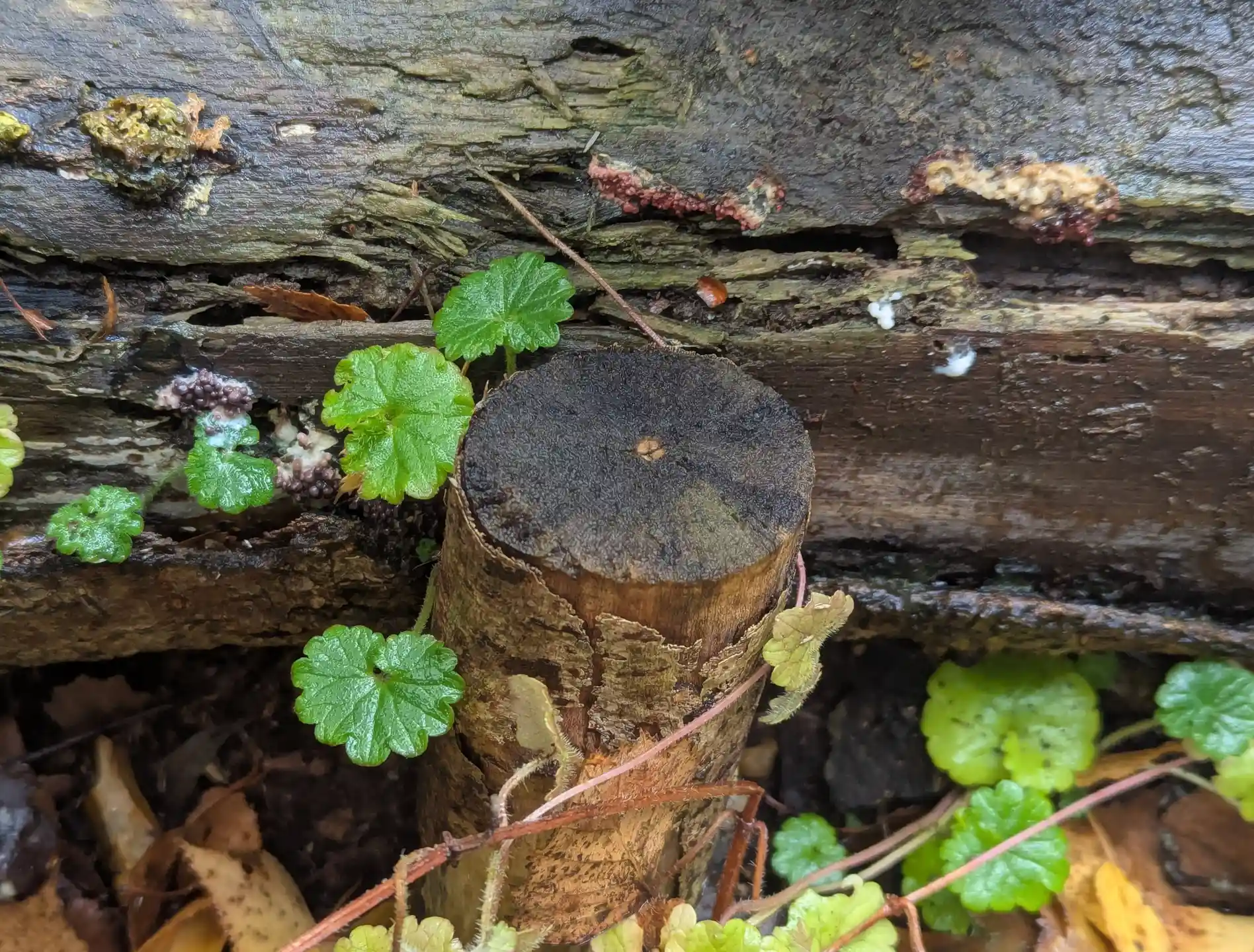
After The Outpost some small slime mould groups and plasmodial blobs, all of them probably the same species.
Strumpshaw Fen – 2nd November 2025
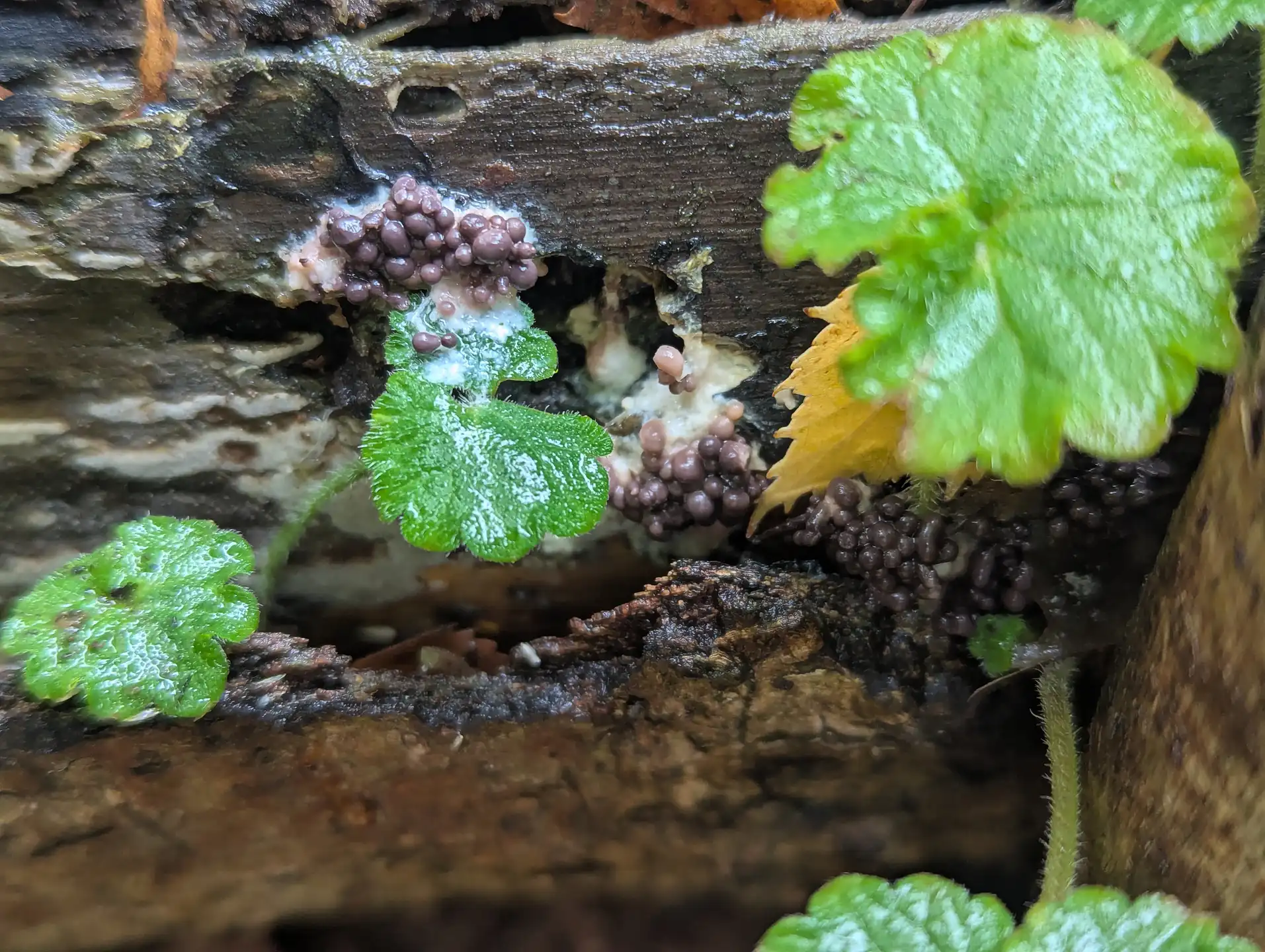
These greyish-violet primordia are emergent from a thick cream substrate – either the hypothallus or the plasmodium.
Strumpshaw Fen – 2nd November 2025
I think that the brownish-red sporangia below are more mature forms of the ones above. You can clearly see a pale yellowish hypothallus or plasmodium similar to above
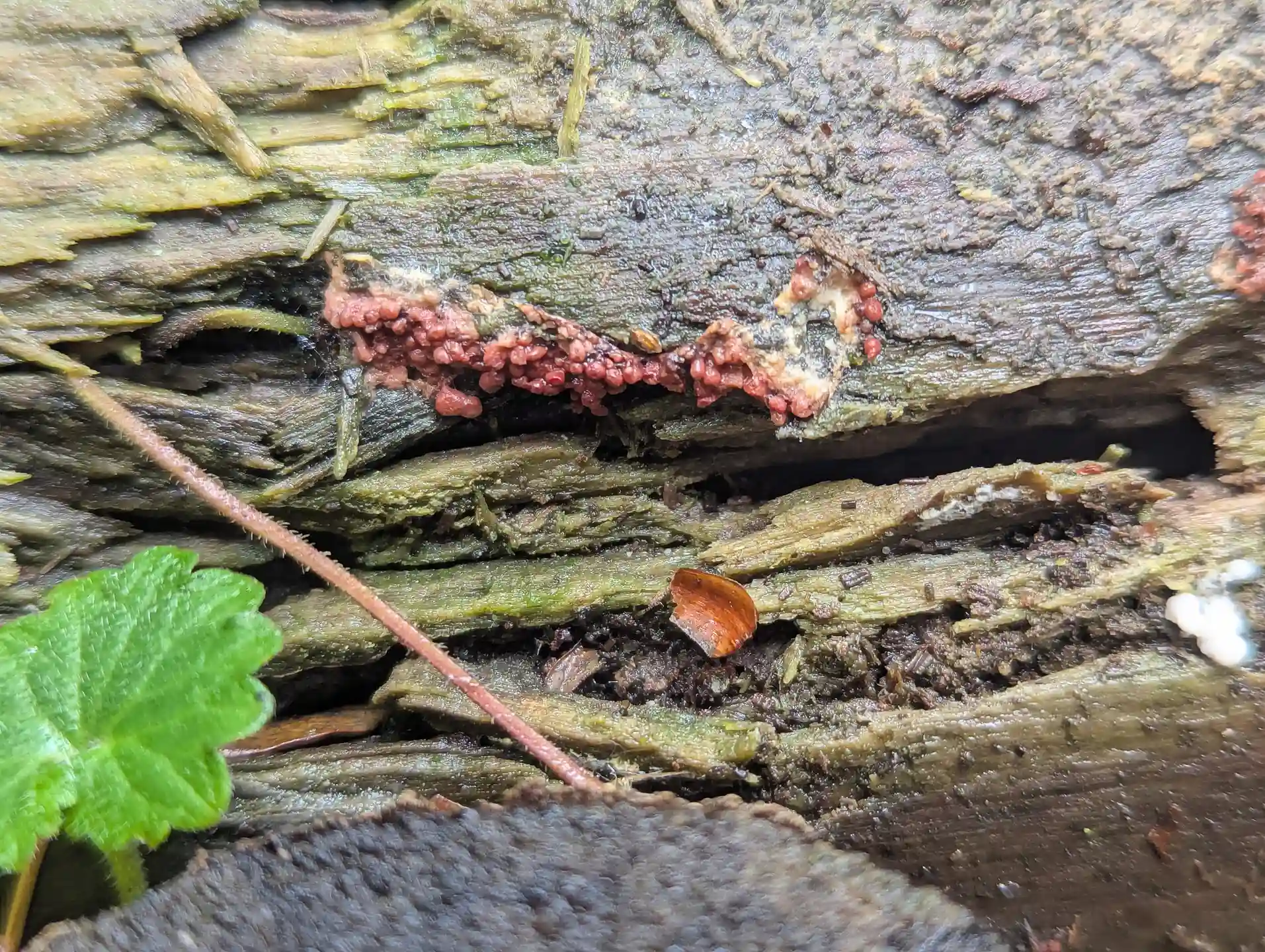
Strumpshaw Fen – 2nd November 2025
Plasmodial blobs with what looks like early primordia emergence.
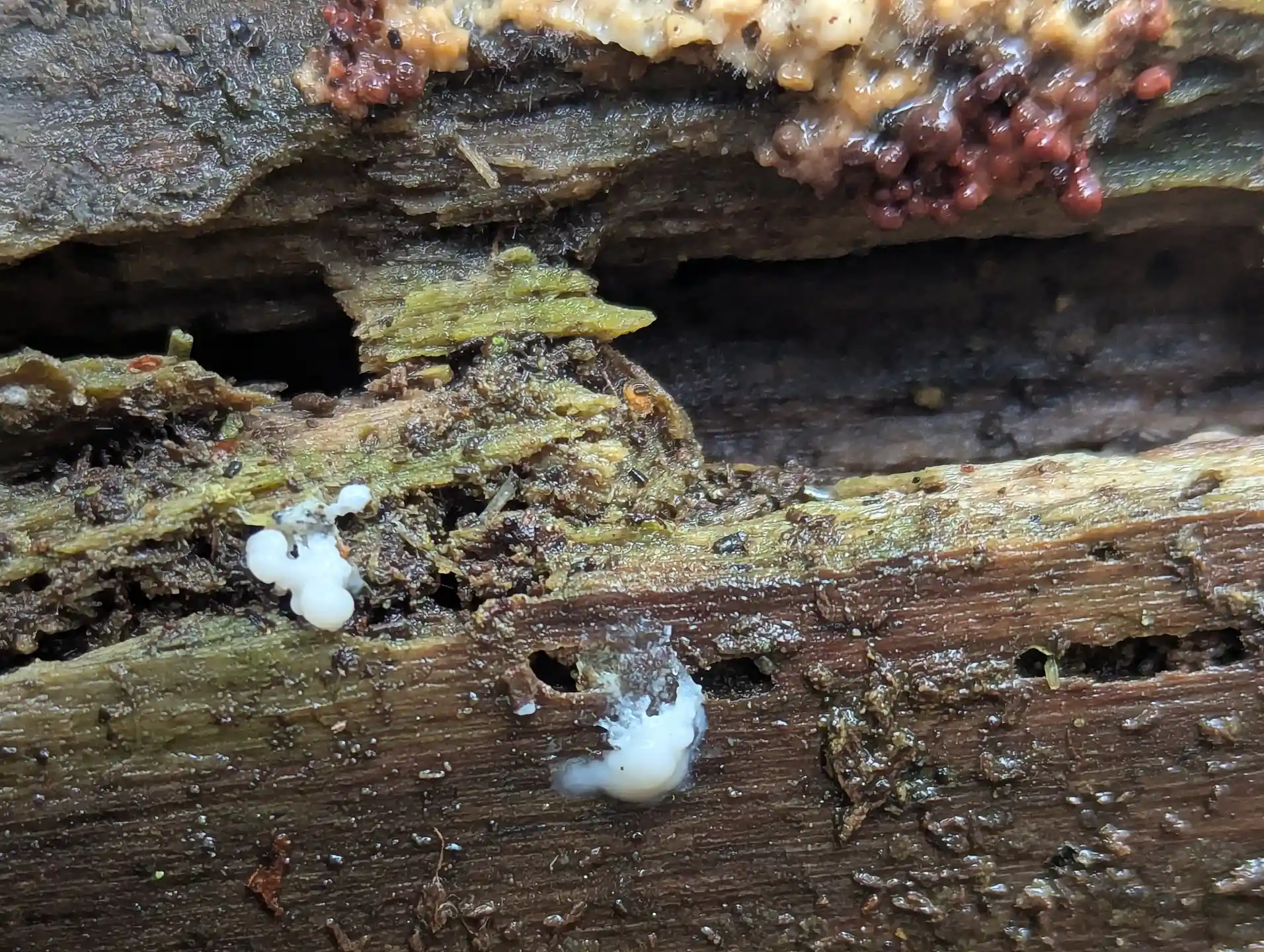
Strumpshaw Fen – 2nd November 2025
Trail End
A Russula with a wonderful serrated cap edge viewed from above.
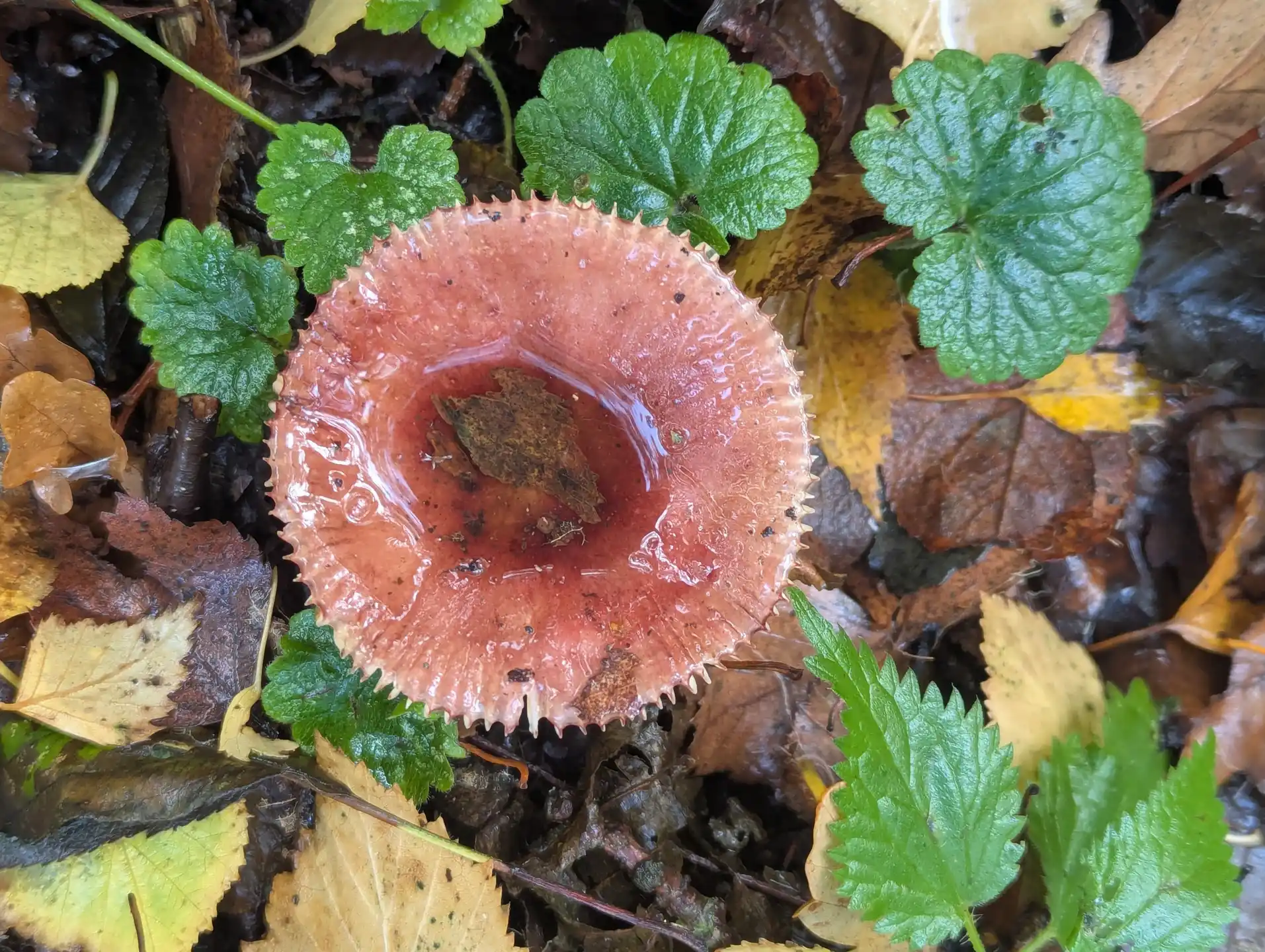
Strumpshaw Fen – 2nd November 2025
But the serrations are the gills extending a little beyond the cap perimeter.
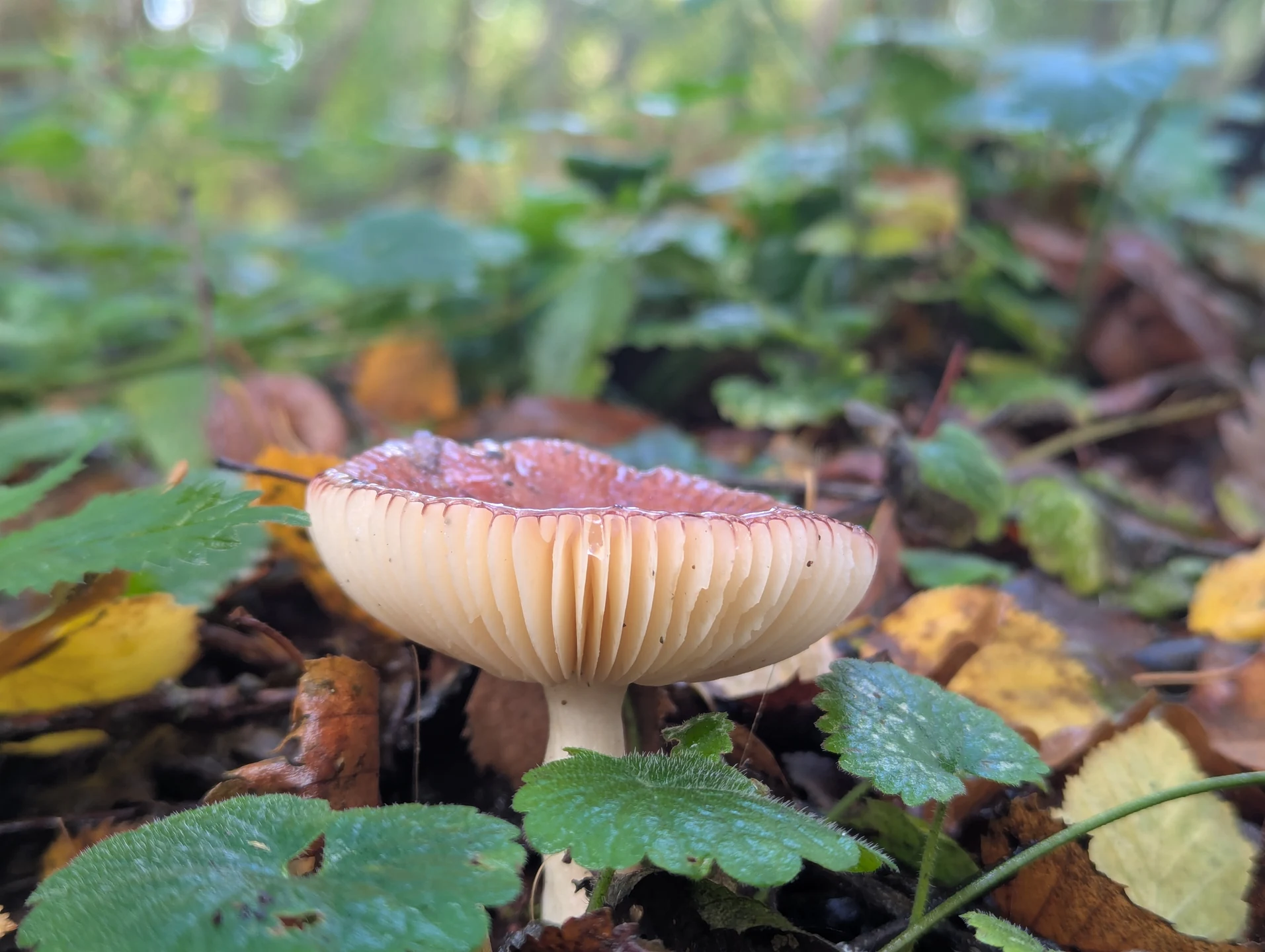
Strumpshaw Fen – 2nd November 2025
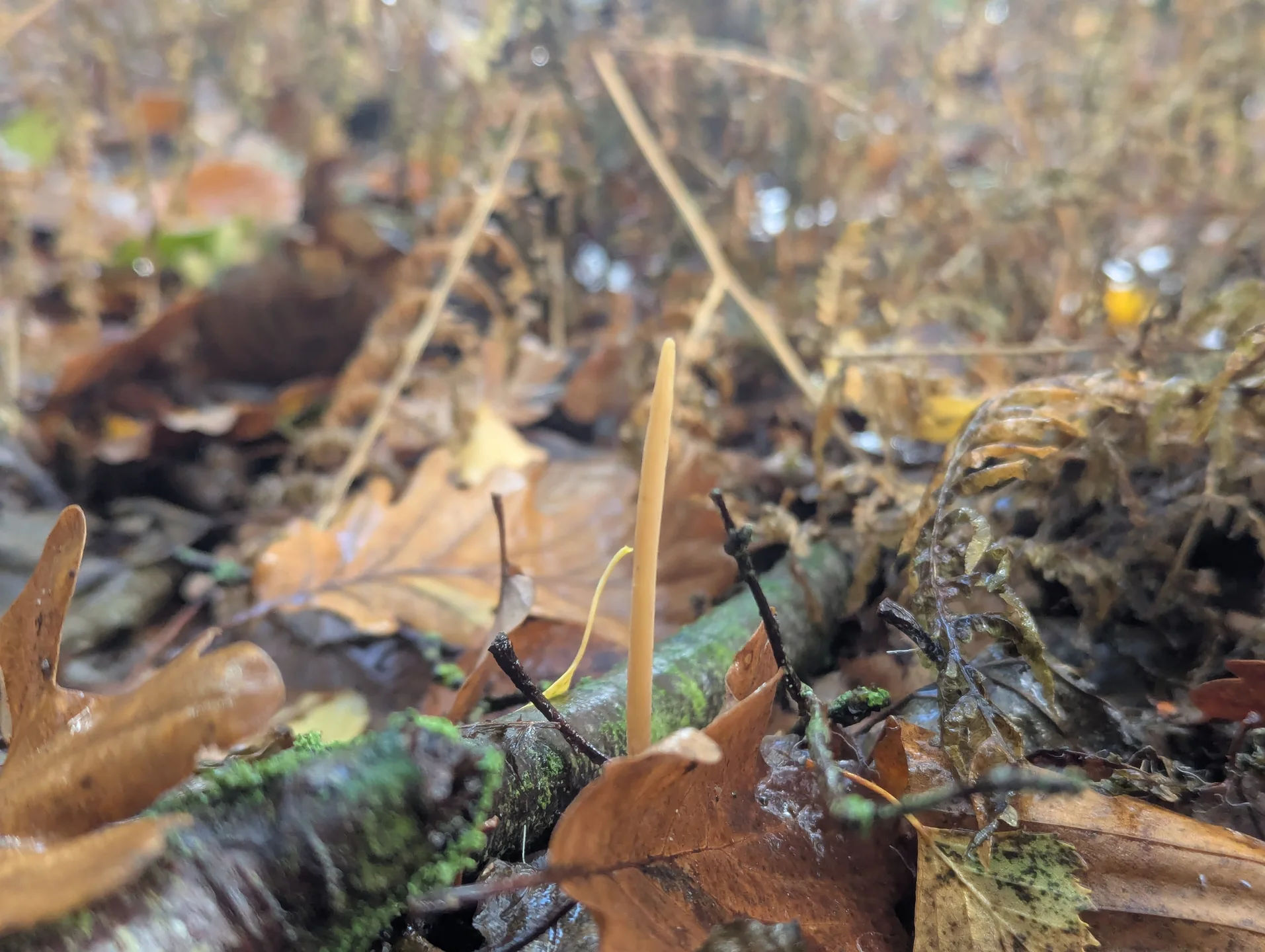
Based on its form, this is probably Macrotyphula fistulosa – the pipe club, rather than Macrotyphula juncea – the slender club, which, as its name suggests, has a more slender form. The pipe club is typically solitary or in small non-gregarious groups. When we’ve seen the pipe club at Strumpshaw Fen, it’s often in the area around and beyond The Outpost.
Strumpshaw Fen – 2nd November 2025
8th November 2025
Zen Zone
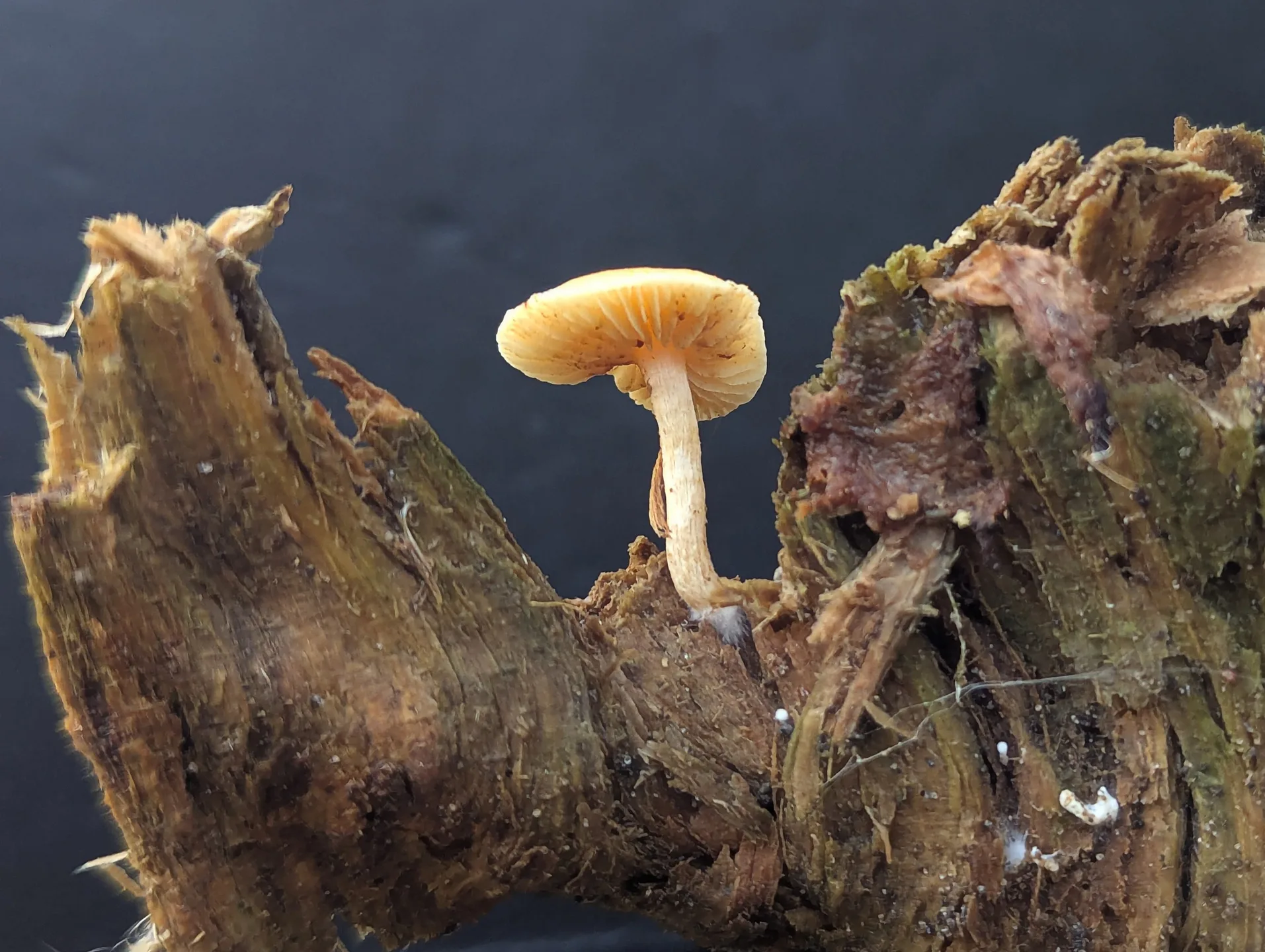
A small mushroom growing from a wood fragment.
Strumpshaw Fen – 8th November 2025
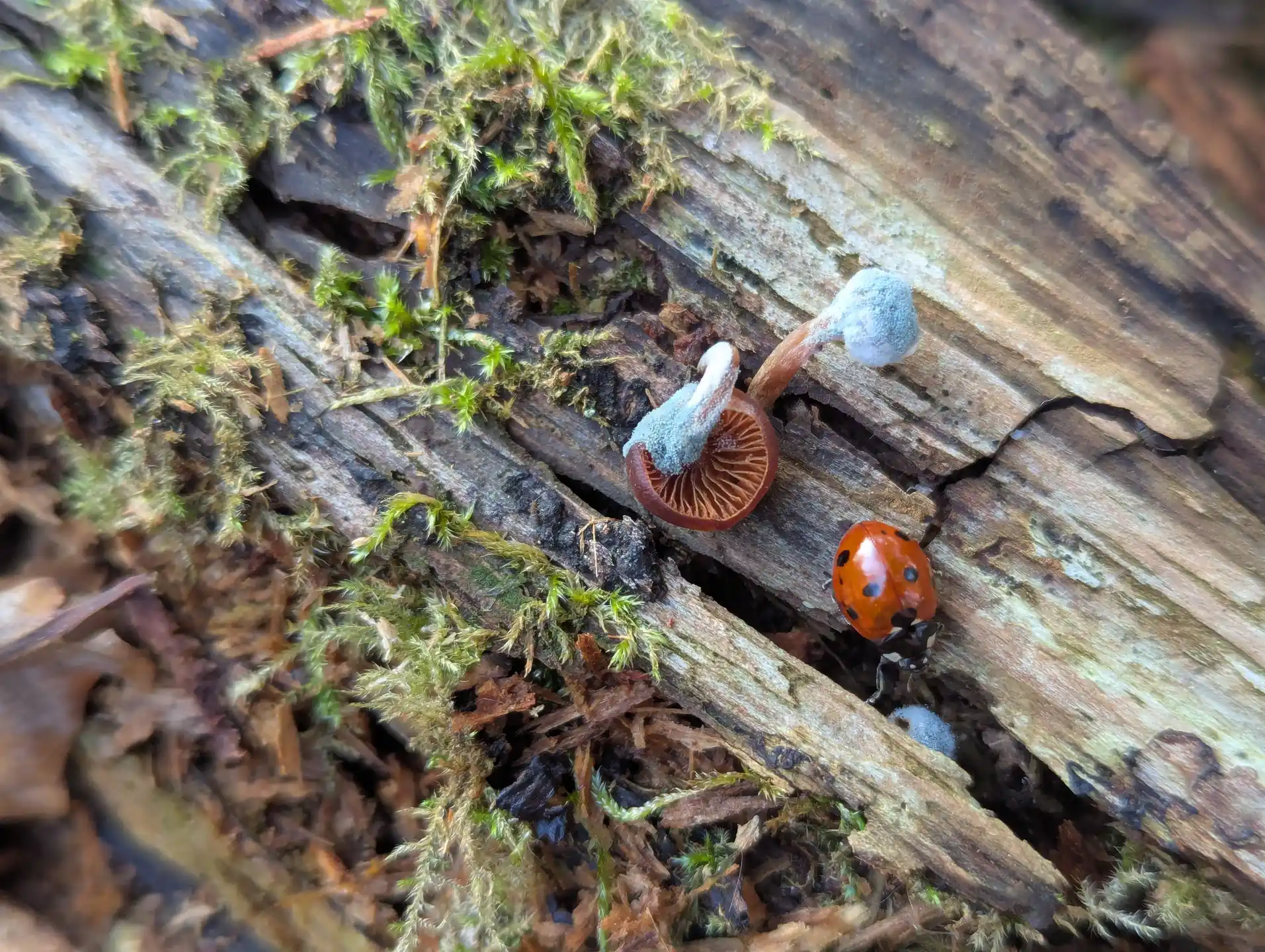
And a ladybird walking near two small mouldy mushrooms
Strumpshaw Fen – 8th November 2025
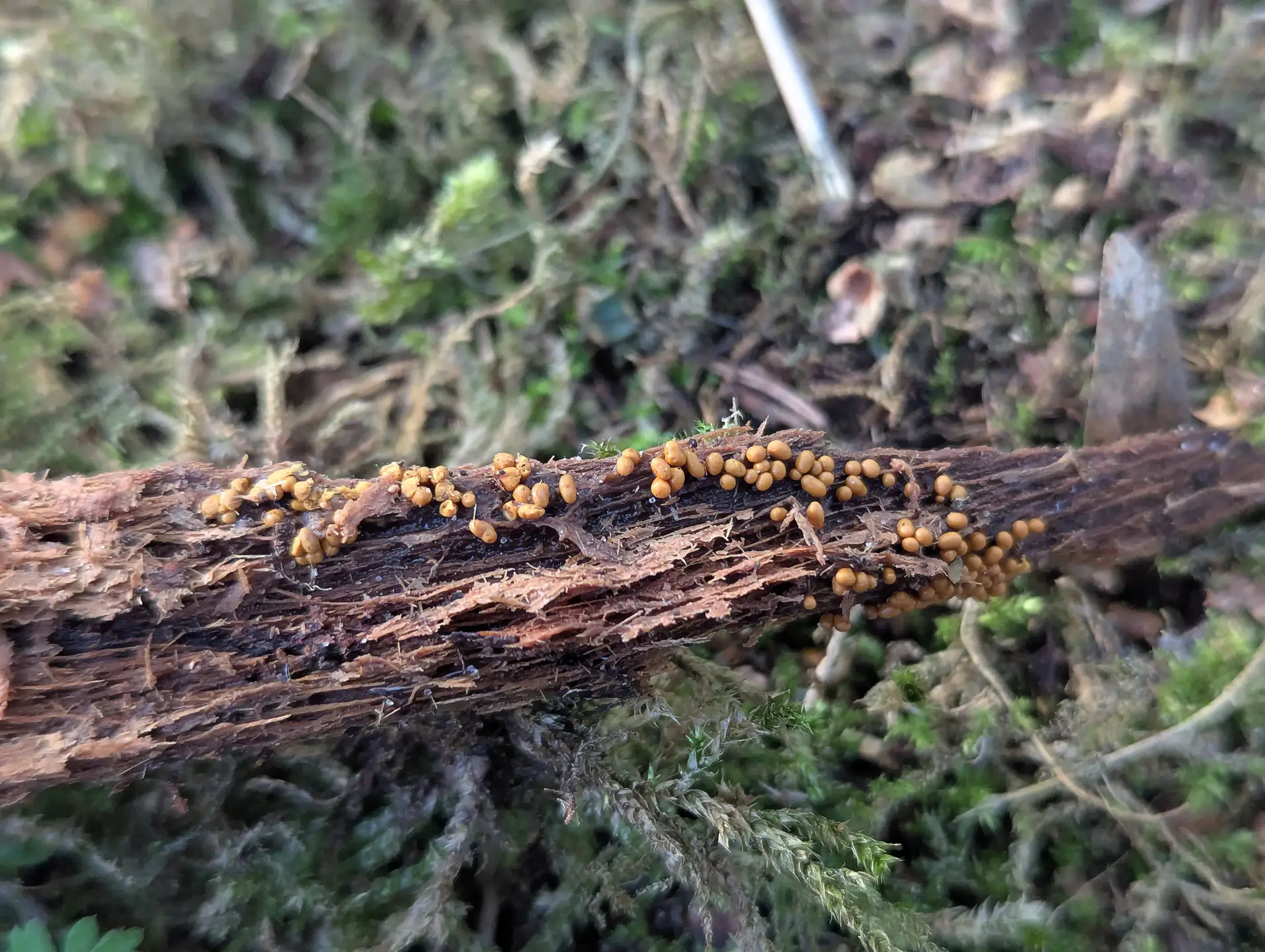
These cinnamon-buff sporangia on the wood fragment below look like Trichia varia.
Strumpshaw Fen – 8th November 2025
And these vinaceous-brown and blackish-violet sporangia below I wasn’t sure of.
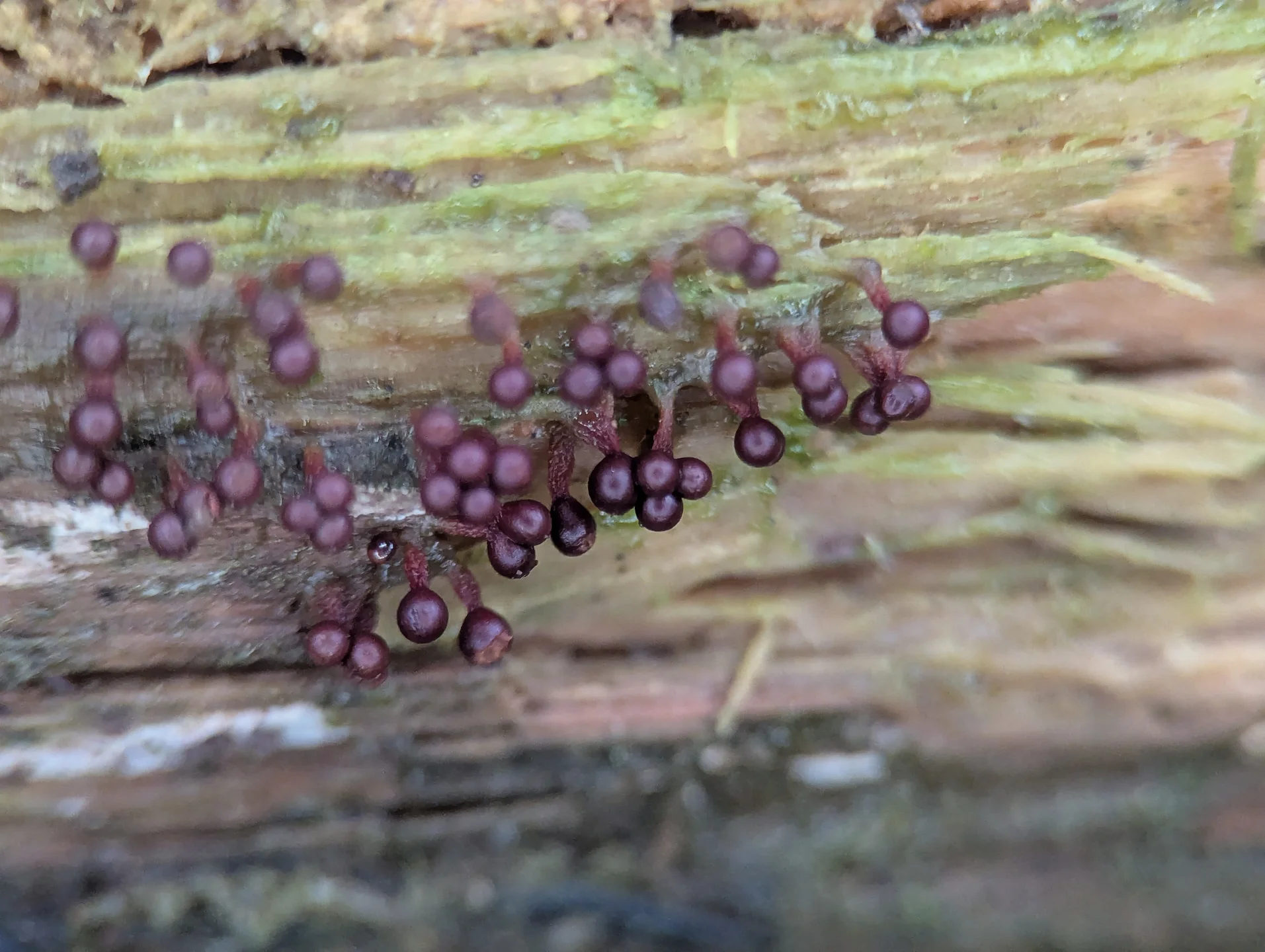
Strumpshaw Fen – 8th November 2025
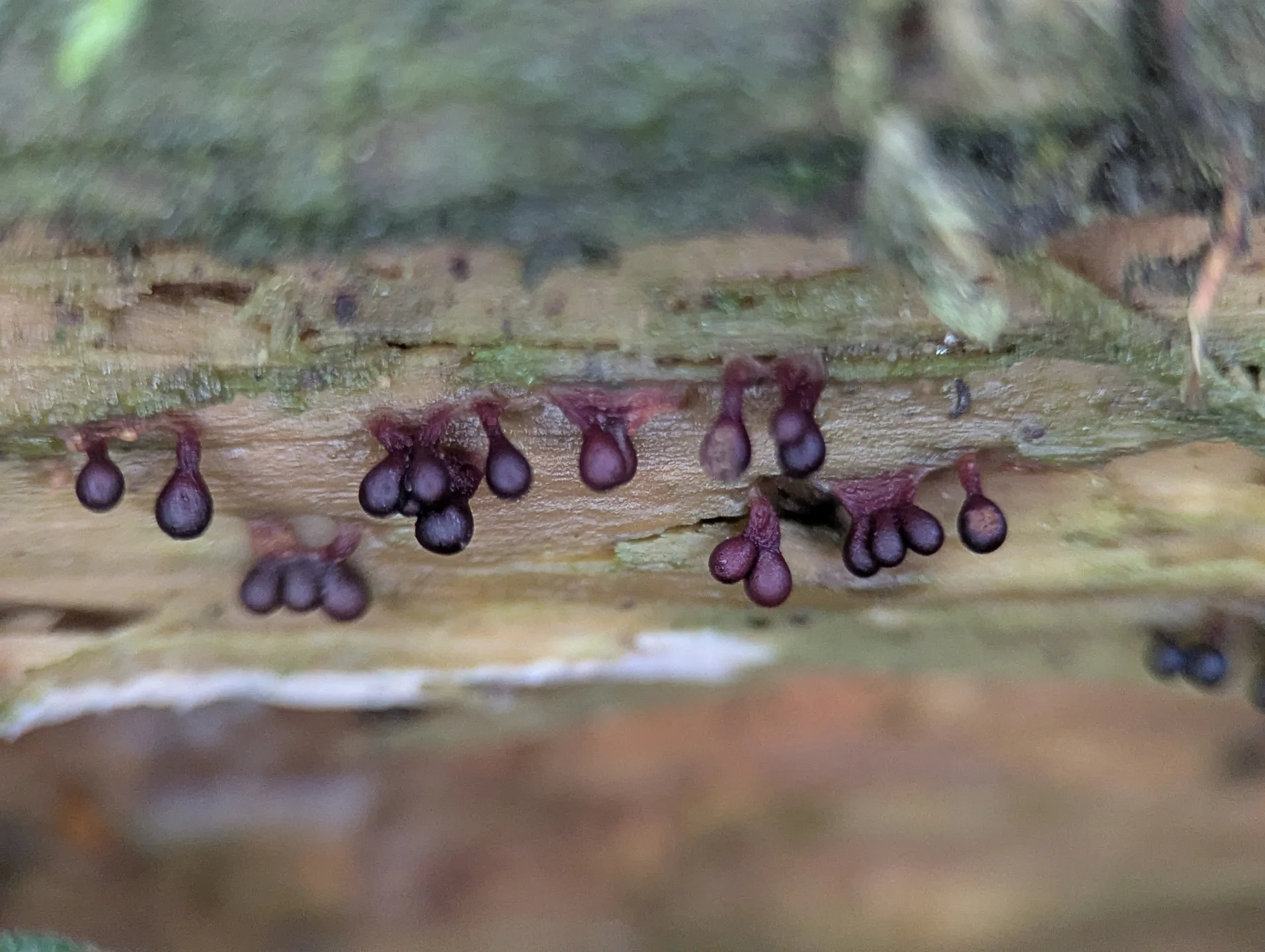
Strumpshaw Fen – 8th November 2025
My feeling was that the blackish-violet sporangia were more mature forms of the vinaceous-brown forms.
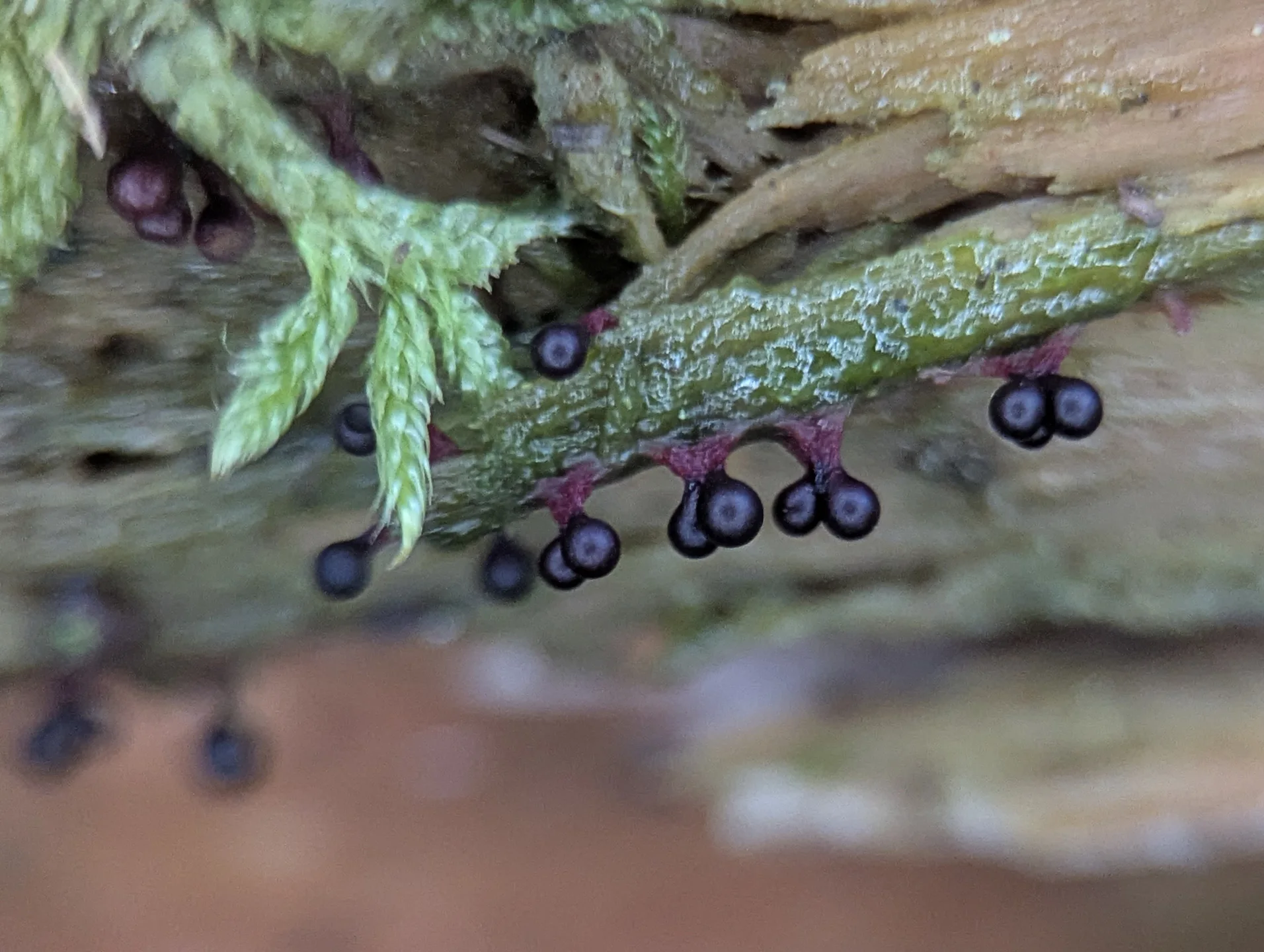
Strumpshaw Fen – 8th November 2025
And then I noticed in the photo below that some of the sporothecae had exposed orangey spore masses – of course! This was very likely Metatrichia floriformis.
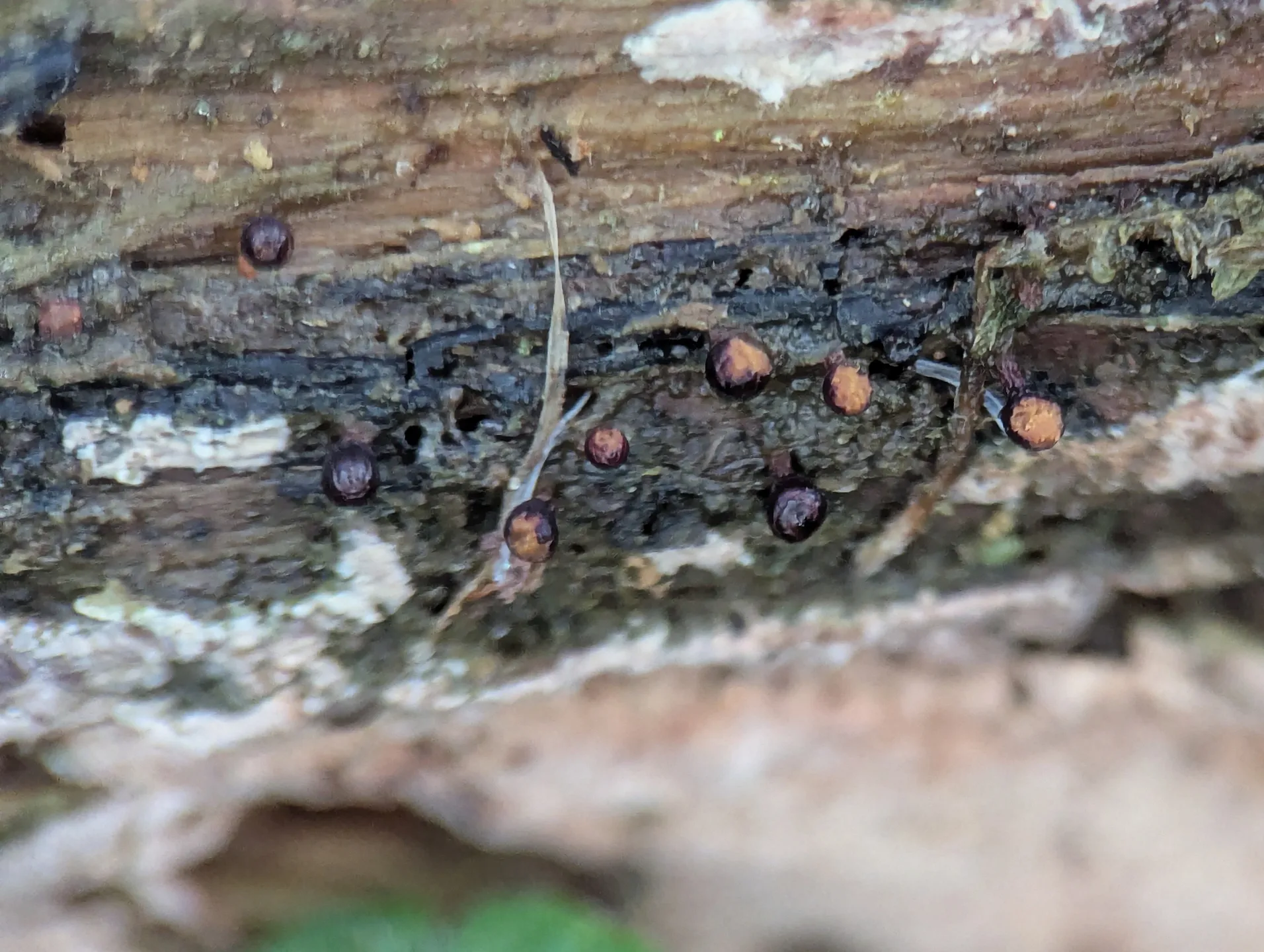
Strumpshaw Fen – 8th November 2025
Basecamp
Some beautiful sporangia – likely Physarum album.
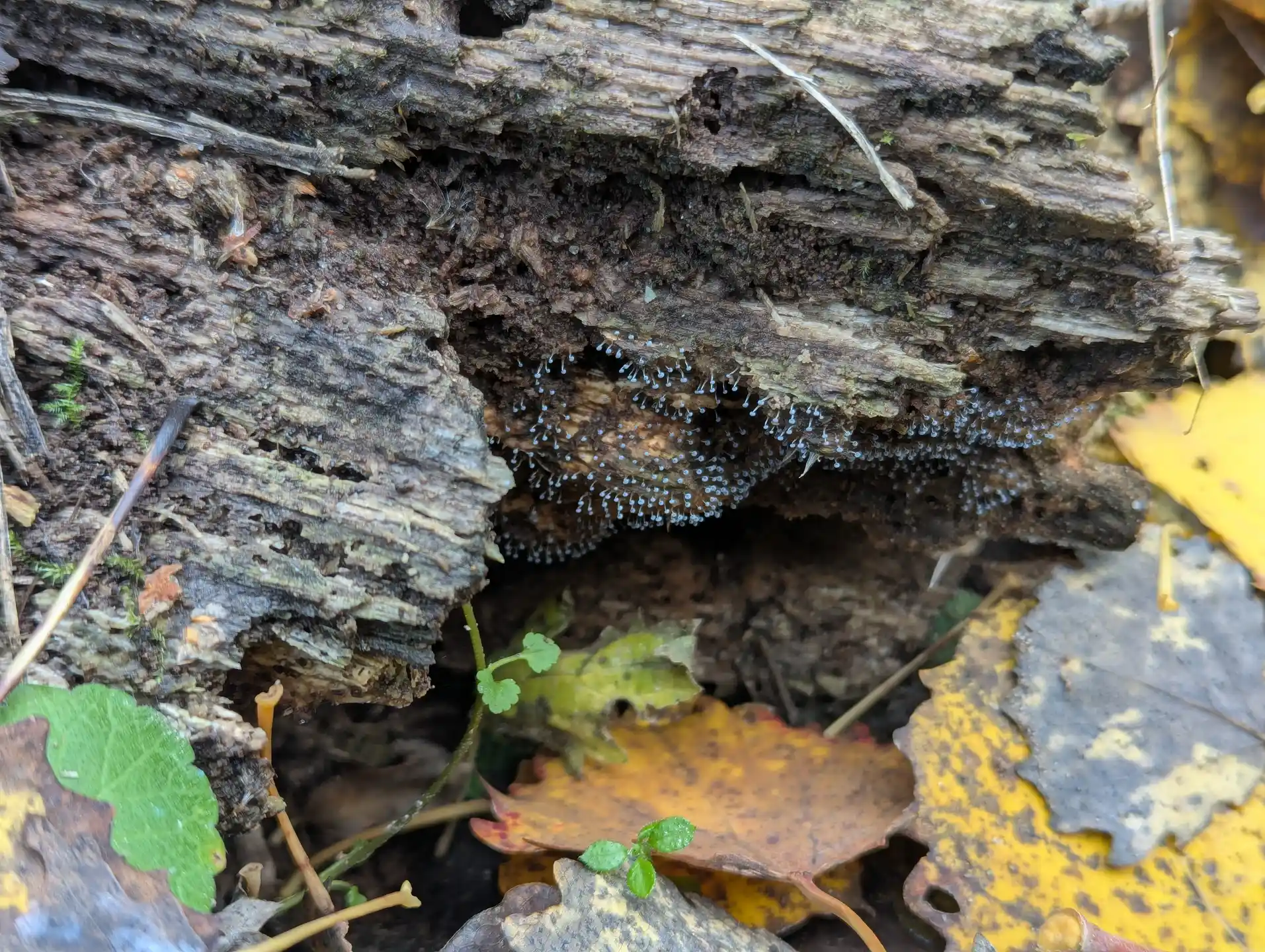
Strumpshaw Fen – 8th November 2025
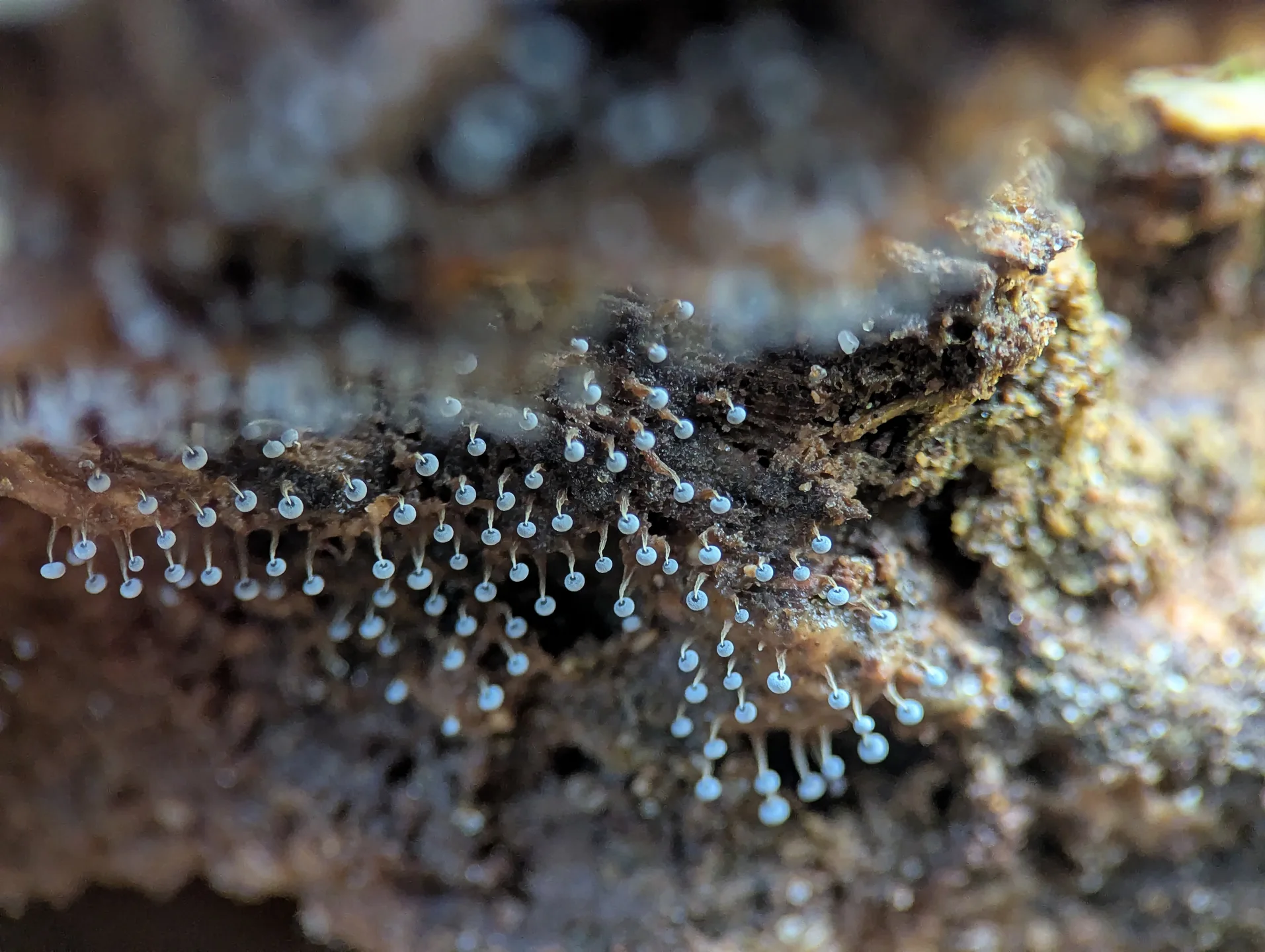
Strumpshaw Fen – 8th November 2025
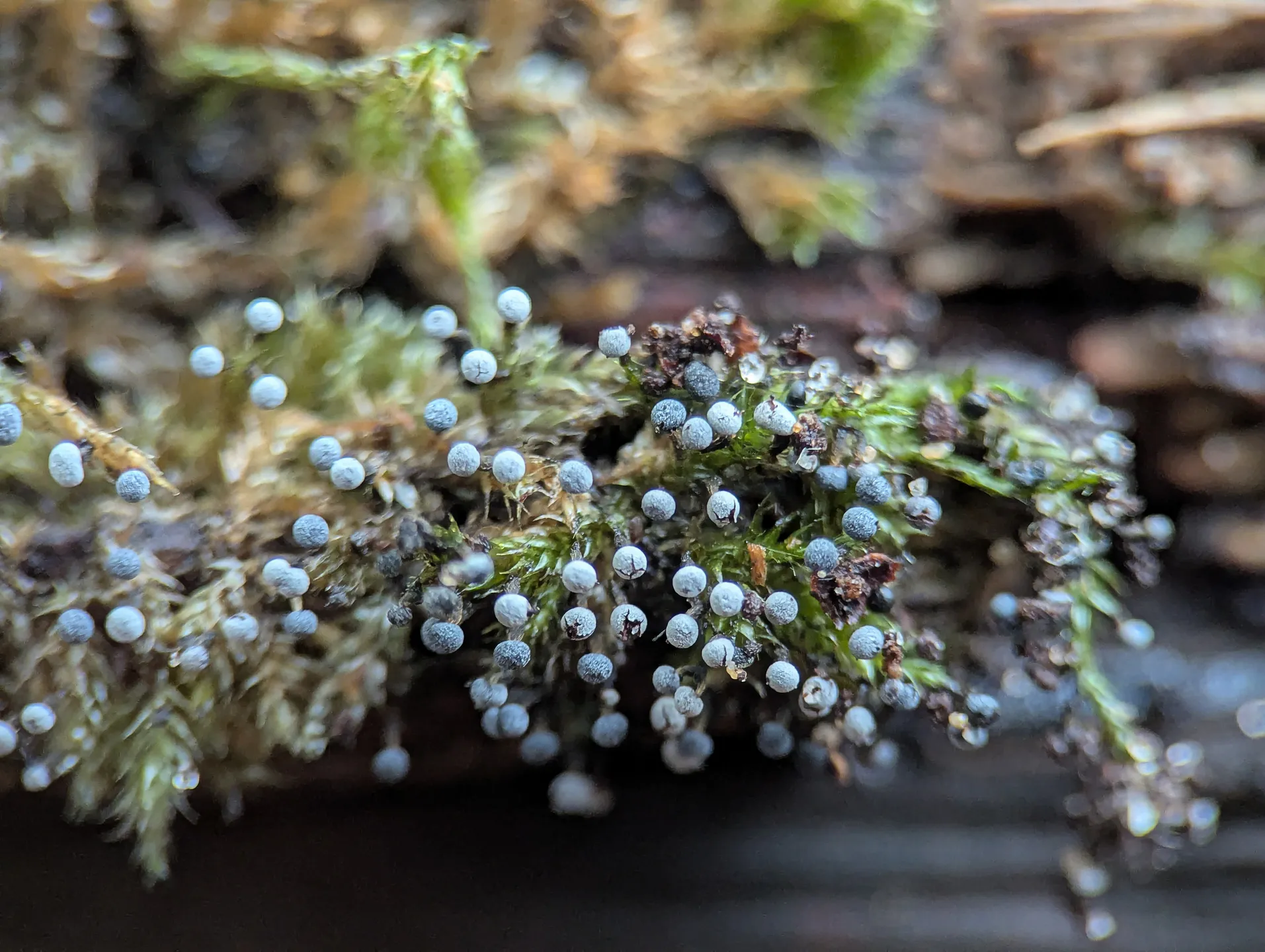
Strumpshaw Fen – 8th November 2025
I don’t know what the glaucous green fuzzy mould is that’s growing among the sporangia.
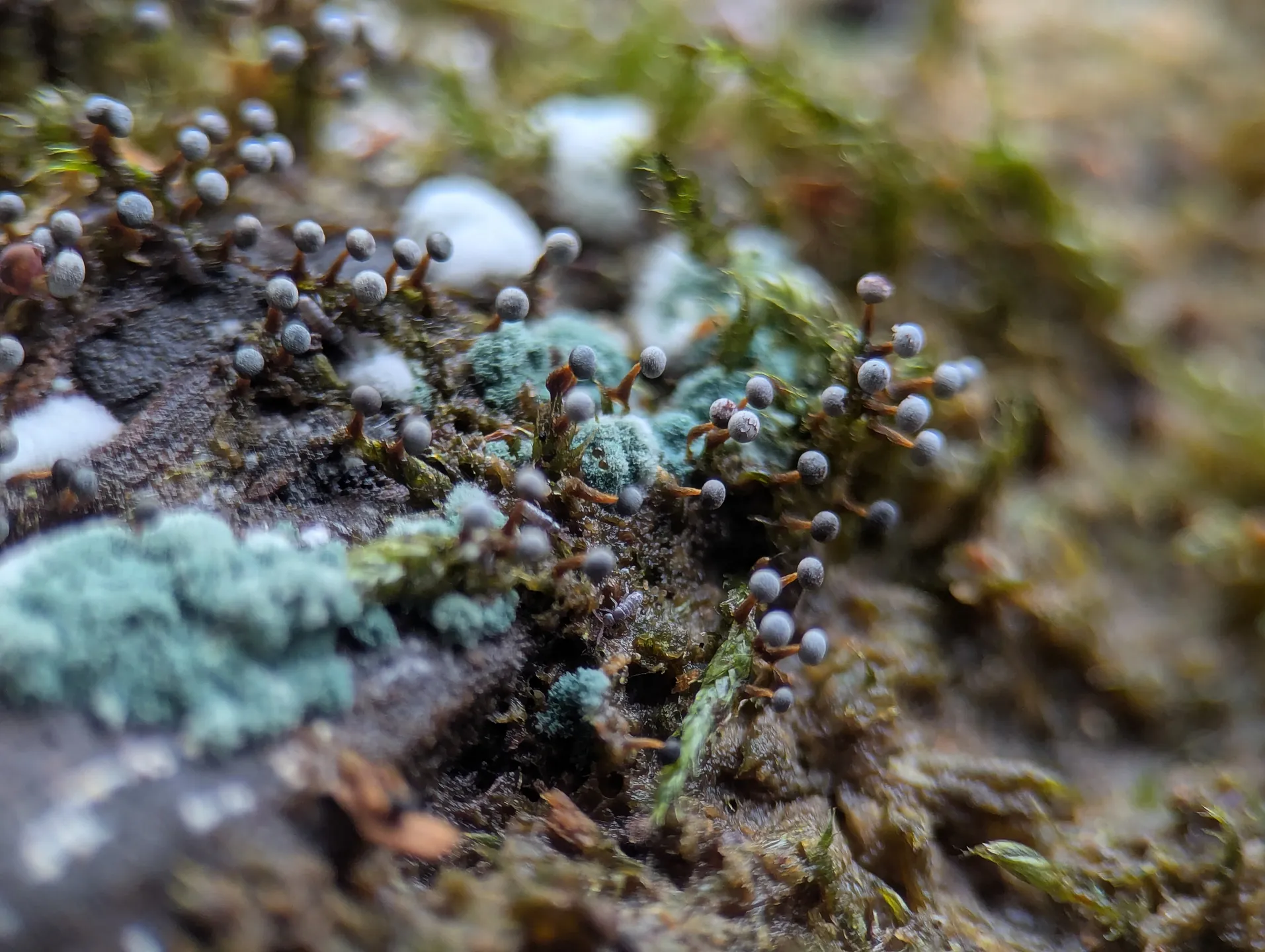
Strumpshaw Fen – 8th November 2025
And these uplifting neon-orange sporangia – the small number of neon-cinnamon individuals in the centre are wonderful!
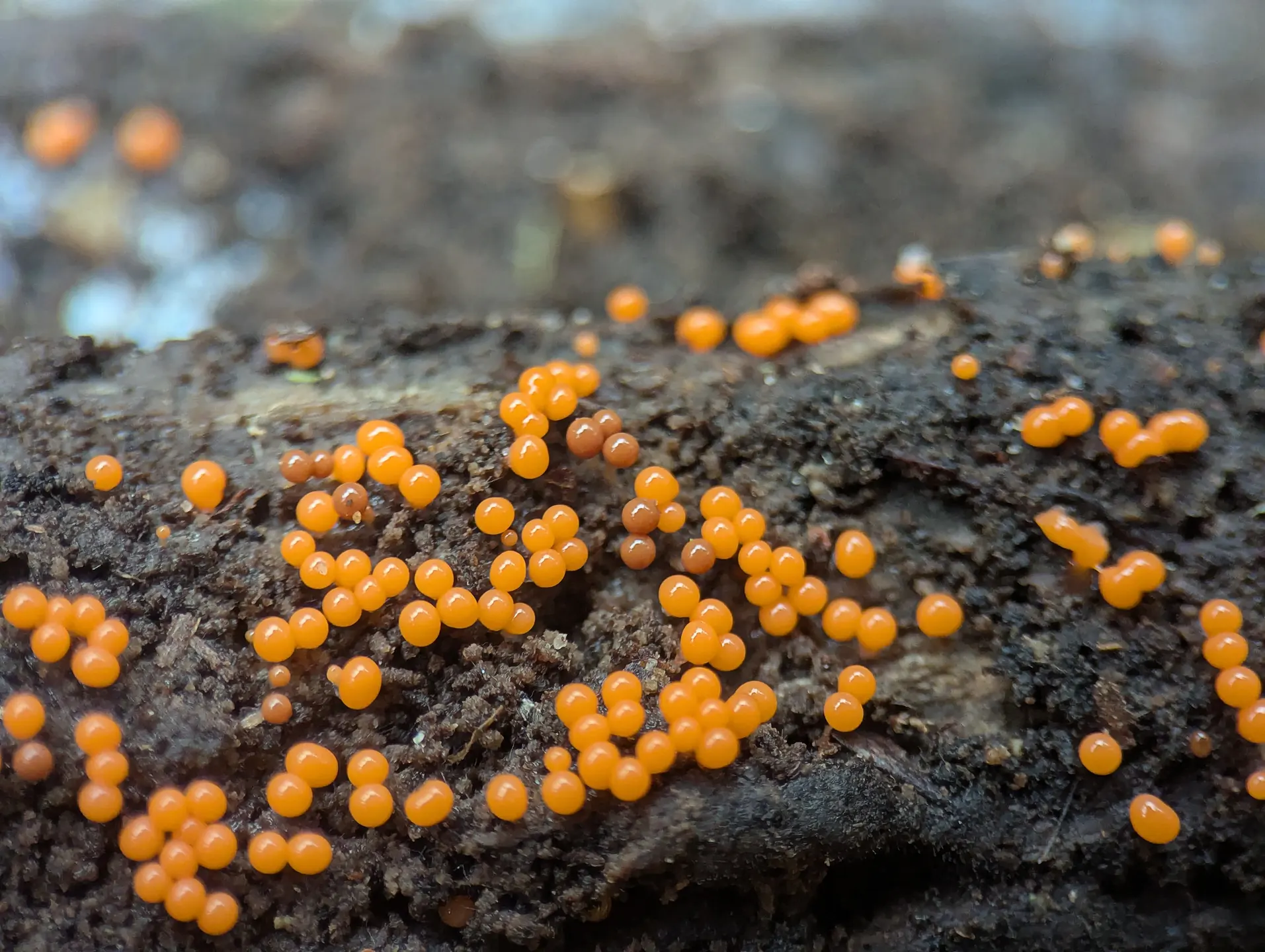
Strumpshaw Fen – 8th November 2025
And this photo shows that they have the classic young Hemitrichia decipiens form – the young orange developing sporotheca and the translucent white stalk.
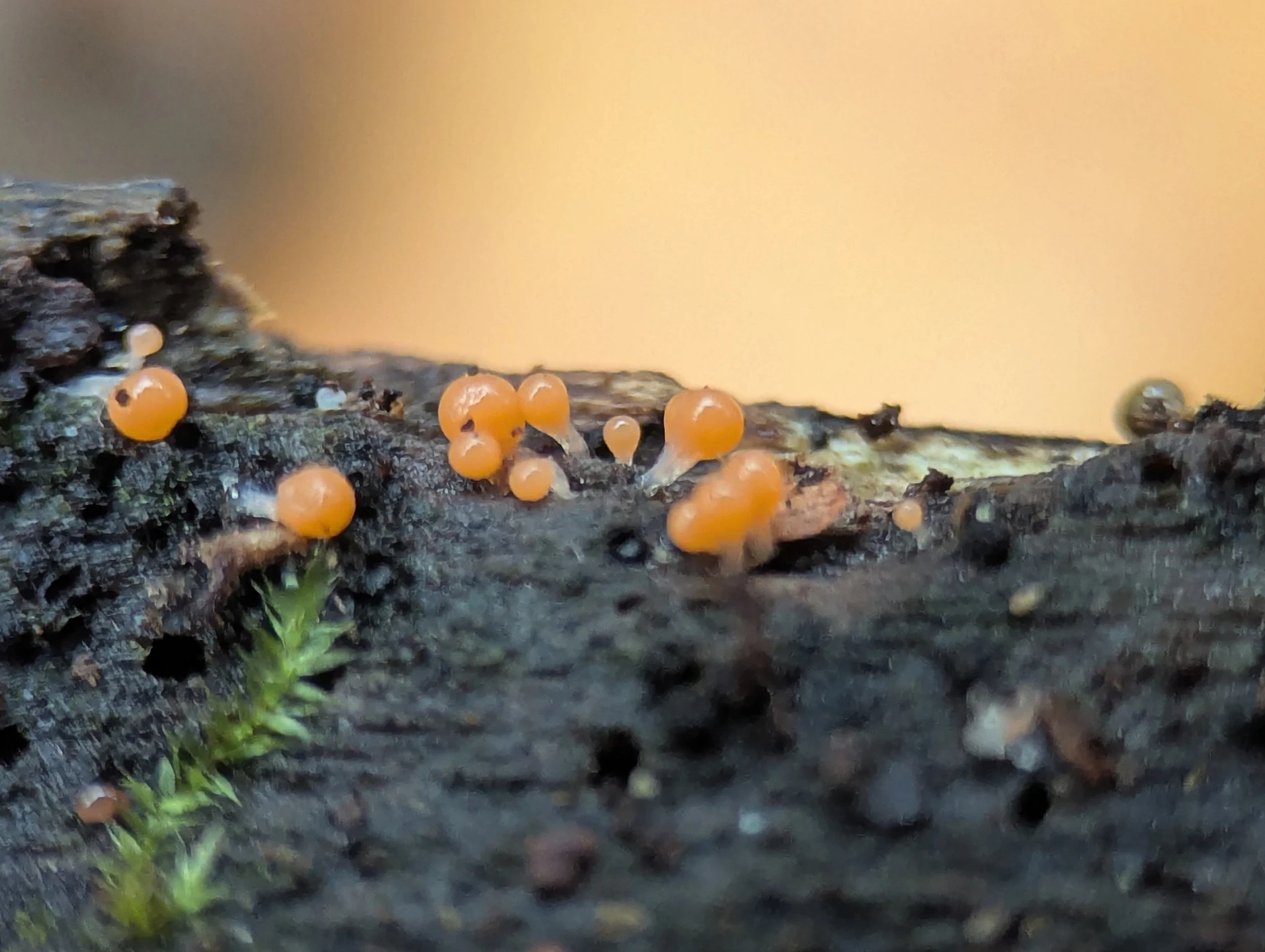
Strumpshaw Fen – 8th November 2025
The Dell
Scattered about The Dell – much more than we thought to expect – were Didymium spongiosum aethalia which we hadn’t seen since my daughter undertook her mycological survey of the reserve in 2022 and 2023.
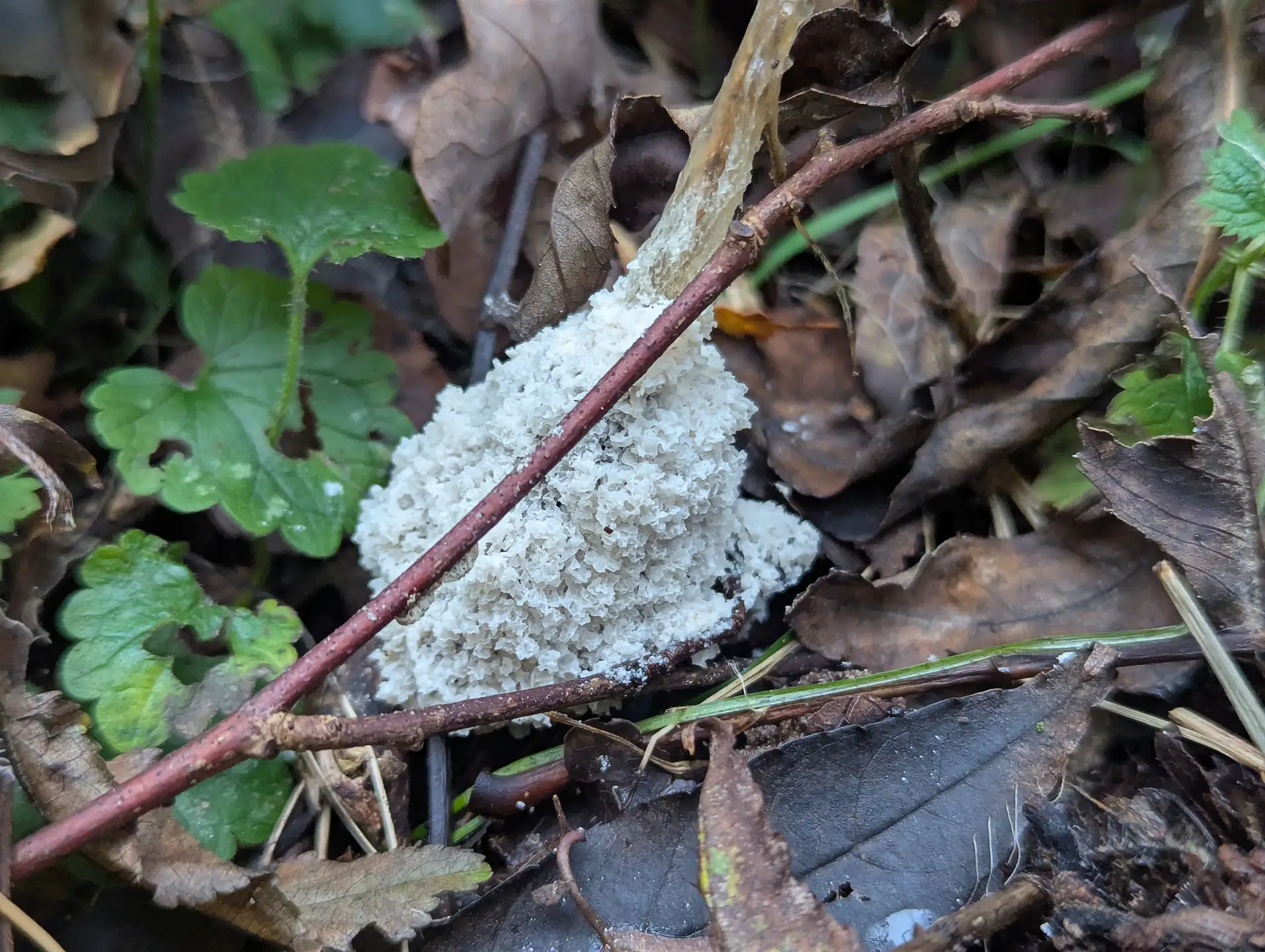
Strumpshaw Fen – 8th November 2025
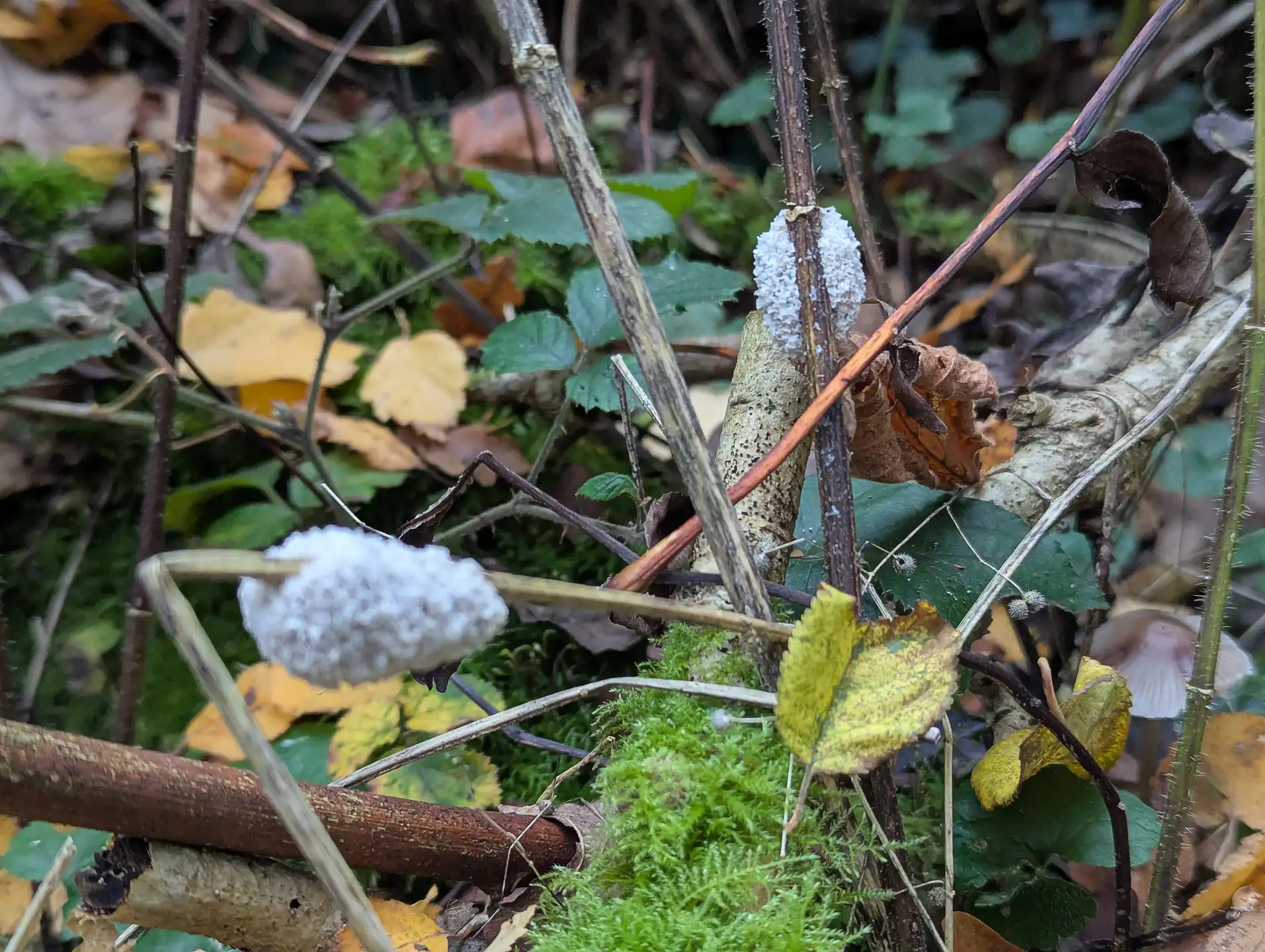
Strumpshaw Fen – 8th November 2025
The aethalium below is degrading exposing the dark grey spore mass.
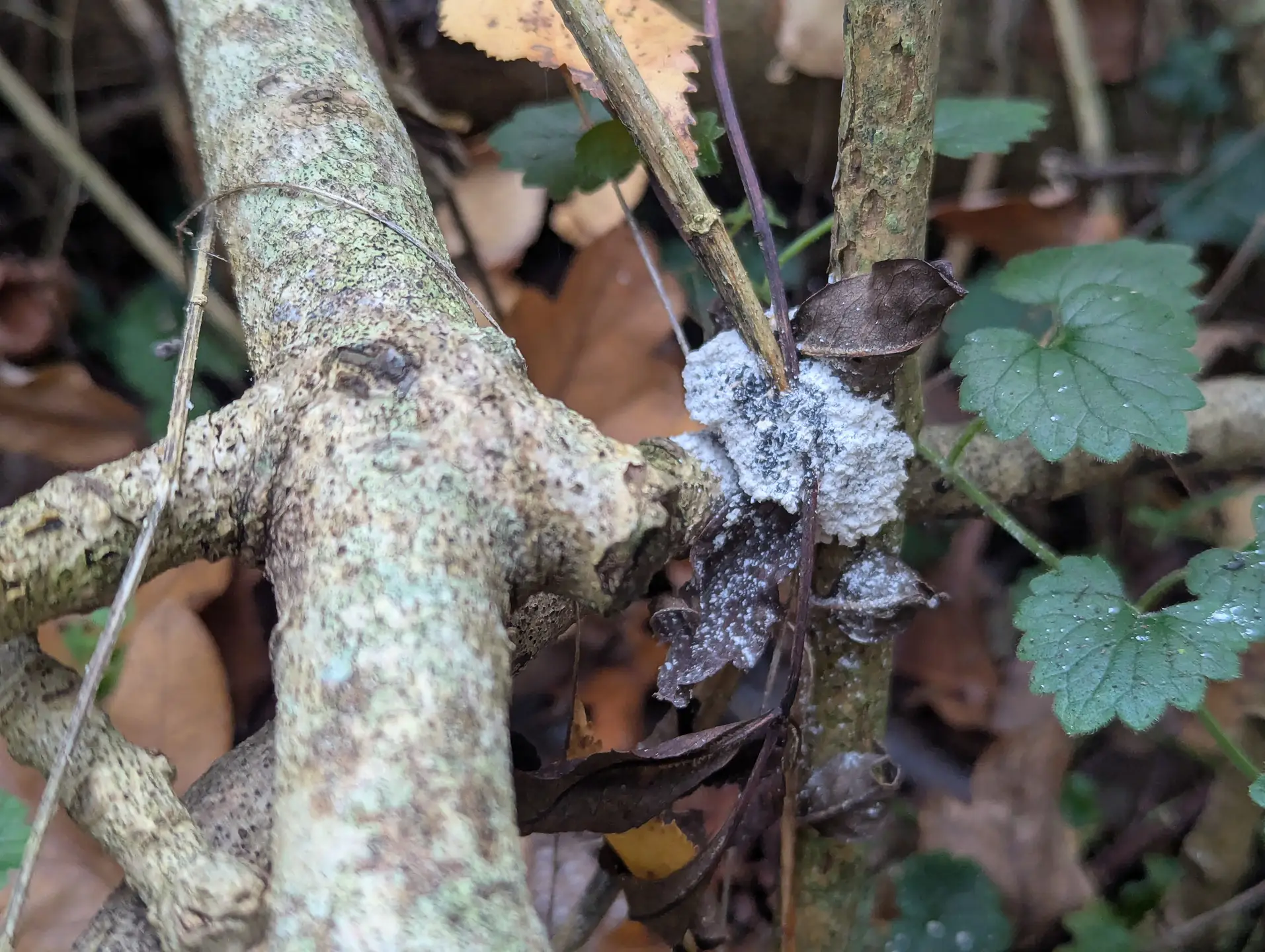
Strumpshaw Fen – 8th November 2025
These sporangia – which I think could be Arcyria stipata – are somewhat shrivelled, appearing stunted in their development, failing to develop their typical fuller, tubular shape.
Strumpshaw Fen – 8th November 2025
Some unidentified early stage young sporangia below.
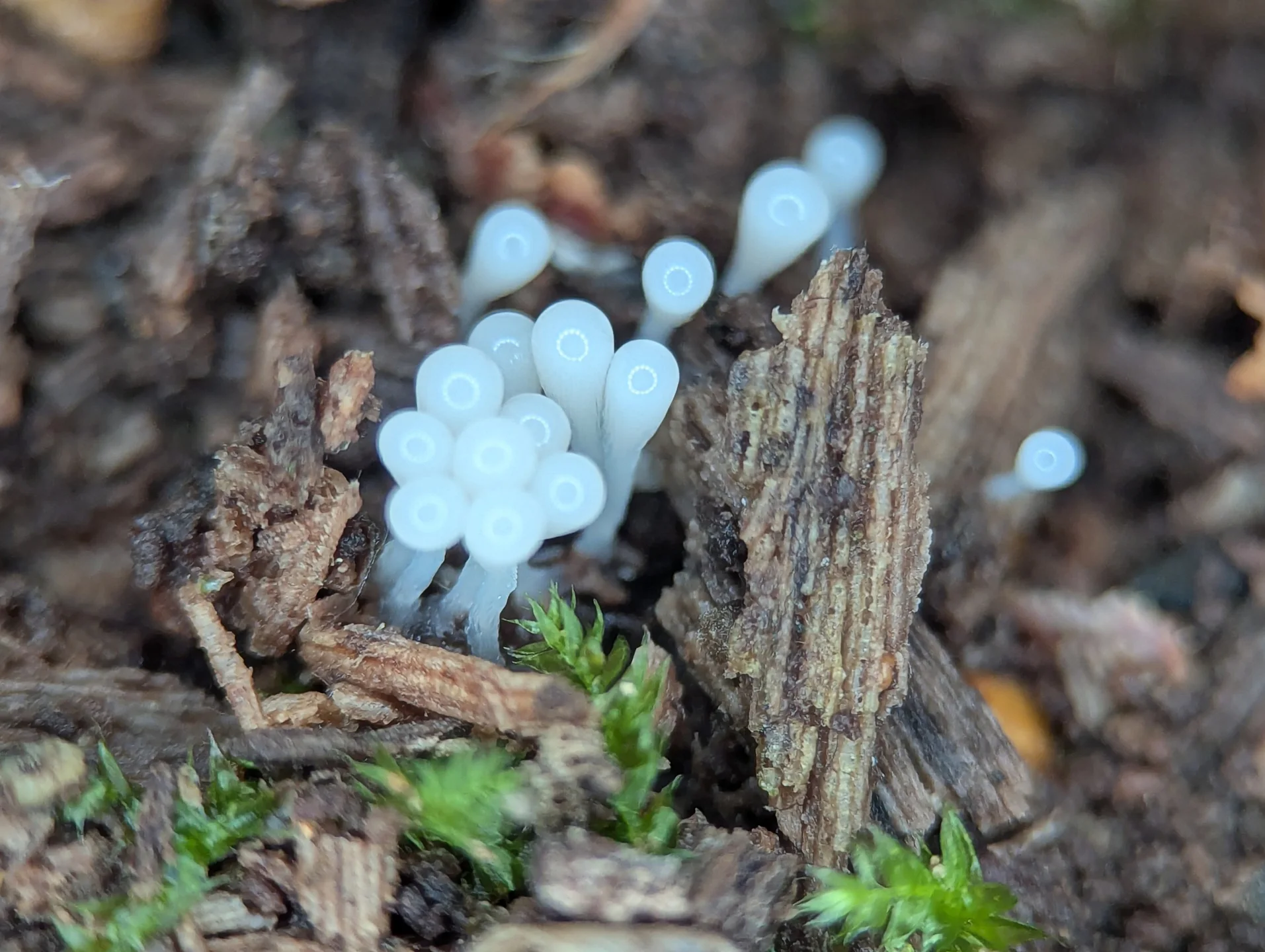
Strumpshaw Fen – 8th November 2025
In the same patch of decaying wood the sporothecae of the sporangia below – likely the same as the above – had a cream pigmentation.
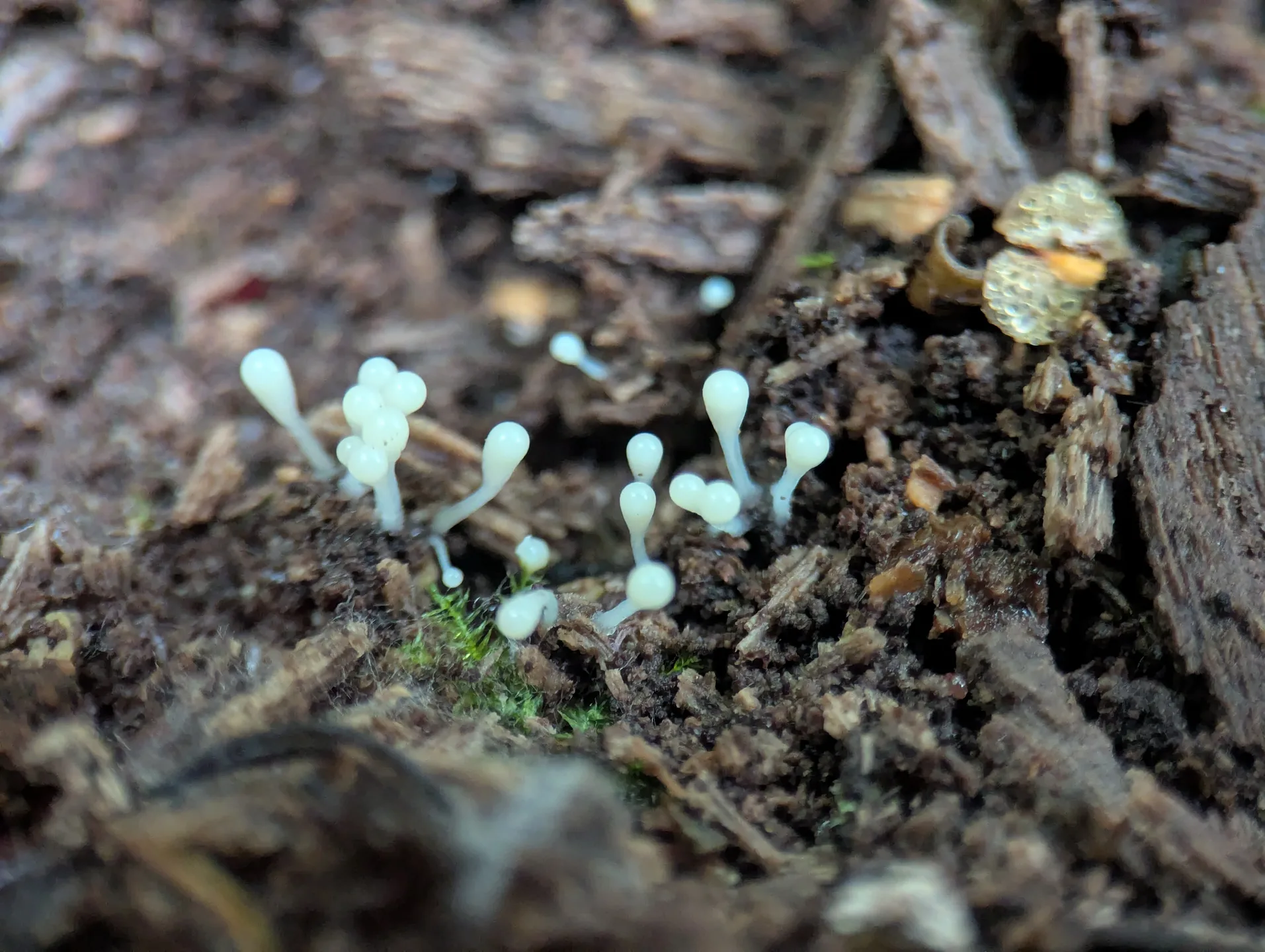
Strumpshaw Fen – 8th November 2025
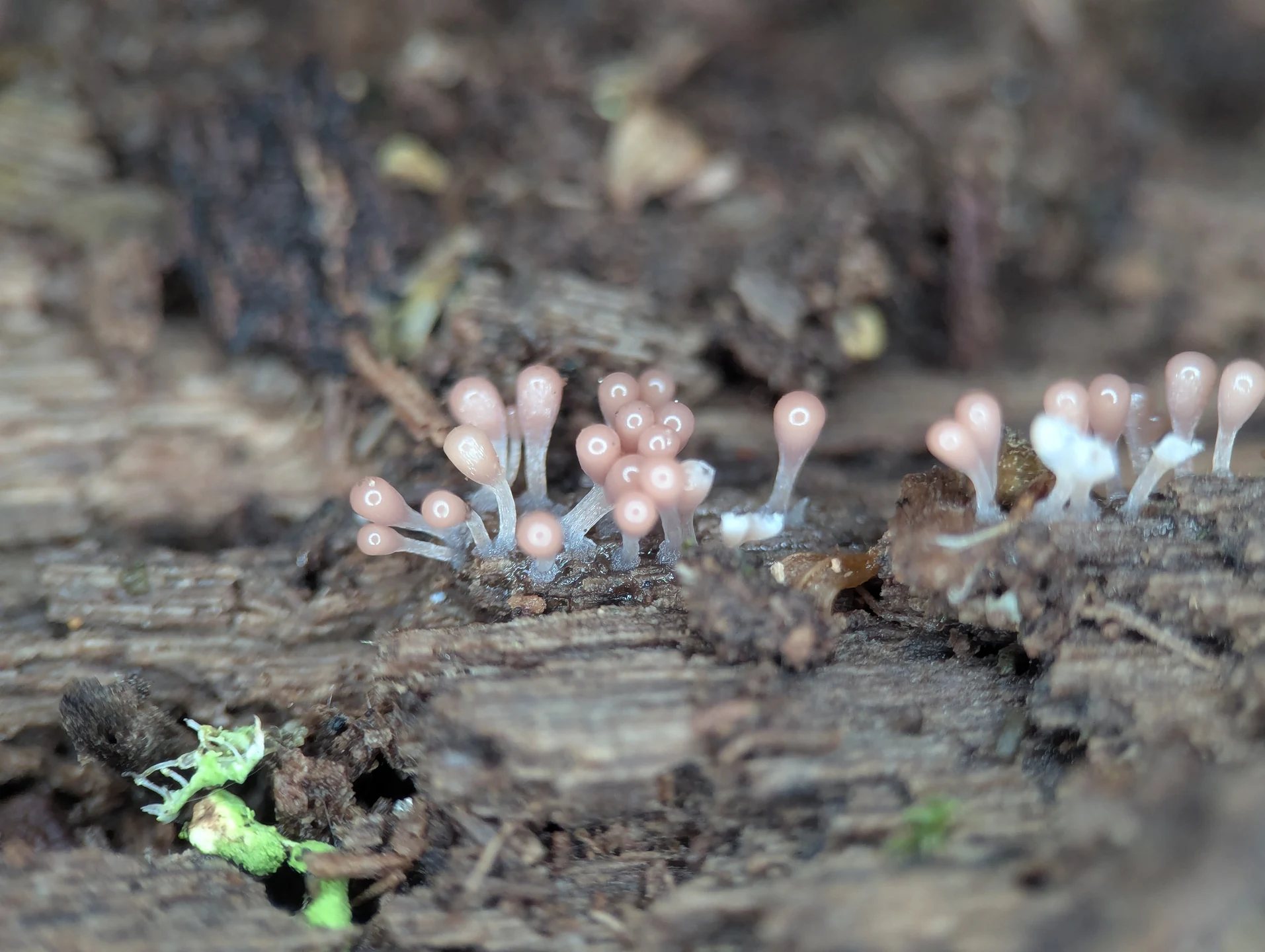
And these – also nearby – had pale clay-pink sporothecae and more translucent stalks, likely more mature forms of the above.
Strumpshaw Fen – 8th November 2025
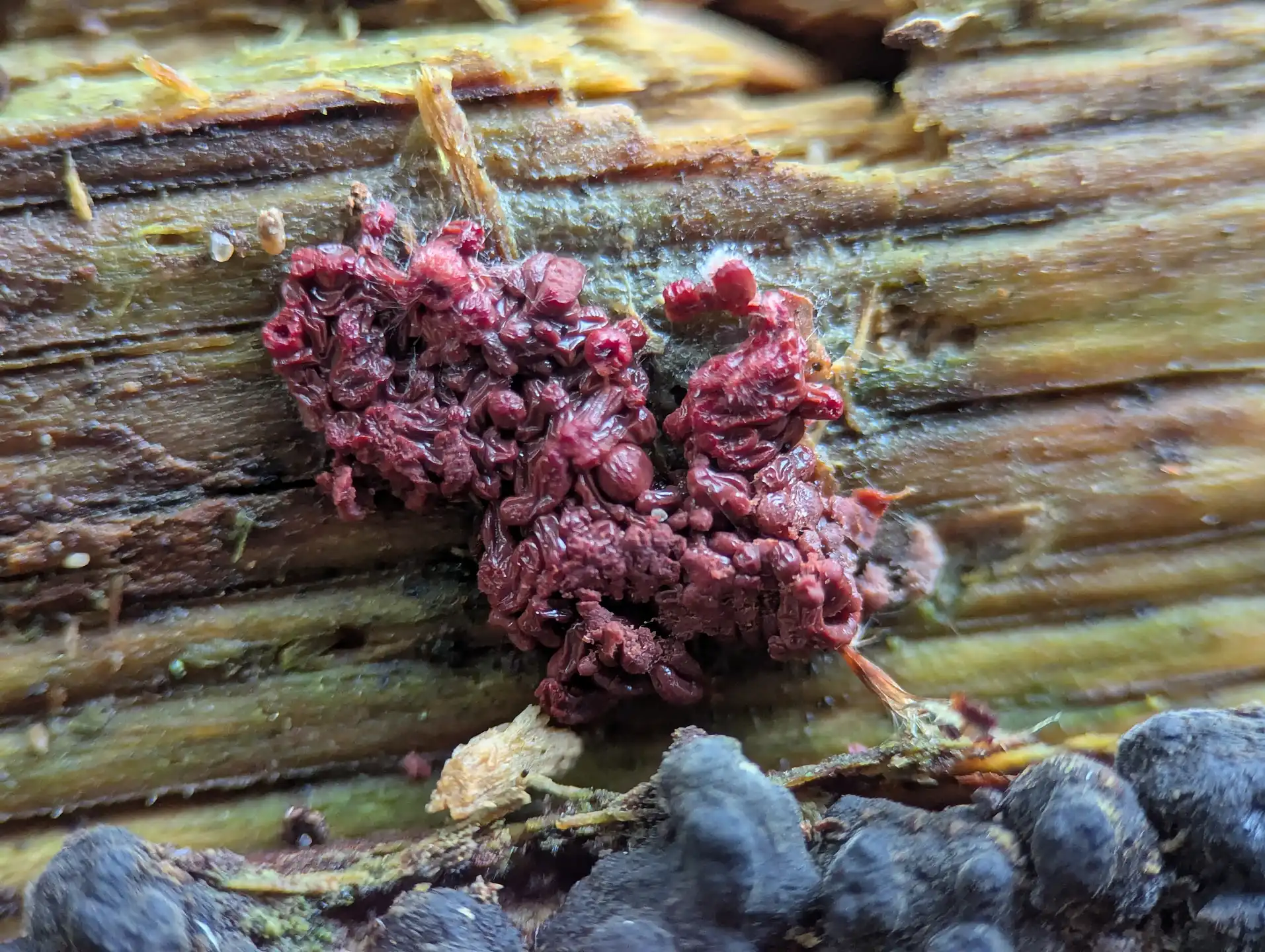
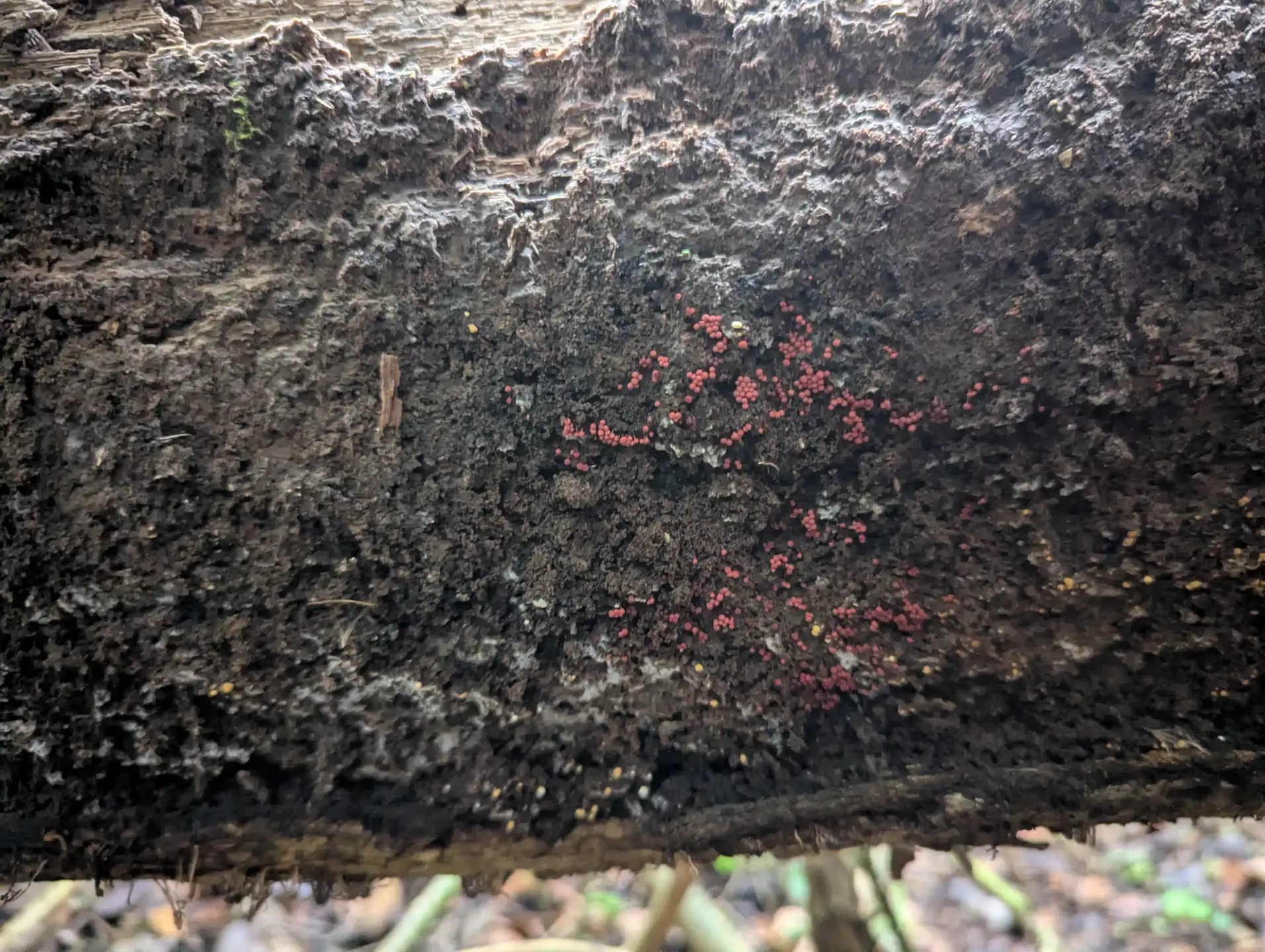
On the downed trunk where we found slime moulds and eyelash fungi a couple of years ago, we noticed scattered, crowded groups of pinkish-red slime mould sporangia.
Strumpshaw Fen – 8th November 2025
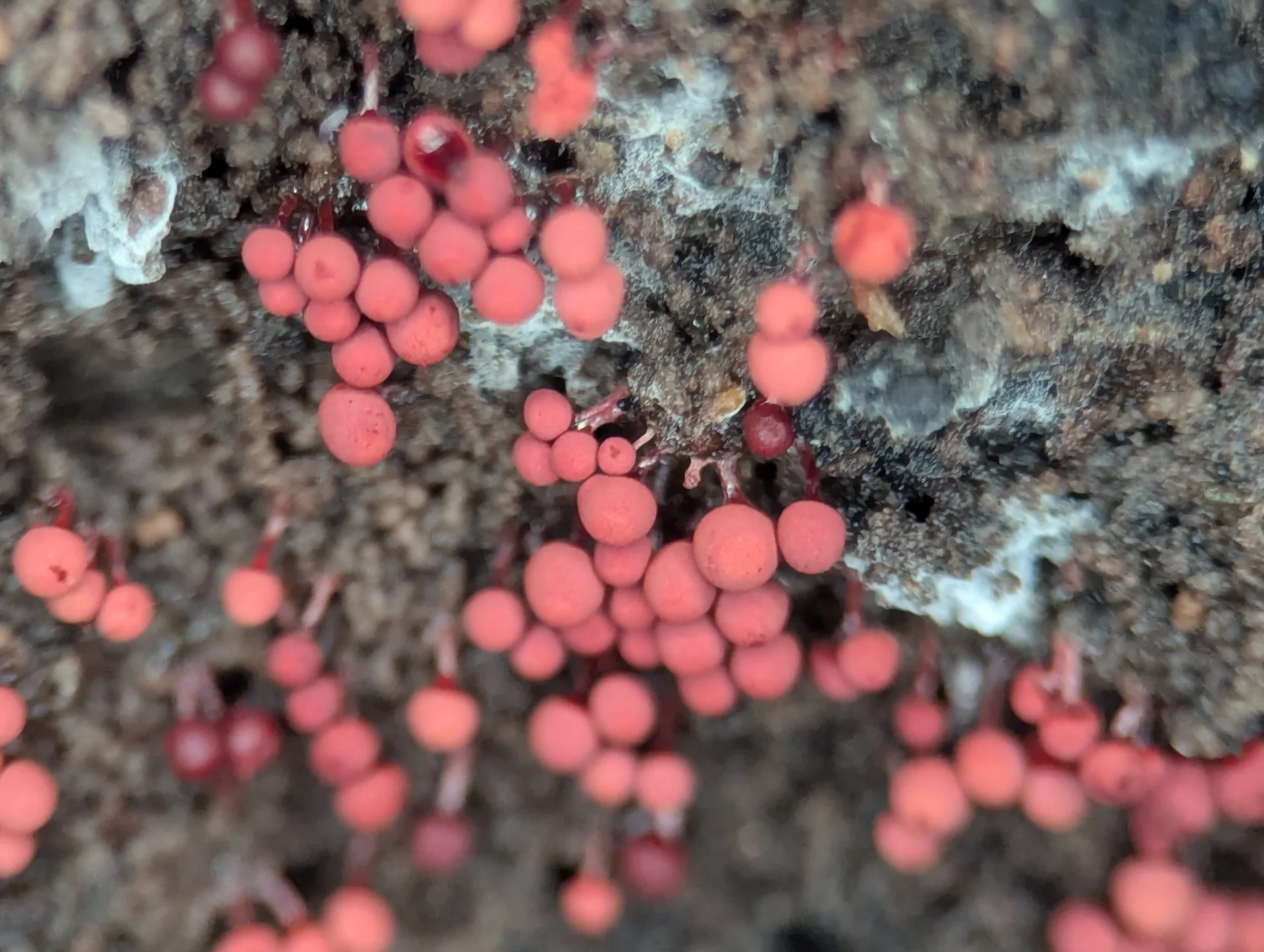
I struggled trying to work out what these could be – the globular forms were confounding me.
Strumpshaw Fen – 8th November 2025
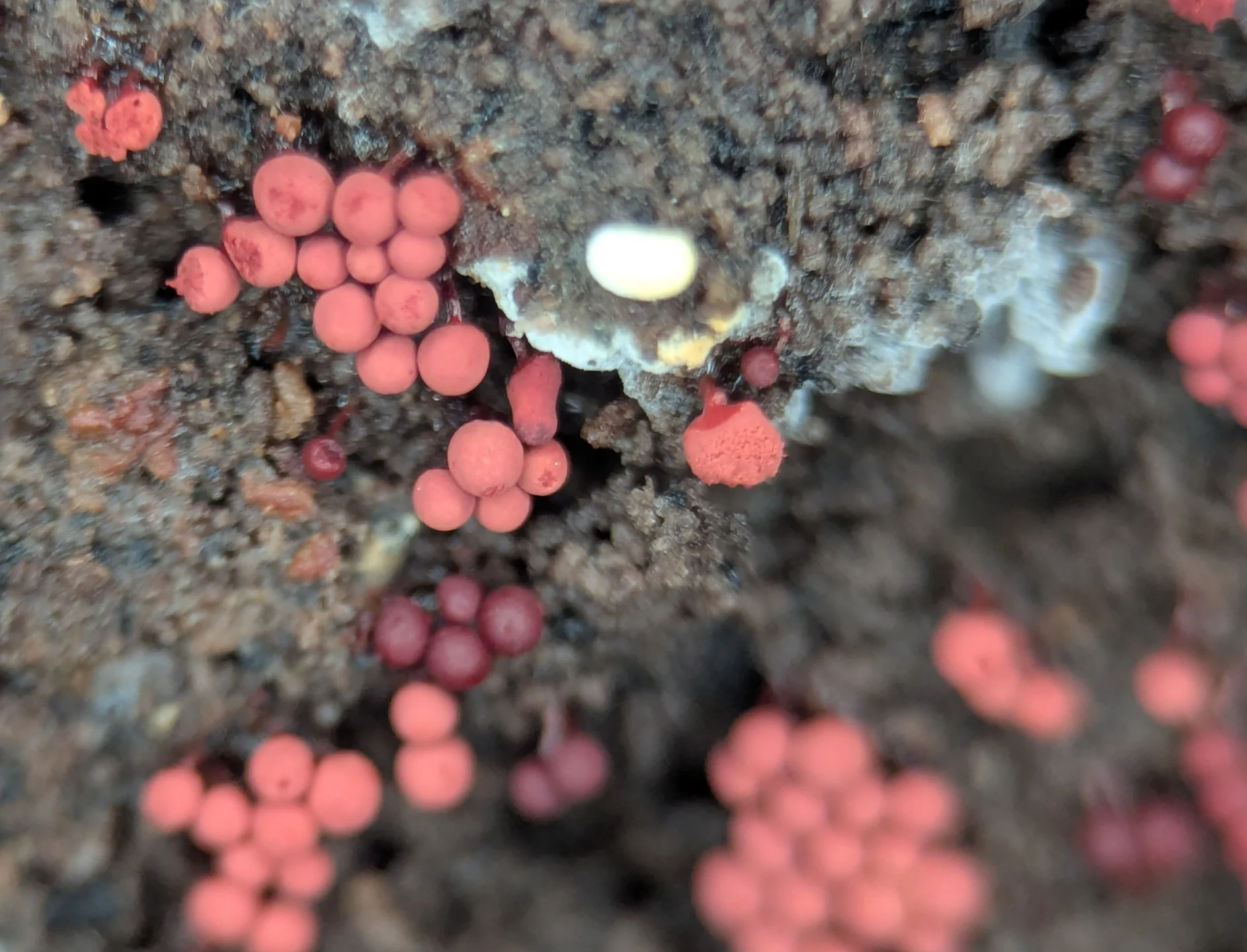
But I think that these are probably Arcyria denudata – in the photo below just left of centre is a sporotheca with a form more characteristic of Arcyria denudata.
Strumpshaw Fen – 8th November 2025
Near The Outpost on the decaying trunk that hosted the unidentified reddish-brown and brownish-vinaceous sporangia at the beginning of the month – some tri-colour Phlebia radiata.
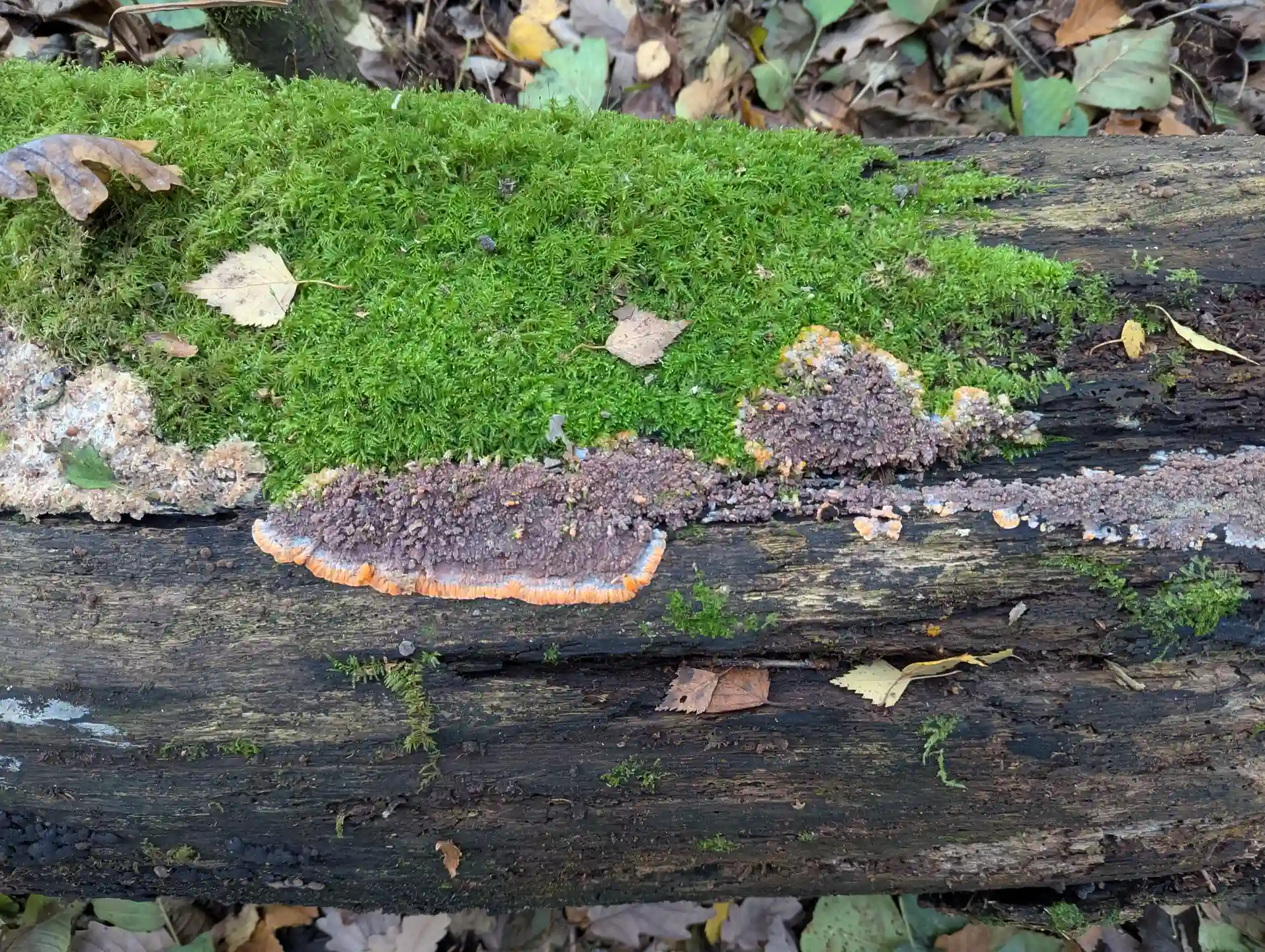
Strumpshaw Fen – 8th November 2025
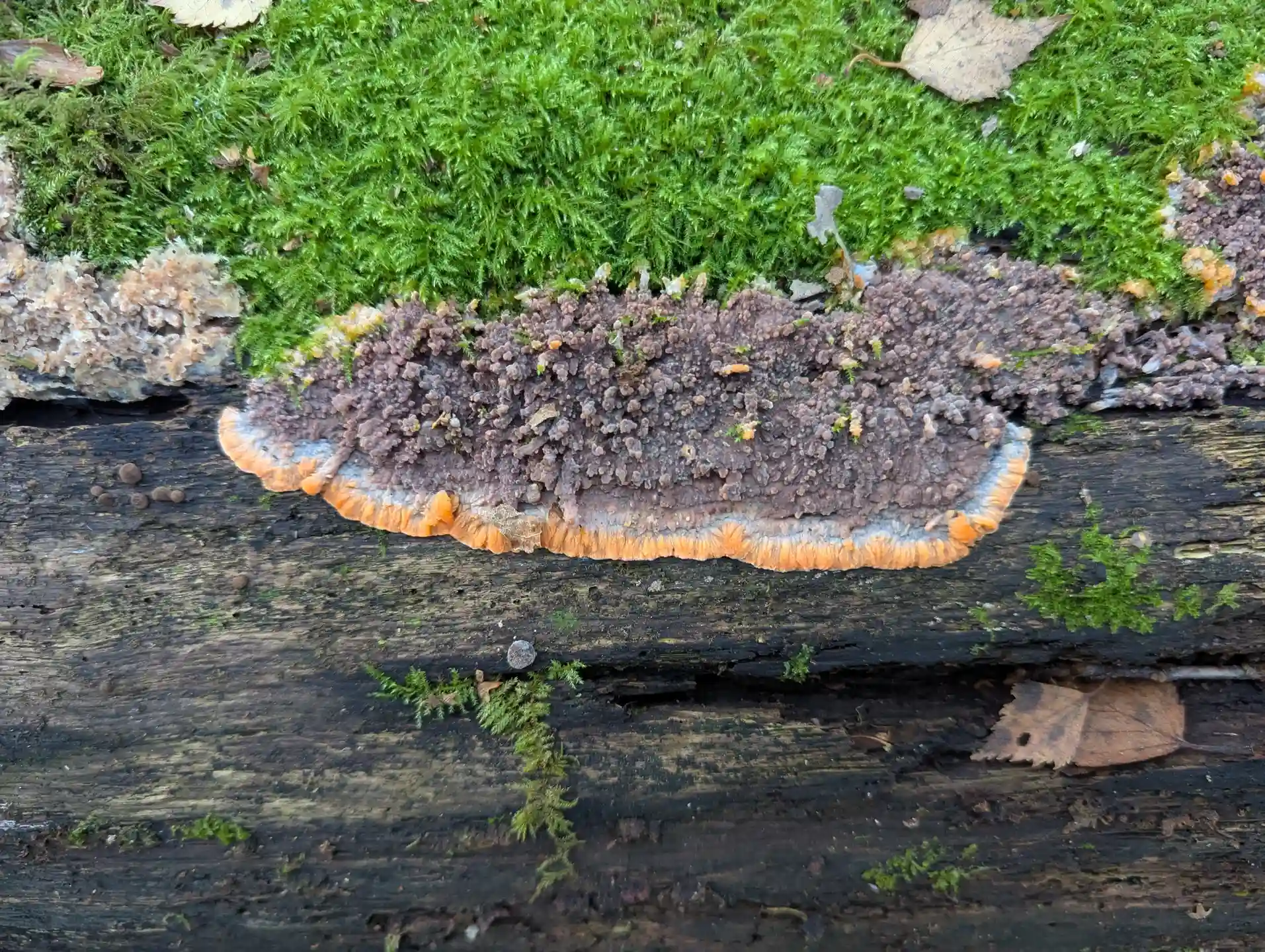
Strumpshaw Fen – 8th November 2025
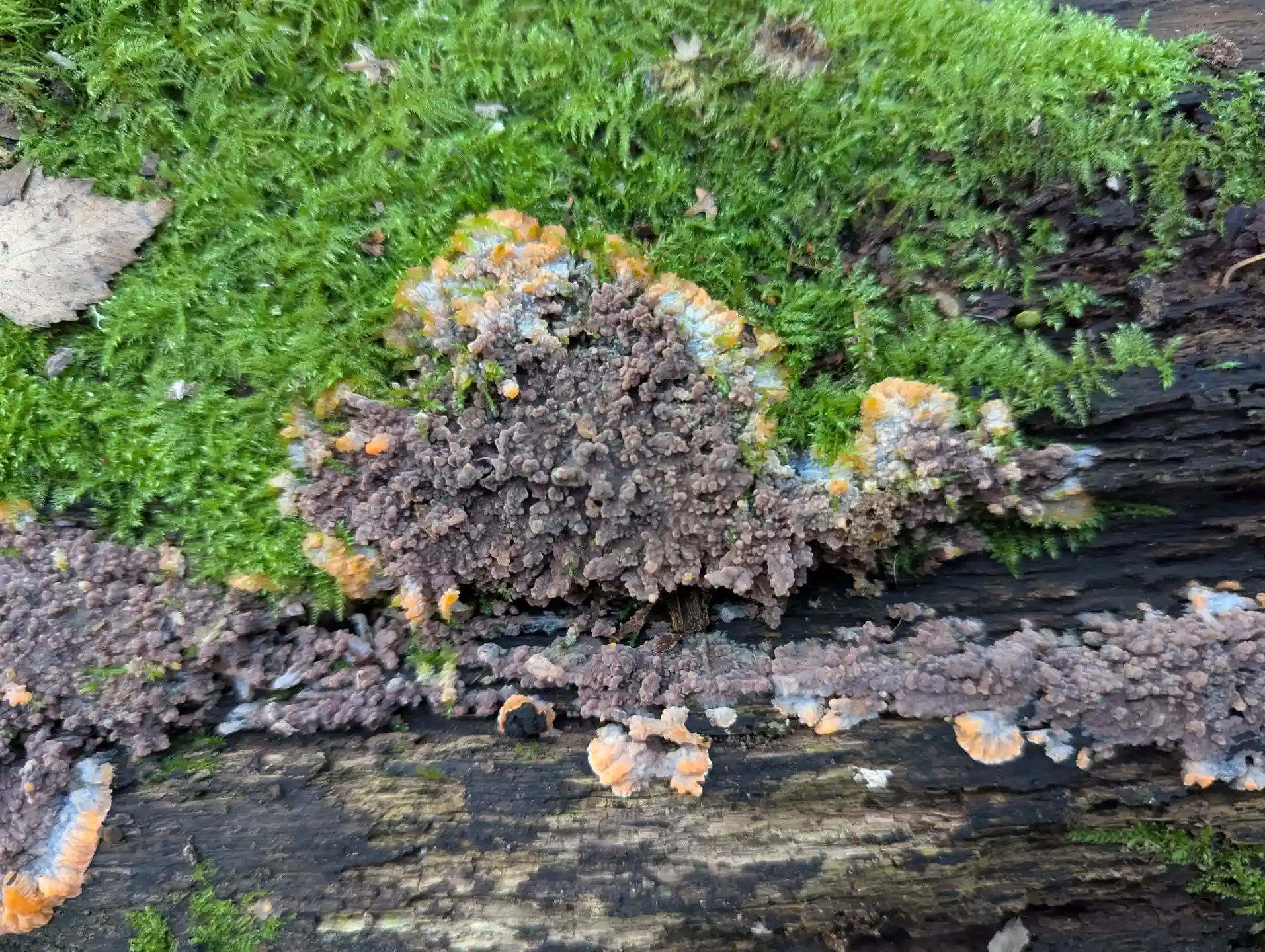
Strumpshaw Fen – 8th November 2025
30th November 2025
The Dell
Likely Hemitrichia decipiens sporangia on a fragment of branch.
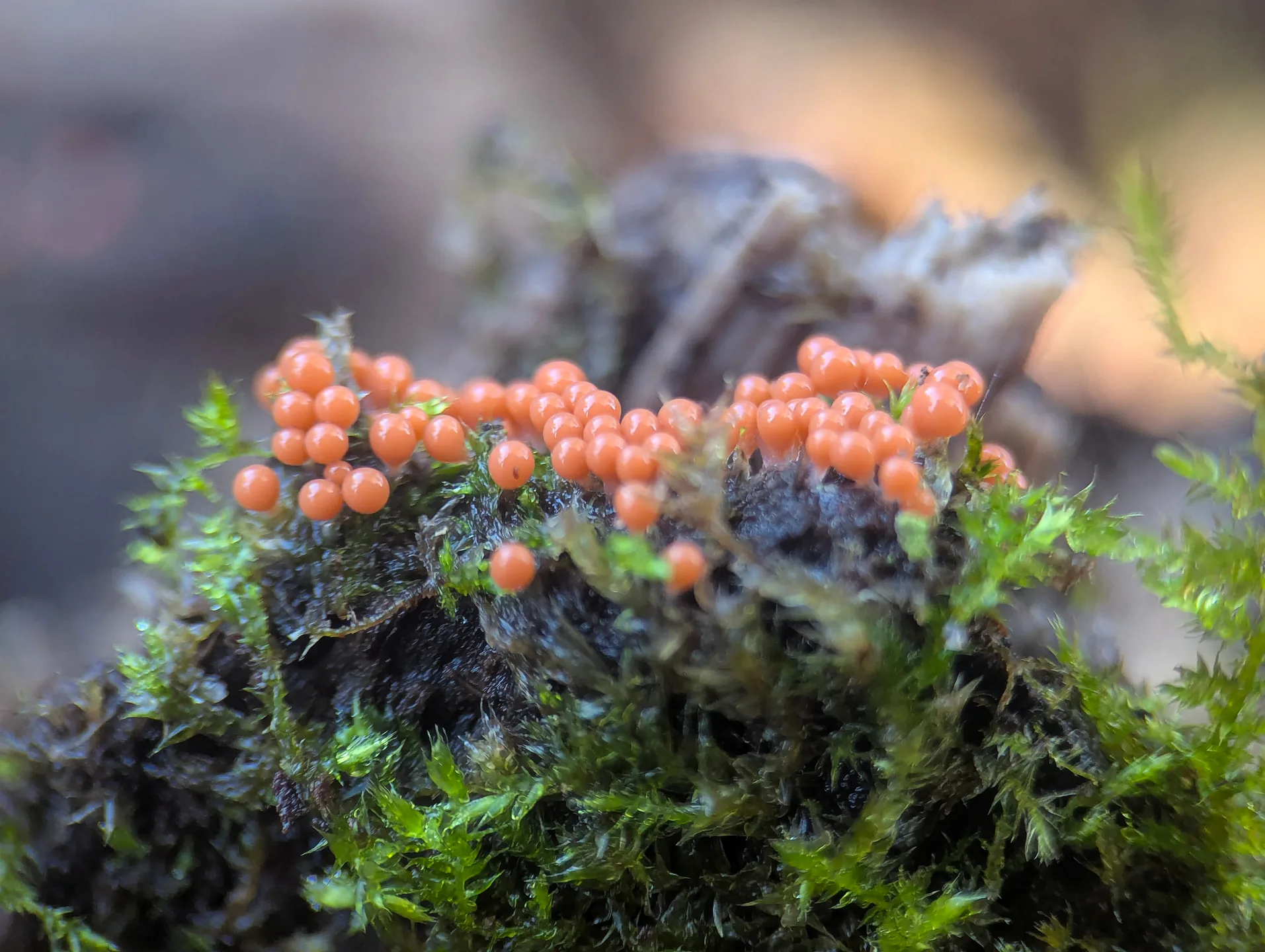
Strumpshaw Fen – 30th November 2025
Also on the branch another group with some more mature deep olive forms.
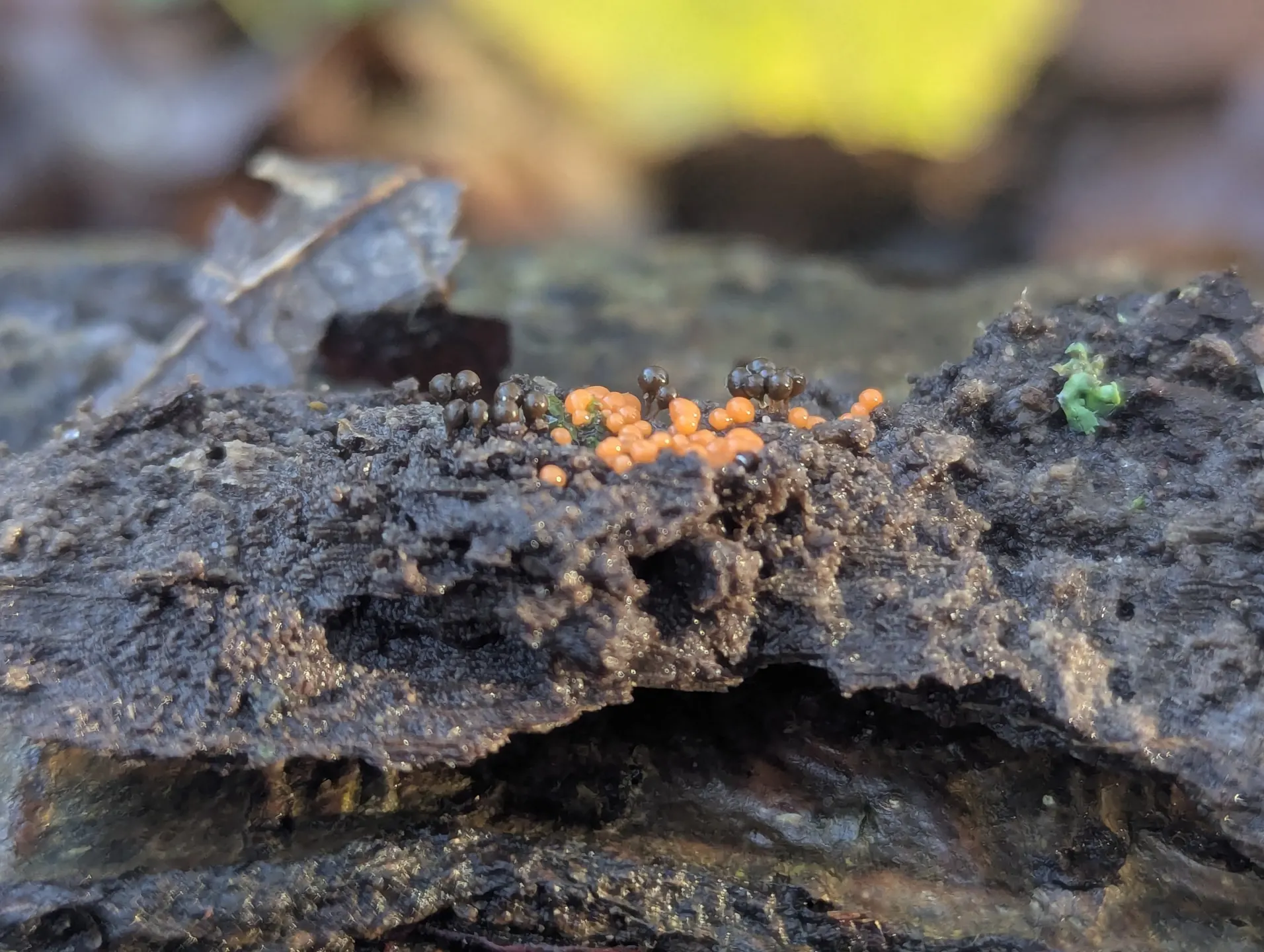
Strumpshaw Fen – 30th November 2025
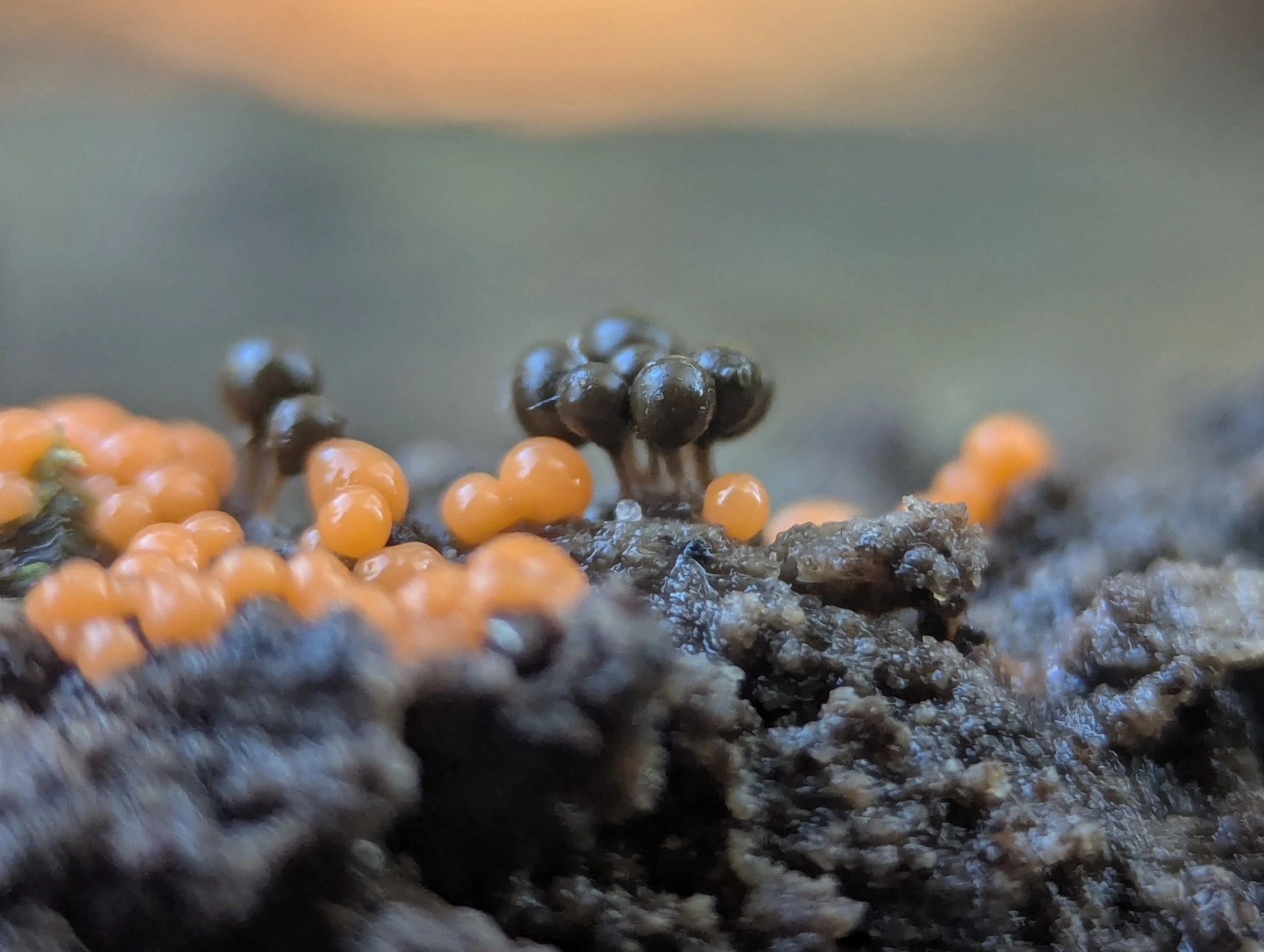
Strumpshaw Fen – 30th November 2025
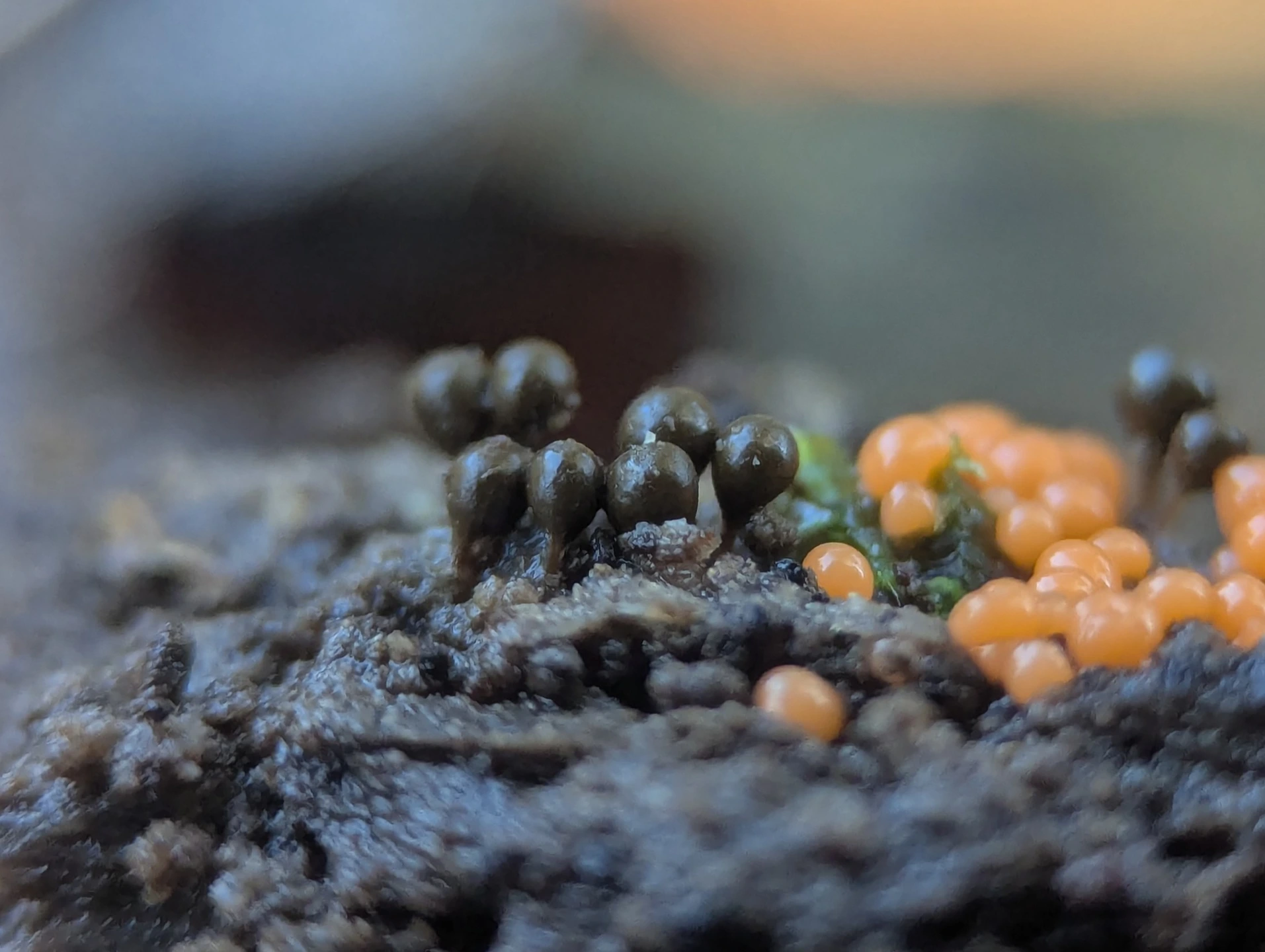
Strumpshaw Fen – 30th November 2025
Near The Outpost
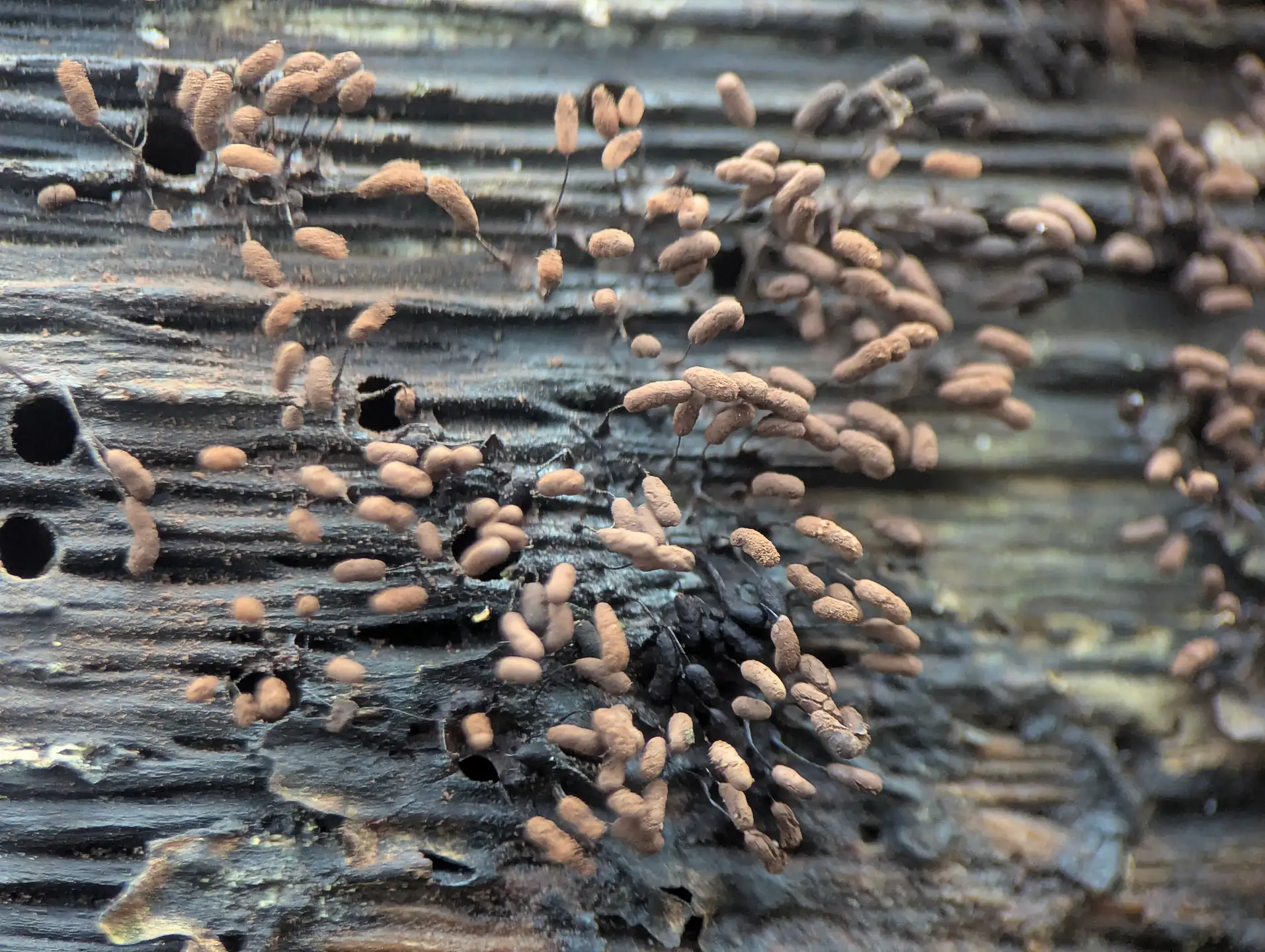
Earlier in the autumn, a chest high stump had toppled over. Before, we had only given it cursory attention, as it didn’t seem to host any obvious slime moulds that we could see. However, now that it was lying on the ground it was retaining moisture better and our expectation was that we might start seeing slime moulds growing on it – and indeed we did!
We spotted two groups of sporangia circled below.
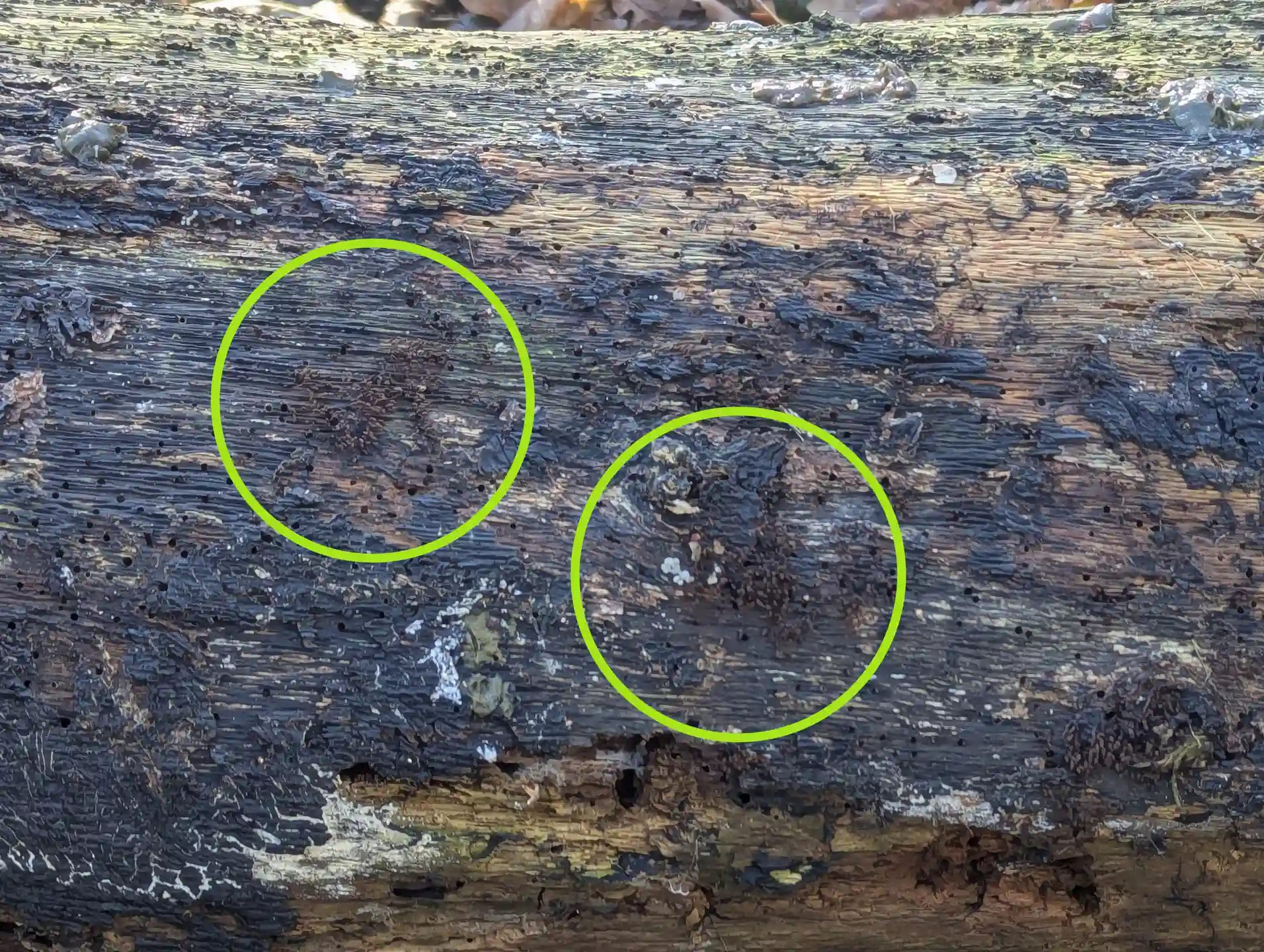
Strumpshaw Fen – 30th November 2025
They had a Stemonitopsis typhina look about them, although in none of the photos I took do the stalks appear to have a slivery sheath that is characteristic of Stemonitopsis typhina.
Strumpshaw Fen – 30th November 2025
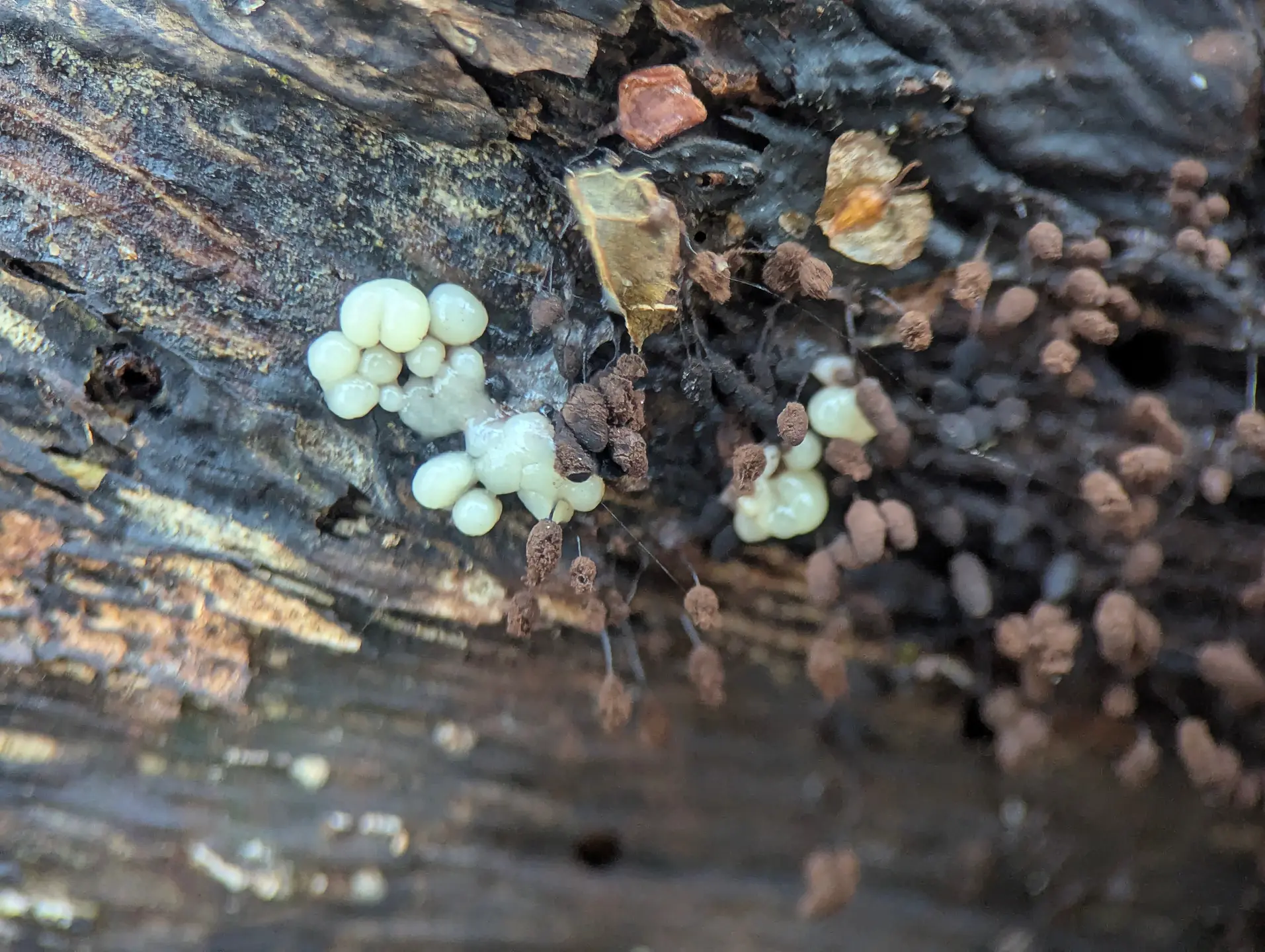
Next to one of the groups was some slime mould primordia.
Strumpshaw Fen – 30th November 2025
[1] Previous posts on the downed trunk near The Outpost – a host to numerous slime mould species and various fungi:
Strumpshaw Fen Slime Moulds & Fungi – September 2025
Arcyria obvelata at Strumpshaw Fen woodland – June 2025
RSPB Strumpshaw Fen Slime Mould Plasmodia
Strumpshaw Fen is a nature reserve managed by the RSPB adjacent the River Yare, east of Norwich in Norfolk
RSPB Strumpshaw Fen webpage RSPB Strumpshaw Fen Wikipedia entry