Strumpshaw Fen Slime Moulds & Fungi – September 2025
7th September
We had a super start to September when we found jewel-like translucent, blue-grey slime mould sporangia at the Basecamp loop that we think is Cribraria argillacea.
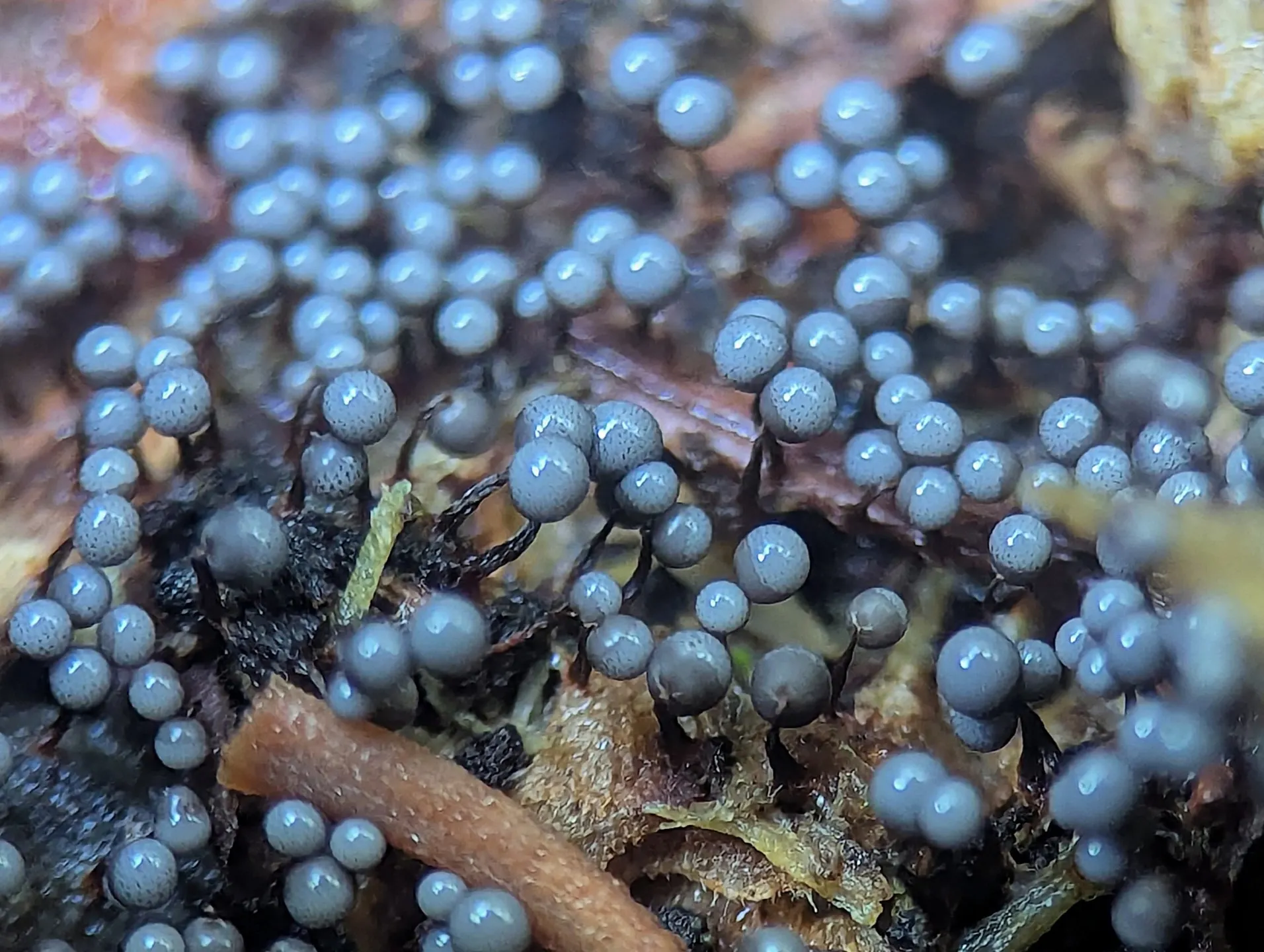
Strumpshaw Fen – 7th September 2025
And after The Outpost some glistening metallic consolidating plasmodia that we also think is Cribraria argillacea.
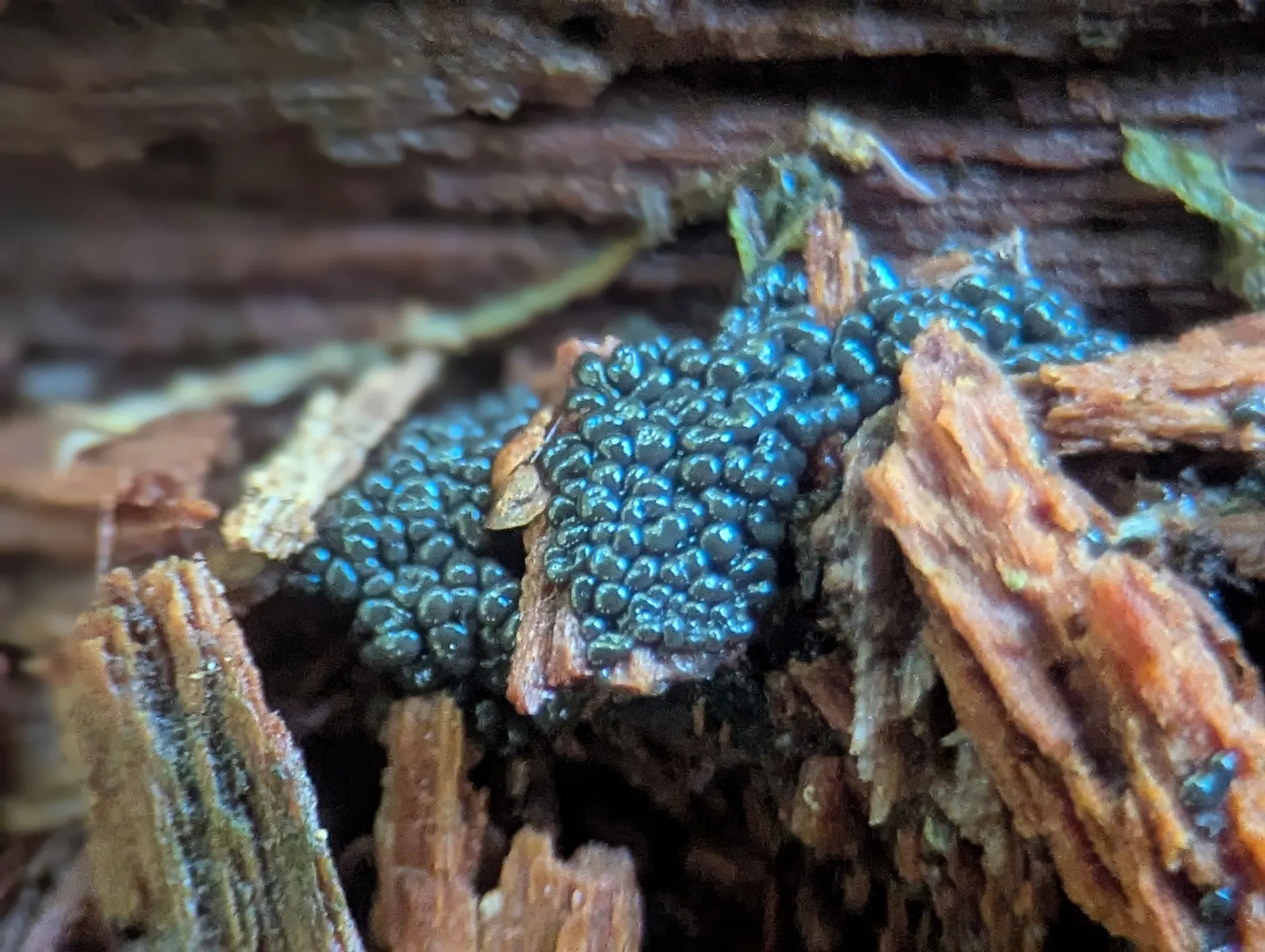
Strumpshaw Fen – 7th September 2025
I’ve posted more about this slime mould.
At Basecamp the Artomyces pyxidatus was still hanging in, not looking to great – desiccating and brittle – but there were some new smaller fruiting bodies.
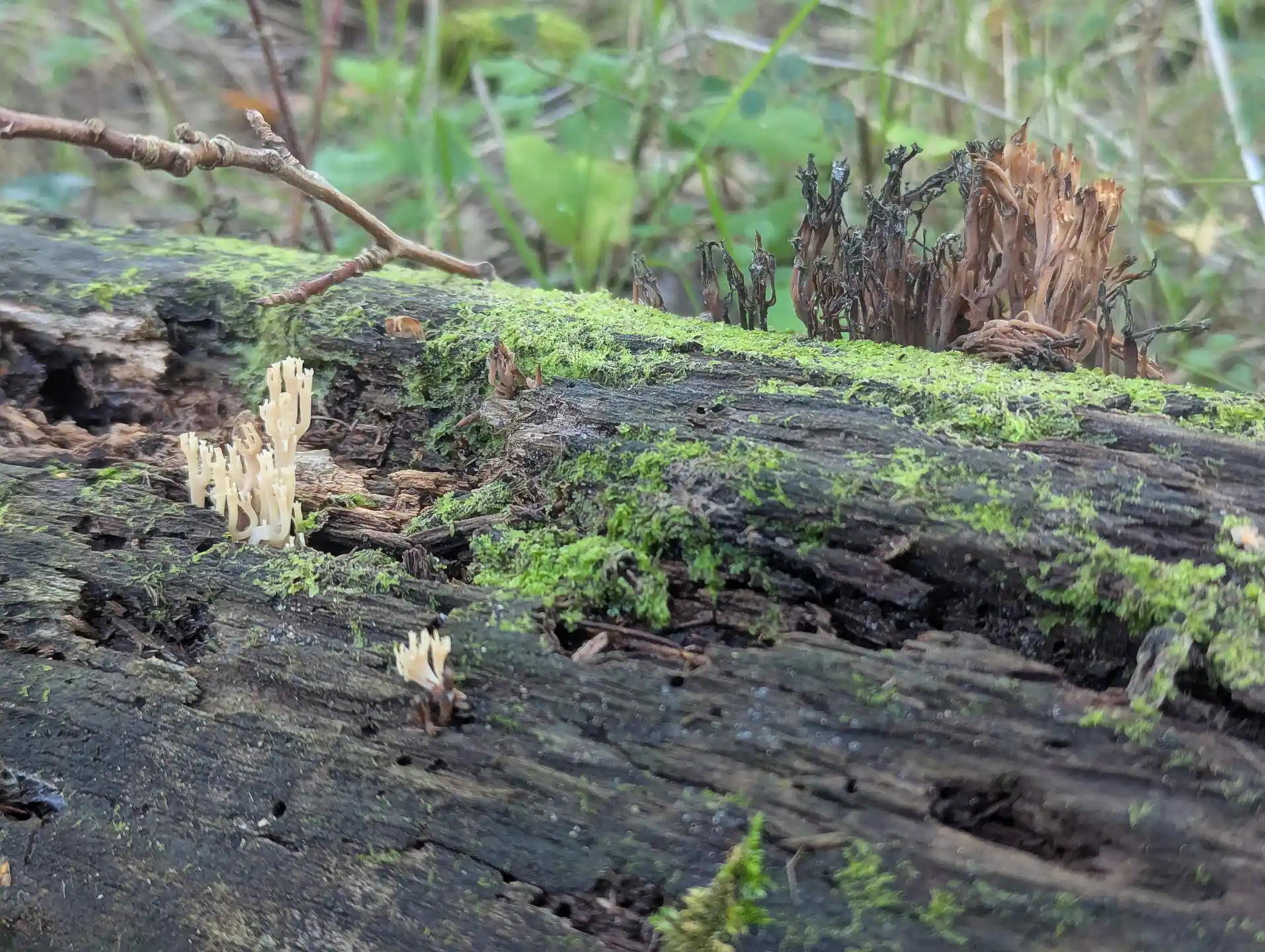
Strumpshaw Fen – 7th September 2025
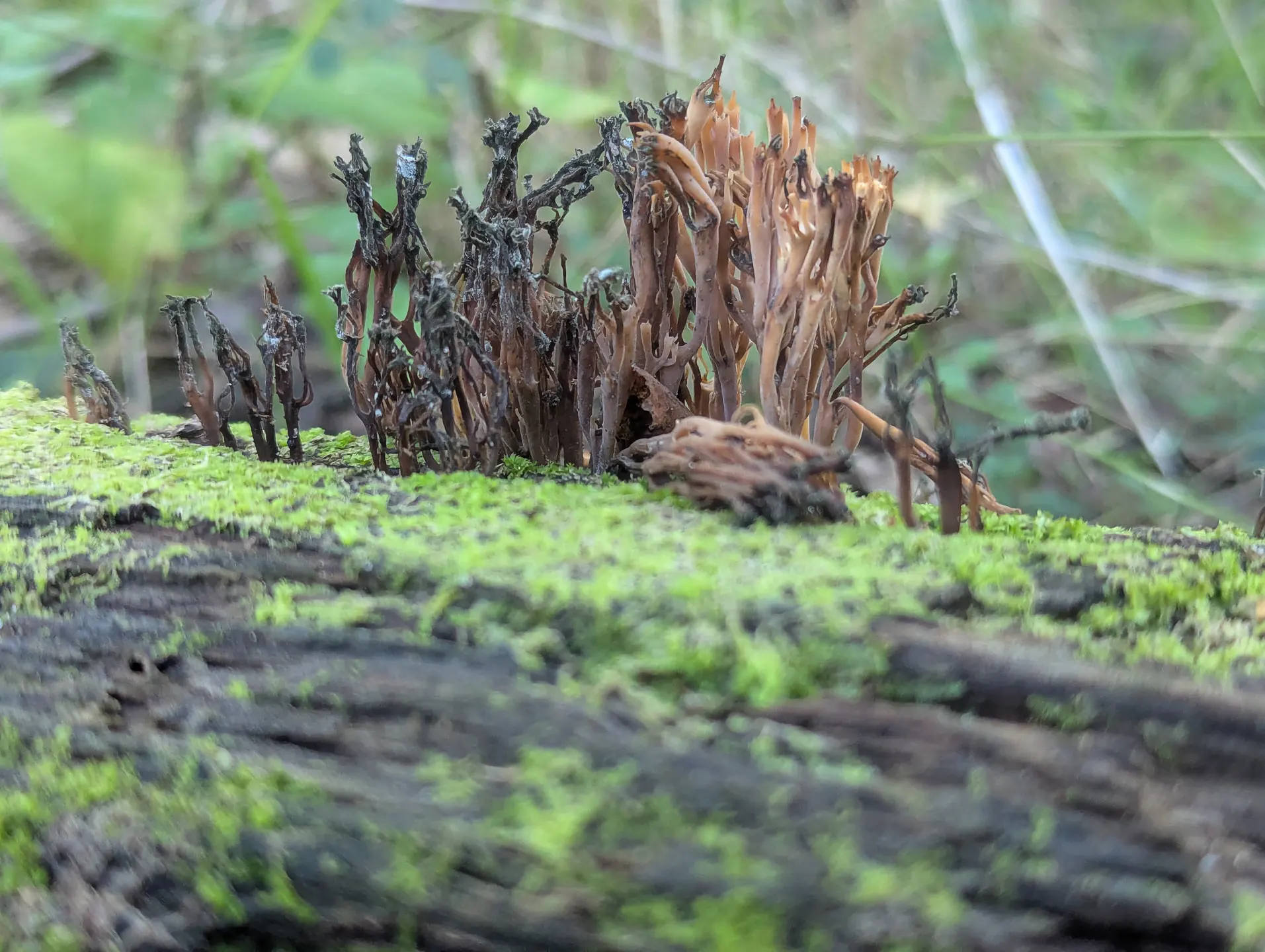
Strumpshaw Fen – 7th September 2025
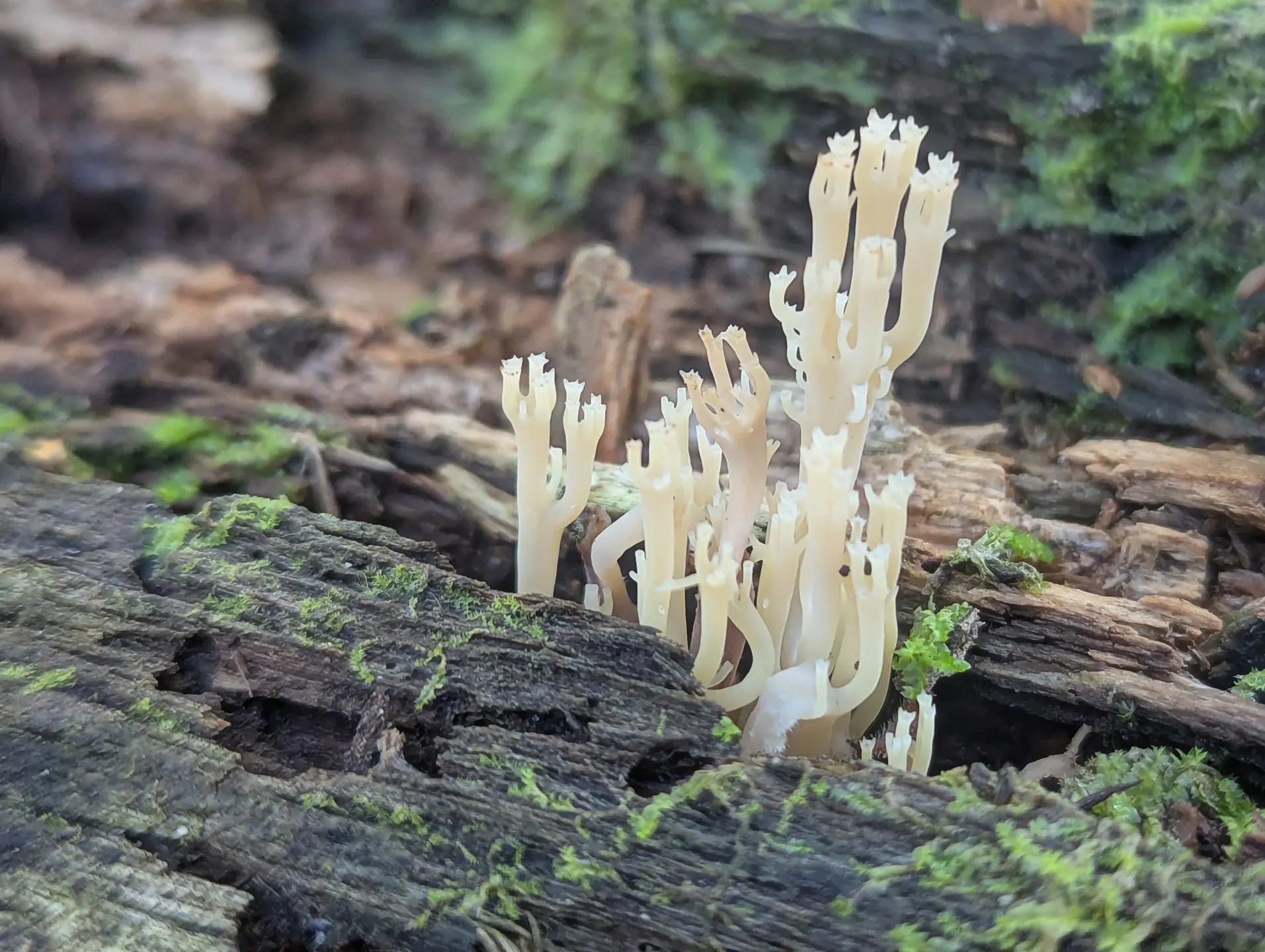
Strumpshaw Fen – 7th September 2025
Near The Outpost some unidentified translucent white slime mould primordia on a fragment of wood.
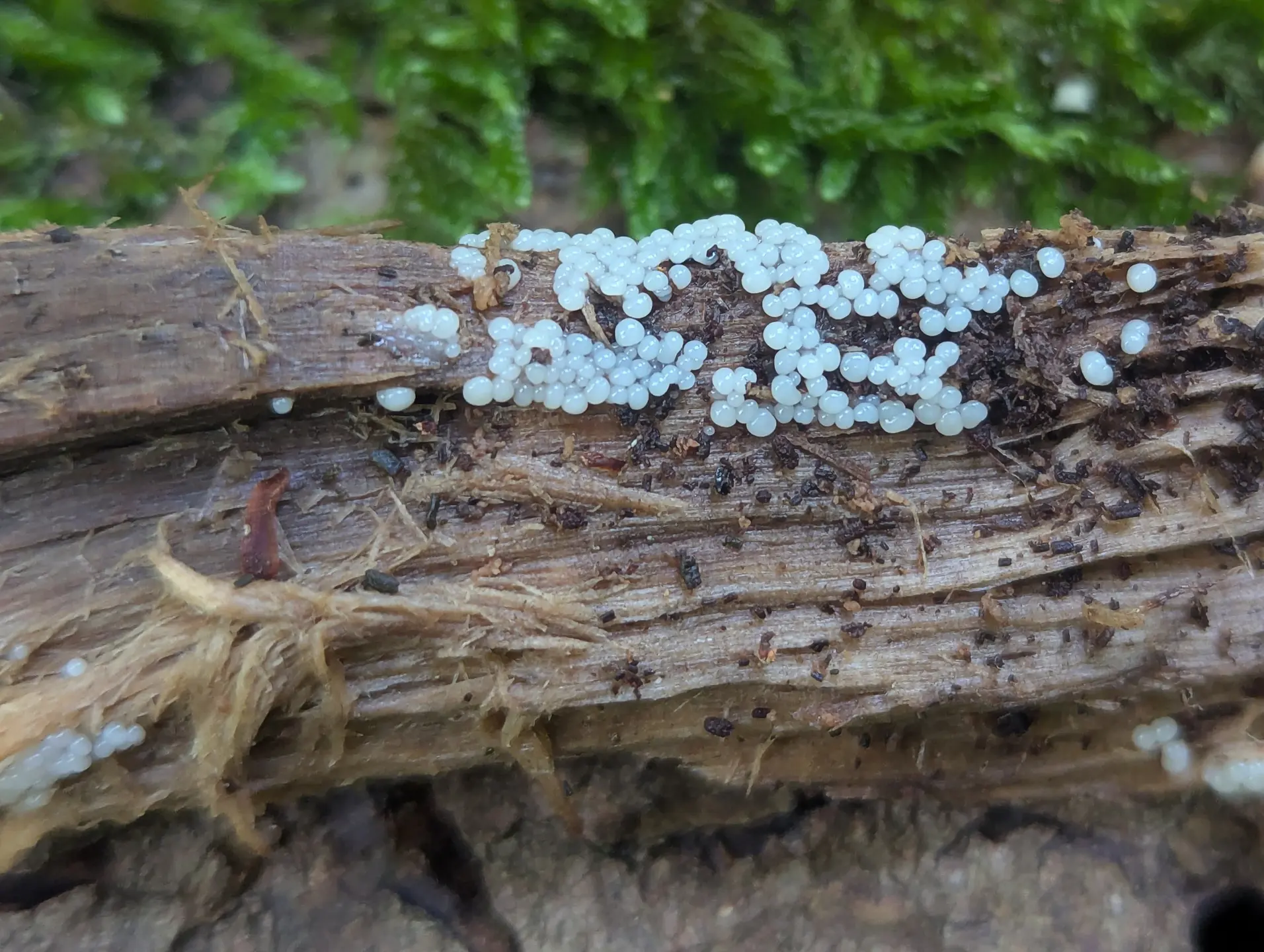
Strumpshaw Fen – 7th September 2025
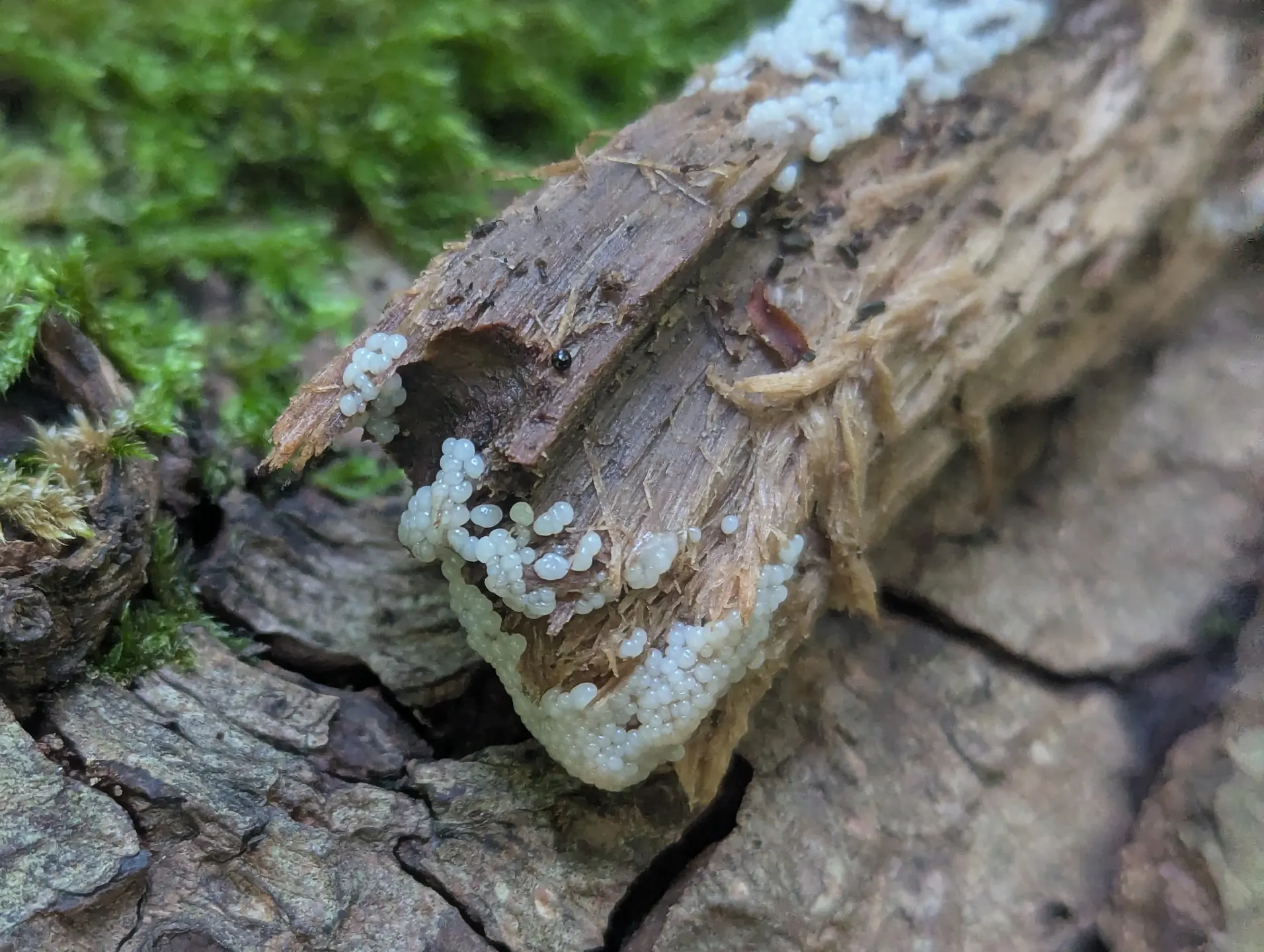
Strumpshaw Fen – 7th September 2025
After The Outpost a Fuligo septica on a section of Birch.
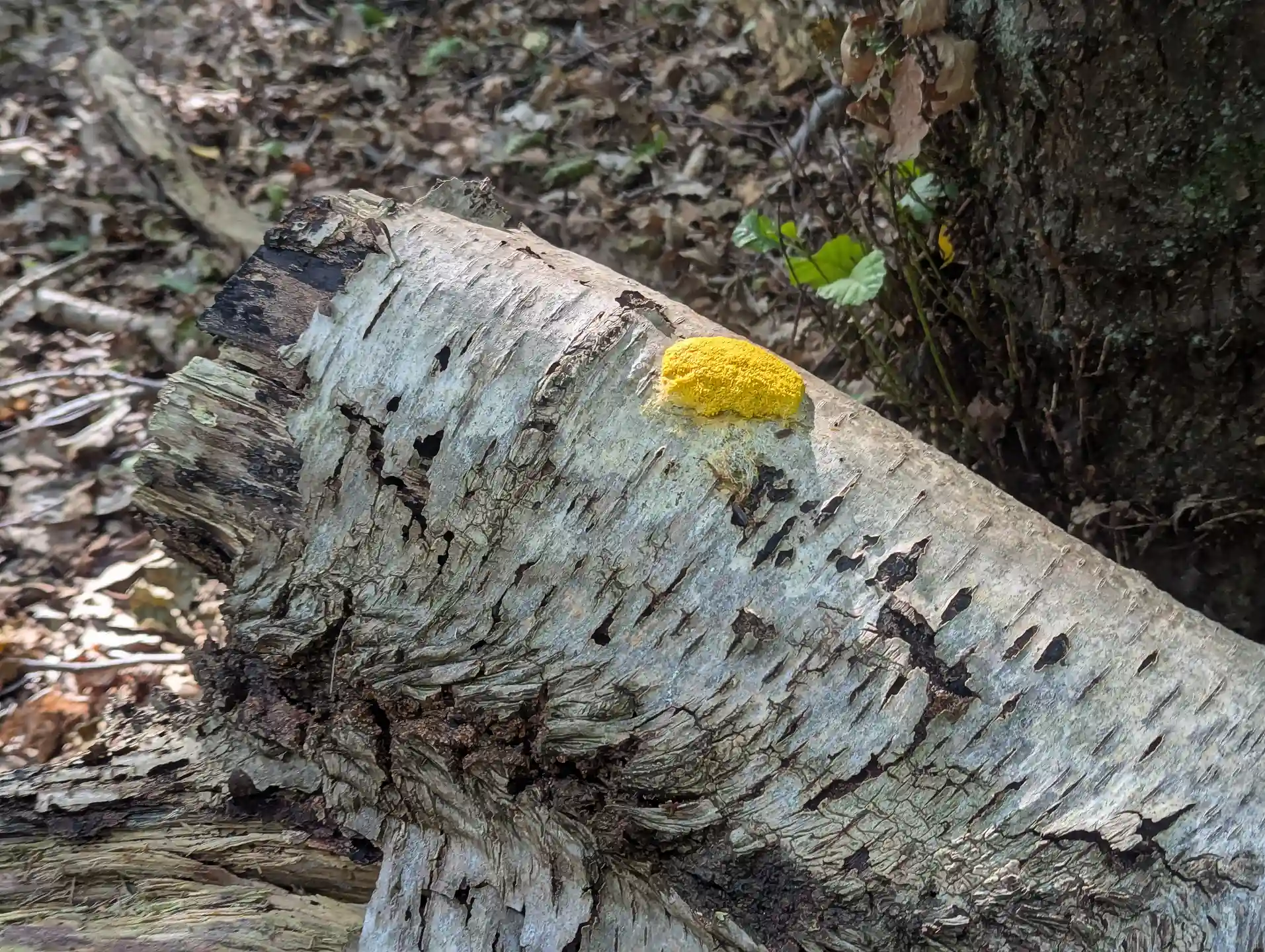
Strumpshaw Fen – 7th September 2025
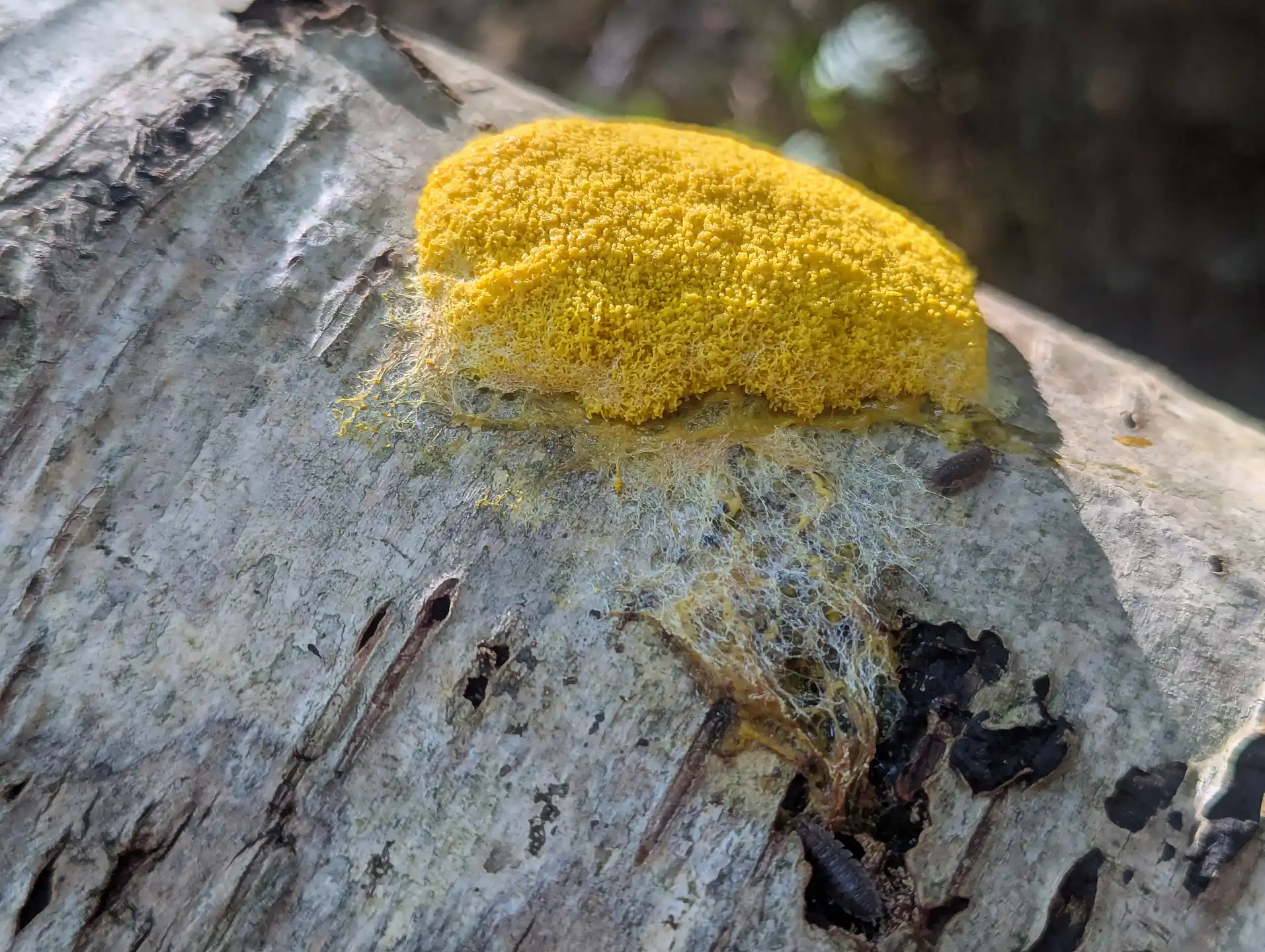
Strumpshaw Fen – 7th September 2025
8th September
At the Basecamp loop some sporangia that look like Physarum album on a decaying, mossy section of trunk.
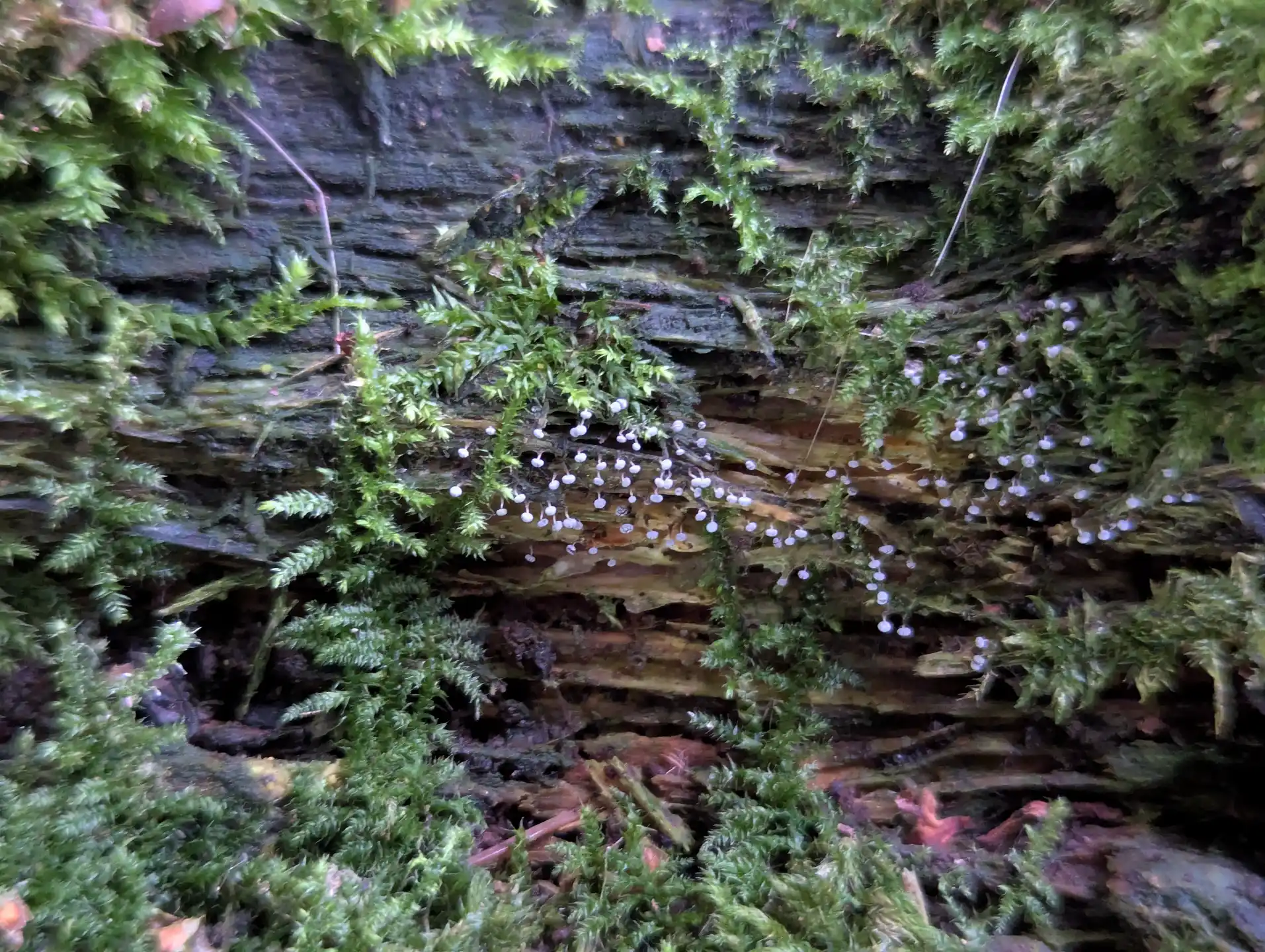
Strumpshaw Fen – 8th September 2025
A close up of the sporangia showing them in the process of dehiscing.
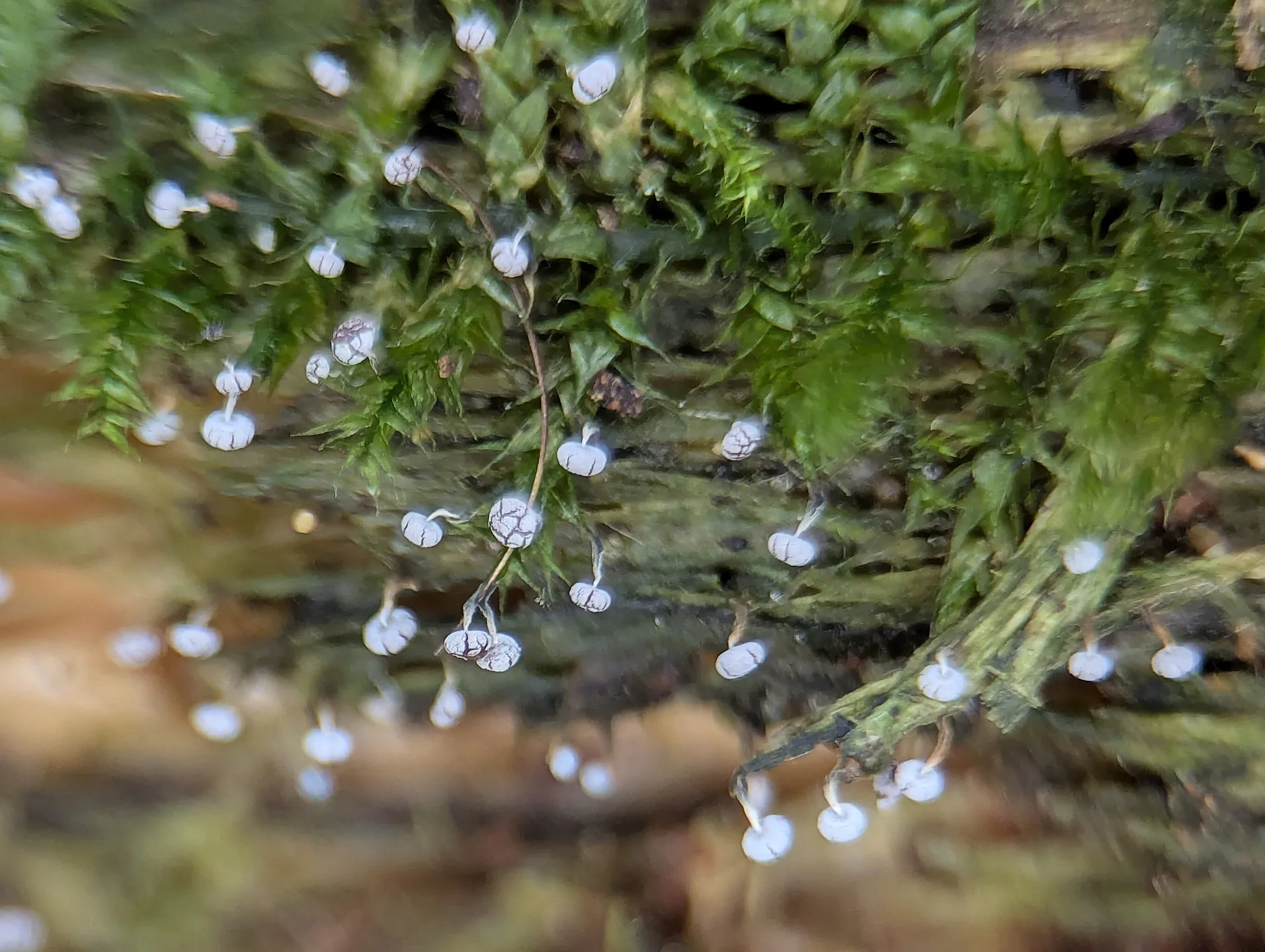
Strumpshaw Fen – 8th September 2025
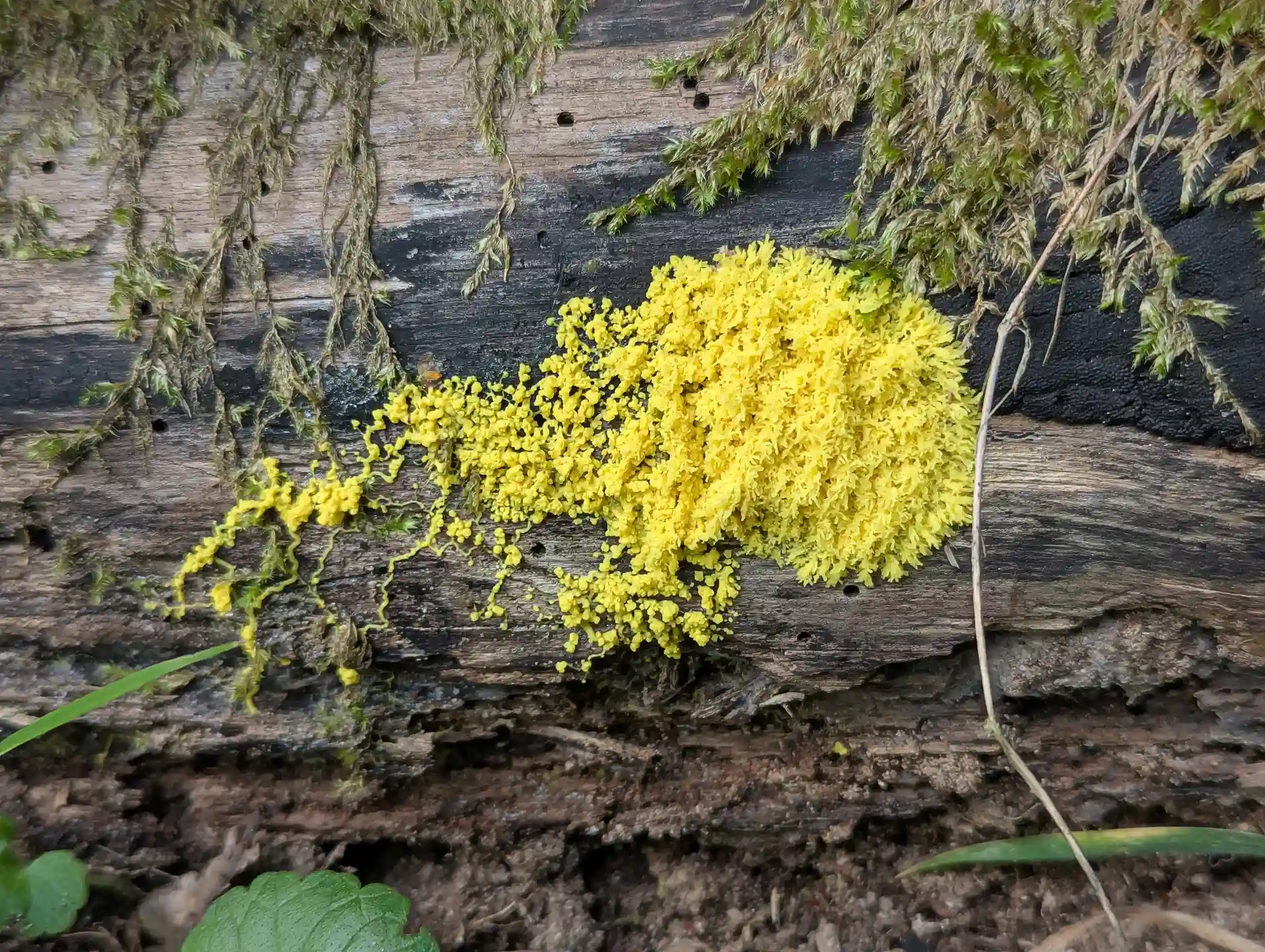
At The Dell another Fuligo septica – this one consolidating from plasmodium on it’s way to becoming an aethalium.
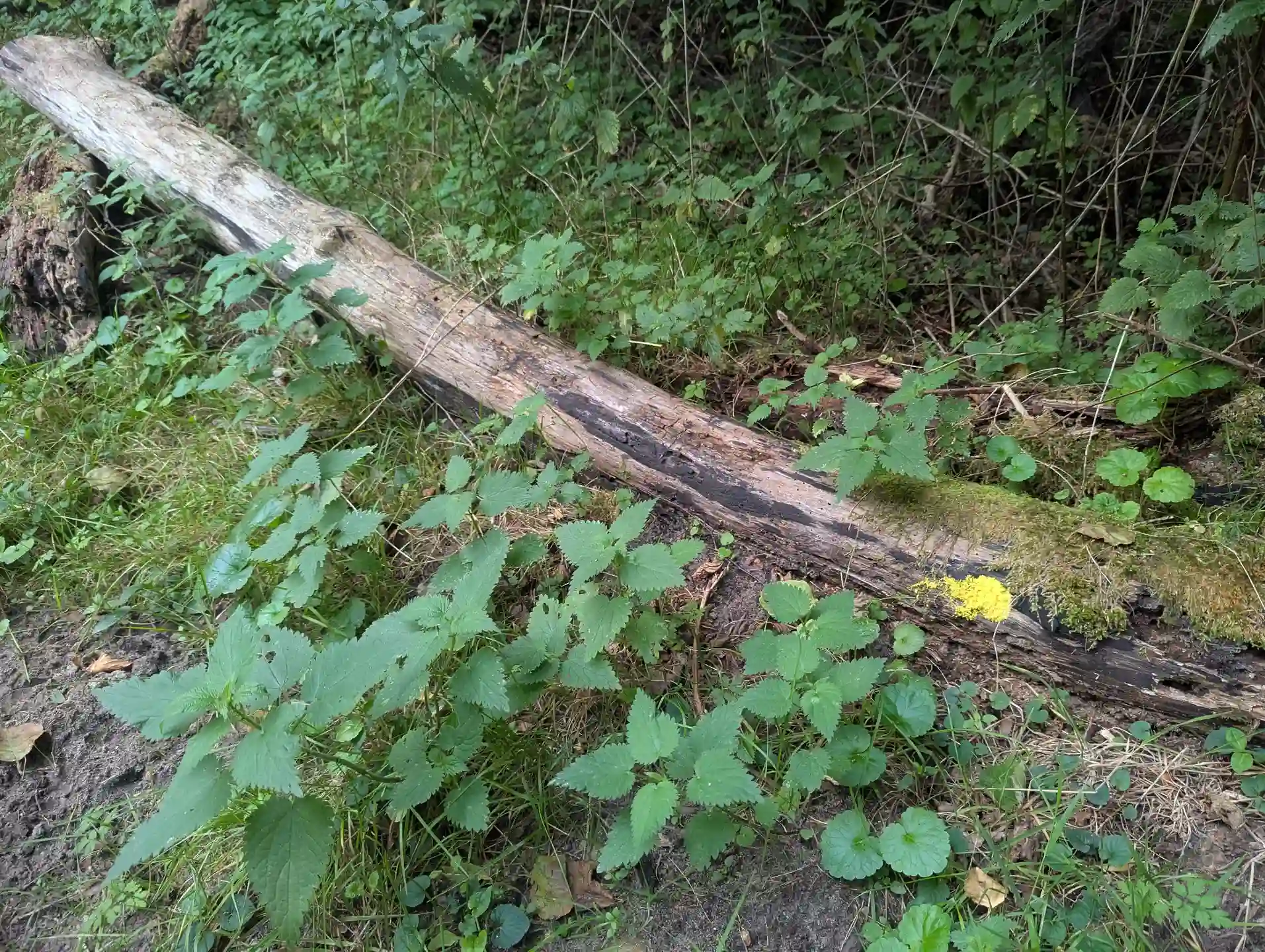
Strumpshaw Fen – 8th September 2025
The wonderful blobby consolidating plasmodium!
Strumpshaw Fen – 8th September 2025
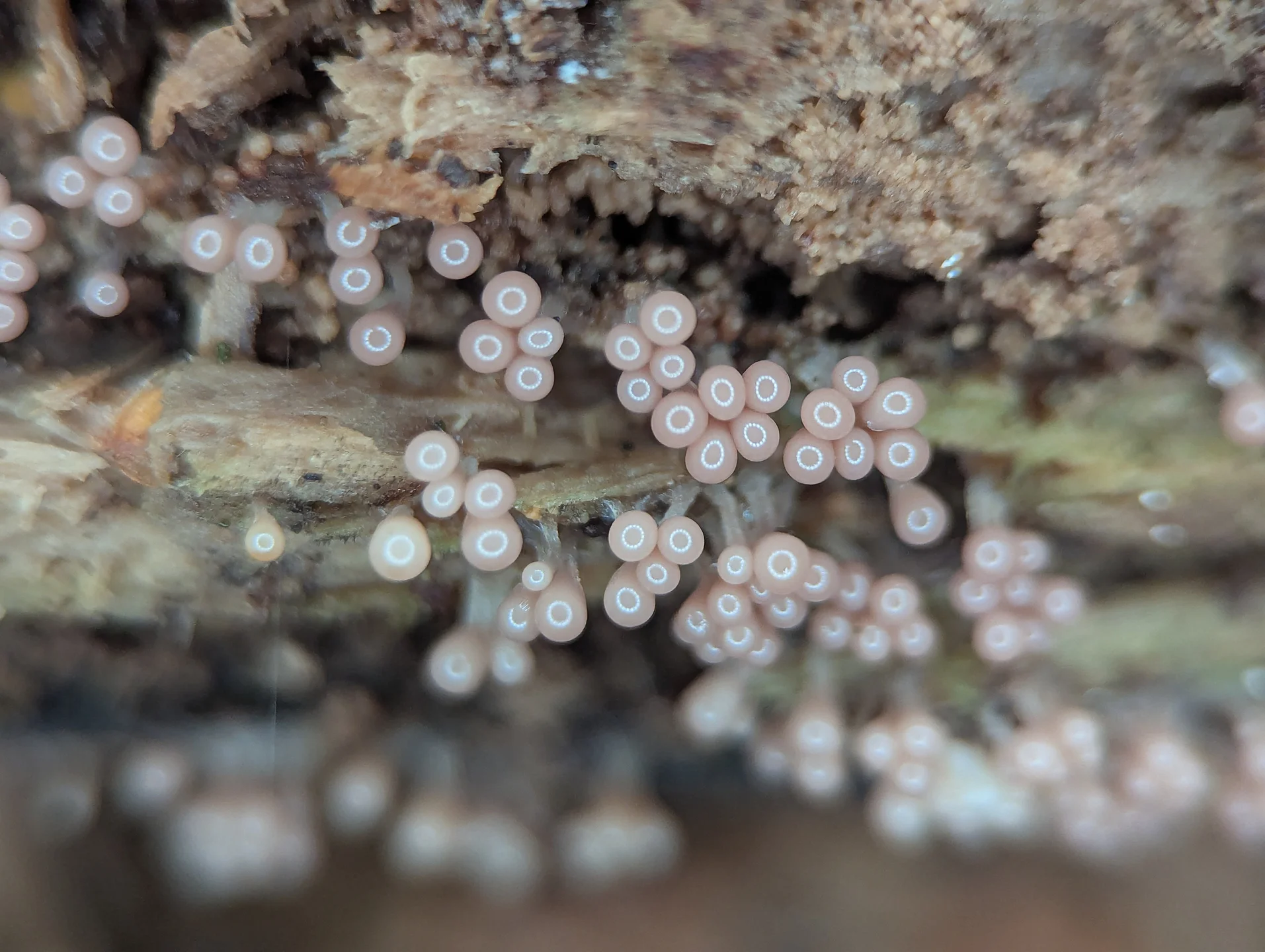
Near The Outpost some unidentified gorgeous young slime mould sporangia. The glistening sporothecae were reflecting the macro LED light!
Strumpshaw Fen – 8th September 2025
14th September
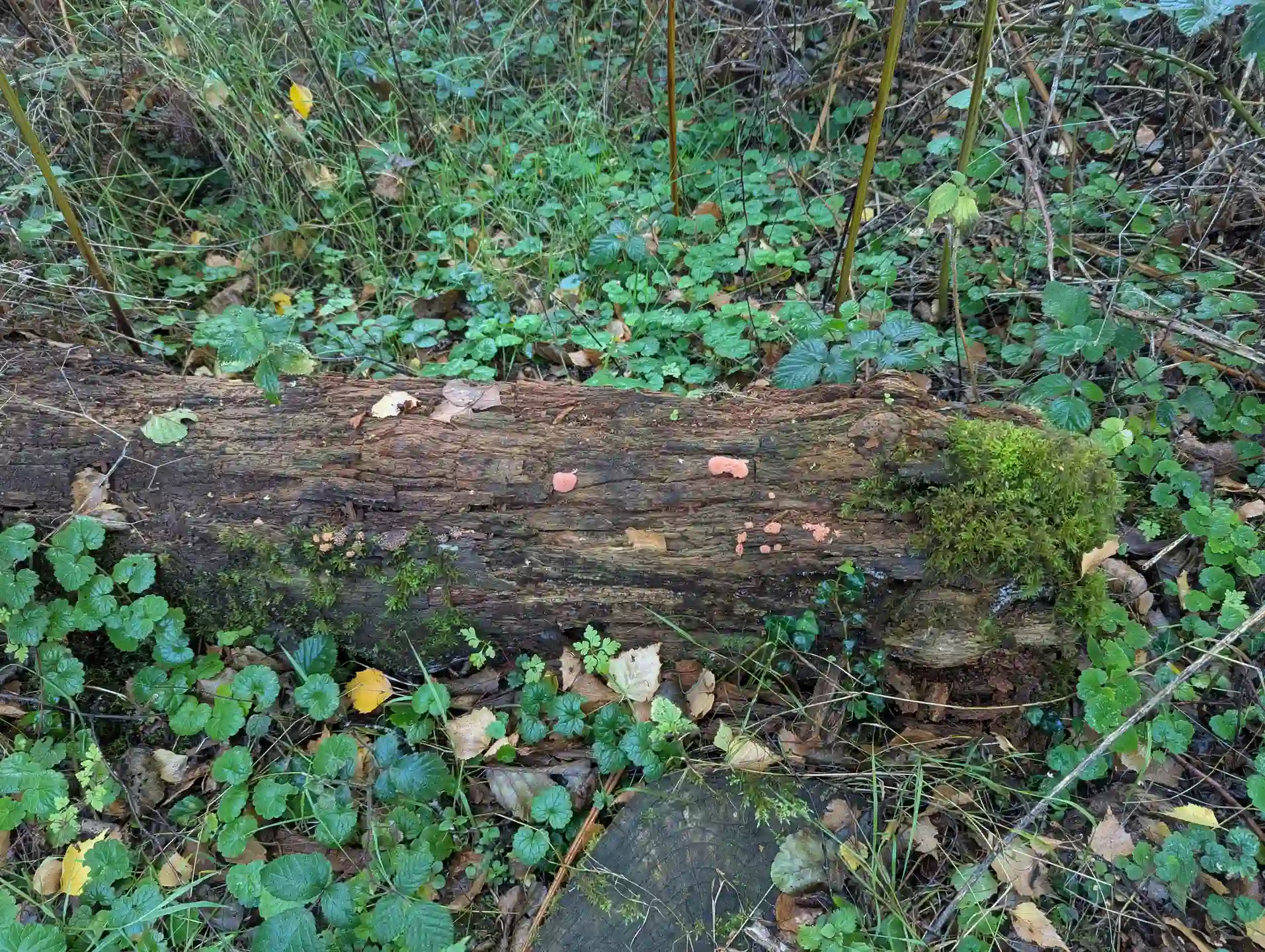
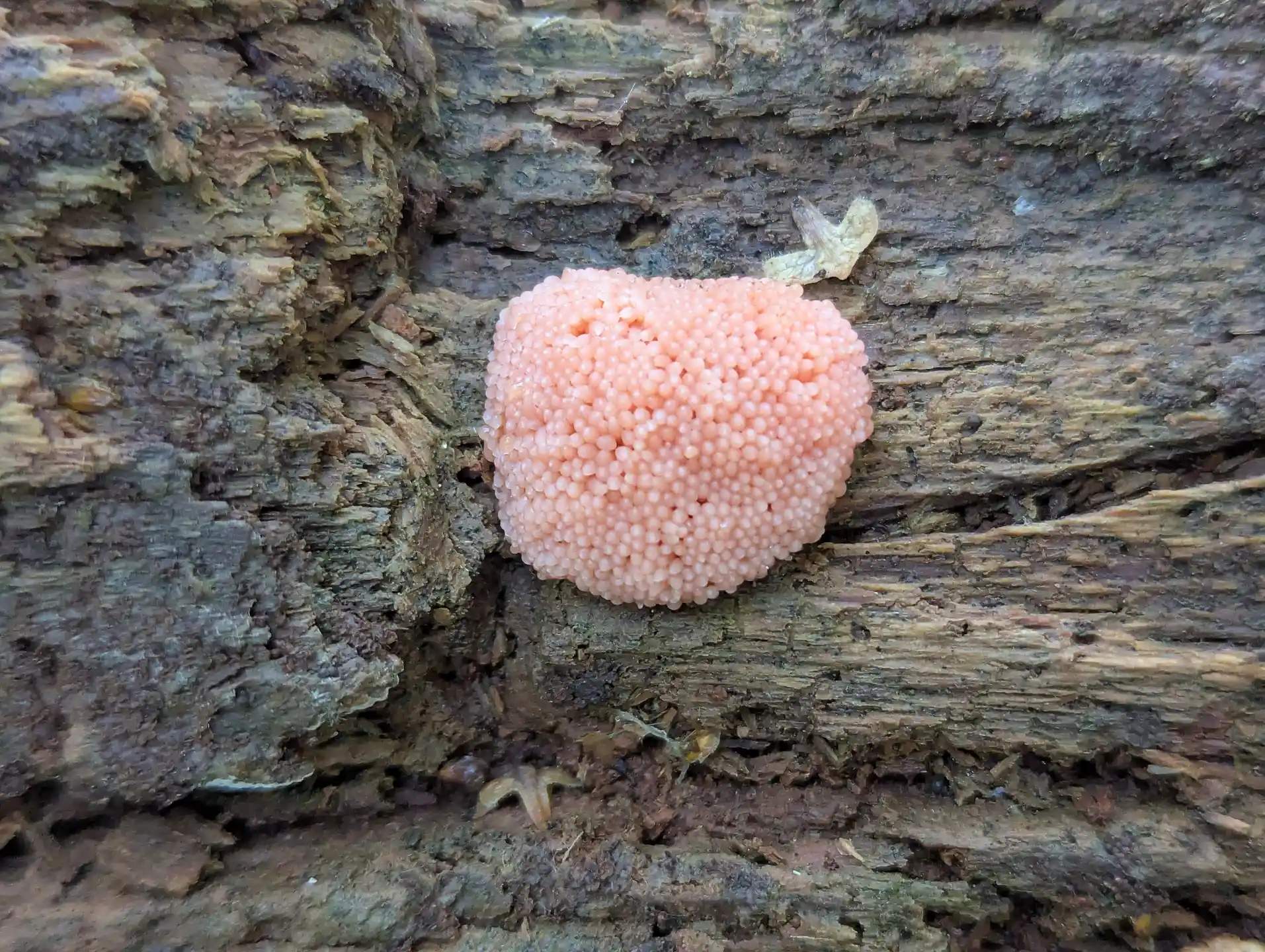
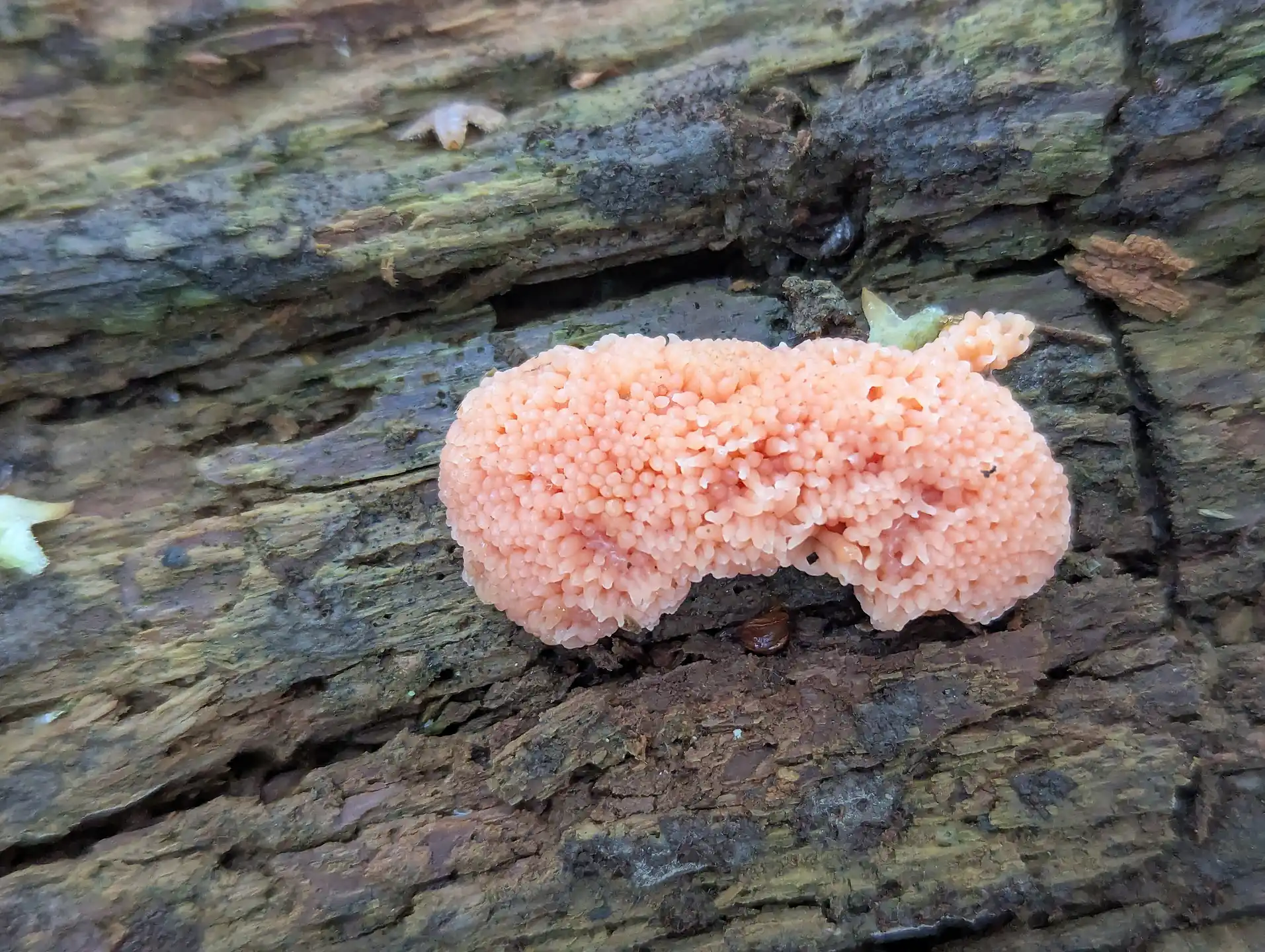
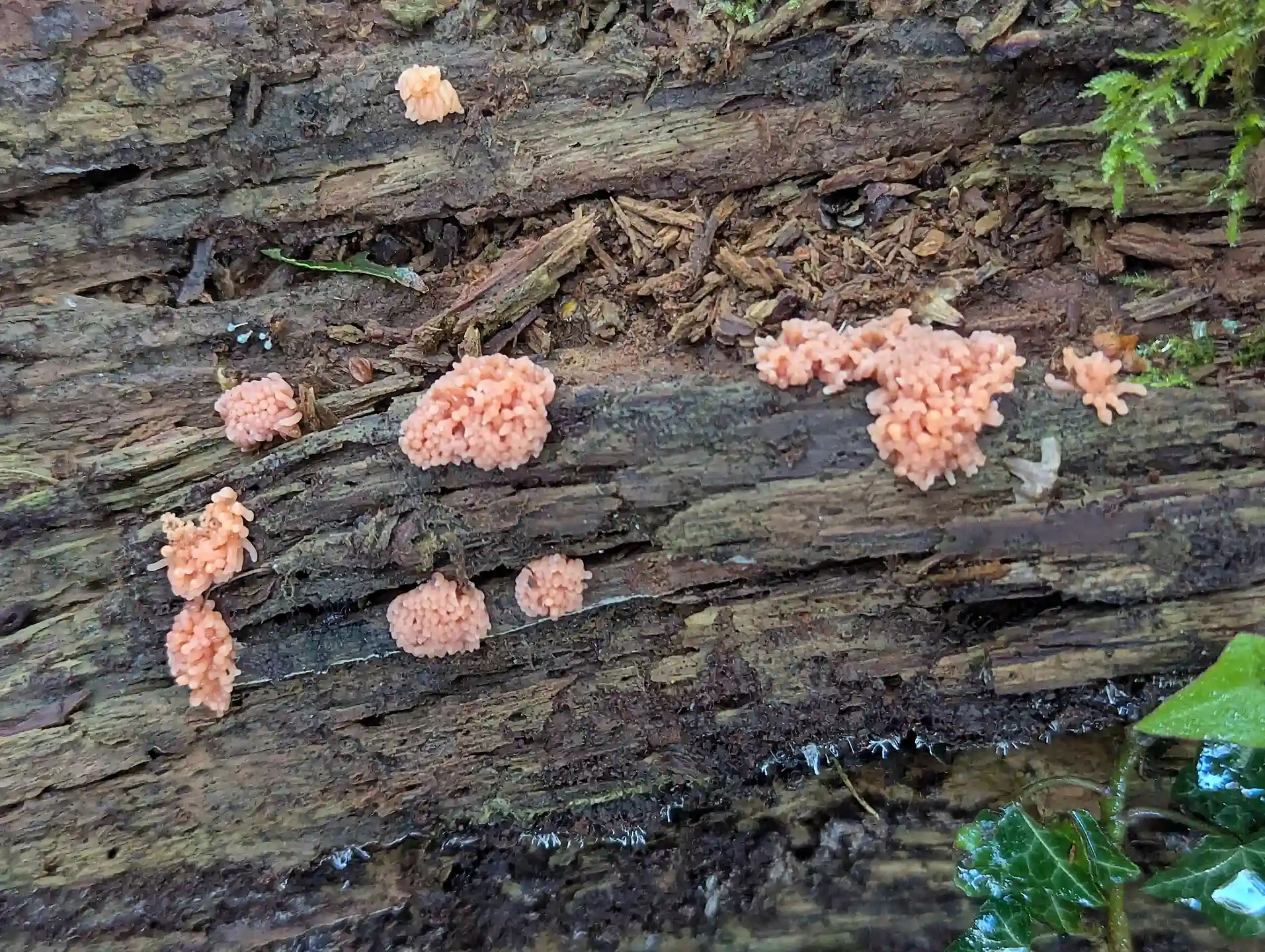
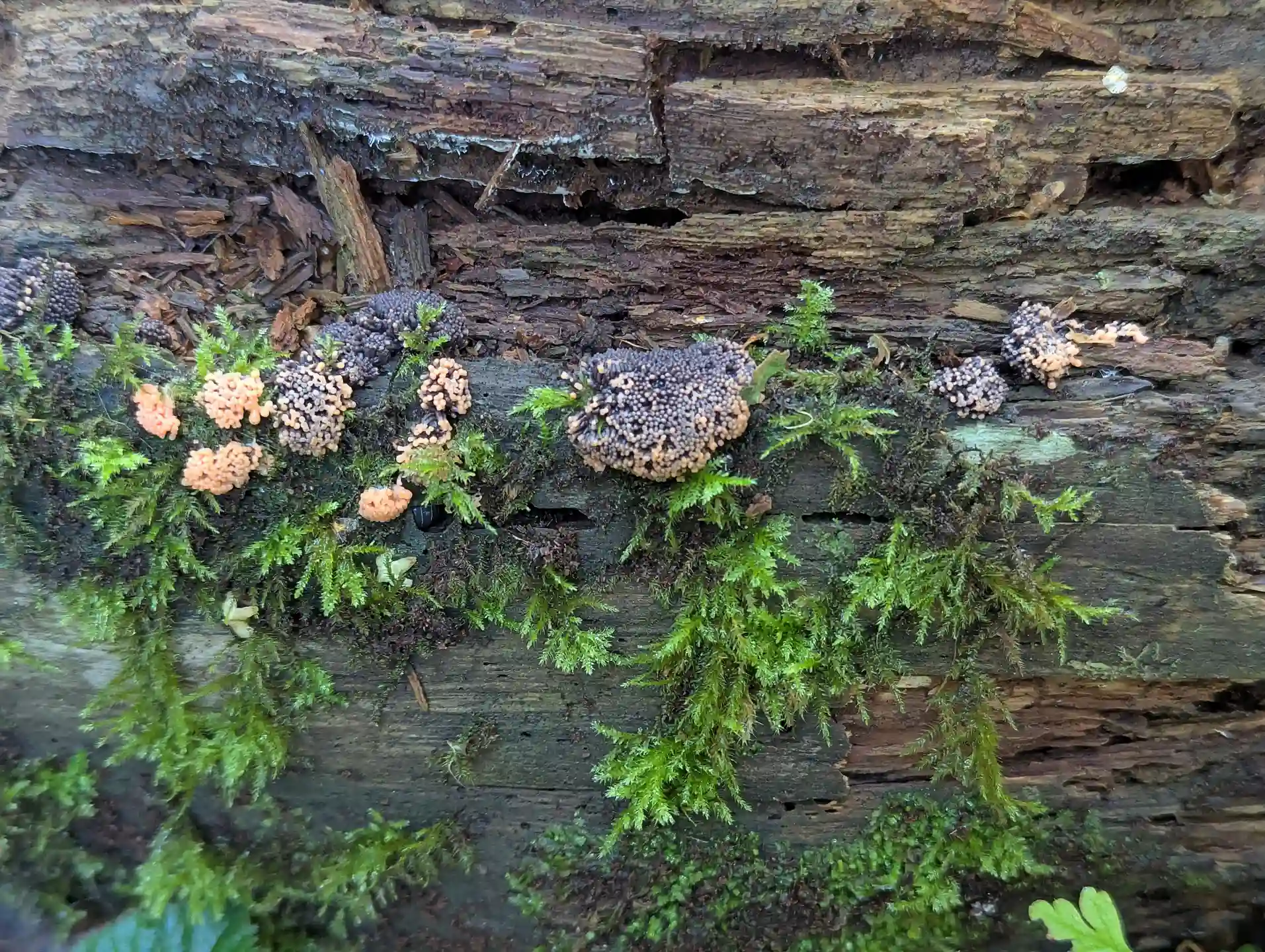
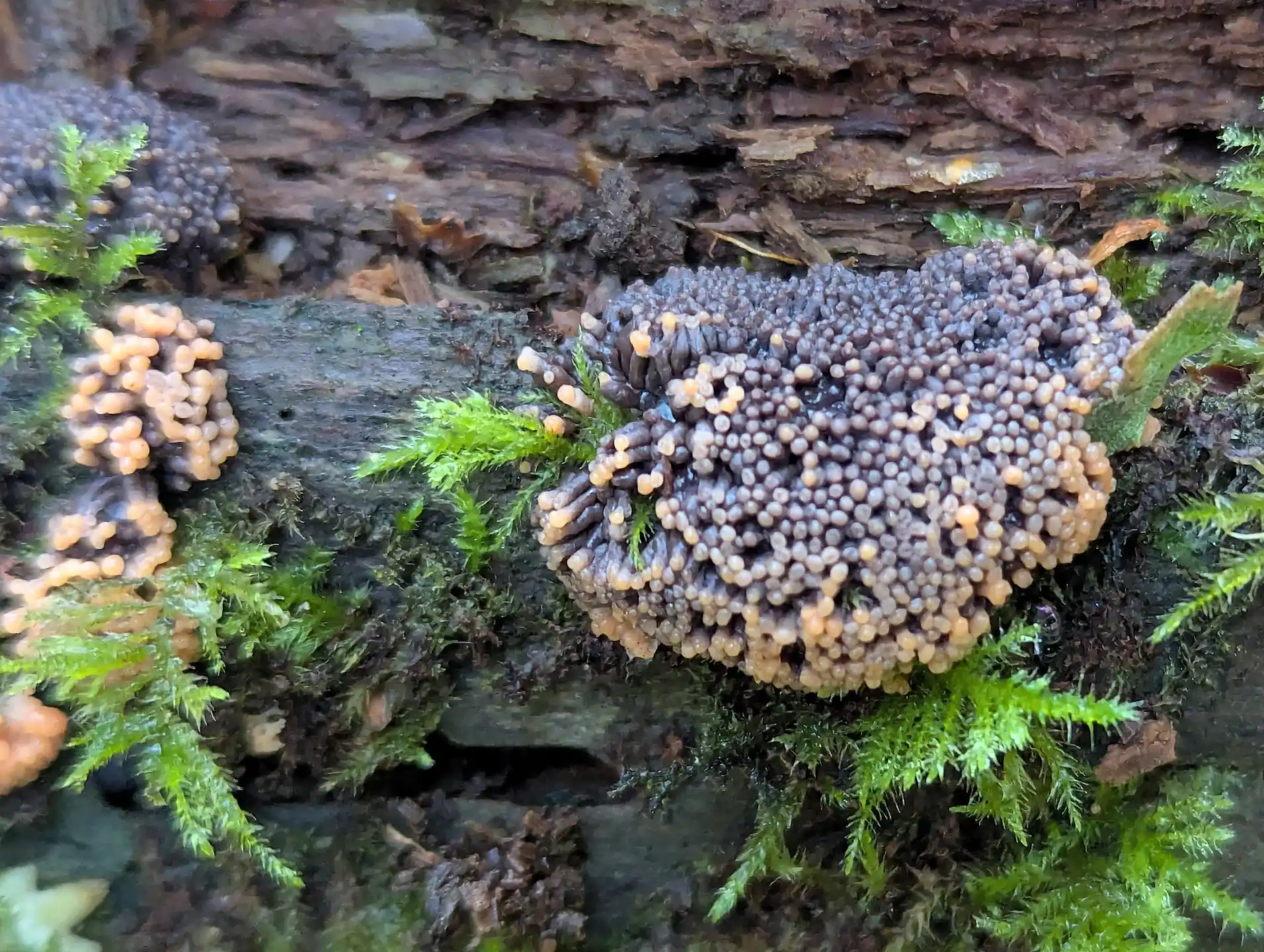
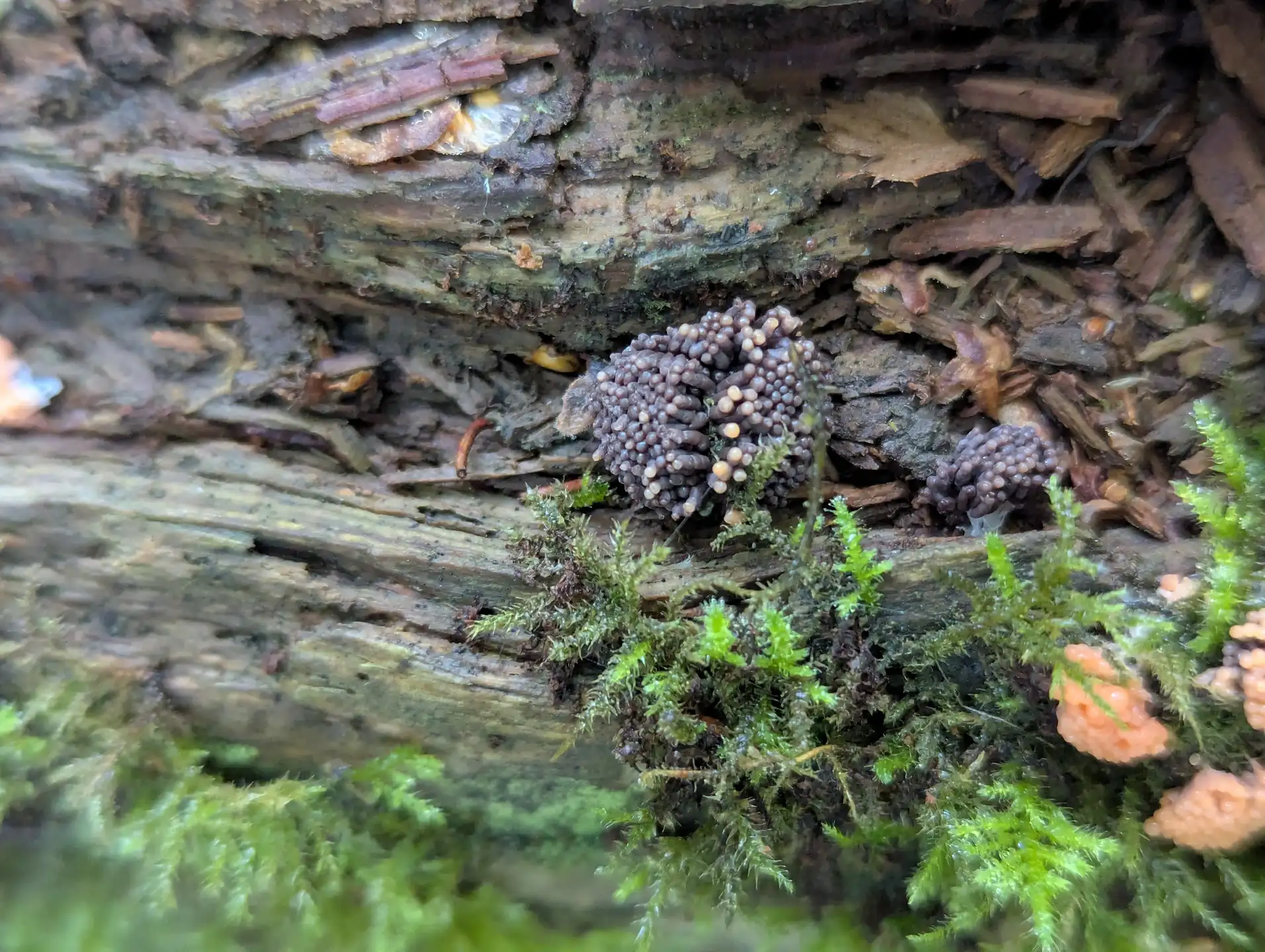
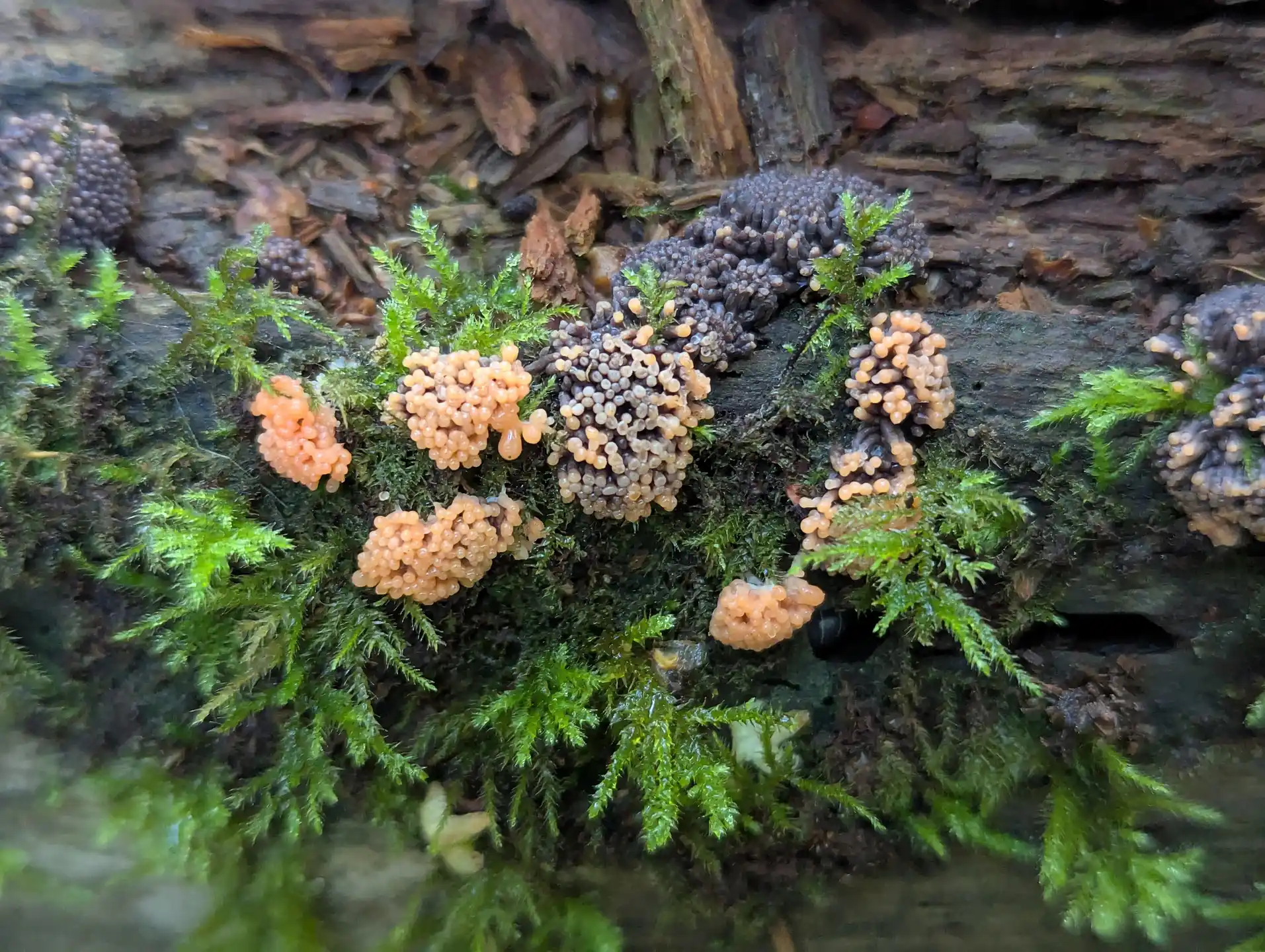
On the way to Basecamp some Tubifera ferruginosa at various stages from early stage flesh-pink and salmon to maturing greyish violet.
Strumpshaw Fen – 14th September 2025
Strumpshaw Fen – 14th September 2025
Strumpshaw Fen – 14th September 2025
Strumpshaw Fen – 14th September 2025
Strumpshaw Fen – 14th September 2025
Strumpshaw Fen – 14th September 2025
Strumpshaw Fen – 14th September 2025
Strumpshaw Fen – 14th September 2025
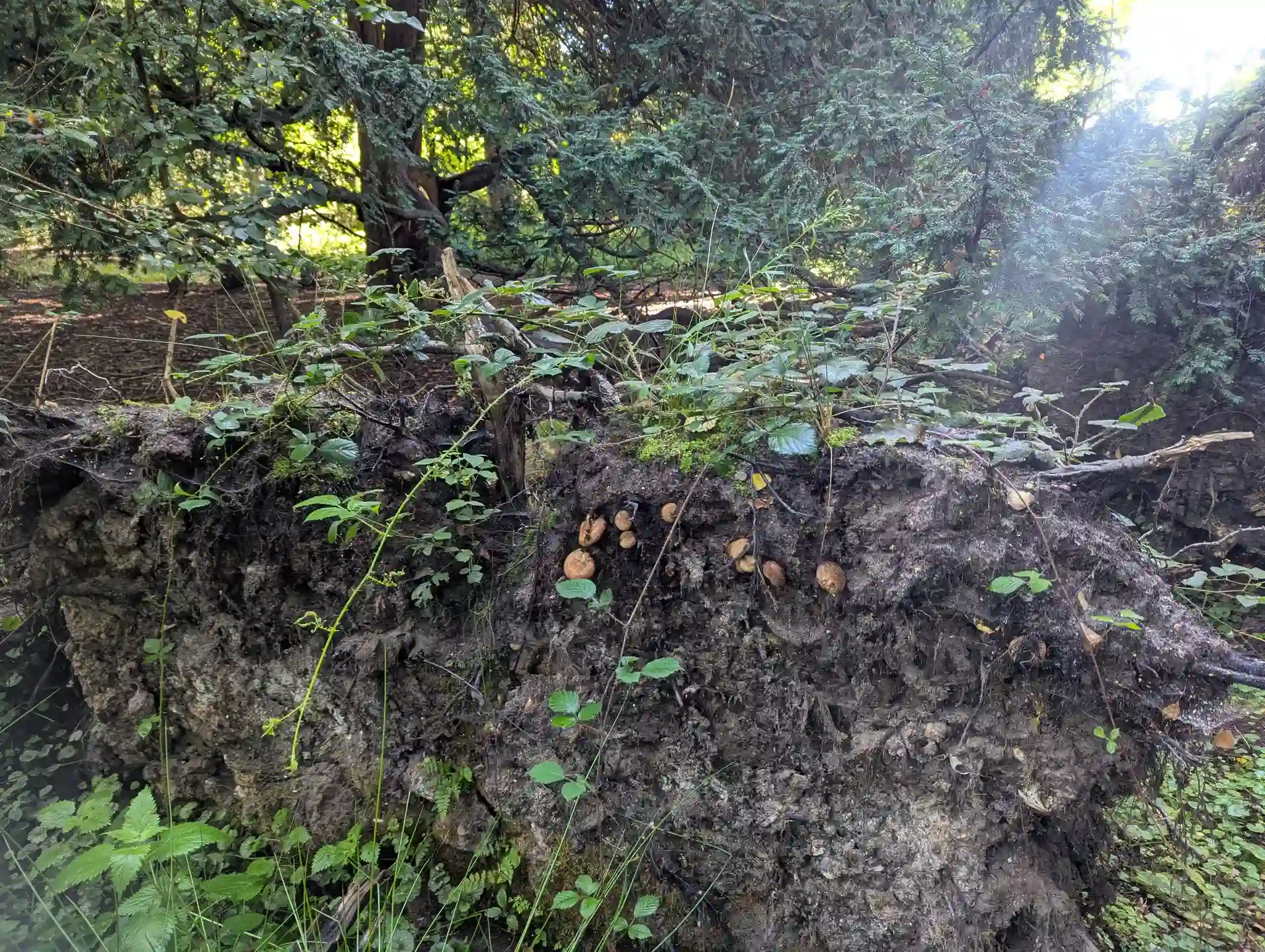
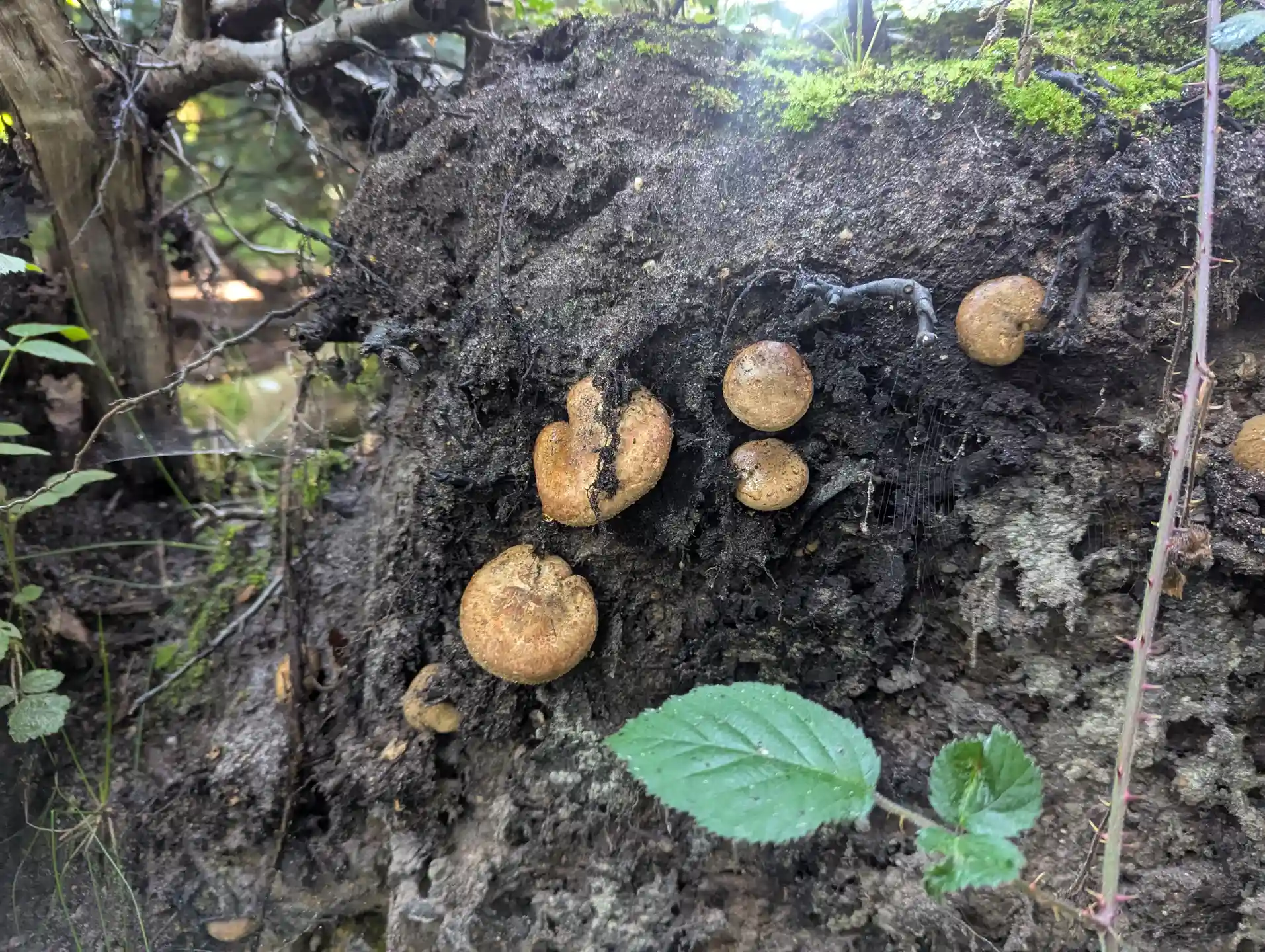
Just after the Yew trees before The Outpost, on the attached soil of a wind thrown tree root plate, some fungus fruiting bodies that MycoKey’s ID tool suggests could be Paxillus involutus – the brown rollrim.
Strumpshaw Fen – 14th September 2025
Strumpshaw Fen – 14th September 2025
Close up photo below showing the downy inrolled margin.
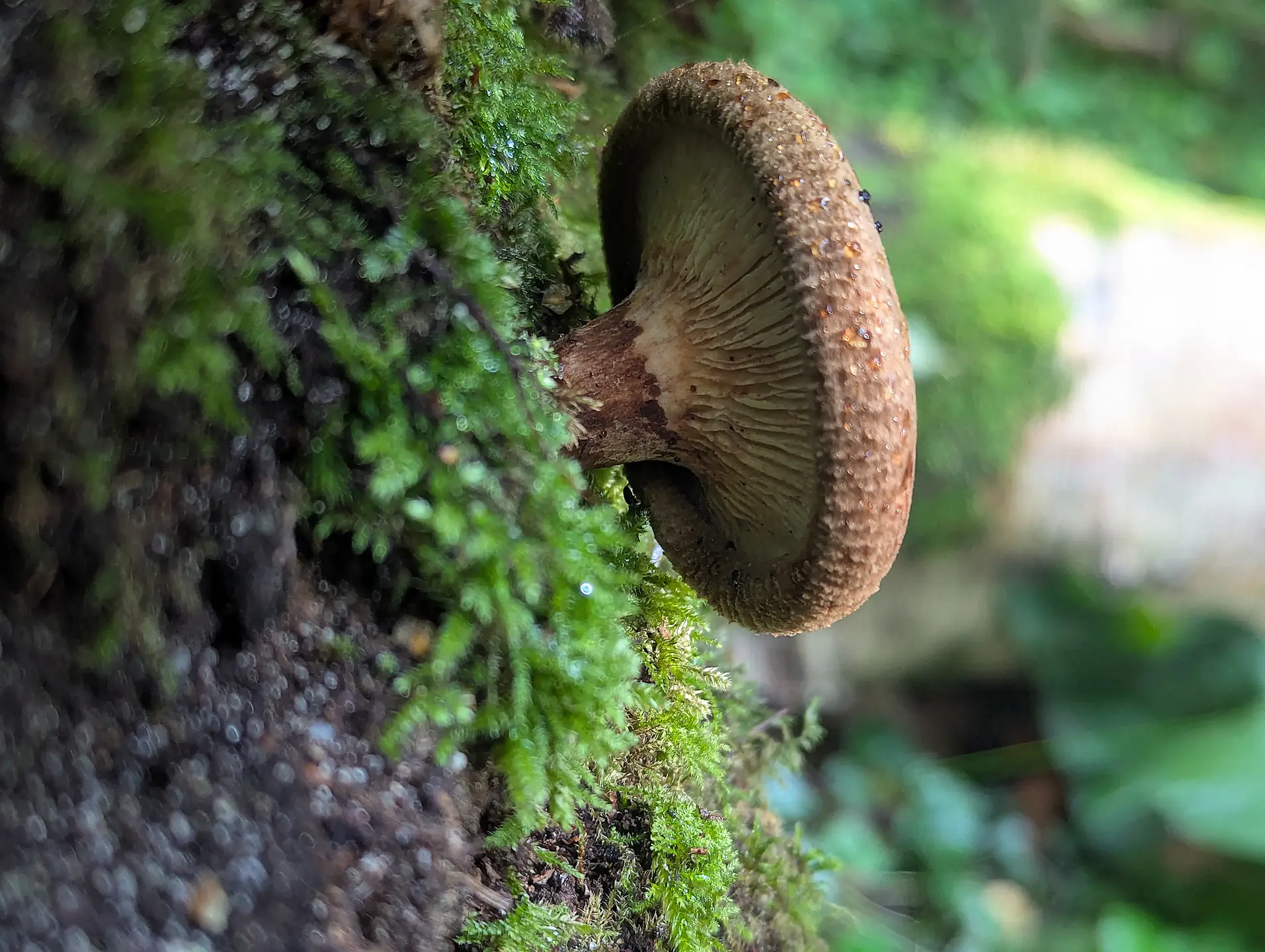
Strumpshaw Fen – 14th September 2025
On the downed trunk before The Outpost, where we saw the fabulous Arcyria obvelata display and slime mould plasmodia – at first glance, a grouping of Lycogalaaethalia, but this is definitely a fungus. But which one?
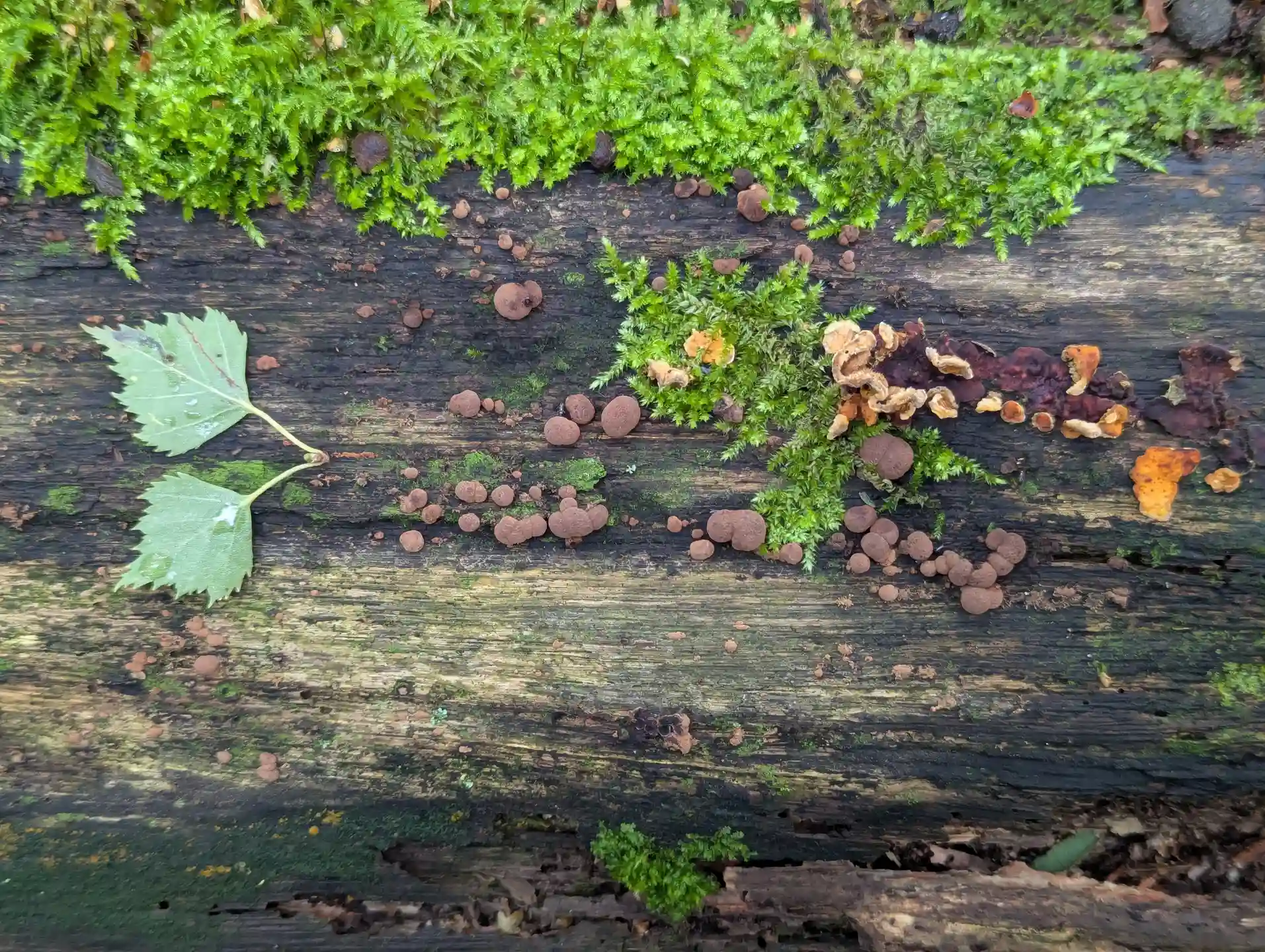
Strumpshaw Fen – 14th September 2025
MycoKey’s ID tool overwhelming suggests Hypoxylon fragiforme – the Beech woodwart [1]. And certainly in the area around The Outpost there are Beech trees and this trunk section has the diameter that is consistent with what would have been a maturing Beech.
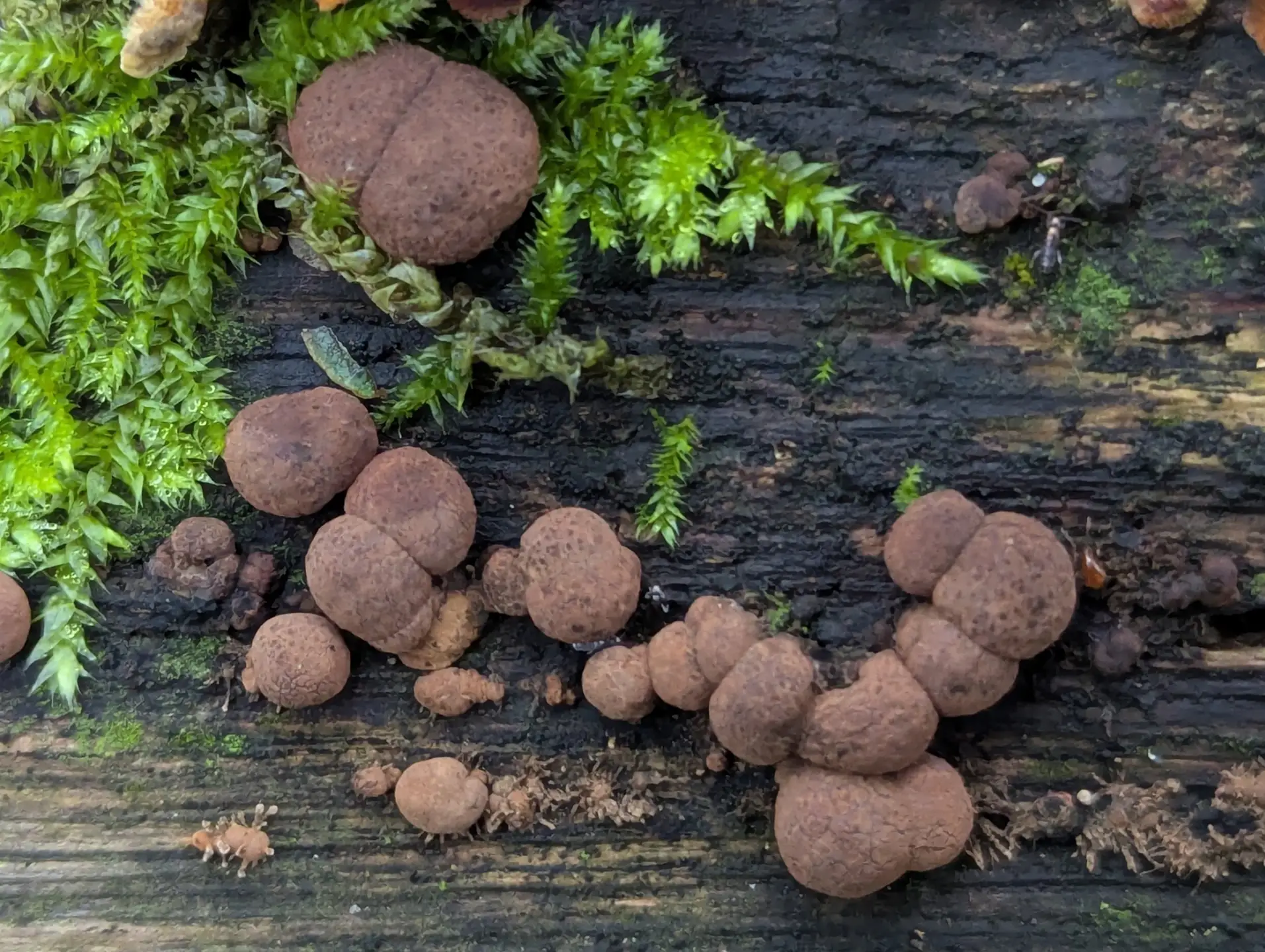
Strumpshaw Fen – 14th September 2025
There’s Hypoxylon fuscum [2], but as the common name suggests – the Hazel woodwart – it is almost exclusively on Hazel. But MycoKey, while listing Hypoxylon fuscum in the list of possible IDs, gives it a 0% probability. However, it does suggest a small possibility for Hypoxylon howeanum [3].
While Hypoxylon fragiforme is associated more with Beech trees, Hypoxylon fragiforme can easily be confused with Hypoxylon howeanum:
In the field, H. howeianum can be confused with the very similar H. fragiforme which differs in being usually restricted to Fagus, while the former is plurivorous.
— Pyrenomycetes from France [4]
While examining the photos at home I noticed a likely small primordium of Hypoxylon populated with tiny stalks topped with bead-like heads – undoubtedly a parasitic fungus.
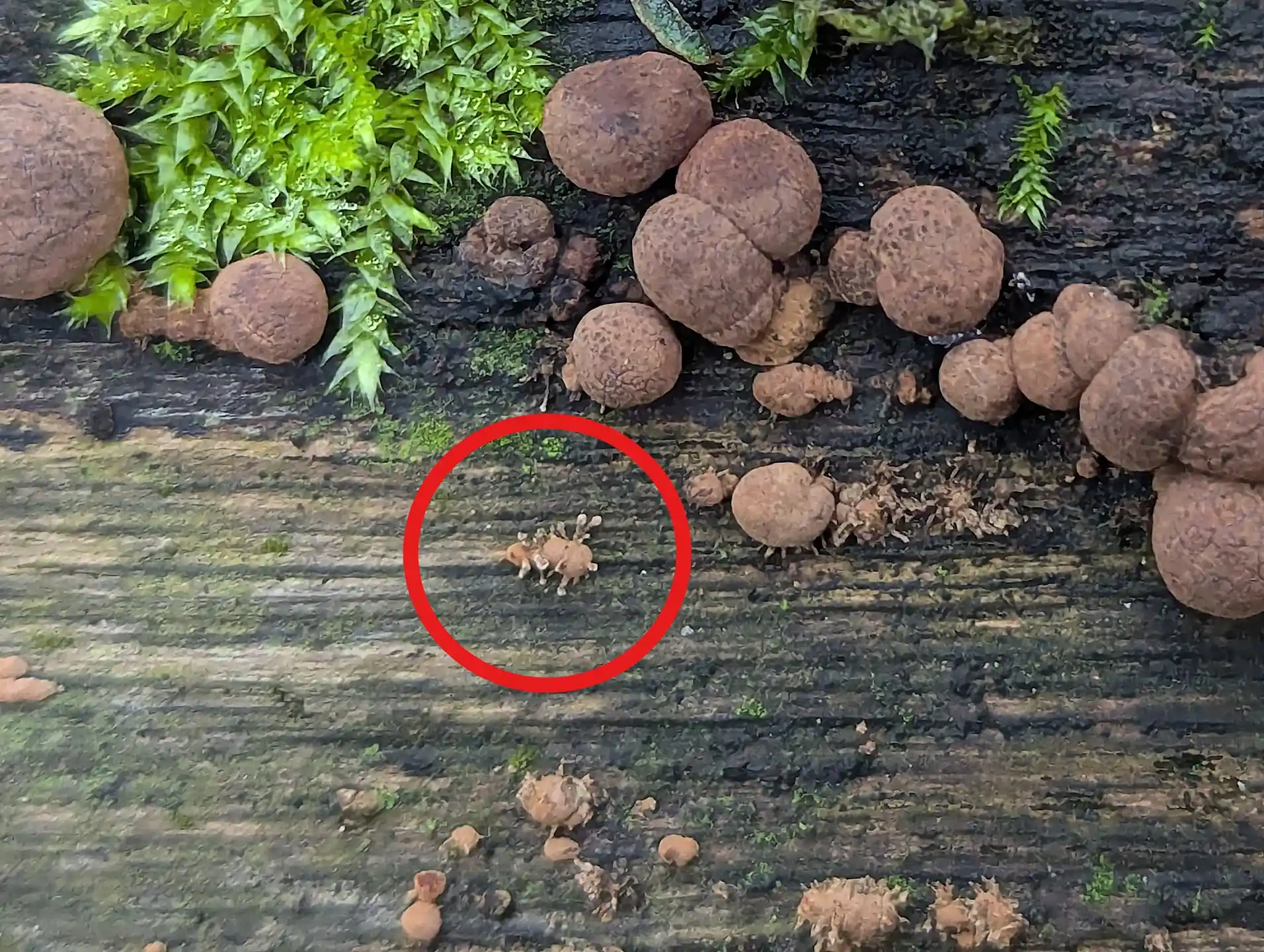
Strumpshaw Fen – 14th September 2025
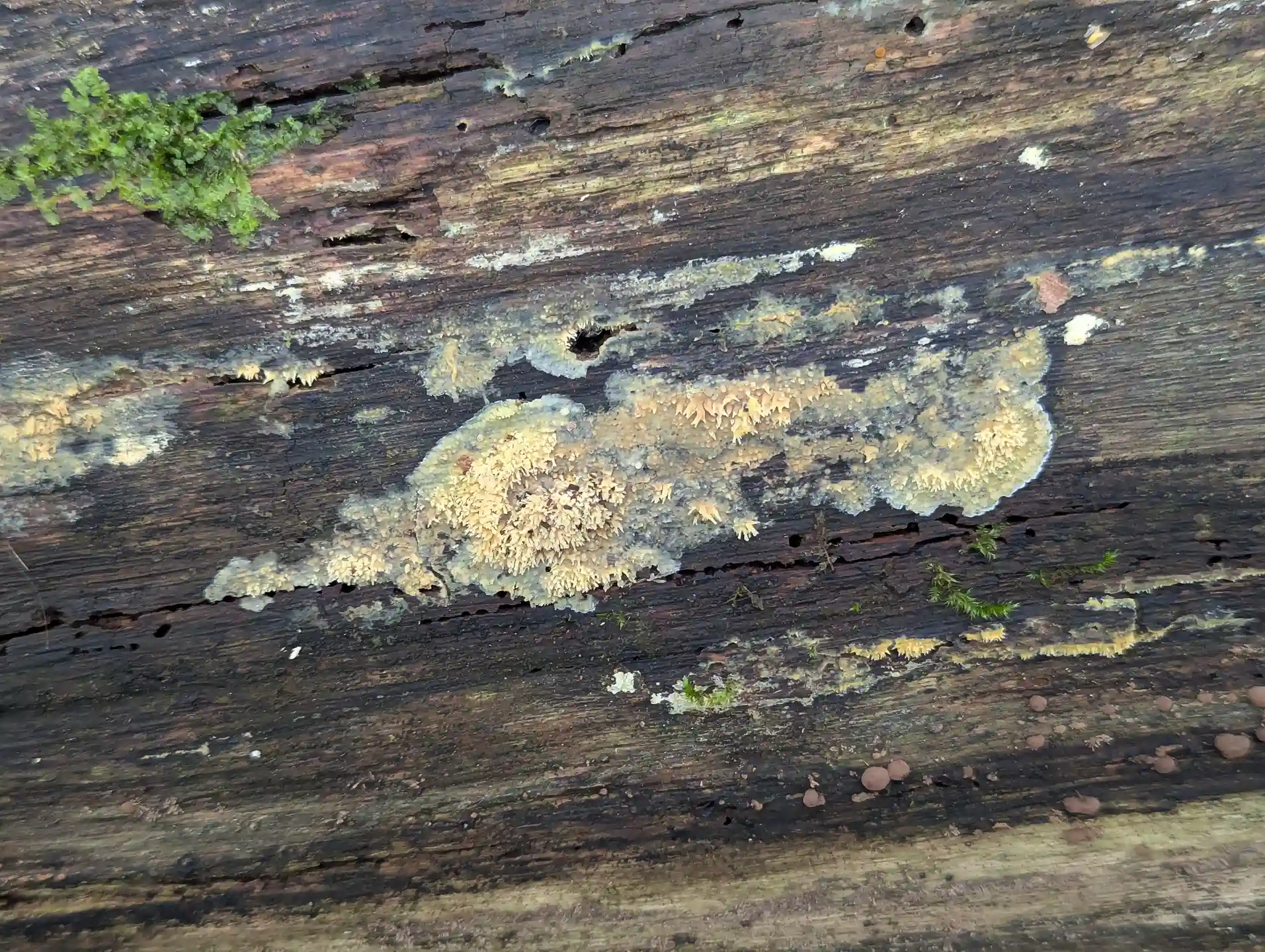
Also on the trunk was a crust fungus. I normally ignore these – I find them rather boring unless they have an interesting or compelling morphology.
Strumpshaw Fen – 14th September 2025
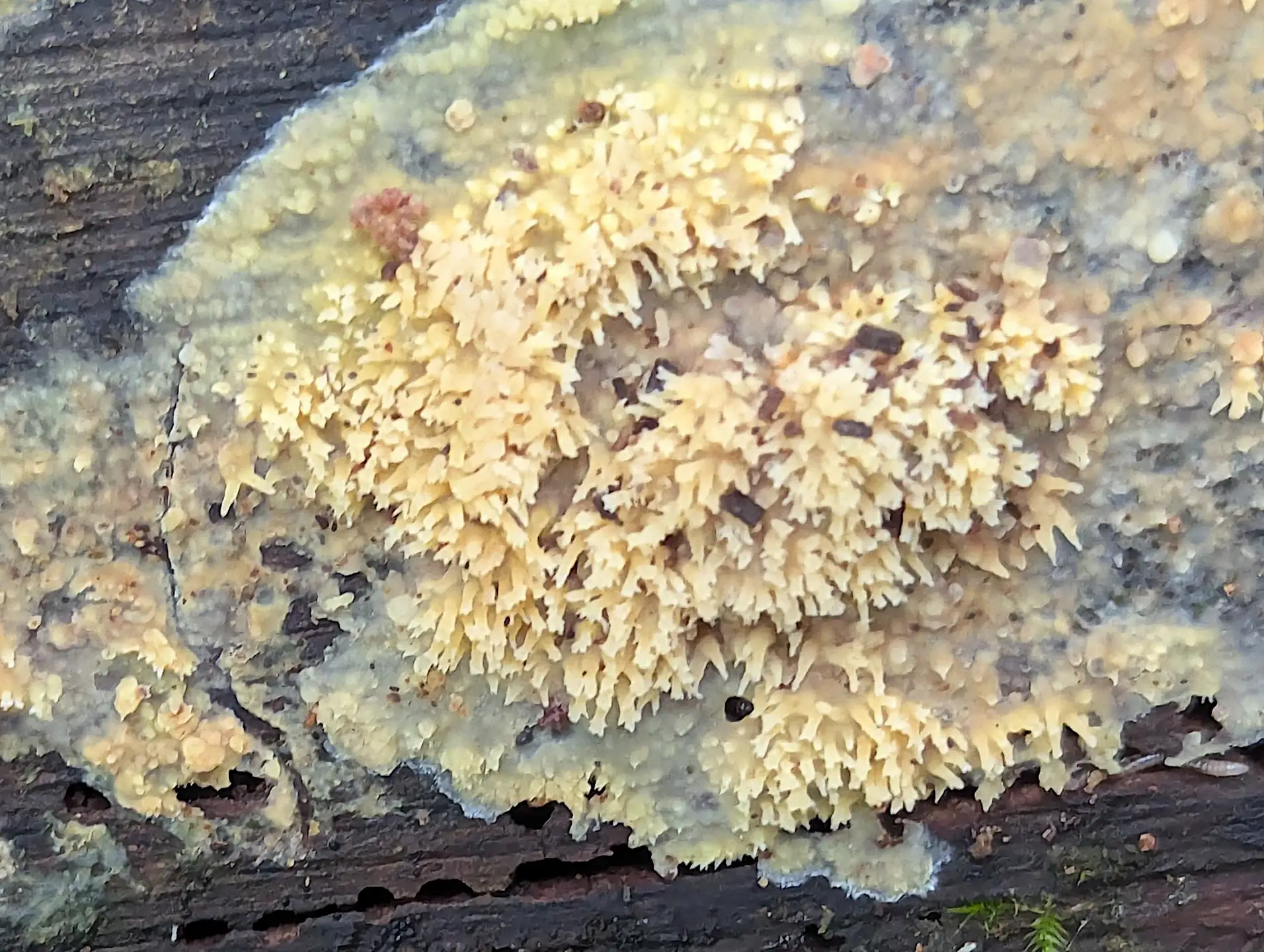
Back at home, I noticed that this one had toothed projections that had coronate tips (crown-tipped) that made me think of the Artomyces pyxidatus that the daughter and I had been documenting at Basecamp. After some cursory interneting, I’m wondering if this is Sarcodontia uda…?
Strumpshaw Fen – 14th September 2025
If you are interested, you can see more examples of Sarcodontia uda at iNaturalist.
The following were all found after The Outpost.
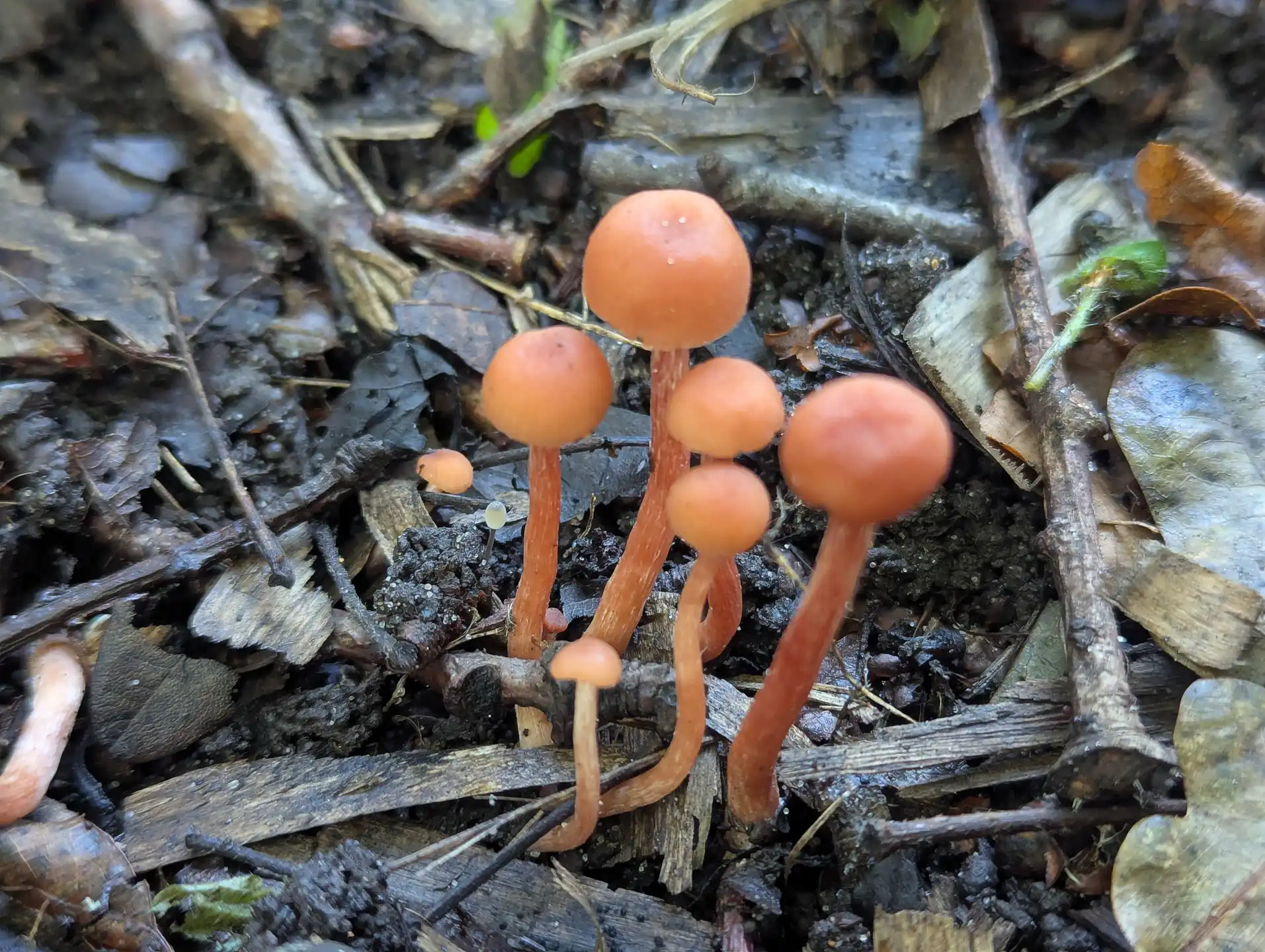
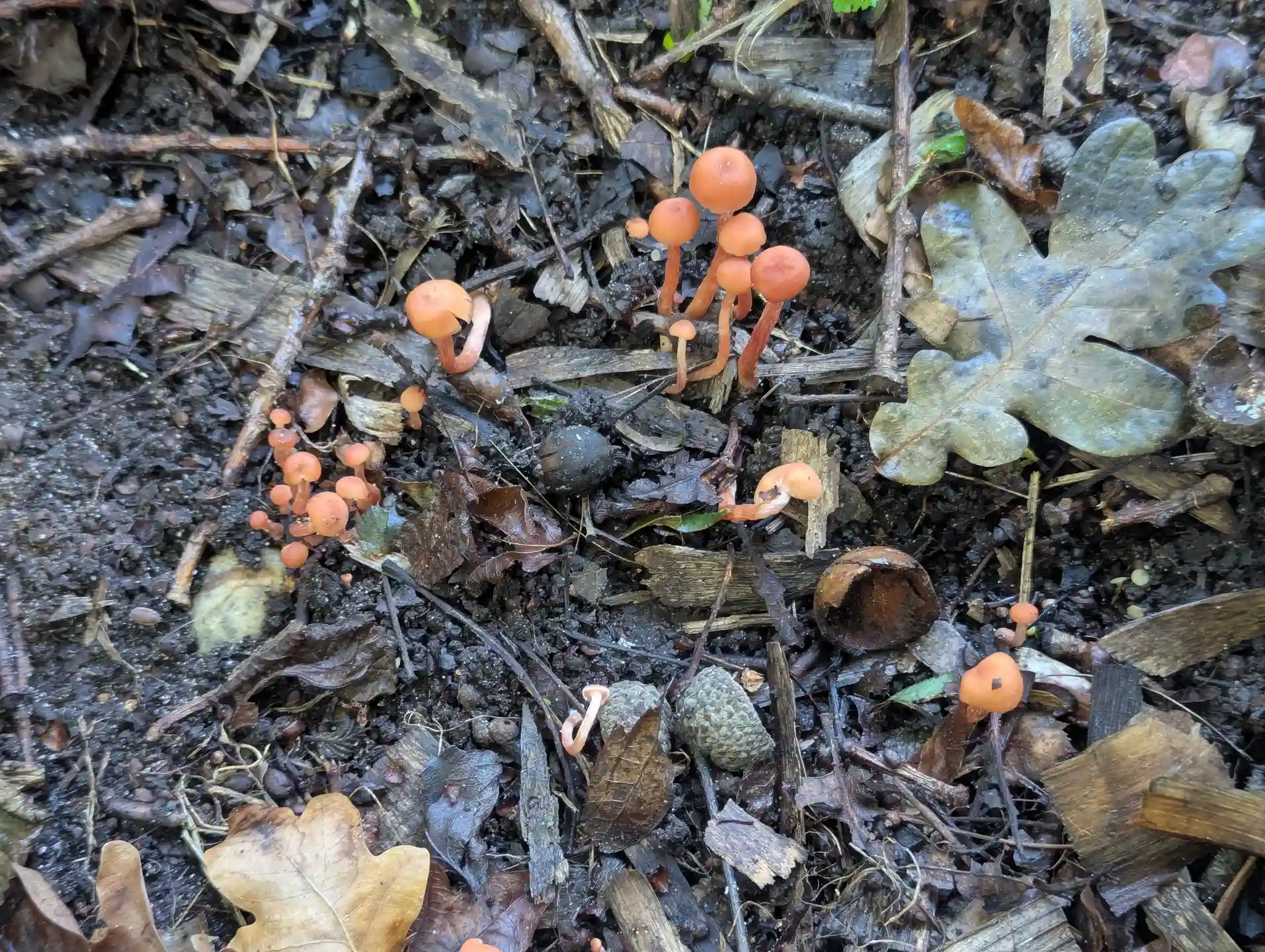
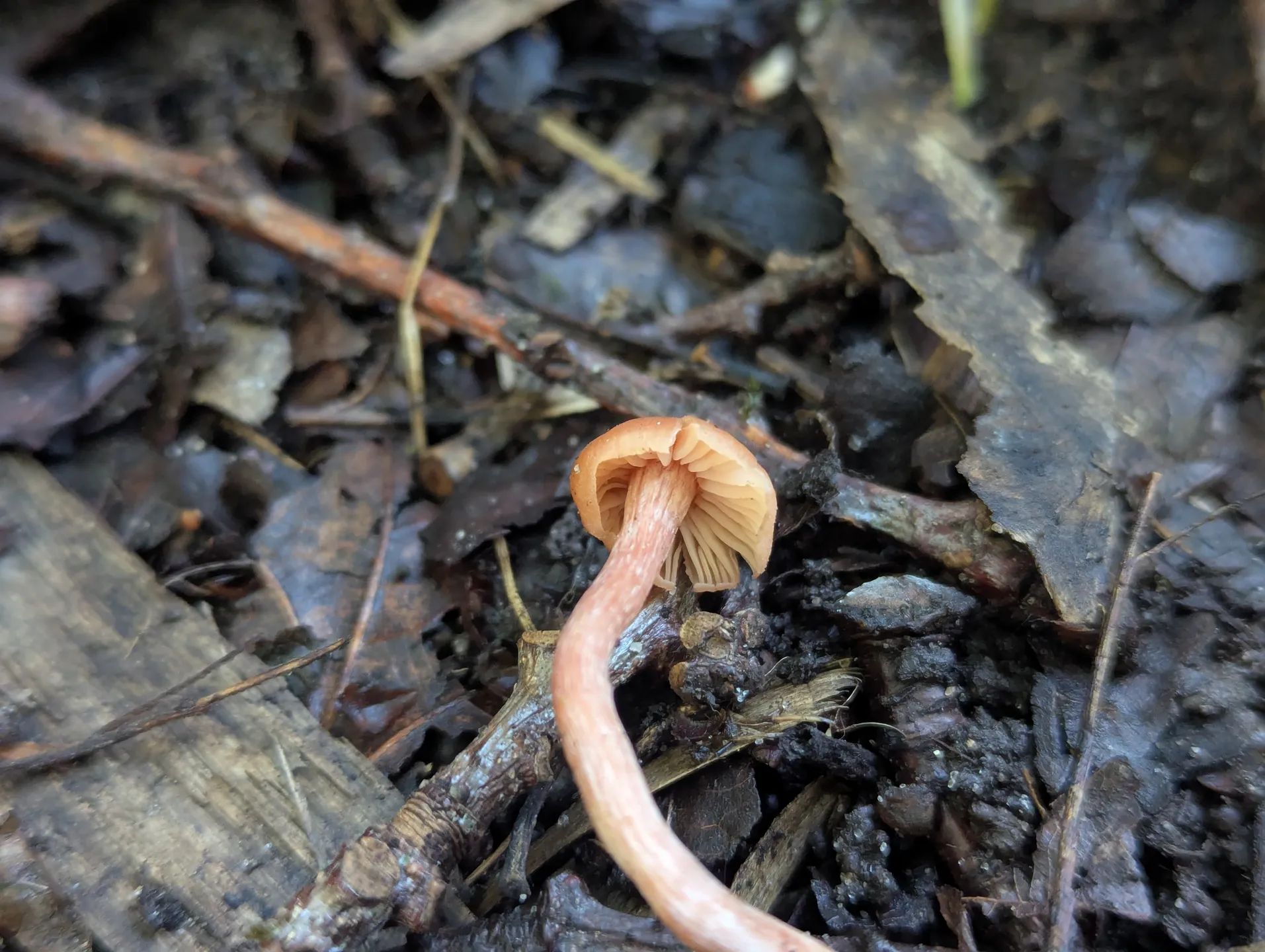
Based on the following two photos, MycoKey suggests 100% that these small fungi are Laccaria laccata – the deceiver mushroom (actually var. pallidifolia).
Strumpshaw Fen – 14th September 2025
Strumpshaw Fen – 14th September 2025
However, this close up photo of the gills results in a 100% suggestion for Tubaria furfuracea – the scurfy twiglet. If you look closely at the top of the stem, it’s hard to say – is there a faint ring zone? A ring zone is an identifying feature of Tubaria furfuracea [5].
Strumpshaw Fen – 14th September 2025
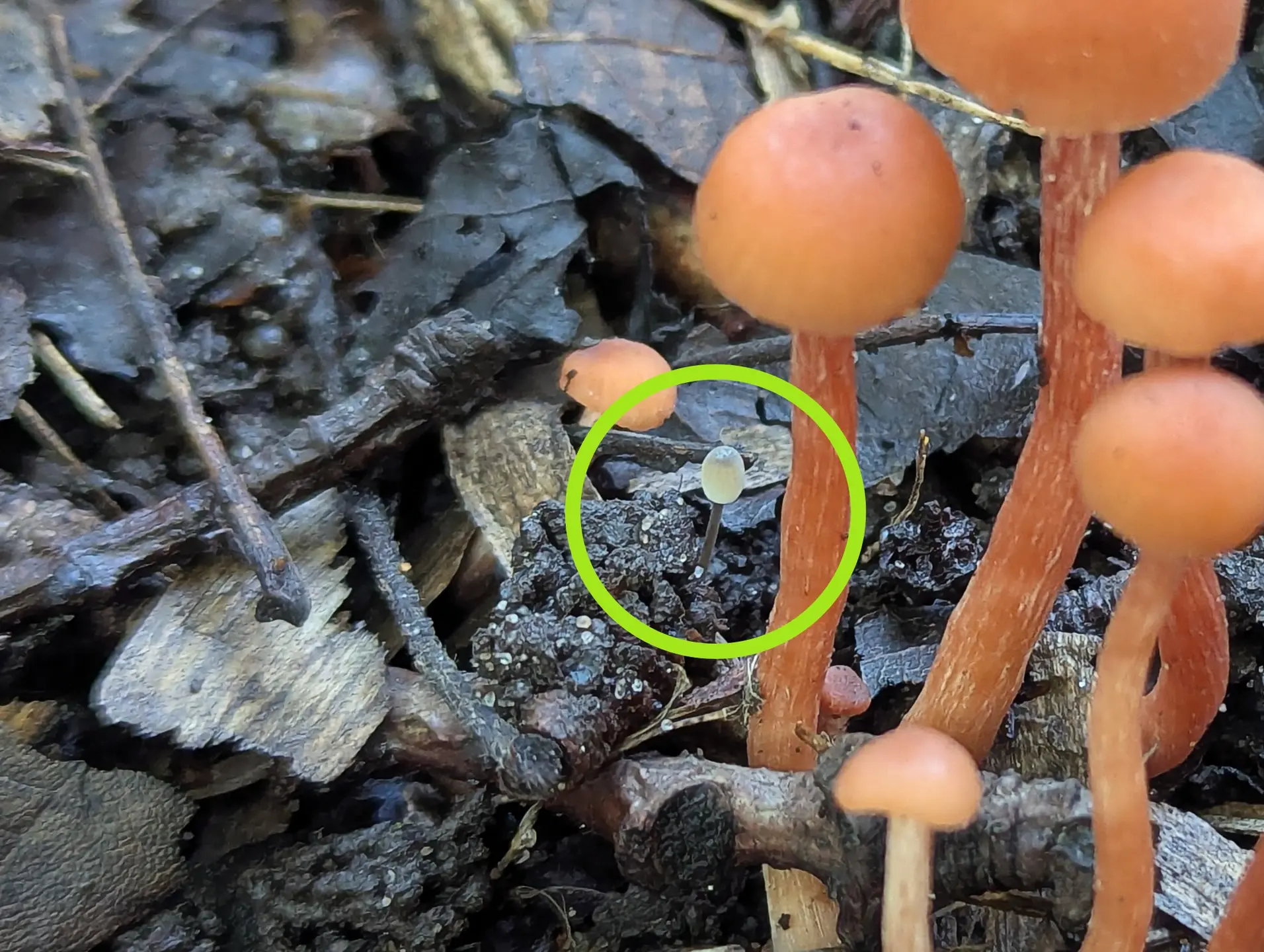
What was interesting – examining the photos back home – was the tiny, emerging, translucent, pale‑yellow, ovoid mushroom.
Strumpshaw Fen – 14th September 2025
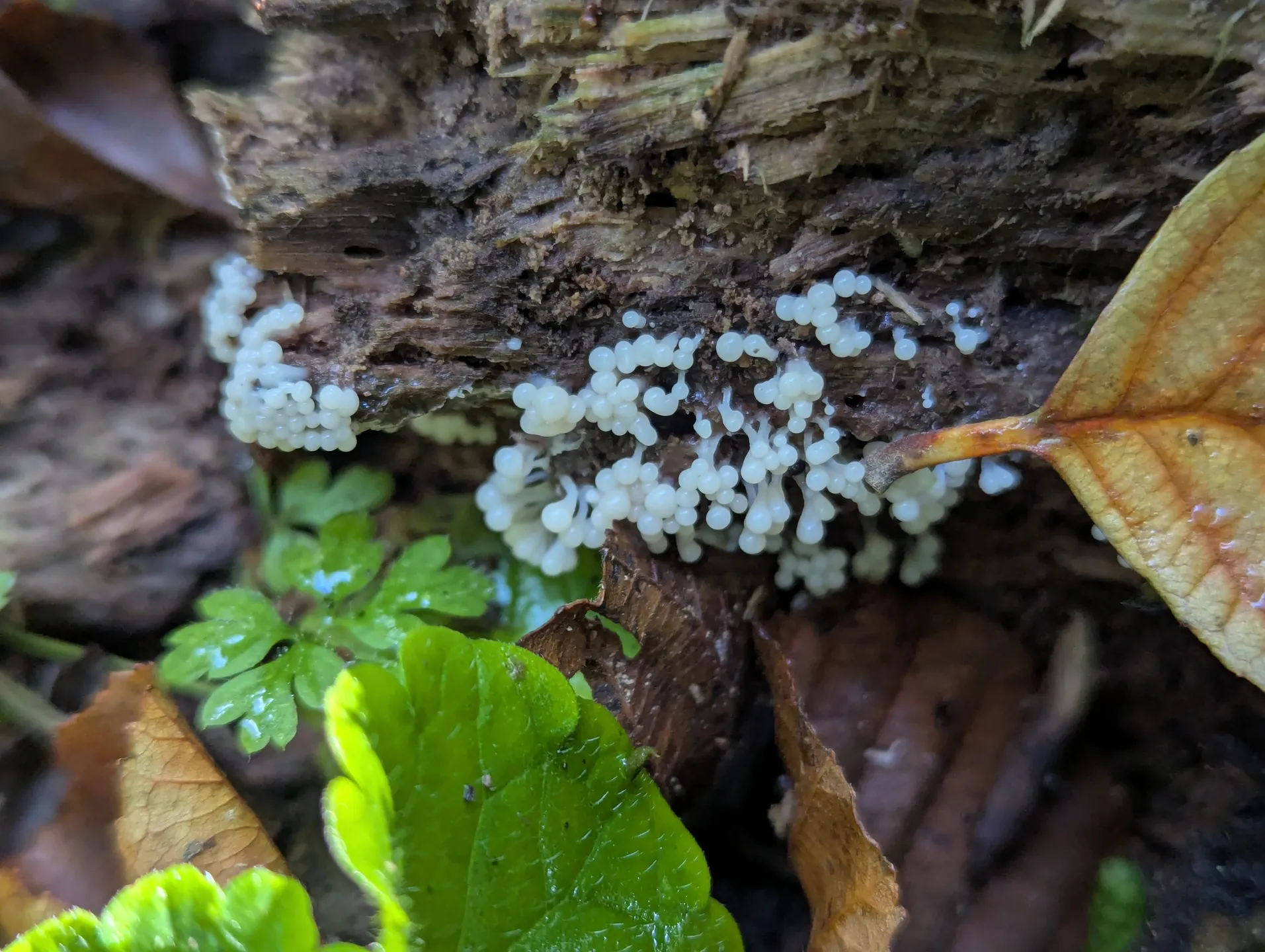
More unidentified, young, white slime mould sporangia.
Strumpshaw Fen – 14th September 2025
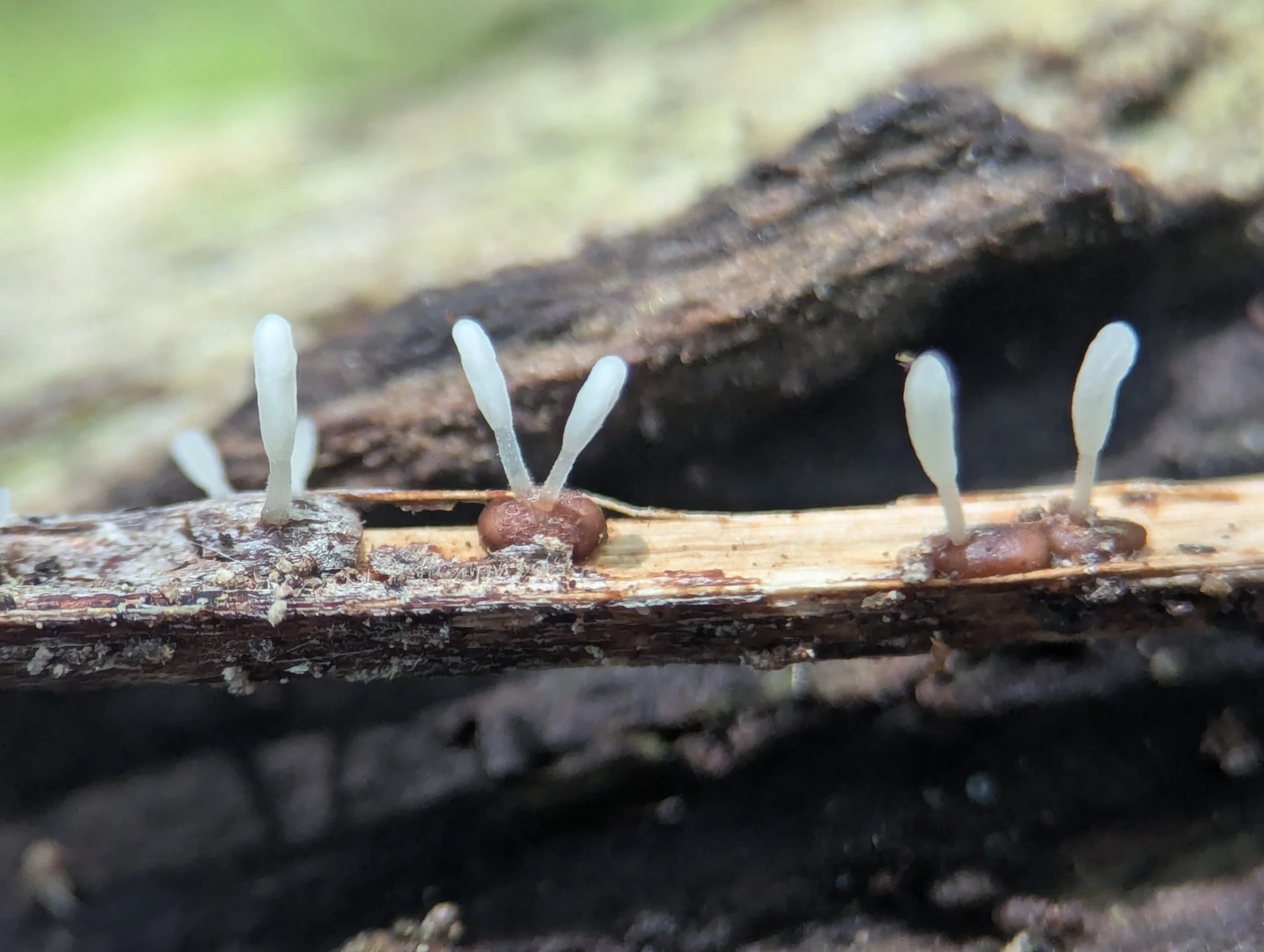
Rooting around at the bench just after the Outpost, I came across something that looked like a slime mould that I had not seen before – exciting!
Strumpshaw Fen – 14th September 2025
But what about those curious brown, seed-like structures from which the fruiting bodies were emerging? Of course – they were sclerotia, and these were fungi fruiting bodies! An image search quickly indicated that these were a Typhula species.
But which one? Based on macroscopic features, it could be one of several species – and then I read that Typhula quisquiliaris is otherwise known as the bracken club.
And indeed, the entire reserve woodland gets covered with bracken. Looking at the photos again, it was clear to me that these fungi were growing on an herbaceous substrate that looked very much like a fragment of bracken stem.
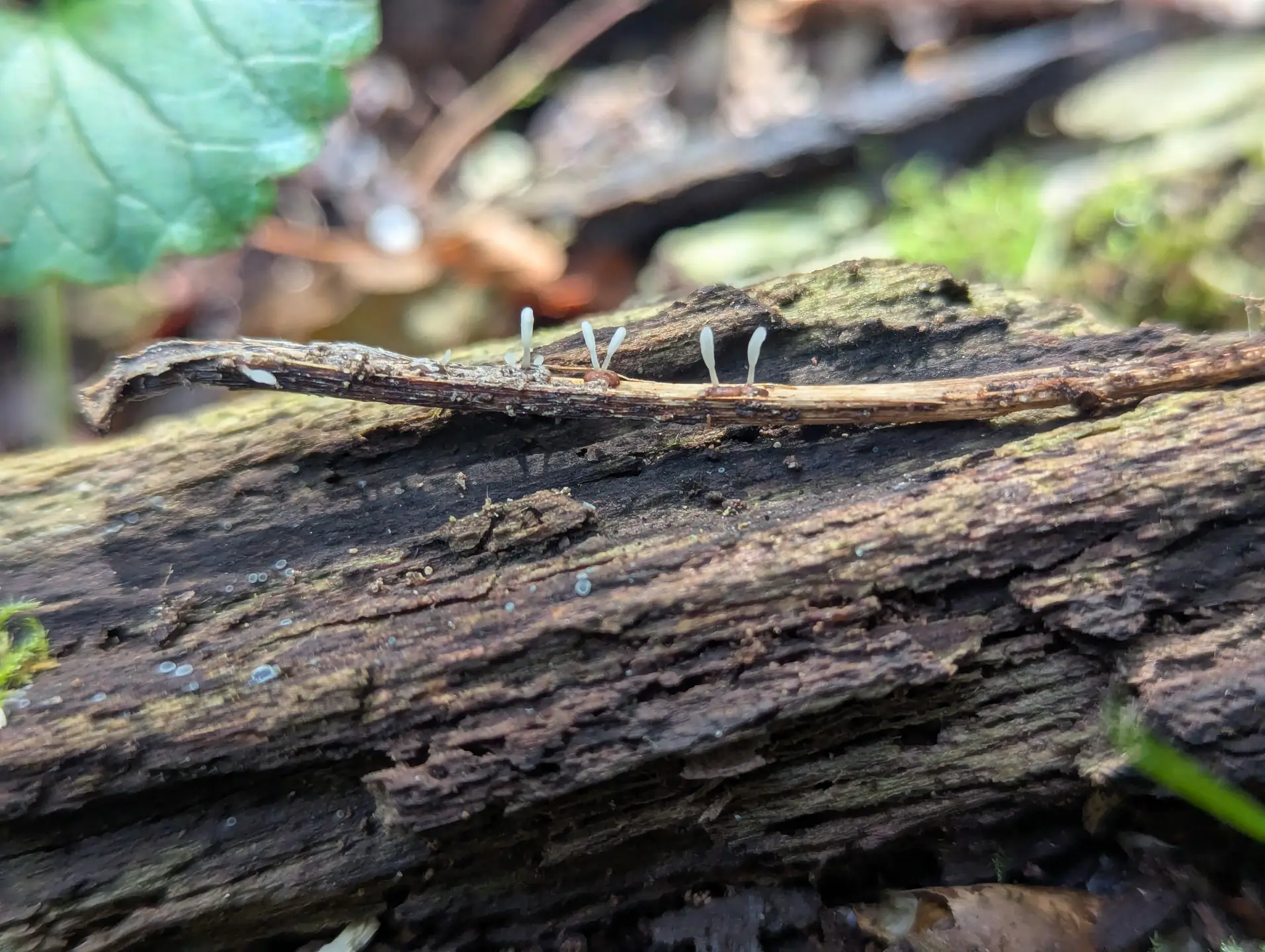
Strumpshaw Fen – 14th September 2025
And lastly another Fuligo septica, this one a young aethalium with the reticulate mesh-like cortex.
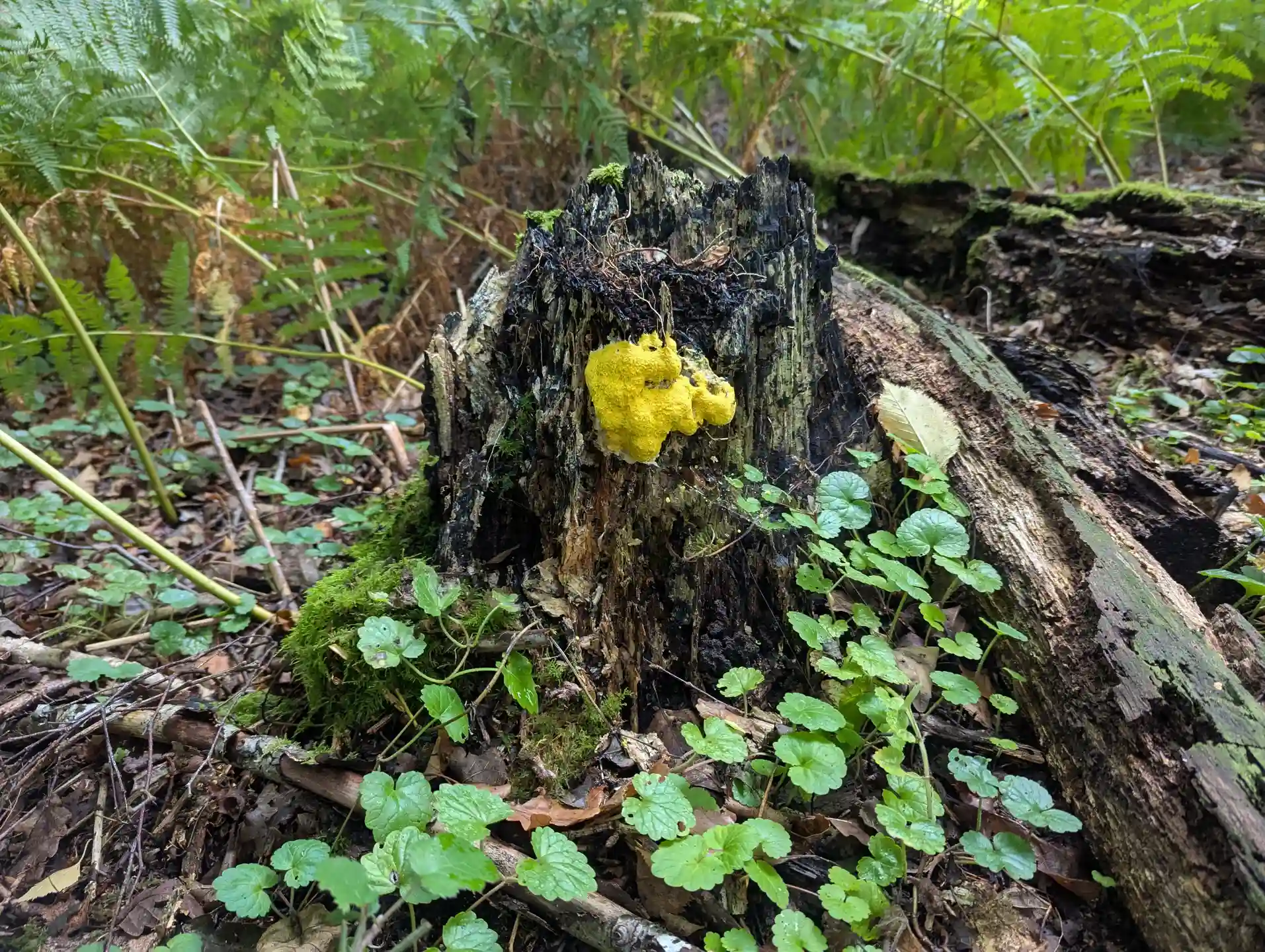
Strumpshaw Fen – 14th September 2025
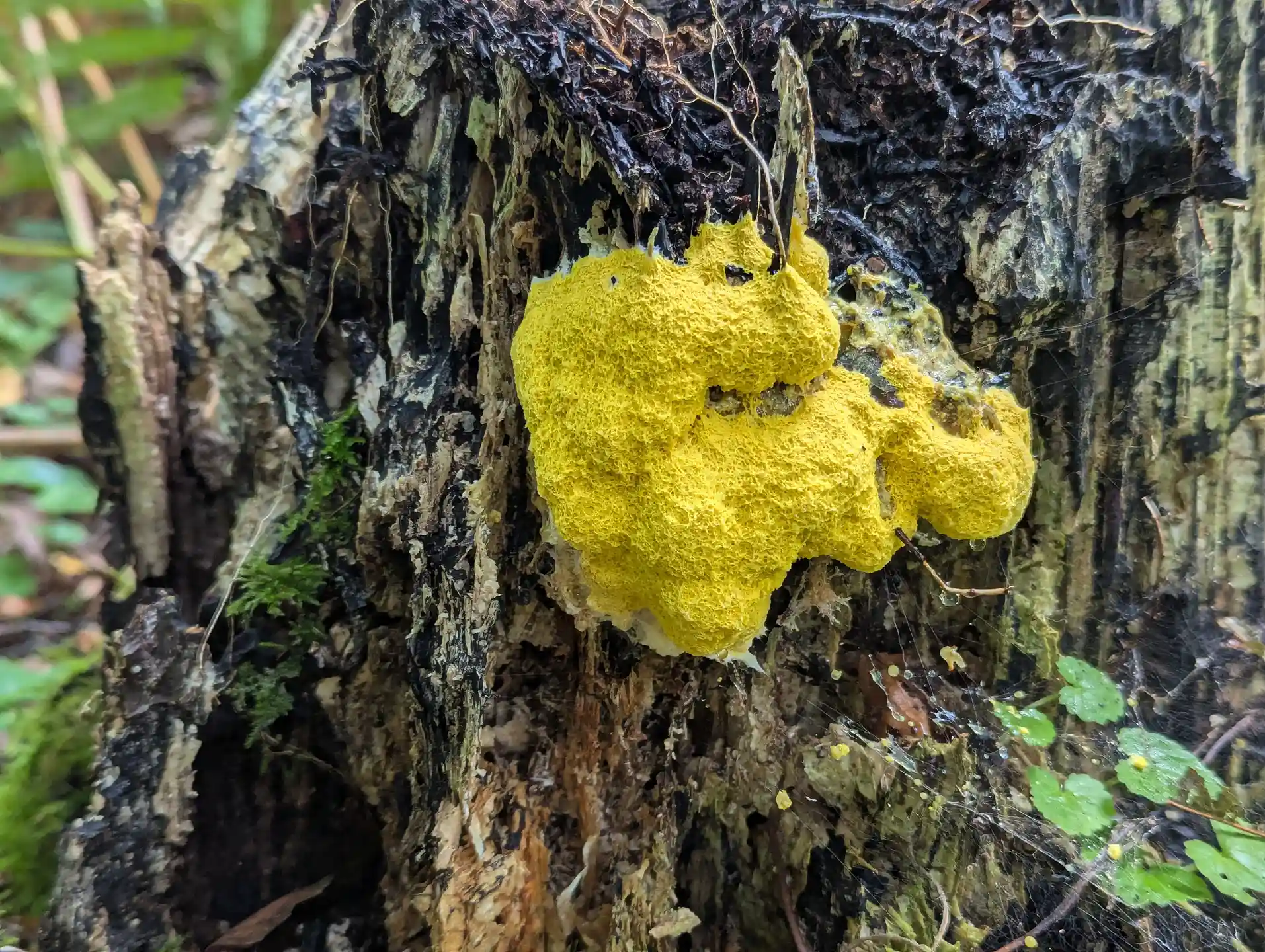
Strumpshaw Fen – 14th September 2025
[1] Hypoxylon fragiforme
Danish Fungal Atlas (MycoKey)Hypoxylon fragiforme page:
https://svampe.databasen.org/taxon/15233
First Nature Hypoxylon fragiforme page:
https://www.first-nature.com/fungi/hypoxylon-fragiforme.php
[2] Hypoxylon fuscum
Danish Fungal Atlas (MycoKey) Hypoxylon fuscum page:
https://svampe.databasen.org/taxon/15235
First Nature Hypoxylon fuscum page:
https://www.first-nature.com/fungi/hypoxylon-fuscum.php
[3] Danish Fungal Atlas (MycoKey) Hypoxylon howeanum page:
https://svampe.databasen.org/taxon/15237
[4] Pyrenomycetes from France Hypoxylon howeanum page:
http://pyrenomycetes.free.fr/hypoxylon/html/Hypoxylon_howeianum.htm
[5] First Nature Tubaria furfuracea page:
https://www.first-nature.com/fungi/tubaria-furfuracea.php
Note: Some of the older research sites I link to (like pyrenomycetes.free.fr) don’t use modern security certificates because they are older archives. They are usually safe to browse, but your browser might give you a ‘Not Secure’ warning!
Strumpshaw Fen is a nature reserve managed by the RSPB adjacent the River Yare, east of Norwich in Norfolk.
RSPB Strumpshaw Fen webpage RSPB Strumpshaw Fen Wikipedia entry