Fungi at Brandon Country Park – October 2025

No slime moulds on this visit but plenty of fungi.

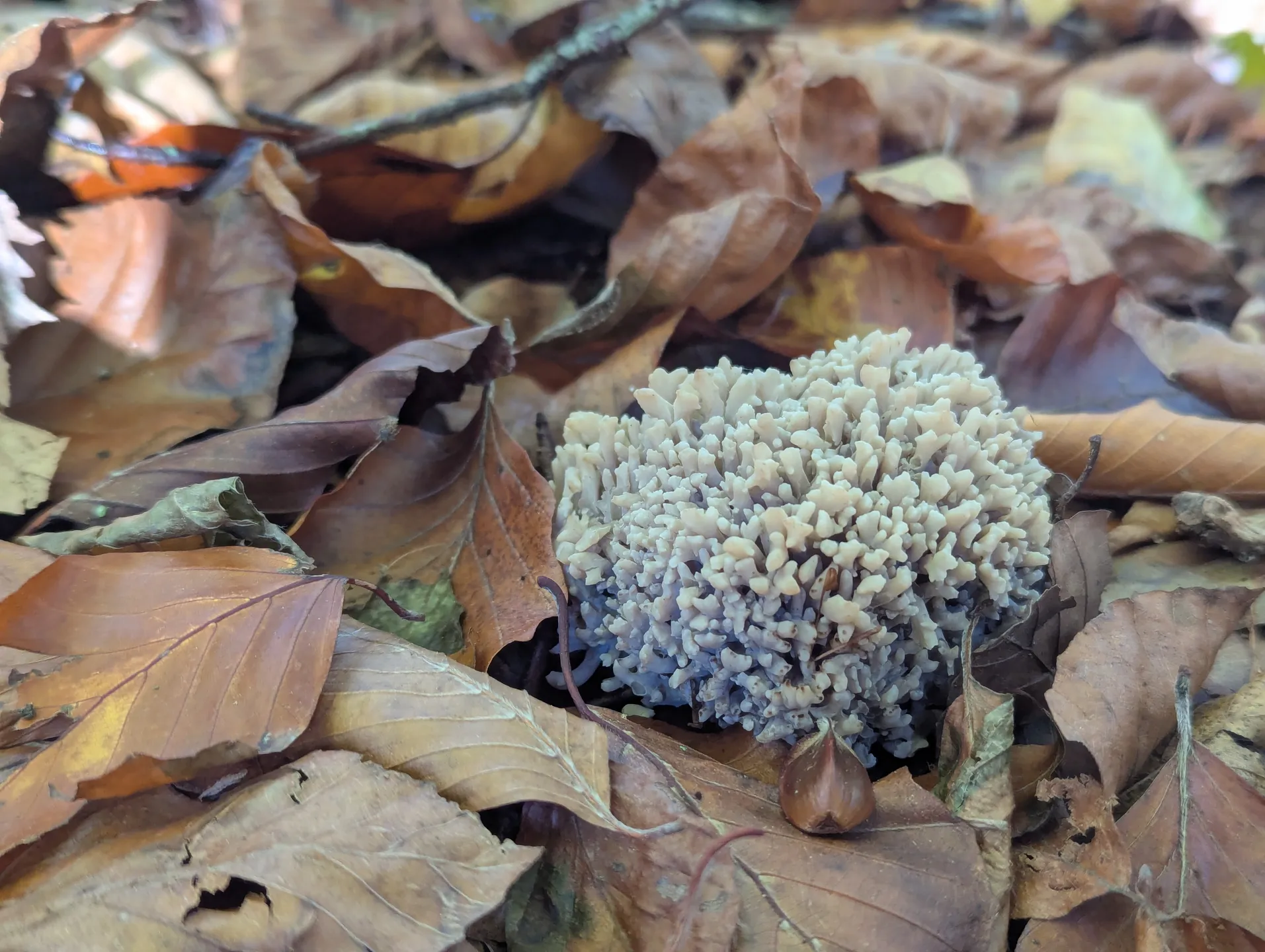
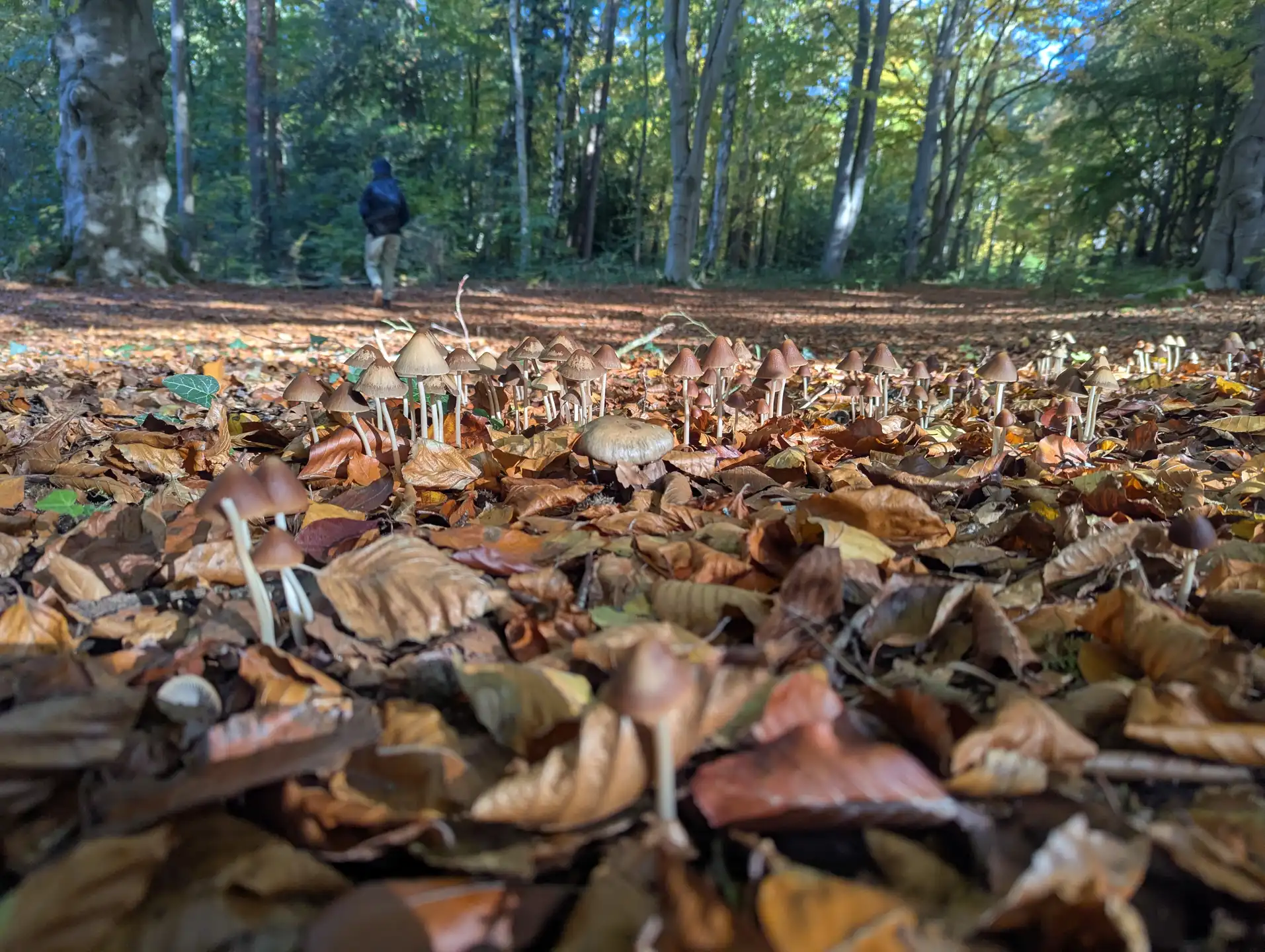
Near the entrance we spotted a likely Clavulina cinerea – a grey coral, nestled amongst the carpet of beech leaf litter and surrounded everywhere by Parasola conopilus – the conical brittlestem.
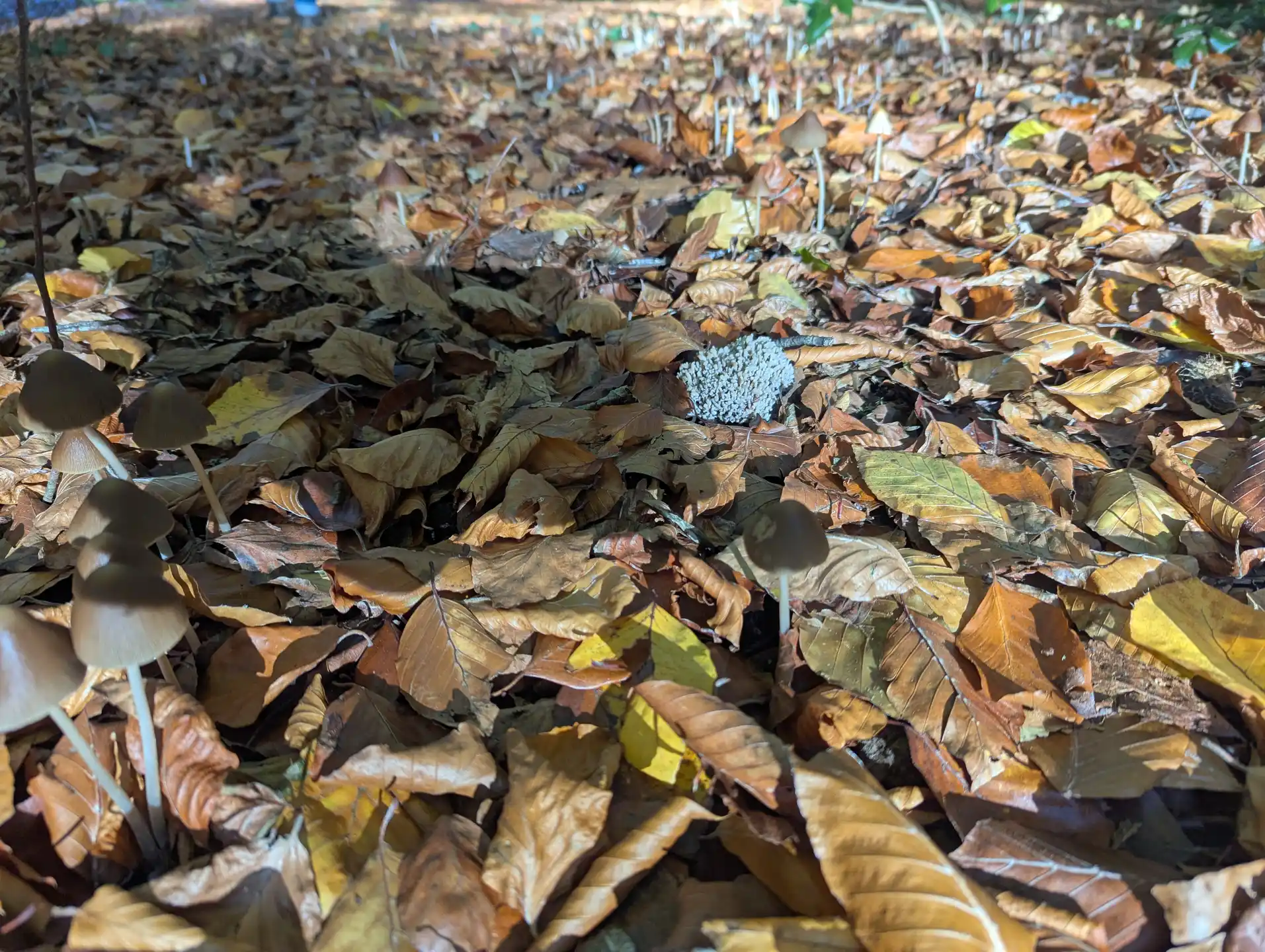
Clavulina cinerea fruiting body emergent from a carpet of golden beech leaves surrounded by Parasola conopilus.
Likely Clavulina cinerea – Brandon Country Park
26th October 2025
Close-up of the Clavulina cinerea fruiting body.
Likely Clavulina cinerea – Brandon Country Park
26th October 2025
Ground level view of Parasola conopilus fungi emerging from a carpet of golden beech leaves
Parasola conopilus – Brandon Country Park
26th October 2025

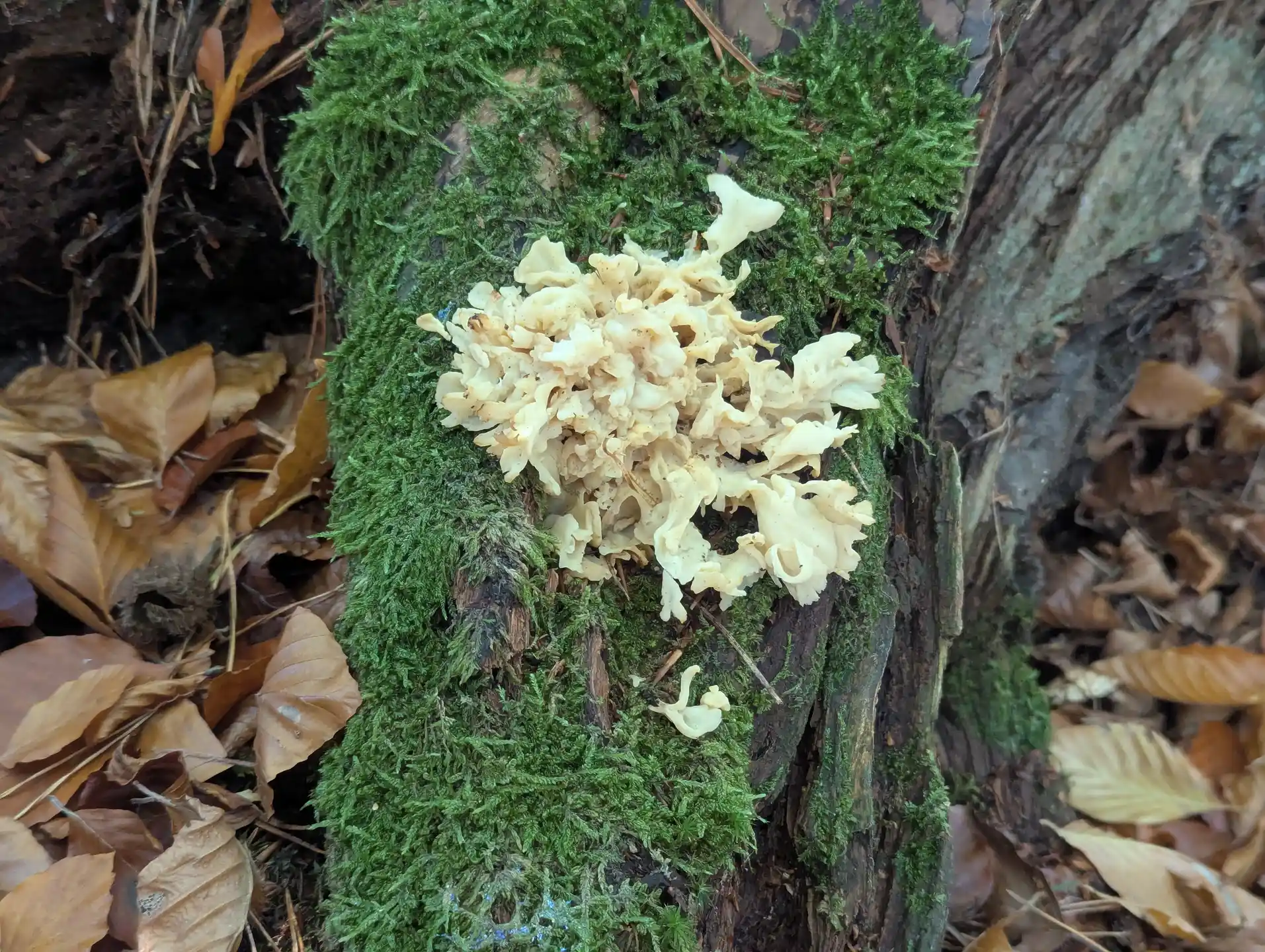
Nearby was a ragged, pale-cream fungus that I can only think was a Sparassis crispa – the wood cauliflower, on an old stump.
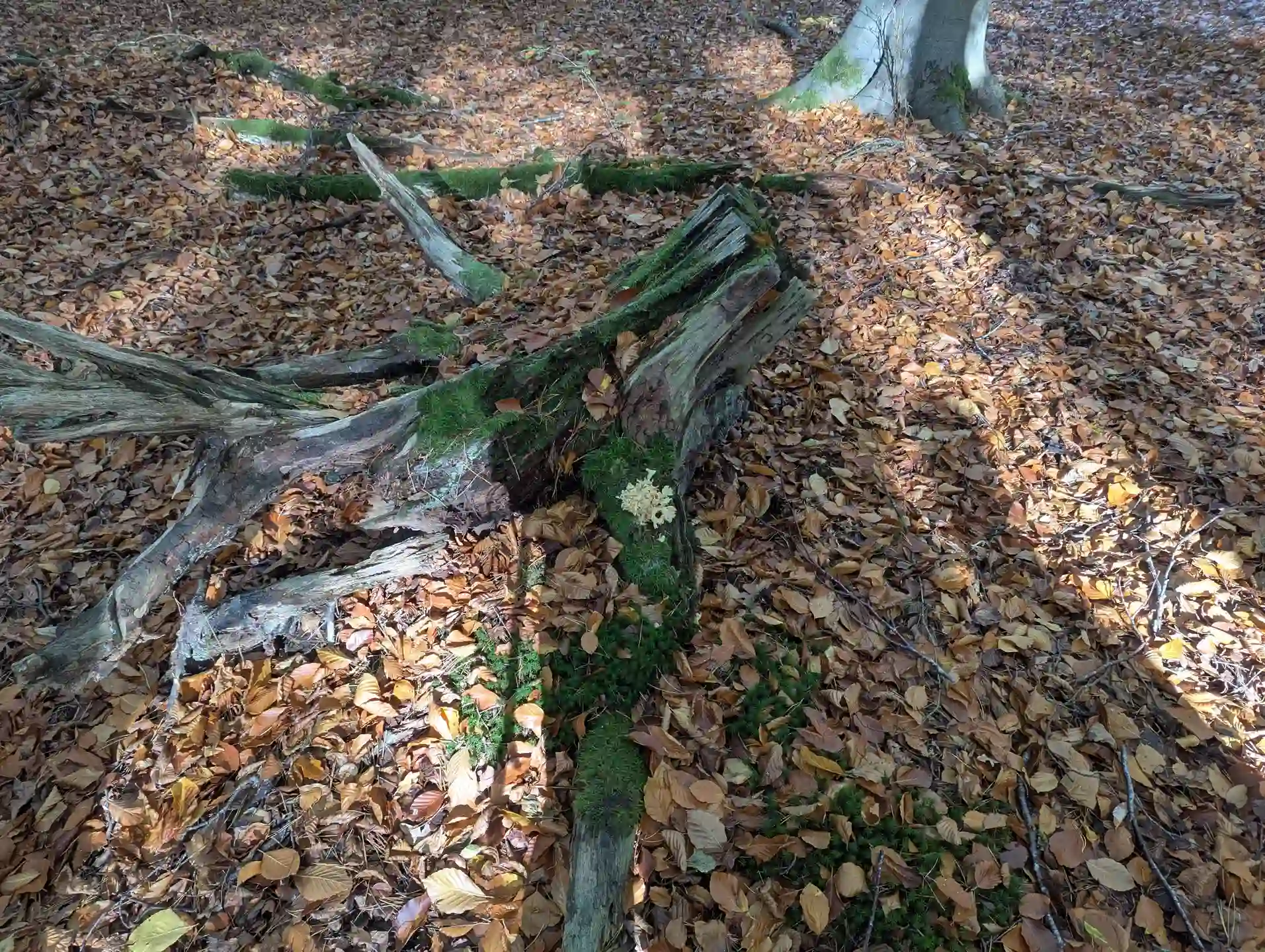
Sparassis crispa on moss covered tree stump root crown.
Sparassis crispa – Brandon Country Park
26th October 2025
Close-up of the Sparassis crispa fungus on tree stump root crown.
Sparassis crispa – Brandon Country Park
26th October 2025

Just why it’s called wood cauliflower is beyond me!

And the saturated wine-red, vinaceous brown of this Russula is compelling.
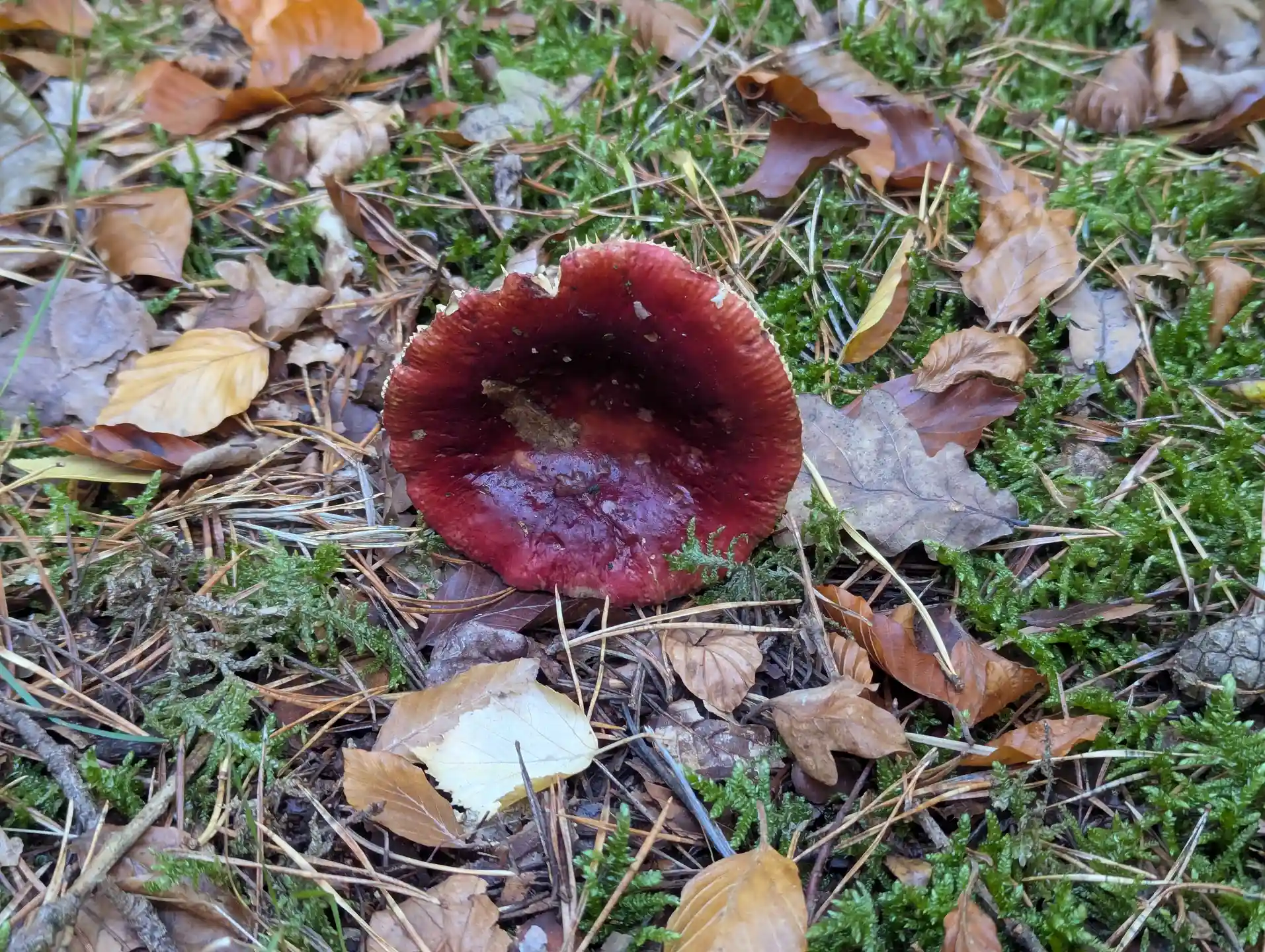
Top view Russula species cap.
Russula species – Brandon Country Park
26th October 2025

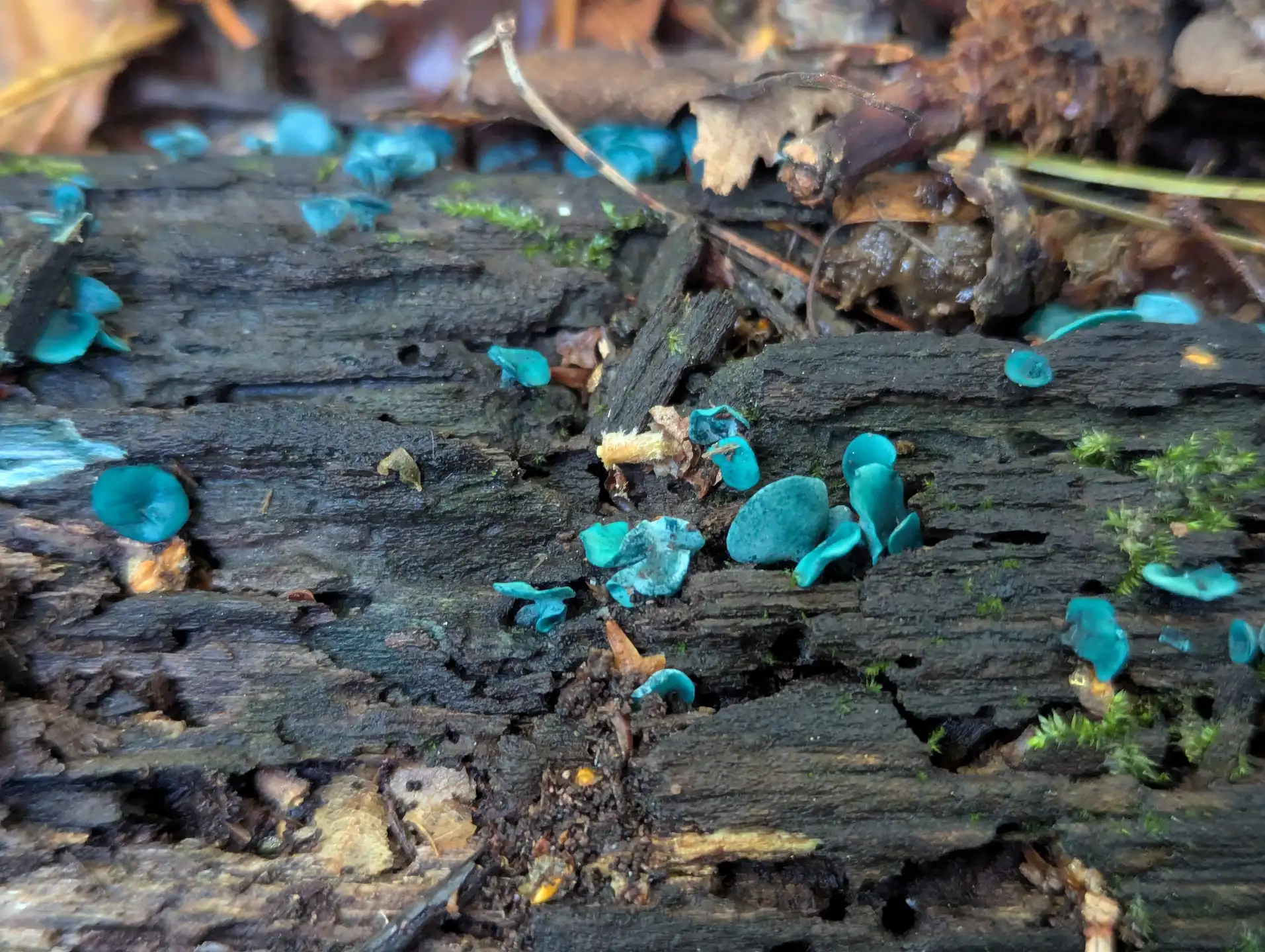
We crossed the B1106 into Thetford Forest and stumbled upon some blue-green Chlorociboria (green or turquoise elfcup).
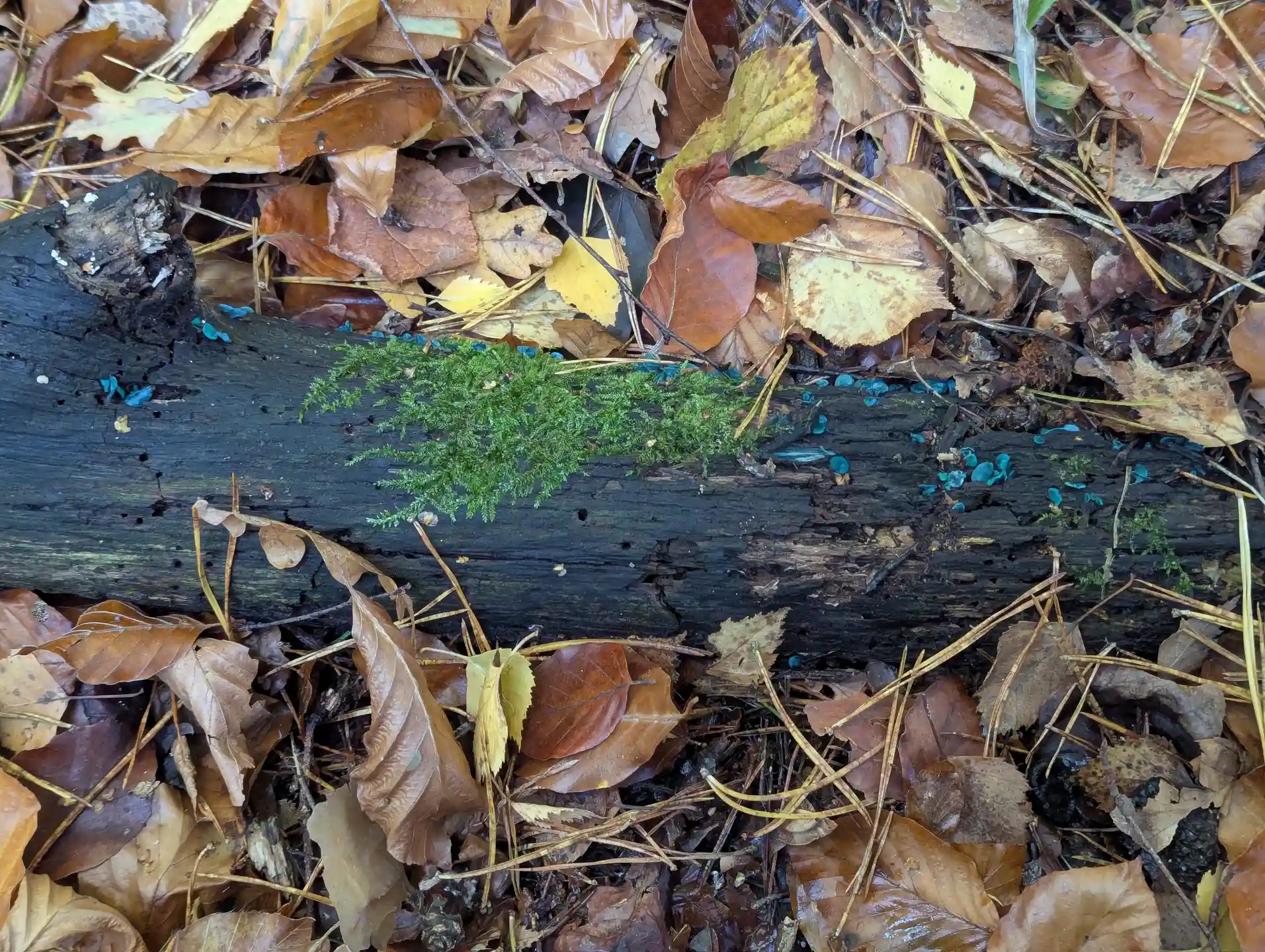
Blue-green Chlorociboria fungi fruiting bodies growing on  moist decaying wood. The wood has a hint of blue-green staining from the fungus.
Chlorociboria species – Thetford Forest
26th October 2025
Close-up of Chlorociboria fruiting bodies.
Chlorociboria species – Thetford Forest
26th October 2025

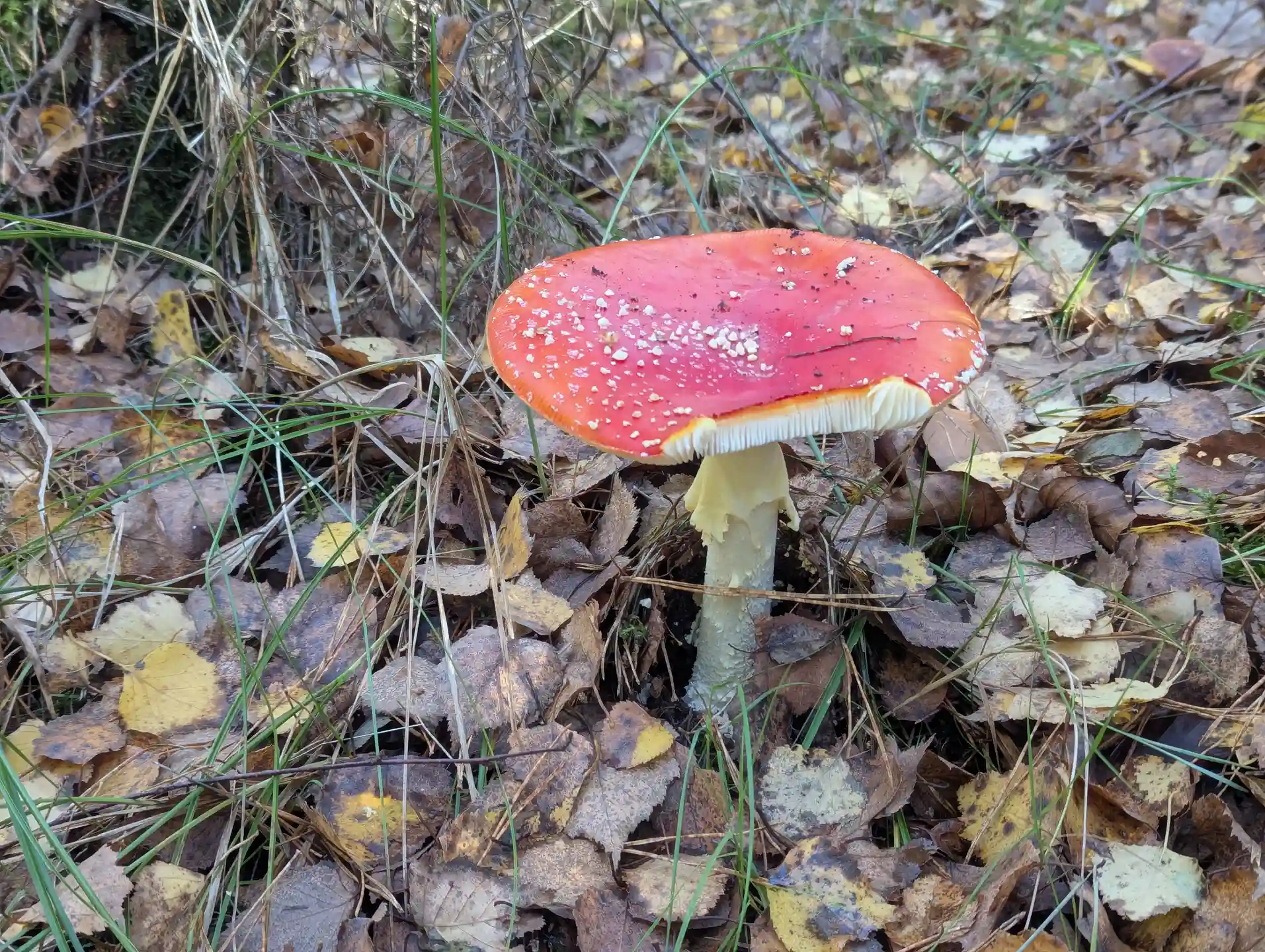
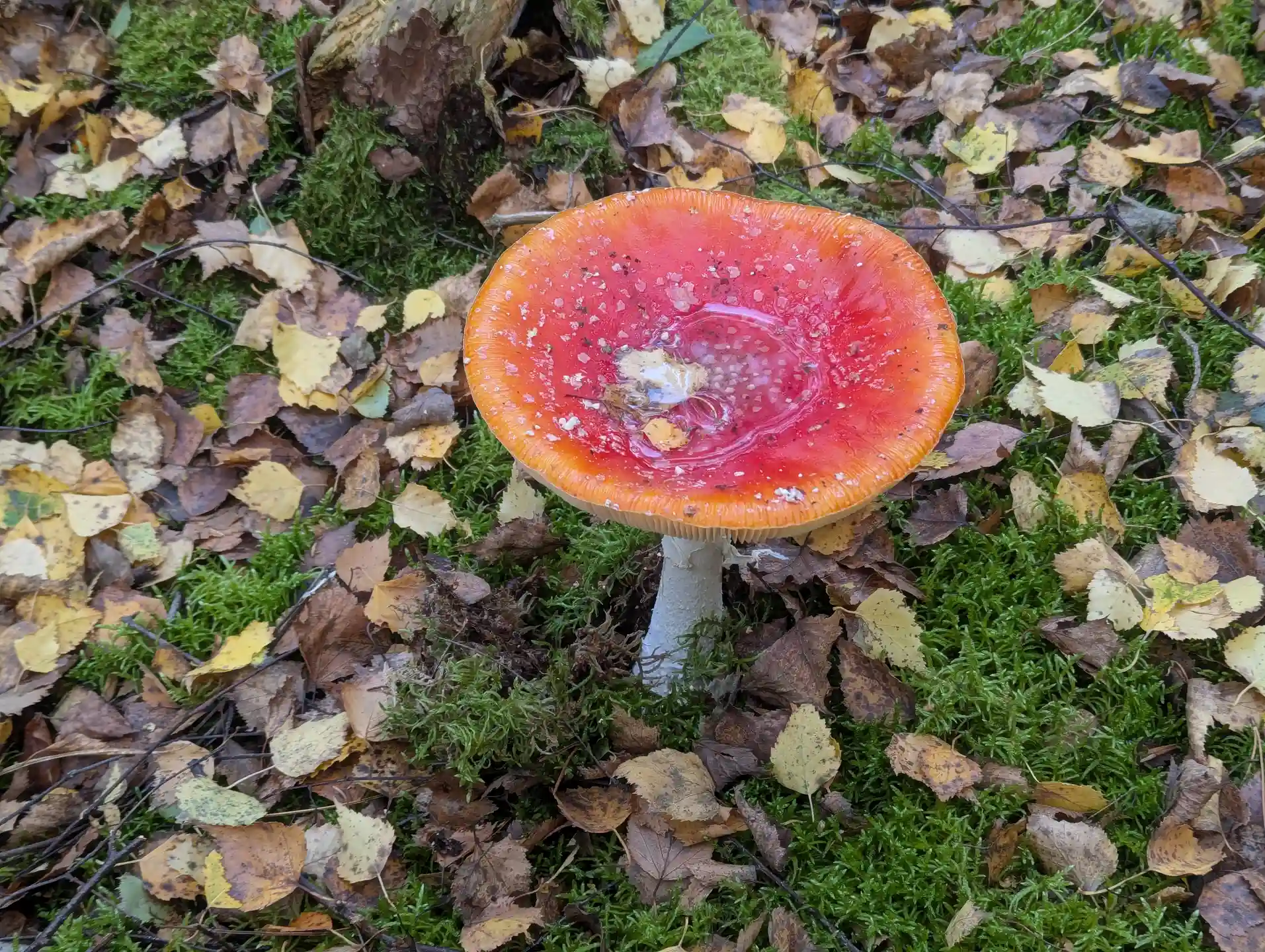
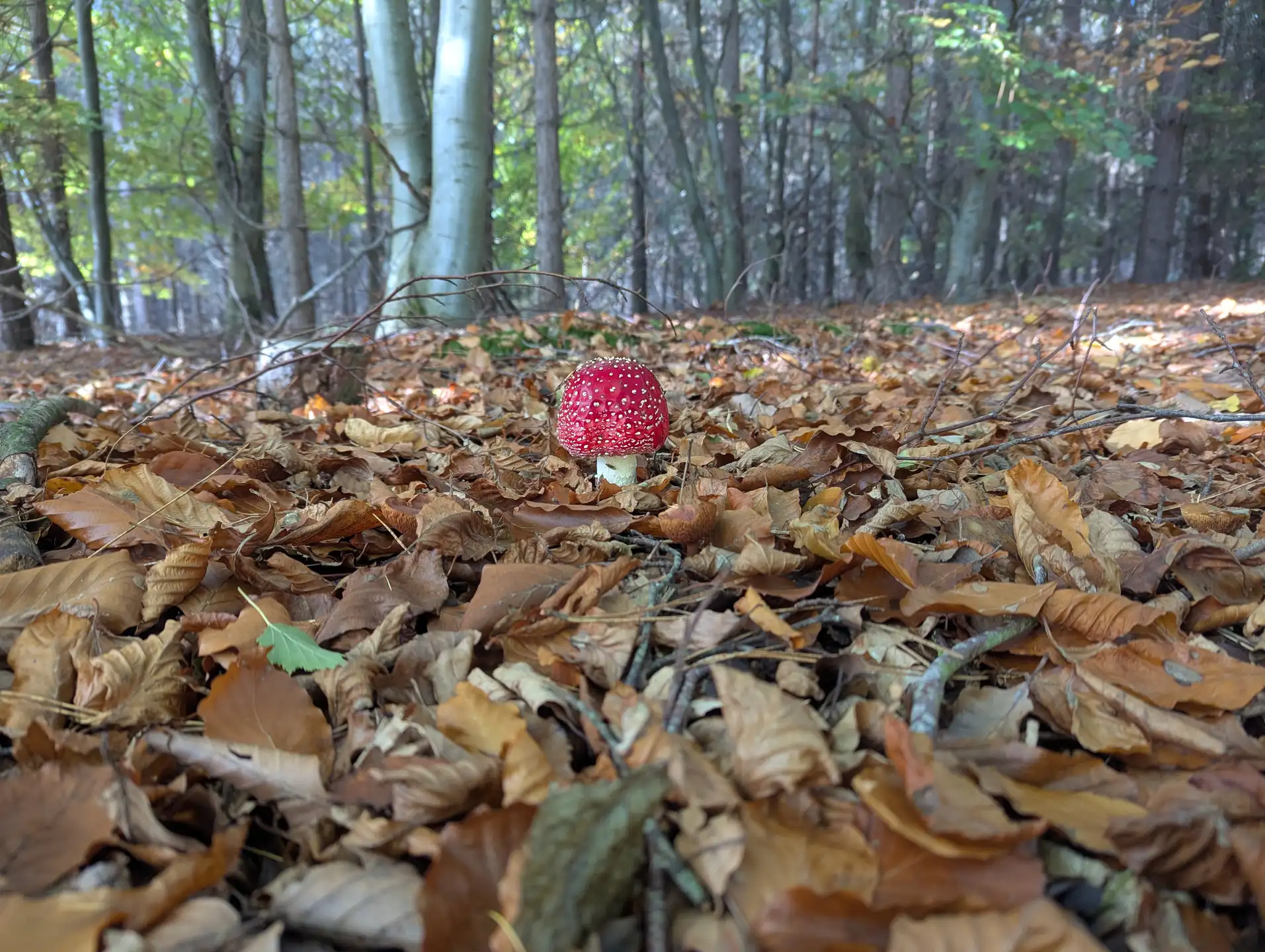
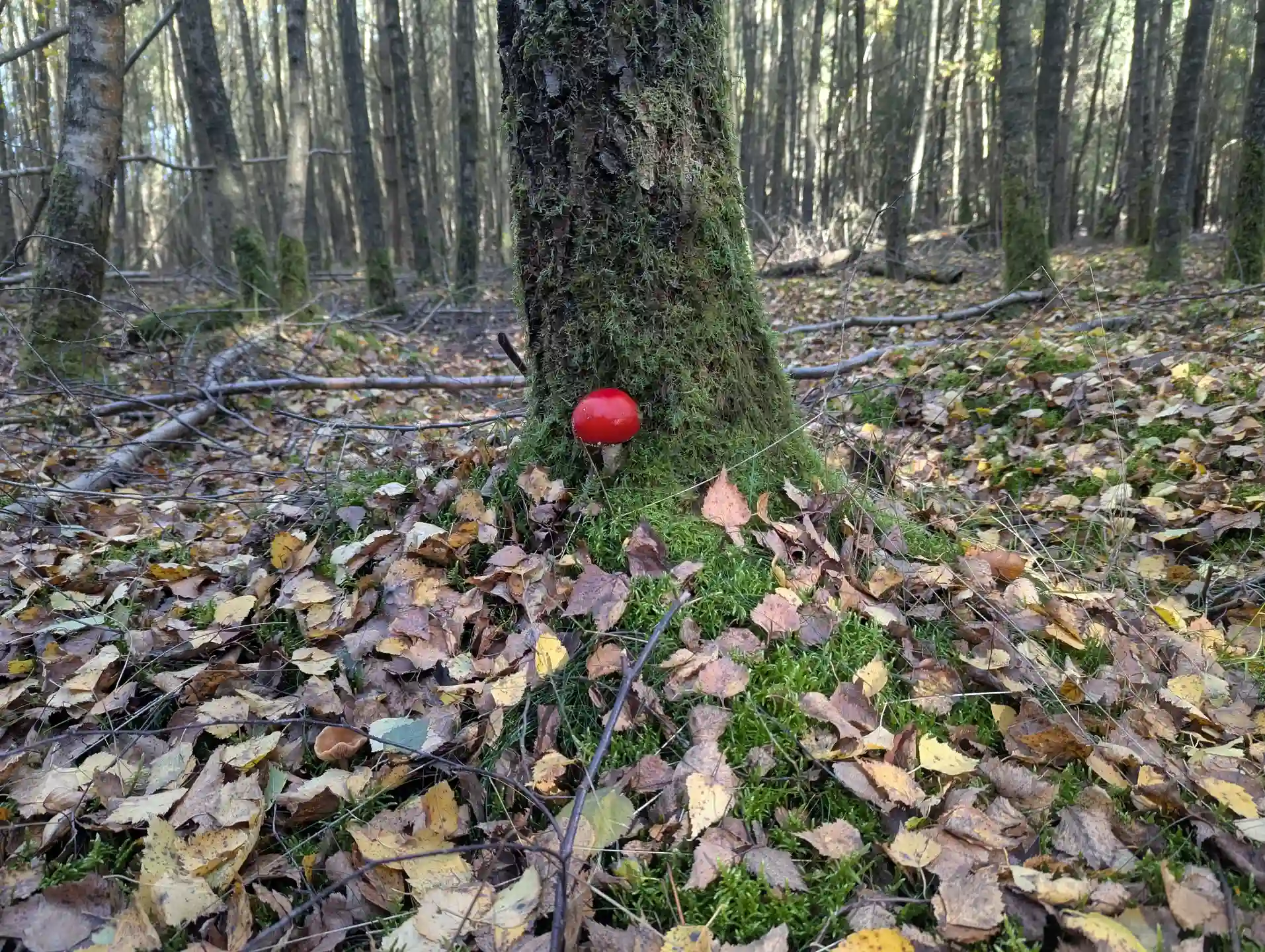
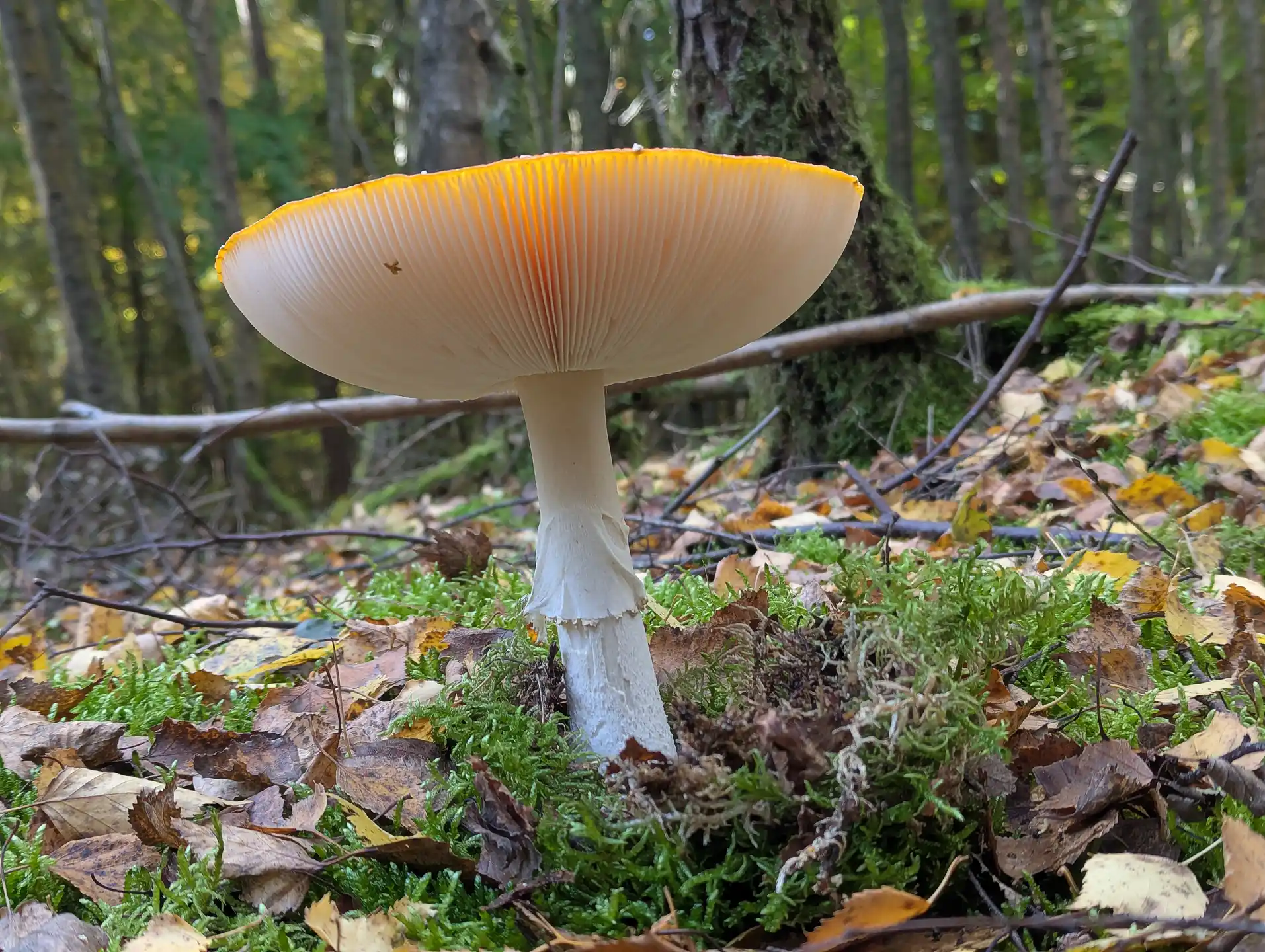
And so, so many Amanita muscaria (fly agaric)!
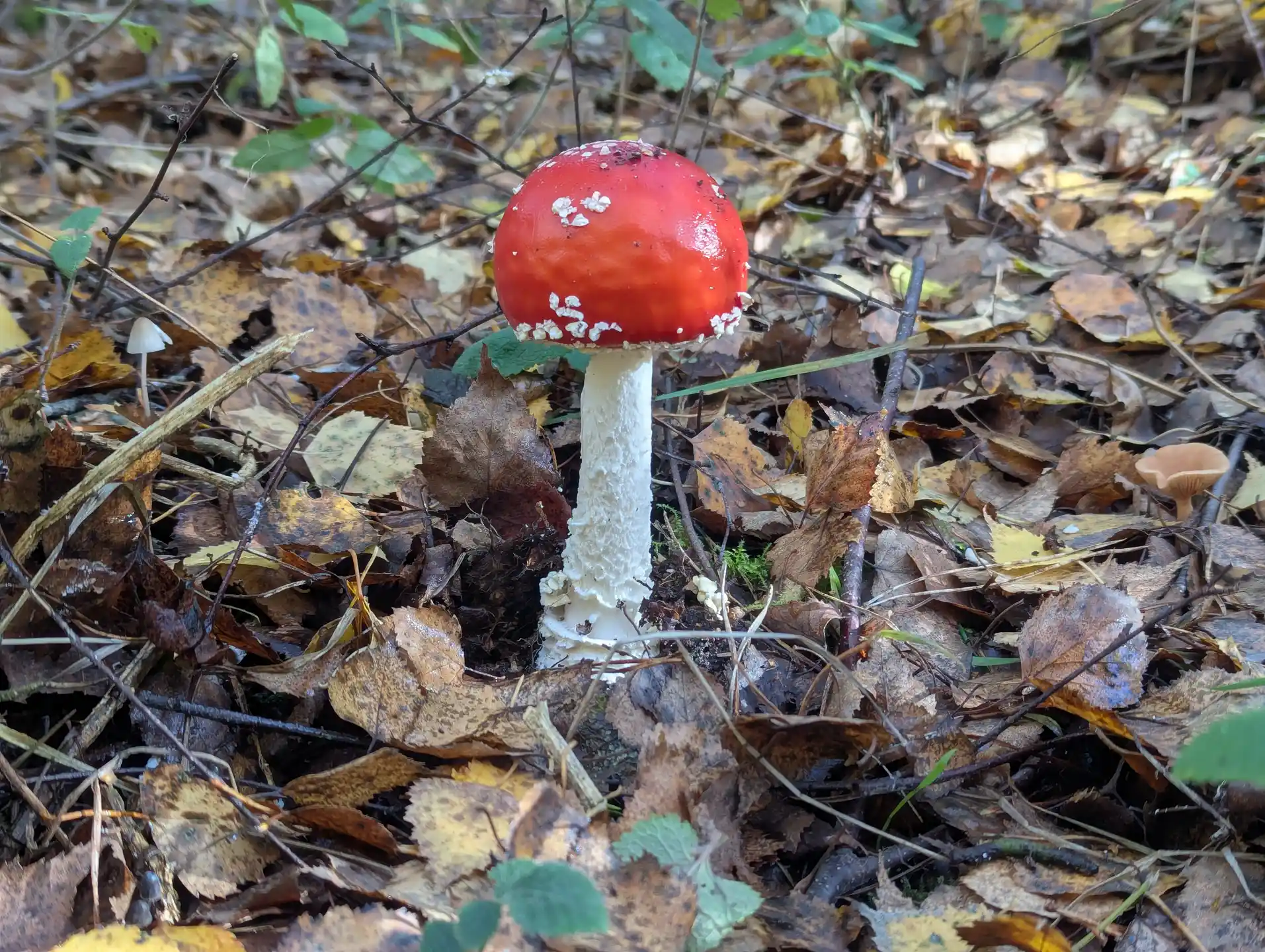
Single Amanita muscaria: a rounded red cap with white remnants of the universal veil, on a shaggy white stem among birch leaves.
Amanita muscaria – Thetford Forest
26th October 2026
Single mature Amanita muscaria: a flattened red cap with white universal veil remnants. A section of the cap perimeter is missing, revealing the white gill structure. It stands on a white stem among fallen birch leaves.
Amanita muscaria – Thetford Forest
26th October 2026
Top view of a mature Amanita muscaria with a flattened umbilicate red cap. The depression has some water and a birch leaf. It stands amongst moss and birch leaves.
Amanita muscaria – Thetford Forest
26th October 2026
Single Amanita muscaria: a rounded red cap on a short stem emerging from a carpet of golden beech leaves. The cap is dotted with white universal veil remnants.
Amanita muscaria – Thetford Forest
26th October 2026
Single Amanita muscaria: a smooth rounded red cap on a short stem emerging from a mossy base of a tree. The cap is devoid of universal veil fragments.
Amanita muscaria – Thetford Forest
26th October 2026
Single Amanita muscaria: view from below the cap showing the white gill structure and stem.
Amanita muscaria – Thetford Forest
26th October 2026

And this unknown fungus with damaged and weathered gills.
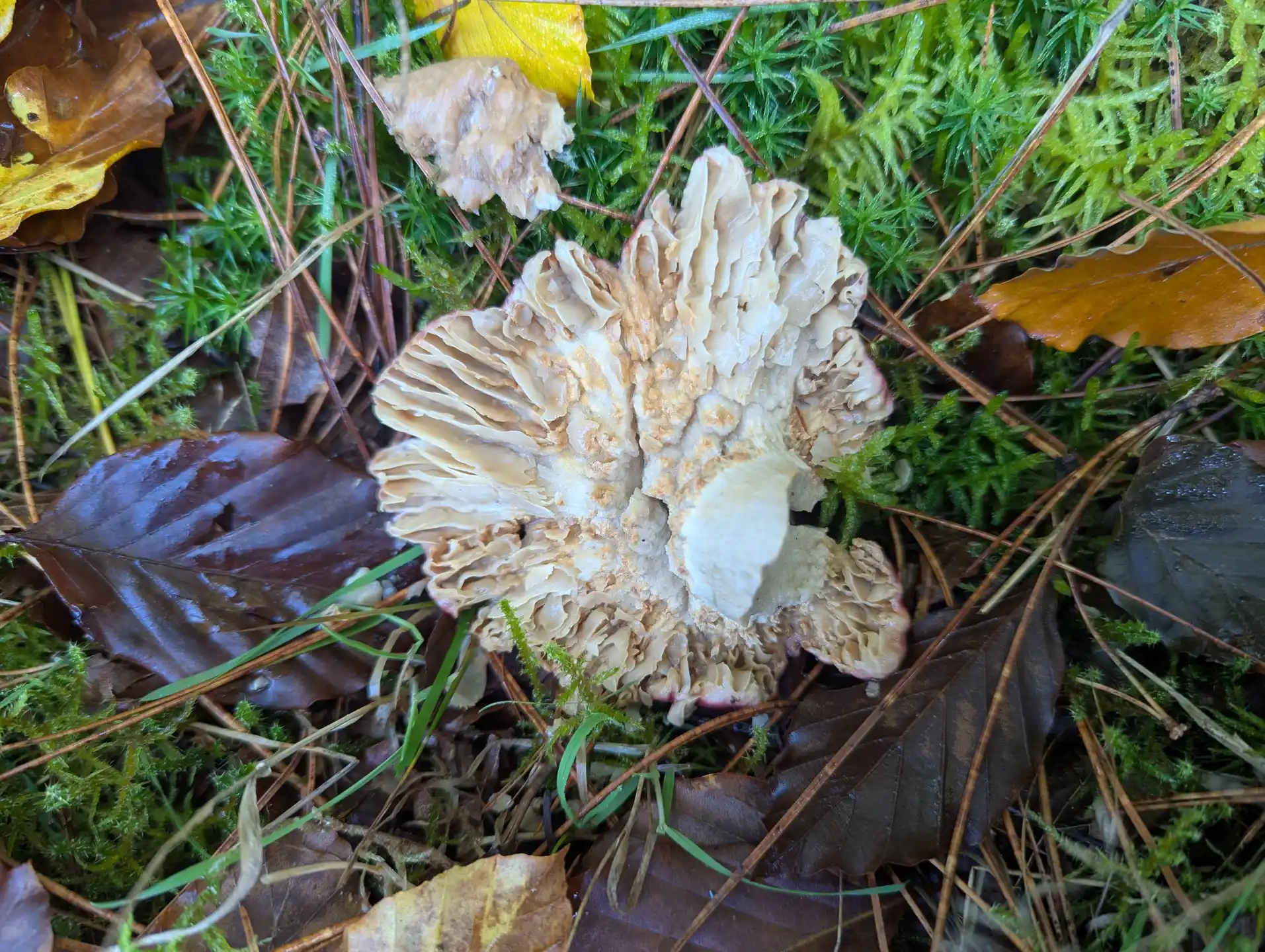
Close-up view of the underside of an unidentified fungus with a damaged, pale cream gill structure.
Unidentified fungus – Thetford Forest
26th October 2026

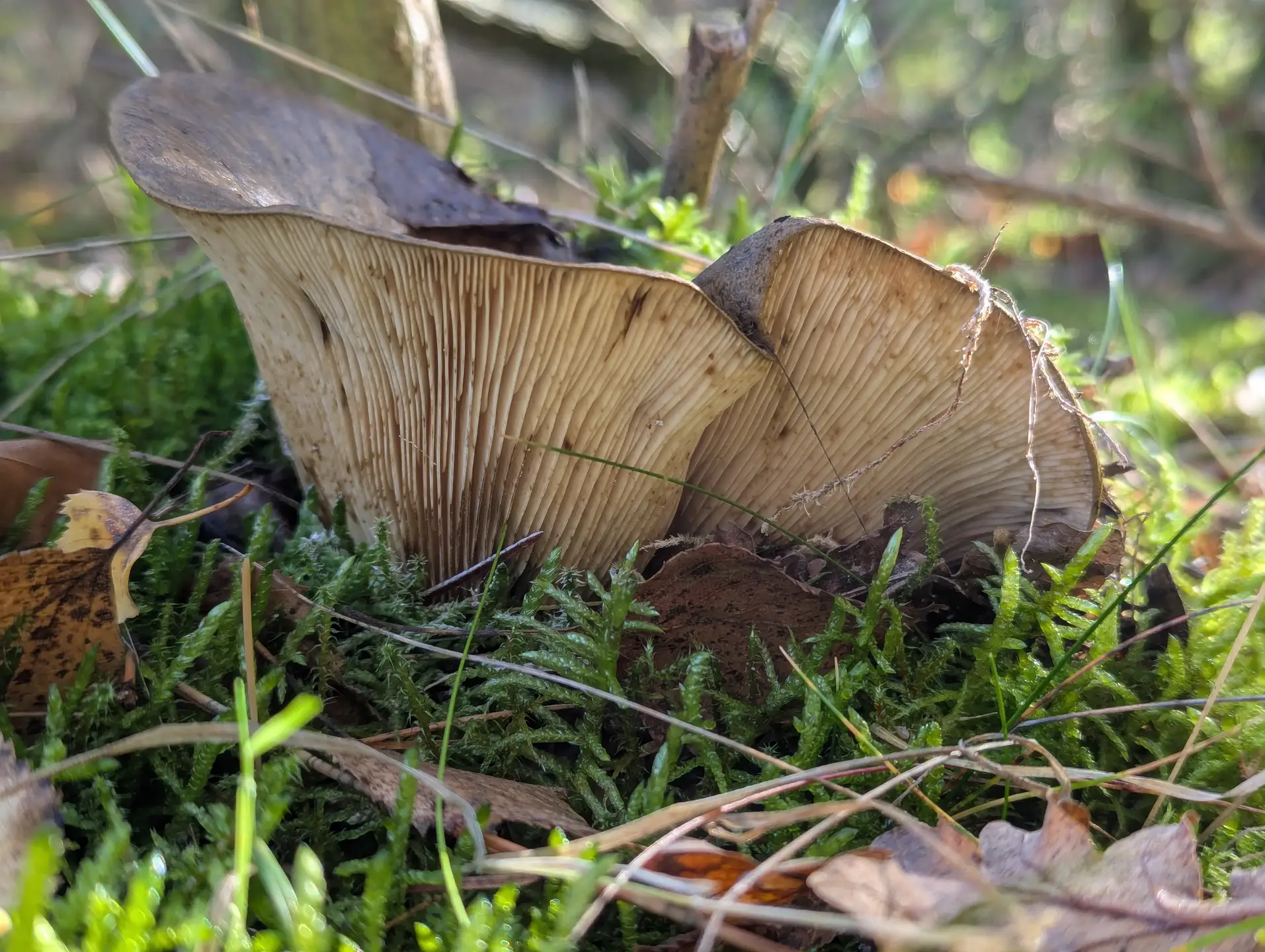
I have not been able to make a likely visual ID for the fungi below. Using MycoKey’s ID tool and cross referencing with various other sites like First Nature, these could be Tapinella atrotomentosa – velvet rollrim, or Lactarius necator.
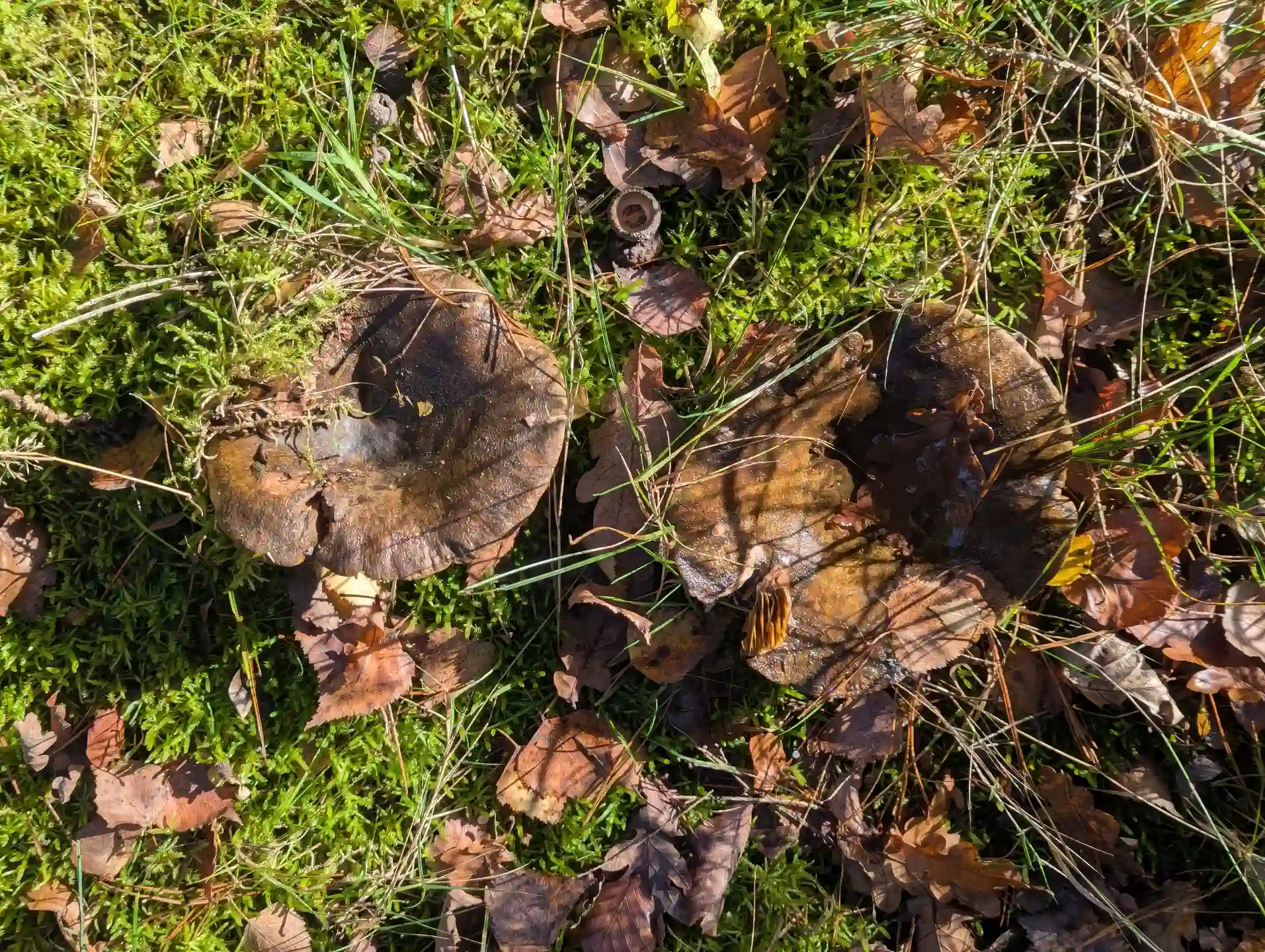
Top view of two possible Tapinella atrotomentosa or Lactarius necator fungi emergent from mossy ground.
Maybe Tapinella atrotomentosa or Lactarius necator
Thetford Forest – 26th October 2026
Side view of a possible Tapinella atrotomentosa or Lactarius necator fungus showing the gill structure.
Maybe Tapinella atrotomentosa or Lactarius necator
Thetford Forest – 26th October 2026

The Danish Fungal Atlas (that powers MycoKey ID) states that Lactarius necator is the current name and that Lactarius turpis – the ugly milkcap, is as synonym (as well as Lactarius plumbeus) [1]. However both MycoBank and Fungal Names list Lactarius necator and Lactarius turpis as separate species. Of course they could be neither.

A Lycoperdon perlatum – the common puffball.
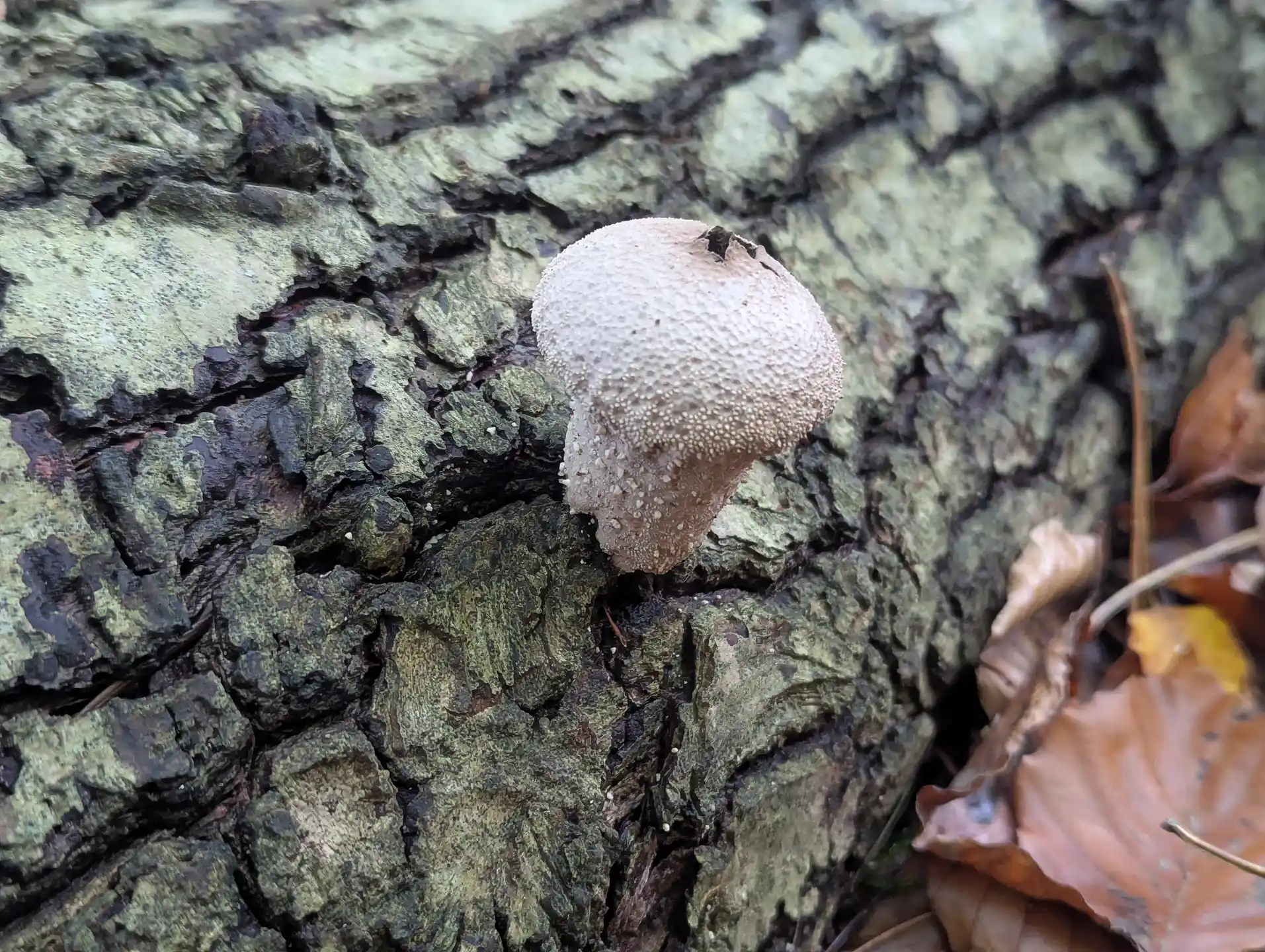
A single Lycoperdon perlatum with a pear-shaped body covered in distinct conical warts, growing from the fissured bark of a downed trunk.
Lycoperdon perlatum – Thetford Forest
26th October 2026

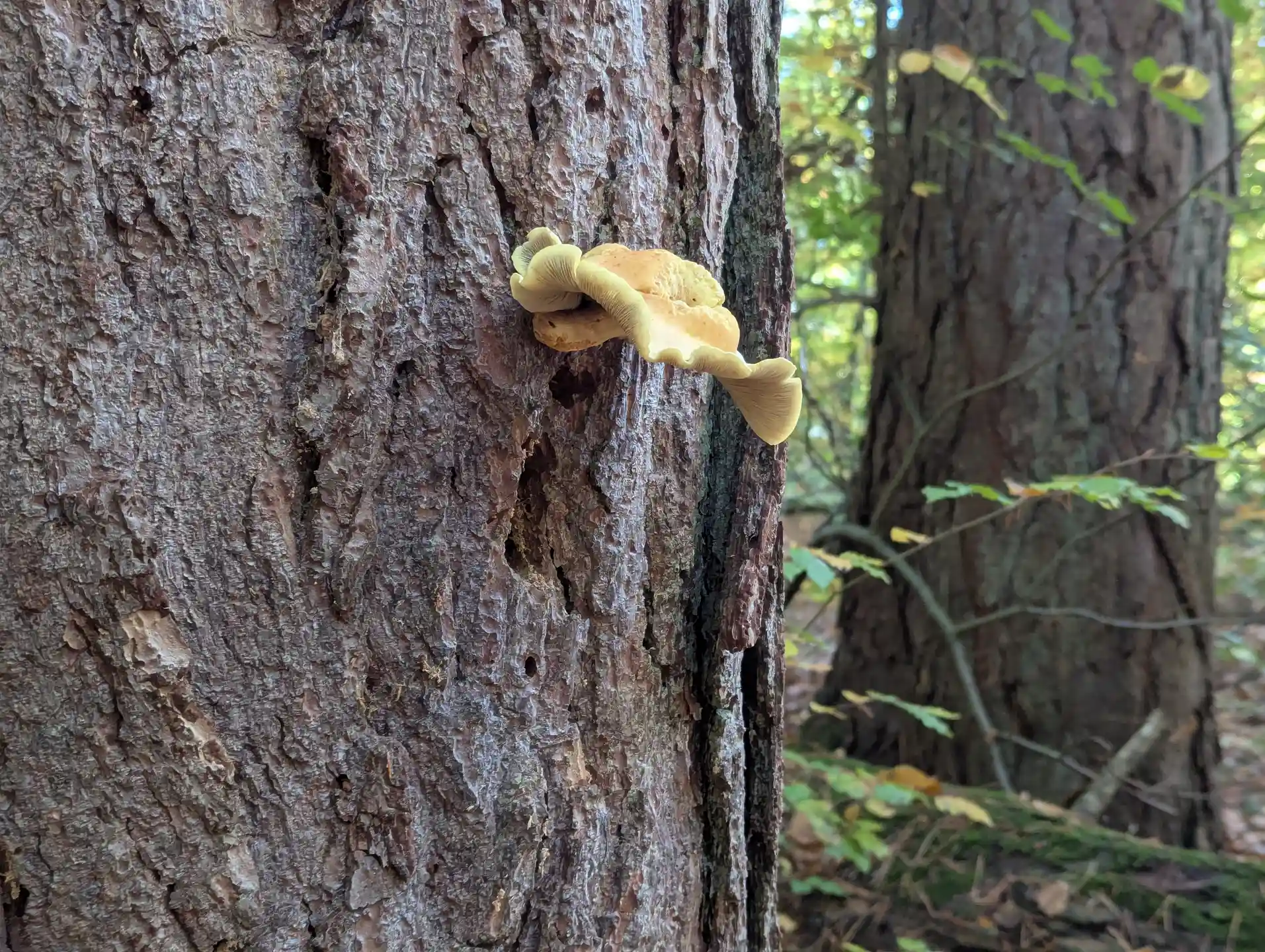
And this was wonderful – I haven’t been able to come to a conclusive likely ID for this fungus.
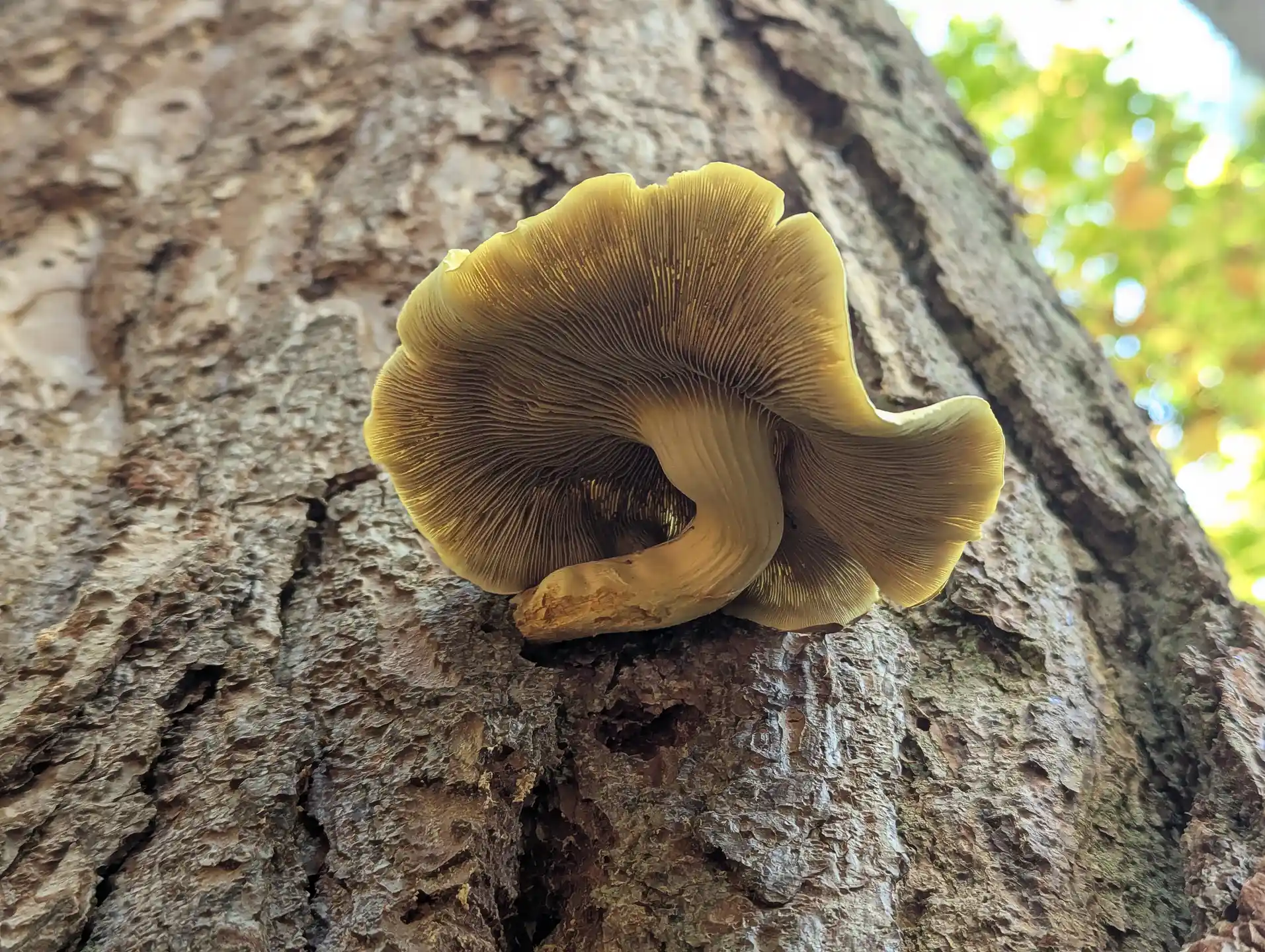
Underside view of an unknown oyster type fungus showing straw-yellow decurrent gills, which appear dark due to shadowing. The fungus is attached to the tree bark by a thick, sharply curved stem.
Unidentified fungus – Thetford Forest
26th October 2026
Side view of the unknown oyster type fungus showing showing it's wavy cap.
Unidentified fungus – Thetford Forest
26th October 2026

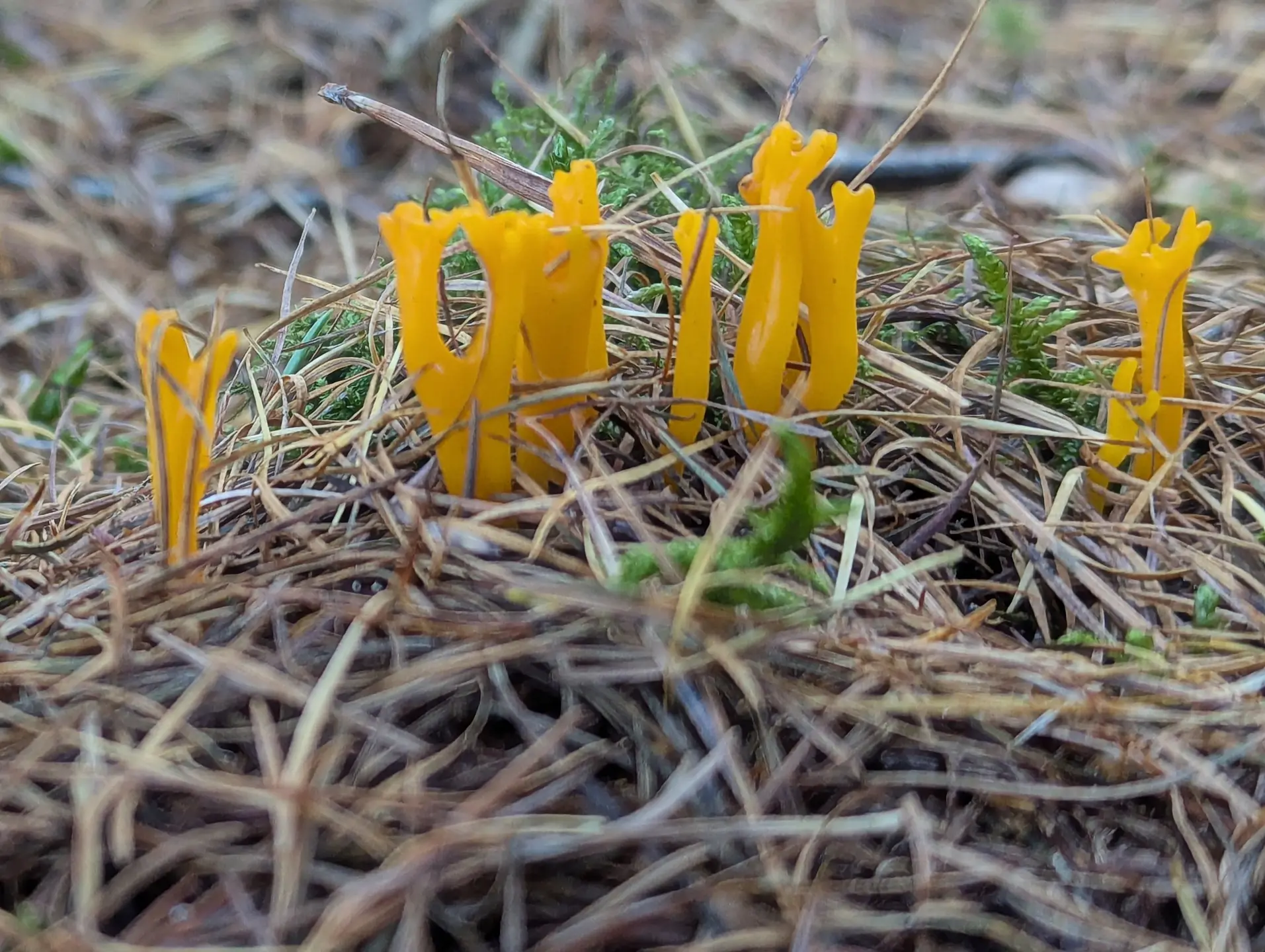
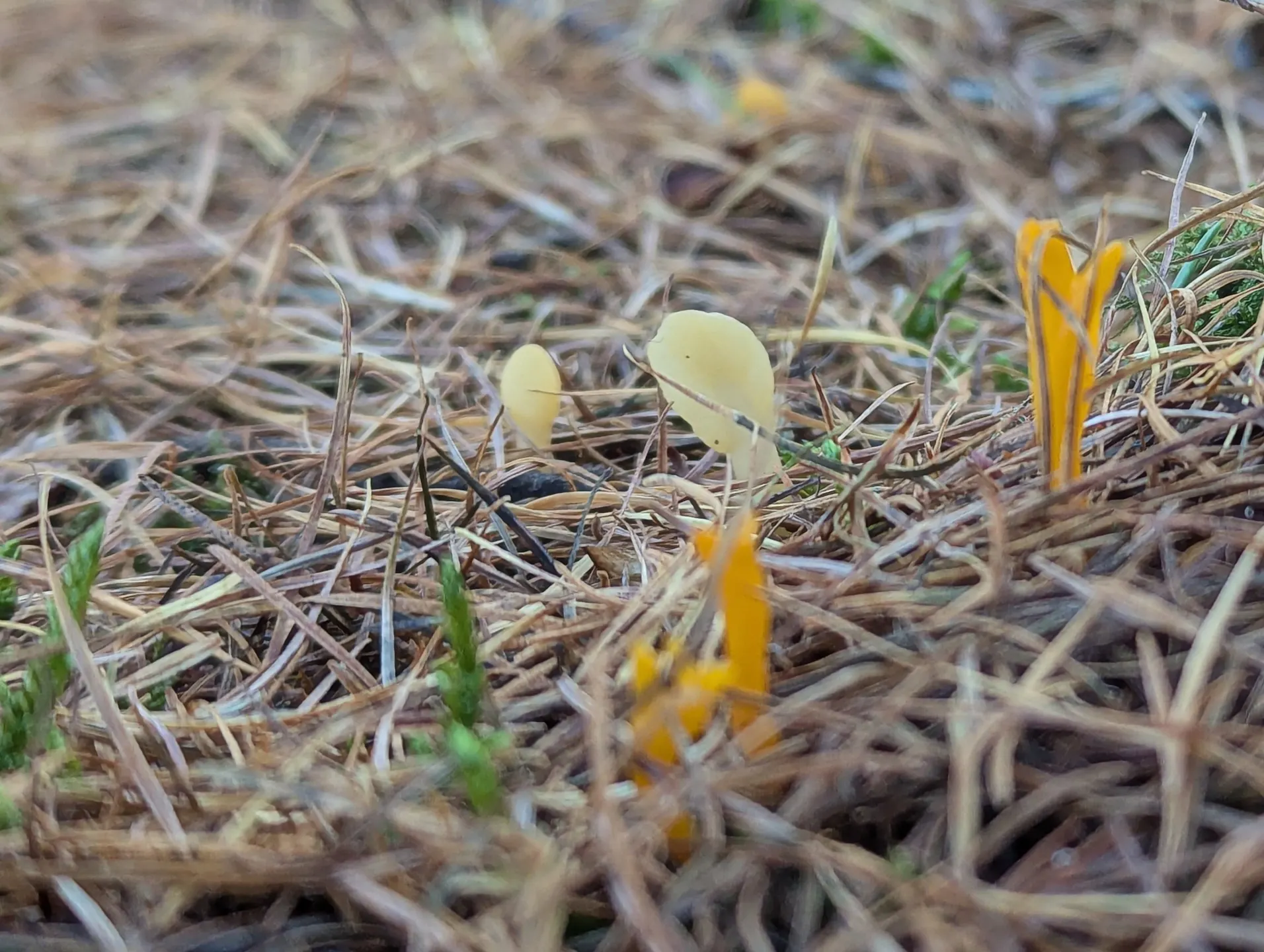
When we visit this part of Thetford Forest at this time of the year we also head to the spot where we hope to see Spathularia flavida again. And we did! As well as some Calocera viscosa (probably).
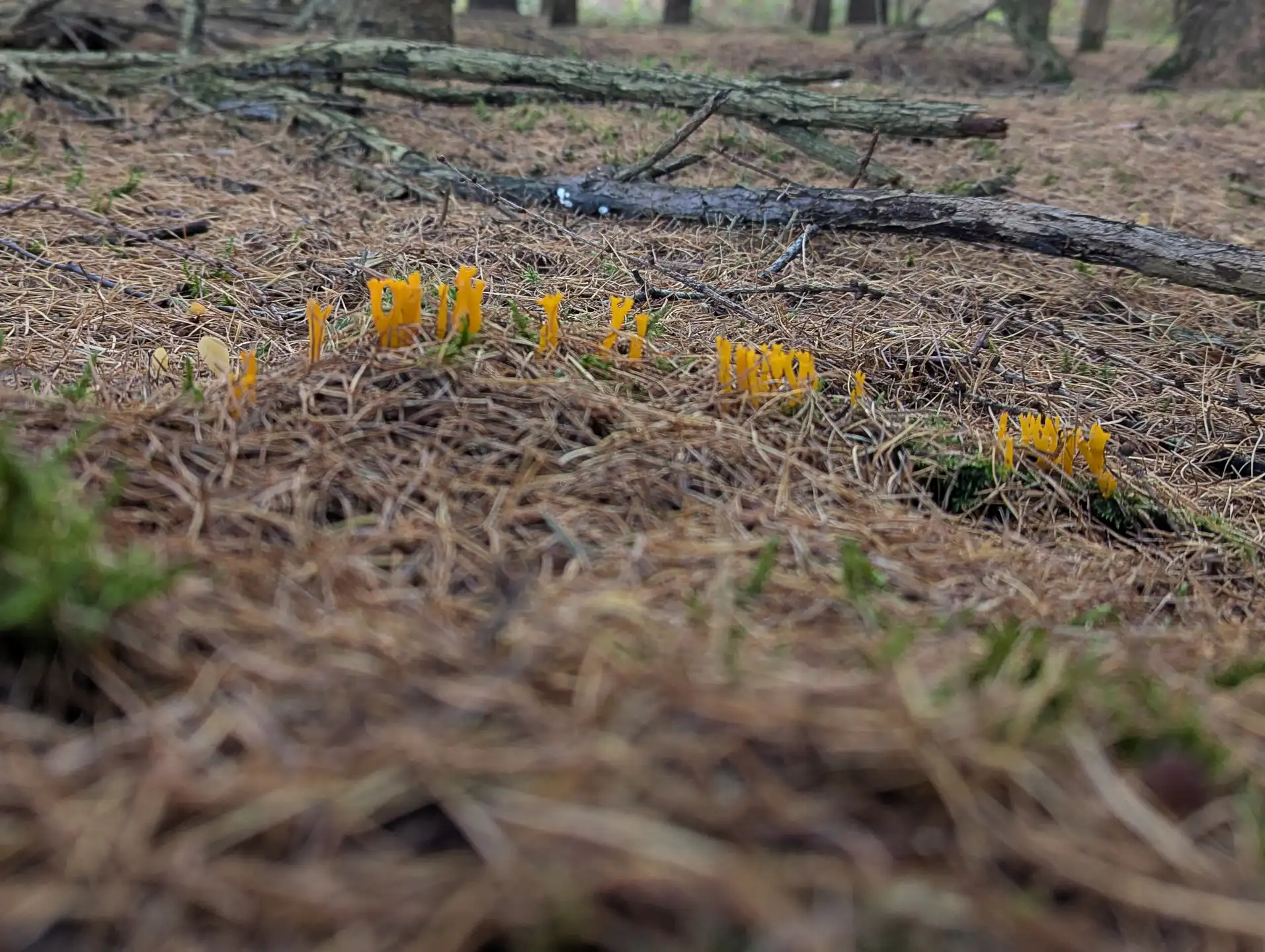
Ground level view of a line of orange-yellow Calocera viscosa emerging from a dense carpet of pine needles.
Calocera viscosa – Thetford Forest
26th October 2026
Close-up view of orange-yellow Calocera viscosa emerging from a dense carpet of pine needles.
Calocera viscosa – Thetford Forest
26th October 2026
Close-up view of pale-yellow Spathularia flavida emerging from a dense carpet of pine needles, adjacent orange-yellow Calocera viscosa.
Spathularia flavida – Thetford Forest
26th October 2026

Back in Brandon Country Park an upended, fissured weathered root crown.
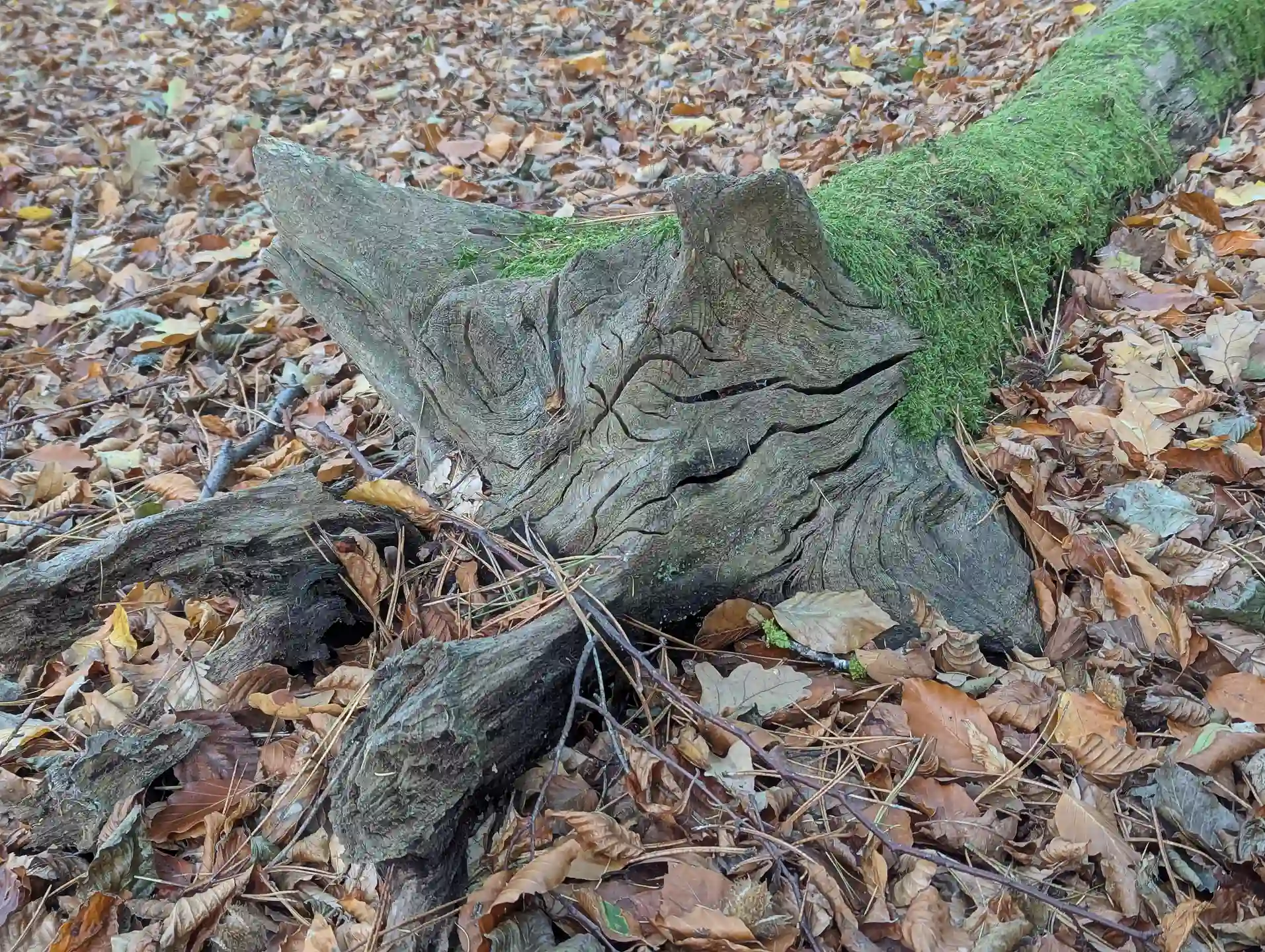
An upended root crown and trunk surrounded by golden beech leaves. The trunk section is covered in moss, contrasting with the grey weathered and fissured root crown.
Upended root crown – Brandon Country Park
26th October 2026

[1] Lactarius necator at Danish Fungal Atlas – https://svampe.databasen.org/taxon/44101