Fungi & a Slime Mould – Lower Wood (Norfolk Wildlife Trust), Ashwellthorpe – 5th October 2025
In the first week of October 2025 we went to Lower Wood at Ashwellthorpe.
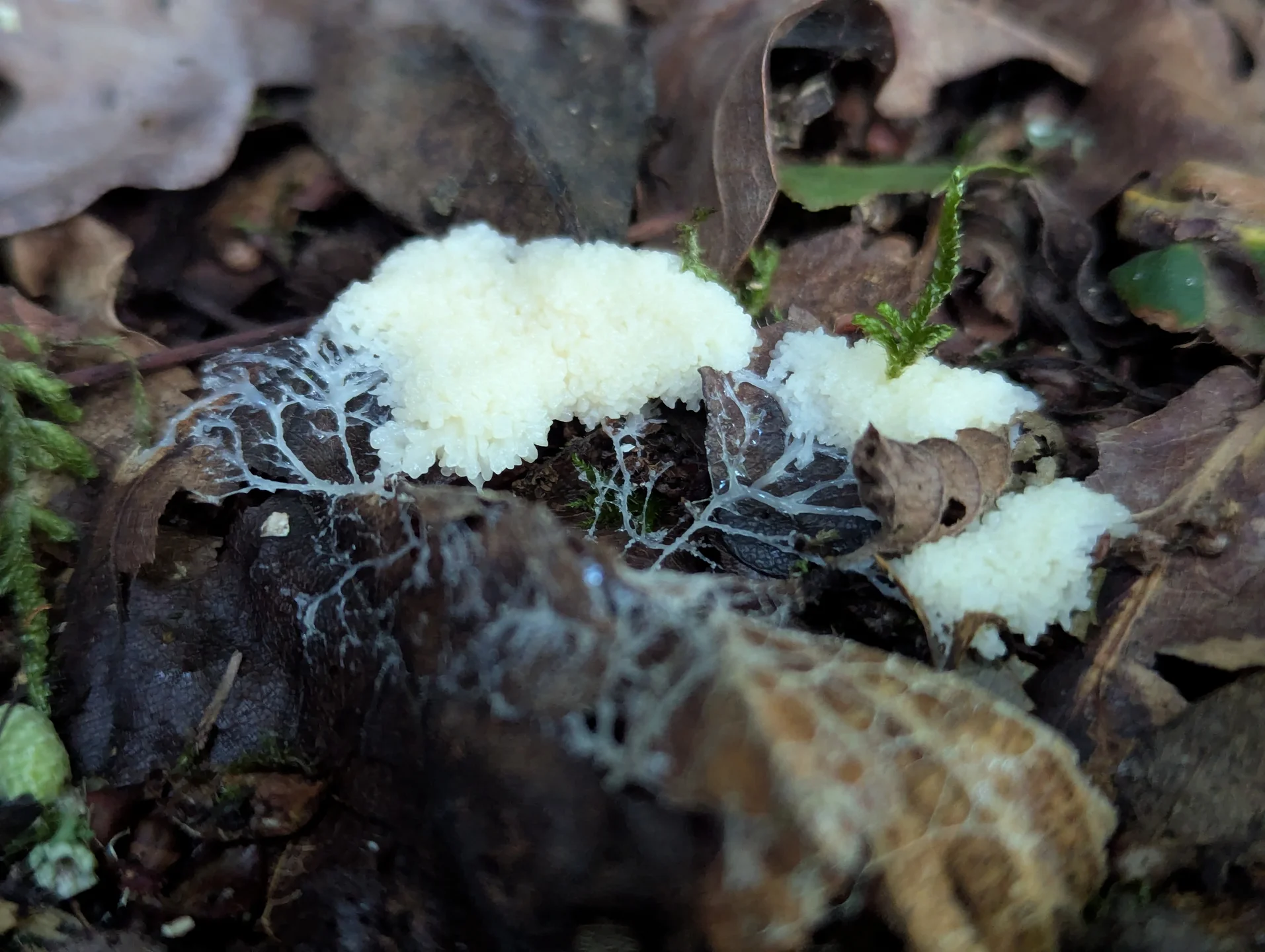
Finding slime moulds is as much about serendipity as it is about knowing where to look. Over time, the daughter & I have developed a feel for the specific level of wood decay that seems optimal for slime moulds – at Strumpshaw Fen, there are a number of cut or fallen trunks that we know where we will find these curious organisms on. But as these hosts (sadly) eventually crumble away, newer, more intact wood reaches that optimal level of decomposition to take their place.
The serendipity is that chance moment when – without even looking – you find a slime mould right at your feet, partially hidden within the leaf litter!
So it was when we spotted these fungi fruiting bodies on a mossy fallen trunk – they have an Armillaria cepistipes feel about them.
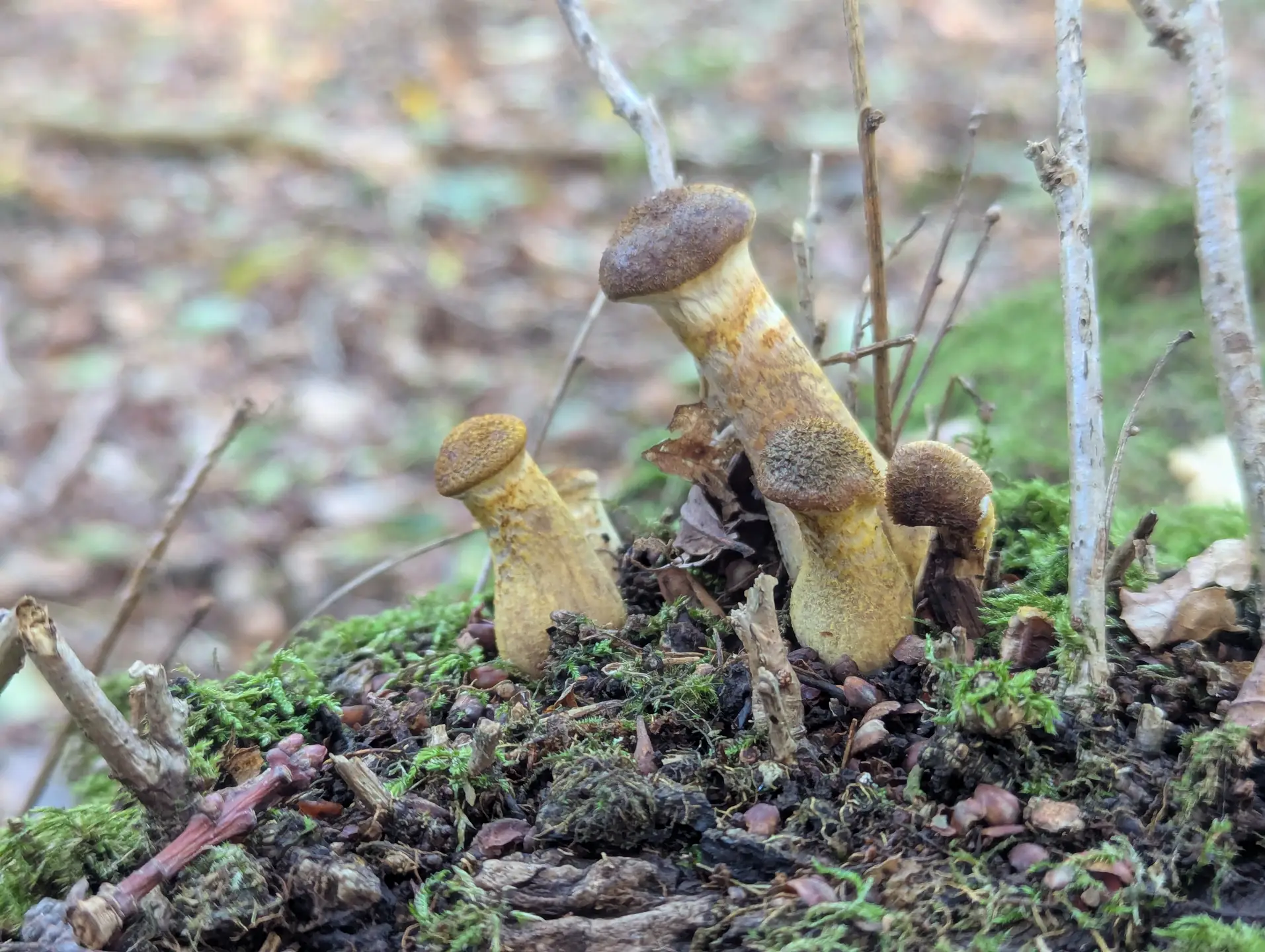
Ashwellthorpe – 5th October 2025
https://www.mykoweb.eu/fungi/armillaria-cepistipes
At our feet were consolidating white plasmodia still with networks of plasmodial veins.
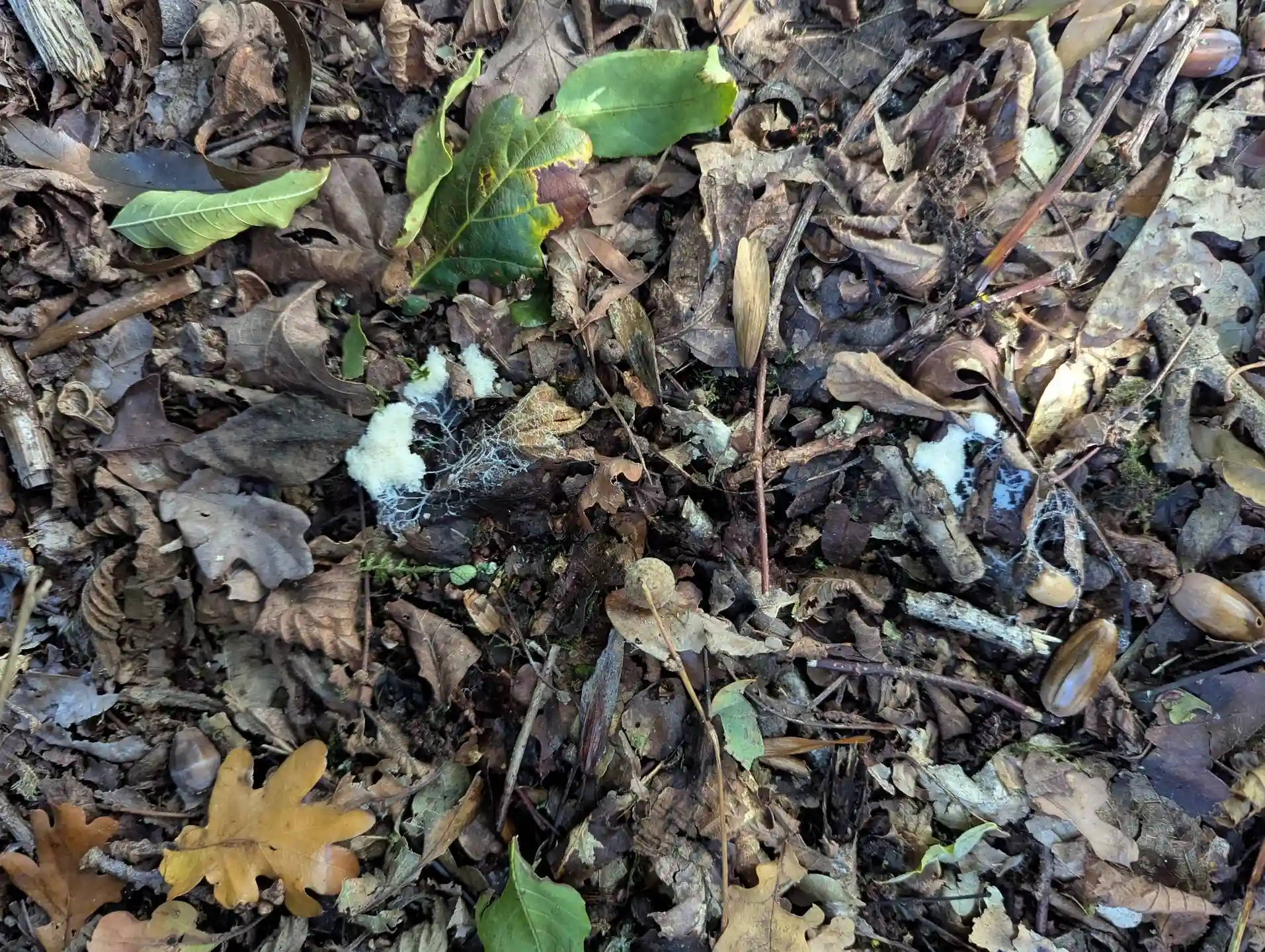
Ashwellthorpe – 5th October 2025
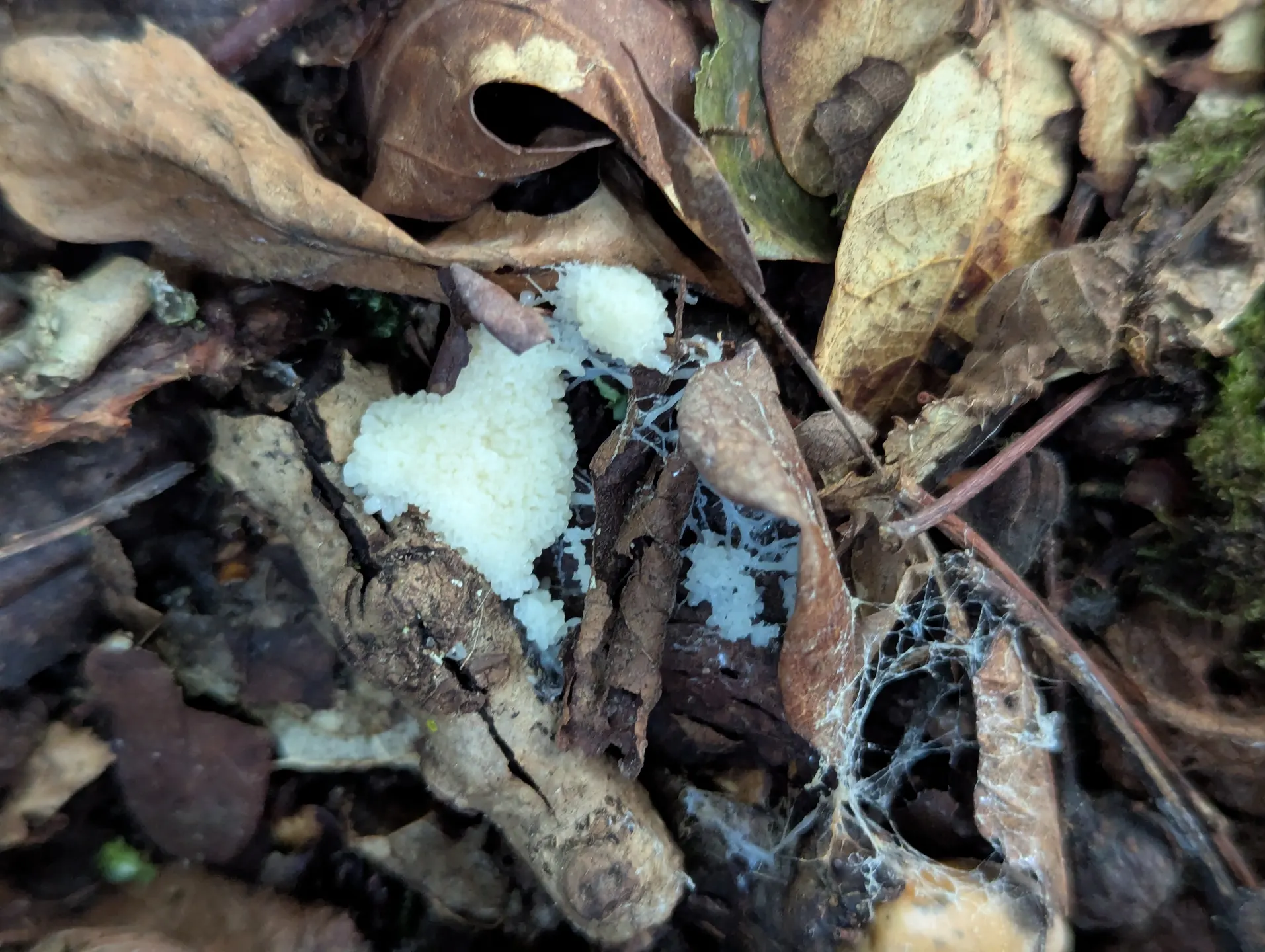
Ashwellthorpe – 5th October 2025
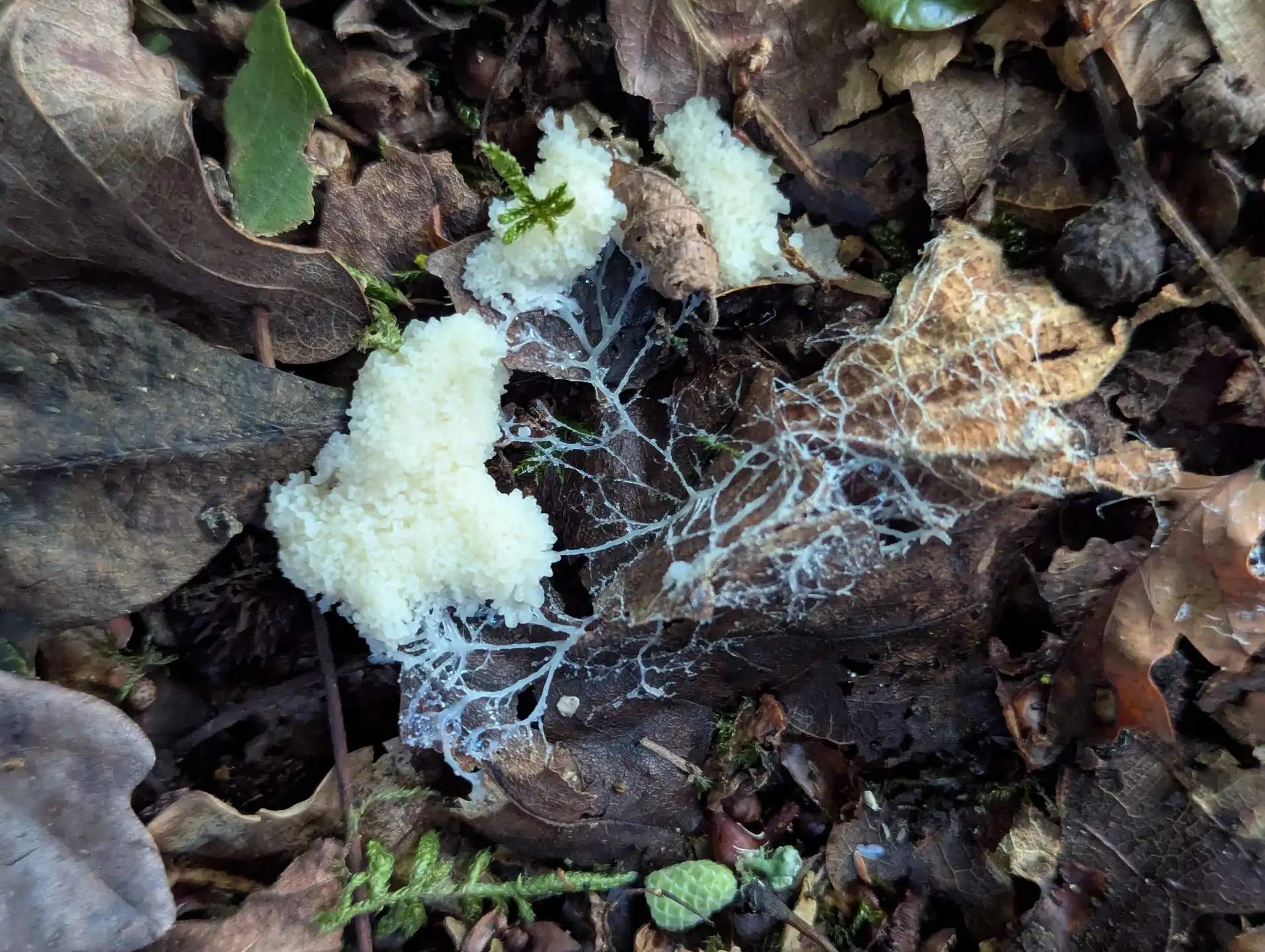
Ashwellthorpe – 5th October 2025
Ashwellthorpe – 5th October 2025
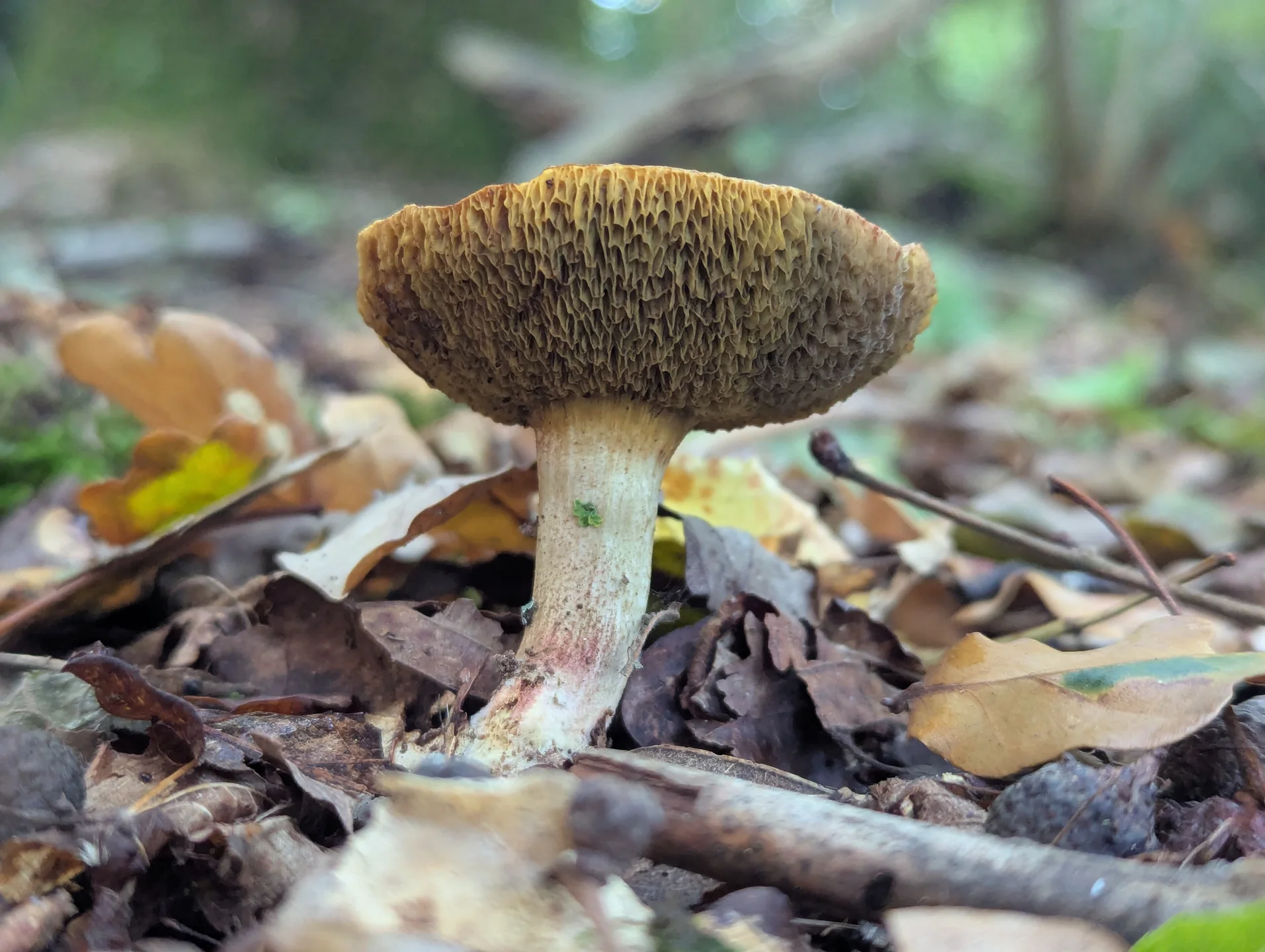
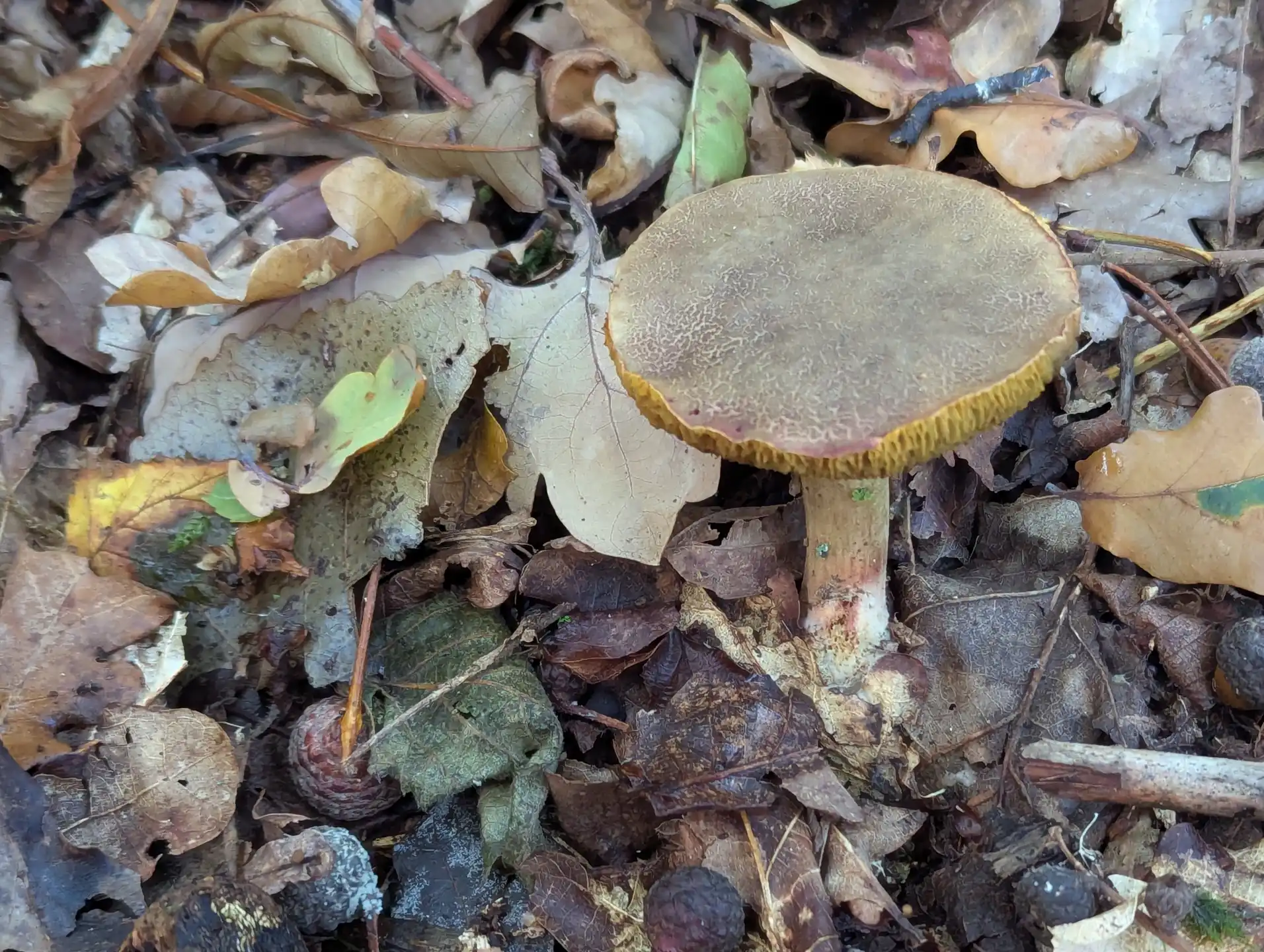
The MycoKey ID tool overwhelmingly suggests that the fruiting body below is Xerocomellus cisalpinus – the bluefoot bolete. The pore structure is wonderfully compelling!
Ashwellthorpe – 5th October 2025
Ashwellthorpe – 5th October 2025
https://boletales.com/genera/xerocomus/x-cisalpinus/
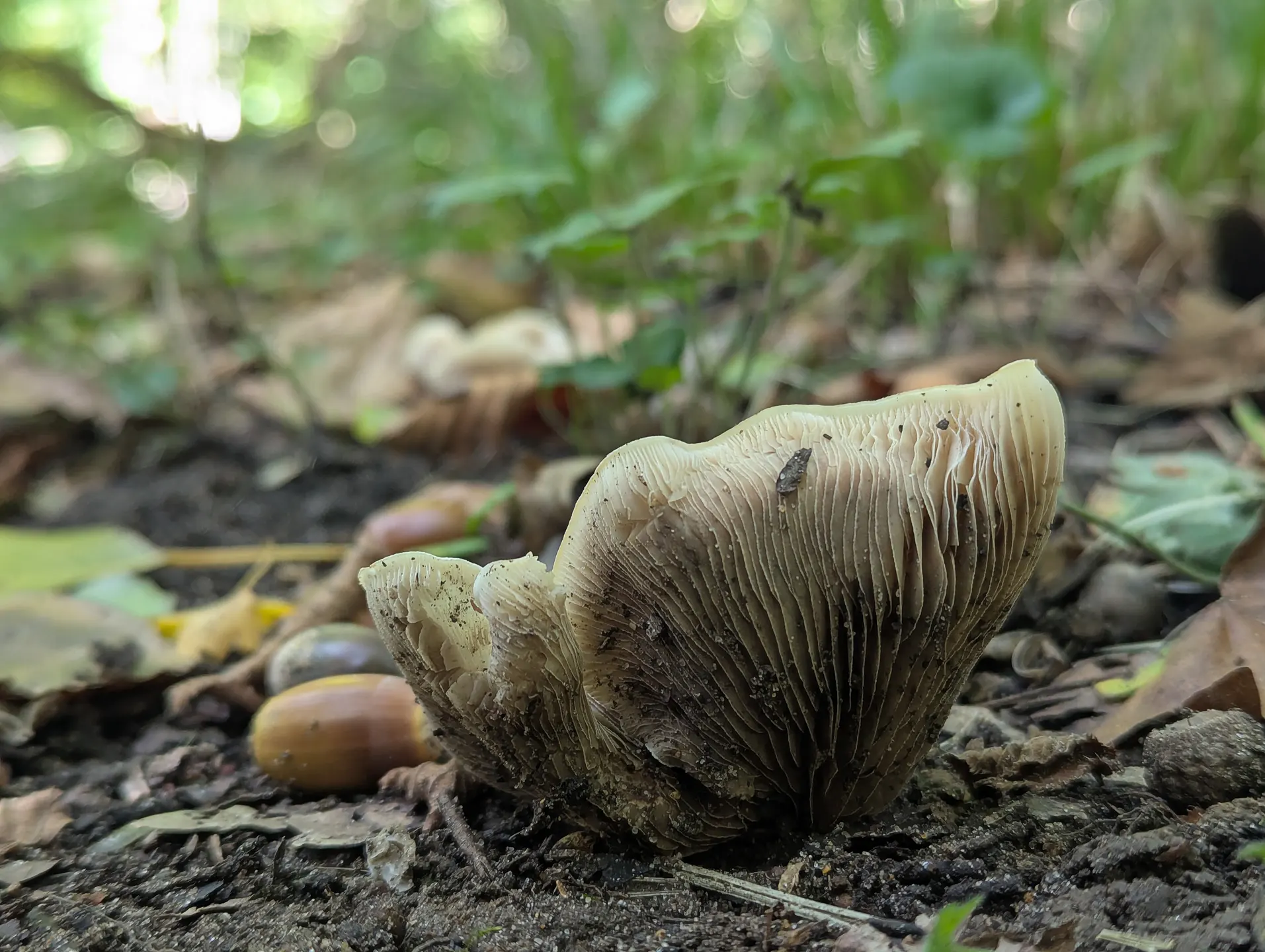
And more compelling fungal structure with this convoluted fruiting body that I haven’t been able to identify.
Ashwellthorpe – 5th October 2025
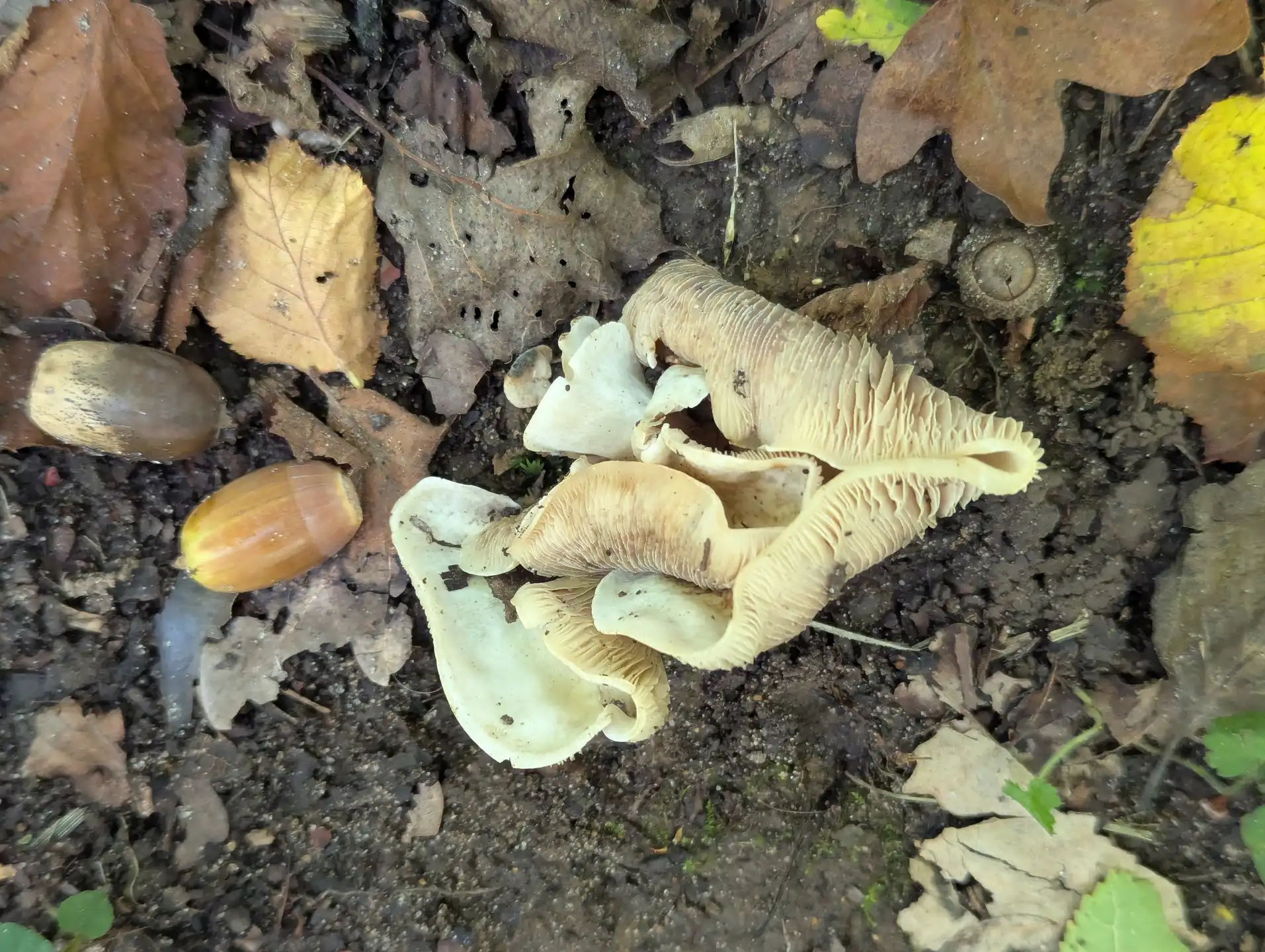
Ashwellthorpe – 5th October 2025
It’s endlessly fascinating to me that the morphology of young fungi appear utterly different to their more mature forms. These vibrant purple ovoid caps…
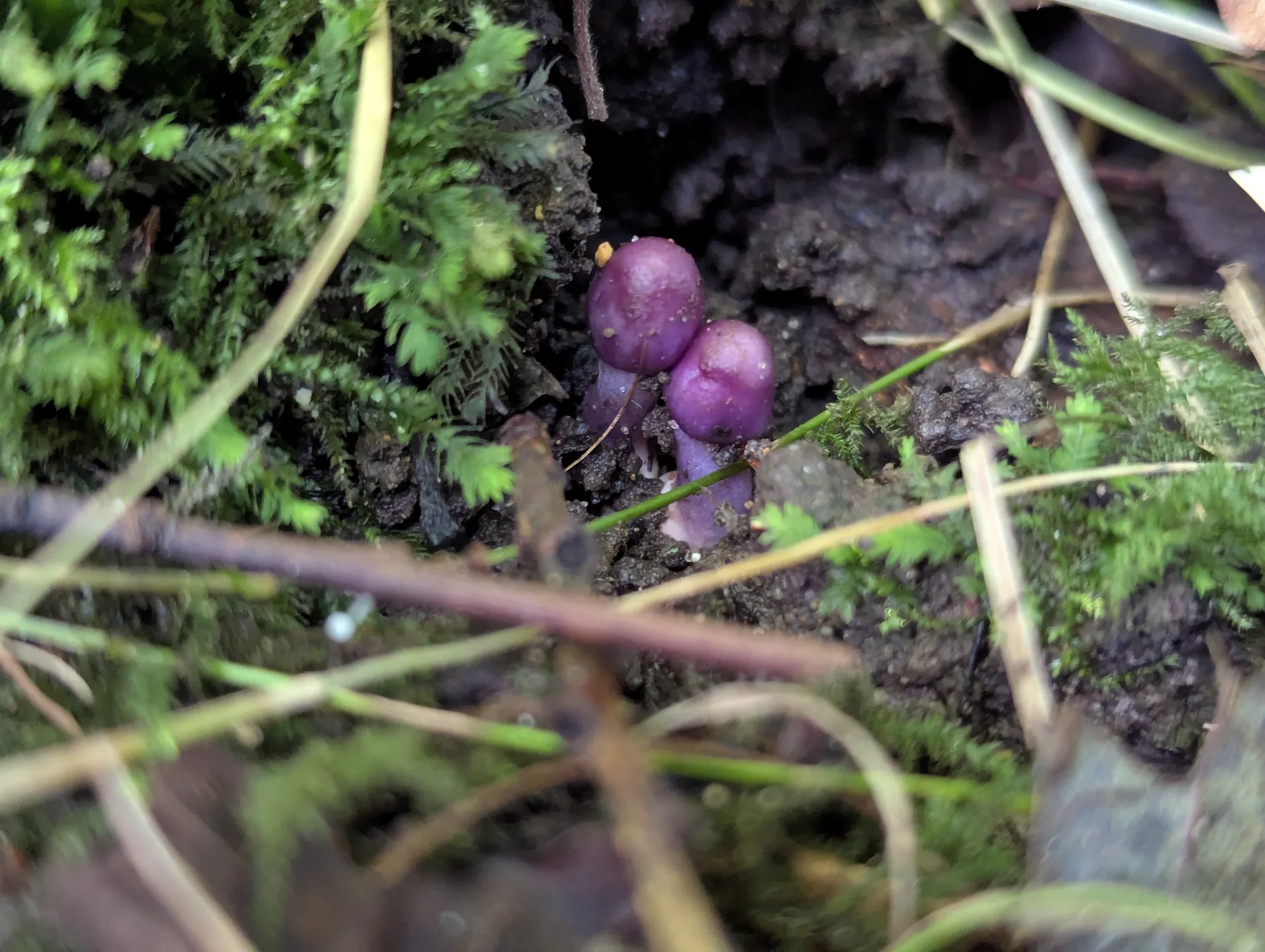
Ashwellthorpe – 5th October 2025
…mature to a paler lilac form – a wider cap with a distinct umbo at the centre.
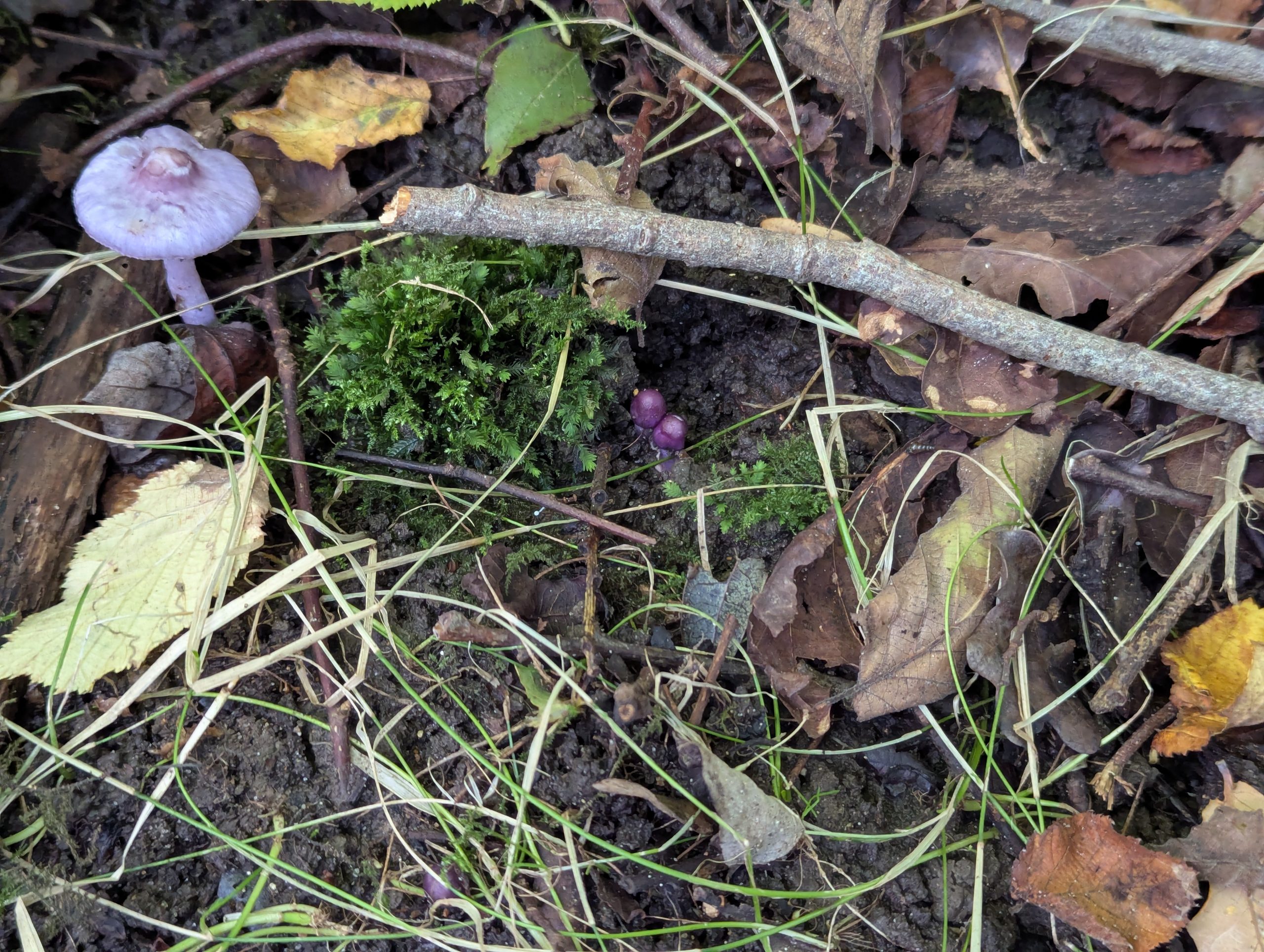
Ashwellthorpe – 5th October 2025
Running my photos above through MycoKey’s ID tool and cross referencing with First Nature – these are likely the deadly poisonous Inocybe geophylla var. lilacina – the lilac fibrecap.
Lower Wood at Ashwellthorpe, Norfolk is a Site of Special Scientific Interest (SSSI) managed by the Norfolk Wildlife Trust.
Recorded in the Doomsday Book, Lower Wood has existed as a woodland since the Ice Age and served as a local source of timber for hundreds of years until the 1970s. In the spring the woodland is carpeted by wildflowers