Badhamia utricularis plasmodium to sporangia at Strumpshaw Fen – Winter 2025/26

The downed trunk on which we have seen a number of wonderful slime mould displays – Badhamia utricularis sporangia and likely plasmodia, and Heterotrichia obvelata – continues to produce super slime mould activity.

21st December 2025

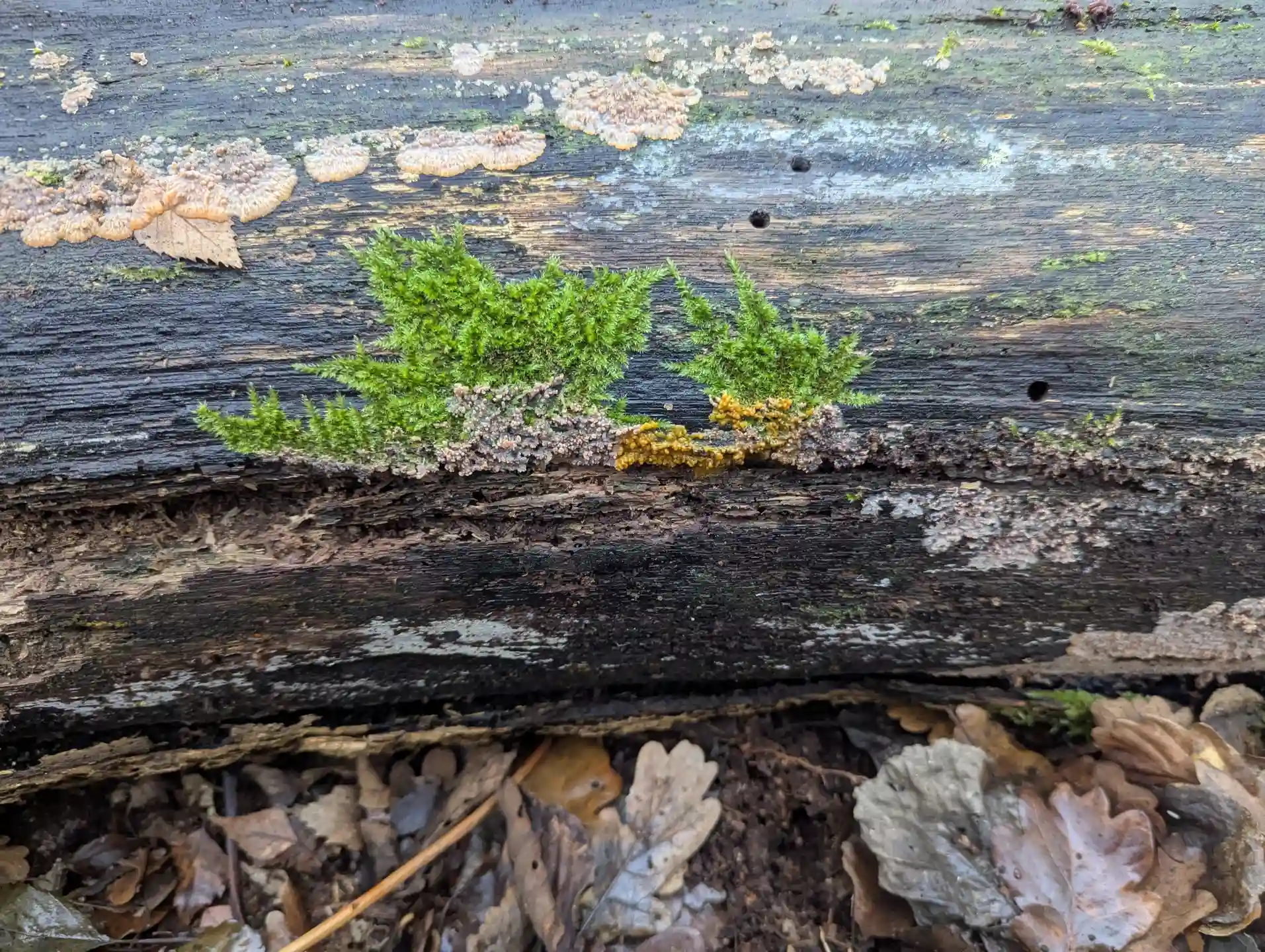
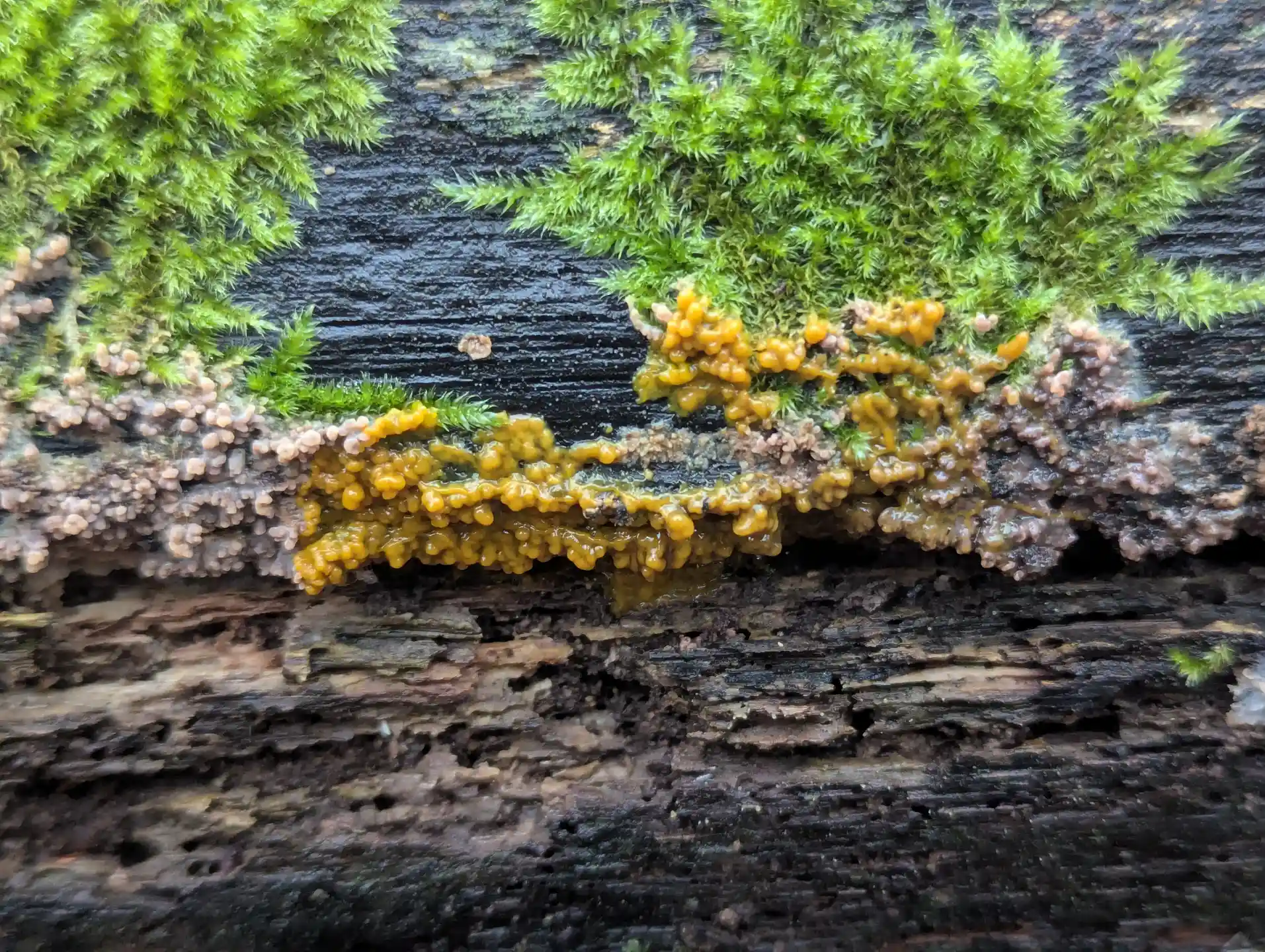
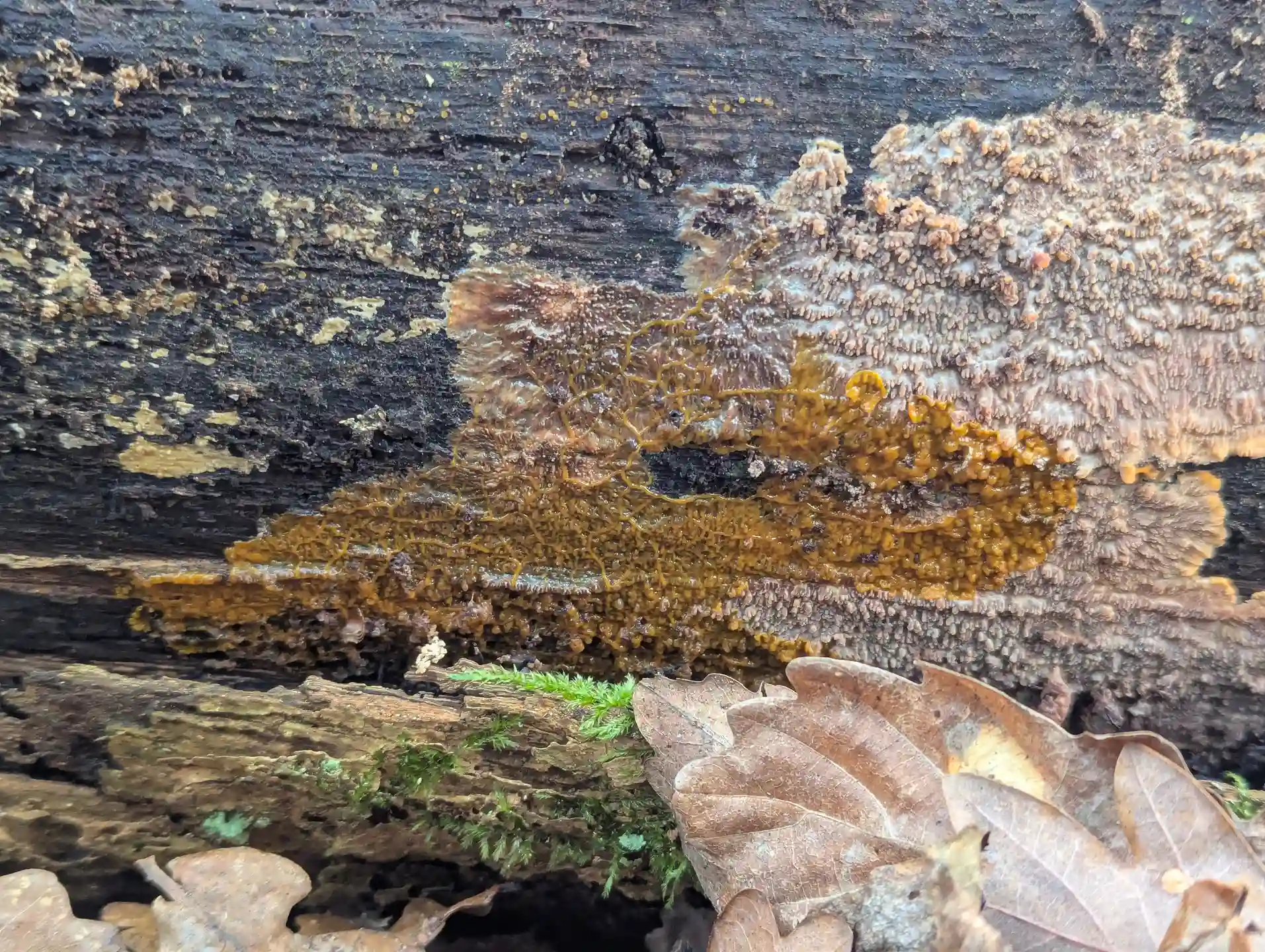
Every visit to the reserve we check out this trunk – the previous day there had been no signs of slime moulds, but today there was a curry-yellow plasmodium growing over, and presumedly consuming some Phlebia radiata [1] – this was likely a Badhamia utricularis plasmodium.
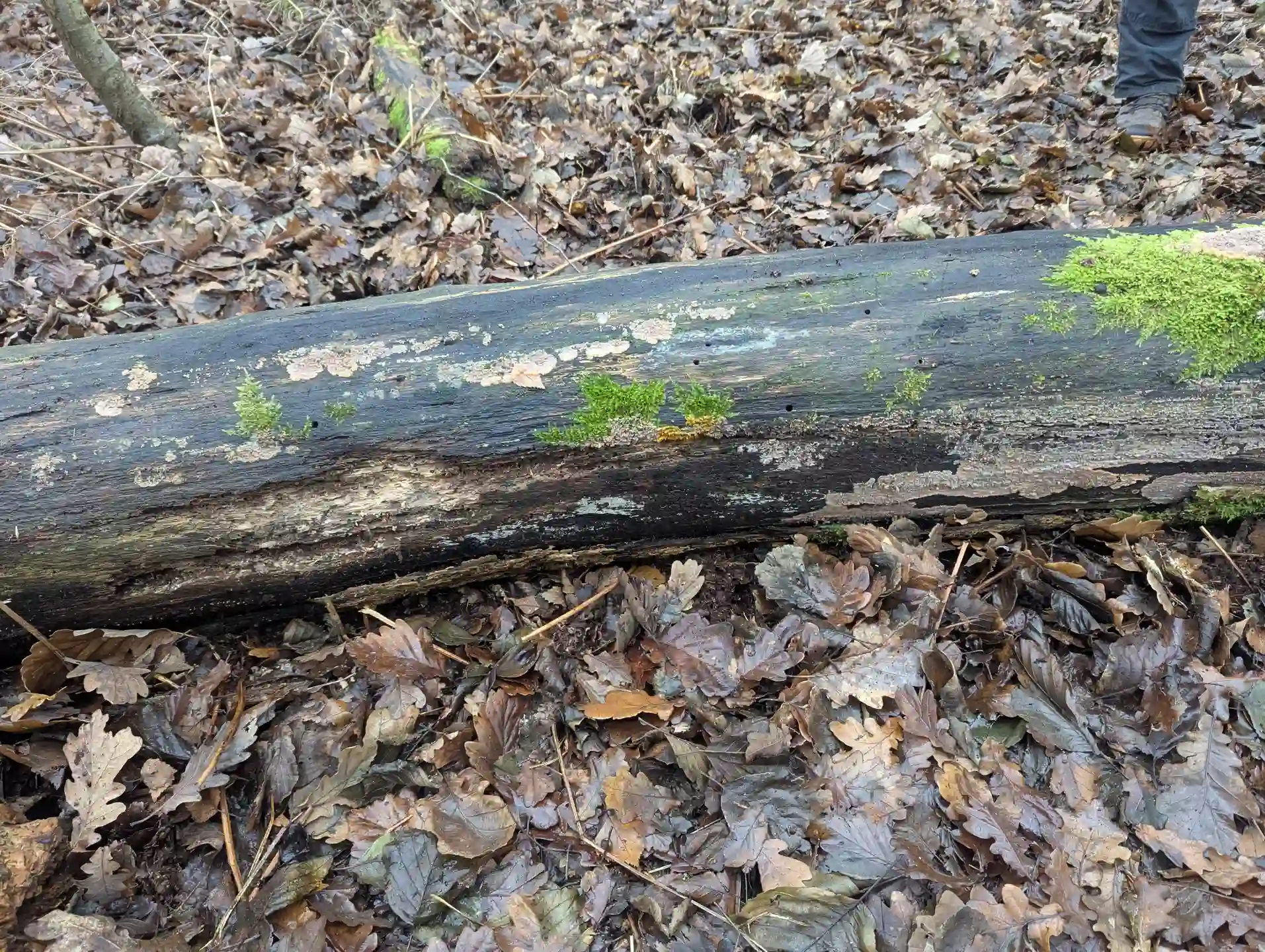
Downed trunk with moss, Phlebia radiata and Badhamia utricularis plasmodium.
Badhamia utricularis plasmodium – near The Outpost
Strumpshaw Fen – 21st December 2025
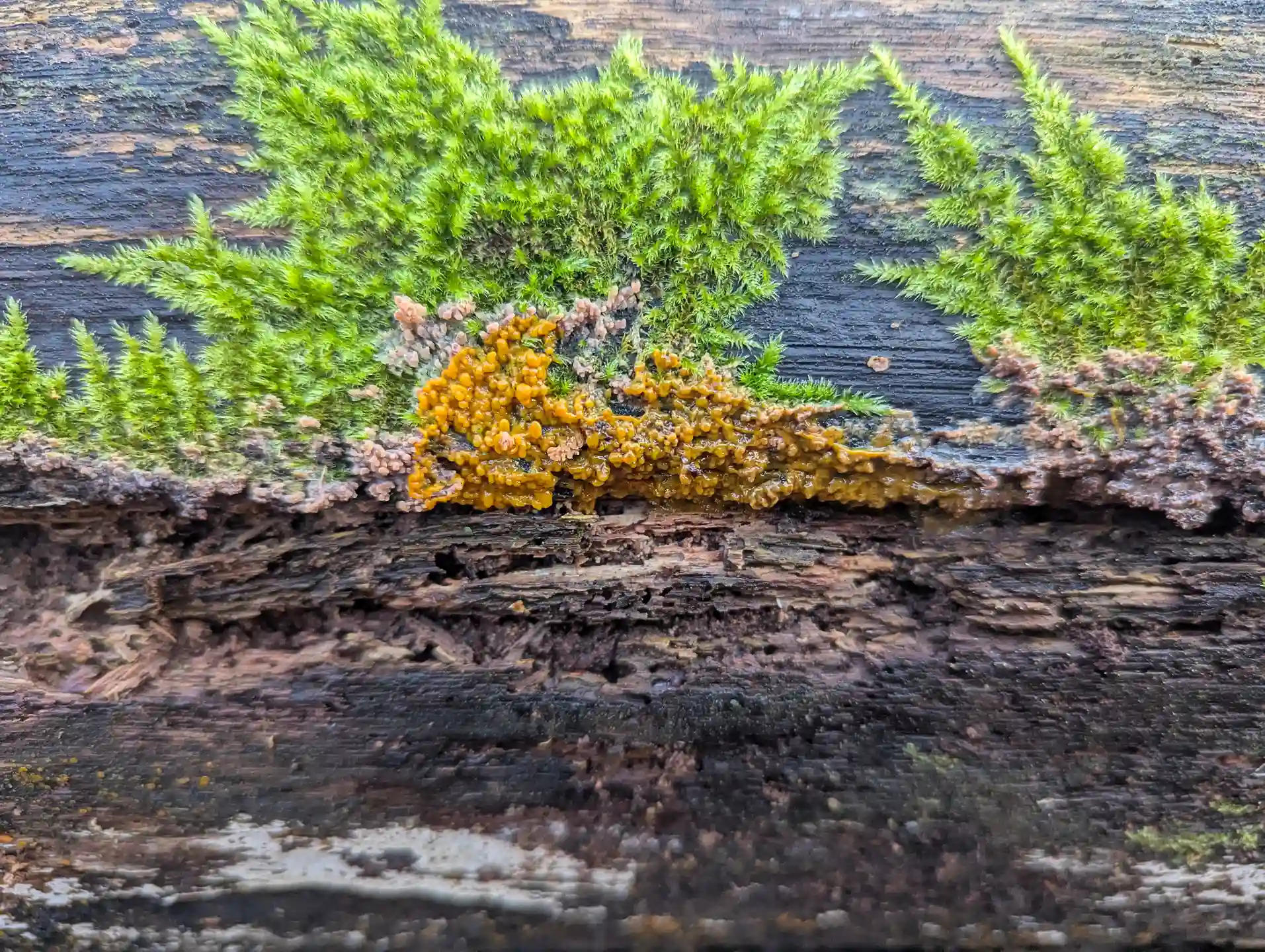
Badhamia utricularis plasmodium spreading over Phlebia radiata. Photo 1.
Badhamia utricularis plasmodium on Phlebia radiata – near The Outpost
Strumpshaw Fen – 21st December 2025

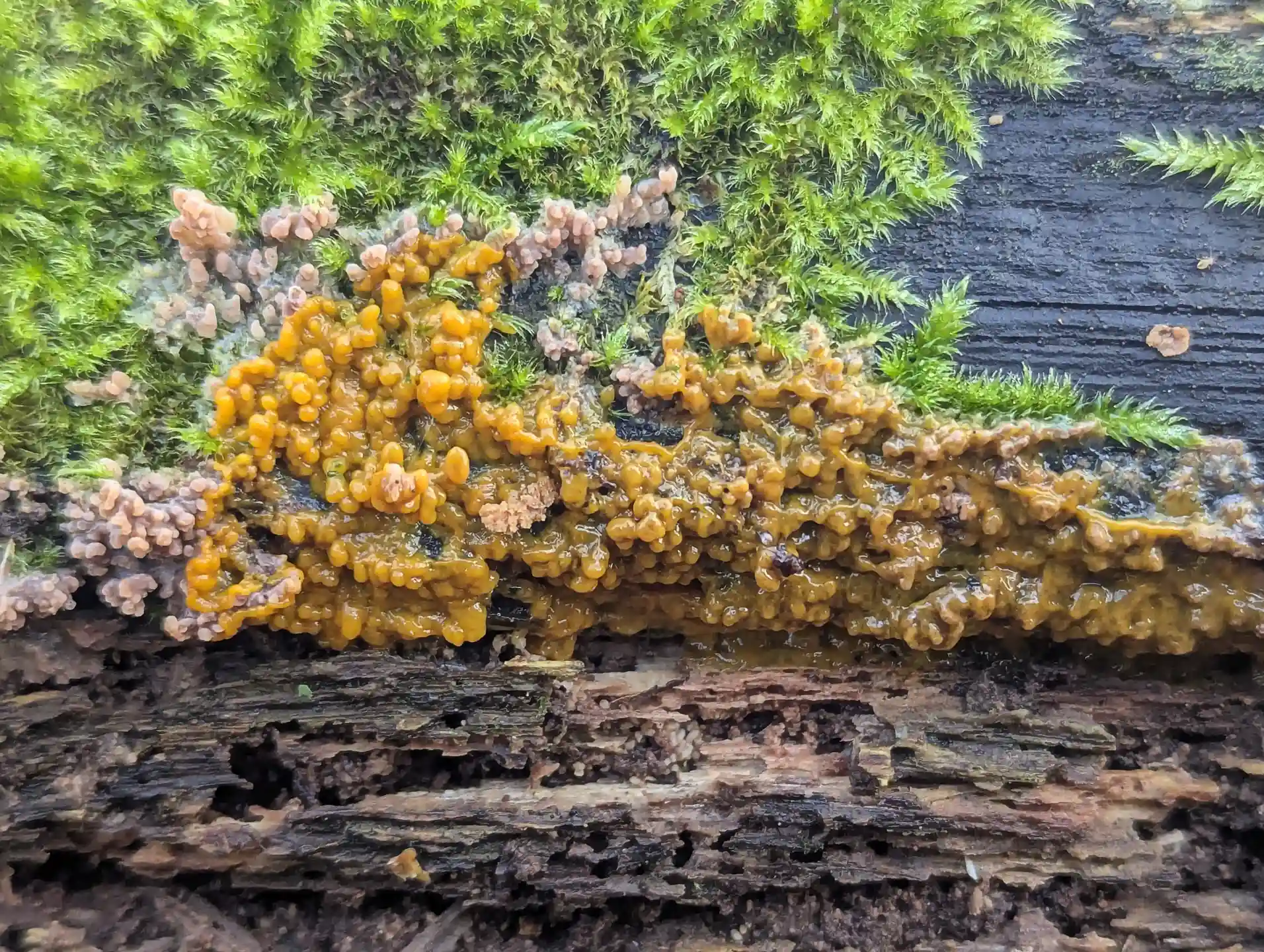
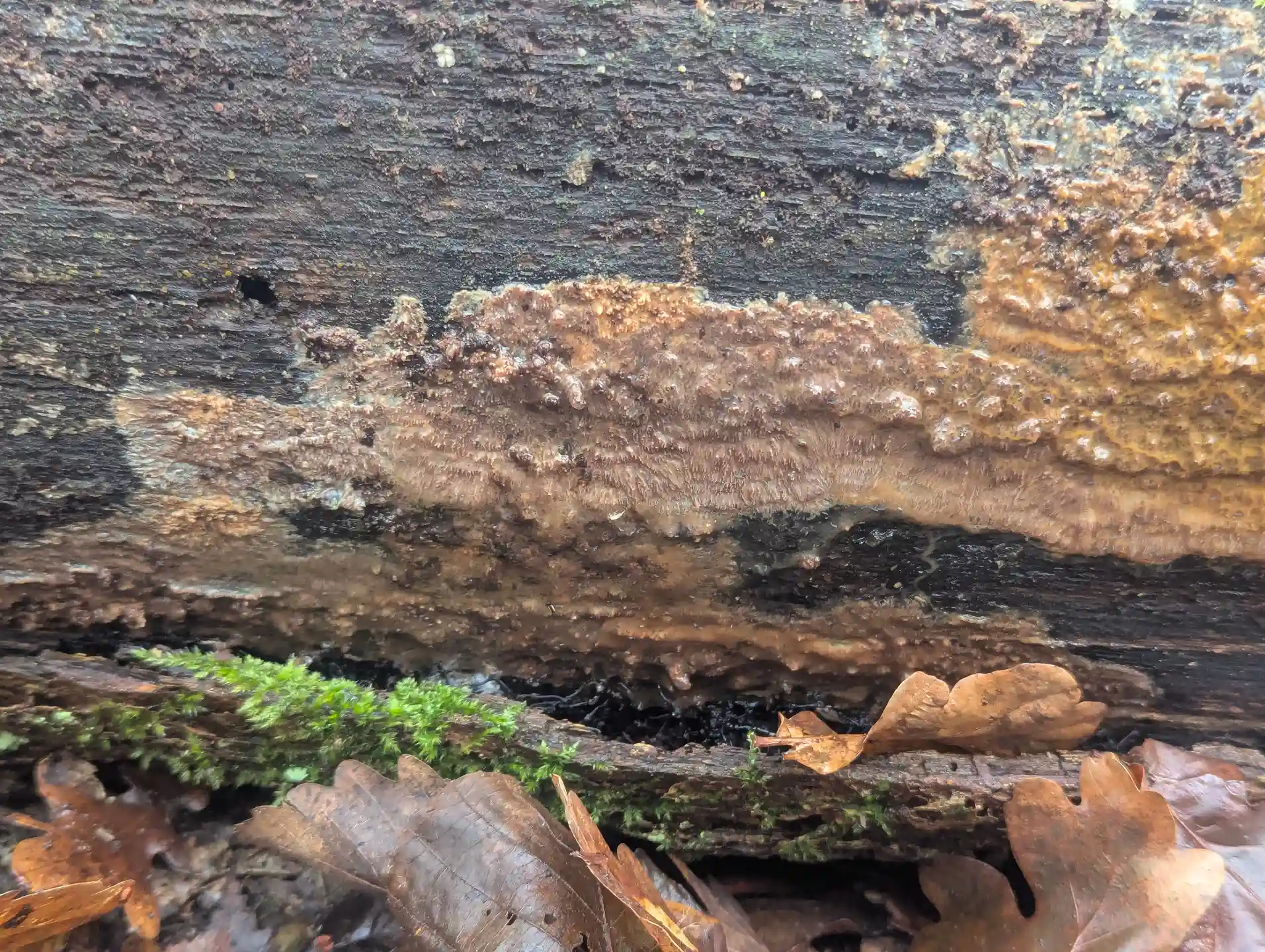
The plasmodium looks as if it’s sporulating, but this is due to it spreading over the highly textured, nodular morphology of the Phlebia radiate.

Close-up Badhamia utricularis plasmodium spreading over Phlebia radiata. Photo 1.
Badhamia utricularis plasmodium on Phlebia radiata – near The Outpost
Strumpshaw Fen – 21st December 2025

22nd December 2025

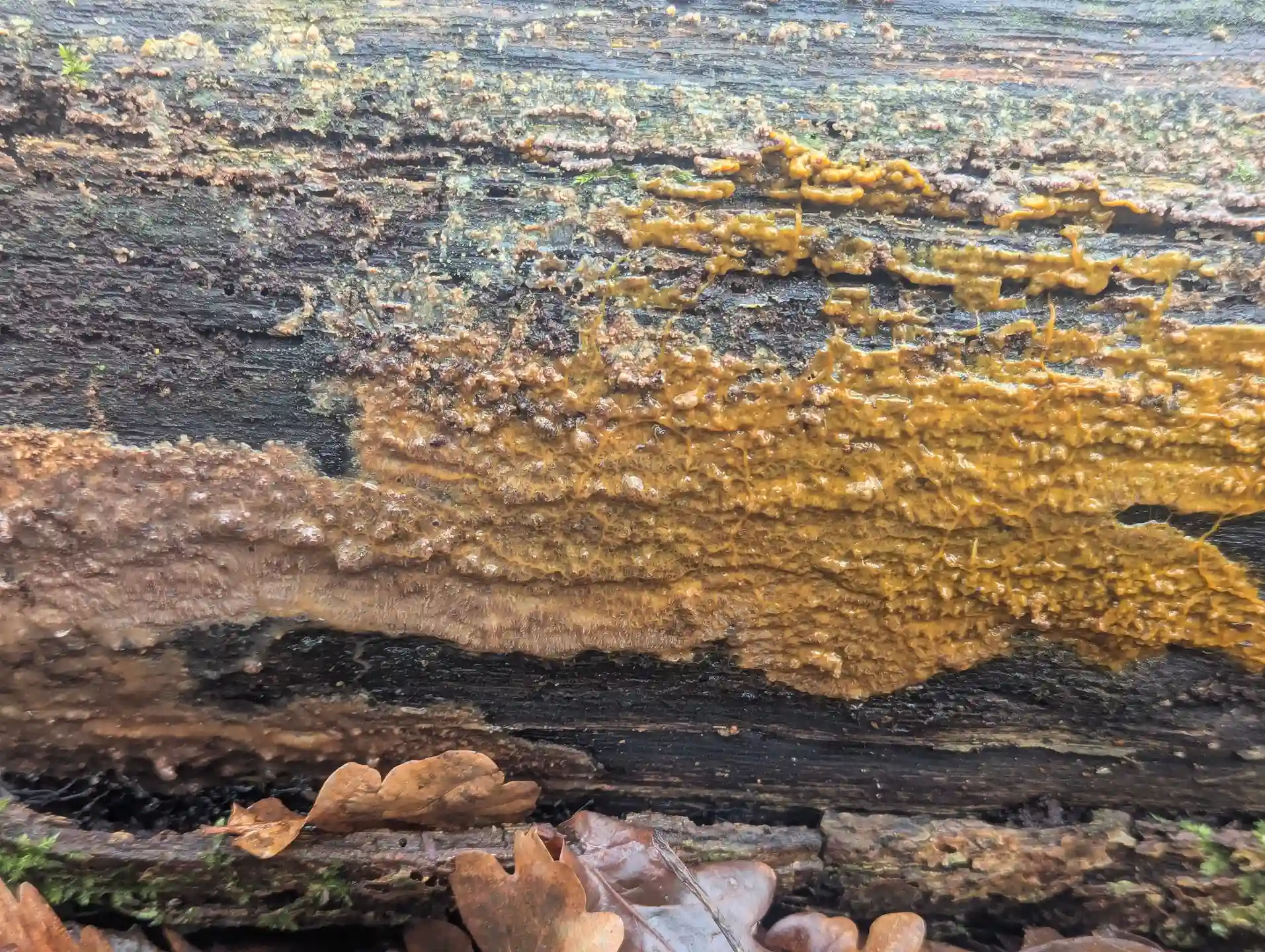
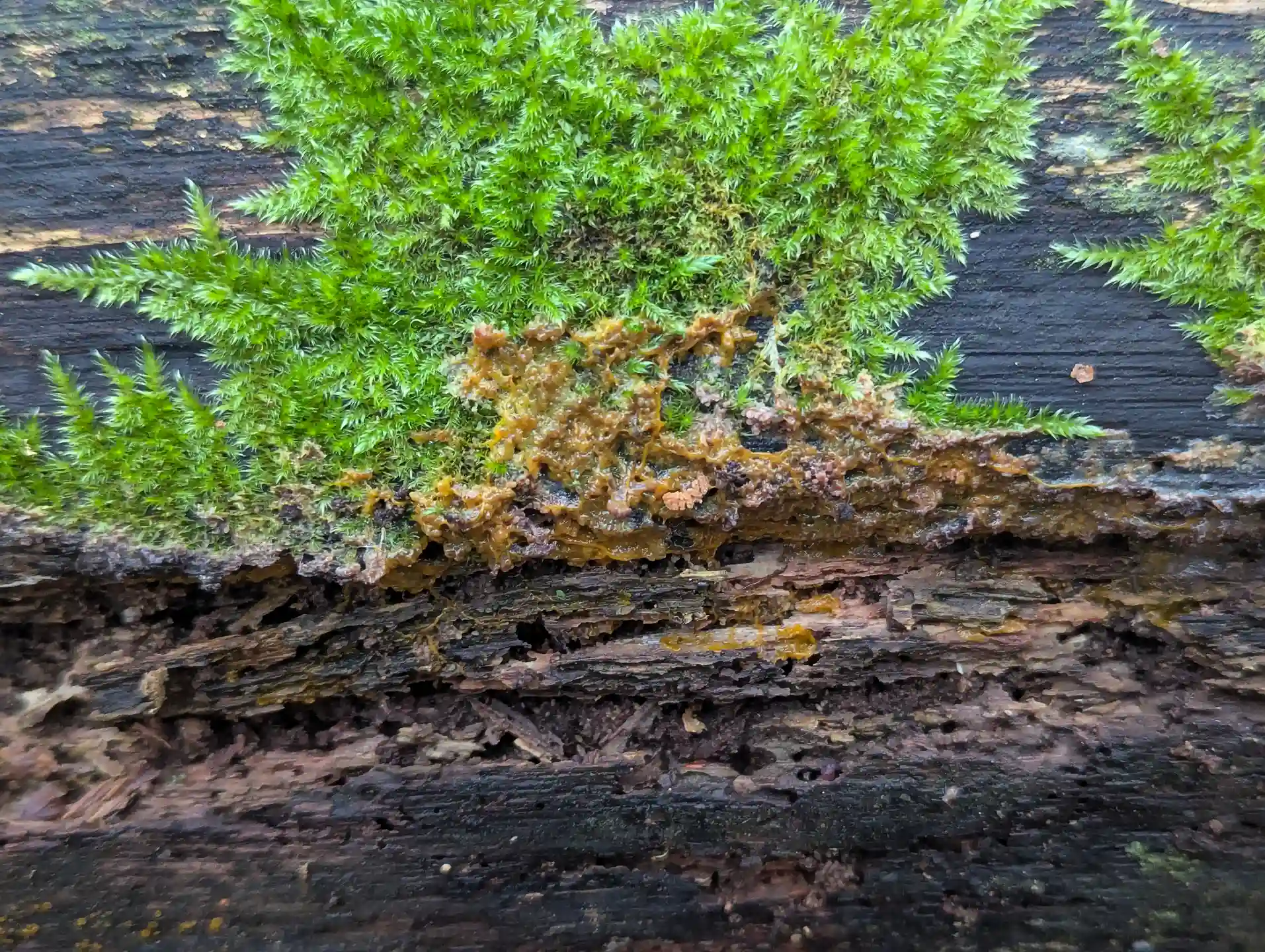
The next day the plasmodium had spread leftwards consuming more Phlebia.
Badhamia utricularis plasmodium spreading over Phlebia radiata. Photo 2.
Badhamia utricularis plasmodium on Phlebia radiata – near The Outpost
Strumpshaw Fen – 22nd December 2025
Close-up Badhamia utricularis plasmodium spreading over Phlebia radiata. Photo 2.
Badhamia utricularis plasmodium on Phlebia radiata – near The Outpost
Strumpshaw Fen – 22nd December 2025

23rd December 2025

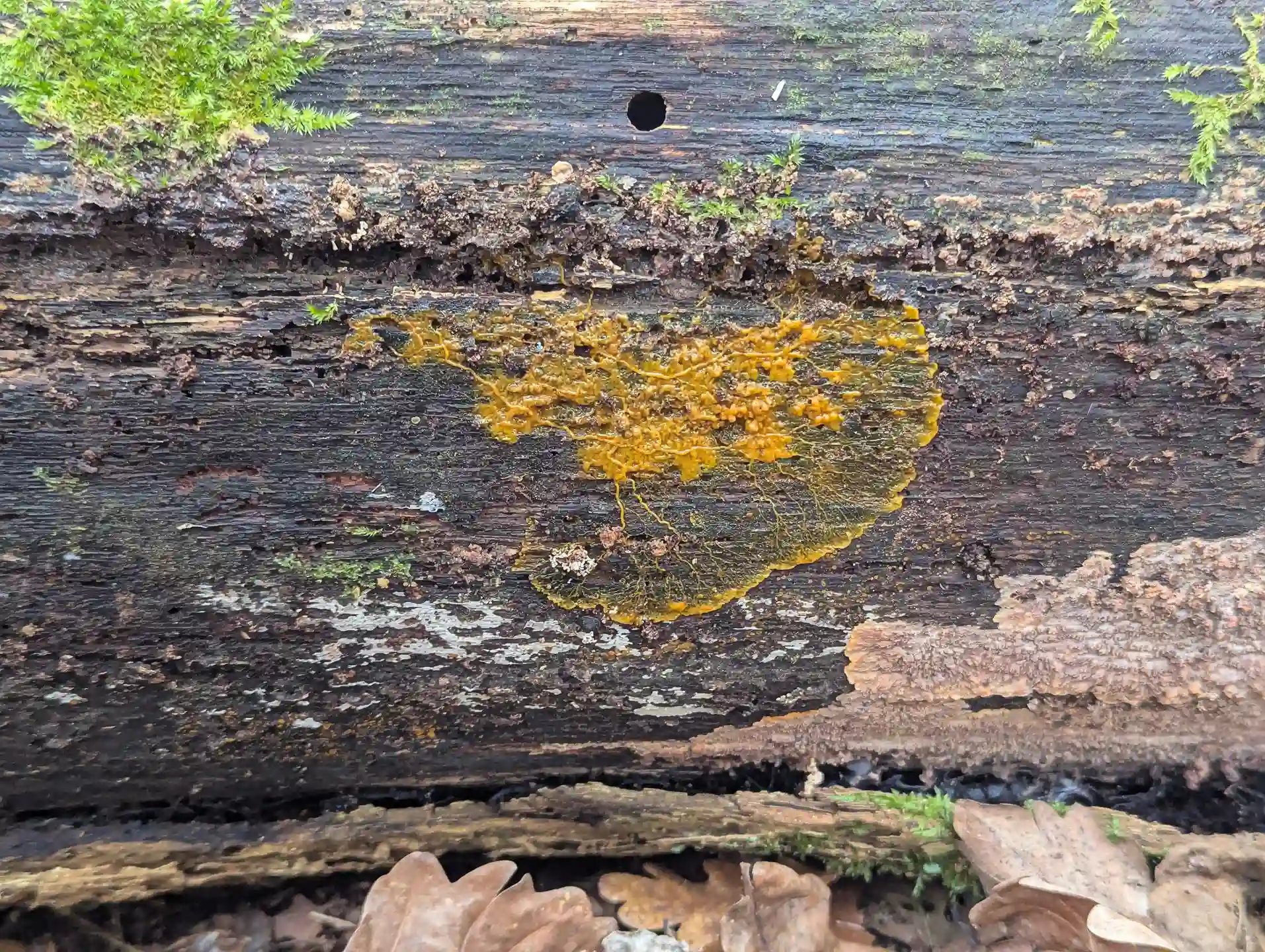
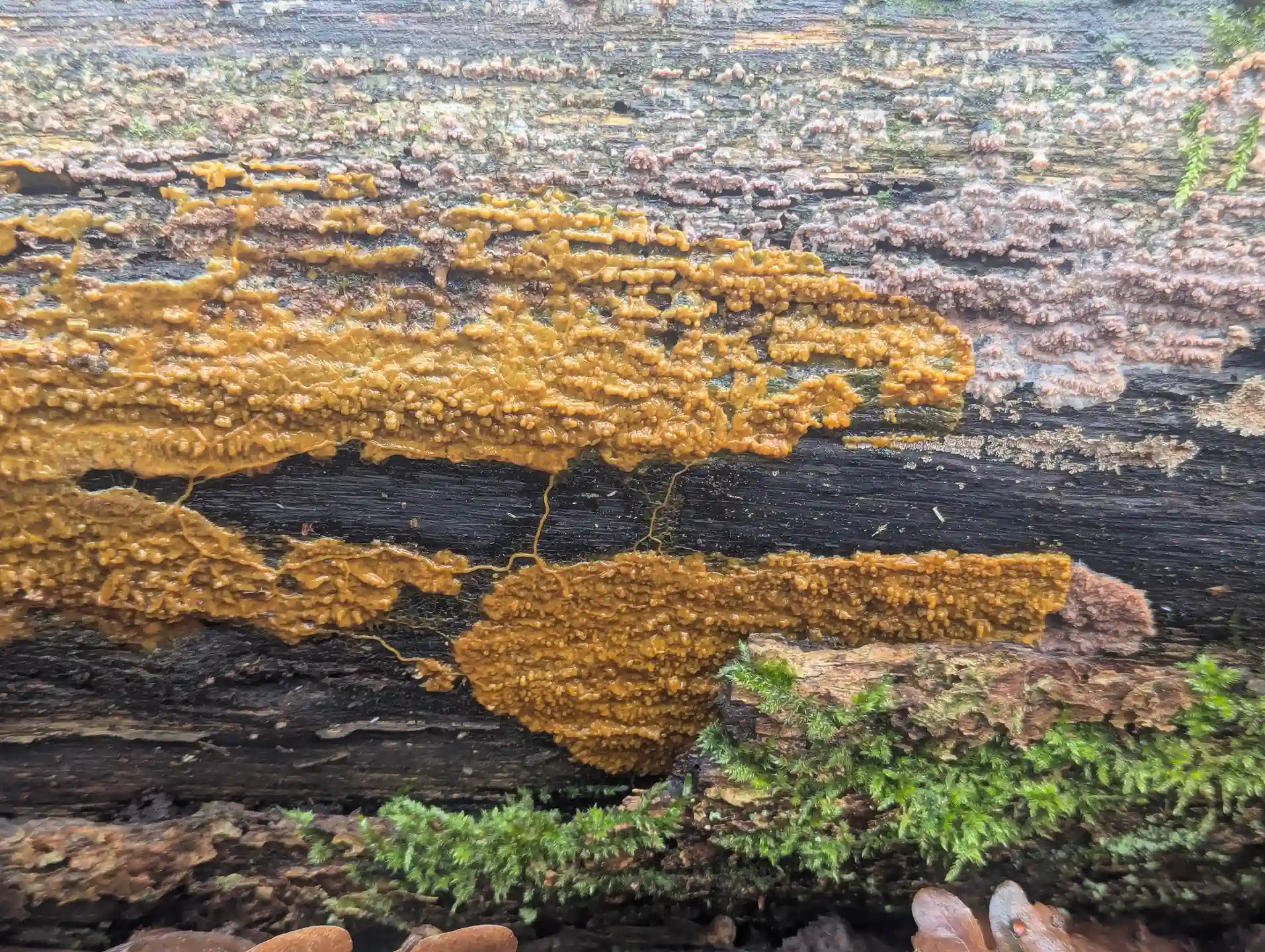
On the third day the plasmodium seemed somewhat diminished, almost as if it had taken what it could from Phlebia. But below it, on the bare wood, there was some plasmodial vein-like networking – the slime mould was searching for more food!
Badhamia utricularis plasmodium spreading over Phlebia radiata. Photo 3.
Badhamia utricularis plasmodium on Phlebia radiata – near The Outpost
Strumpshaw Fen – 23rd December 2025

28th December 2025

Five days later a phaneroplasmodium (orange arrow) was fanning out to the right of where we saw the plasmodium five days earlier (green arrow), moving right and downwards towards a larger area of Phlebia (lavender arrow).
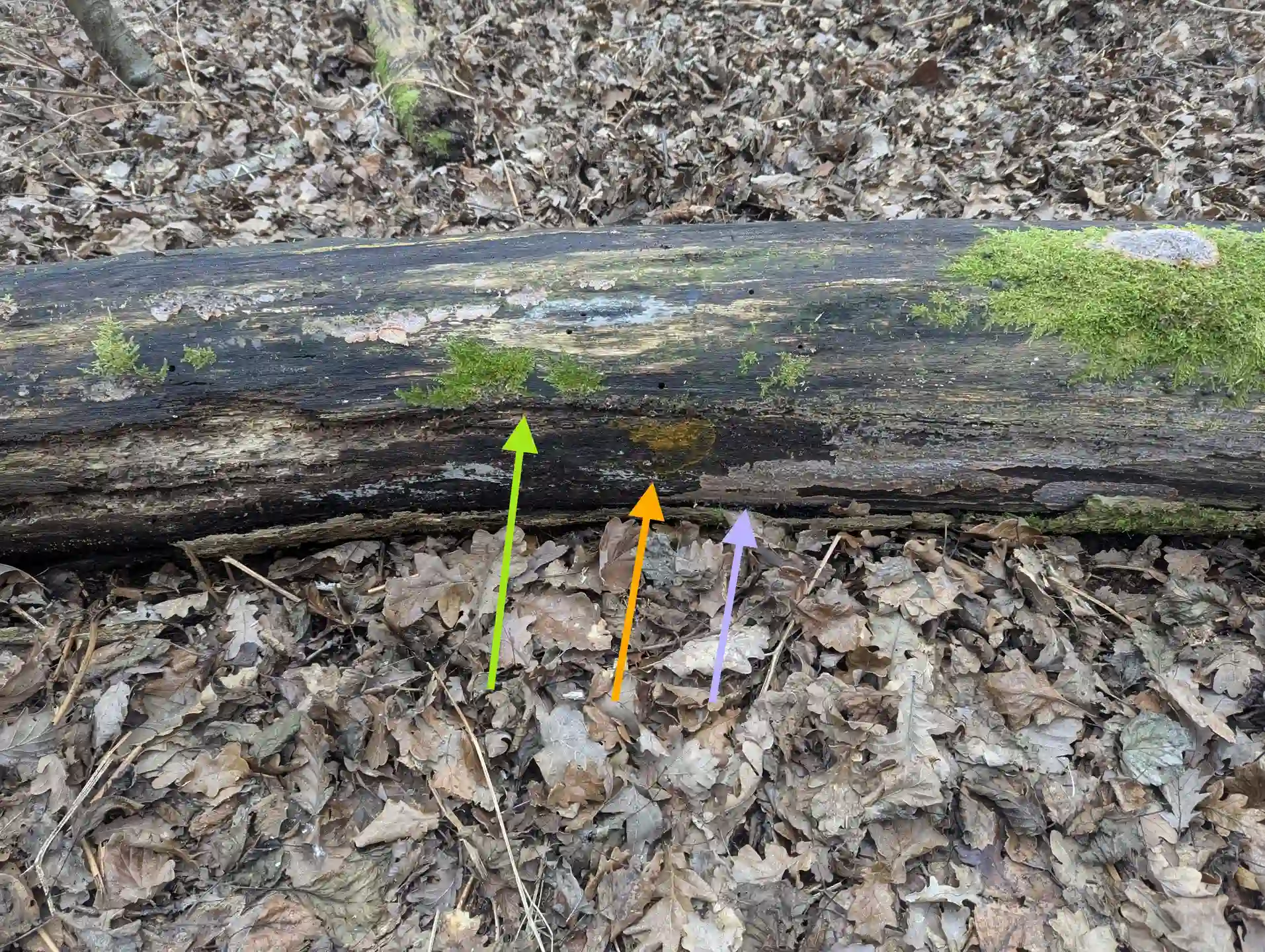
Downed trunk with moss, Phlebia radiata and Badhamia utricularis phaneroplasmodium.
Badhamia utricularis phaneroplasmodium – near The Outpost
Strumpshaw Fen – 28th December 2025
Close-up of the Badhamia utricularis phaneroplasmodium.
Badhamia utricularis phaneroplasmodium – near The Outpost
Strumpshaw Fen – 28th December 2025

1st January 2026

Fours days later the plasmodium had reached the Phlebia moving rightwards across the fungus.
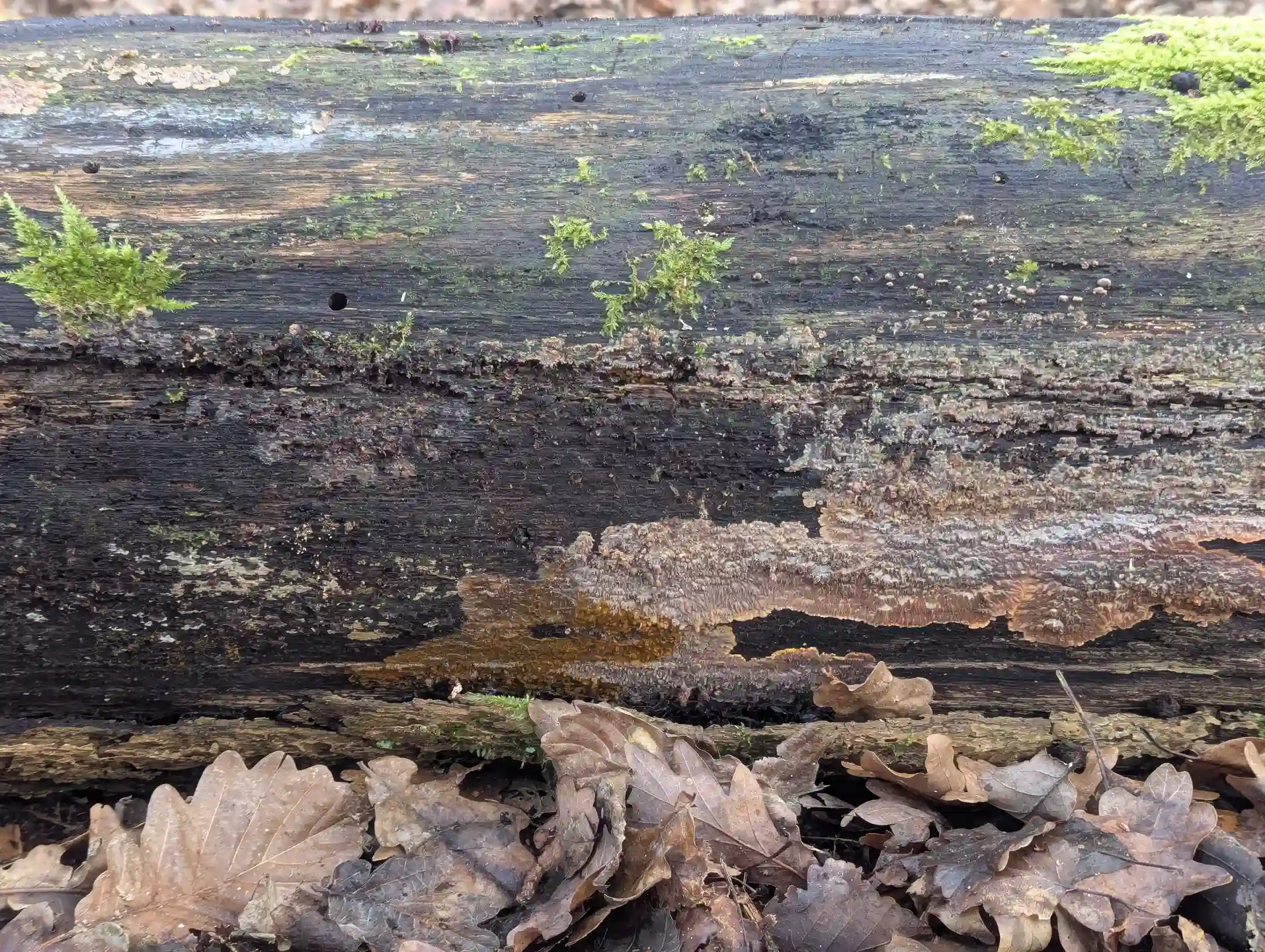
Badhamia utricularis phaneroplasmodium engulfing Phlebia radiata.
Badhamia utricularis plasmodium on Phlebia radiata – near The Outpost
Strumpshaw Fen – 1st January 2026
Close-up of Badhamia utricularis phaneroplasmodium engulfing Phlebia radiata.
Badhamia utricularis plasmodium on Phlebia radiata – near The Outpost
Strumpshaw Fen – 1st January 2026

18th January 2026

We next visited the reserve nearly three weeks later and wow 🤯 – the plasmodium had engulfed large areas of the Phlebia leaving slimy digested fungus in it’s wake.
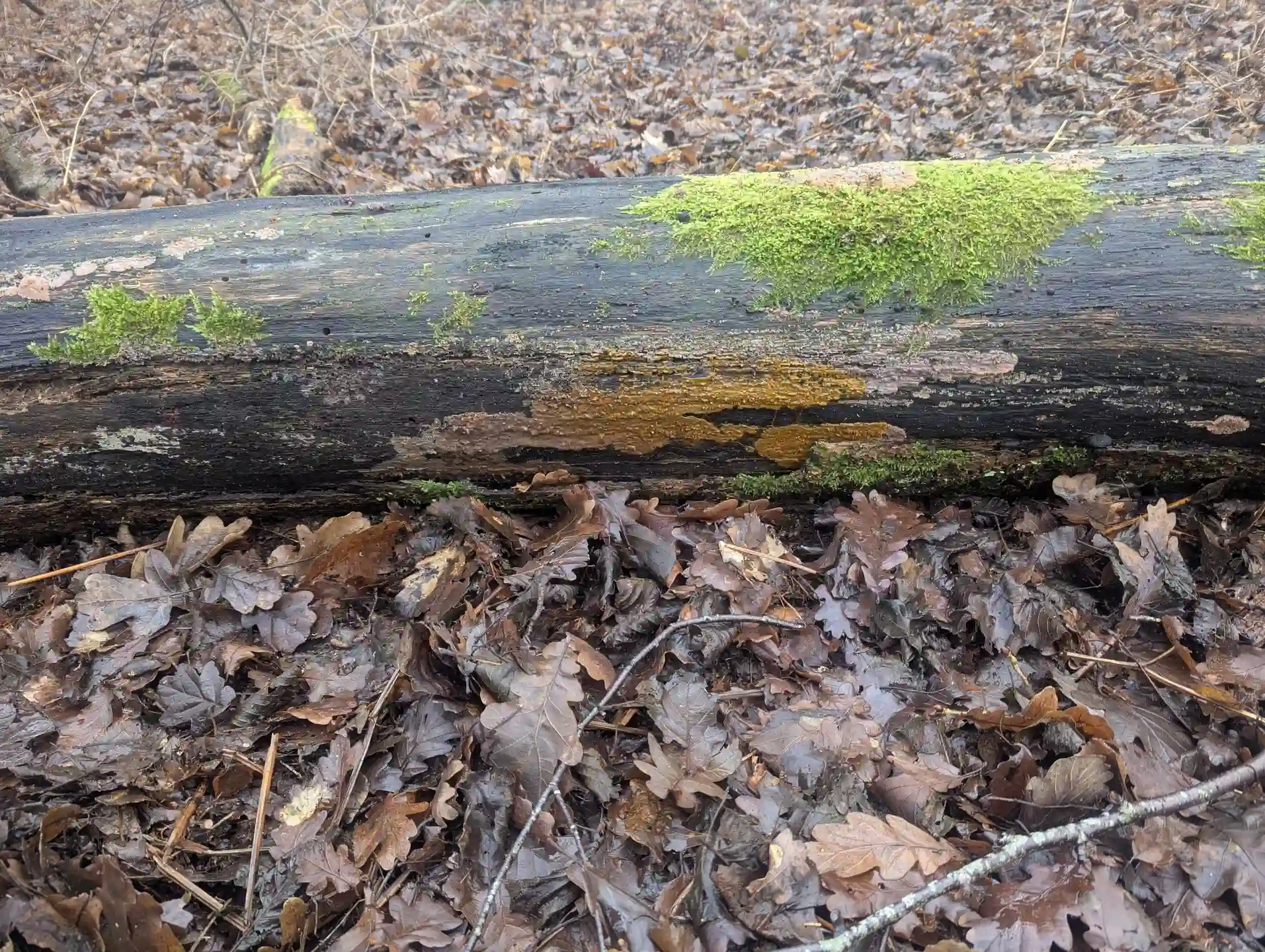
Wide shot of Badhamia utricularis plasmodium engulfing a large area of Phlebia radiata.
Badhamia utricularis plasmodium on Phlebia radiata – near The Outpost
Strumpshaw Fen – 18th January 2026
Badhamia utricularis digested Phlebia radiata.
Phlebia radiata digested by Badhamia utricularis – near The Outpost
Strumpshaw Fen – 18th January 2026
Badhamia utricularis plasmodium digesting Phlebia radiata. Photo 1.
Badhamia utricularis digesting Phlebia radiata – near The Outpost
Strumpshaw Fen – 18th January 2026
Badhamia utricularis plasmodium digesting Phlebia radiata. Photo 2.
Badhamia utricularis digesting Phlebia radiata – near The Outpost
Strumpshaw Fen – 18th January 2026

I can’t recall why we didn’t visit the reserve the next day – at this stage we would not have wanted to miss this plasmodium sporulate. The next visit a week later was wonderful…

25th January 2026

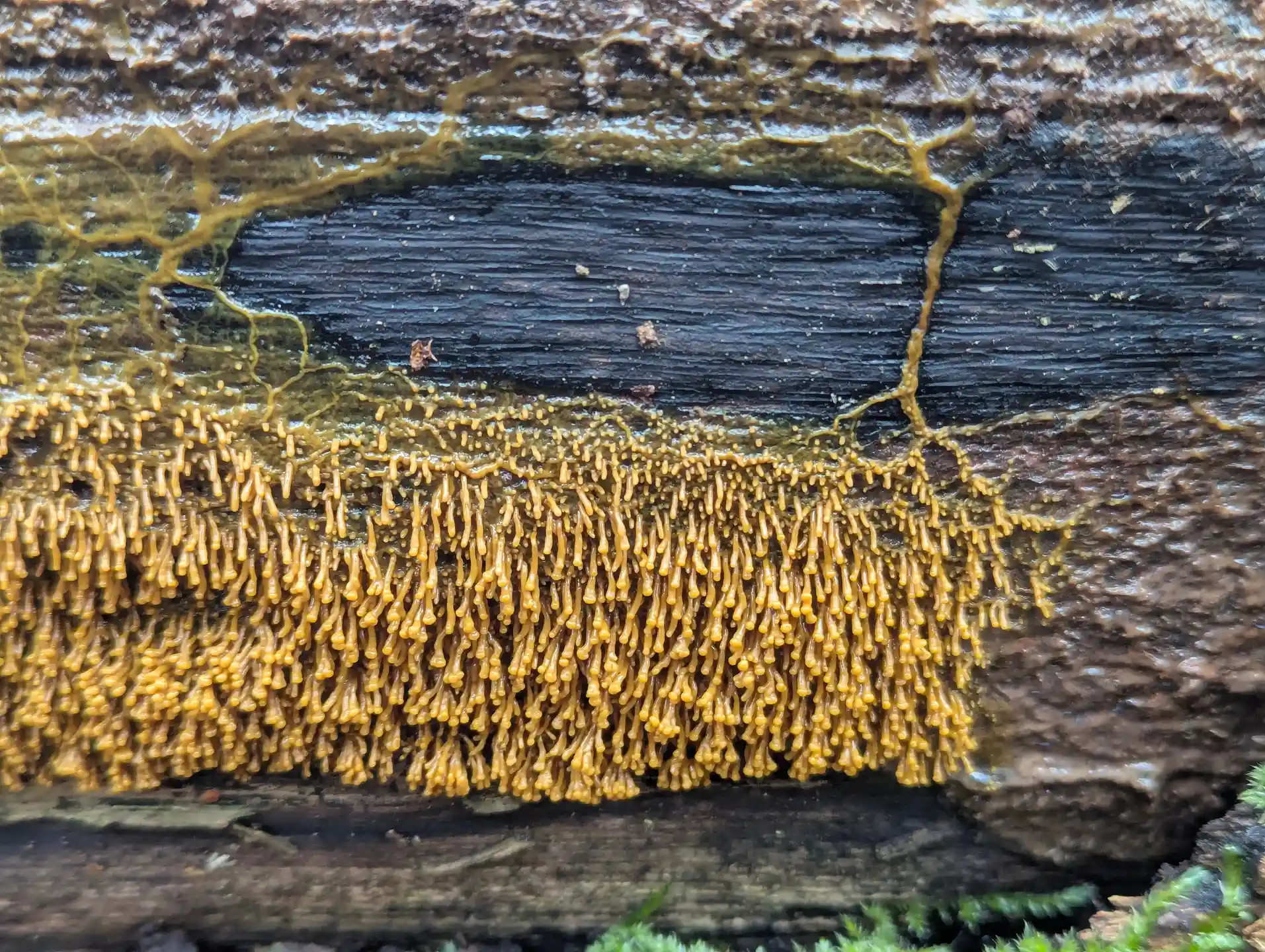
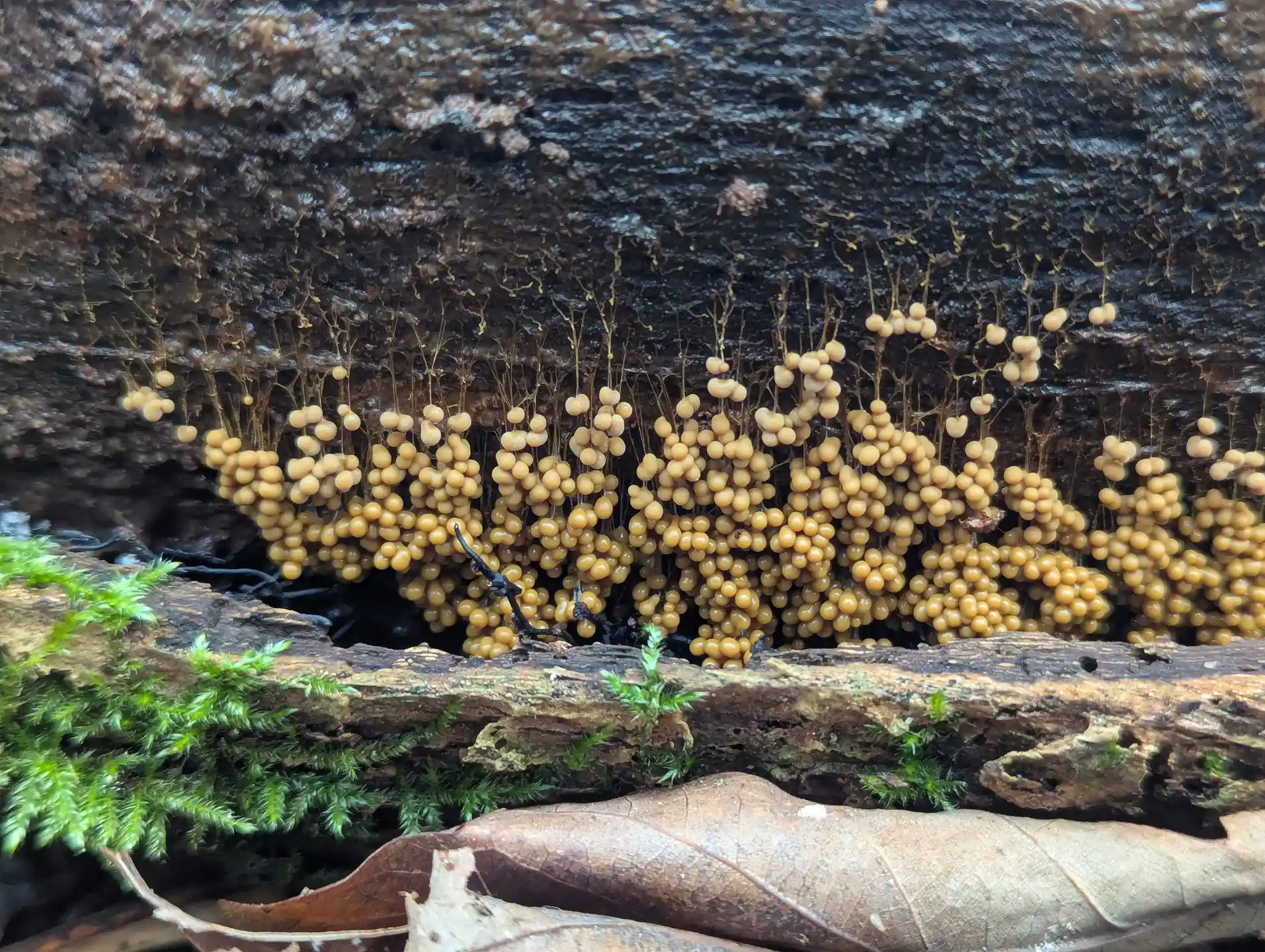
The Phlebia appeared to be mostly digested and in it’s place was one of the largest sporulations we had seen for some time.
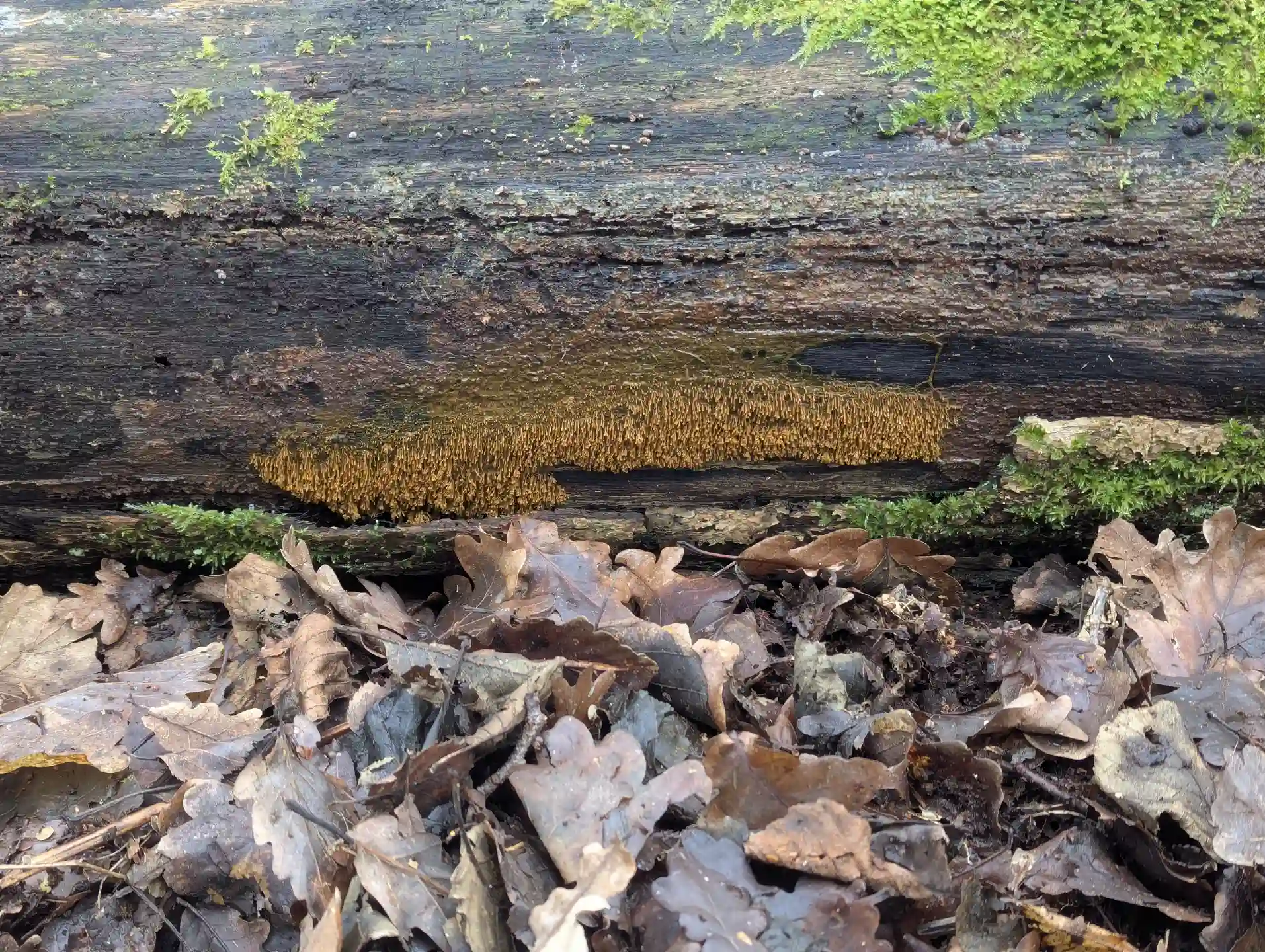
Wide shot of orange-yellow Badhamia utricularis primordia.
Sporulating Badhamia utricularis – near The Outpost
Strumpshaw Fen – 25th January 2026

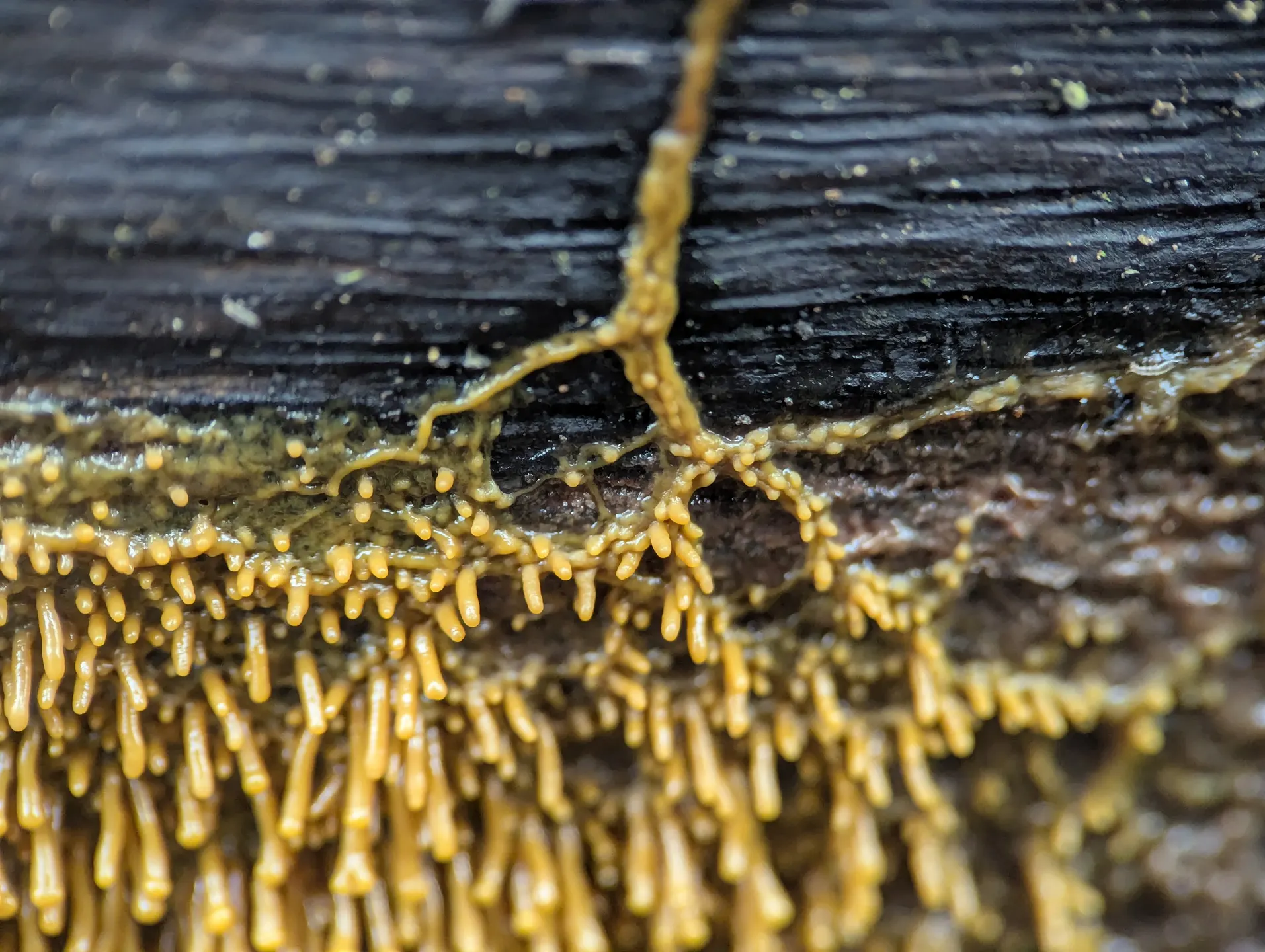
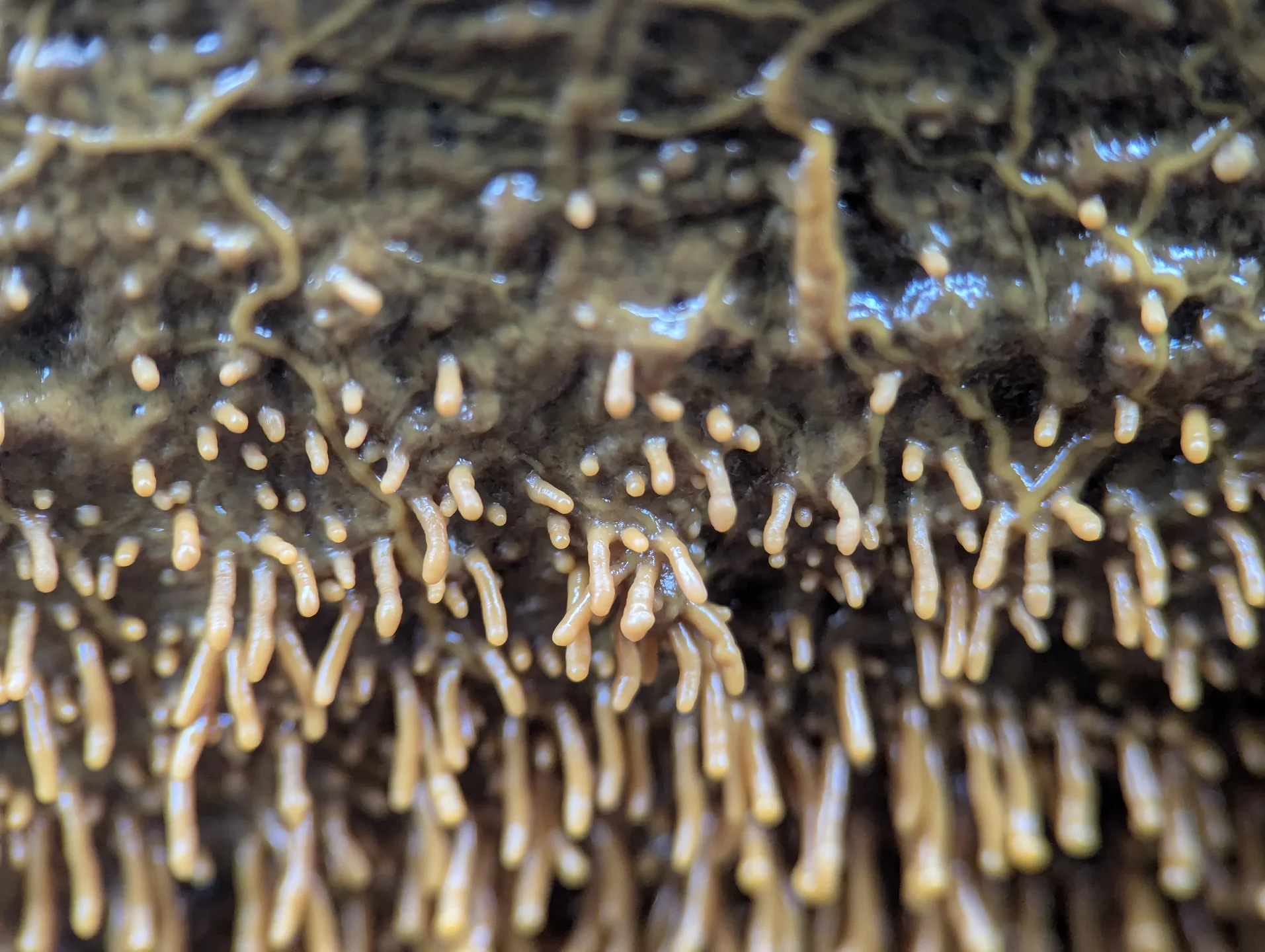
In the photo below, you can see a range of development from emerging primordia (the tiny blebs) to the elongated primordia with developing globular tips, which will eventually become the sporothecae.
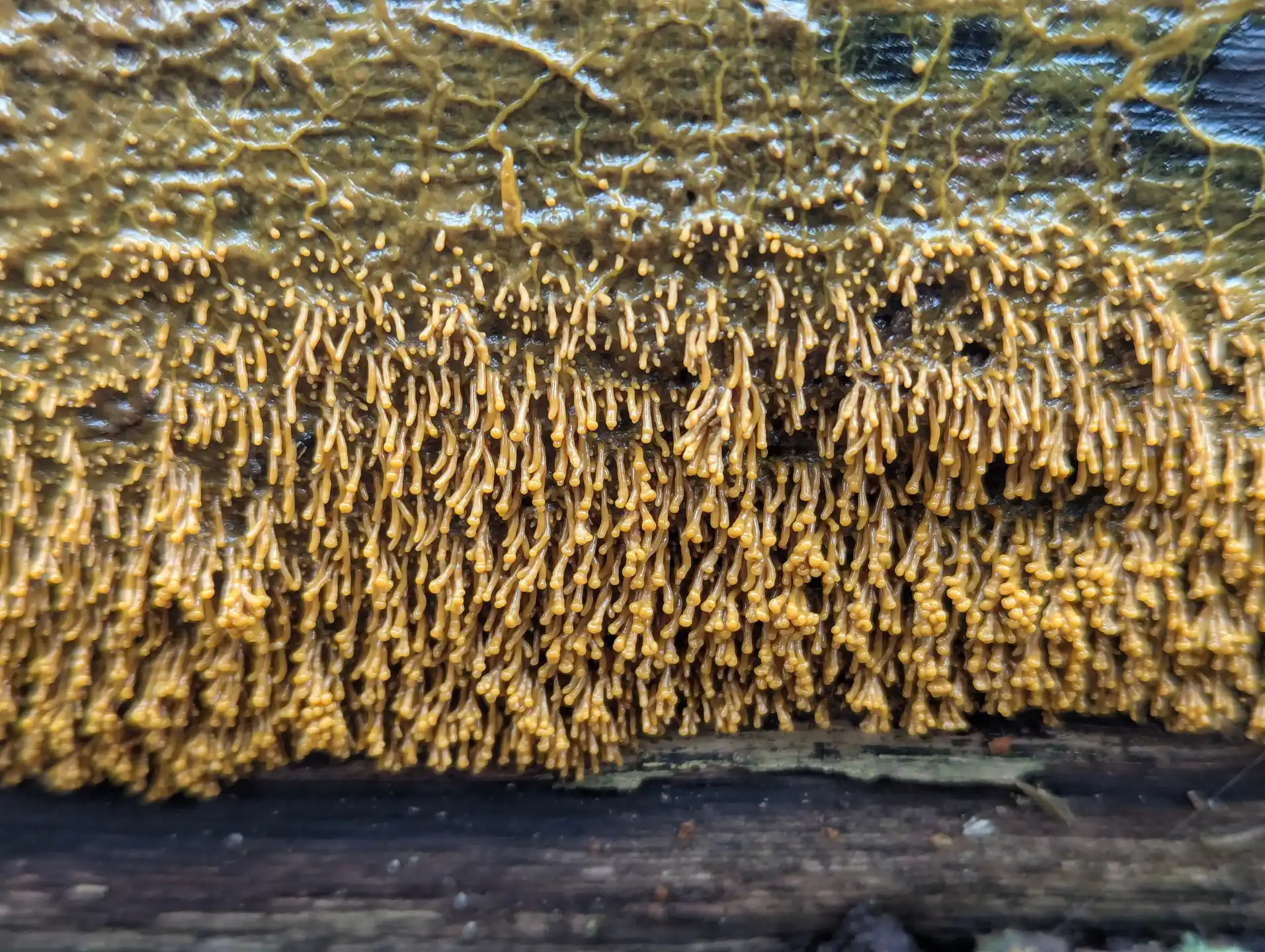
Orange-yellow Badhamia utricularis primordia. Photo 1.
Sporulating Badhamia utricularis – near The Outpost
Strumpshaw Fen – 25th January 2026
Orange-yellow Badhamia utricularis primordia. Photo 2.
Sporulating Badhamia utricularis – near The Outpost
Strumpshaw Fen – 25th January 2026
Close-up of orange-yellow Badhamia utricularis primordia. Photo 1.
Sporulating Badhamia utricularis – near The Outpost
Strumpshaw Fen – 25th January 2026
Close-up of orange-yellow Badhamia utricularis primordia. Photo 2.
Sporulating Badhamia utricularis – near The Outpost
Strumpshaw Fen – 25th January 2026

The next photo shows elongated primordia beginning to cluster together.
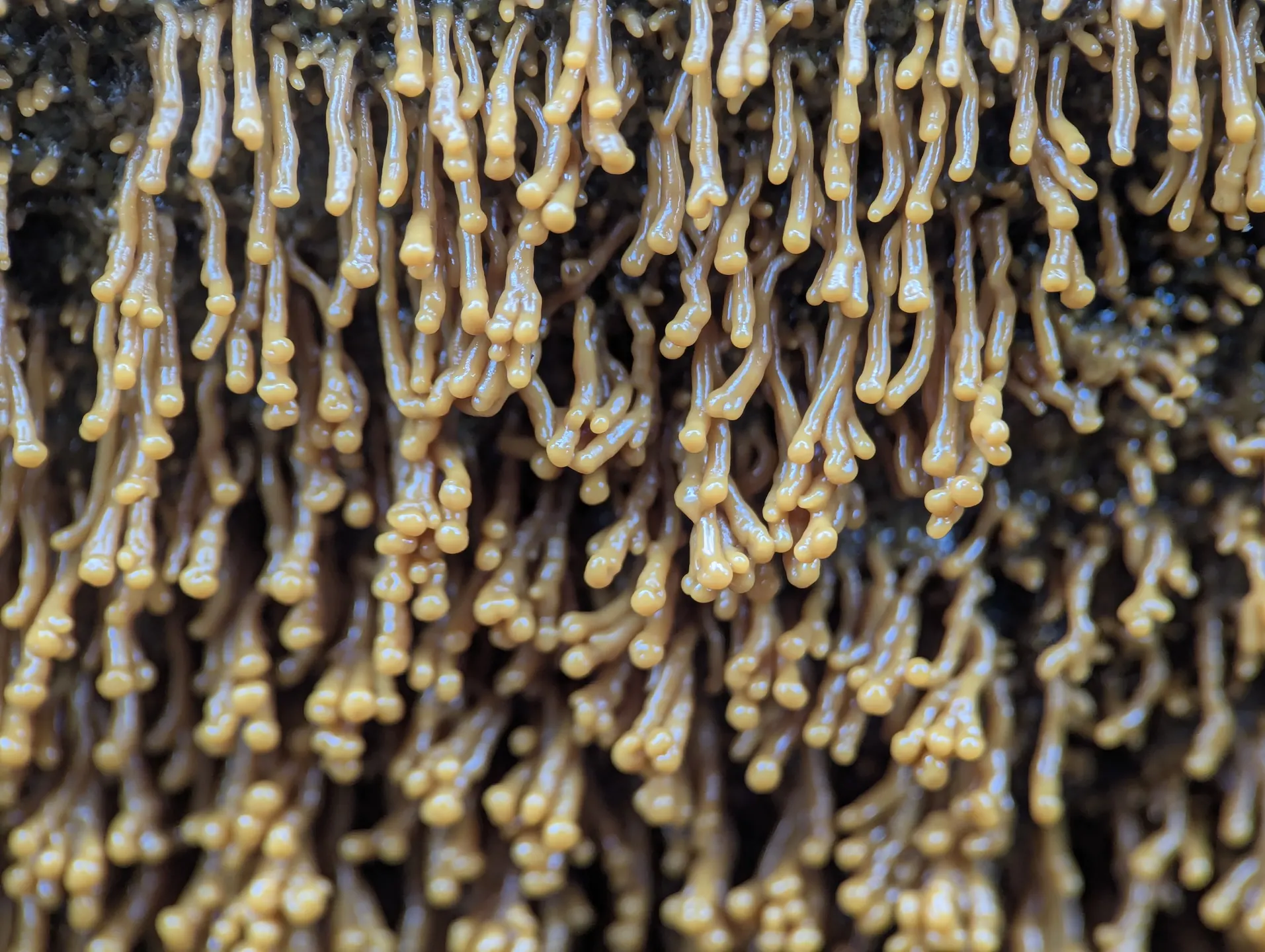
Close-up of orange-yellow Badhamia utricularis primordia. Photo 3.
Sporulating Badhamia utricularis – near The Outpost
Strumpshaw Fen – 25th January 2026

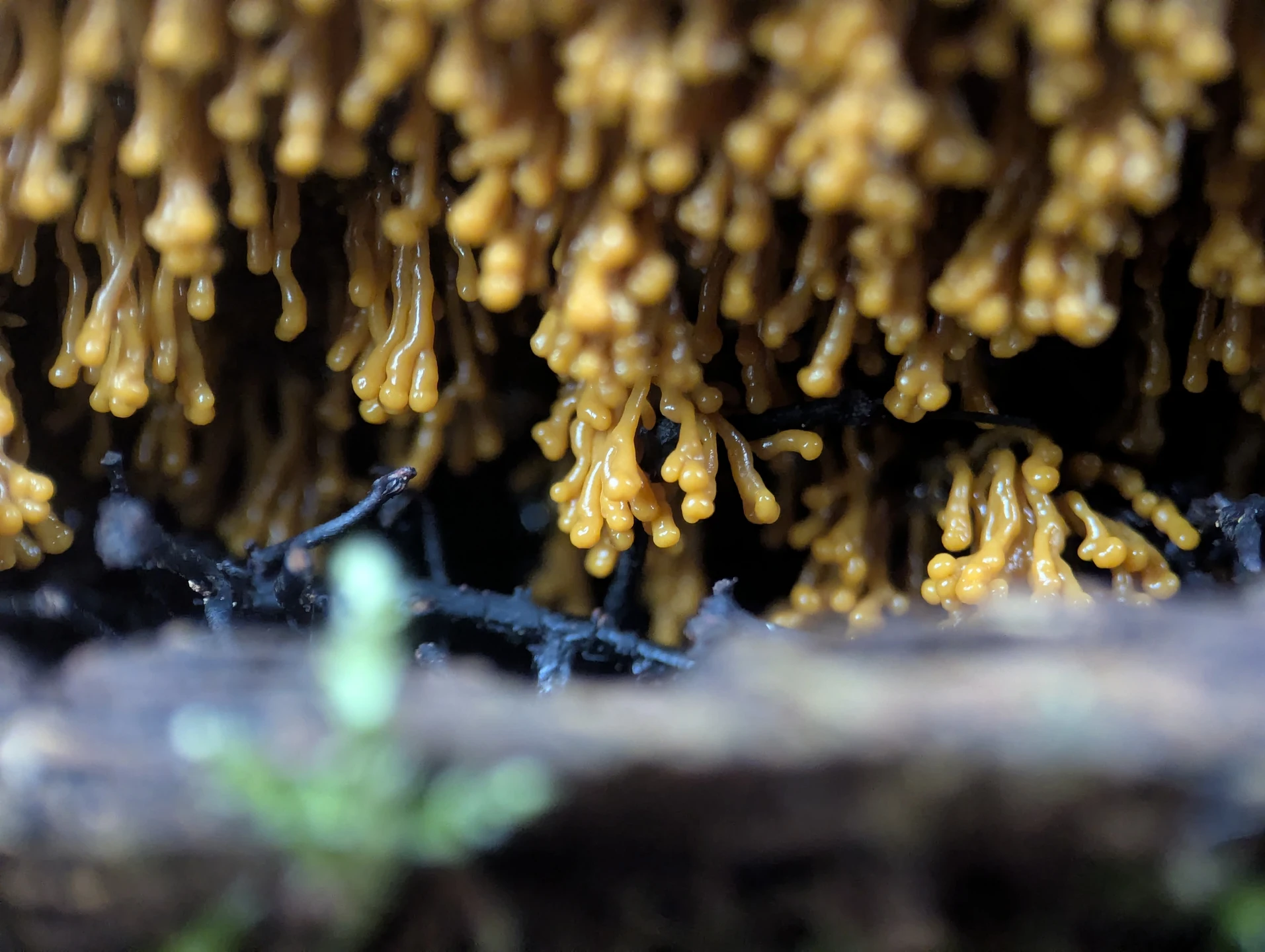
These clusters will eventually form the distinctive ‘bunches of grapes’ for which Badhamia utricularis is known, as you can see more clearly in the photo below.
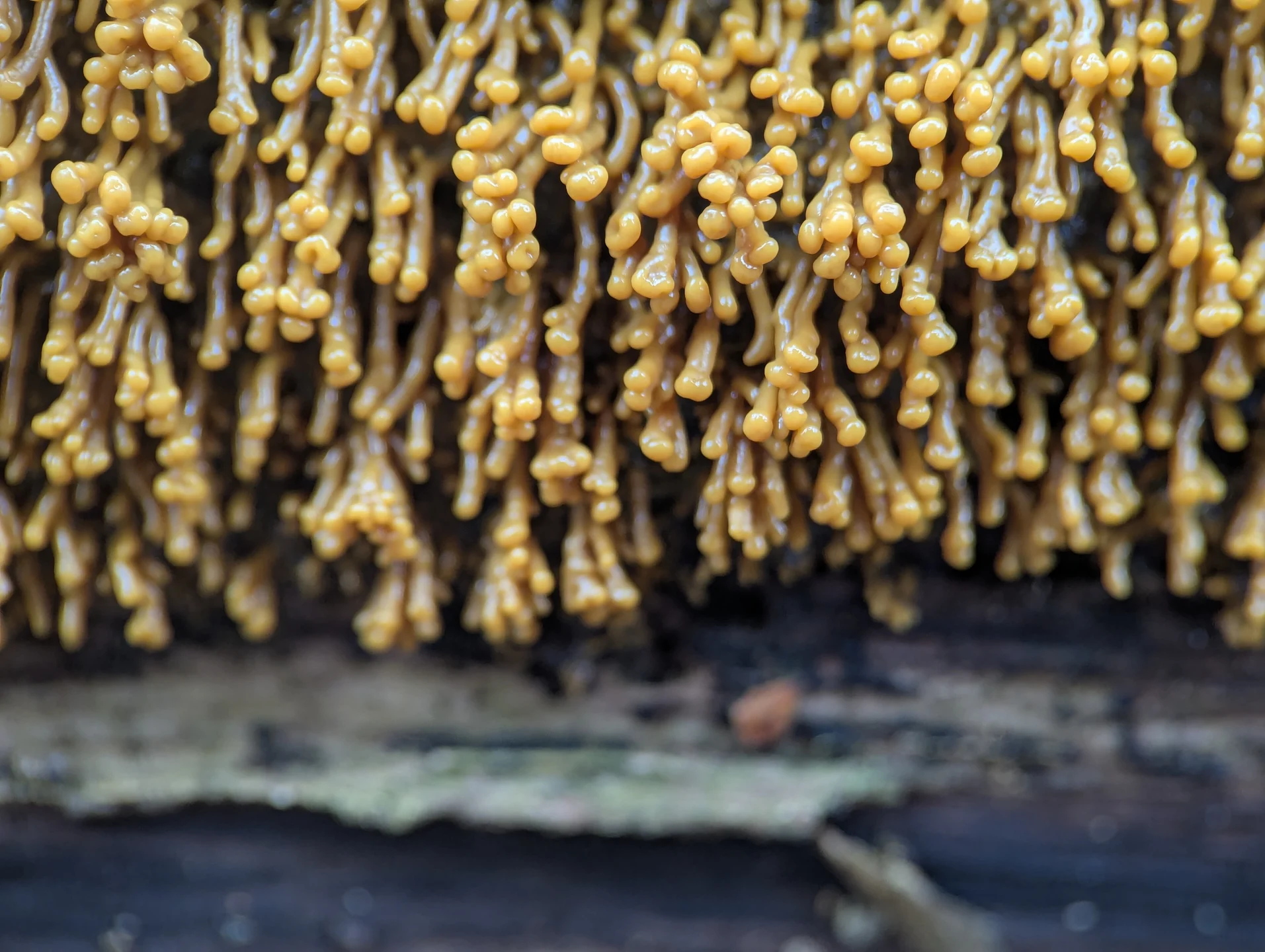
Close-up of sporulating Badhamia utricularis as elongated primordia. Numerous downward pointing slender, finger-like, orange-yellow stalks, each tipped with globular heads that will become the sporothecae. The primordia are densely clustered, showing the initial formation of the characteristic 'bunches of grapes' form.
Sporulating Badhamia utricularis – near The Outpost
Strumpshaw Fen – 25th January 2026
Close-up of orange-yellow Badhamia utricularis primordia. Photo 4.
Sporulating Badhamia utricularis – near The Outpost
Strumpshaw Fen – 25th January 2026

26th January 2026

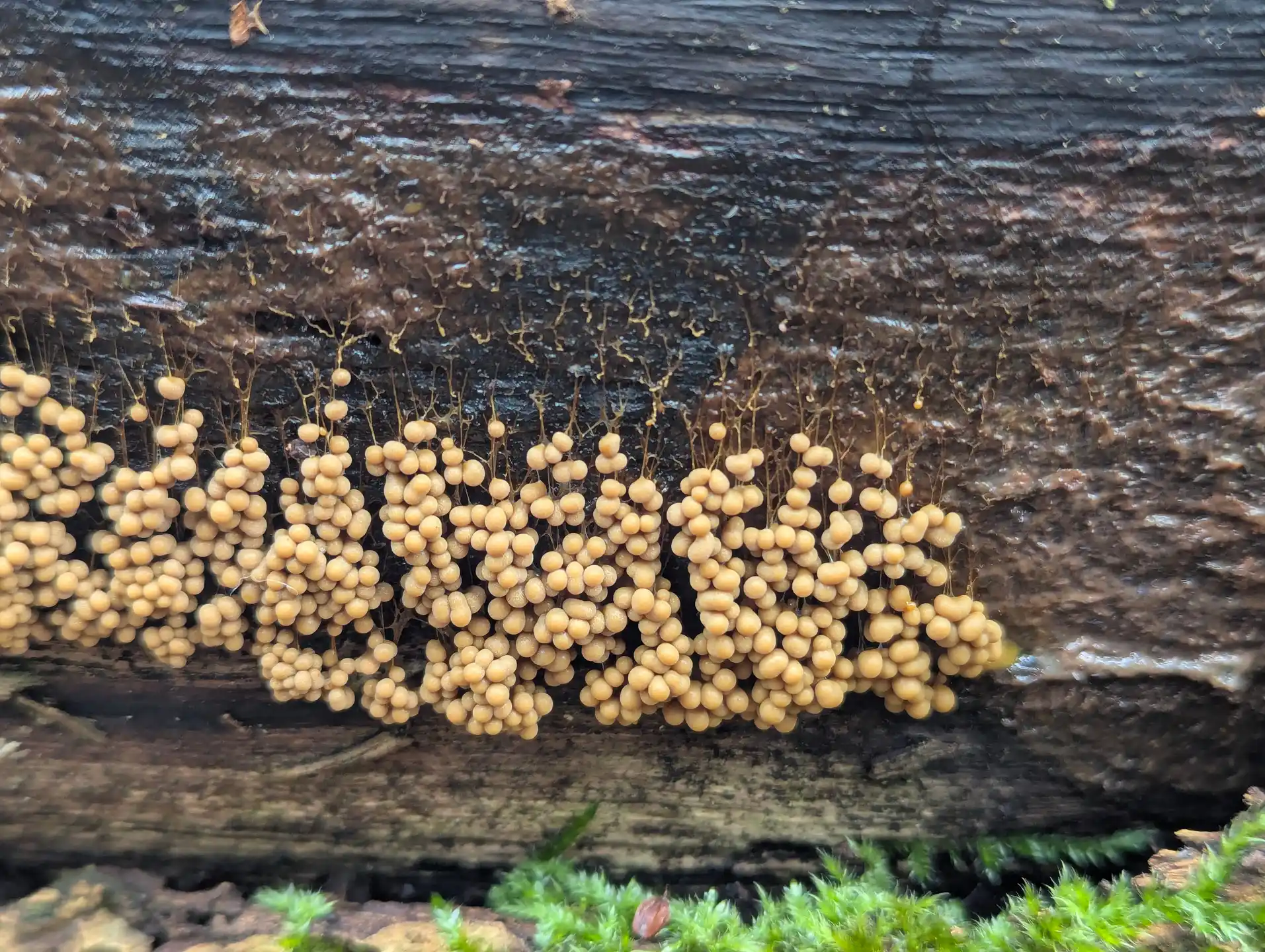
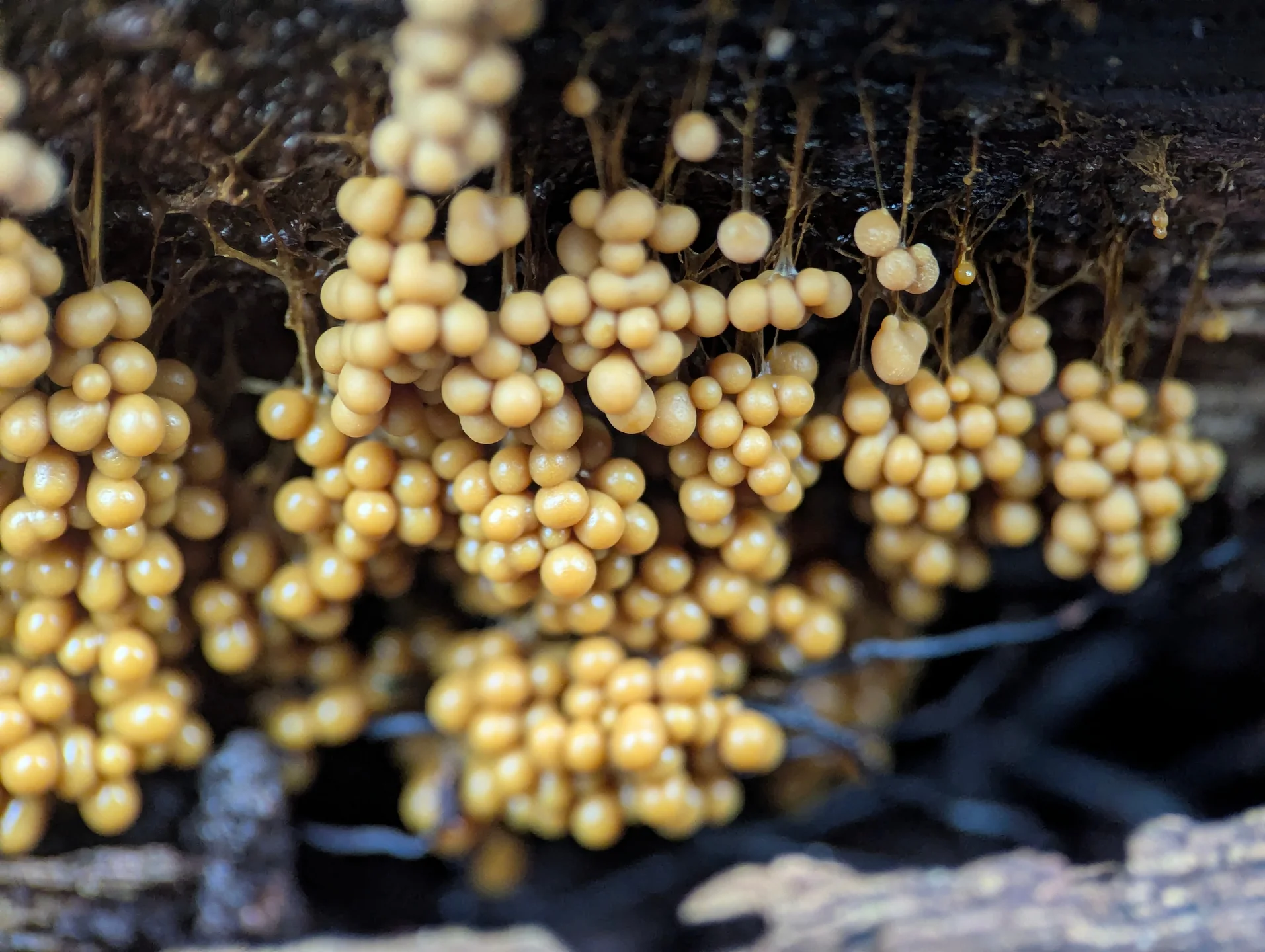
There was no debate – we had to come back the next day and we were not disappointed. The sporothecae had fully developed into cream, buff-yellow and orange-yellow globular clusters of globular sporothecae, hanging from a tangle of slender thread-like stalks.
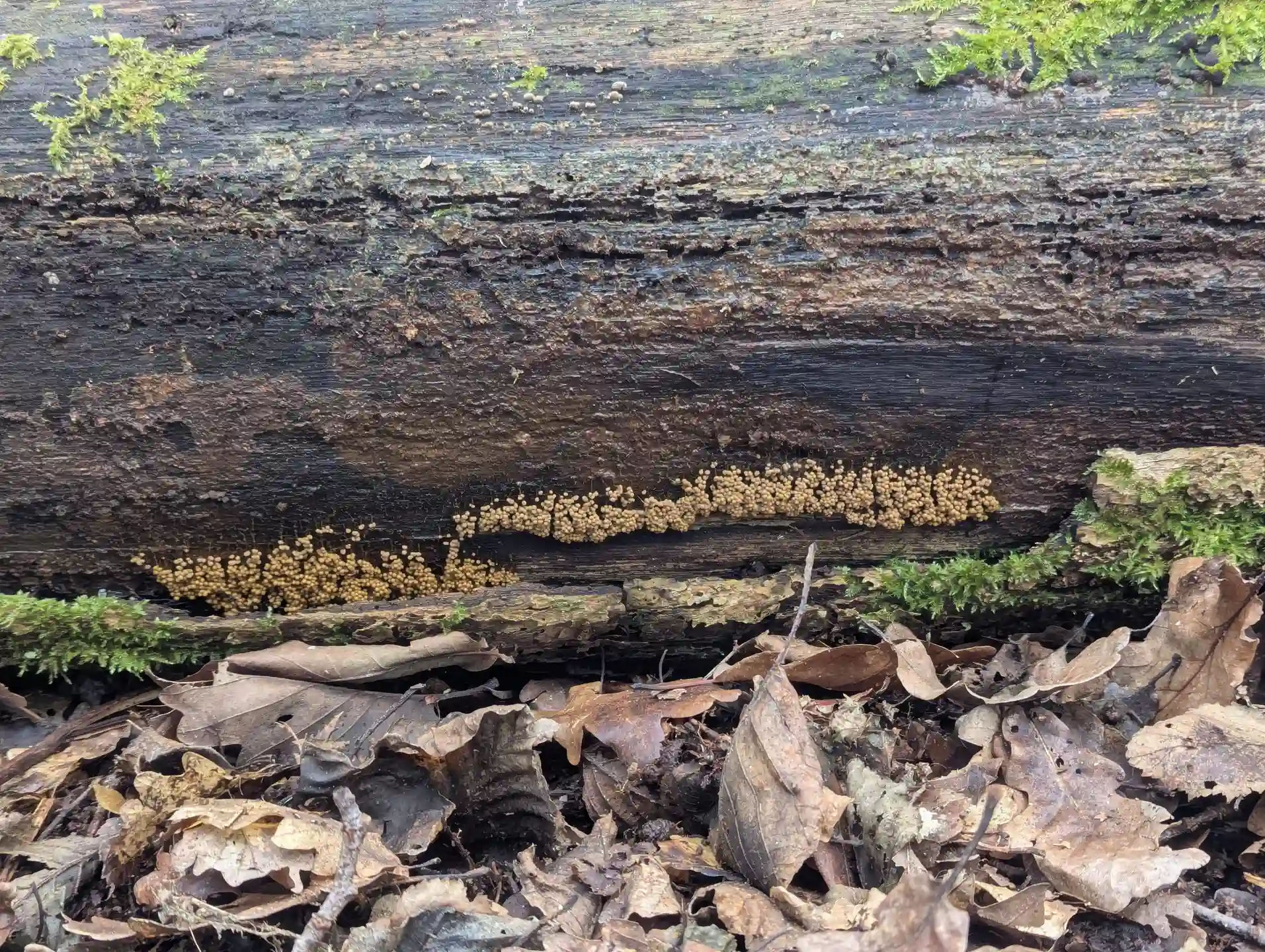
Wide shot of young orange-yellow 'bunches of grapes' Badhamia utricularis sporangia.
Young Badhamia utricularis sporangia – near The Outpost
Strumpshaw Fen – 26th January 2026
Young orange-yellow 'bunches of grapes' Badhamia utricularis sporangia. Photo 1.
Young Badhamia utricularis sporangia – near The Outpost
Strumpshaw Fen – 26th January 2026
Young orange-yellow 'bunches of grapes' Badhamia utricularis sporangia. Photo 2.
Young Badhamia utricularis sporangia – near The Outpost
Strumpshaw Fen – 26th January 2026
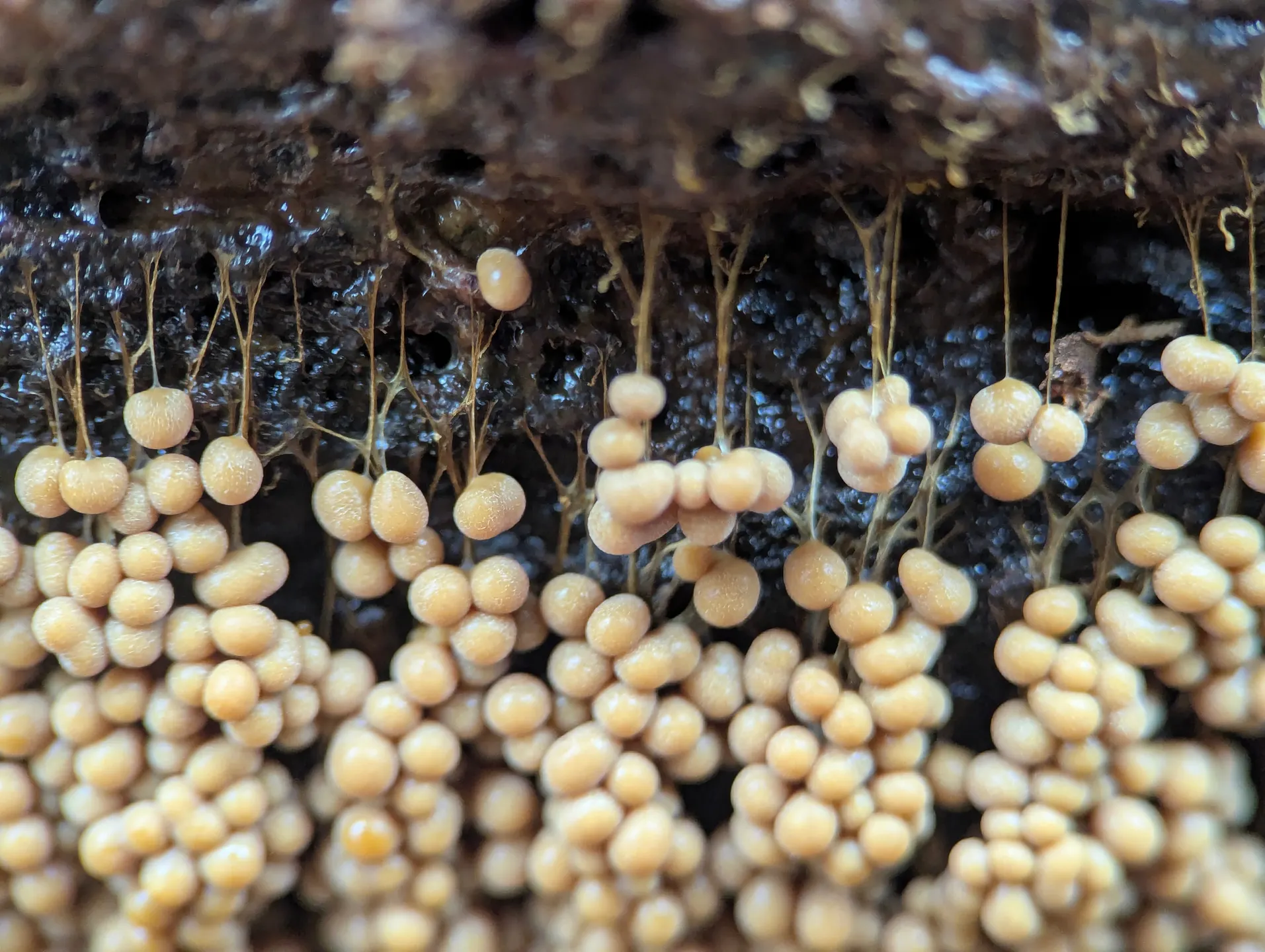
Close-up of young orange-yellow 'bunches of grapes' Badhamia utricularis sporangia. Photo 1.
Young Badhamia utricularis sporangia – near The Outpost
Strumpshaw Fen – 26th January 2026

Notice the speckled irridescence.
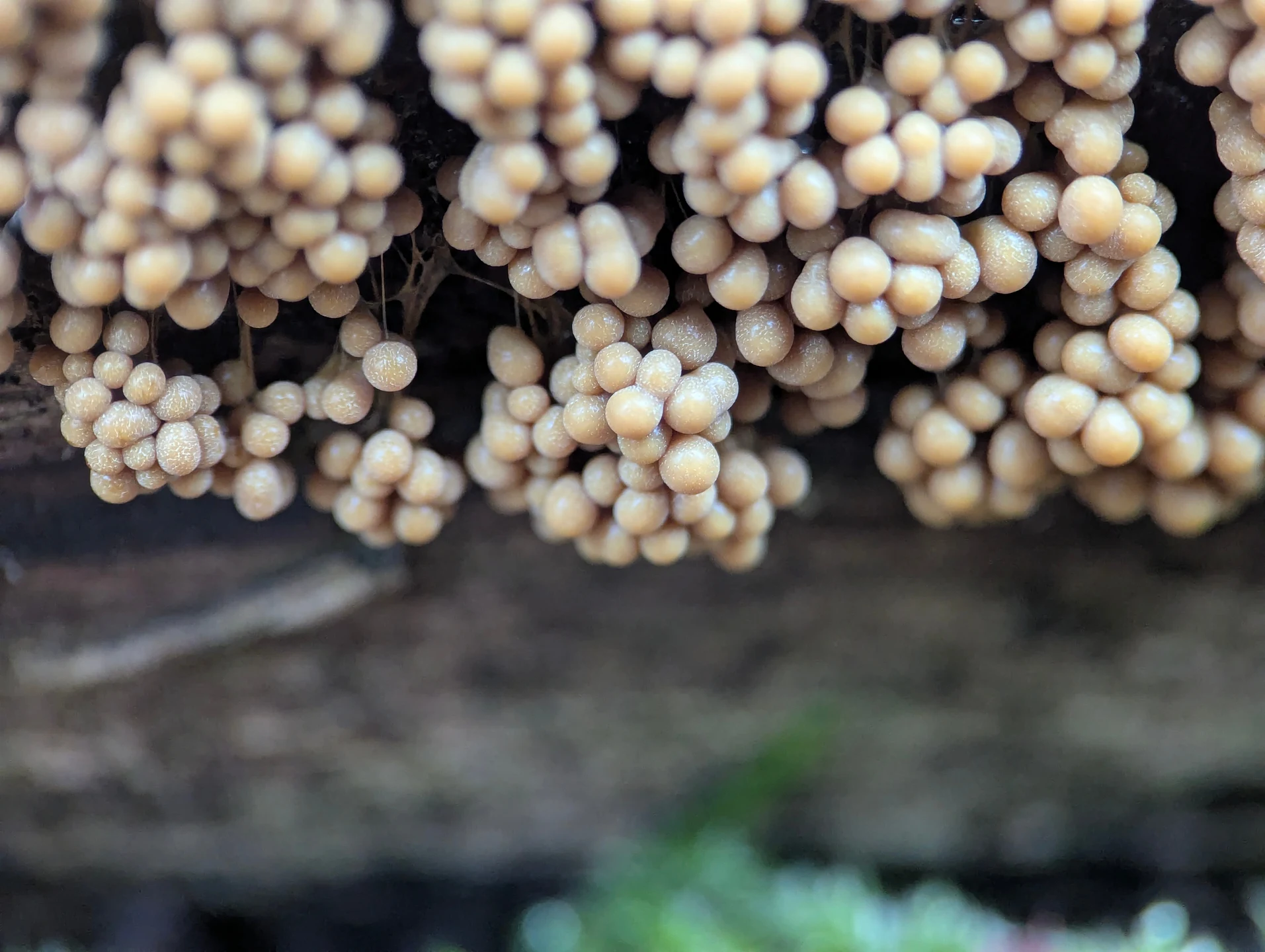
Close-up of young orange-yellow 'bunches of grapes' Badhamia utricularis sporangia. Photo 2.
Young Badhamia utricularis sporangia – near The Outpost
Strumpshaw Fen – 26th January 2026
Close-up of young orange-yellow 'bunches of grapes' Badhamia utricularis sporangia. Photo 3.
Young Badhamia utricularis sporangia – near The Outpost
Strumpshaw Fen – 26th January 2026

1st February 2026

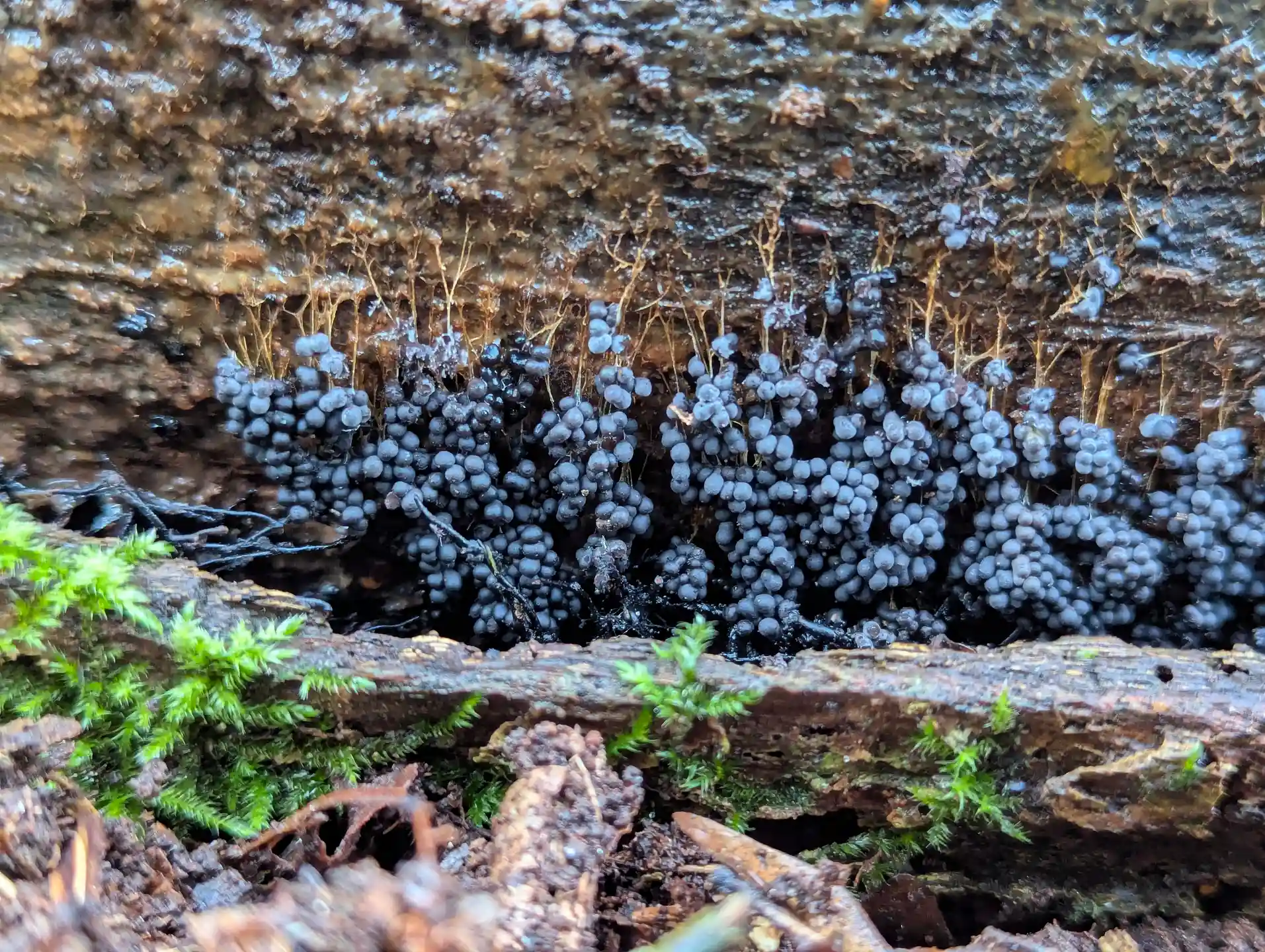
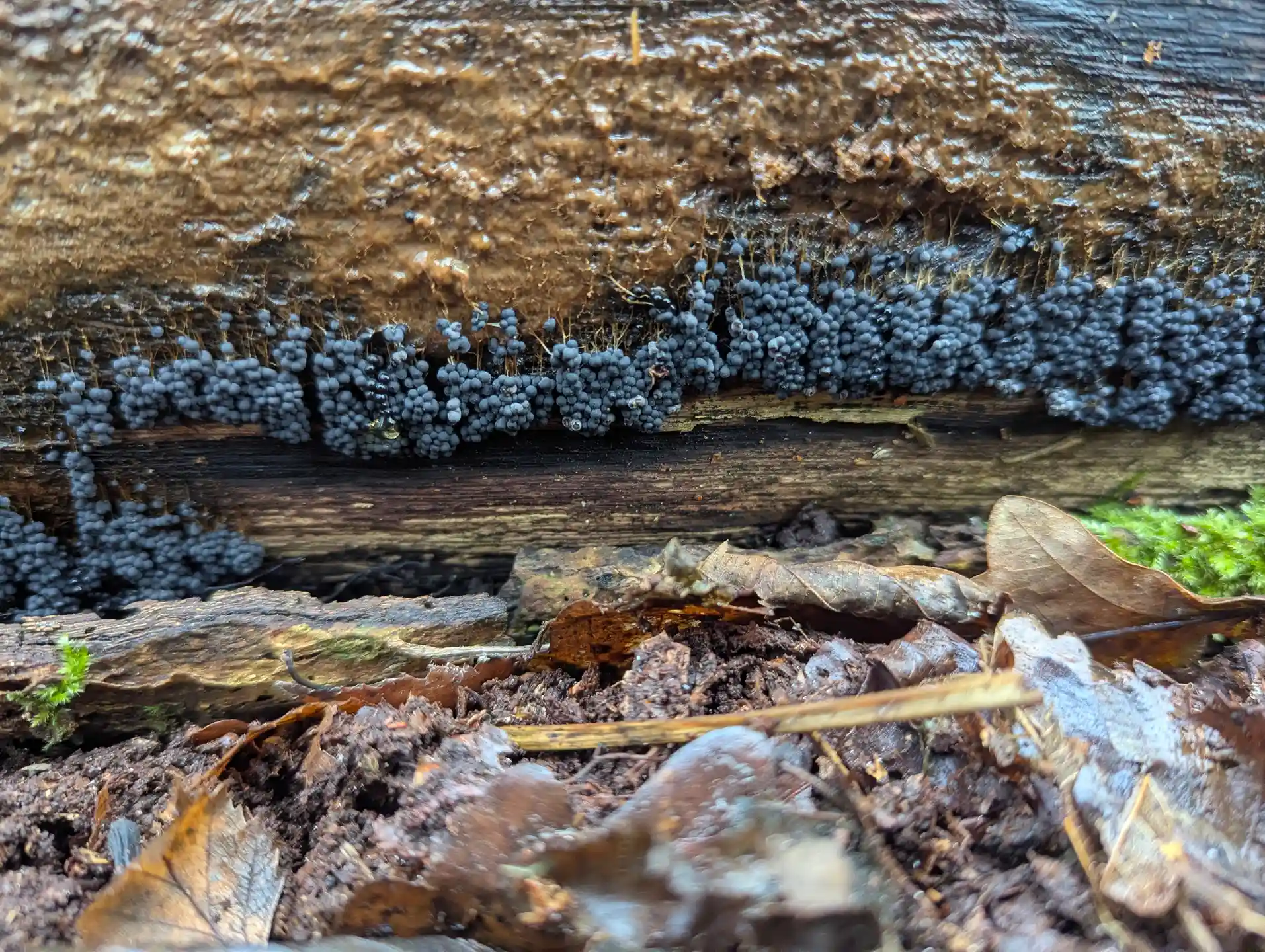
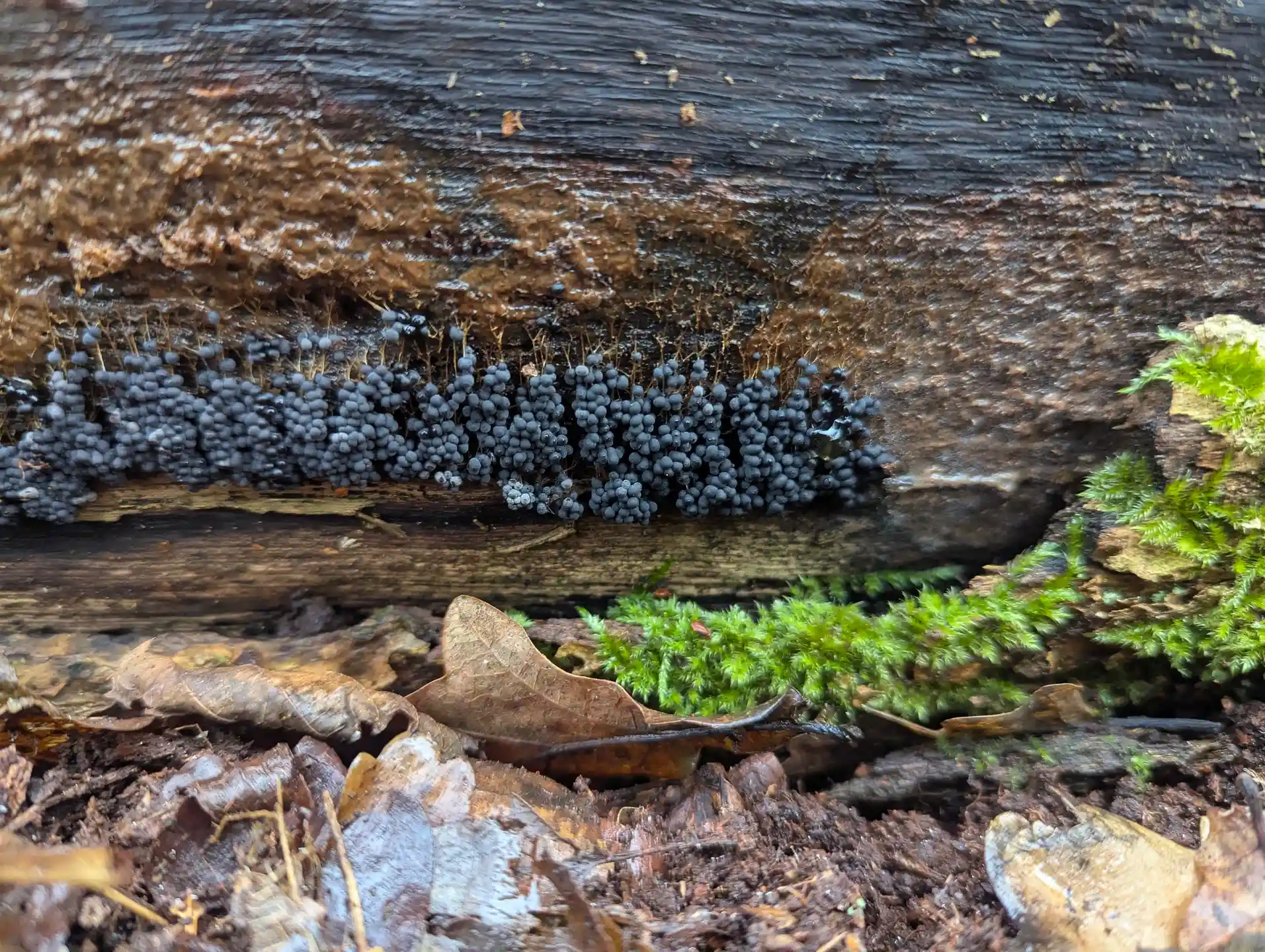
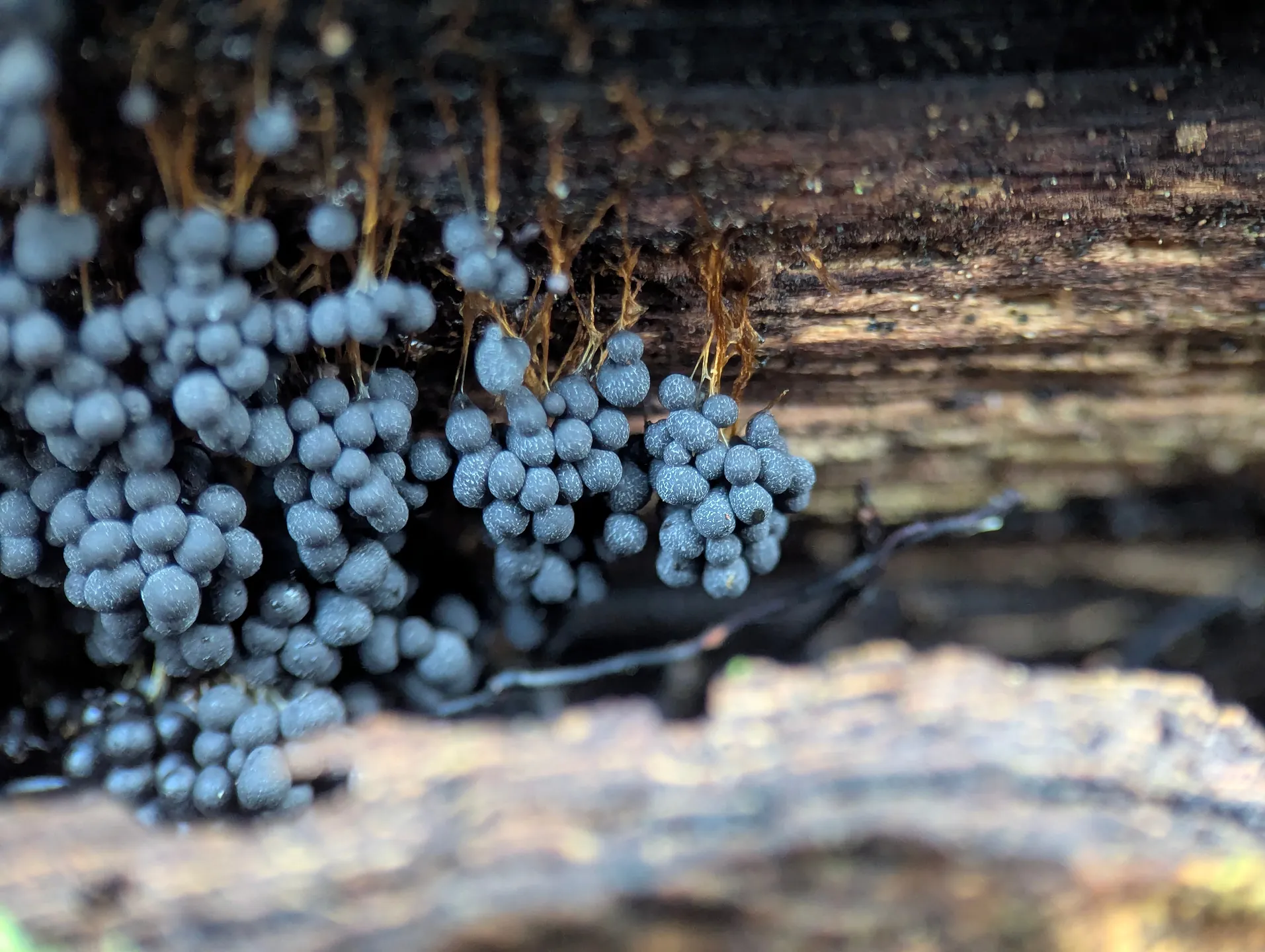
Two days later the sporothecae had turned bluish-grey
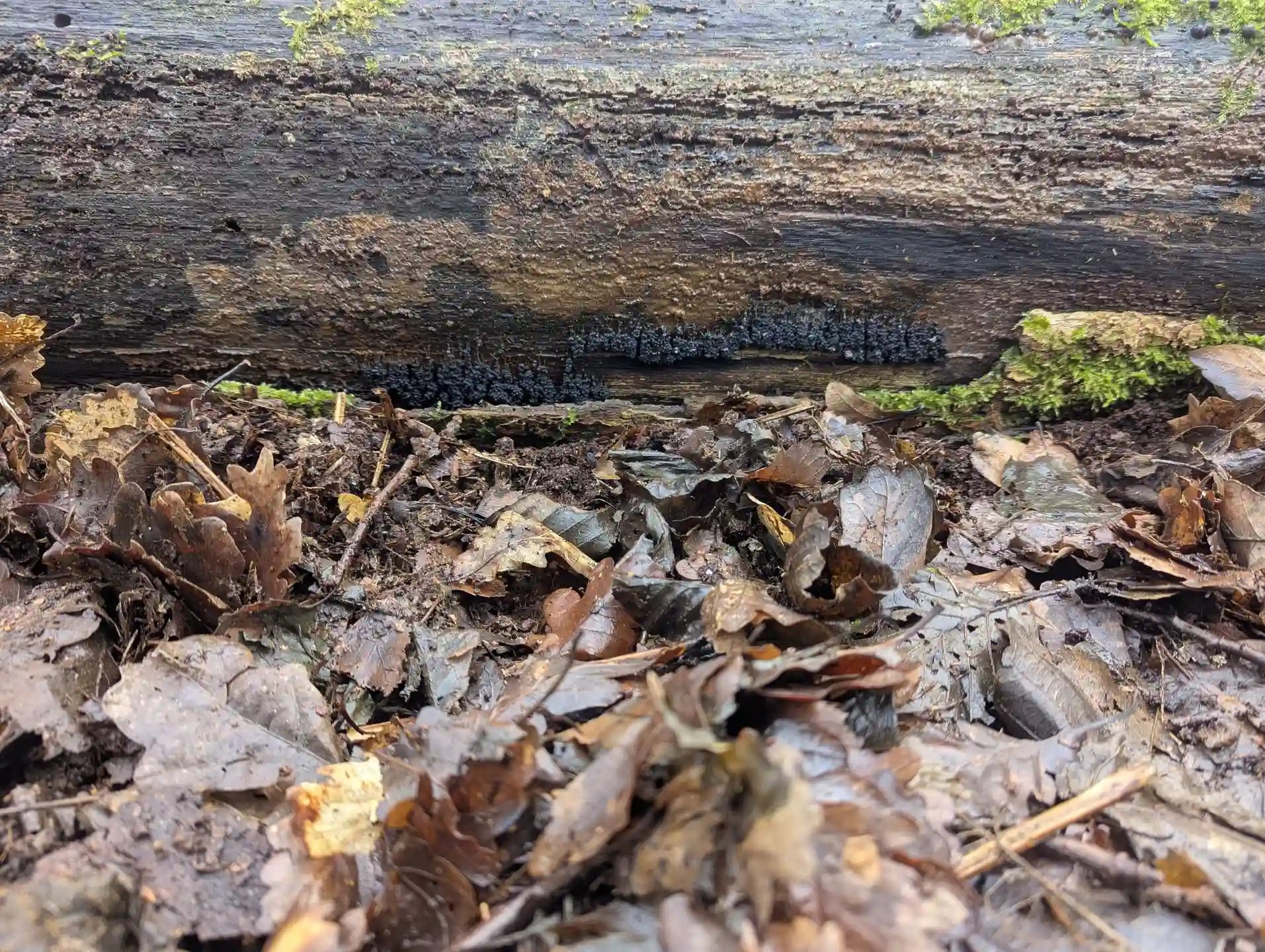
Wide shot of mature dark greyish-blue 'bunches of grapes' Badhamia utricularis sporangia.
Mature Badhamia utricularis sporangia – near The Outpost
Strumpshaw Fen – 1st February 2026
Mature dark greyish-blue 'bunches of grapes' Badhamia utricularis sporangia. Photo 1.
Mature Badhamia utricularis sporangia – near The Outpost
Strumpshaw Fen – 1st February 2026
Mature dark greyish-blue 'bunches of grapes' Badhamia utricularis sporangia. Photo 2.
Mature Badhamia utricularis sporangia – near The Outpost
Strumpshaw Fen – 1st February 2026
Mature dark greyish-blue 'bunches of grapes' Badhamia utricularis sporangia. Photo 3.
Mature Badhamia utricularis sporangia – near The Outpost
Strumpshaw Fen – 1st February 2026
Close-up of mature dark greyish-blue 'bunches of grapes' Badhamia utricularis sporangia. Photo 1.
Mature Badhamia utricularis sporangia – near The Outpost
Strumpshaw Fen – 1st February 2026

The sporothecae in the centre of the photo below appear to have a liquid coating making them glossy – almost black, with a droplet of deep-olive liquid hanging at the bottom.
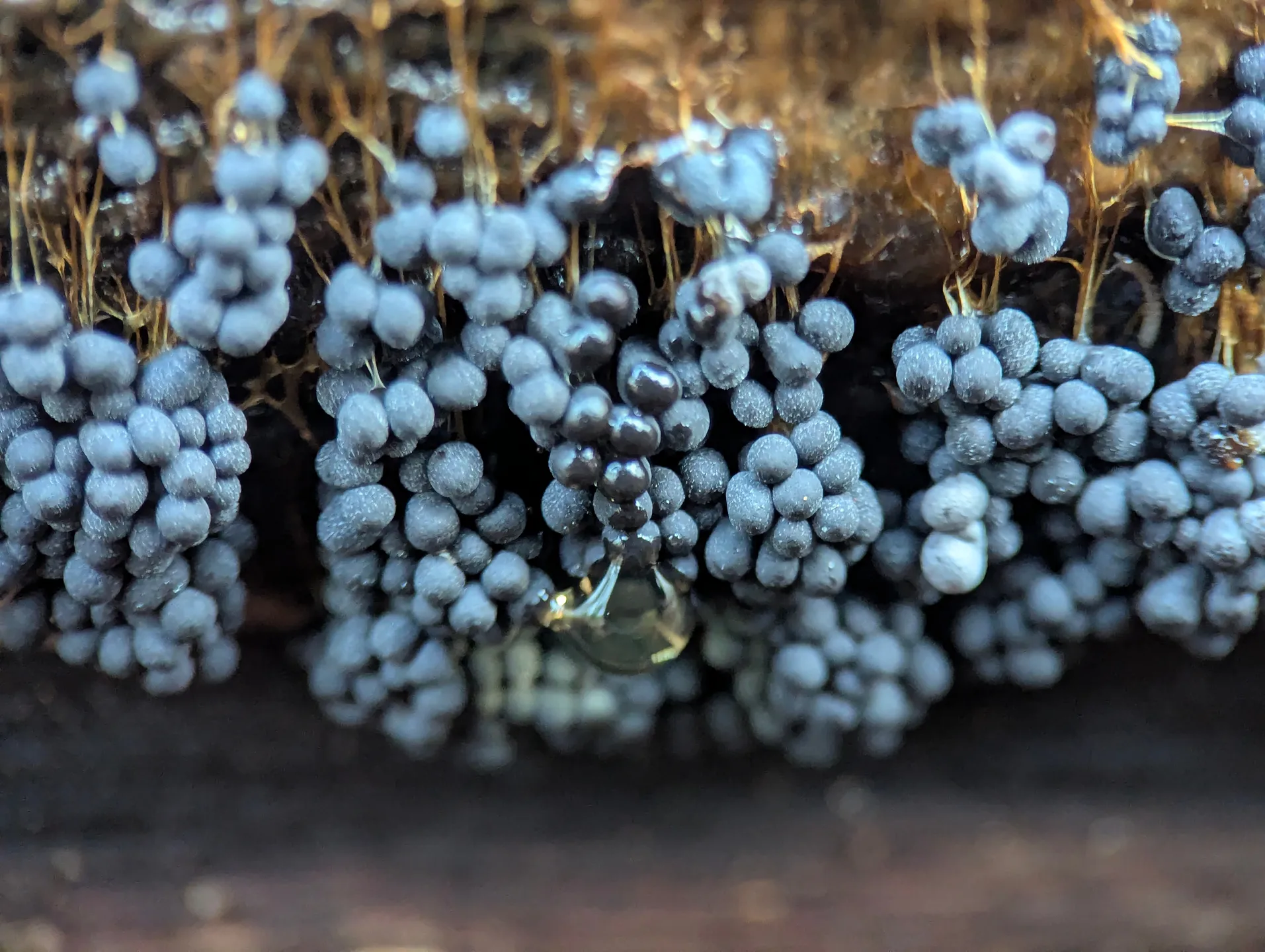
Close-up of mature dark greyish-blue 'bunches of grapes' Badhamia utricularis sporangia. Photo 2.
Mature Badhamia utricularis sporangia – near The Outpost
Strumpshaw Fen – 1st February 2026

8th February 2026

Two days later the sporothecae were dehiscing.
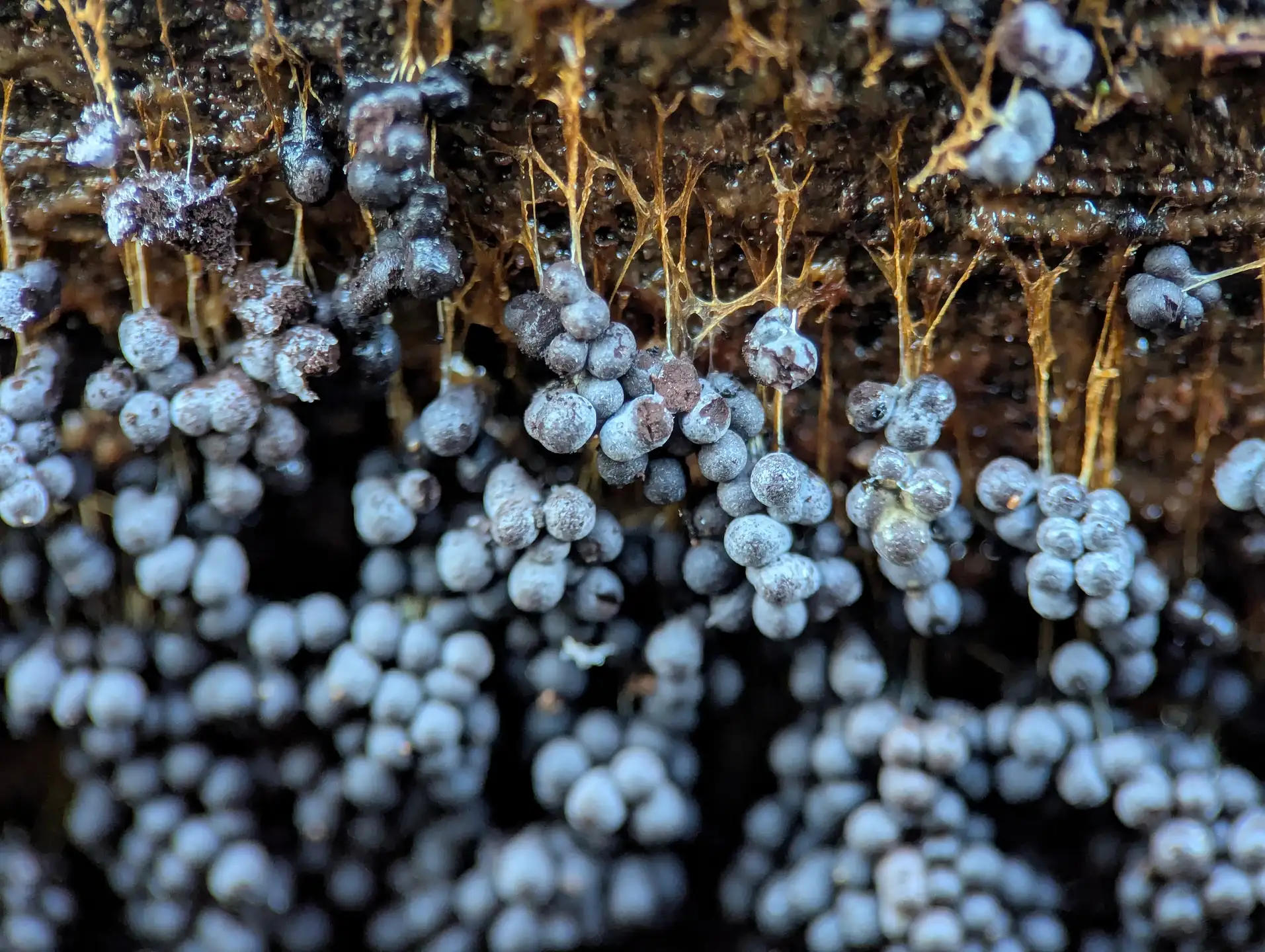
Close-up of dehiscing Badhamia utricularis sporothecae.

I think this is the only time we’ve observed a slime mould’s life cycle from active plasmodium to sporulation, to young and mature sporangia, and to dehiscence – all in one place!

References:

[1] Bruce Ing – Tansley Review No. 62, The phytosociology of myxomycetes, New Phytologist – Page 187

Strumpshaw Fen is a nature reserve managed by the RSPB adjacent the River Yare, east of Norwich in Norfolk

RSPB Strumpshaw Fen webpage RSPB Strumpshaw Fen Wikipedia entry