Beautiful green slime mould sporotheca – Strumpshaw Fen – June 2024
EDIT – 3rd January 2026
Researching for a new post, I don’t believe these sporangia are Cribraria. I was initially fixated on Colin Purrington’s bright green plasmodium photos (see link below) and assumed that because these sporangia had a glossy green sporotheca, that they were Cribraria likely aurantiaca. However, the stalks of the green sporotheca show a more mature, darkened structure than would be expected for a juvenile form emerging from a green plasmodium – one would expect an ‘all-in-one’ structure, where both emerging stalk and head were green. The presence of white immature sporangia amongst the green headed sporangia possibly suggests a non-green plasmodial stage.
Having delved into Bruce Ing’s identification handbook, Martin & Alexopoulos’ Taxonomic Keys [1], and trawling too many online images purporting to be – I’m leaning more towards possibly Physarum viride. But as with many finds without microscopy – who knows!
I’ve decided to leave the original body of the post as a record of my identification journey.
End of EDIT
Considered Badhamia viridescens
At Basecamp — on the section of trunk that we often find slime moulds and Artomyces pyxidatus (daughter’s 2023 mycological survey at the reserve) — I was captivated by groups of glossy yellowish green sporangia (I’m using the Danish Mycological Society’s colour chart).
A Google Lens search suggests that this slime mould is Cribraria aurantiaca and throws up wonderful photos by Barry Webb of slime moulds likely to be C. aurantiaca.
Some Google results state that the green sporangia are a “rare” form, however at the Buckinghamshire Fungus Group’s slime mould page (nearly half way down) there are some Barry Webb photos of C. aurantiaca from Burnham Beeches with a description that the “sporangia develop through green to blue then eventually ochre orange when mature”.
In The Myxomycetes of Britain and Ireland Bruce Ing states that the plasmodium of C. aurantiaca is a “bright leaf green” — on his blog Colin Purrington posts a photo of C. aurantiaca plasmodium that he found in 2017.
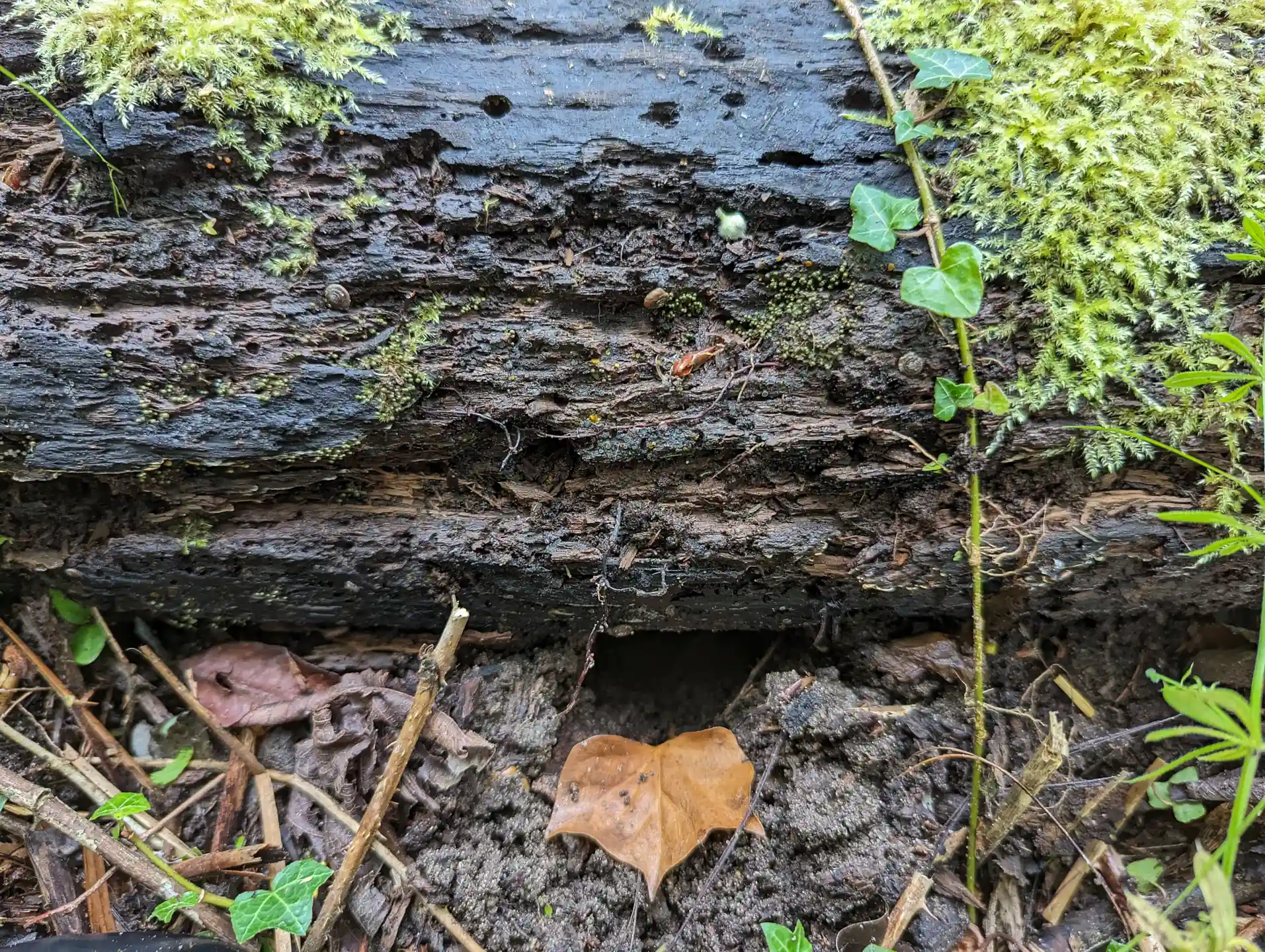
Strumpshaw Fen – 16th June 2024
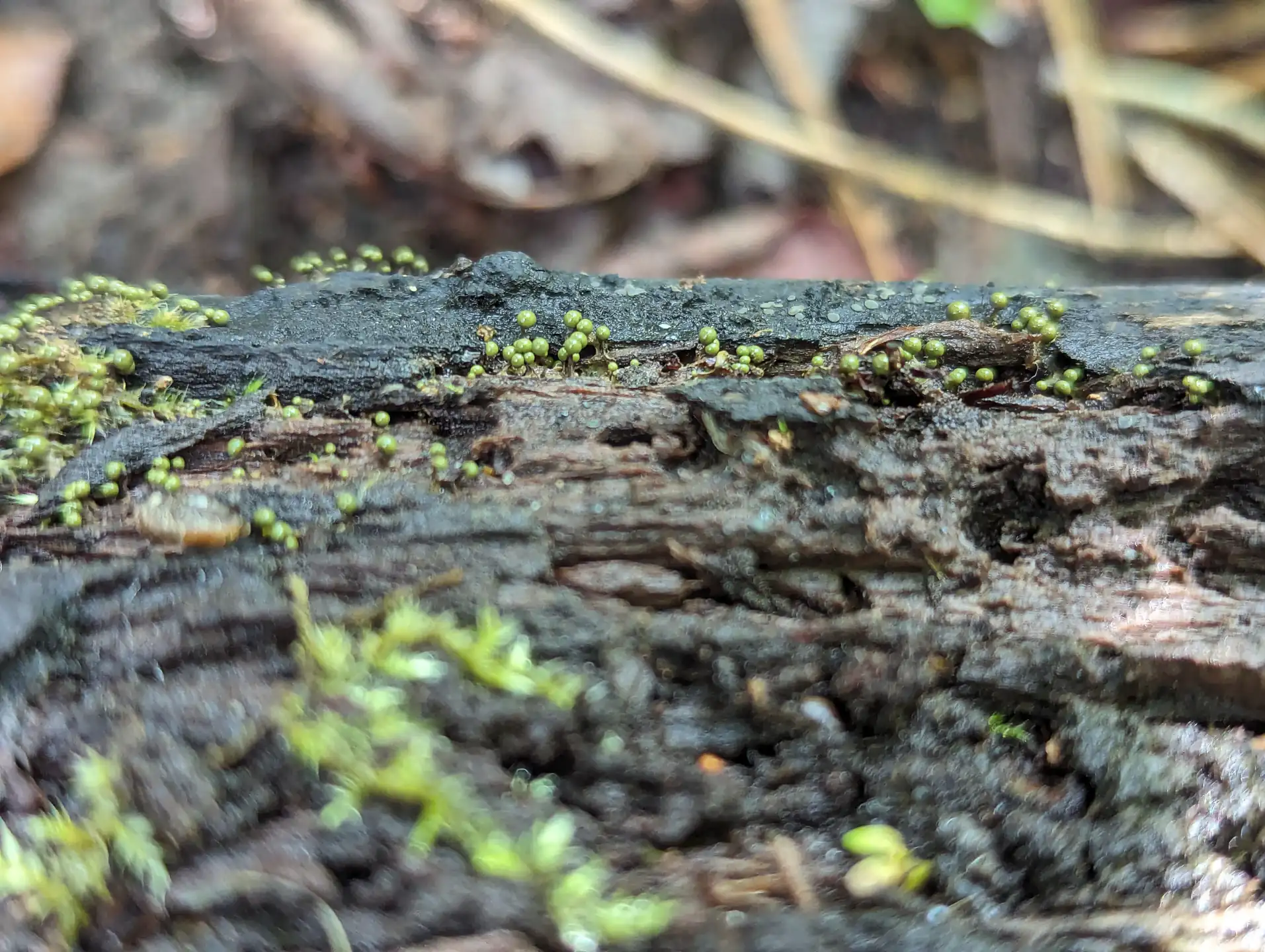
Strumpshaw Fen – 16th June 2024
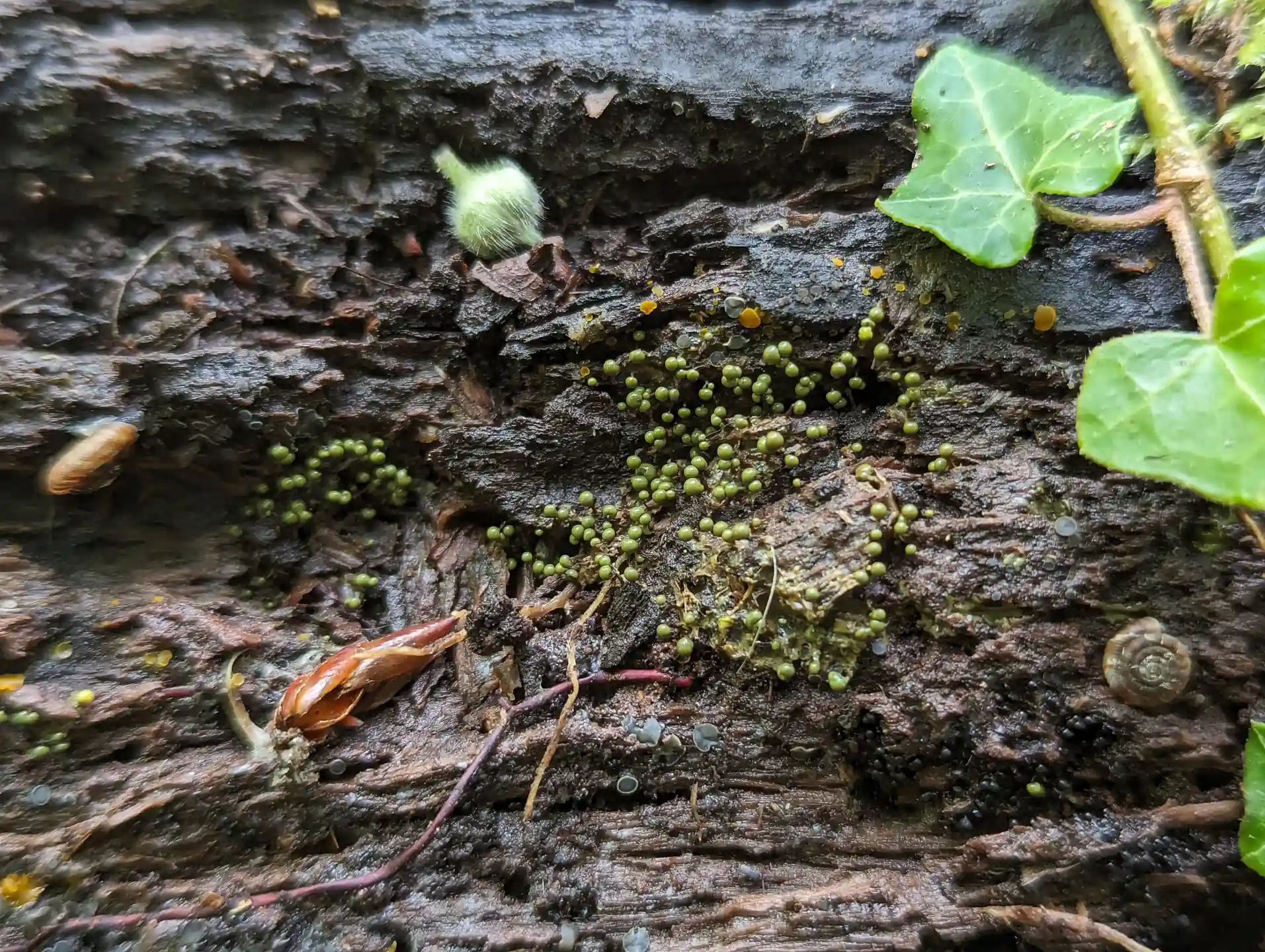
Strumpshaw Fen – 16th June 2024
Note the small group of white sporangia left of centre in the photo below.
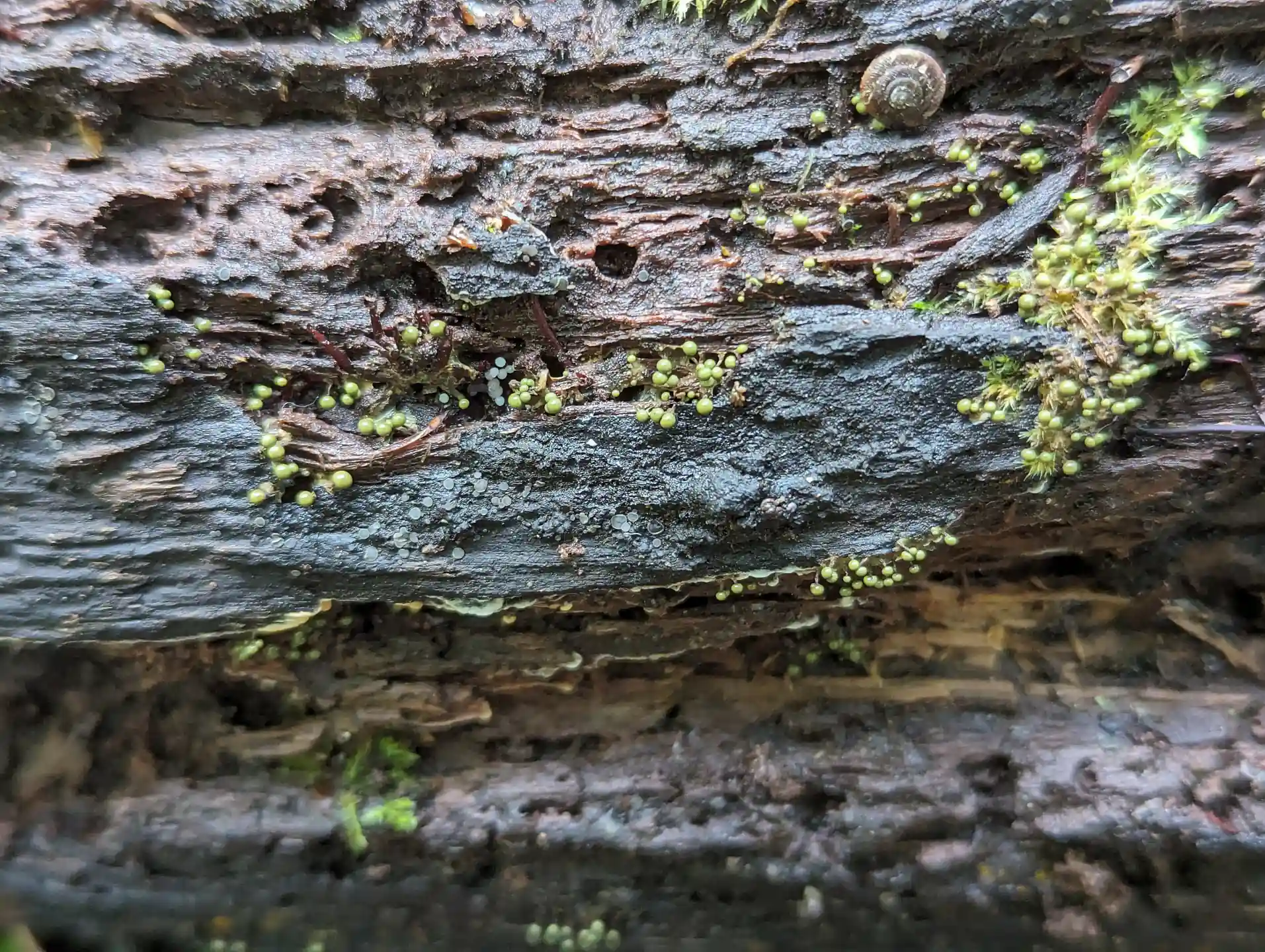
Basecamp – Strumpshaw Fen – 16th June 2024
Amongst the groups of green sporangia were scattered smaller groups of these white sporangia. On some of the white sporangia there were tiny brownish vinaceous droplets.
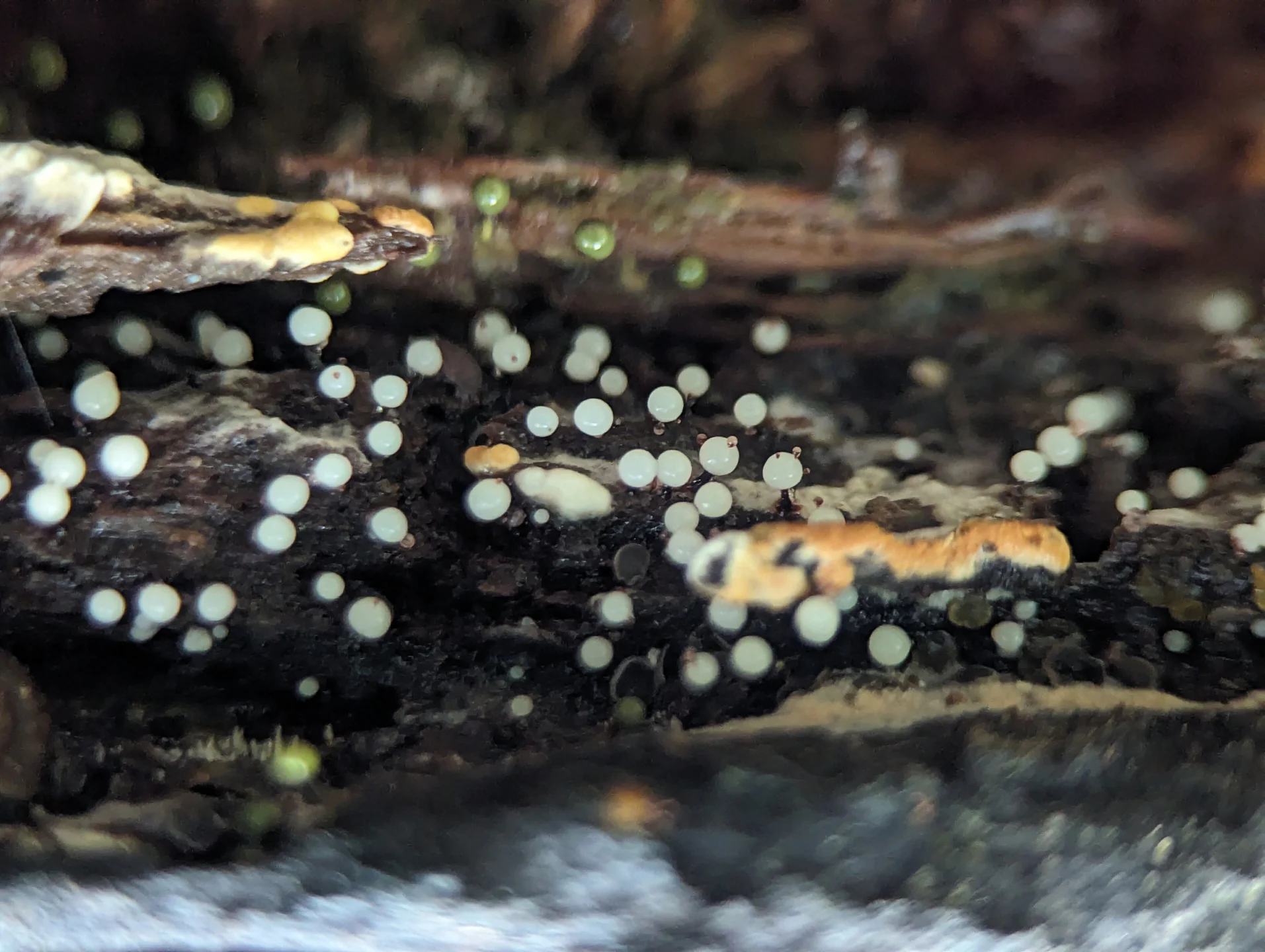
Strumpshaw Fen – 16th June 2024
I was inclined to think that the white sporangia were a young stage of C. aurantiaca — they were in and amongst the green sporangia groups and had a similar form but I can’t find any reference to C. aurantiaca having white sporangia.
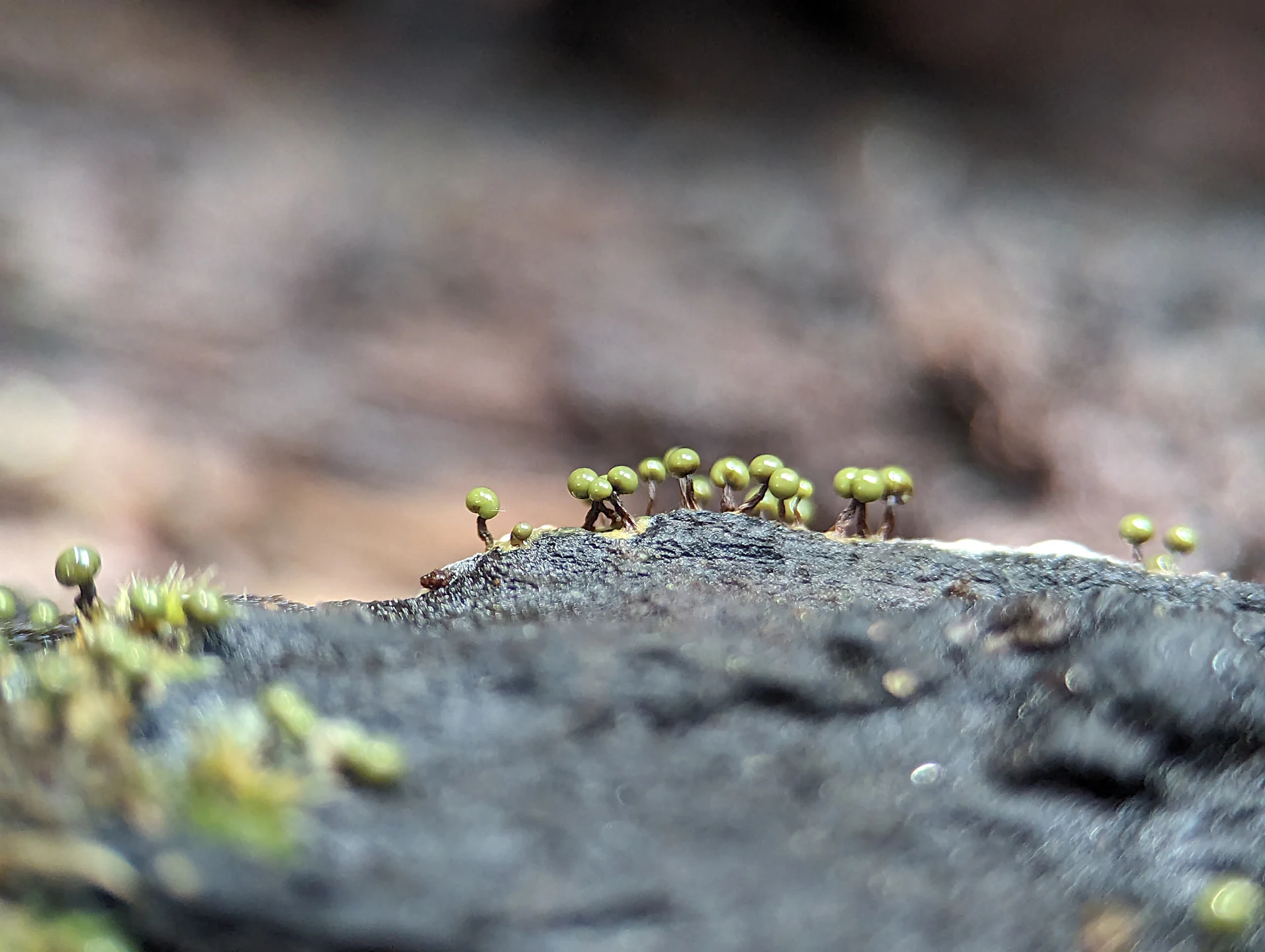
Strumpshaw Fen – 16th June 2024
[1] Martin & Alexopoulos Taxonomic Keys – https://www.myxotropic.org/myxo-keys/
Strumpshaw Fen is a nature reserve managed by the RSPB adjacent the River Yare, east of Norwich in Norfolk
RSPB Strumpshaw Fen webpage RSPB Strumpshaw Fen Wikipedia entry