Felbrigg Estate Fungi & Slime Moulds – 9th November 2025

We were last at Felbrigg Estate in October 2024.

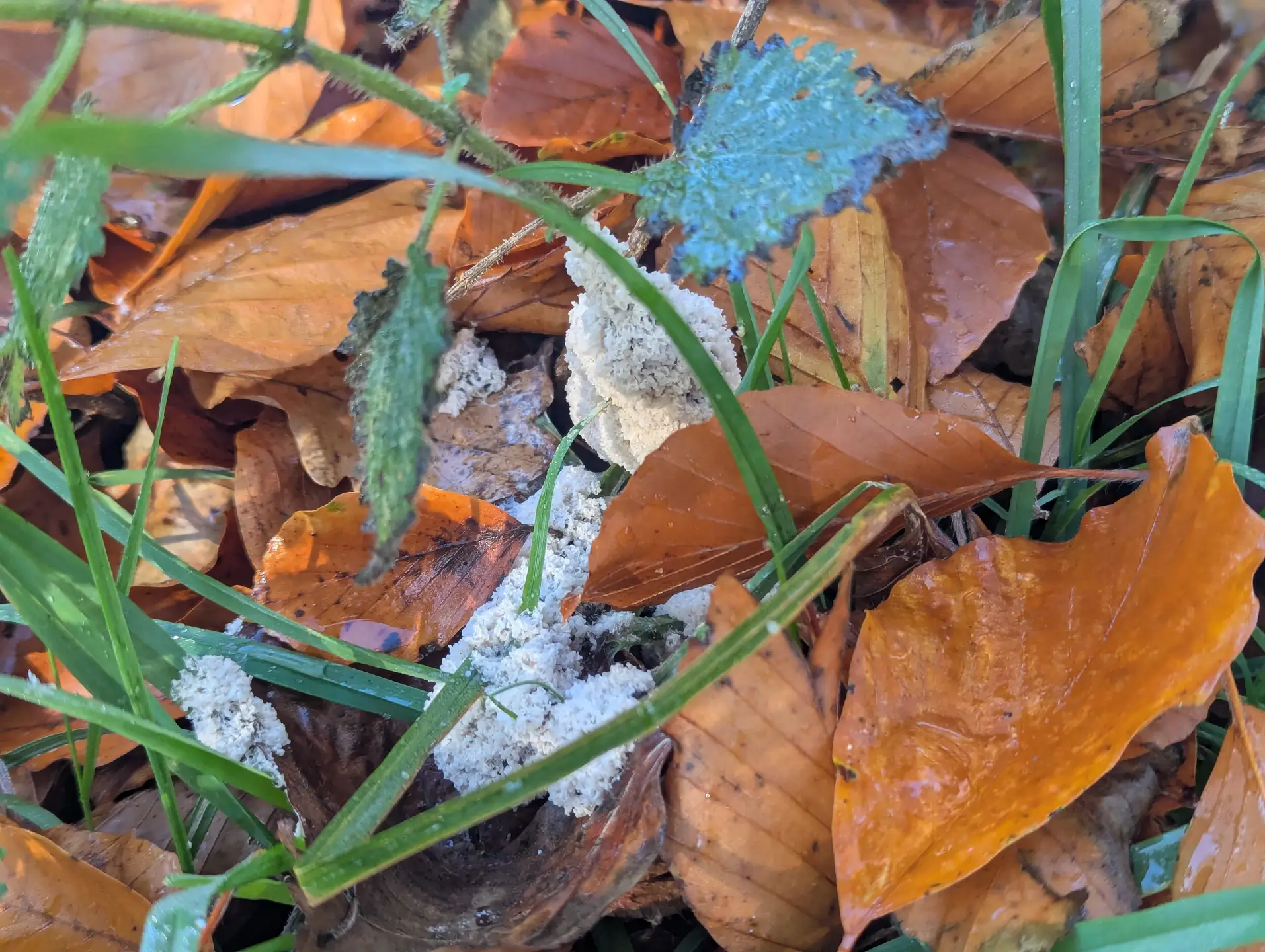
South of the Hall just past the entrance from the main carpark, some Didymium spongiosum.
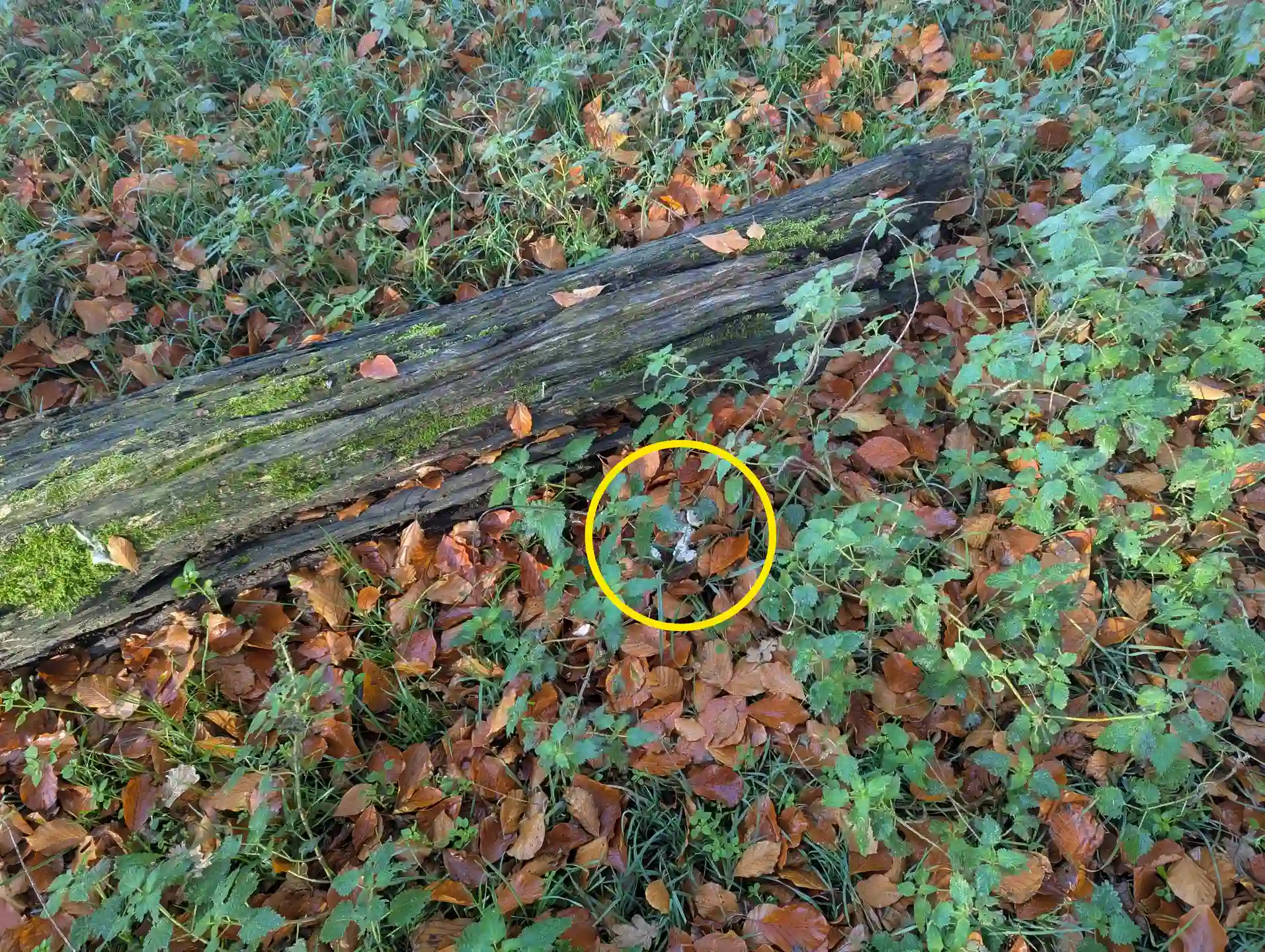
Woodland floor covered in brown beech leaves and green ground vegetation, with a decaying section of trunk on the ground. A yellow circle highlights white, Didymium spongiosum slime mould growing on the ground.
Didymium spongiosum
Felbrigg Estate – 9th November 2025
Close-up view of the white Didymium spongiosum aethalia growing around blades of grass, among brown beech leaves.
Didymium spongiosum
Felbrigg Estate – 9th November 2025

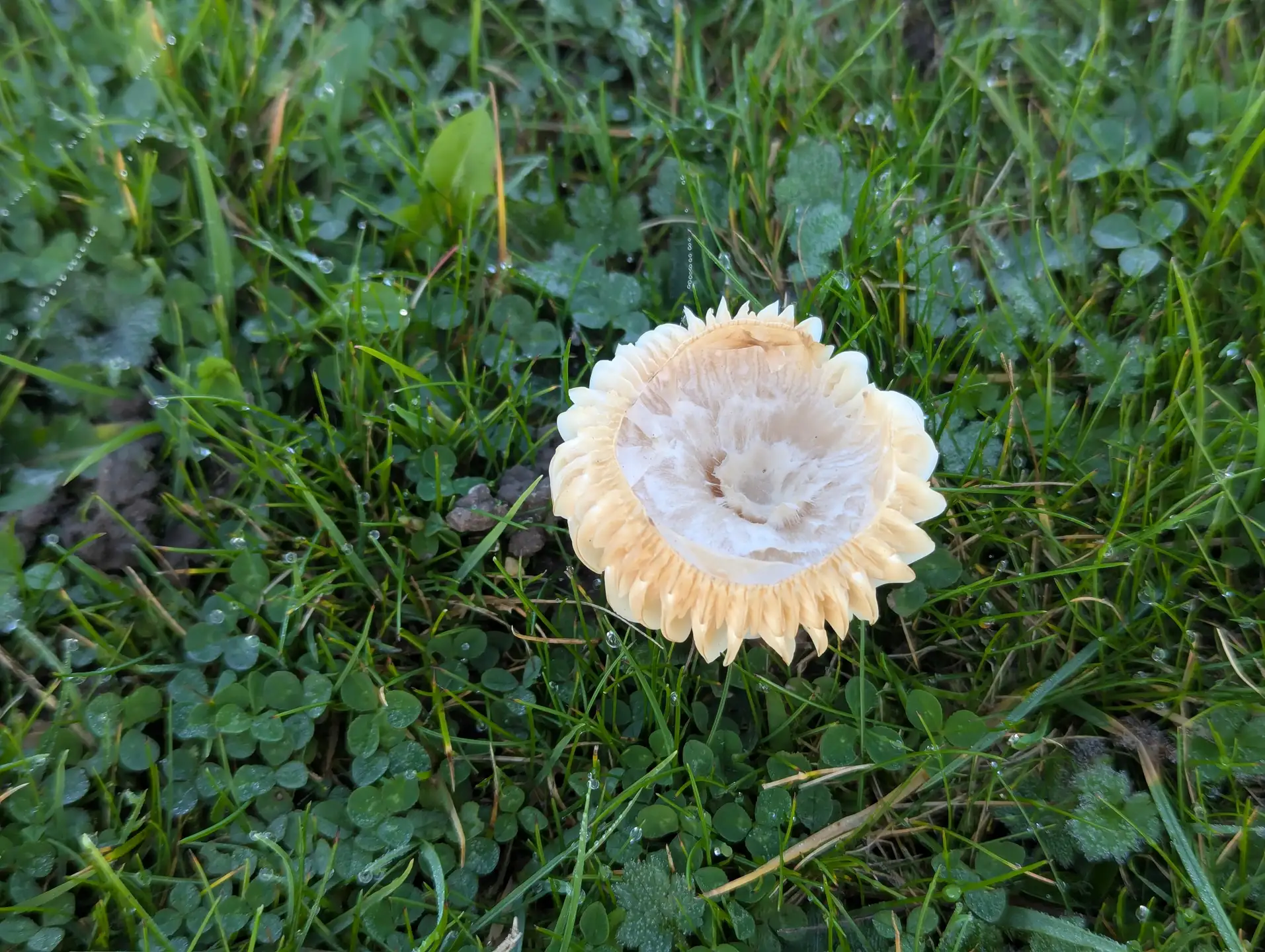
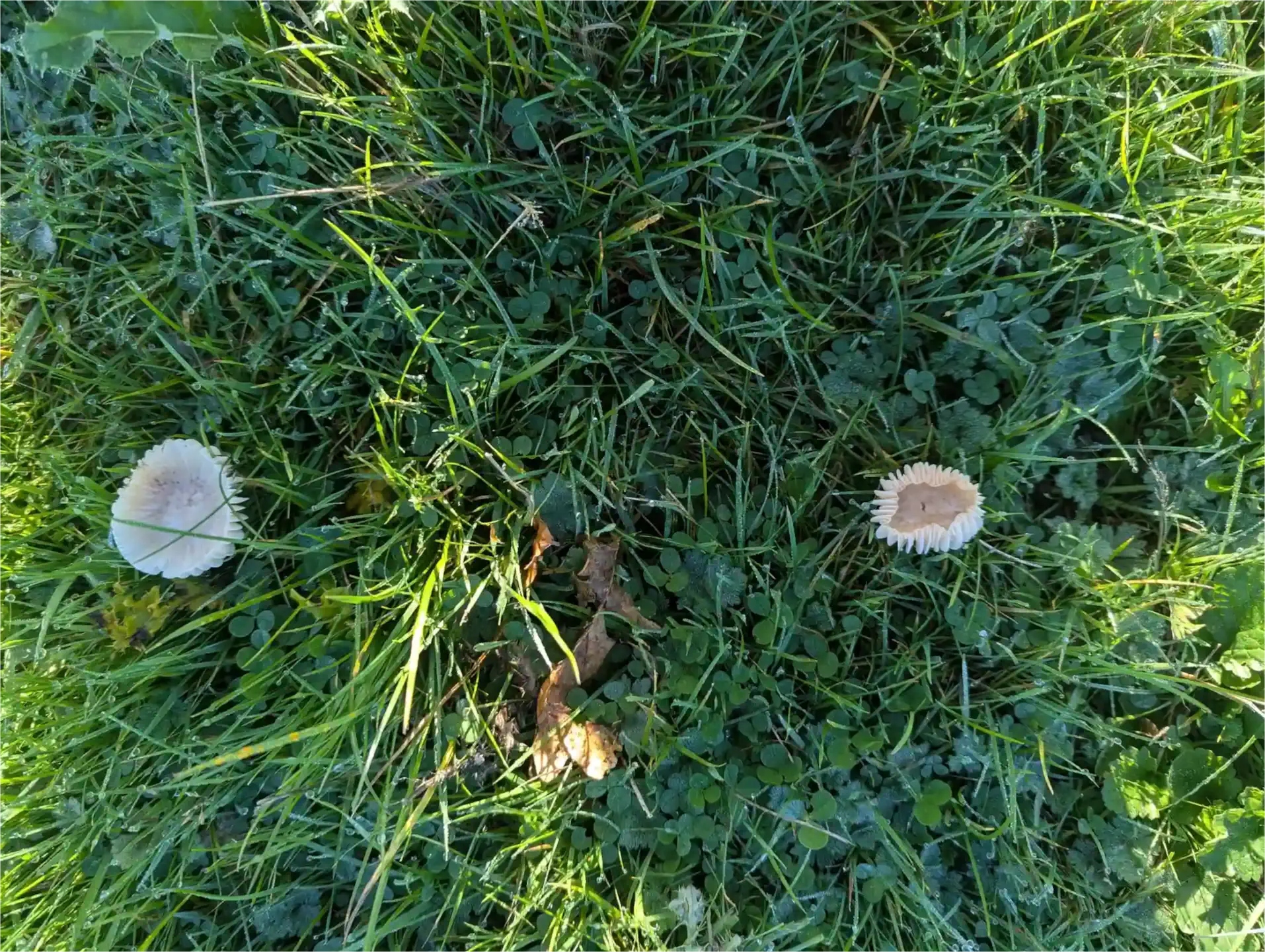
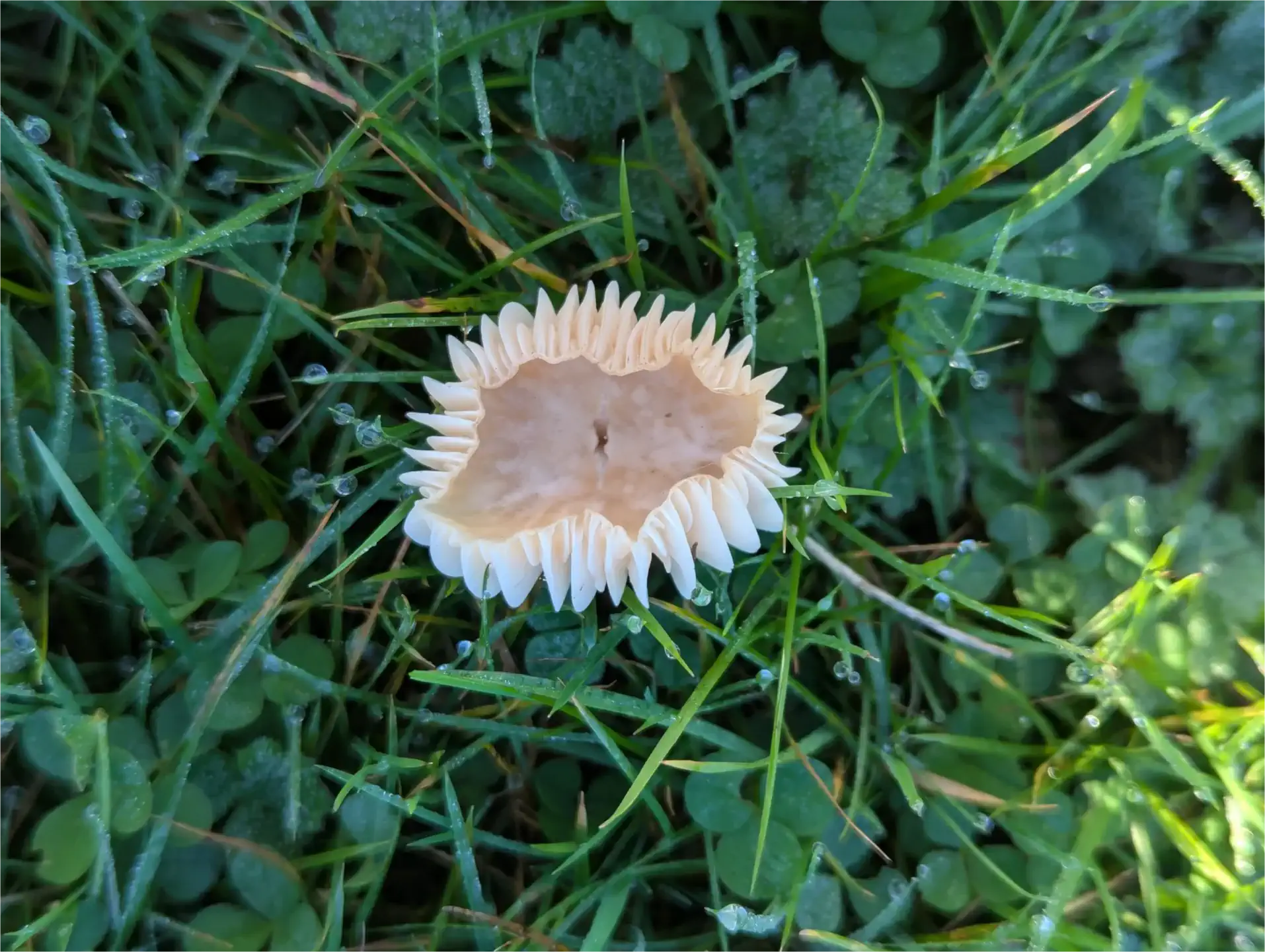
In the grassland to the south of the Hall – wonderfully sculpted meadow waxcaps (Cuphophyllus pratensis).
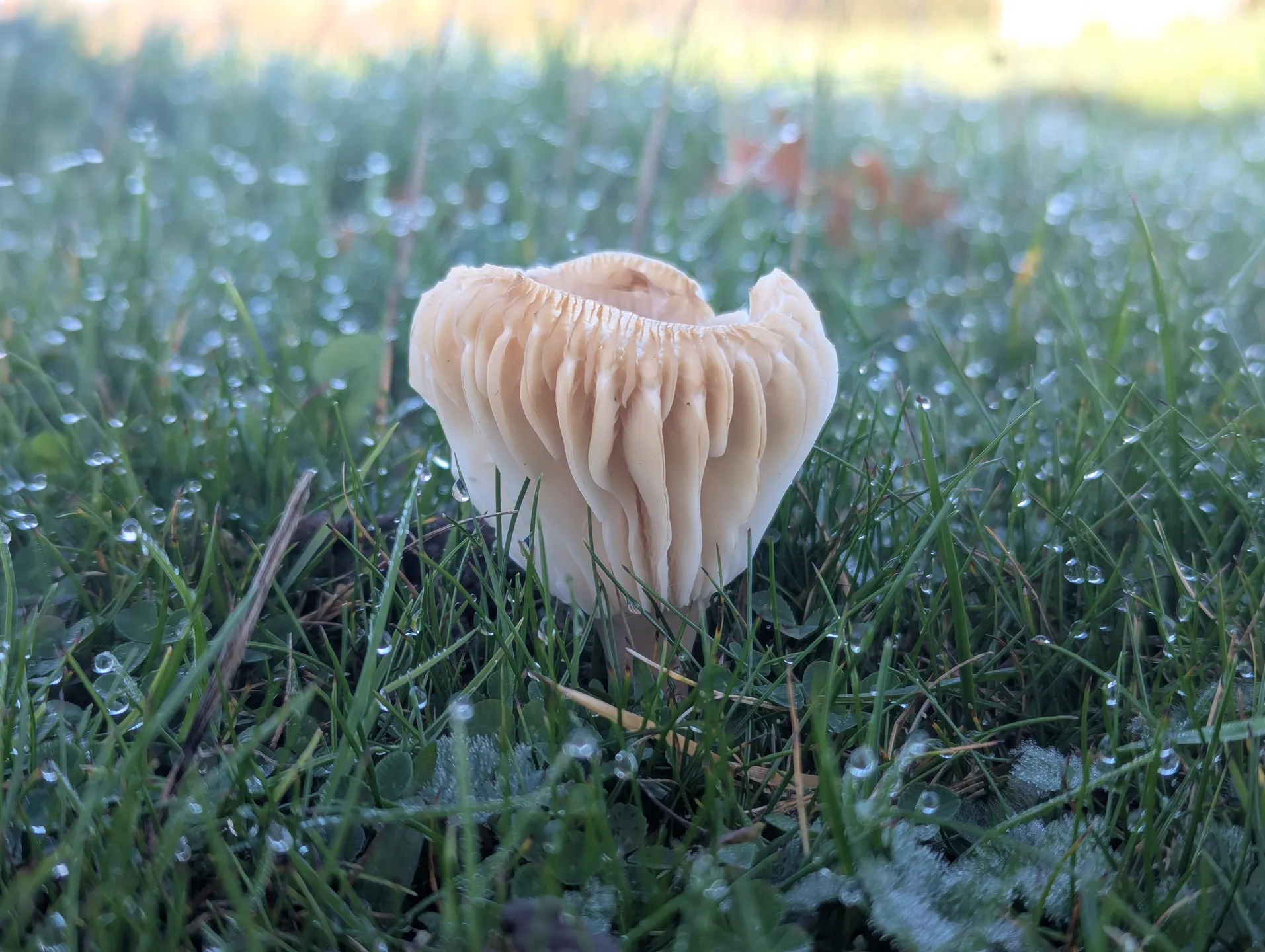
A close-up side view of a pale, creamy-white meadow waxcap, showing its prominent gills. The mushroom is growing in green grass covered with morning dew.
Cuphophyllus pratensis
Felbrigg Estate – 9th November 2025
Close-up top view of the same pale, creamy-white meadow waxcap mushroom, showing its deeply umbilicate cap with a perimeter of its prominent gills.
Cuphophyllus pratensis
Felbrigg Estate – 9th November 2025
Close-up, top views of two pale, creamy-white meadow waxcap mushrooms growing near to each other in green grass covered with morning dew drops.
Cuphophyllus pratensis
Felbrigg Estate – 9th November 2025
Close-up top view of another pale, creamy-white meadow waxcap mushroom, showing its deeply umbilicate cap with a perimeter of its prominent gills.
Cuphophyllus pratensis
Felbrigg Estate – 9th November 2025

Also in the meadow, a Xerocomellus cisalpinus – the blue‑foot bolete… probably.
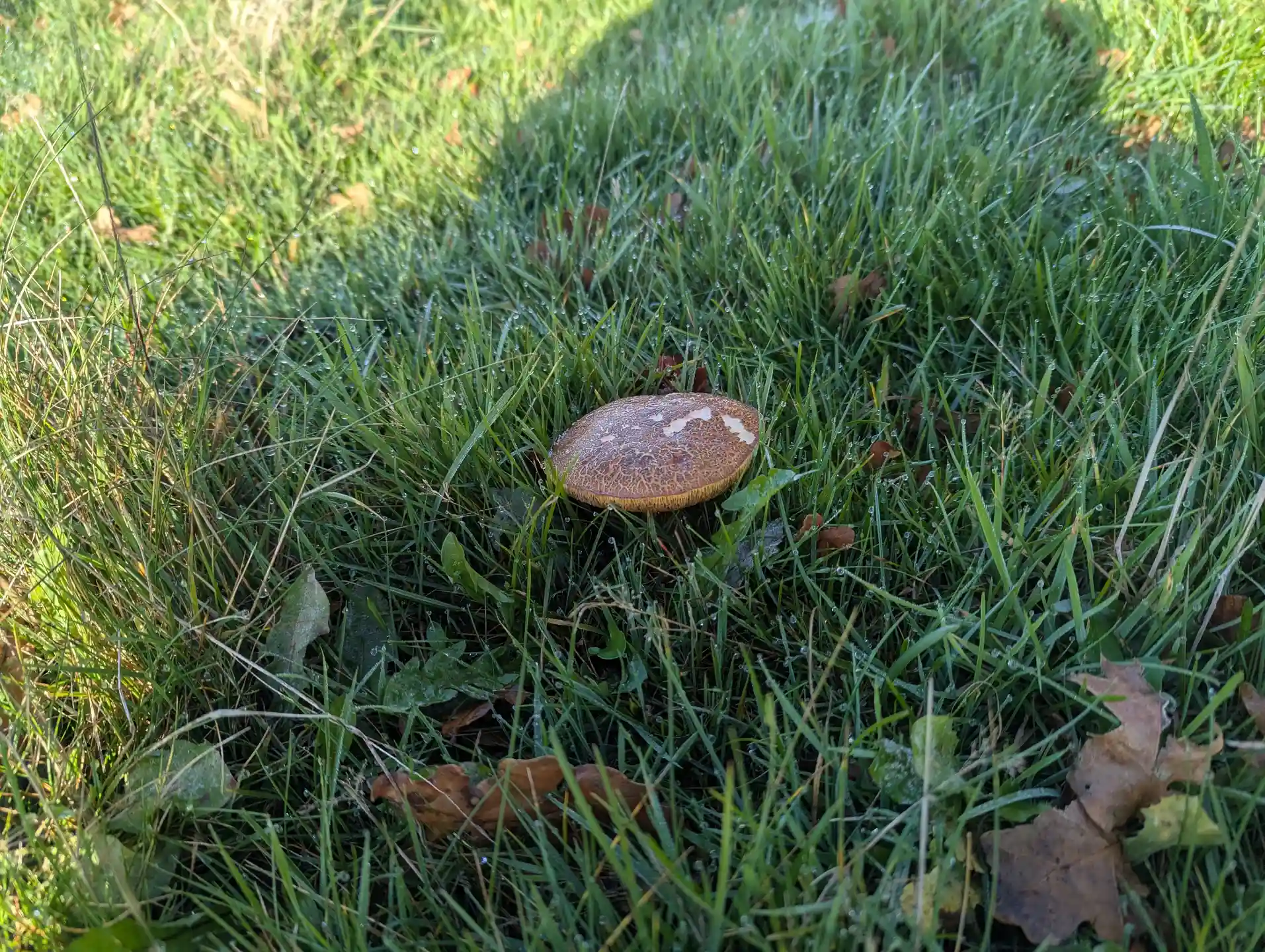
Blue-foot bolete mushroom growing in green grass covered with morning dew. The mushroom has a crazed brownish cap revealing the flesh below the cap skin.
Xerocomellus cisalpinus – probably
Felbrigg Estate – 9th November 2025

Compelling pore structure.
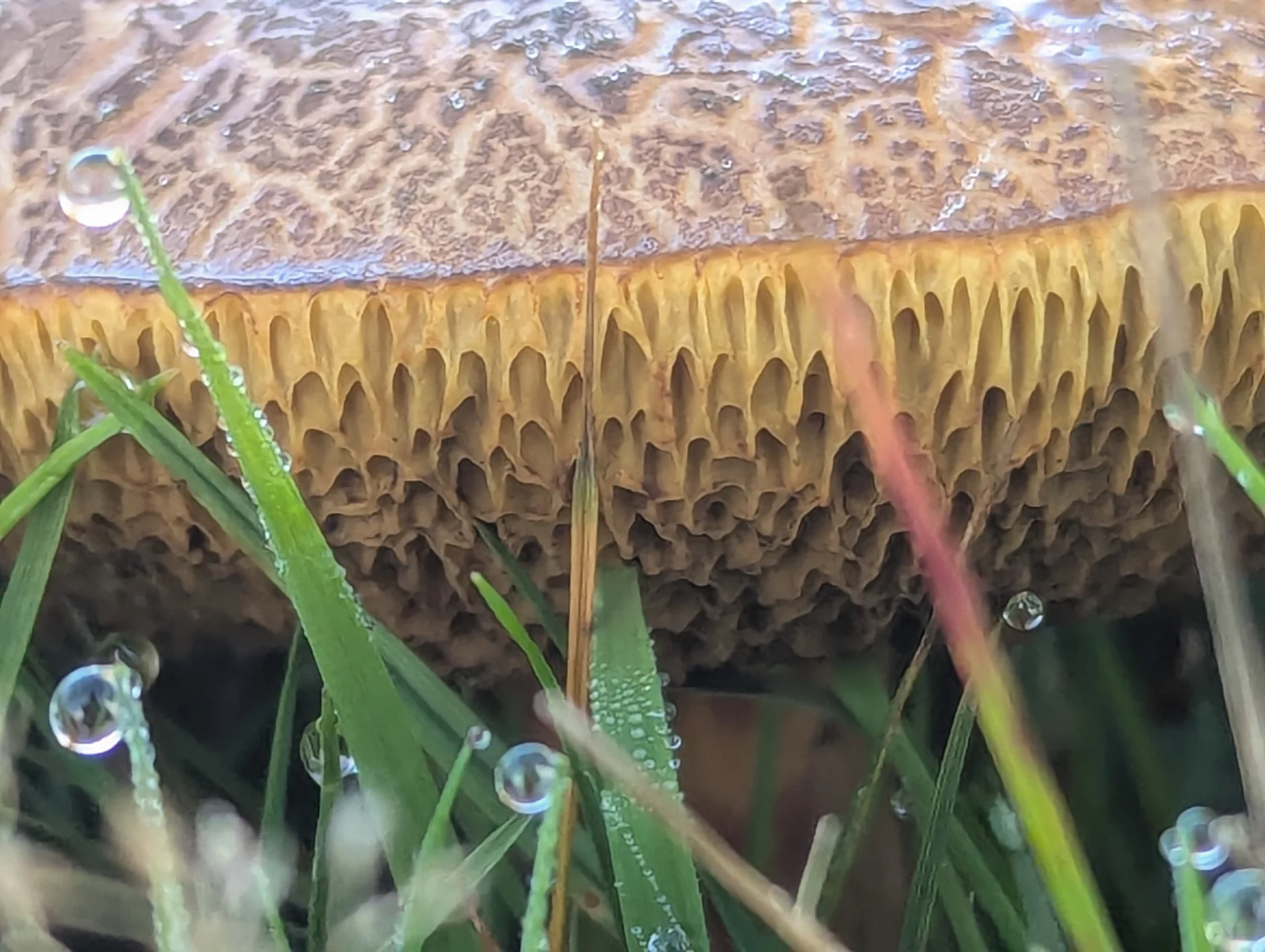
Close-up side view of the blue-foot bolete mushroom showing its pale orange-yellow, honeycomb-like pore surface. Blades of grass and dew drops are visible in the foreground.
Xerocomellus cisalpinus – probably
Felbrigg Estate – 9th November 2025

At the same location last year where we saw the super large ring of Macrolepiota procera – some shrivelled specimens.
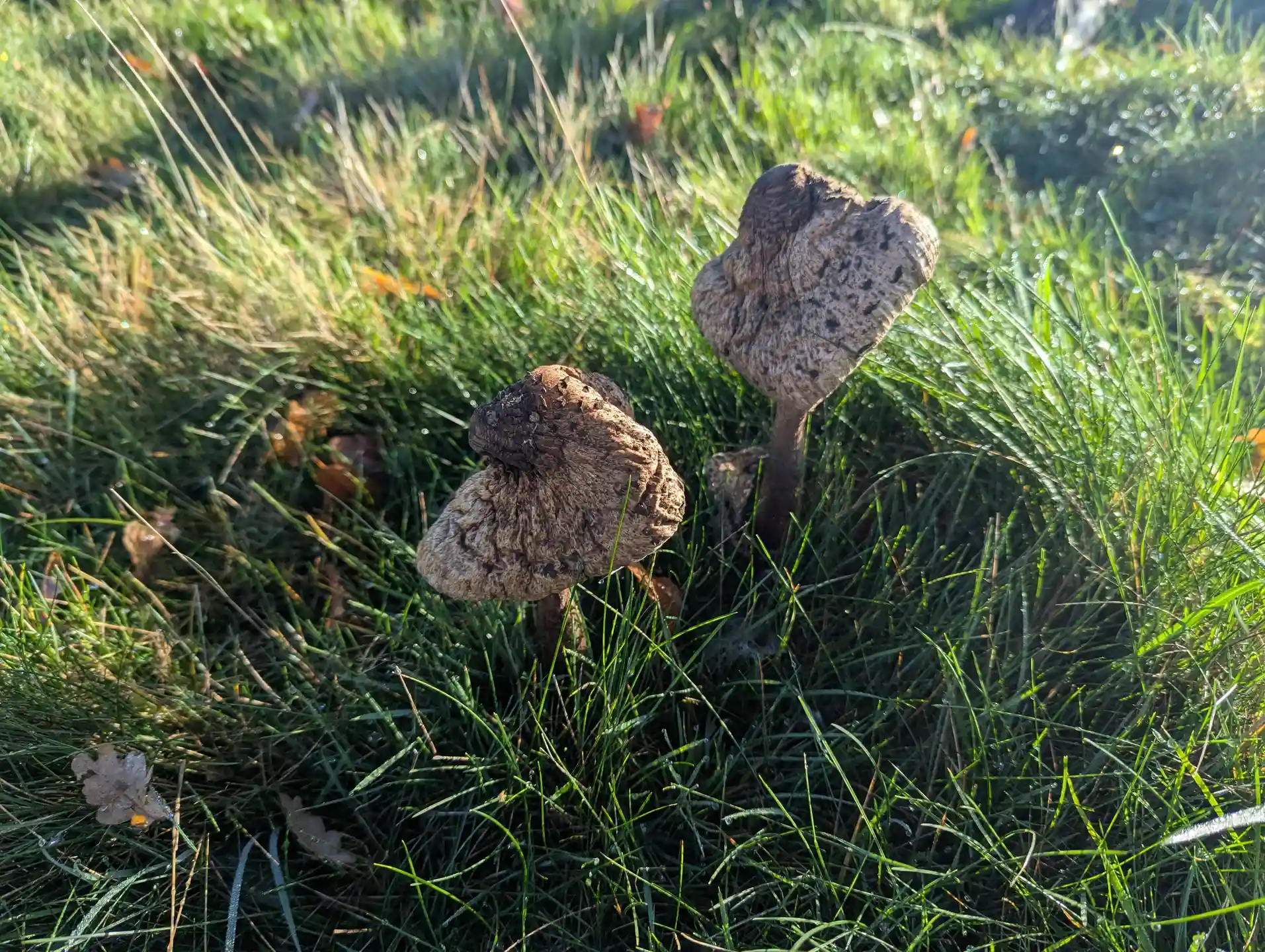
Two withered parasol mushrooms growing in green grass.
Macrolepiota procera – probably
Felbrigg Estate – 9th November 2025

Passing into the woodland adjacent the Lion’s Mouth – two Phallus impudicus eggs.
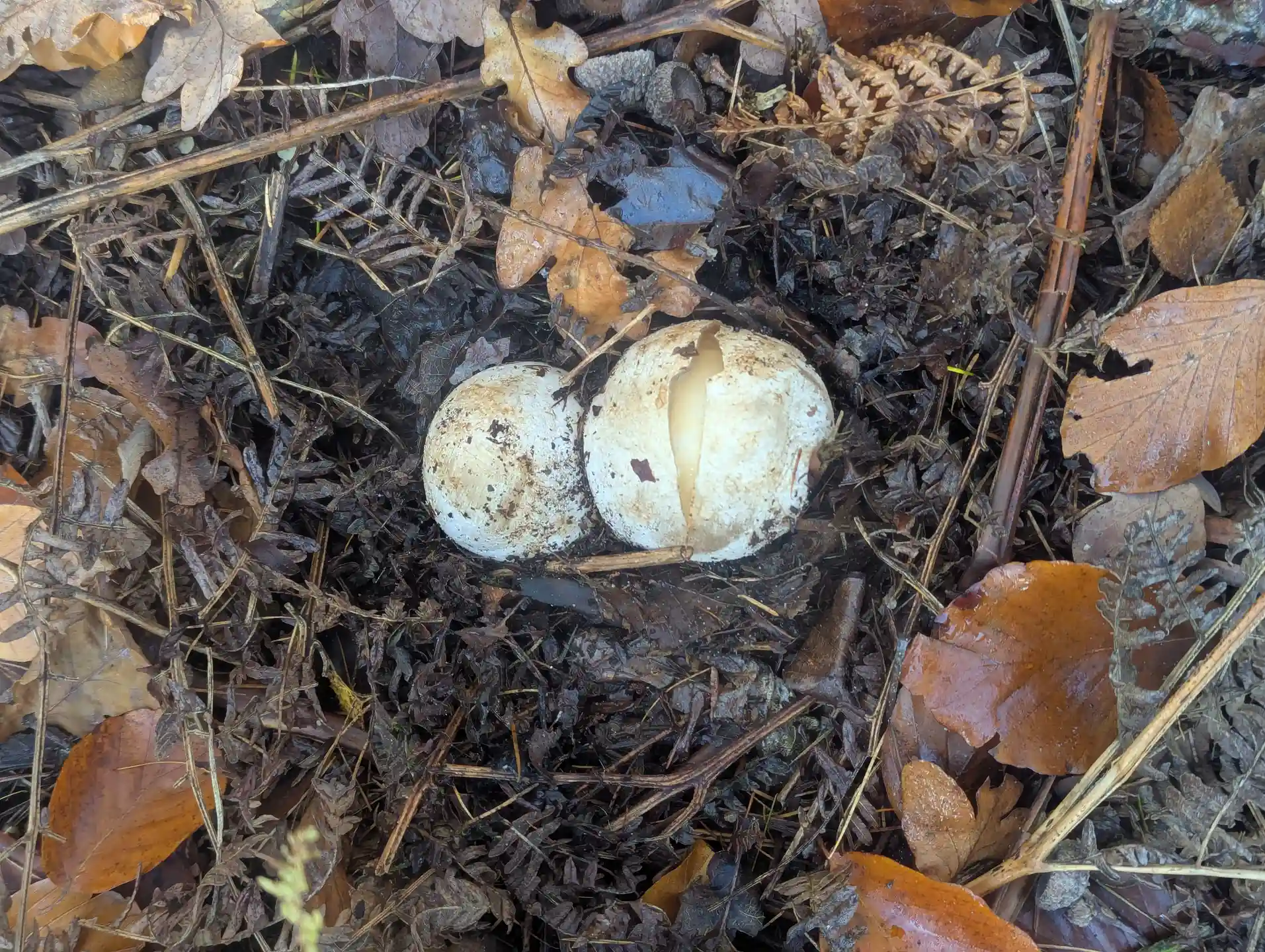
A top view of two white common stinkhorn eggs emerging from a bed of decaying leaves. One egg has cracked open at the top, revealing the gelatinous developing gleba inside.
Phallus impudicus eggs
Felbrigg Estate – 9th November 2025

A sprouting sweet chestnut!
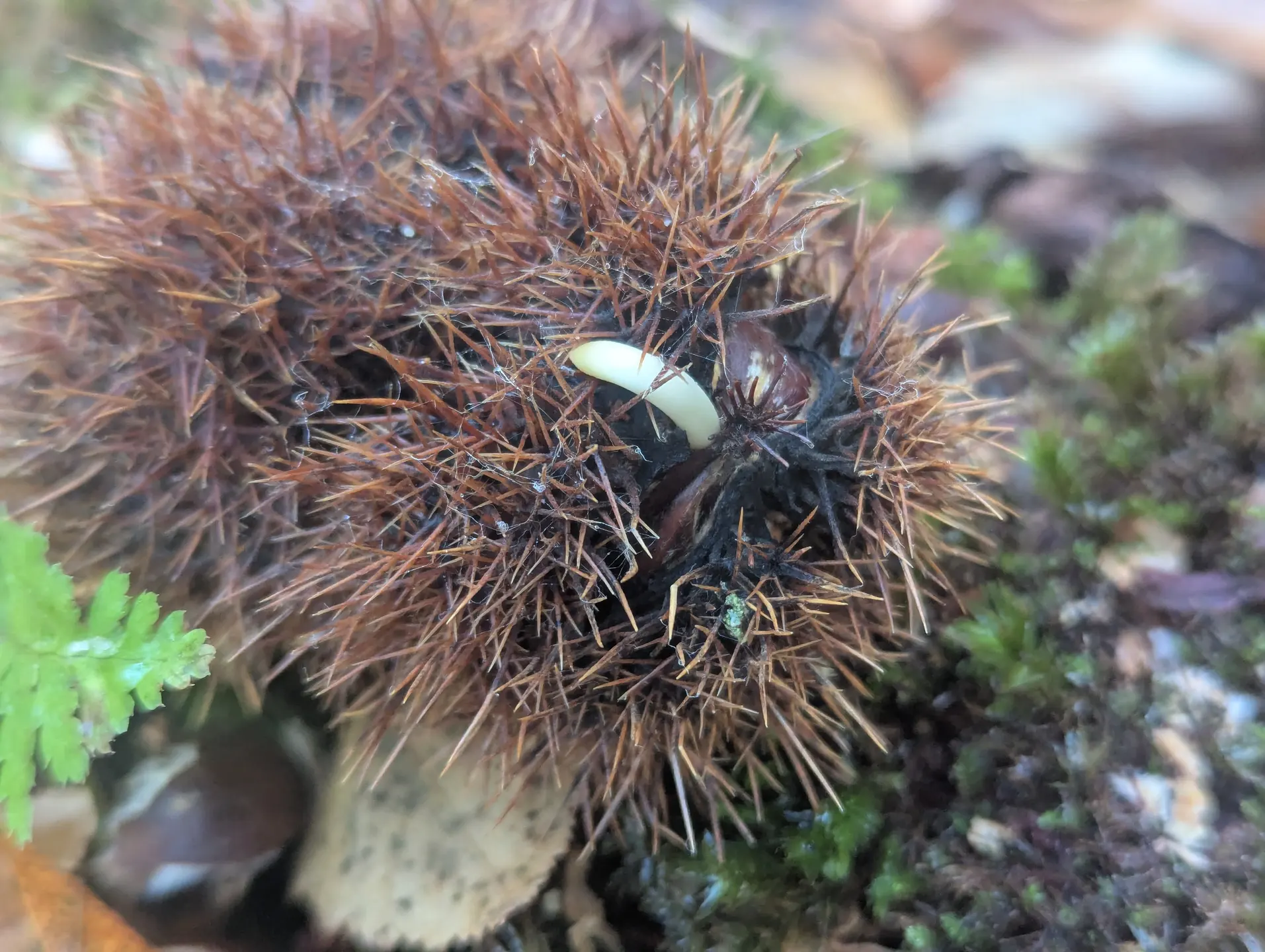
A close-up of a spiky, brown sweet chestnut burr. A small, white root is emerging from an opening in the burr, indicating that the seed inside is germinating. Moss is visible in the background.
Sprouting sweet chestnut
Felbrigg Estate – 9th November 2025

On a fallen branch – an unidentified sprawling slime mould phaneroplasmodium advancing in multiple directions. This was a super exciting find, as it seems uncommon to spot them.
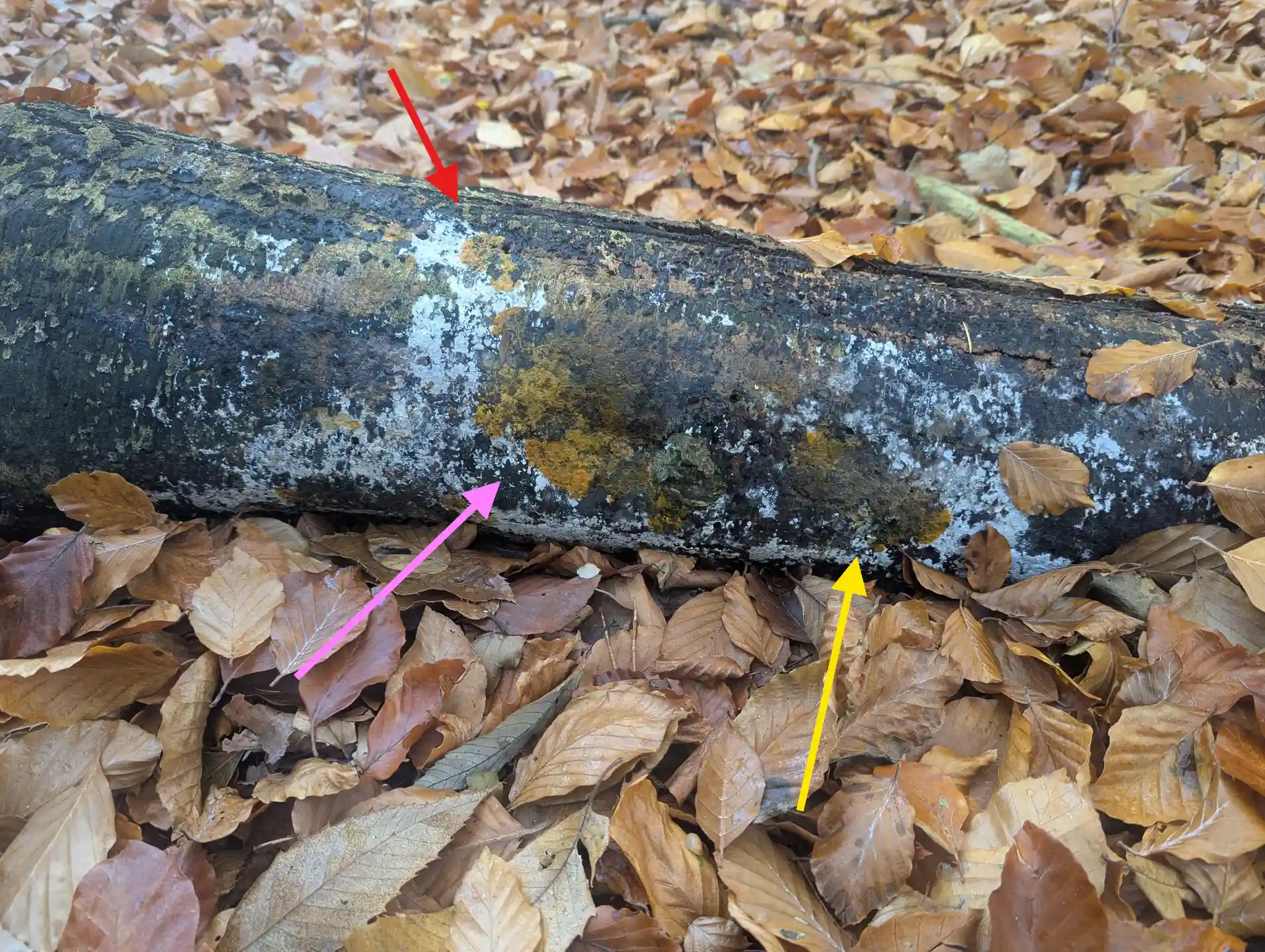
A section of decaying trunk on a bed of fallen golden beech leaves. Arrows point to different sections of a sprawling phaneroplasmodial slime mould growing on the bark.
Unidentified slime mould phaneroplasmodium
Felbrigg Estate – 9th November 2025

The photo below shows an area of advancing fronts indicated by the magenta arrow. Could the slime mould be consuming the thin white surface growths – likely fungal?
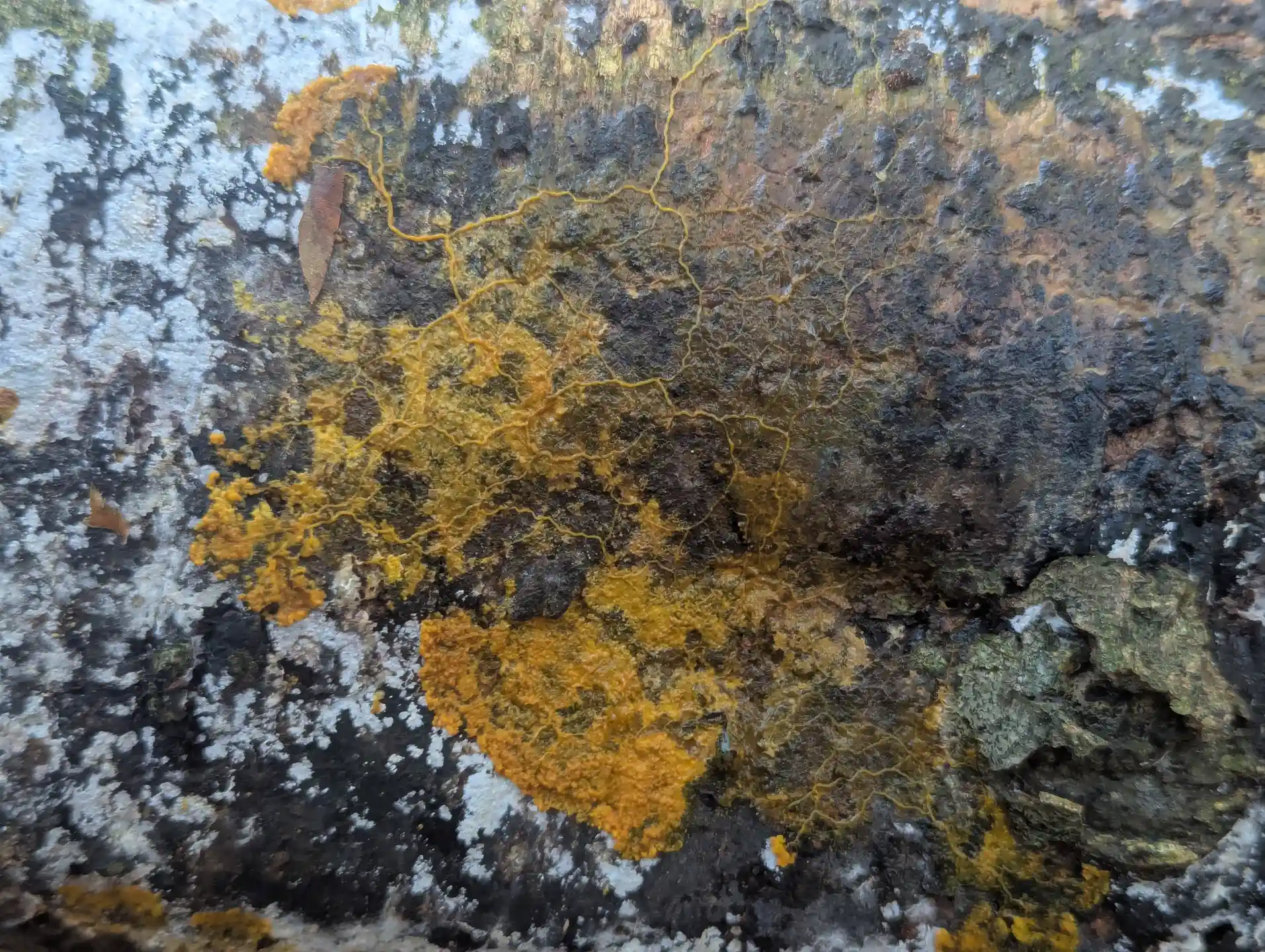
Close-up of one of the sections of the phaneroplasmodium characterised by a curry-yellow advancing fan-shaped feeding edge and a trailing network of veins.
Unidentified slime mould phaneroplasmodium
Felbrigg Estate – 9th November 2025

The advancing front below is the one indicated by the red arrow.
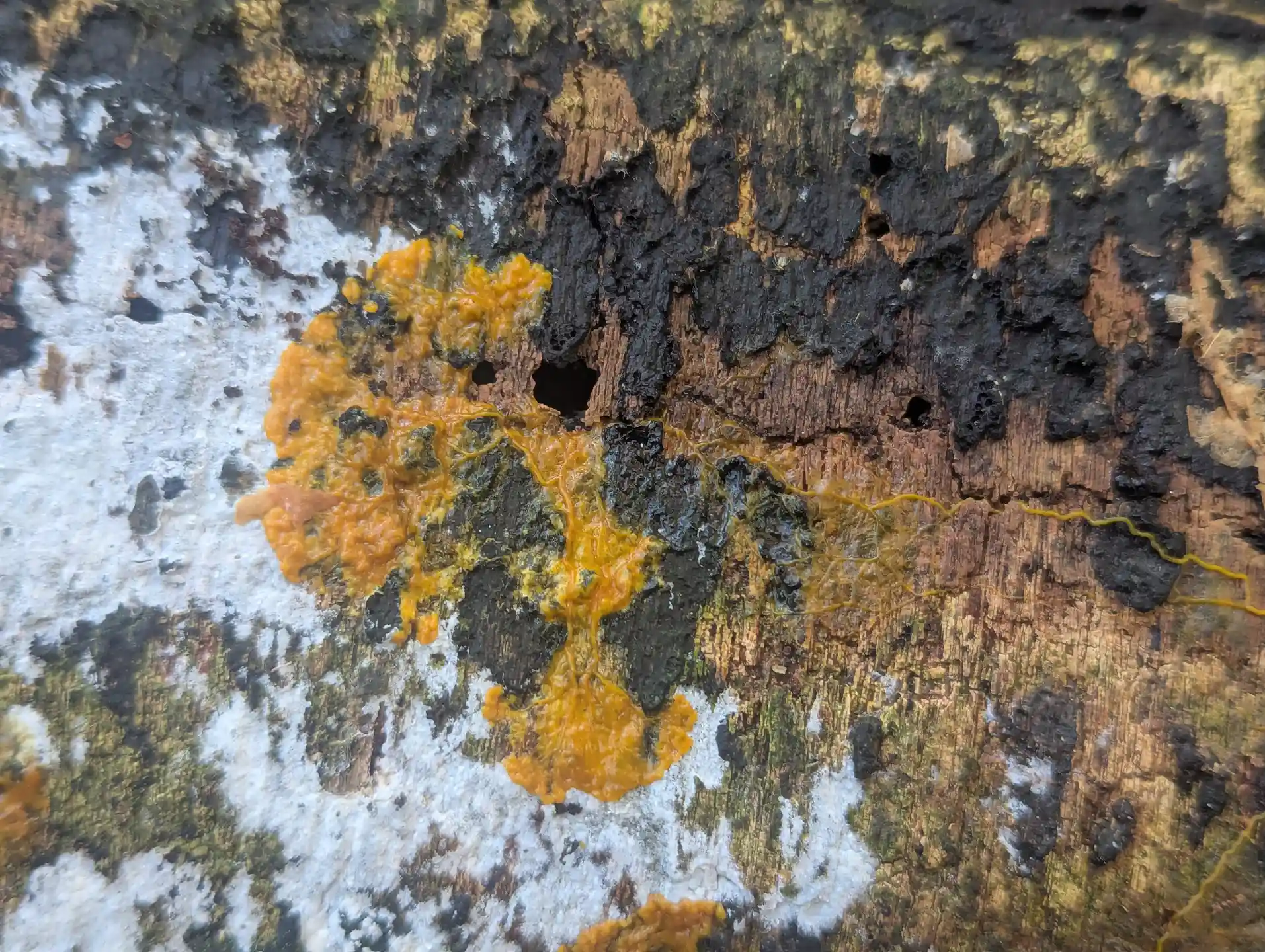
Close-up of another section of the phaneroplasmodium.
Unidentified slime mould phaneroplasmodium
Felbrigg Estate – 9th November 2025

And this advancing section is indicated by the yellow arrow.
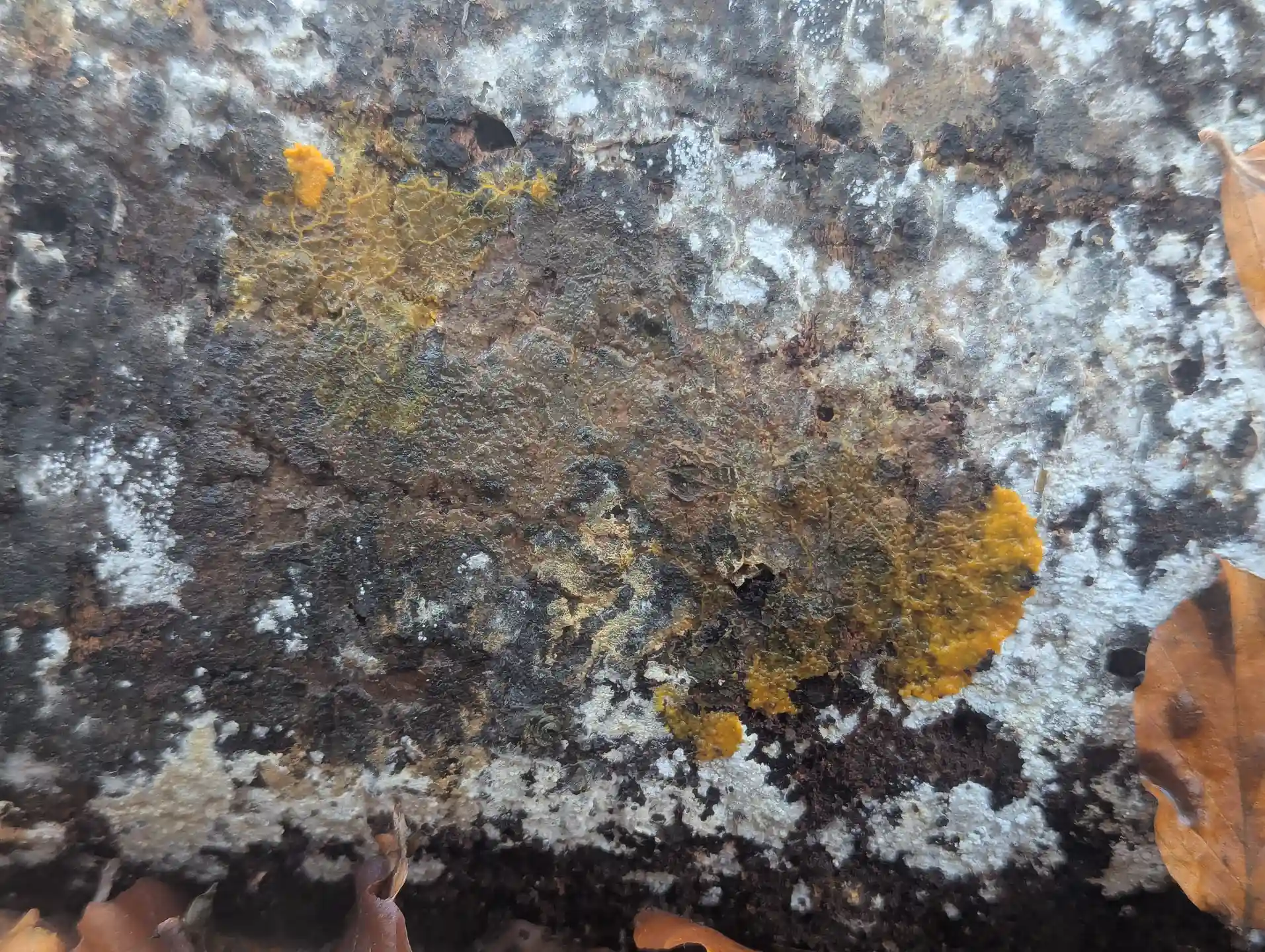
Close-up of a third section of the phaneroplasmodium
Unidentified slime mould phaneroplasmodium
Felbrigg Estate – 9th November 2025

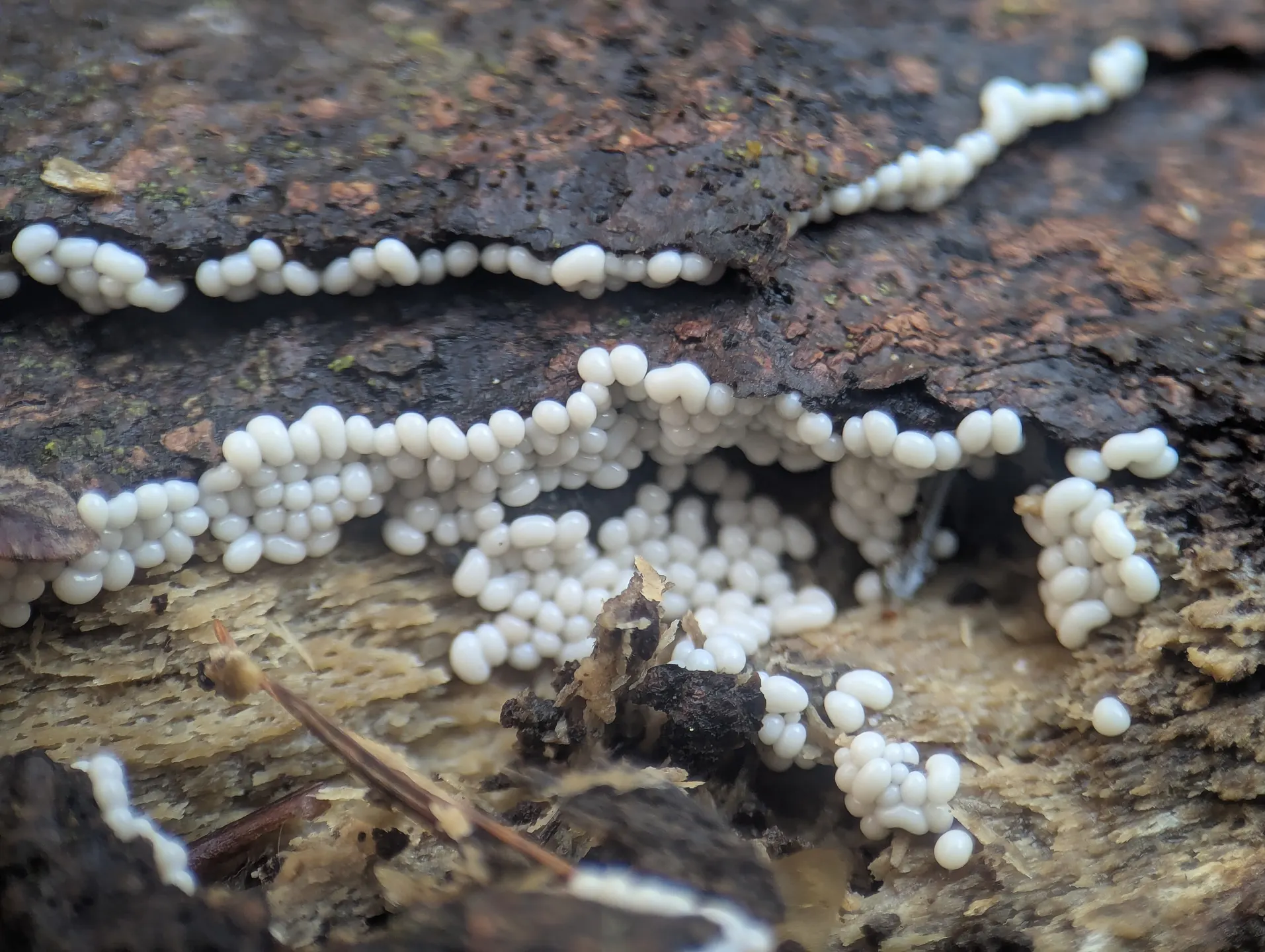
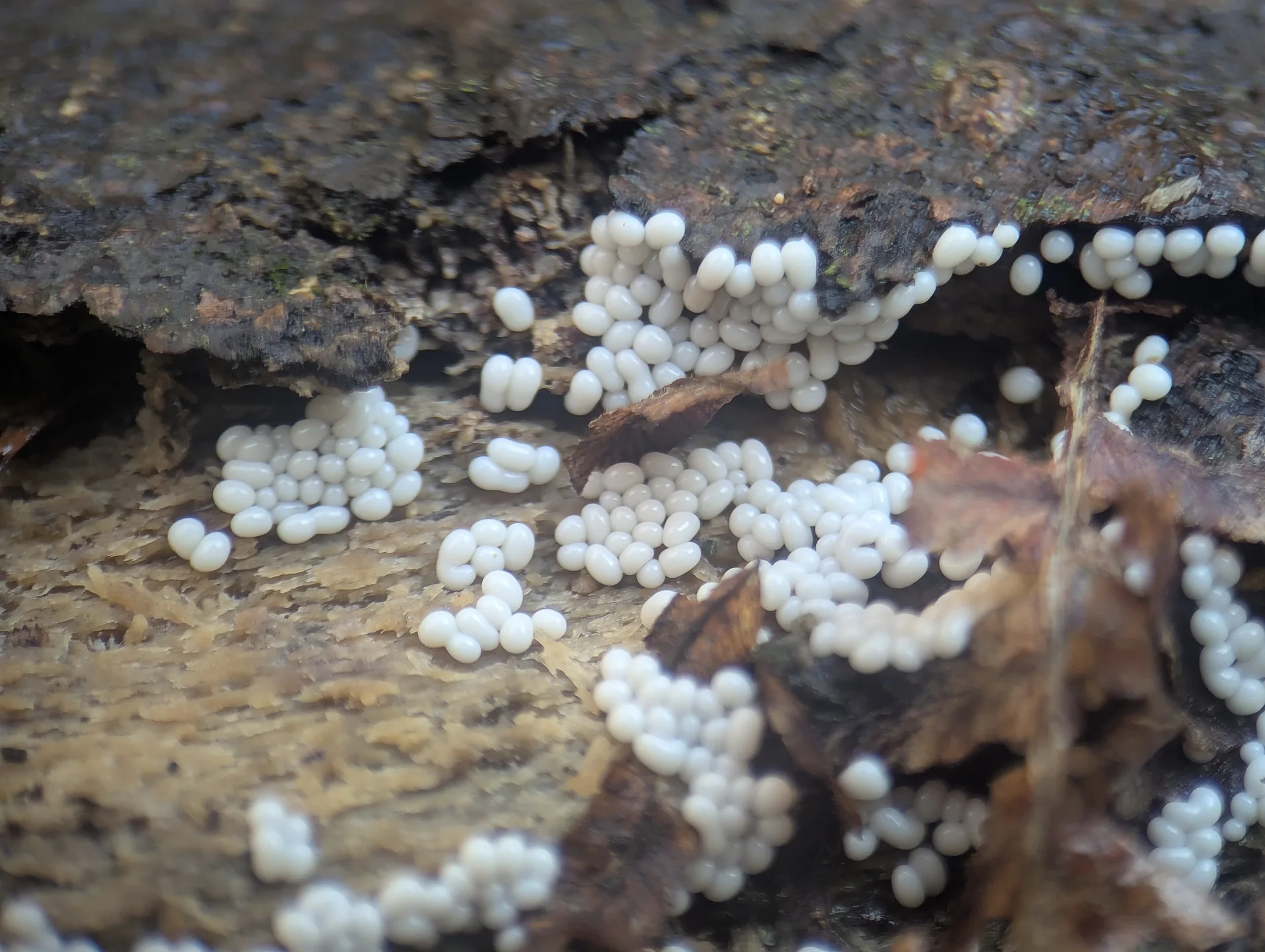
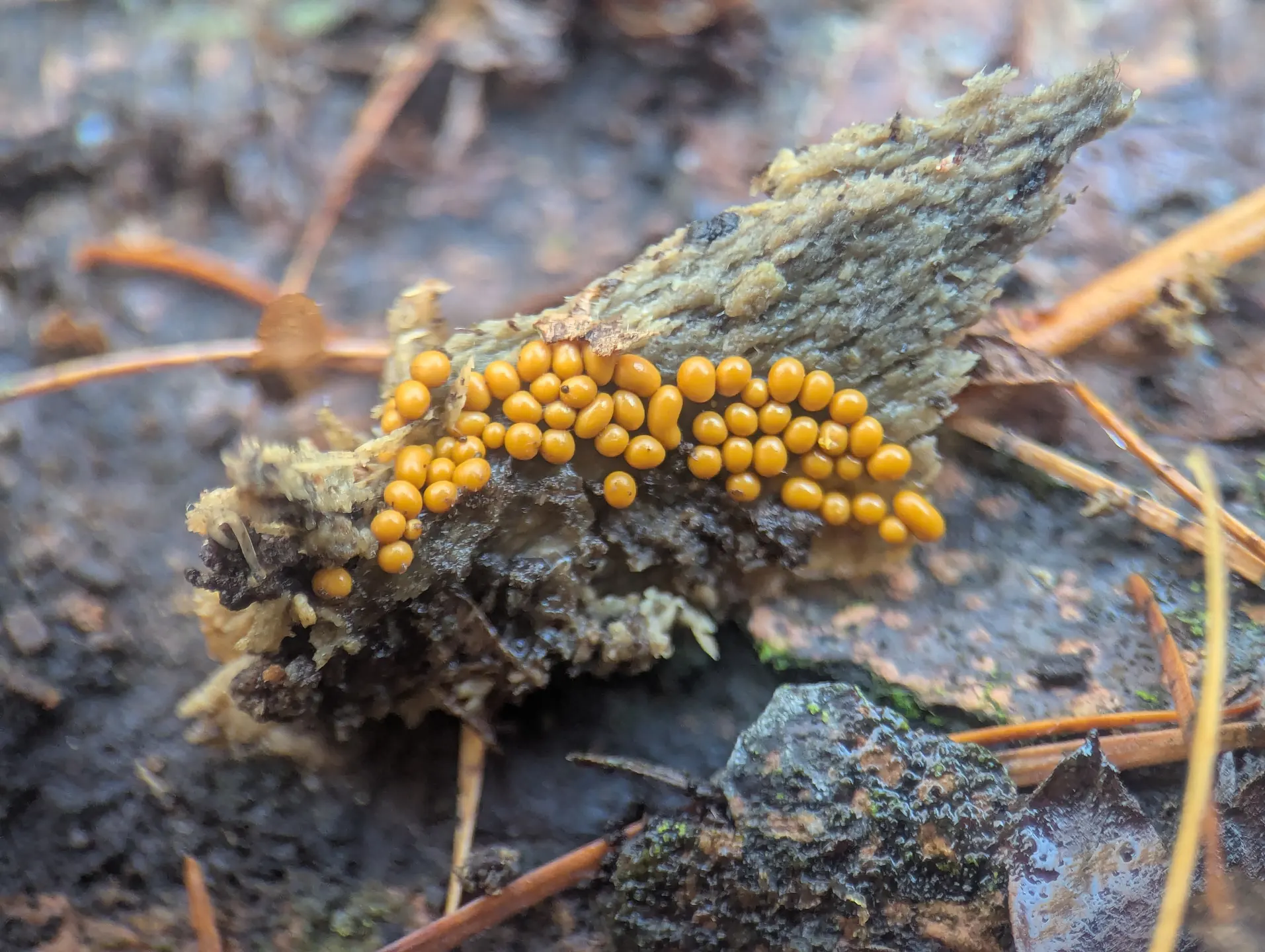
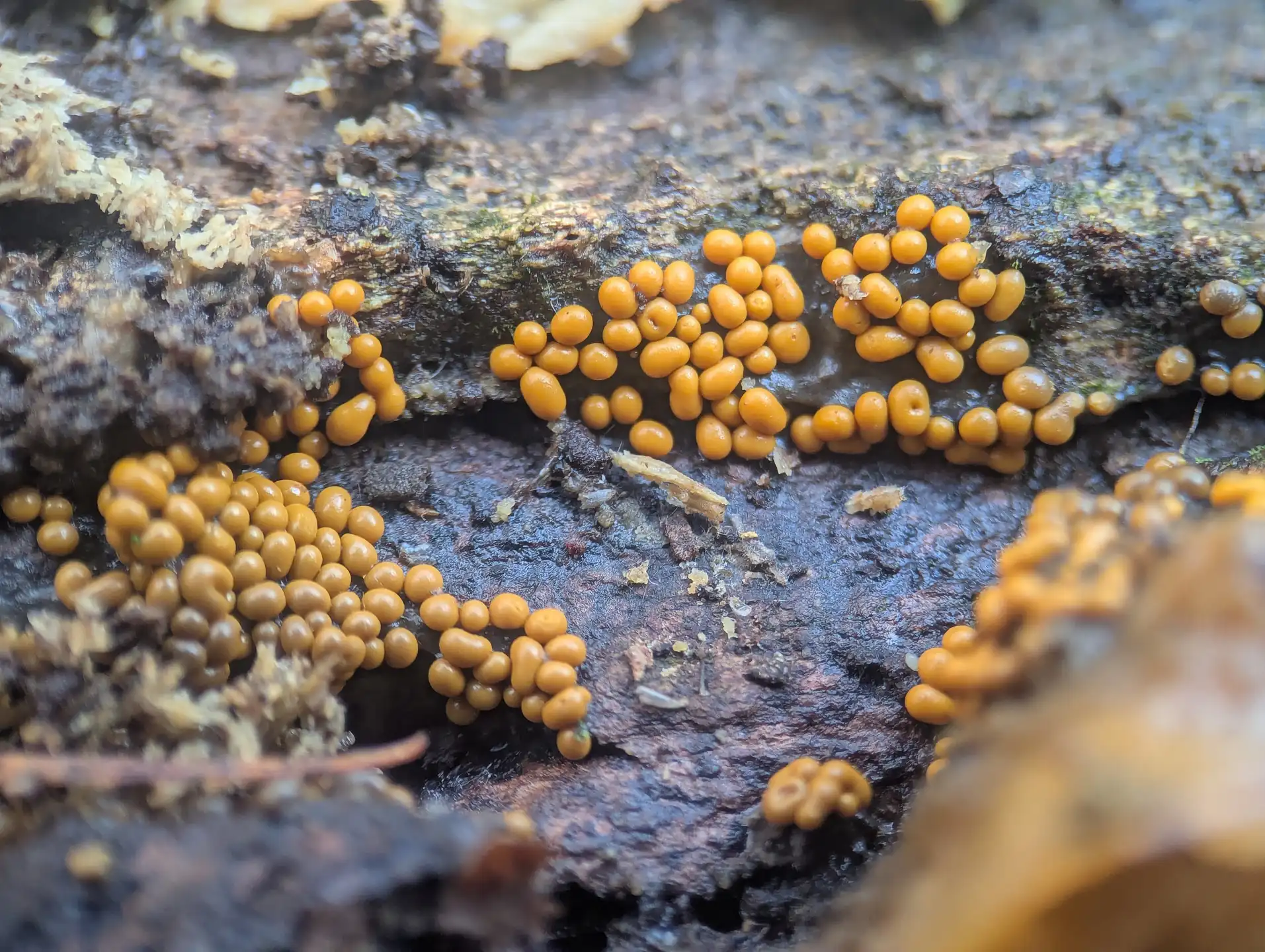
In the same area of the woodland as the last visit – some clusters of Trichia sporangia, probably Trichia varia, at various stages, from white to curry-yellow. Other colours not photo’d were pale ash-grey and greyish-brown.
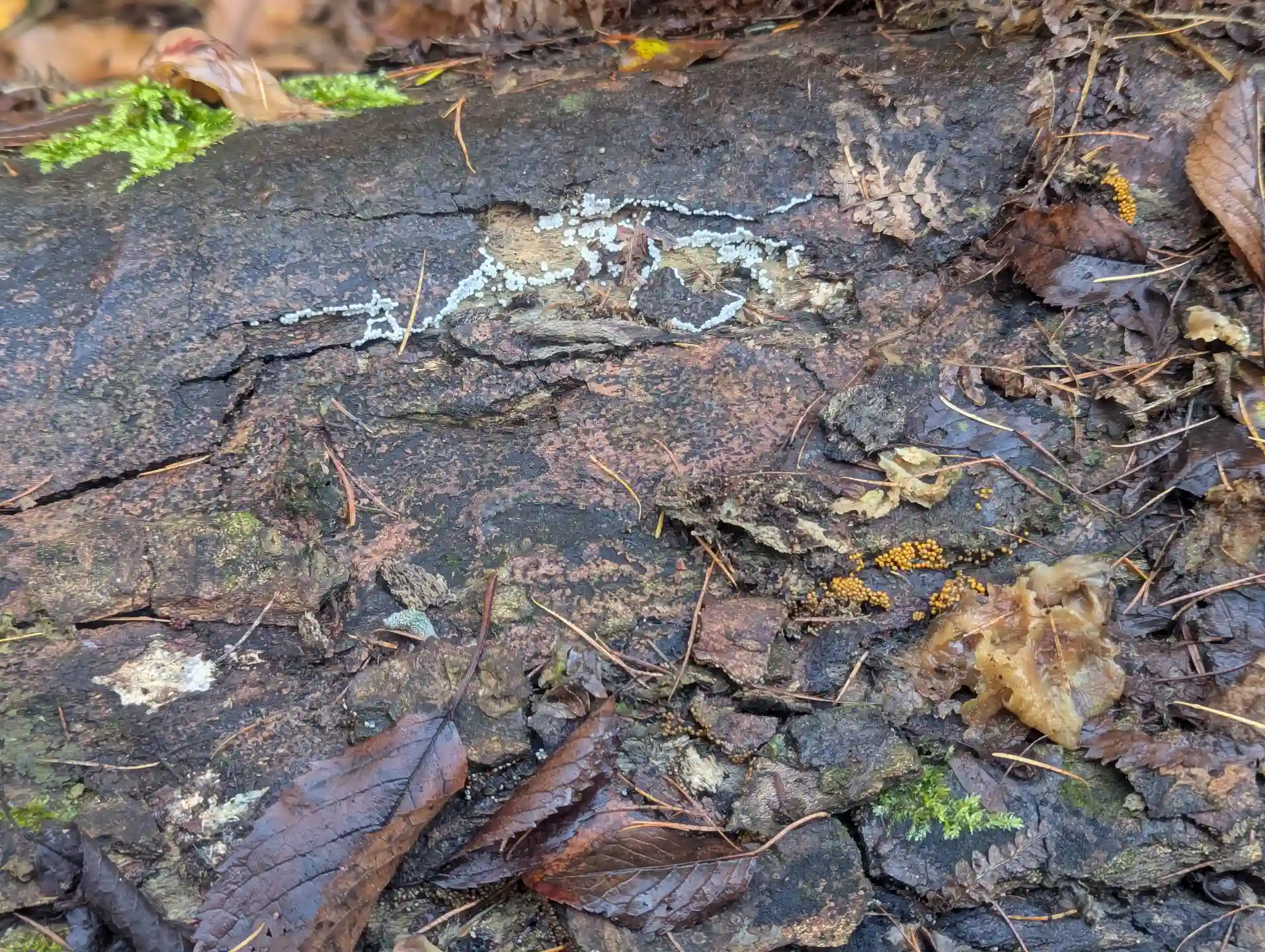
Section of a downed tree trunk, with Trichia varia sporangia clustered along the edges of fissures in the bark.
Probably Trichia varia
Felbrigg Estate – 9th November 2025
Close-up of numerous globular, white Trichia varia sporangia clustered together along fissures in the bark.
Probably Trichia varia
Felbrigg Estate – 9th November 2025
Close-up of another cluster of globular, white Trichia varia sporangia.
Probably Trichia varia
Felbrigg Estate – 9th November 2025
Cluster of globular, curry-yellow Trichia varia sporangia on a fragment of wood.
Probably Trichia varia
Felbrigg Estate – 9th November 2025
Close-up of numerous globular, curry-yellow Trichia varia sporangia clustered together along fissures in the bark.
Probably Trichia varia
Felbrigg Estate – 9th November 2025
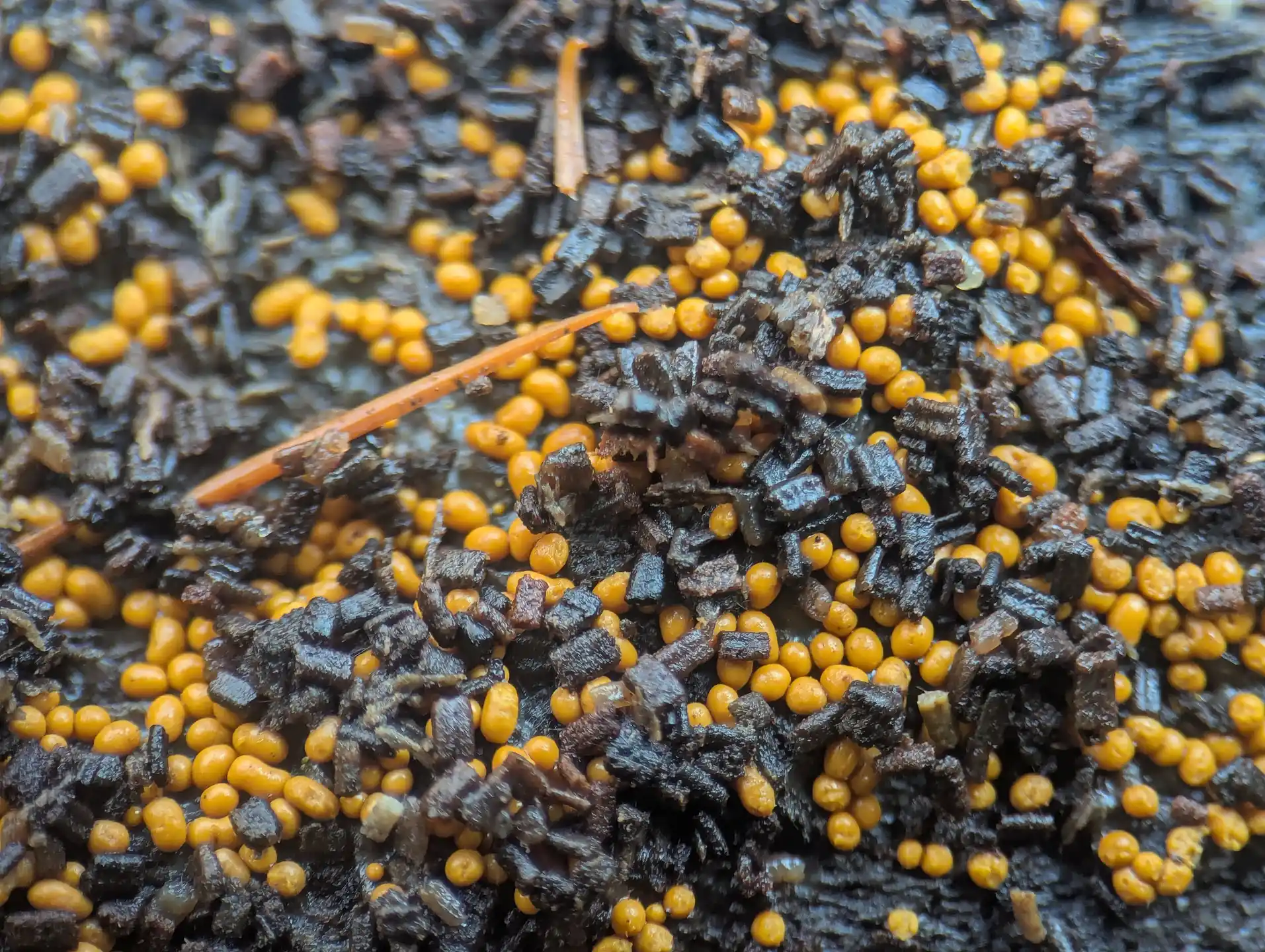
Close-up view of numerous globular, curry-yellow Trichia varia sporangia scattered within a matrix of small wood fragments.
Probably Trichia varia
Felbrigg Estate – 9th November 2025

These unidentified sporangia were quite wonderful with their luminous pale cream sporotheca.
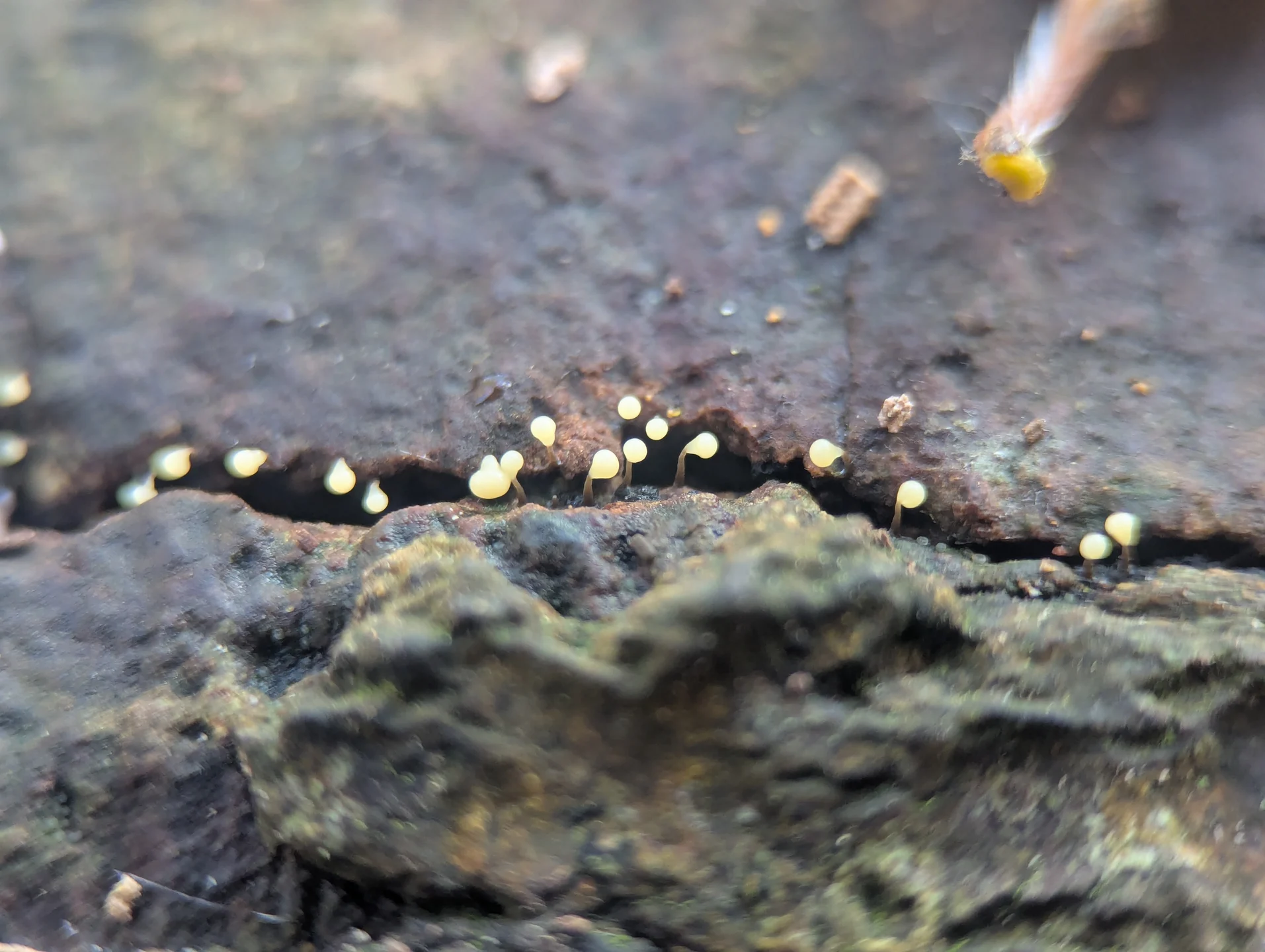
Stalked sporangia along a fissure in wood.
Unidentified slime mould sporangia
Felbrigg Estate – 9th November 2025

A cluster of small unidentified mushrooms growing from a stick.
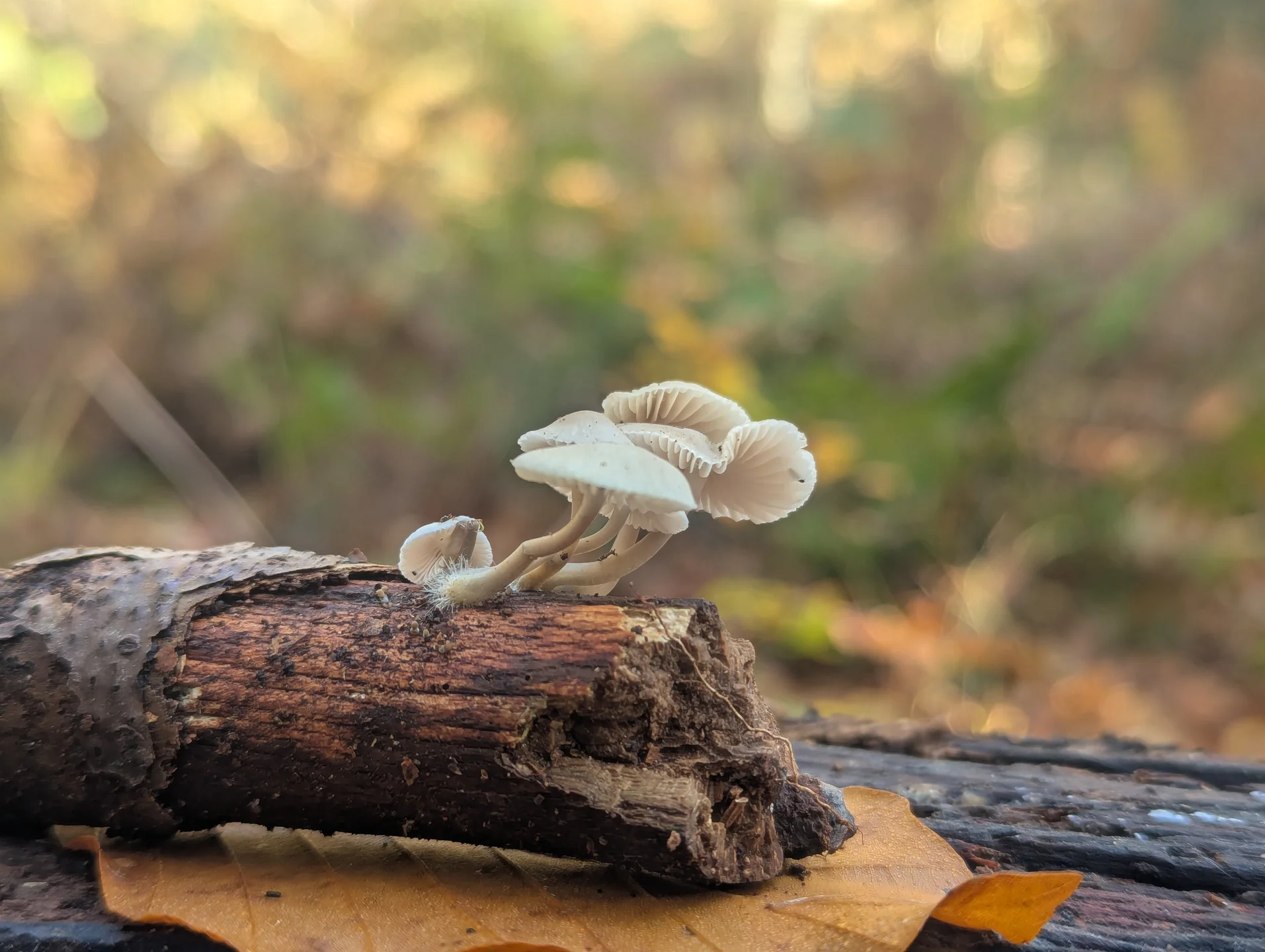
Close-up of a small cluster of pale, delicate mushrooms growing on a broken stick. The background features soft focus autumn colours.
Unidentified mushrooms
Felbrigg Estate – 9th November 2025

And this ozonium of Coprinellus domesticus – super! This is the second time ever we have seen it – the last time at RSPB Strumpshaw Fen in November 2024.
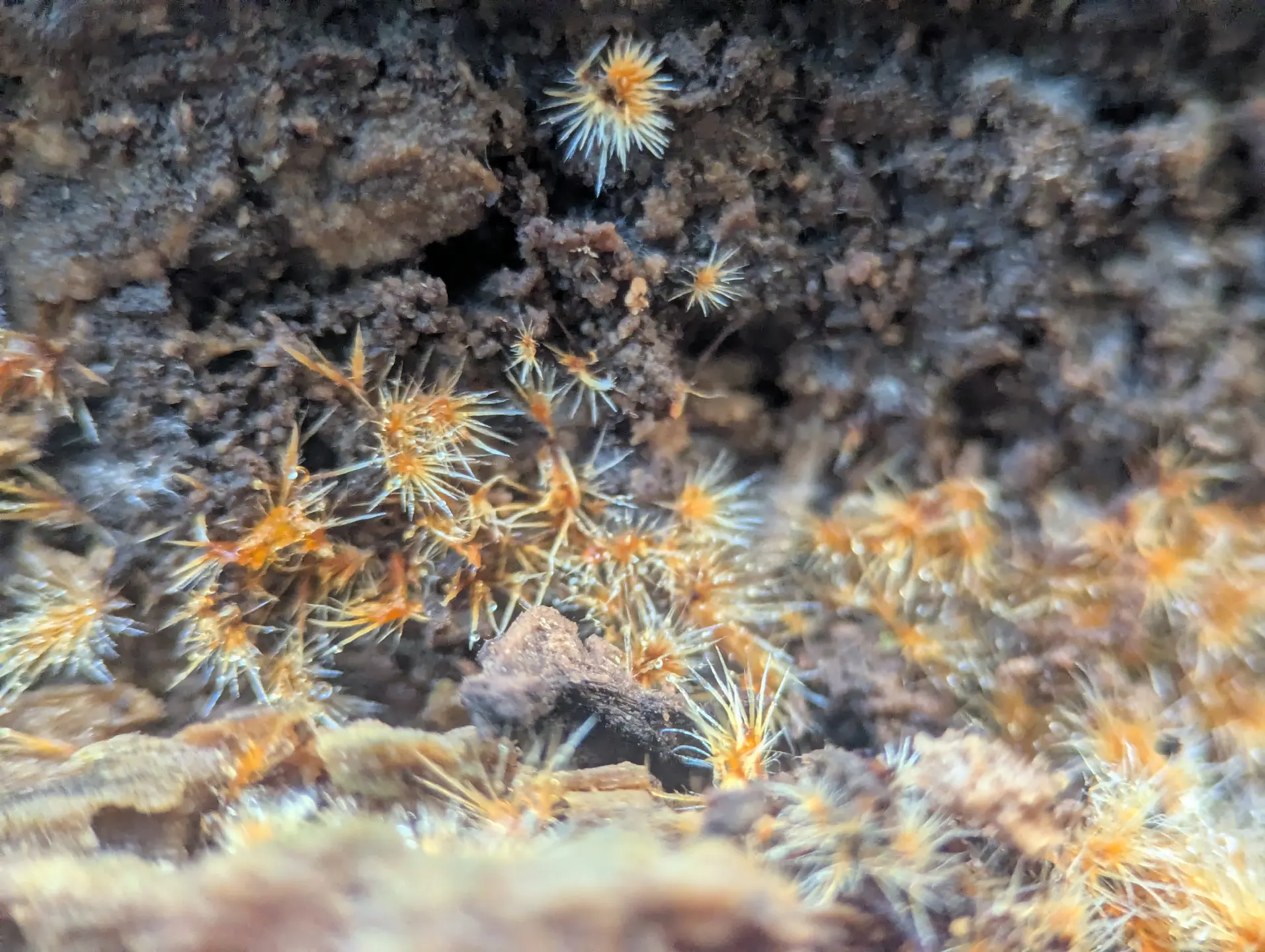
Close-up view of the ozonium of Coprinellus domesticus. The structures are clusters of brownish-orange formations with white spikes growing on a decomposed woody substrate.
Ozonium of Coprinellus domesticus
Felbrigg Estate – 9th November 2025

At this time of year, there’s always an opportunity to see some impressive shaggy parasol fungi (Chlorophyllum rhacodes) – particularly in the open grass area north-east of the Hall.
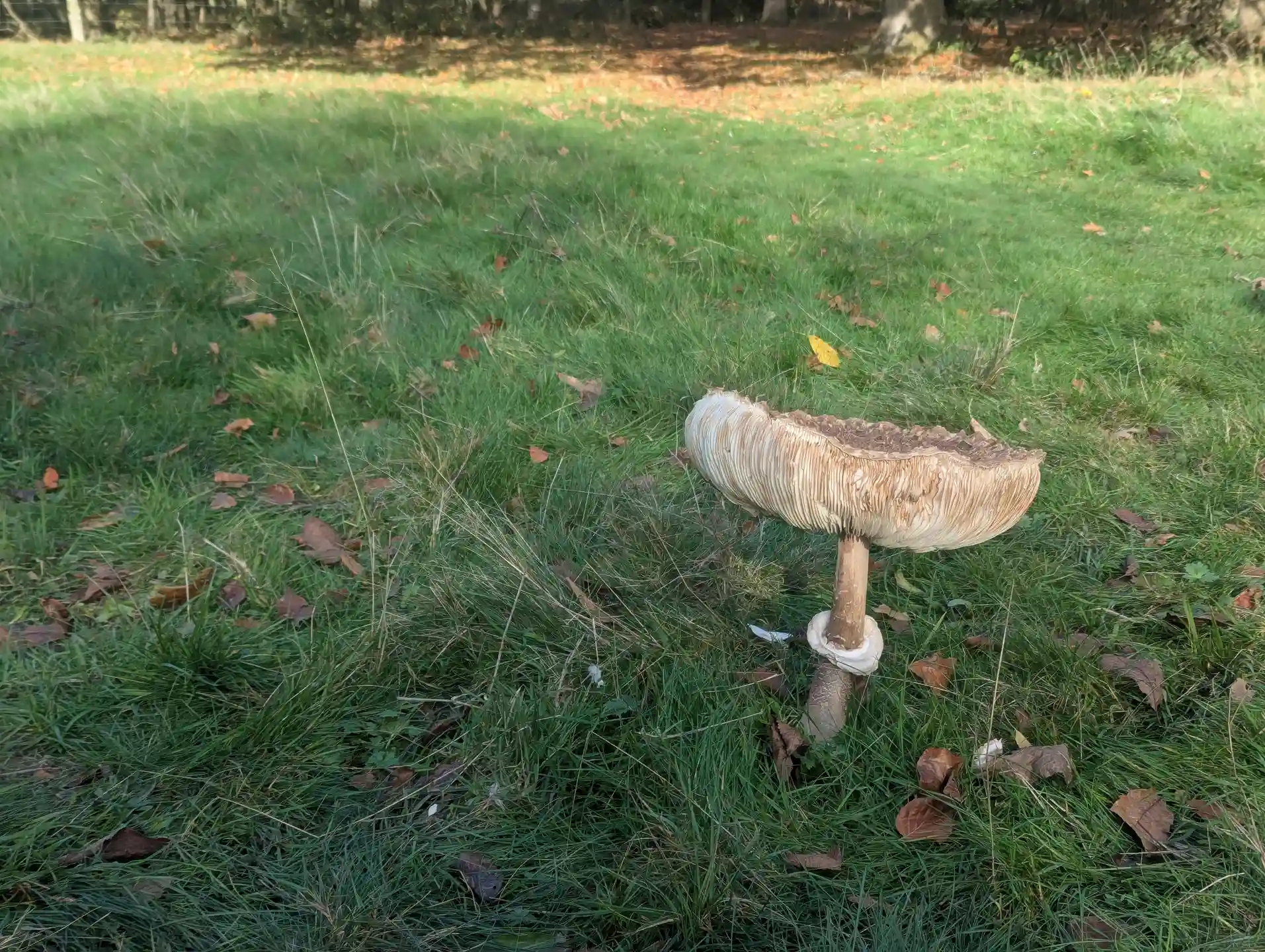
Side view of a large shaggy parasol mushroom growing in a grassy area. The cap is upturned showing its cream and light brown gills. There is a prominent cream ring on its thick, pale-brown stem.
Chlorophyllum rhacodes
Felbrigg Estate – 9th November 2025
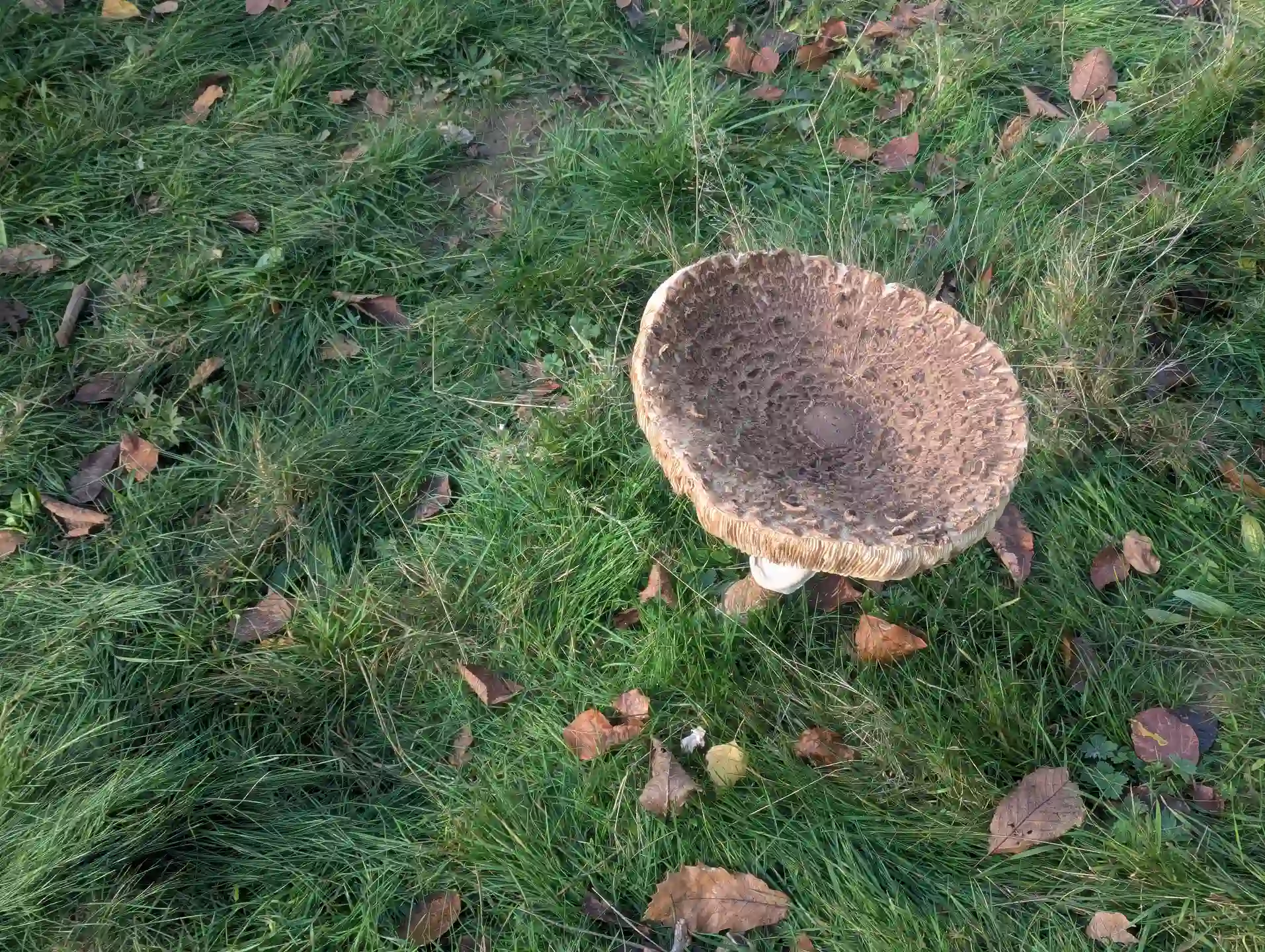
Top view of the shaggy parasol. The cap is distinctly depressed, revealing its brownish scales and lighter-colored margin. Scattered leaves are visible on the surrounding grass.
Chlorophyllum rhacodes
Felbrigg Estate – 9th November 2025
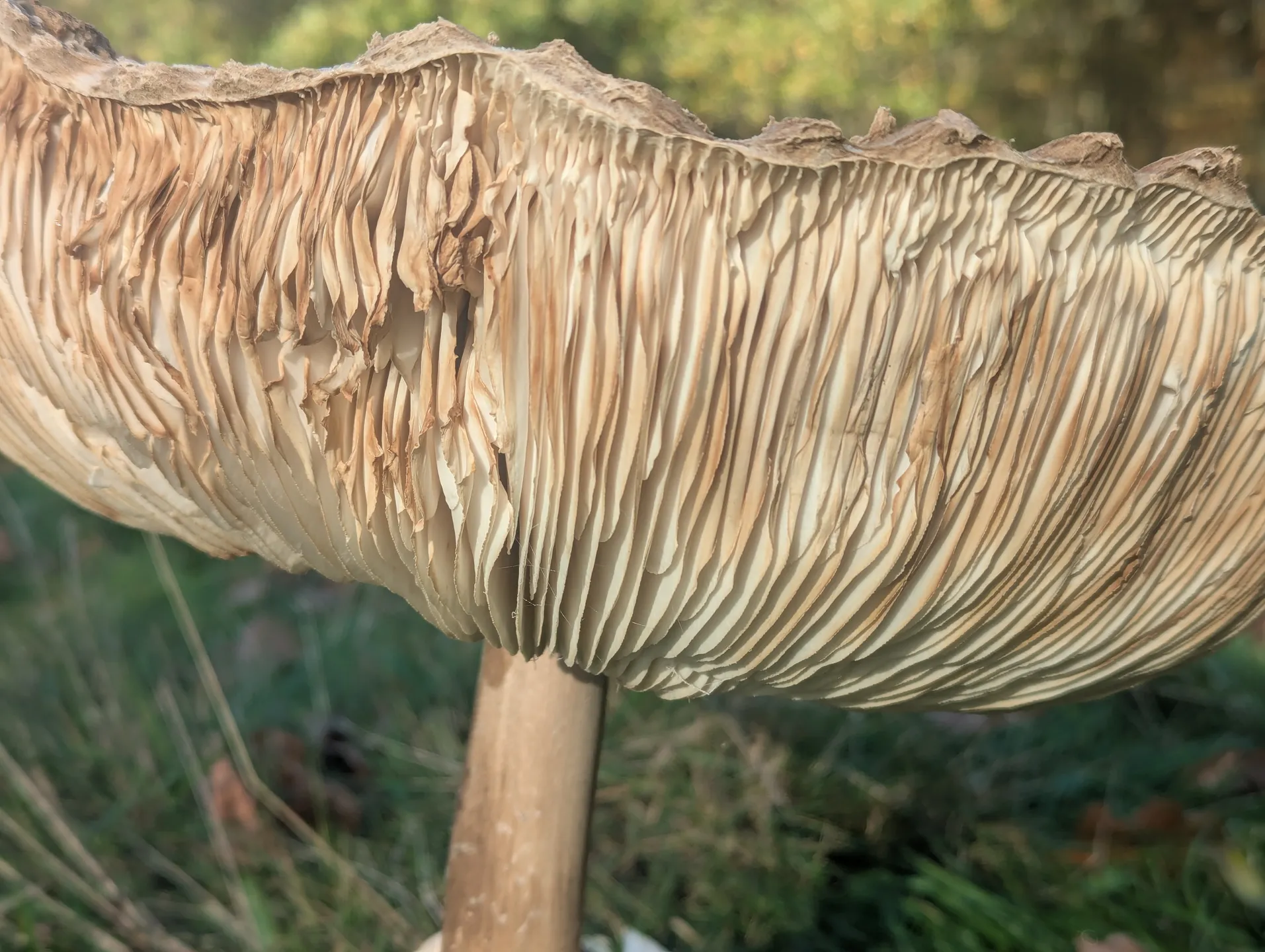
Close-up side view of the shaggy parasol's cream and light brown gill structure.
Chlorophyllum rhacodes
Felbrigg Estate – 9th November 2025

Felbrigg Hall is a 17th-century country house and estate located near Cromer in North Norfolk, and is part of the National Trust. The estate has extensive parkland and includes the Great Wood.

Felbrigg Hall National Trust webpage Felbrigg Hall Wikipedia entry